Dogs curl up to sleep for safety, warmth, and comfort—but sometimes it signals pain. Learn common reasons, a quick home checklist, and when to call the vet.
Article
•
Designer Mixes
Dog Sleeping Positions: What They Reveal About Your Pet

Shari Shidate
Designer Mixes contributor
If you have ever watched your dog drift off, you have probably wondered what their sleeping position “means.” As a veterinary assistant here in Frisco, Texas, I can tell you this: sleep posture can offer helpful clues about comfort, temperature, trust, and even sore spots. But it is not a personality test, and one position is not automatically “better” than another.
Your dog may rotate through several positions in a single nap. That is normal. What matters most is what is typical for your dog and whether anything changes suddenly.
Quick note: This article is general information and not a substitute for veterinary advice. If you are worried about breathing , pain , or sudden behavior changes, your vet is the right next step.
Why dogs sleep the way they do
Dogs choose sleep positions for a few practical reasons. Understanding these basics makes the “meaning” of each pose much clearer.
- Safety and vulnerability: Positions that expose the belly often happen when a dog feels secure.
- Temperature control: Sprawling out can help cool down; curling up can help conserve heat.
- Joint and muscle comfort: Older dogs or dogs with arthritis may choose positions that reduce pressure on sore areas.
- Habit and environment: A new home, a different bed, noise, light, or other pets can change how a dog settles.
Common sleeping positions
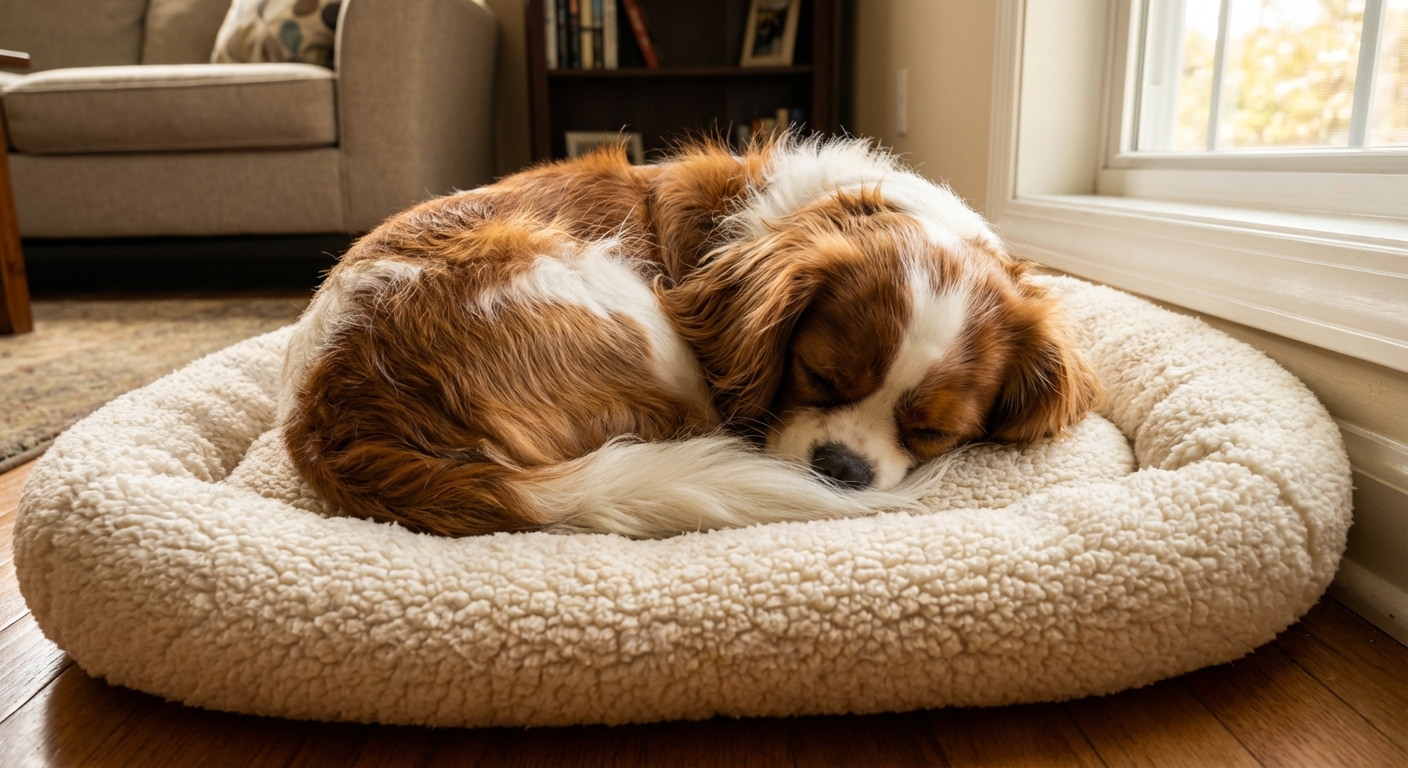
The curled-up “donut”
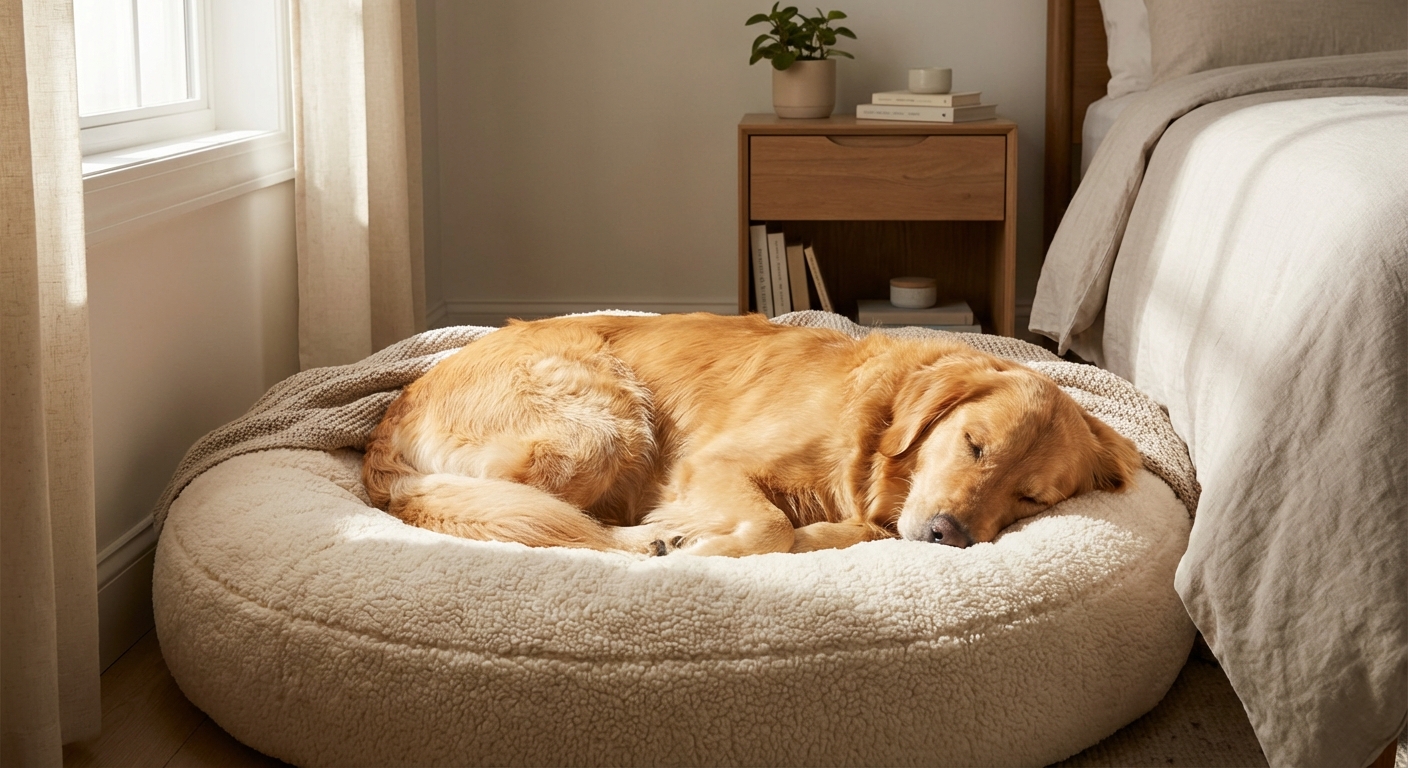
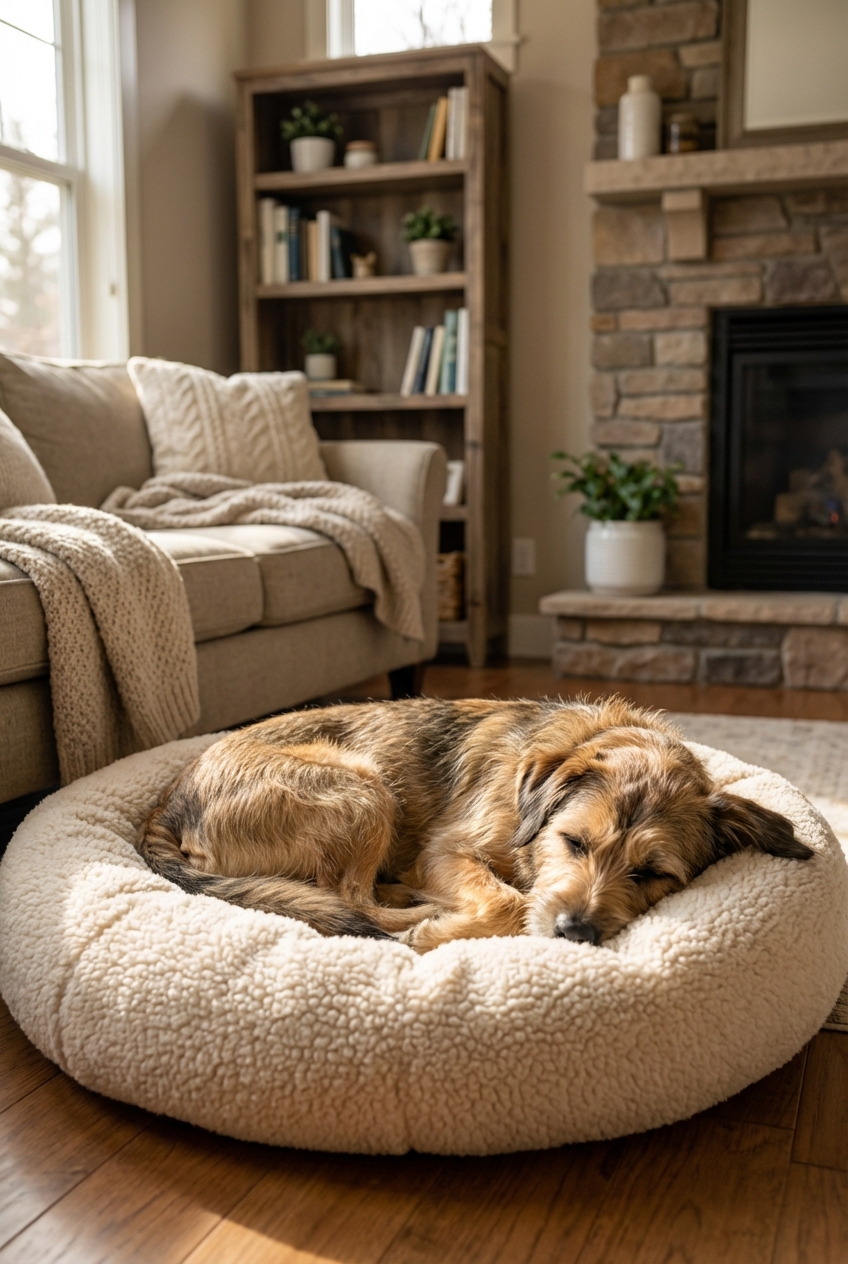
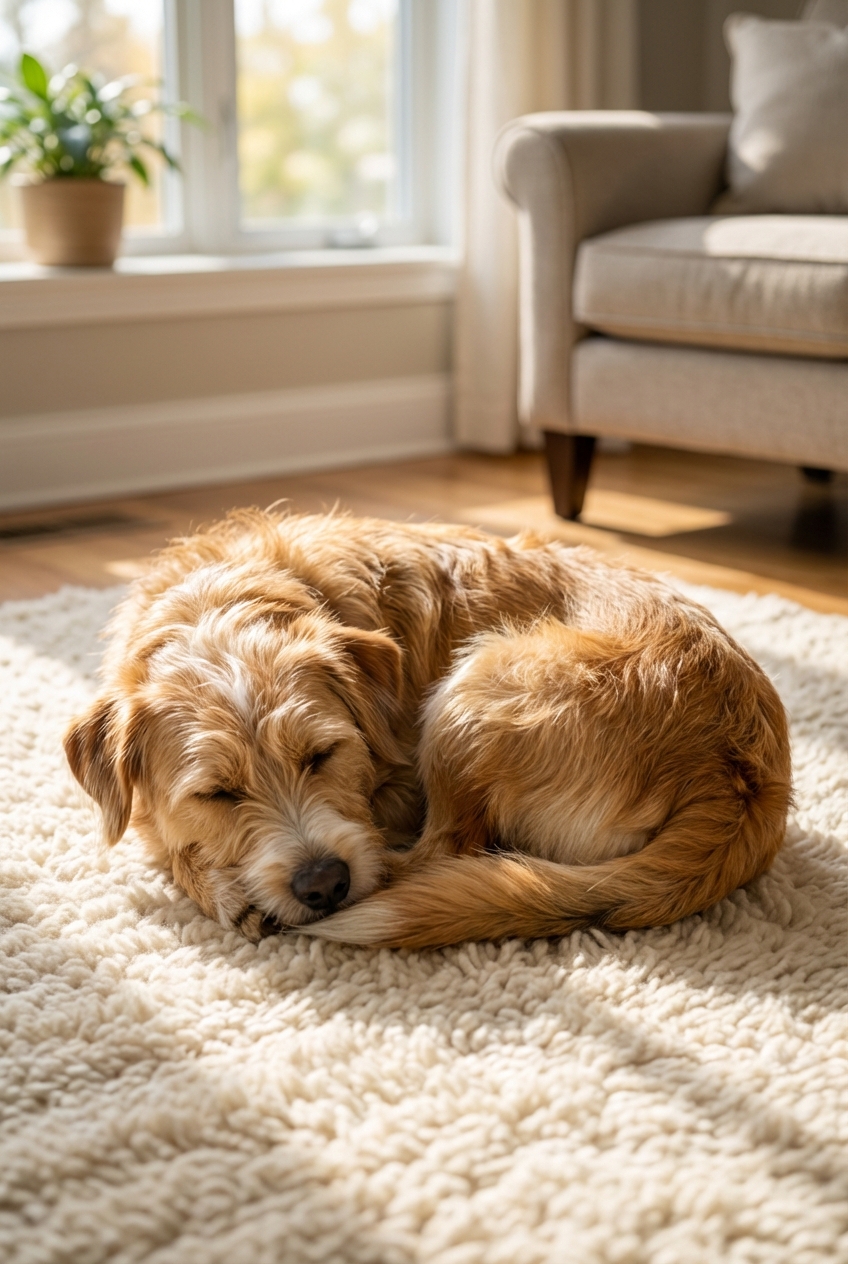
This is one of the most common positions: nose near tail, paws tucked in. It can help conserve body heat, and many dogs also seem to feel more protected in this tucked posture.
- May indicate: Comfort, coziness, and temperature regulation.
- You may notice it more when: The room is cool, your dog is napping in an open area, or they are settling into a new environment.
The side sleeper
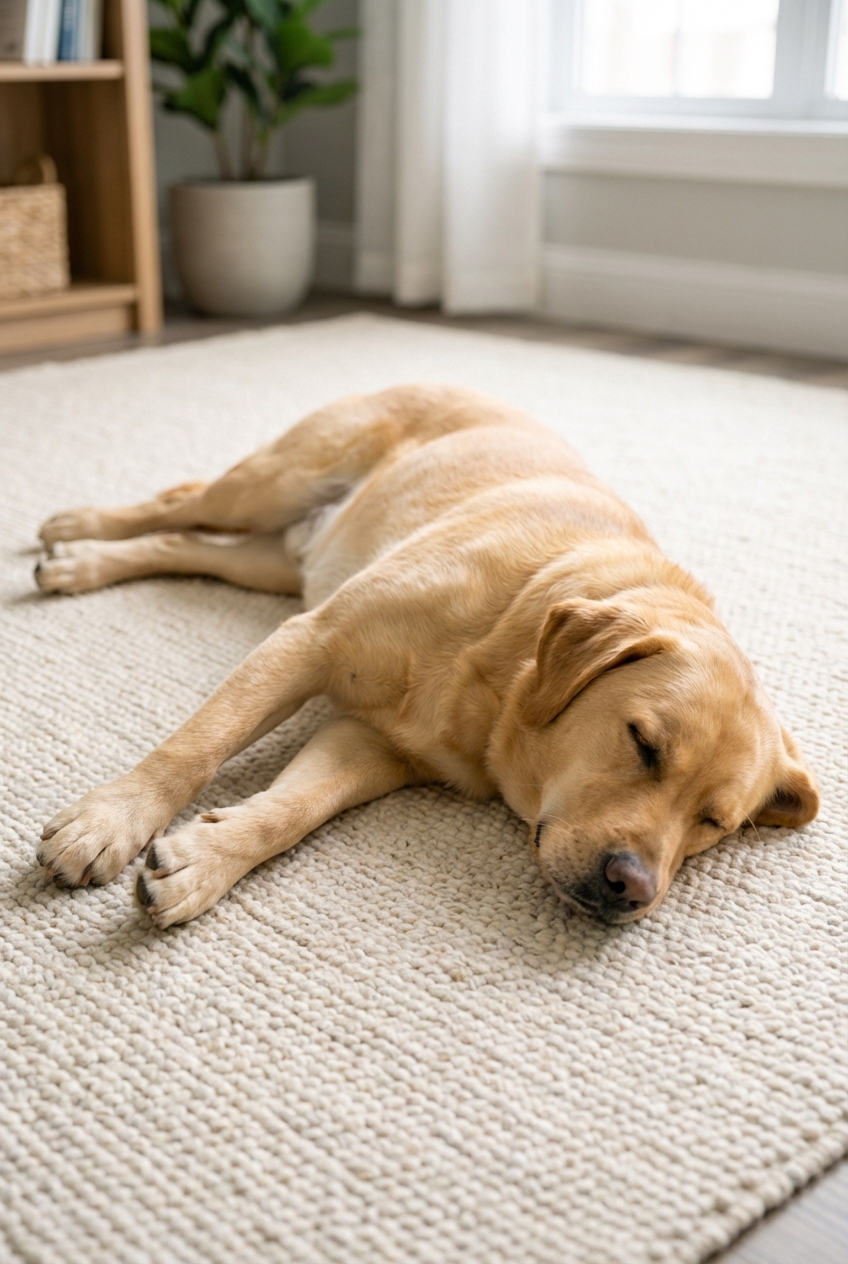
When a dog sleeps on their side with legs extended, it often means they feel safe enough to relax. Many dogs may spend deeper parts of sleep in this posture, but every dog is different.
- Commonly associated with: Relaxation and trust in the environment.
- Practical note: If your dog seems stiff getting up from side sleeping, talk to your vet about joint support and gentle exercise.
Belly up “paws in the air”
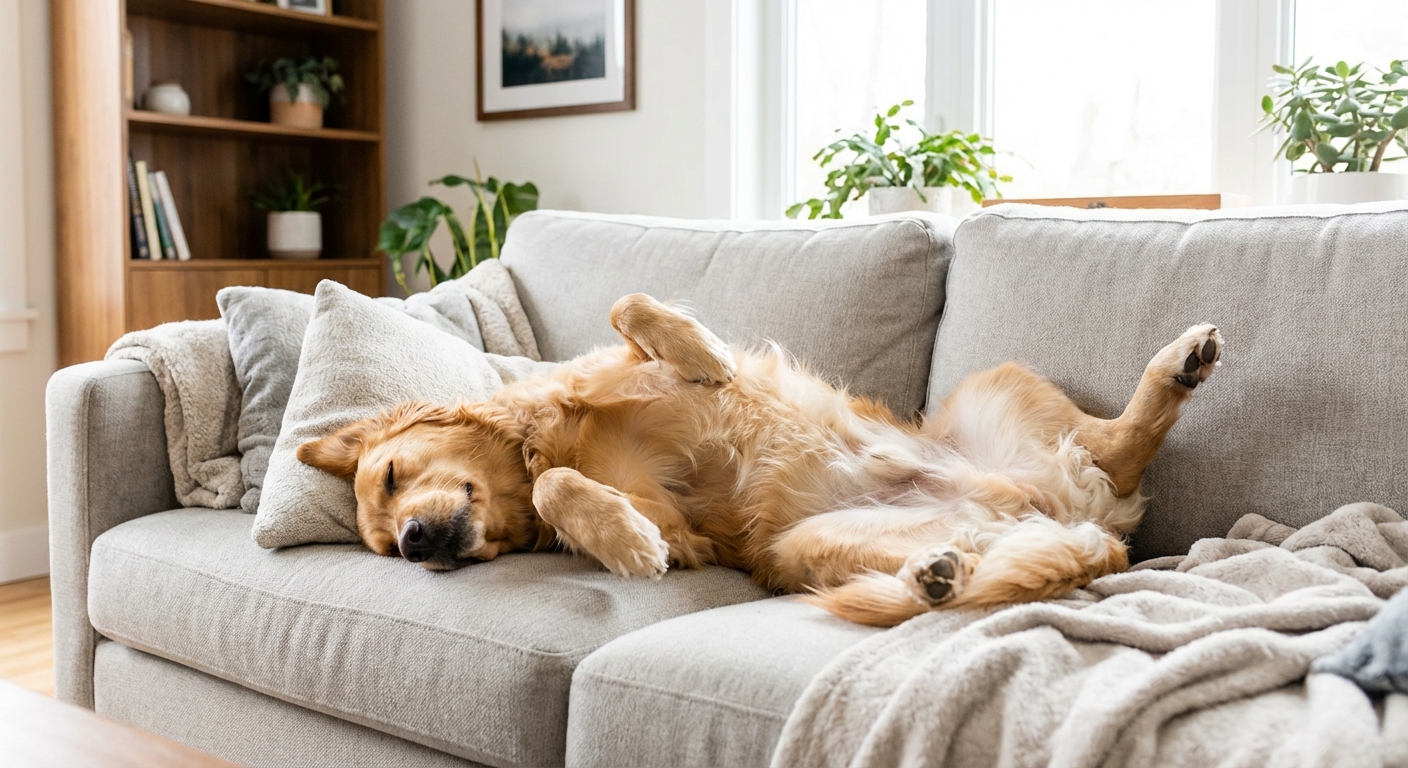
This one makes people smile, and yes, it can be a sign of trust because the belly is exposed. It can also help some dogs cool off, since the belly often has less insulation than the back, although coat thickness varies a lot by breed.
- May indicate: Feeling safe, comfortable, and possibly warm.
- Important nuance: A belly-up sleeper is not always inviting belly rubs. Look for loose body language and a relaxed face before you reach in.
The lion pose (sphinx)
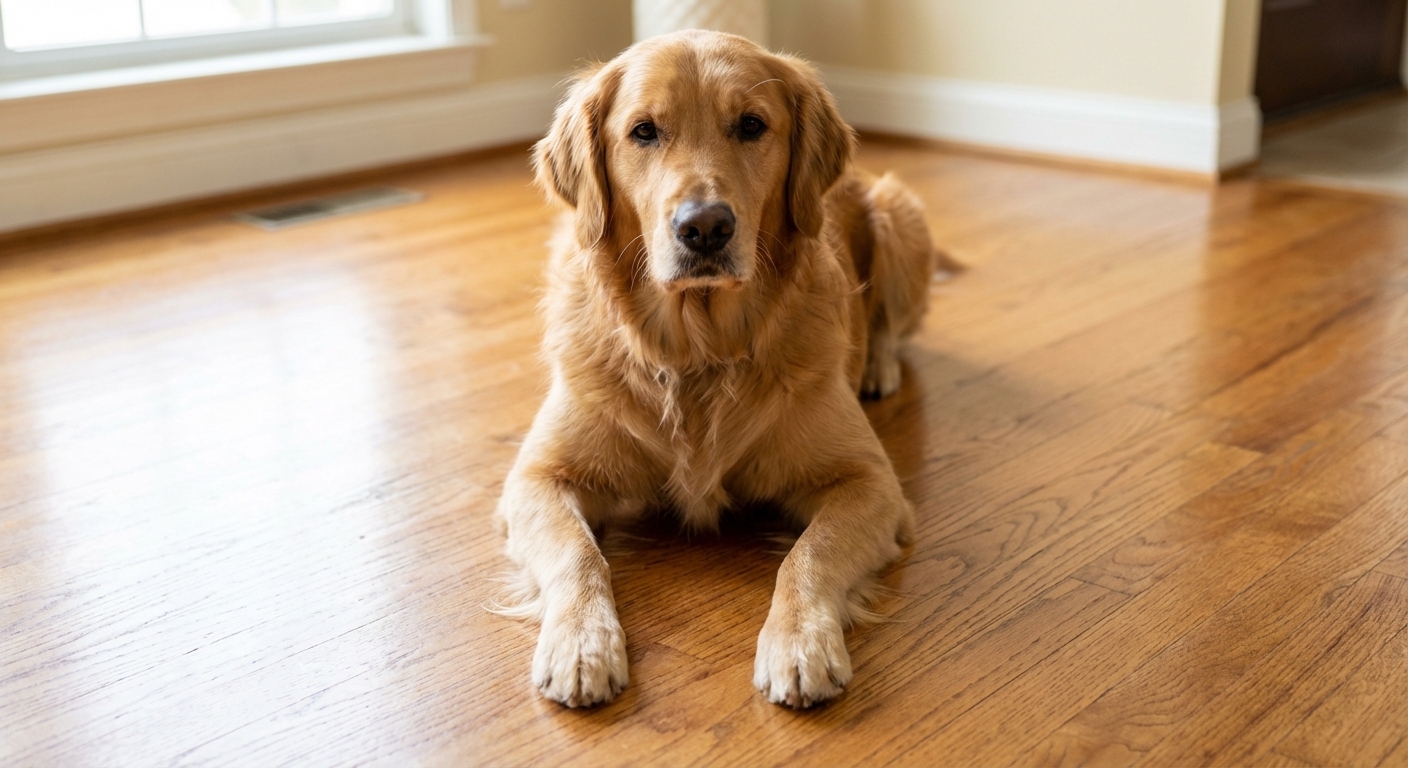
This is when a dog rests with head on paws (or head up) and front legs forward. It is common for light sleepers and dogs who want to be ready to respond.
- May indicate: Drowsy resting, light sleep, or staying alert.
- You may notice it more when: There is activity in the home, visitors, or outdoor noises.
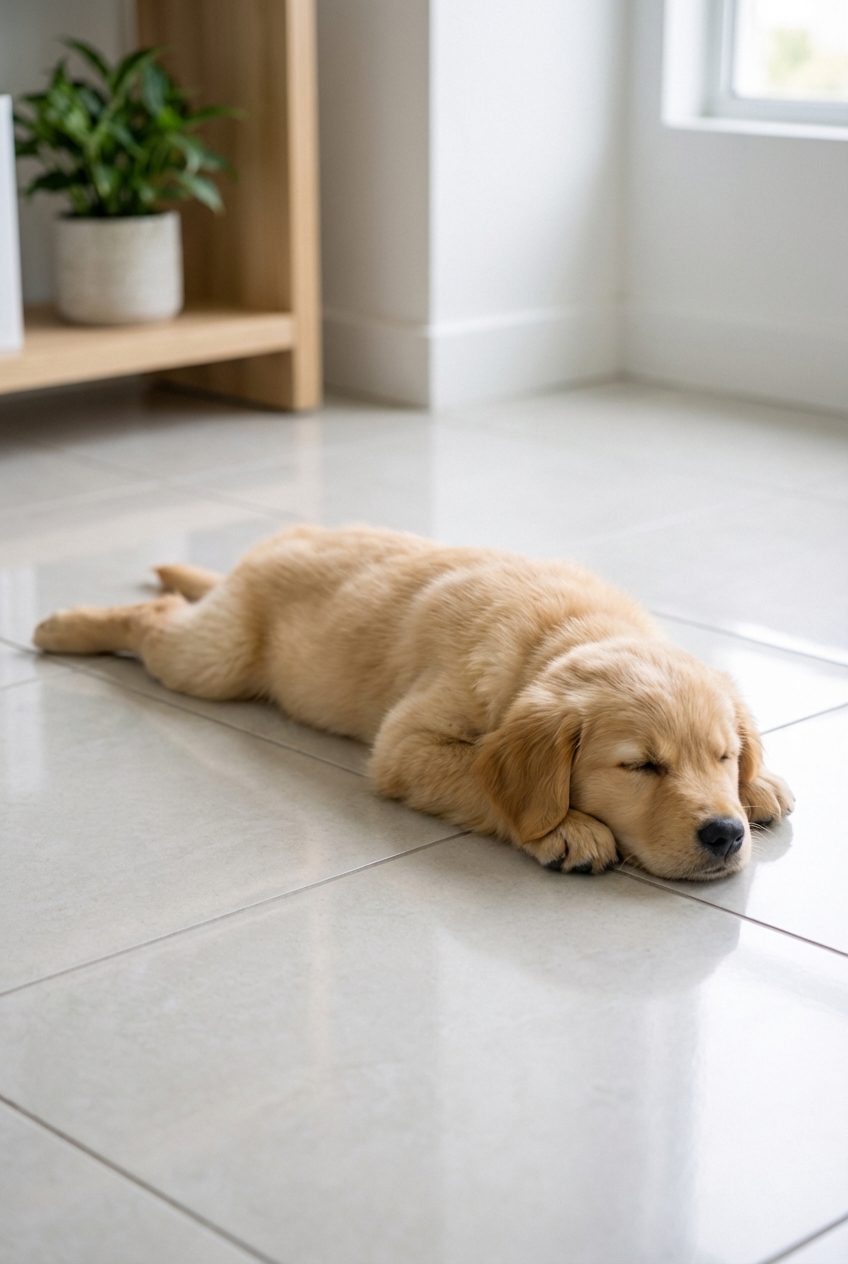
The “superman”
Puppies do this a lot, but adult dogs can too. It is a quick, comfortable sprawl that makes it easy to pop up and play.
- May indicate: Relaxed but ready, or cooling off on a solid surface.
- Common with: Younger dogs and energetic dogs.
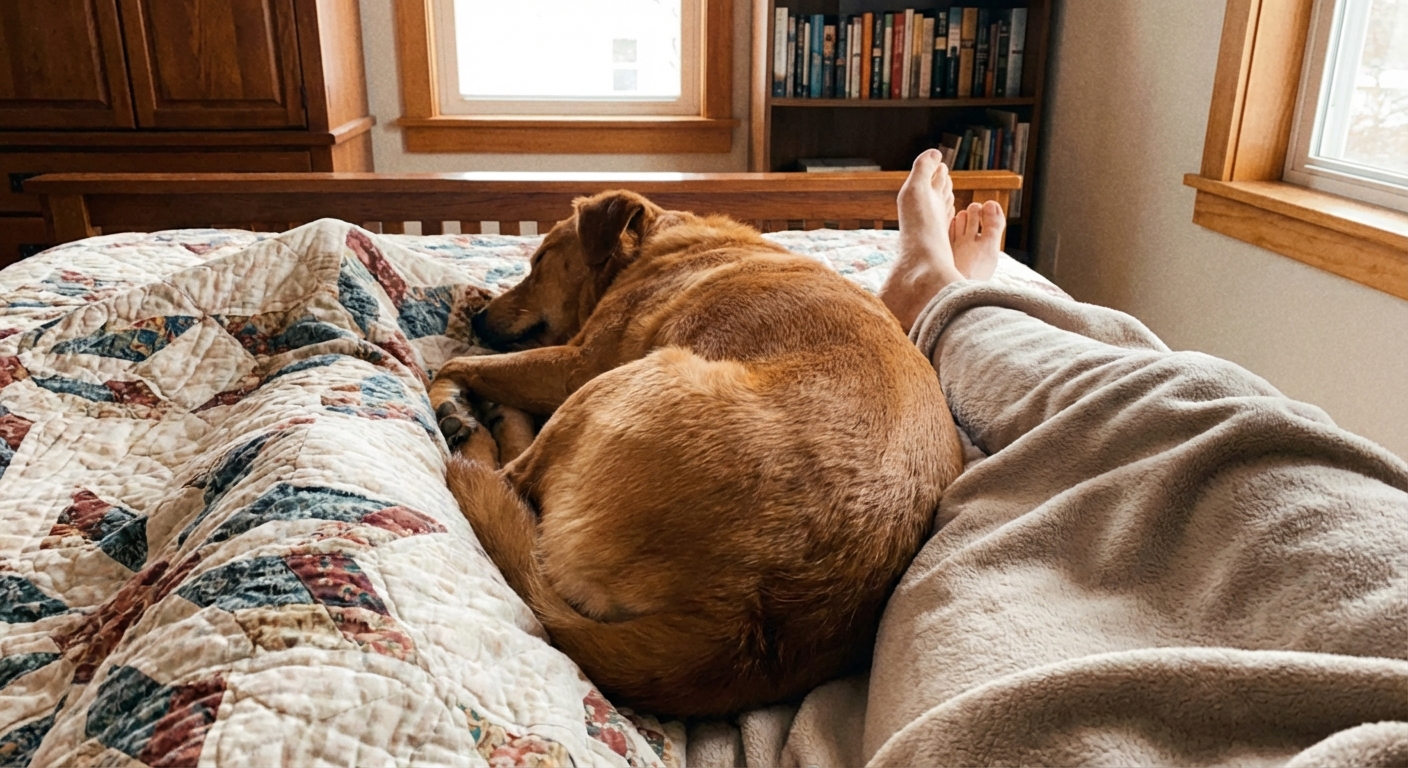
Touching you (or another pet)
Some dogs sleep pressed against their person or another animal. This can be a bonding behavior, and it can also be about warmth and comfort.
- Often linked to: Attachment, security, and social bonding.
- If it changes suddenly: A usually cuddly dog that stops seeking contact might be stressed or painful.
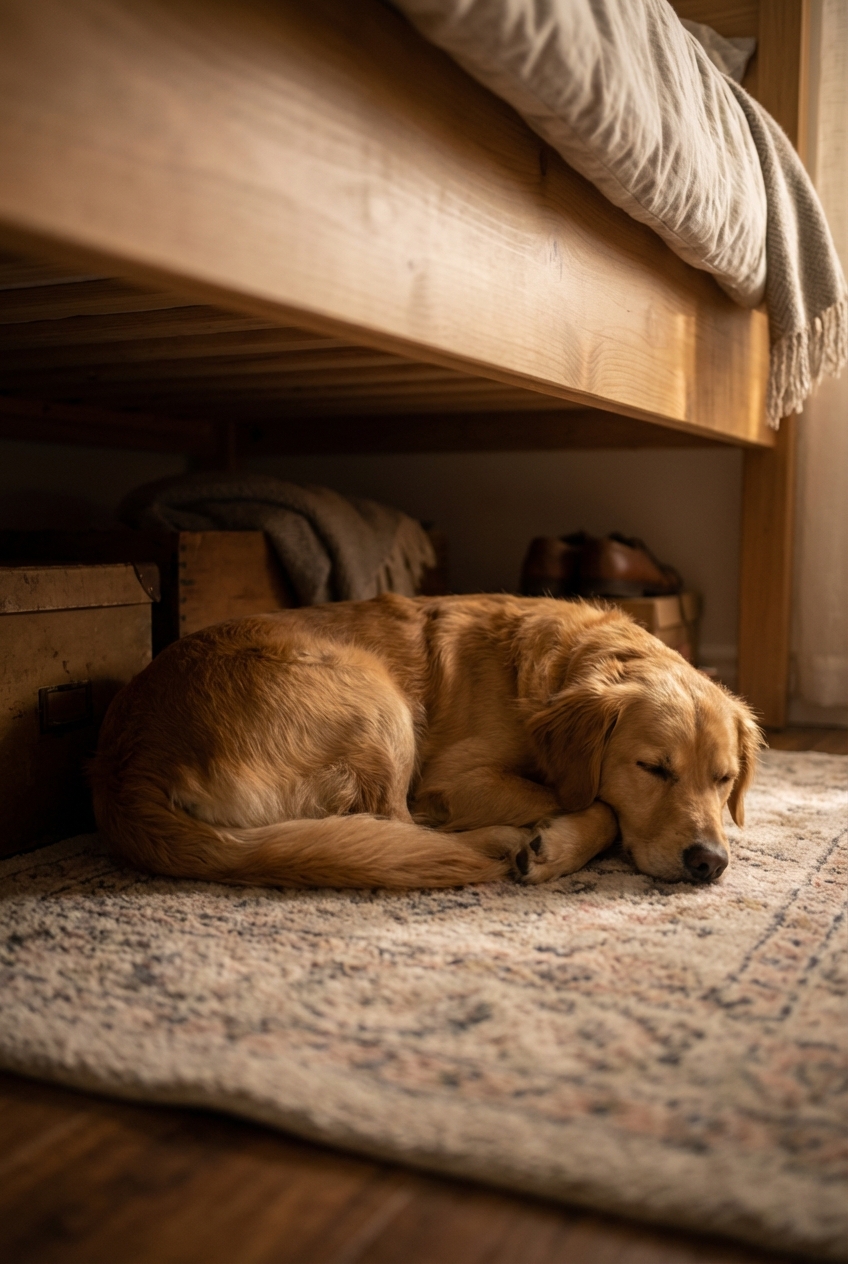
Under the bed or in a closet
“Denning” behavior is normal for many dogs, especially in busy homes. But hiding can also signal anxiety, noise sensitivity, or discomfort.
- May indicate: Seeking a quiet, sheltered space.
- Worth a closer look if: It is new behavior, paired with panting, trembling, pacing, or appetite changes.
What changes can tell you
The most useful information is not a single position. It is a pattern. Here are a few changes that can be meaningful.
Signs your dog may be too warm
- Sprawling on tile or hardwood
- Belly up more often than usual
- Moving away from blankets or from cuddling
- Panting at rest (especially if the room is not hot)
Try: A cooler sleep surface, a fan for air circulation, fresh water nearby, and avoiding heavy bedding.
Signs your dog may be uncomfortable
- Restlessness, frequent position changes, or difficulty settling
- Stiffness when rising, limping after naps, or reluctance to jump
- Choosing hard floors over a bed (sometimes an overly soft, unsupportive bed can make it harder to reposition)
Try: A supportive orthopedic bed, gentle daily movement, keeping nails trimmed for better traction, and scheduling a vet exam if it is new or worsening.
Signs of stress or poor sleep
- Sudden “hiding to sleep” when they used to nap openly
- Startling awake easily, scanning, or pacing at night
- New clinginess or new isolation
Try: A quieter sleep area, predictable routines, a covered crate if your dog likes it, and talking with your veterinarian if anxiety is suspected.
Dreaming, twitching, and other sleep behaviors
Many people worry that movement during sleep is “a bad dream” or a sign something is wrong. In most healthy dogs, sleep twitching is normal. You may see paw paddling, ear flicks, or soft vocalizing during dream sleep.
- Usually normal: Brief twitching that stops if your dog wakes up easily and seems normal afterward.
- Call your vet promptly if: Episodes are long, intense, hard to interrupt, or followed by disorientation, drooling, loss of bladder control, or trouble walking, since seizures can look similar.
Breed, age, and health factors
Sleeping positions are not one-size-fits-all. A few examples:
- Brachycephalic breeds (like French Bulldogs, Boston Terriers, Pugs) may choose positions that help them breathe more comfortably. If your dog snores loudly, seems to struggle, or wakes often, mention it to your vet. In some dogs, this can be linked to brachycephalic obstructive airway syndrome (BOAS).
- Giant breeds often prefer side sleeping or sprawling simply because it is easier on their body.
- Senior dogs may curl less tightly due to stiffness and may need more cushioning and warmth.
- Arthritis or spine issues can lead to more careful, less twisted positions and more frequent repositioning.
- Stomach upset can sometimes show up as repeated stretching (the “prayer” position), restlessness, or reluctance to lie down. If you also see vomiting, diarrhea, bloating, or unproductive retching, treat it as urgent.
Better sleep at home
Small changes can make a big difference in how well your dog rests.
- Offer two sleep surfaces: one cushioned bed and one cooler, flatter option nearby so your dog can choose.
- Check the room setup: If your dog startles easily, move the bed away from doors, windows, and noisy vents. A darker, quieter corner can help.
- Make traction easy: Rugs or runners help dogs settle without slipping, especially seniors.
- Keep a consistent routine: Predictability supports calmer sleep.
- Notice the whole picture: Appetite, energy, bathroom habits, mobility, and mood matter just as much as sleep posture.
When to worry
Most sleep positions are harmless. But please contact your veterinarian promptly if you see any of the following:
- Labored breathing at rest (heaving sides, open-mouth breathing when not hot, or blue-tinged gums)
- Repeated inability to get comfortable paired with whining, panting, or pacing
- Sudden reluctance to lie down or yelping when changing positions
- Extreme lethargy or trouble waking up
- New coughing, gagging, collapse, or fainting
Your dog’s “normal” is your best baseline. If the position changes overnight and your gut says something is off, it is always okay to call your vet and ask.