Raised, itchy welts can be alarming. Learn common causes of dog hives, how to spot them, what to do at home, and the emergency signs like facial swelling or ...
Article
•
Designer Mixes
Dog Skin Bumps: Sudden Hives vs Insect Bites

Shari Shidate
Designer Mixes contributor
Finding bumps on your dog can be alarming, especially when they seem to show up out of nowhere. In my work as a veterinary assistant, I have seen a lot of these “sudden bump” visits, and the good news is that many cases are manageable once you figure out what you are looking at. Two of the most common culprits are hives (urticaria) and insect bites or stings. They can look similar at first glance, but the pattern, timing, and your dog’s comfort level often tell the story.
One important note up front: this article is not a diagnosis. If you are unsure, or your dog seems unwell, call your veterinarian.
What dog hives look like
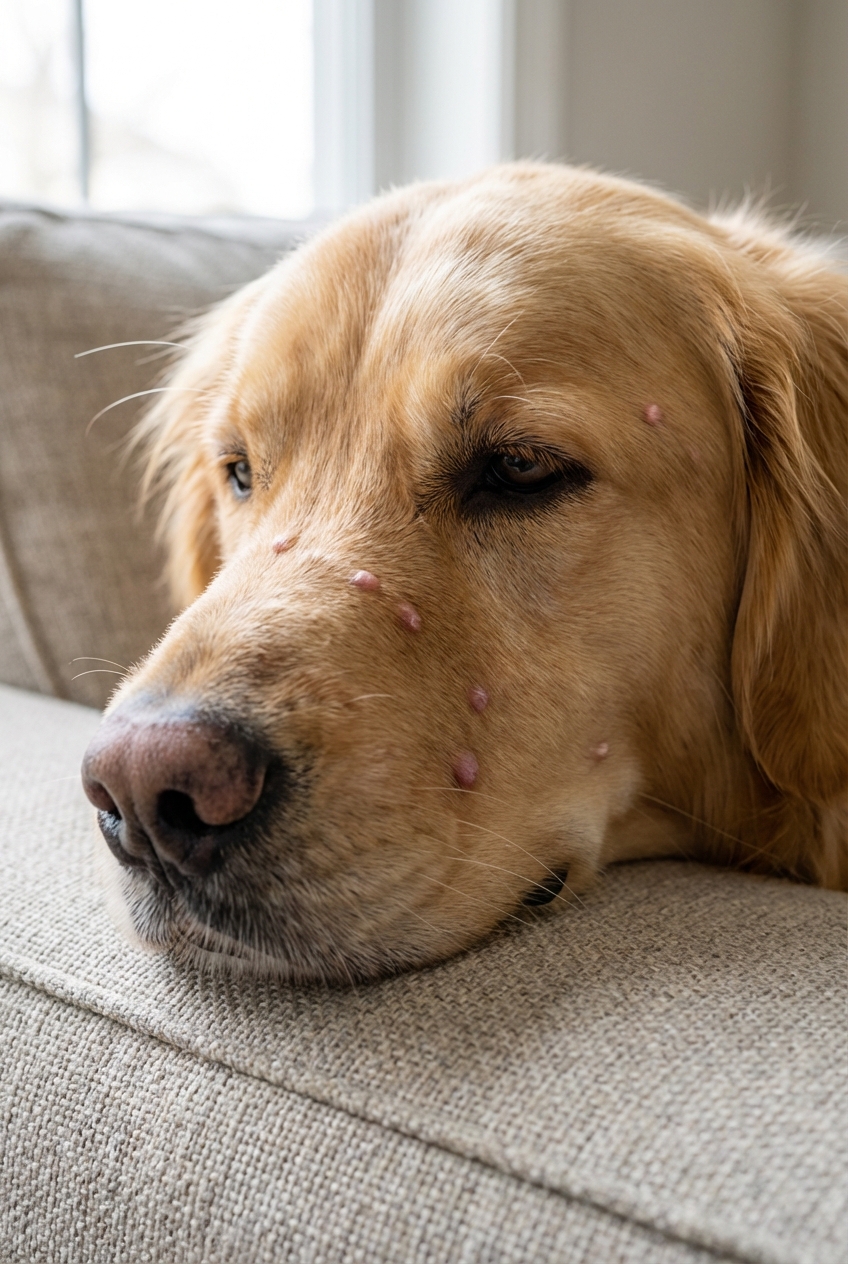
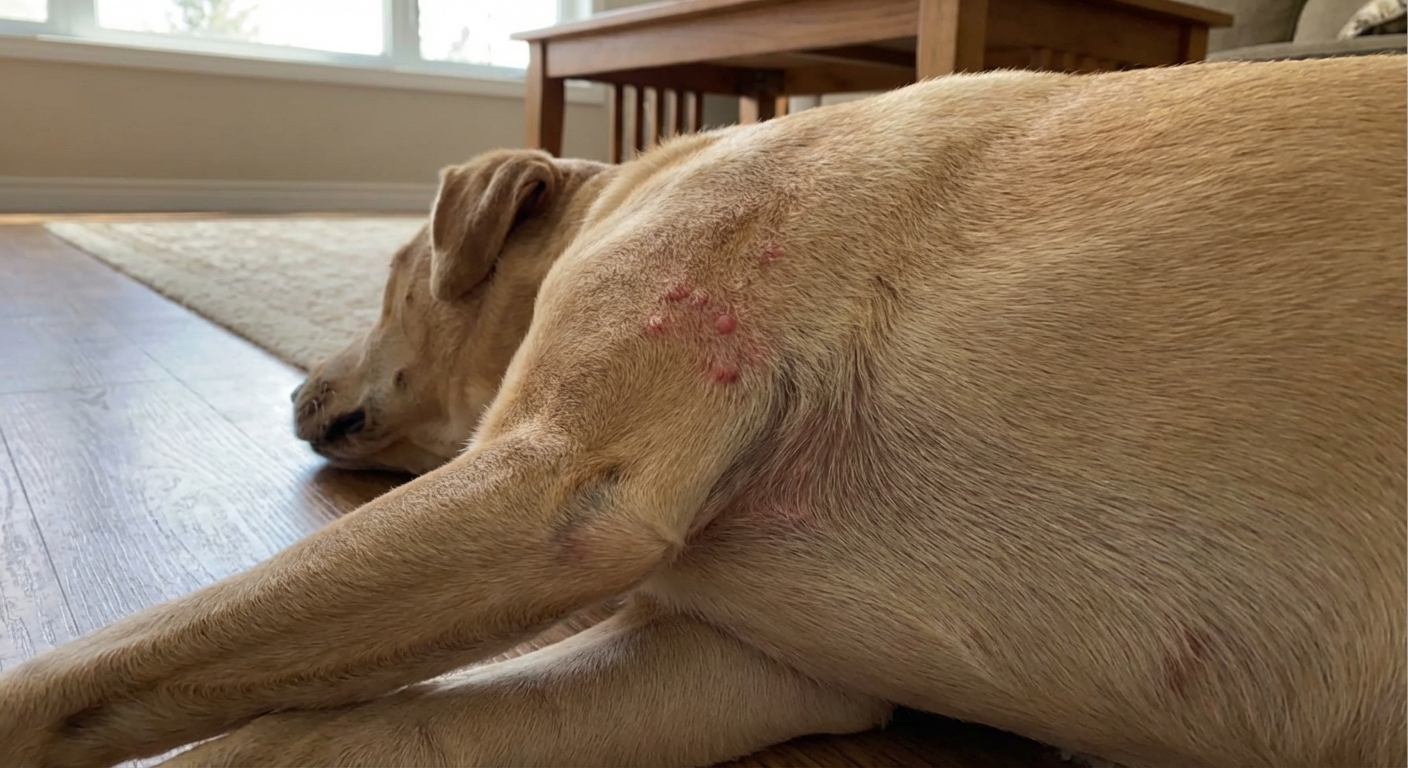
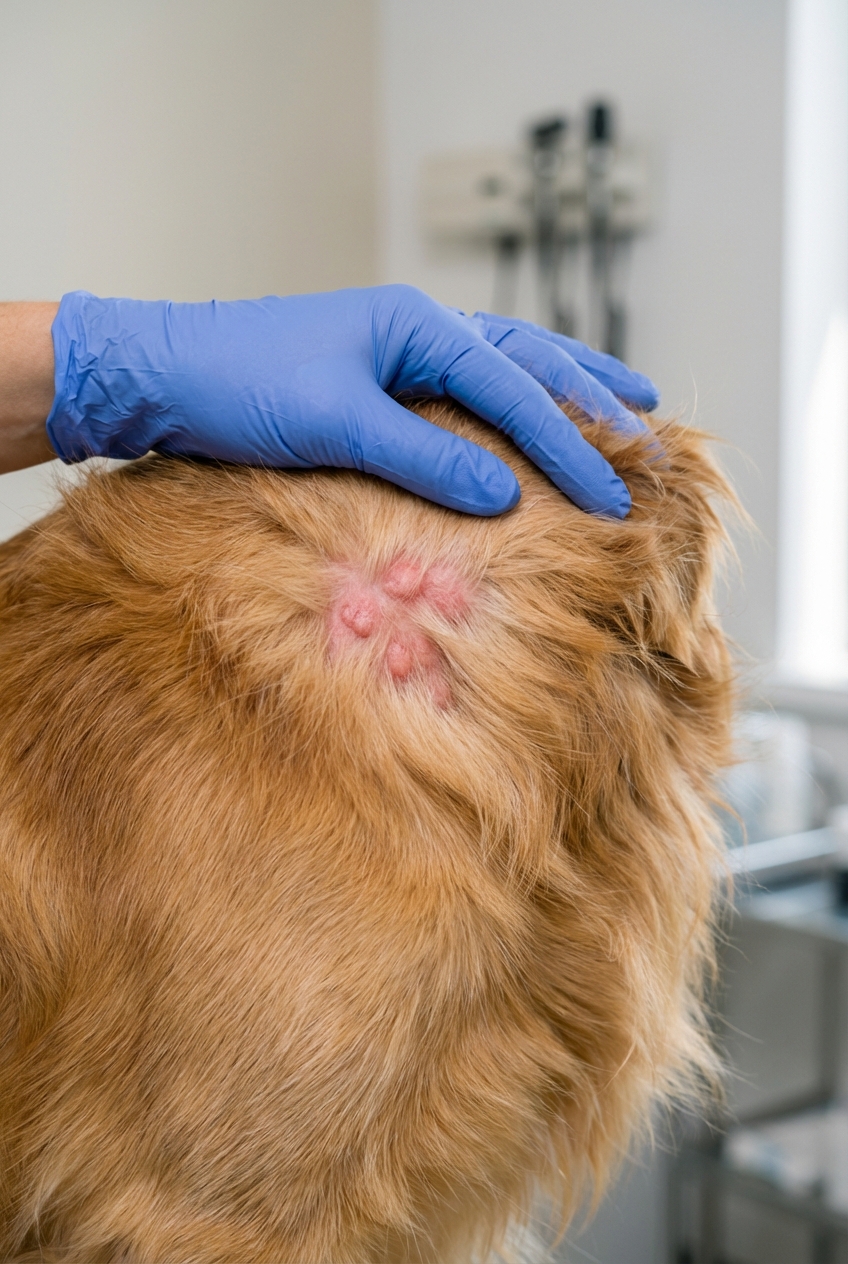
Hives are raised, swollen welts that pop up quickly due to histamine and other inflammatory chemicals released in the skin. They can be small like mosquito bites or larger and irregular. On many dogs, hives feel like “lumps you can suddenly count” under the coat.
Common hive clues
- Fast onset: minutes to a few hours after a trigger.
- Multiple welts: often scattered across the body, especially face, neck, trunk, and legs.
- Itchy: many dogs rub their face on the carpet or scratch more than usual.
- Swelling in soft areas: eyelids, lips, ears, and muzzle can puff up.
- They can move around: welts may fade in one area and show up in another as the reaction changes.
Hives are often caused by an allergic reaction. Common triggers include insect stings, vaccines, new foods or treats, certain medications, shampoos and topical products, environmental allergens (like grasses or pollen), or contact with something irritating on a walk.
What bites and stings look like
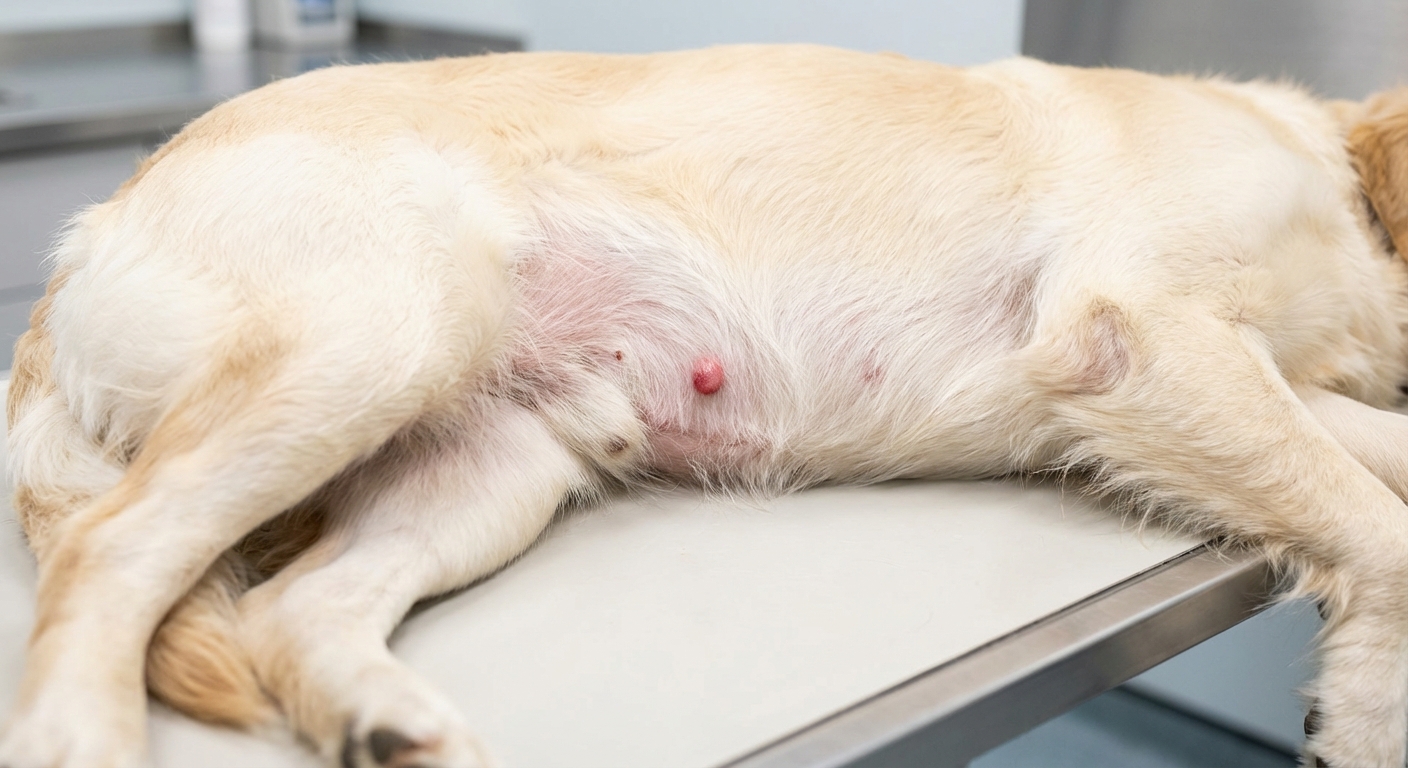
Insect bites and stings can also cause raised bumps, but the pattern tends to be more localized. You may see a central puncture, a small scab, or a cluster of bumps in one area where the insects had access. Reactions can be immediate or delayed depending on the insect and your dog’s sensitivity. Also, a sting can trigger hives in some dogs, so you may see both at once.
Common bite or sting clues
- More localized: one spot or a few spots, often on the belly, groin, legs, ears, or muzzle.
- Possible visible center: a tiny red dot, scab, or puncture can sometimes be seen.
- Targeted discomfort: your dog may lick one foot repeatedly, paw at one ear, or act sore in a specific place.
- Outdoor timing: bumps show up after time in tall grass, wooded areas, or near standing water.
Hives vs bites
Here are some practical, at-home ways to tell them apart before you call your veterinarian.
- How fast it happened: hives tend to appear rapidly and in multiple places; bites and stings can be immediate or show up over hours and may be limited to exposed areas.
- How many: hives are often widespread; bites are often fewer or clustered.
- Where they are: hives can show up anywhere; bites often show up where fur is thinner or where insects can reach.
- Itch level: both can itch, but hives often come with generalized itchiness and facial rubbing.
- Facial swelling: can happen with hives and with stings, but sudden muzzle or eyelid puffiness makes me think “allergic reaction” right away.
Emergency red flags
Most bumps are not life-threatening, but some allergic reactions can escalate quickly. Seek urgent veterinary care right away if you notice any of the following:
- Trouble breathing, noisy breathing, or excessive panting that seems abnormal
- Swelling of the face, tongue, or throat
- Repeated vomiting or severe diarrhea
- Collapse, weakness, pale gums, or acting “out of it”
- Hives plus lethargy that is new or worsening
These signs can indicate a serious reaction that needs immediate treatment.
What you can do first
If your dog is stable, breathing normally, and acting normal otherwise, you can do a few safe steps while you contact your vet for guidance.
1) Check head to tail
Part the fur and look for a stinger, a tick, or a focal puncture. Bees sometimes leave a stinger behind, and removing it quickly can help. If you see a stinger, gently scrape it out with a flat object (like a credit card) if possible. Try not to pinch or squeeze the venom sac.
2) Use a cool compress
A clean, cool compress on the area for 5 to 10 minutes can help reduce itch and swelling for both hives and bites.
3) Prevent licking and scratching
Overgrooming can turn simple bumps into hot spots. An e-collar, a recovery cone, or a well-fitted shirt can help for a day or two if your dog cannot stop licking.
4) Call your vet before meds
Many owners ask about antihistamines like diphenhydramine. Sometimes vets recommend them, but the dose depends on your dog’s weight, health history, and other medications. Also, some human products include added ingredients (like decongestants such as pseudoephedrine) and should never be used for dogs. When in doubt, call first.
What not to do at home
- Do not give human pain relievers like ibuprofen or naproxen.
- Do not apply random human creams or ointments, especially products with zinc oxide, lidocaine, or benzocaine.
- Avoid essential oils or strongly scented products on the skin.
Why dogs get hives
Hives are basically the skin’s “overreaction” to something it thinks is a threat. The most common triggers I see include:
- Insect stings (especially bees and wasps)
- Vaccines (reactions are uncommon, but they can happen)
- New foods, treats, chews, or table scraps
- Medications (including some flea and tick products)
- New shampoo, fragrance sprays, or cleaning products
- Environmental exposure like grasses, pollen, or mold
If the hives are recurring, a pattern can be very helpful. Write down what your dog ate, where you walked, any new products used, and the timing of the bumps.
Other causes of bumps
Not every bump is a hive or a bite. “Sudden bumps” can also be caused by things like cysts, warts (papillomas), abscesses, bacterial folliculitis, mites (including sarcoptic mange), ringworm, swollen lymph nodes, or tumors. One I always want owners to take seriously is a mast cell tumor, because it can sometimes look like an itchy, inflamed lump that changes size.
If you are seeing a single lump that persists, keeps growing, comes back in the same spot, bleeds, or looks ulcerated, schedule a vet visit even if your dog seems fine otherwise.
What your vet may do
Your veterinarian will usually start with a physical exam and a few key questions: when the bumps started, how fast they spread, any recent vaccines or new foods, and whether your dog has had flea exposure or recent outdoor adventures.
Common next steps
- Skin exam and coat combing for fleas, flea dirt, ticks, or mites
- Assessment for infection if bumps are pustules or oozing
- Medication to reduce allergic response or itching, if appropriate
- Treatment for parasites if fleas or mites are suspected
If your dog has repeated episodes, your vet may discuss an allergy workup, diet trial, or changes to parasite prevention. In some cases, what looks like hives can actually be a different issue, so it is worth getting eyes on it if it does not improve quickly.
Prevention tips
You cannot prevent every sting or allergy flare, but you can reduce the odds.
- Use veterinarian-recommended flea and tick prevention consistently, especially in warm months.
- Rinse paws and belly after walks if your dog reacts to grass or pollen.
- Introduce new foods slowly and stick to simple ingredient treats if your dog is sensitive.
- Avoid heavily scented products on skin and coat.
- Keep a “bump diary”: date, time, location, what changed, and photos.

When to see your vet
Make an appointment (even if your dog seems okay) if:
- Bumps last longer than 24 to 48 hours or keep returning
- Your dog develops scabs, sores, or hair loss
- There is drainage, a bad odor, or crusting
- Your dog seems painful, not just itchy
- You suspect fleas or see consistent belly or ear bumps after being outside
- You find a single persistent lump, especially one that changes size or looks irritated
If you are ever unsure whether you are seeing hives or bites, take a few clear photos in good light and call your veterinarian. A quick description of timing and where the bumps are can make triage much easier.