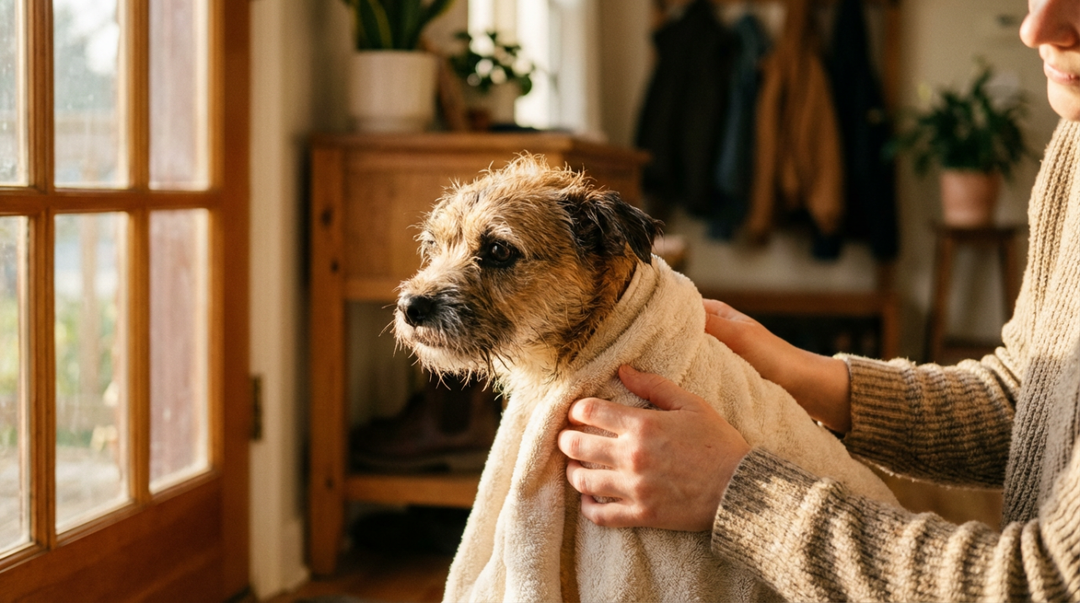
Dog shivering can be harmless—or a sign of pain, fever, poisoning, low blood sugar, or neurologic issues. Learn what to watch for, what you can do at home,...
Article
•
Designer Mixes
Dog Shivering: Pain, Anxiety, or Cold?

Shari Shidate
Designer Mixes contributor
Seeing your dog shiver can be unsettling, especially when you cannot tell if they are just chilly or if something deeper is going on. As a veterinary assistant, I like to think of shivering as a body signal, not a diagnosis. It can be as simple as being cold or excited, or it can be a clue that your dog is hurting, stressed, nauseated, or sick.
This guide cannot replace an exam, but it can help you triage what you are seeing and decide when to call your veterinarian.
Below, we will walk through the most common causes, what you can check at home, and the red flags that mean it is time to call your veterinarian.

Quick check: what does the shivering look like?
Not all shaking is the same. A fast visual check can help you decide if you can warm and watch, schedule a same-day call, or seek urgent care.
- Fine tremors (small, rapid shaking): often cold, excitement, anxiety, nausea, or mild pain.
- Whole-body shaking (like they just got wet): can be a normal release after stress or excitement, or a sign of discomfort.
- Shaking plus stiffness or a tense posture: can point toward pain, fever, toxin exposure, or neurologic issues.
- Shaking during sleep: may be normal dream activity, but frequent, progressive, or unusual episodes, especially with disorientation after waking, warrant a vet call.
Tip: If you can, take a short video. It is one of the most helpful things you can show your vet.
Cold: a very common, fixable cause
Many dogs shiver simply because they are cold. Smaller dogs, short-coated dogs, seniors, and dogs with low body fat are especially prone.
Clues your dog is cold
- Curling up tightly, tucking paws under the body
- Seeking blankets, heaters, sunny spots, or your lap
- Cold ears, paws, or belly
- Shivering that improves quickly with warmth
What to do at home
- Move your dog to a warm, draft-free area and offer a blanket.
- Use a sweater or coat outdoors in cool weather.
- Dry them thoroughly if they are wet.
- Offer a warm bed off tile or cold floors.
When cold becomes urgent: If your dog is lethargic, weak, has pale gums, seems confused, or the shivering does not improve after warming and resting for about 10 to 20 minutes, contact a veterinarian. Hypothermia can happen faster than people realize, especially in tiny dogs.

Excitement: the happy shakes
Some dogs shiver because they are simply thrilled. This often happens when you come home, right before a walk, when a favorite person arrives, or when they are waiting for a ball or treat. These “happy shakes” are usually brief and your dog otherwise looks normal.
Clues it is excitement
- Starts during greetings, play, meals, or anticipation
- Loose, wiggly body, bright eyes, normal movement
- Stops once the exciting moment passes
When to reconsider: If the trembling seems out of proportion, lasts a long time, happens at rest, or comes with hiding, panting, limping, vomiting, or weakness, treat it as a medical or anxiety sign and check in with your vet.
Pain: a quiet cry for help
Dogs do not always yelp when they hurt. Shivering can be a pain sign, although it is nonspecific and varies by dog. Pain is also commonly paired with panting, restlessness, or a stiff, guarded posture.
Clues shivering may be pain-related
- Shivering plus hunched posture or a tucked abdomen
- Reluctance to jump, use stairs, or be picked up
- Limping, stiffness, or trouble getting comfortable
- Growling, flinching, or avoiding touch
- New accidents in the house or difficulty urinating
Common painful problems behind shivering
- Back or neck pain (including intervertebral disc disease in breeds like Dachshunds)
- Arthritis, especially in older dogs or after heavy activity
- Dental pain from fractured teeth or gum disease
- Abdominal pain (pancreatitis, gastrointestinal upset, foreign body)
- Injury from slipping, falling, or rough play
Important safety note: Do not give human pain medications (like ibuprofen or naproxen). Even medications that can be used in dogs under veterinary guidance (like acetaminophen) can be dangerous with dosing errors or the wrong situation. Call your veterinarian for safe options.

Anxiety and fear: stress tremors
Just like people, dogs can tremble when they are stressed. This often shows up during thunderstorms, fireworks, car rides, vet visits, new environments, or separation.
Clues shivering may be anxiety
- Shivering starts with a trigger (loud noise, strangers, travel)
- Pacing, panting, drooling, yawning, lip licking
- Hiding, clinging to you, or trembling when approached
- Improves when the trigger ends or your dog settles in a safe place
Calming steps that help
- Create a safe “den” area with blankets and white noise.
- Use predictable routines and reward calm behavior.
- Try pressure wraps (like a snug anxiety vest) if your dog tolerates it.
- Talk with your veterinarian about evidence-based options: behavior plans, prescription anxiety meds for events, or daily support when needed.
If shivering is anxiety-driven and happening often, it is not just a “personality quirk.” Chronic stress affects sleep, digestion, and quality of life. A good plan can be truly life-changing.
Other medical causes
Cold, excitement, pain, and anxiety cover a lot, but there are several other conditions that can cause shaking or tremors.
Nausea or stomach upset
Dogs may shiver when they feel nauseated. Look for lip licking, drooling, grass eating, gulping, decreased appetite, or vomiting or diarrhea.
Fever or infection
Shivering can be chills from fever. Other clues include lethargy, decreased appetite, coughing, nasal discharge, or pain. If you suspect fever, call your vet rather than trying to treat at home.
Low blood sugar (hypoglycemia)
This is especially important for puppies and toy breeds. Low blood sugar can cause tremors, weakness, wobbliness, glassy eyes, and collapse or seizures. It can become an emergency quickly, so contact your veterinarian or an emergency clinic right away if you suspect it.
Vaccine reactions
Mild sleepiness or mild shivering can happen after vaccines. Call your veterinarian promptly if signs are severe, last more than a day, or include facial swelling, hives, vomiting, diarrhea, or trouble breathing.
Toxin exposure
Some toxins cause tremors, shaking, or seizures. Examples include certain insecticides, rodenticides, some human medications, chocolate, caffeine, cannabis products, xylitol (often found in sugar-free gum), and permethrin products labeled for cats that are used on dogs. If you suspect ingestion or exposure, seek veterinary care immediately.
Neurologic issues
Tremors can be neurologic. If your dog seems disoriented, cannot stand normally, has head tilt, abnormal eye movements, or episodes that look like seizures, seek veterinary care promptly.
Idiopathic tremors
Some dogs develop idiopathic tremors, sometimes called idiopathic generalized tremor syndrome (also known as white shaker dog syndrome). Despite the nickname, it can occur in many breeds and coat colors. These cases still require a veterinary exam to rule out other causes and to discuss treatment.

When to call the vet now
Trust your instincts. If something feels off, it is always okay to call. Seek urgent veterinary care if shivering comes with any of the following:
- Weakness, collapse, or trouble standing
- Blue, gray, or very pale gums
- Repeated vomiting, bloated abdomen, or unproductive retching
- Seizure activity, extreme disorientation, or loss of consciousness
- Suspected toxin ingestion
- Severe pain, crying, or a tense, hunched abdomen
- Rapid worsening, or shivering that does not improve with rest and warmth
- A very young puppy, senior dog, or dog with chronic illness (they have less reserve)
Before your appointment
If your dog is stable and you are monitoring at home while you arrange care, these steps help your vet help you faster:
- Record details: When did it start? How long does it last? What triggers it? Any vomiting, diarrhea, limping, coughing, appetite changes?
- Take a video of the shivering episode.
- Check the environment: cold floors, drafts, wet coat, recent bath or swim.
- List recent exposures: new treats, medications, flea products, plants, trash, or human food.
- Keep your dog calm and warm, and limit activity if pain is possible.
What not to do
- Do not give human medications unless your veterinarian directs you.
- Do not use heating pads directly against the skin (burn risk). If you use gentle heat, keep a thick layer between and supervise closely.
- Do not force exercise or stretching if pain, weakness, or a back or neck issue is possible.
- Do not delay if toxin exposure is possible.
- Do not force food or water if your dog is actively vomiting, gagging, or seems extremely nauseated.
The bottom line
Dog shivering most often comes down to cold, excitement, anxiety, or pain, but it can also signal nausea, fever, low blood sugar, toxins, or neurologic problems. If warming your dog and removing stress or excitement does not help quickly, or you see any red flags, get veterinary guidance. You are never overreacting by checking in, especially when it comes to sudden changes in your dog’s body language.