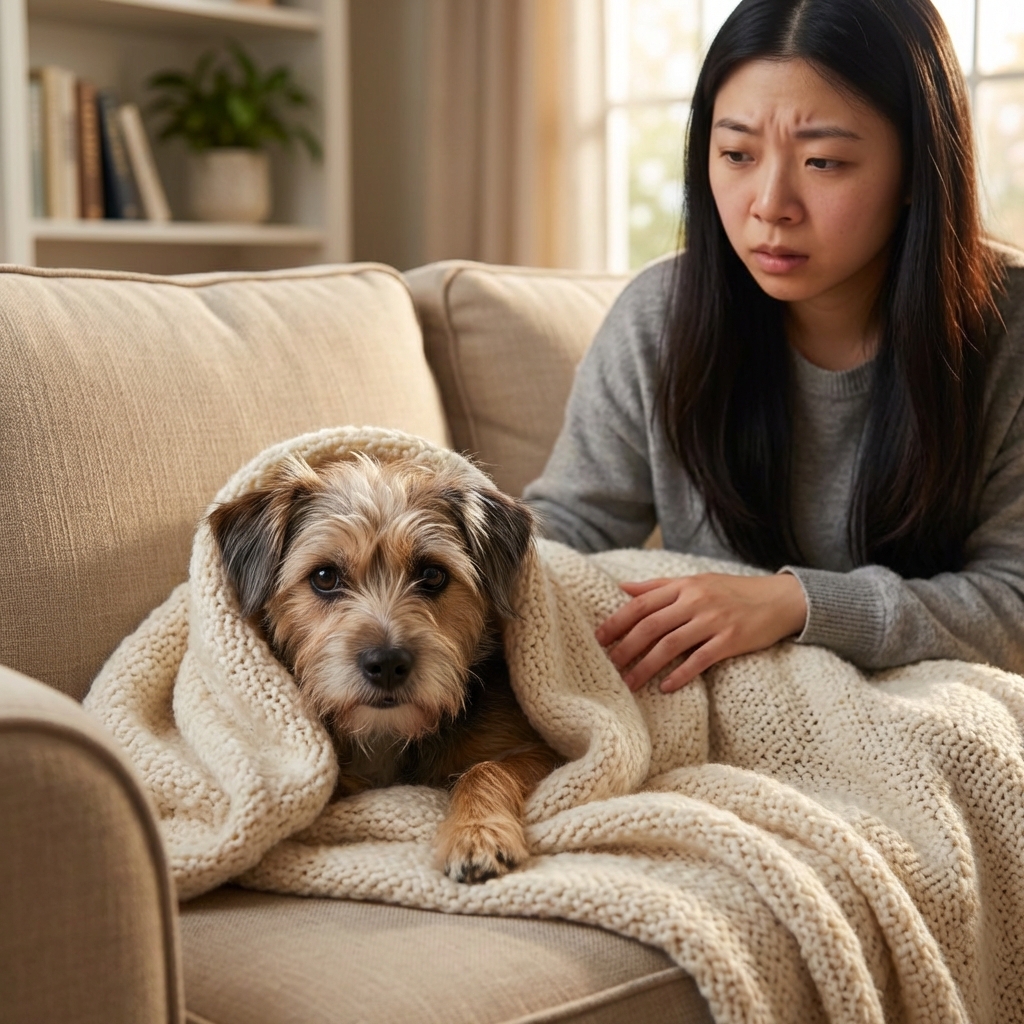
Understand the top reasons dogs shiver—from cold and excitement to pain, nausea, fever, toxins, and neurologic issues. Get a quick home check and emergency...
Article
•
Designer Mixes
Dog Shivering at Night: Causes and What Helps

Shari Shidate
Designer Mixes contributor
It’s scary when your dog shivers at night, especially when everything is quiet and you are not sure what changed. The good news is that many nighttime shivers are caused by something simple like being cold, feeling anxious, or even dreaming. But shaking can also be a sign of pain or illness, so it is worth taking a thoughtful, evidence-based look.
As a veterinary assistant, I always tell families this: your dog’s body is communicating. Your job is to notice patterns, check for easy fixes, and know when it is time to call your veterinarian.
Quick note: This article is for education and can’t diagnose your pet. If you are worried, trust your instincts and contact your veterinarian.
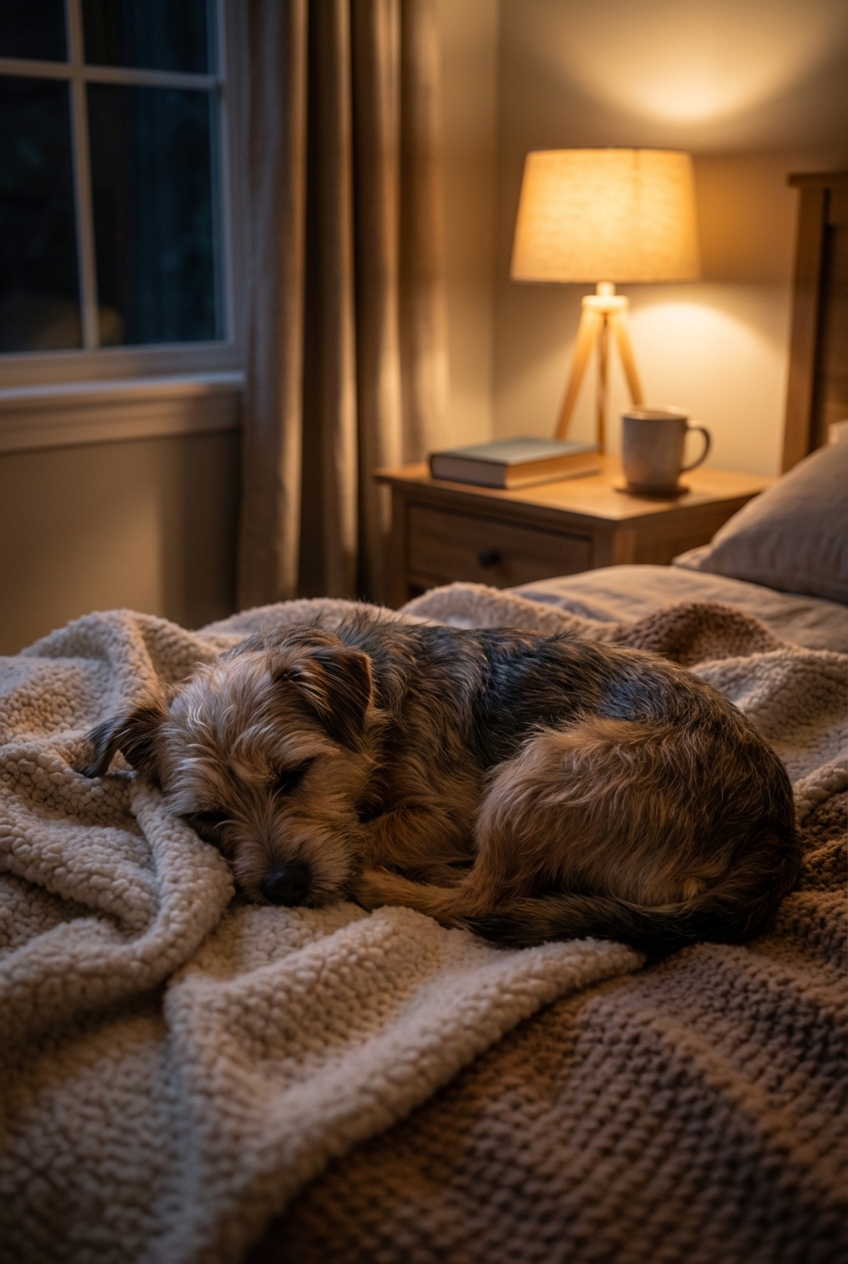
What shaking can mean
Pet owners use “shivering,” “trembling,” and “shaking” interchangeably, but they can come from different causes:
- Shivering (cold): rhythmic shaking that often improves with warmth.
- Tremors: muscle quivering that may not improve with warmth and can be linked to toxins, neurologic issues, pain, or some medications.
- Seizure activity: often includes stiffening, paddling, loss of awareness, and may involve drooling or loss of bladder or bowel control. This is urgent.
Shivering is a rhythmic muscle movement that can happen for several reasons:
- Temperature control: the body generates heat by contracting muscles.
- Stress response: adrenaline and cortisol can trigger trembling.
- Pain or nausea: discomfort can show up as shaking, especially when a dog is lying still.
- Neurologic or metabolic changes: less common, but important to recognize early.
Nighttime can make shivering more noticeable because your dog is resting, the home is cooler, and triggers like separation anxiety or pain can feel worse when things quiet down.
Common causes at night
1) Cold
This is one of the most common causes, especially for:
- Small dogs and toy breeds
- Short-haired dogs
- Senior dogs
- Puppies
- Dogs that just got a bath or were outside in cold or wet weather
Homes also tend to cool down at night, and floors can feel chilly. If the shivering improves with warmth, that is a strong clue.
2) Anxiety or noise sensitivity
Dogs can shiver when they feel uneasy. At night, you might not notice the trigger, but your dog does: distant thunder, fireworks, neighbor noise, or even a new shadowy shape in the hallway.
Clues include panting, pacing, hiding, clinginess, pinned ears, or being unable to settle.
3) Pain (including arthritis)
Pain is a big one to take seriously. Nighttime often worsens discomfort because the body is stiff after resting. Common pain-related culprits include:
- Arthritis or joint disease
- Back or neck pain (IVDD can be a concern in some breeds)
- Dental pain
- Abdominal pain (gastrointestinal upset, pancreatitis, constipation)
Watch for reluctance to jump, stiffness when standing up, yelping, guarding, a hunched posture, or changes in appetite.
4) Nausea or GI upset
Dogs that feel nauseated may tremble or shiver, especially if they are also drooling, lip-licking, swallowing repeatedly, or eating grass. Nighttime stomach upset can happen after a rich treat, a new chew, trash snacking, or diet changes.
5) Fever or infection
Just like people, dogs can shiver with a fever. Normal canine rectal temperature is often cited around 100.0–102.5°F. Many veterinarians consider a fever to be generally over 103°F, but context and the whole clinical picture matter.
You may also notice lethargy, decreased appetite, coughing, vomiting, or diarrhea. Ears and paws may feel warmer than usual, but that is not a reliable way to check for fever. A rectal thermometer is the most accurate at-home option, and your veterinarian can help you interpret the number for your dog.
Important: never give human fever reducers (like acetaminophen or ibuprofen). They can be dangerous for dogs.
6) Senior changes
Senior dogs may shiver because they get cold more easily, have arthritis, or develop cognitive changes that cause nighttime restlessness. If your dog is pacing at night, seeming confused, staring, or vocalizing, mention it to your veterinarian.
7) Low blood sugar
This is most common in very small dogs and young puppies, and can happen if they go too long without eating. Shivering can be an early sign, along with weakness, wobbliness, or acting “not quite right.” This can become urgent quickly.
8) Toxins
Some toxins cause tremors that can look like shivering, and these cases can escalate fast. Examples include:
- Chocolate, xylitol, certain medications
- Some insecticides and slug baits
- Marijuana products
- Essential oils (some can be toxic even in small amounts, including tea tree, wintergreen, clove, and pennyroyal)
If your dog shakes suddenly and seems disoriented, is vomiting, has diarrhea, or cannot stand normally, treat it like an emergency. If your publication allows, you can also contact ASPCA Animal Poison Control or Pet Poison Helpline for guidance while you are on the way to care.
9) Medication or vaccine effects
Sometimes shaking shows up after starting a new medication, after certain flea and tick products, or after vaccination. Many reactions are mild and short-lived, but any shaking that is intense, worsening, or paired with vomiting, facial swelling, hives, weakness, or breathing changes needs urgent veterinary guidance.
10) Idiopathic tremors
Some dogs develop tremor syndromes that are not caused by cold, such as idiopathic tremors (often discussed as “white shaker syndrome” in some small white breeds). These need a veterinary exam because they can look like toxin exposure or neurologic disease.
11) Metabolic or endocrine disease
Less commonly, shaking can be linked to internal medical problems. For example, Addison’s disease can cause shaking, weakness, and GI signs. Because these conditions are not obvious at home, recurring nighttime shaking is a good reason to schedule an exam.
12) Dreaming
Many dogs twitch, paddle, or make little movements during REM sleep. This is usually normal. If your dog wakes easily and acts normal right afterward, it is often just dreaming.
If movements are intense and repetitive, your dog cannot be roused, or you see rigid extension, loss of awareness, or loss of bladder or bowel control, treat it like an urgent situation and call an emergency veterinarian.

When it is an emergency
Call an emergency veterinarian right away if shaking is paired with any of the following:
- Collapse, severe weakness, or pale gums
- Difficulty breathing, open-mouth breathing at rest, or blue-tinged gums or tongue
- Repeated vomiting, a swollen belly, or unproductive retching (possible bloat or GDV)
- Suspected toxin exposure
- Seizure-like activity or your dog is not responsive
- Extreme pain, crying, or inability to get comfortable
- A very high or very low temperature (about over 104°F or under 99°F, measured rectally)
If you are unsure, it is always okay to call your veterinarian or an emergency hospital for guidance. That is what they are there for.
What helps tonight
Warmth and comfort
- Offer a blanket or move your dog to a warmer room.
- Use a sweater for small or short-haired dogs.
- Try gentle heat: a warm water bottle wrapped in a towel or a low-heat pet-safe heating pad. Make sure your dog can move away from it.
- Lift them off cold floors with a thicker bed.
Build a calm routine
- Keep bedtime consistent.
- Use white noise to mask outdoor sounds.
- Dim lighting and reduce stimulation in the hour before sleep.
- If your dog is noise-phobic, talk to your veterinarian about behavior plans and safe calming options.
Quick head-to-tail check
Without poking or stressing your dog, look for:
- Limping, stiffness, or guarding
- Swollen abdomen
- Vomiting, diarrhea, drooling
- Signs of a painful mouth (pawing at face, dropping food)
- Recent access to trash, chews, new supplements, people food, medications, or new flea and tick products
If low blood sugar is possible
If you have a tiny dog or puppy and they are alert but shaky, offer a small snack. Some veterinarians may recommend a quick sugar source (for example, a small amount of corn syrup rubbed on the gums) as a short-term bridge while you seek care.
Safety note: if your dog is weak, very sleepy, choking, or not swallowing normally, do not put food or liquid in their mouth due to aspiration risk. Go in right away.
Track patterns
Write down:
- When the shivering starts and how long it lasts
- Any triggers (storms, bedtime separation, after exercise, after meals)
- Other symptoms (panting, whining, vomiting, limping)
- Diet changes, treats, chews, supplements, vaccines, or medications
If shaking stops with warmth and your dog otherwise acts normal, it is often a comfort issue. If it keeps happening, gets worse, or comes with other symptoms, that is your cue to schedule a vet visit.
When to see your vet
Make an appointment if:
- Shivering happens repeatedly over several nights
- Your dog seems painful, stiff, or less active
- There are appetite changes, weight loss, increased drinking, or bathroom changes
- Your dog is a senior and nighttime behaviors are changing
- You suspect nausea, dental pain, or an underlying illness
- Your dog recently started a new medication or flea and tick product and shaking began after
Your veterinarian may recommend an exam, pain assessment, temperature check, bloodwork, or imaging depending on the history. The goal is not just to stop the shaking, but to treat the reason it is happening.
Prevention tips
- Keep them cozy: a supportive bed, warm blanket, and a draft-free sleep spot.
- Support joints: maintain a lean body weight and ask your vet about safe mobility support if arthritis is suspected.
- Feed smart: avoid late-night rich treats, sudden diet changes, and fatty table scraps.
- Reduce stress: consistent routines and safe spaces help sensitive dogs settle.
- Do regular health checks: dental care and wellness exams catch problems earlier.
Bottom line
Dog shivering at night is often caused by cold, stress, or normal sleep movements, and simple comfort steps can make a big difference. But shaking can also be an early sign of pain, nausea, fever, toxin exposure, or something more serious. If your dog looks unwell, seems painful, or the shaking is new and persistent, your veterinarian is your best next step.