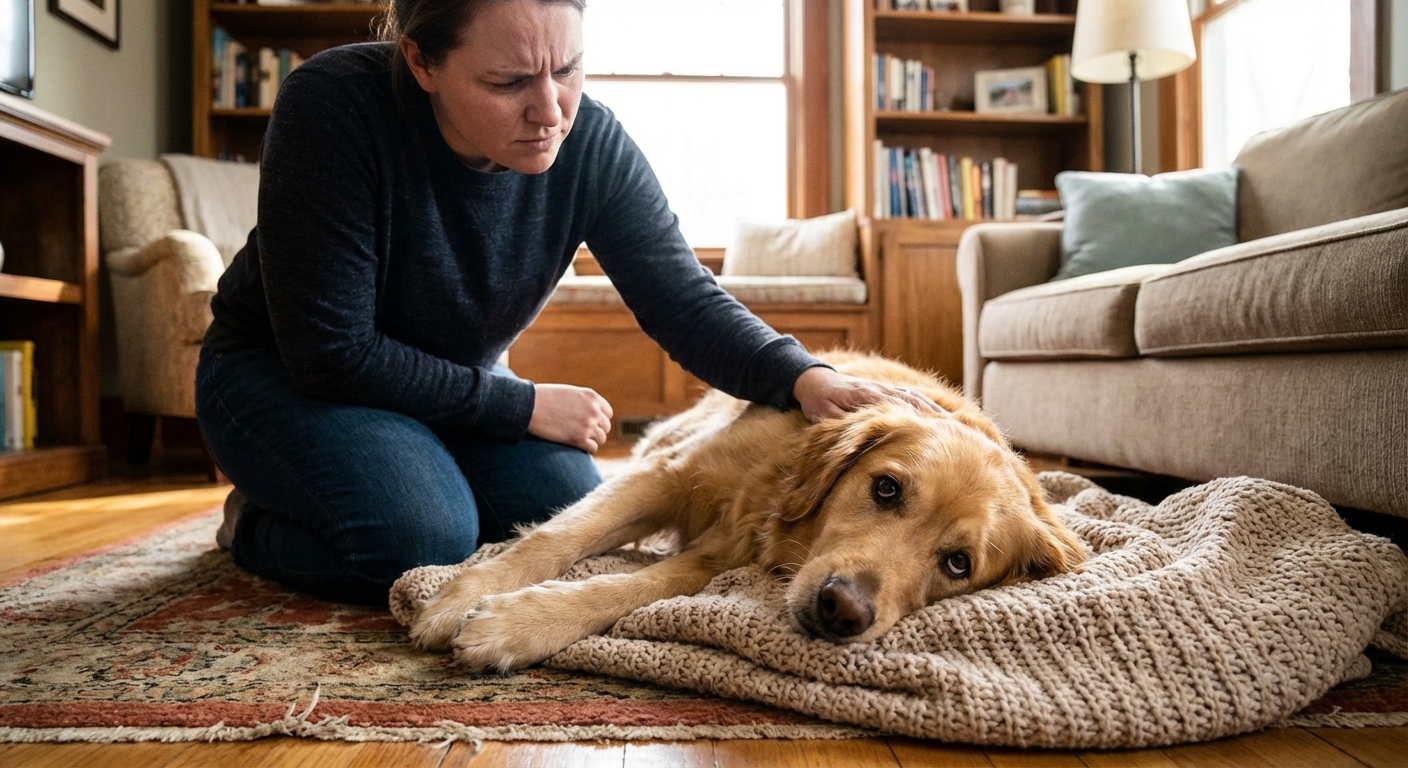
A step-by-step guide to caring for your dog after a seizure: what the postictal phase looks like, immediate safety tips, cooling advice, seizure logging, and...
Article
•
Designer Mixes
Dog Seizures: Grand Mal vs. Focal and What to Do

Shari Shidate
Designer Mixes contributor
Seeing your dog have a seizure is one of the scariest moments a pet parent can experience. I have been in the room for these emergencies as a veterinary assistant in Frisco, Texas, and I want you to know two things right away: most seizures are time-limited, and what you do in the first few minutes can truly help your dog stay safe.
Quick note: This article is educational and not a substitute for veterinary care. If you are worried, it is always appropriate to call your veterinarian or an emergency clinic for guidance.
In this article, we will walk through two common seizure types you may hear your vet talk about, grand mal (generalized tonic-clonic) and focal (partial), plus exactly what to do during and after an episode.

Seizure basics
A seizure happens when there is abnormal electrical activity in the brain. That burst of activity can affect the whole body or just one area, depending on what part of the brain is involved.
It is also easy to confuse seizures with other events, especially the first time you see one. Here are a few common look-alikes:
- Fainting (syncope): Often related to heart rhythm problems. Dogs may suddenly collapse, look limp, and recover quickly.
- Vestibular episodes: Dogs can look dizzy, tilt their head, and stumble, sometimes with nausea. This can look dramatic but is not typically a seizure.
- Muscle tremors or shivering: Can occur from pain, anxiety, cold, toxins, or neurologic issues.
If you are unsure, record a short video if it is safe to do so. A clear clip is incredibly helpful for your veterinarian.
Grand mal seizures
Grand mal seizures are what most people picture when they think “seizure.” The abnormal brain activity involves both sides of the brain, so you often see full-body signs.
Common signs
- Sudden collapse
- Stiffening (tonic phase) followed by paddling or jerking (clonic phase)
- Jaw chomping
- Drooling or foaming
- Loss of bladder or bowel control
- Not responsive to your voice during the episode
Many dogs have a brief “before” phase called an aura (restlessness, clinginess, hiding, whining) and a recovery phase called the post-ictal period (confusion, pacing, temporary blindness, hunger, or sleepiness). The post-ictal phase can last minutes to hours.
Focal seizures
Focal seizures begin in one area of the brain, so signs can be more subtle and may affect only one part of the body. Some focal seizures stay focal. Others spread and become generalized (often called focal seizures with secondary generalization), turning into a grand mal seizure.
Common signs
- Facial twitching, lip smacking, or chewing motions
- One ear or one side of the face repeatedly twitching
- One limb jerking or “paddling” while the dog is otherwise upright
- Staring or seeming “zoned out”
- Odd behaviors such as snapping at the air, fly-biting, sudden fear, or frantic licking
Because focal seizures can look like “weird moments,” they are sometimes dismissed. If you see repeated episodes with a similar pattern, that is a strong clue you should talk with your veterinarian.

What to do during a seizure
Your goal is simple: keep your dog safe and time the episode.
1) Stay calm and start a timer
Many seizures last under 2 to 3 minutes, even though it feels much longer. Timing matters because seizure length helps your vet assess urgency and treatment.
2) Protect your dog from injury
- Move furniture away if you can do it safely.
- Block access to stairs.
- Place a folded blanket or pillow near your dog’s head if they are thrashing, but do not put anything in their mouth.
3) Keep hands away from the mouth
Dogs do not swallow their tongues during seizures. But they can bite unintentionally, even the gentlest dog.
4) Reduce stimulation
- Dim the lights.
- Turn off the TV.
- Keep other pets and children out of the room.
5) Do not restrain or give human meds
- Do not restrain your dog. You can get hurt, and your dog can get injured.
- Do not give human medications unless a veterinarian has specifically instructed you to do so.
6) Video if safe
If you can safely record, a 10 to 30 second clip that shows the face and body can be more useful than a longer video.
When it is an emergency
Some seizure situations need urgent veterinary care because prolonged seizure activity can raise body temperature and lead to complications. If you are on the fence, you can call an emergency clinic for guidance. They would rather you call than wait.
Go to an emergency vet now if:
- The seizure lasts more than 5 minutes.
- Your dog has two or more seizures in a day or seizures that are close together (often called cluster seizures).
- Your dog does not seem to recover normally, or you are seeing repeated disorientation that does not improve.
- Your dog had a seizure and also has known toxin exposure, head trauma, or trouble breathing.
- This is your dog’s first seizure, especially if they are very young, very old, pregnant, or have other health problems.
If you are heading in, call the clinic from the car if possible so they can be ready when you arrive.
What to do after the seizure
The post-seizure period can be confusing for dogs. They may pace, bump into things, vocalize, or seem restless.
Help them recover safely
- Keep them in a quiet, dim room and block stairs.
- Offer water once they are fully awake and coordinated.
- Hold off on food until they seem steady, unless your veterinarian has advised otherwise.
- Stay nearby, speak softly, and avoid sudden handling if your dog seems disoriented.
Heat safety
Seizures can raise body temperature, especially if they are long or happen back-to-back. If your dog feels hot, you can offer a cool, quiet environment and a fan. Avoid ice baths or forcing cold water into the mouth. If the seizure was prolonged or your dog seems overheated, that is an emergency.
Write down details for your vet
- Time the seizure started and ended
- What your dog was doing right before it happened
- What you observed (stiffening, paddling, twitching, drooling, urination)
- How long the post-ictal confusion lasted
- Any possible triggers (missed medication, stress, sleep deprivation, new flea products, scavenging, exposure to cannabis products or human medications)
Why seizures happen
Seizures are a symptom, not a single disease. The most common categories veterinarians consider include:
- Idiopathic epilepsy: A common cause in otherwise healthy dogs, often starting between about 6 months and 6 years of age. Some breeds and mixes may be more predisposed.
- Structural brain disease: Inflammation, infection, trauma, or tumors.
- Metabolic causes: Low blood sugar, liver shunts or severe liver disease, kidney disease, electrolyte abnormalities.
- Toxins: Certain human medications, illicit substances (including THC), xylitol, some insecticides, and other exposures. Some toxins cause seizures directly, while others can lead to seizures secondarily (for example, xylitol can cause dangerous low blood sugar).
That is why your vet may recommend bloodwork, urinalysis, blood pressure, and sometimes imaging like MRI, depending on your dog’s age, exam findings, and seizure pattern.
Vet diagnosis and treatment
Your veterinarian’s plan will depend on seizure frequency, severity, and what is suspected as the underlying cause.
What to expect at the vet (especially after a first seizure)
- A detailed history (what you saw, how long it lasted, any possible exposures)
- Physical and neurologic exam
- Baseline labs (CBC, chemistry, electrolytes, glucose)
- Urinalysis in many cases
- Bile acids testing if liver issues are suspected
- Advanced imaging (MRI or CT) and spinal fluid testing in certain cases
Common treatment approaches
- Emergency medications to stop an active seizure (often benzodiazepines given by a veterinarian).
- Rescue medications at home: some vets prescribe rectal diazepam or intranasal midazolam for certain dogs prone to clusters. Ask your veterinarian if your dog should have a home “seizure rescue” plan.
- Daily anti-seizure medications if seizures are frequent, severe, or clustering. Common examples include phenobarbital, levetiracetam (Keppra), potassium bromide, and zonisamide. Your vet will discuss options, monitoring, and side effects.
- Addressing the cause when possible (treating metabolic problems, stopping toxin exposure, treating infections).
Many dogs with epilepsy live happy lives with the right plan and follow-up. The key is teamwork: your observations at home plus your vet’s medical guidance.
Home care tips
Not all seizures can be prevented, but you can reduce risks and improve your dog’s safety.
- Medication consistency matters. Give seizure medications exactly as prescribed. Do not stop suddenly without veterinary guidance.
- Make the home safer. Use baby gates near stairs and avoid leaving a dog with uncontrolled seizures on high furniture unattended.
- Track episodes. A simple seizure journal in your phone helps you notice patterns and share accurate data.
- Avoid known triggers when possible. Some dogs are triggered by stress, sleep disruption, or certain products. Share any pattern you notice with your vet.
- Talk nutrition and supplements with your veterinarian. Some dogs benefit from targeted strategies, but it is important to avoid interactions with prescription anti-seizure drugs.
If your dog has had a seizure, please do not “wait and see” for weeks. A timely vet visit helps rule out dangerous causes and gives you a plan that can bring peace of mind.
Quick checklist
- Start a timer
- Clear the area, block stairs
- Keep hands away from the mouth
- Do not restrain
- Dim lights, lower noise
- Video if safe
- Call emergency care if longer than 5 minutes or if clustering
- Write down details for your vet

Sources
- American College of Veterinary Internal Medicine (ACVIM) resources on seizure disorders and idiopathic epilepsy in dogs.
- American Veterinary Medical Association (AVMA) client education materials on seizures and emergency care.
- Merck Veterinary Manual: Seizures and epilepsy in dogs, diagnostic and treatment overviews.