A practical, vet-informed plan to help your dog lose weight safely: check Body Condition Score, measure meals, set calories, manage treats, add gentle walks,...
Article
•
Designer Mixes
Dog Safe Vegetables That Support Weight Loss

Shari Shidate
Designer Mixes contributor
If your dog needs to slim down, vegetables can be one of the simplest, gentlest tools to support the plan. I see it all the time in veterinary settings: dogs feel hungrier on a calorie-restricted routine, and families feel guilty. The good news is that many dog-safe veggies add volume, water, and fiber with very few calories, so your pup can feel more satisfied while you stay on track.
Vegetables are not meant to replace balanced protein, essential fats, and the vitamins and minerals your dog needs. Think of them as smart add-ins that help you reduce calories while still feeding real food.
How vegetables help with weight loss
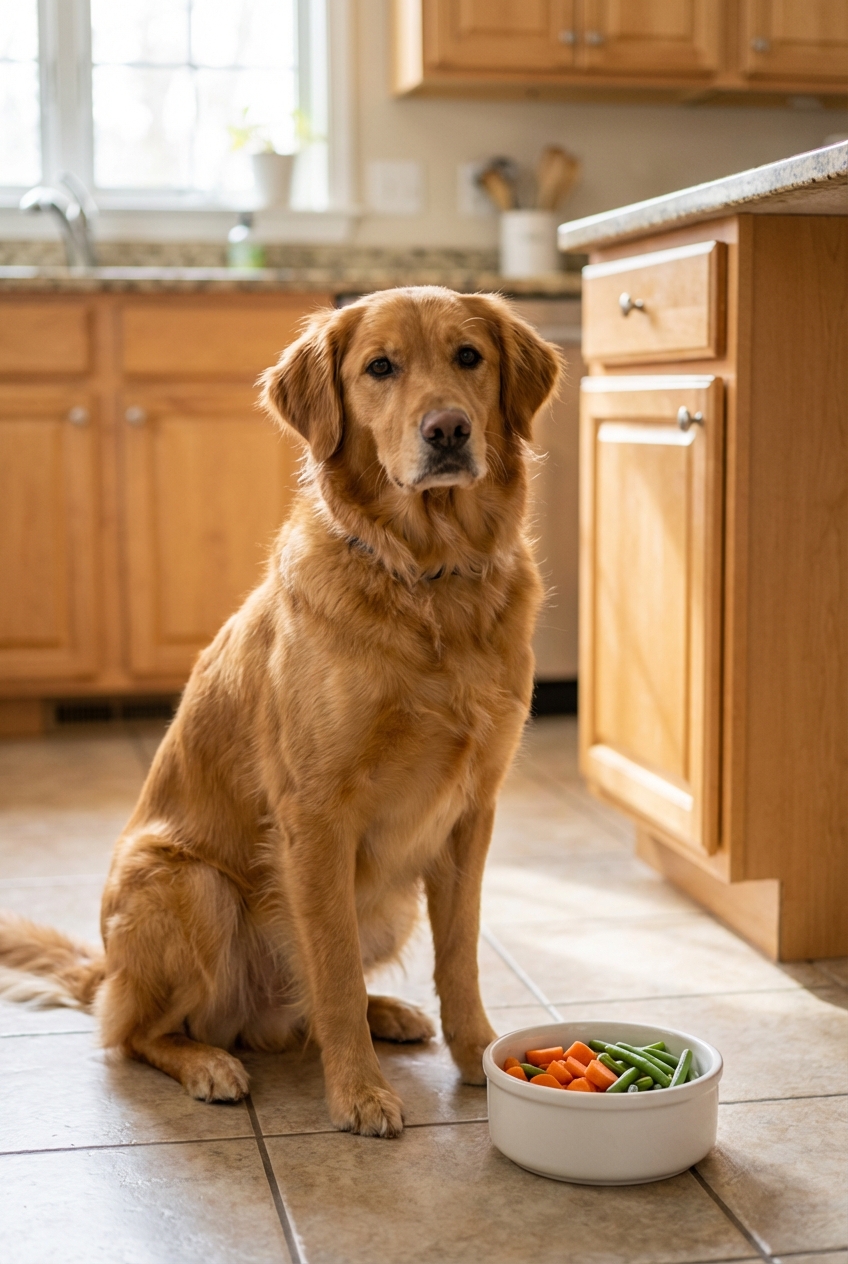
- Low-calorie, high-volume: Many veggies are mostly water, so they fill the bowl without adding many calories.
- Fiber supports fullness: Fiber helps some dogs feel satisfied between meals and may help regulate bowel movements.
- More chewing and slower eating: Crunchy options can slow fast eaters and make meals feel more substantial.
- Nutrient support: Veggies contribute antioxidants and micronutrients that support overall wellness during a weight-loss plan.
Important: Weight loss still comes down to calorie control. Vegetables support the plan, but portions and treats matter just as much. A common guideline is keeping treats at under 10% of daily calories, unless your veterinarian recommends otherwise.
Best dog-safe vegetables for weight loss
These are widely used, generally well-tolerated choices that work well as toppers or treats. Introduce one at a time, start small, and increase slowly over several days to help prevent gas or diarrhea. Keep an eye on stool quality.
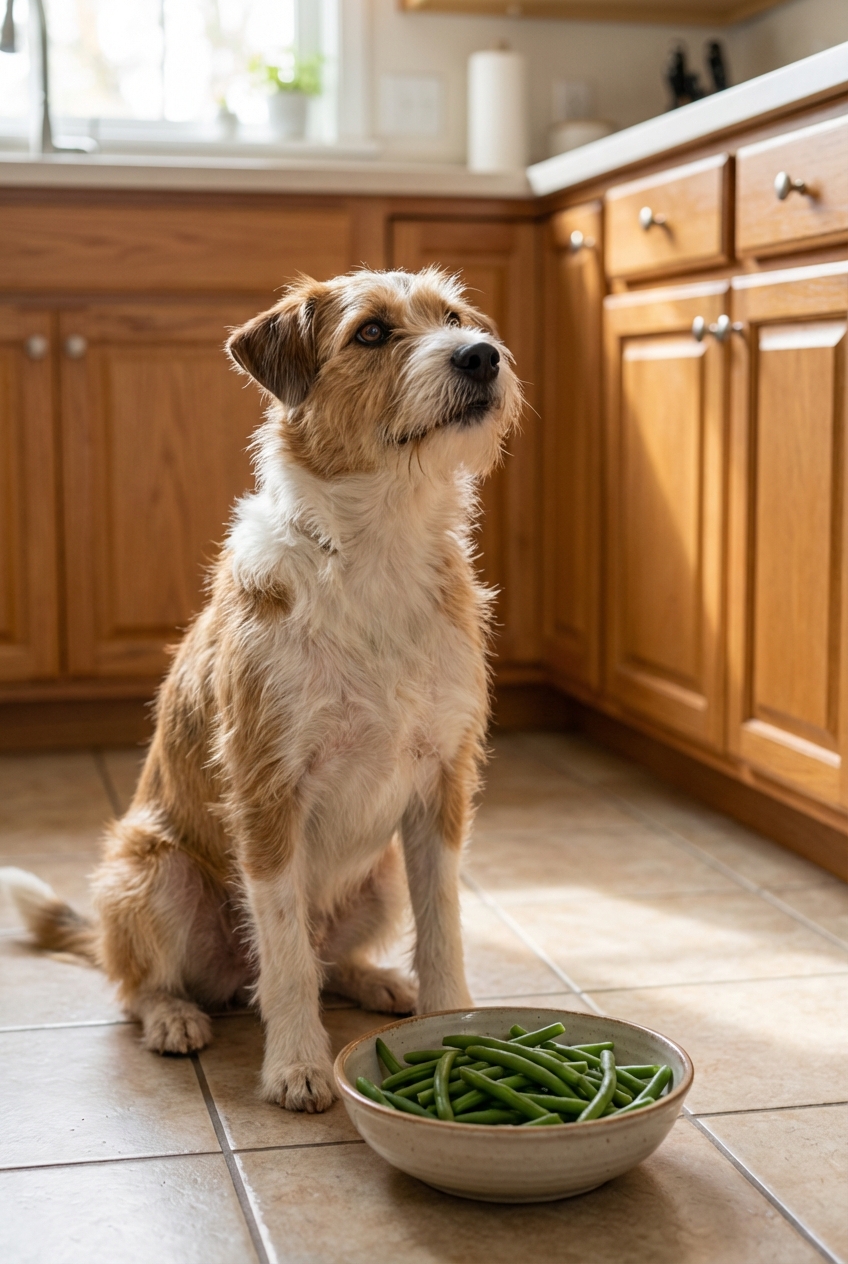
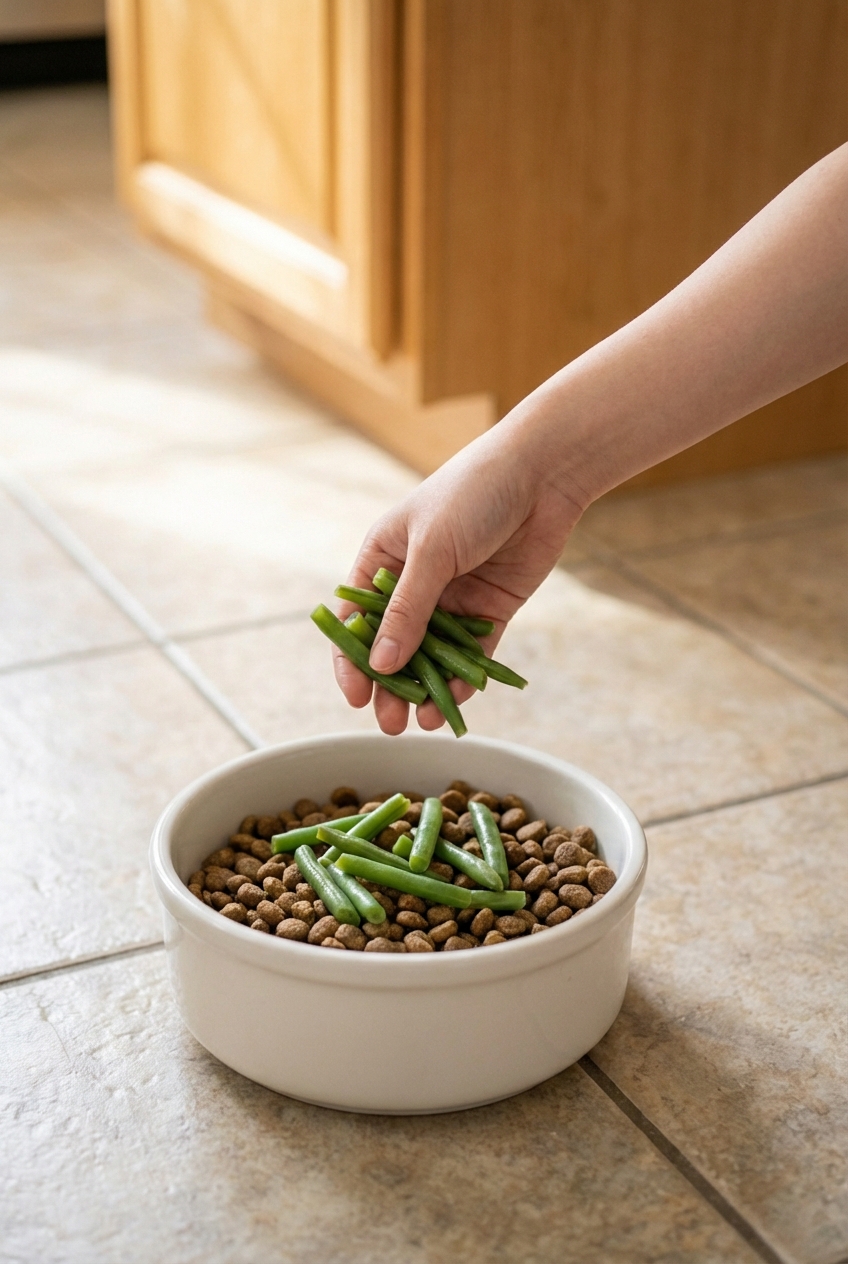
Green beans
Green beans are a classic for a reason: low-calorie, satisfying, and easy to serve. Choose plain fresh, steamed, or no-salt-added canned.
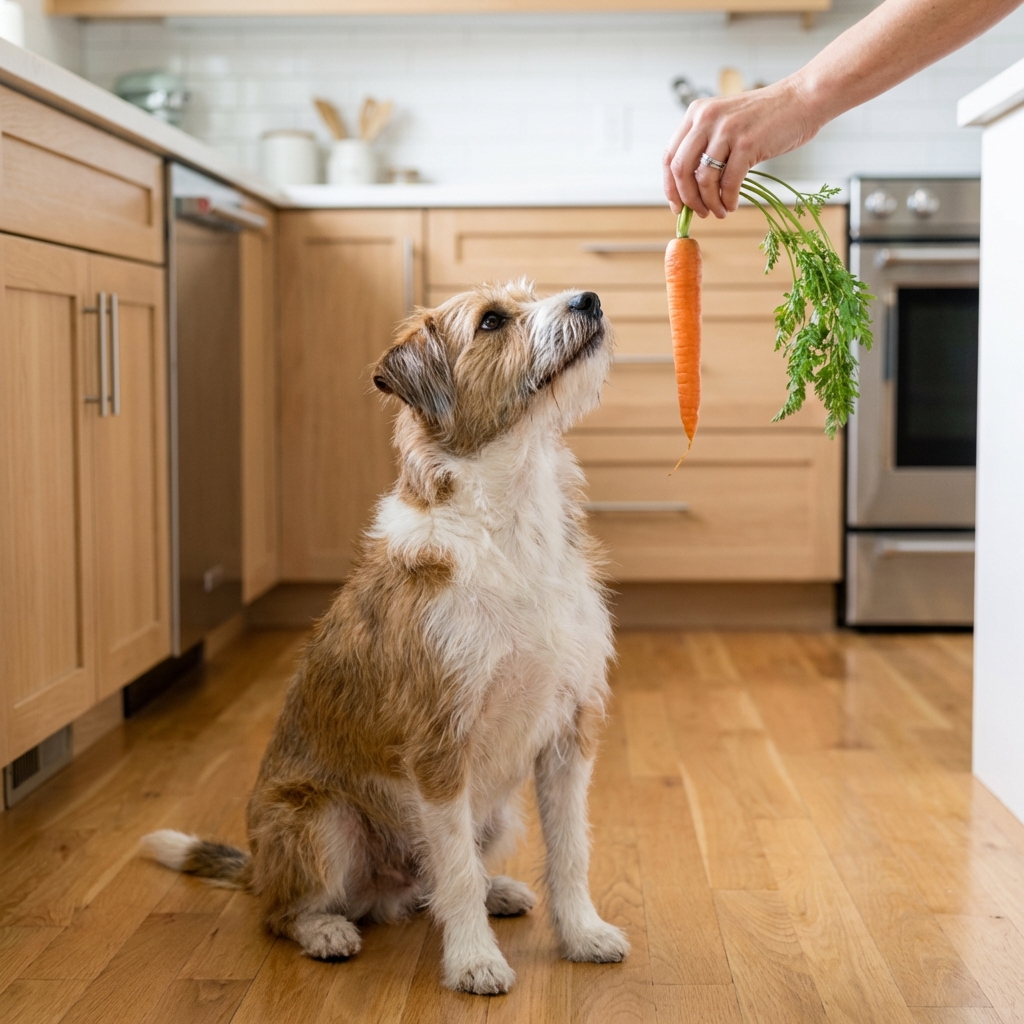
Carrots
Carrots are crunchy and naturally sweet, which makes them a great treat swap. Serve raw sticks for crunch or lightly steamed for easier chewing and digestion.
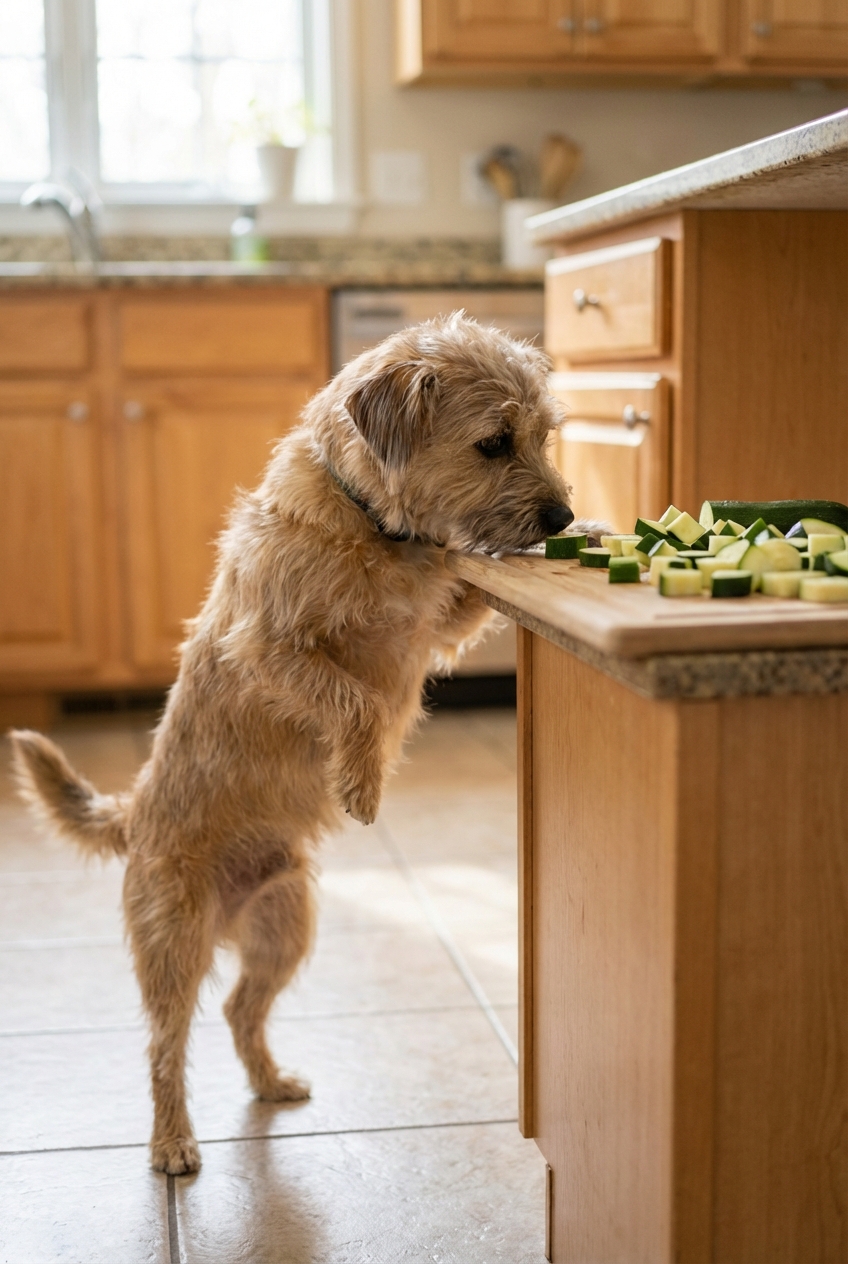
Zucchini
Zucchini is mild and usually easy on the stomach. It is mostly water and can add bulk to meals. Lightly cook if your dog is sensitive.
Cucumber
Cucumbers are very low-calorie and hydrating. Slice them into thin coins to reduce choking risk, especially for enthusiastic eaters.
Broccoli (small amounts)
Broccoli offers fiber and nutrients, but it can cause gas in some dogs. In larger amounts, broccoli can irritate the GI tract, so keep portions small and serve cooked for easier digestion.
Cauliflower
Cauliflower is another low-calorie, high-volume option. Many dogs do well with it lightly steamed and chopped, but too much can cause gassiness.
Leafy greens (spinach, kale in moderation)
Leafy greens can be nutrient-dense, but they are best as a small portion of the meal. Moderation matters because some greens (like spinach) are higher in oxalates, and others (like kale) can be a bit harder on sensitive stomachs. Light cooking and fine chopping can improve tolerance.
Celery
Celery is crunchy and low-calorie. Slice thin to avoid stringy pieces that some dogs gulp.
How much to feed
Every dog is different, and your vet should guide weight-loss goals, especially if your dog has other health conditions. As a general starting point, many dogs do well when vegetables make up a modest part of the meal.
- Start with 1 to 2 tablespoons of a single veggie for small dogs, or 2 to 4 tablespoons for medium to large dogs.
- If stools stay normal, slowly work up over 1 to 2 weeks.
- A common target is about 10% to 15% of the meal as vegetables, depending on your dog’s overall diet and tolerance. If your dog eats a complete-and-balanced diet, avoid replacing too much of it with vegetables. Do not exceed about 10% of daily calories from extras unless your veterinarian formulates the plan.
If your dog gets gassy, has loose stool, or seems uncomfortable, scale back and try a different vegetable.
How to prepare vegetables
- Keep it plain: No butter, oil, salt, garlic powder, onion powder, or seasoning blends.
- Cook for digestibility: Light steaming often helps dogs digest veggies more easily.
- Chop small: Helps prevent choking and can improve digestibility and tolerance.
- Use as a topper: Mix into the meal to increase volume without turning it into a separate snack habit.
- Freeze for a long-lasting treat: Frozen green beans or carrot sticks can be a soothing chew for many dogs.
Vegetables to avoid
Some vegetables are unsafe, and others are safe only in certain forms or amounts. When in doubt, ask your veterinarian.
- Onions, garlic, leeks, chives: Can damage red blood cells and cause serious illness.
- Wild mushrooms: Toxicity risk is high. Avoid.
- Raw potatoes and green potato skins: Can contain solanine. Avoid.
- Corn on the cob: The cob can cause life-threatening obstruction.
- Very large amounts of cruciferous veggies: Broccoli, cauliflower, cabbage can cause gas and stomach upset in some dogs.
Common add-in dangers
These are not vegetables, but they are common kitchen add-ins people reach for when trying to feed healthier. They can be dangerous for dogs.
- Grapes and raisins: Can cause kidney failure in some dogs.
- Avocado: Can trigger vomiting or diarrhea in some dogs, and the pit is a choking and obstruction hazard.
- Xylitol: Found in some sugar-free foods and some peanut butters, and it can be life-threatening. Always check labels.
A simple veggie swap plan
If your dog is currently eating a full portion of kibble or a calorie-dense homemade meal, a helpful strategy is to replace a small amount of the higher-calorie food with low-calorie vegetables, while keeping protein and essential nutrients in mind.
- Step 1: Measure your dog’s current food for accuracy.
- Step 2: Replace a small portion of the meal with steamed green beans or zucchini (start with a spoonful or two).
- Step 3: Recheck weight and body condition every 2 to 4 weeks.
Tip from a veterinary assistant: the scale does not lie, but it does take time. Slow, steady weight loss is safer for your dog’s joints, liver, and overall health.
When to call your veterinarian
Get professional guidance if your dog is gaining despite calorie control, seems constantly ravenous, or has symptoms like vomiting, diarrhea, coughing, exercise intolerance, or sudden behavior changes. Also ask before making major diet changes if your dog has diabetes, pancreatitis history, kidney disease, food allergies, or is on prescription food.