If your dog growls near the food bowl, don’t punish it. Learn what resource guarding looks like, why it happens, and safe training steps to prevent bites a...
Article
•
Designer Mixes
Dog Resource Guarding: Step-by-Step Tips You Need

Shari Shidate
Designer Mixes contributor
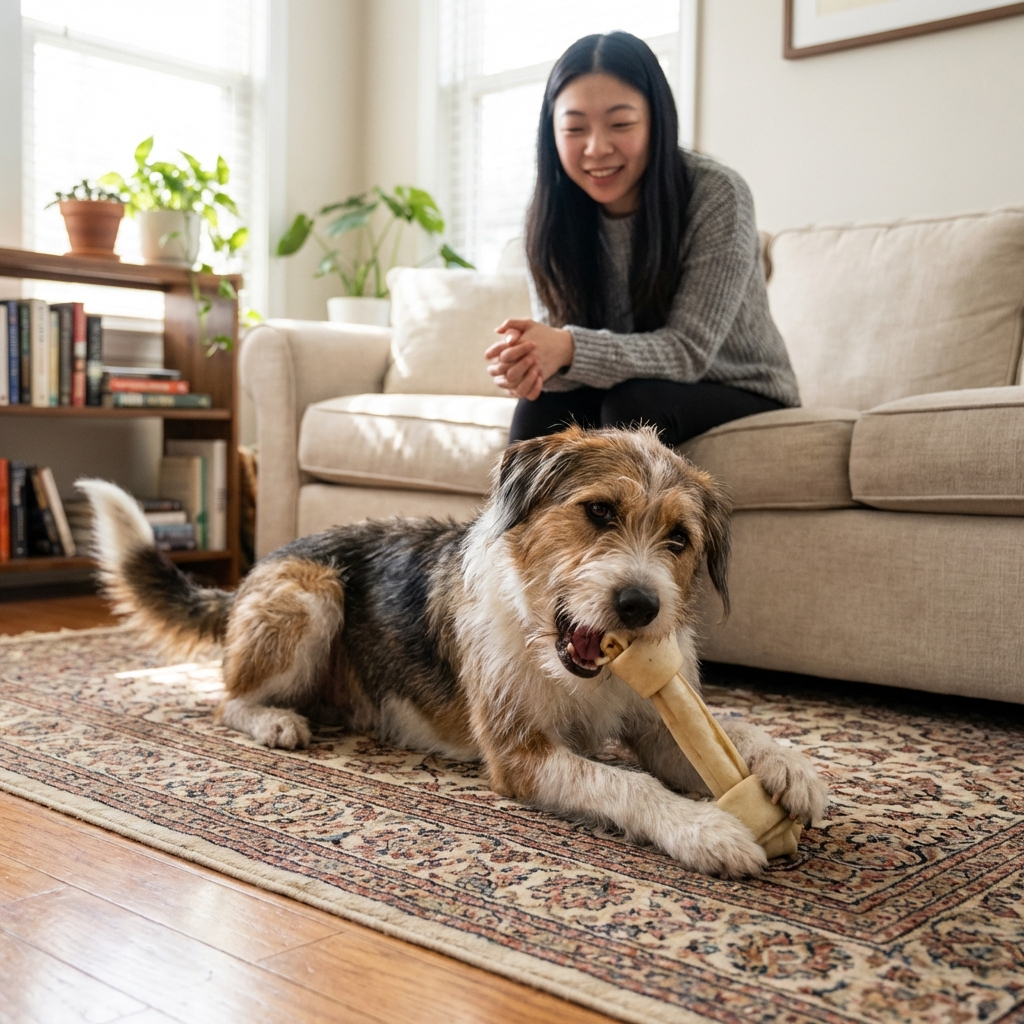
Resource guarding (sometimes called possessive aggression) is when a dog uses threats like stiffening, growling, snapping, or biting to keep something they value, like food, a chew, a toy, a bed, or even a person. As a veterinary assistant in Frisco, Texas, I want you to know two things can be true at once: this behavior is common, and it is absolutely something you can improve with the right plan.
Because resource guarding can escalate quickly, safety comes first. Then we teach your dog that humans coming near their prized item predicts good things, not loss.
What it looks like
Many families do not notice early warning signs because the first big “aha” moment is a snap. Your dog usually tries to communicate long before that.
- Early signs: freezing, clamping down on the item, side-eye, hovering over the food bowl, moving away with the item
- Clear warnings: hard stare, lip lift, growl, baring teeth
- Escalation: air snap, lunge, bite
Growling is information. It is your dog saying, “I am uncomfortable.” If we punish the growl, we do not fix the discomfort. We just remove the warning, which can make bites more sudden.
Why it happens
Resource guarding is rooted in normal canine survival behavior. Some dogs are more sensitive due to genetics, early experiences, fear, anxiety, pain, or unpredictable handling around food and valued items. Rescue dogs may be more likely to guard if they experienced scarcity or competition, but owned-from-puppy dogs can guard too. It does not mean you “raised them wrong.”
Common triggers include:
- People reaching toward a bowl, chew, or toy
- Kids moving quickly near the dog’s space
- Dogs competing over high-value items
- Trying to take an item away without a trade
- Stress, illness, or pain lowering the dog’s tolerance
Safety first
If your dog has growled, snapped, or bitten around resources, treat this like a management issue first, training issue second. Management prevents rehearsals, and rehearsals strengthen the habit.
- Stop taking items by force. No grabbing from the mouth, no looming over the bowl.
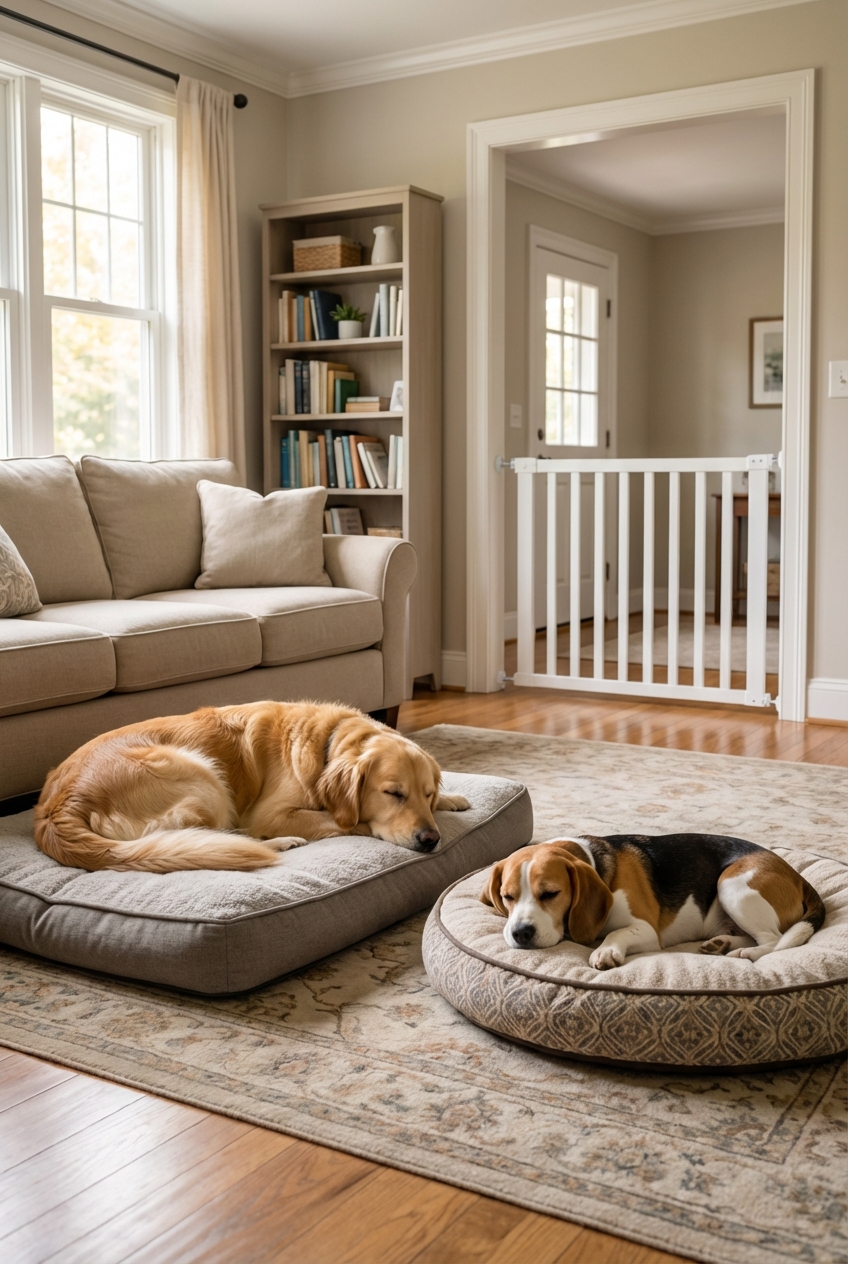
- Separate when needed. Feed in a quiet room, use baby gates, crates, or closed doors.
- Kid safety: kids should never approach a dog eating or chewing. Period.
- Pick up guardable items when you cannot supervise (chews, bones, favorite toys).
- Use a leash indoors if needed to guide your dog away without reaching.
- Make a bite plan. If there has been a bite, consult your vet and a credentialed trainer promptly.
If your dog guards their food, do not “test” them by touching the bowl. Testing increases risk and stress for everyone.
Training that helps
The goal is to change your dog’s emotional response from “Uh oh, you are going to take my thing” to “Yay, humans approaching means bonus treats.” This is typically done with desensitization and counterconditioning.
Important safety note: If your dog has a bite history, guards intensely, or you feel unsure at any point, do not do hands-on exercises around food or chews. Use management and work with a qualified behavior professional so everyone stays safe.
Step 1: Find the threshold
Threshold is the distance where your dog can notice you near the item and still stay relaxed. Signs they are over threshold include freezing, hovering, gulping faster, growling, or showing whale eye. Start farther away than you think you need.
Step 2: Start low value
Begin with something mildly interesting, not the object your dog would defend most. Think a basic toy instead of a bully stick.
Step 3: Approach, toss, leave
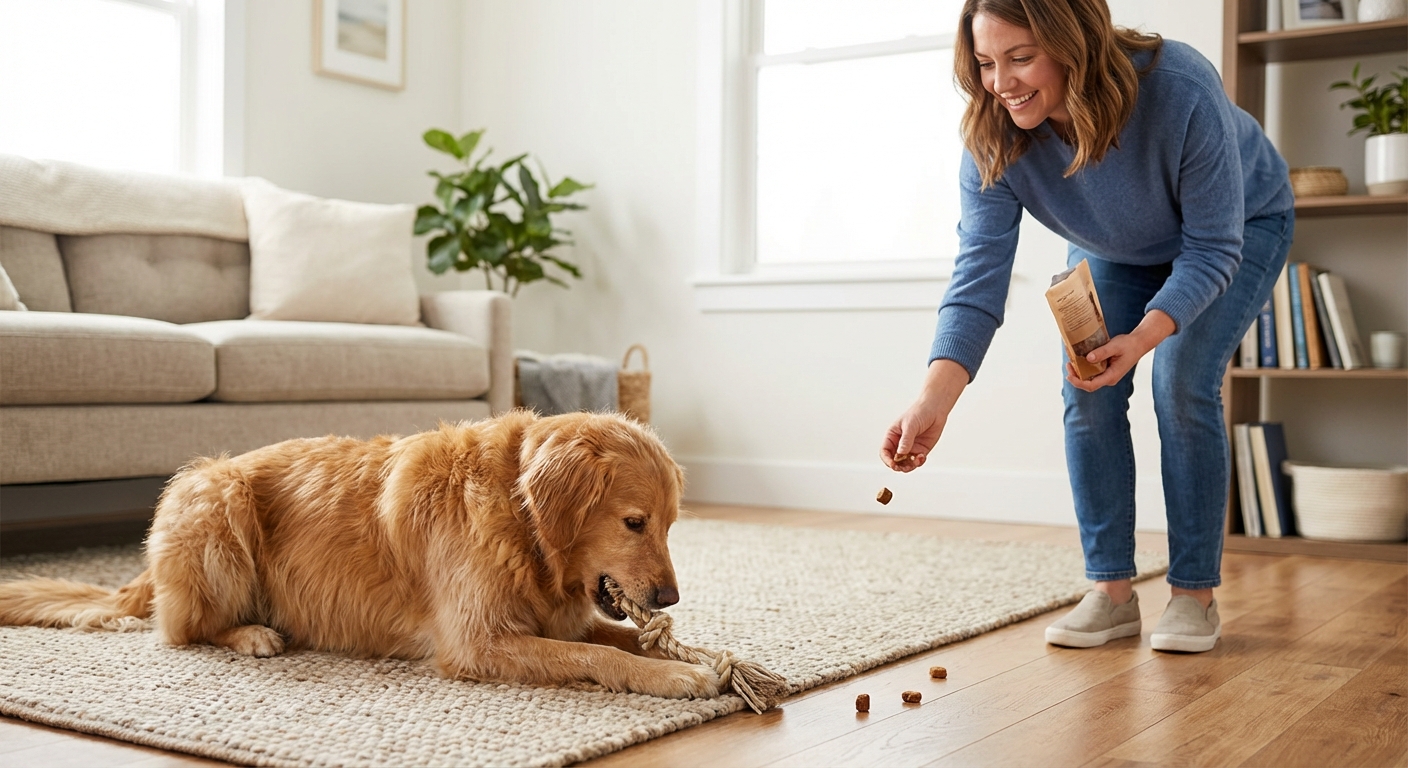
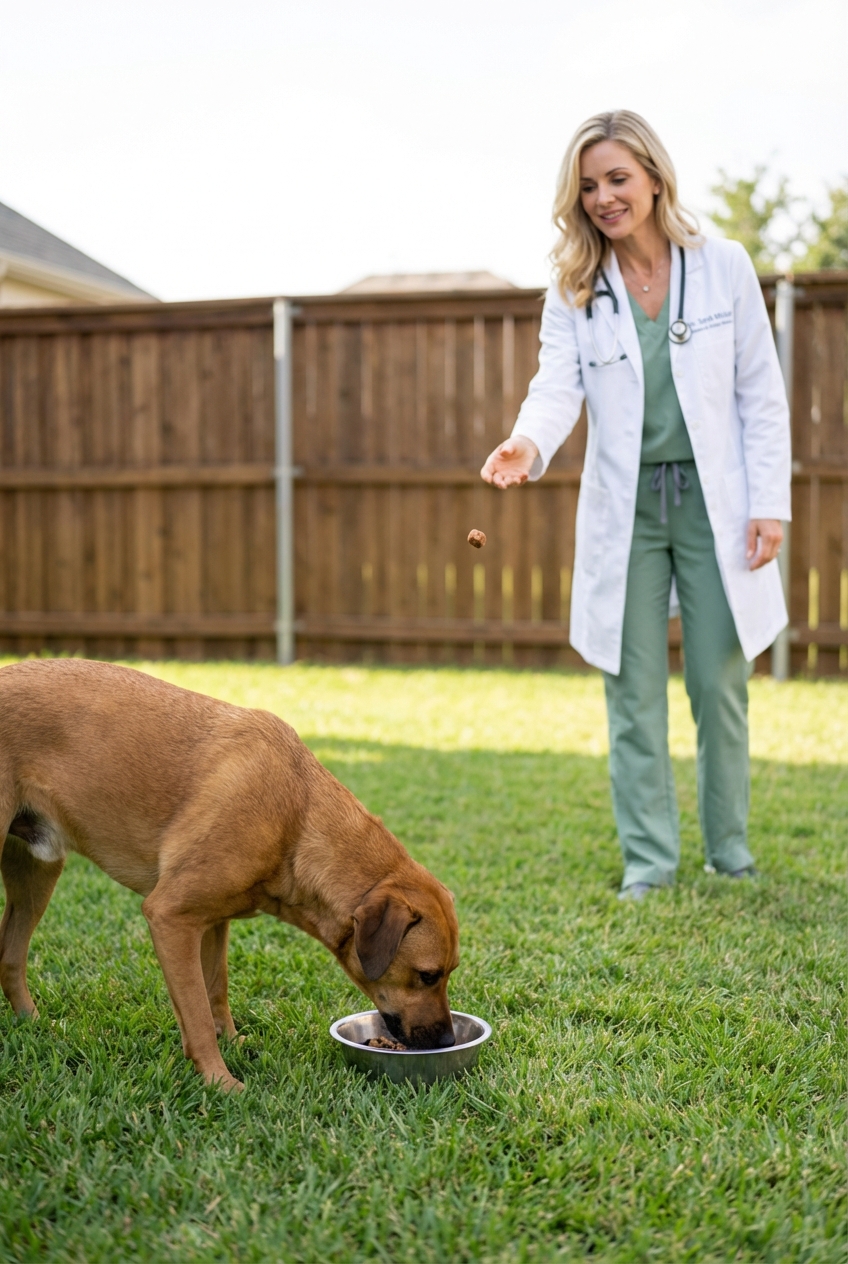
From a safe distance, take one step toward the dog, toss a high-value treat (chicken, cheese, freeze-dried liver), and step away. In most cases, it helps to toss the treat behind your dog or off to the side so they can turn away from the item to get it, which reduces pressure and builds trust. Do not reach for the item.
- Approach
- Toss the treat behind or to the side
- Walk away
This “treat and retreat” pattern is powerful because it tells your dog that your presence does not predict loss.
Step 4: Close the distance slowly
Only decrease distance when your dog stays relaxed for several repetitions. Move closer in small increments over days, not minutes.
Progress is not always linear. If you see stiffness, faster eating, hovering, or a growl, you went too fast. Simply go back to the last distance where your dog was relaxed and repeat there for a few more sessions.
Step 5: Add a trade game
Trading teaches your dog that giving something up leads to something better.
- Say a cheerful cue like “trade” or “drop”.
- Show the treat at the dog’s nose.
- When they release the item, mark with “yes” and give the treat.
- Then, whenever safe, give the item back to prove the point that releasing does not always mean losing.
Pro tip: Do not chase your dog for stolen items. That turns it into a high-adrenaline game and can increase guarding.
What if it is dangerous?
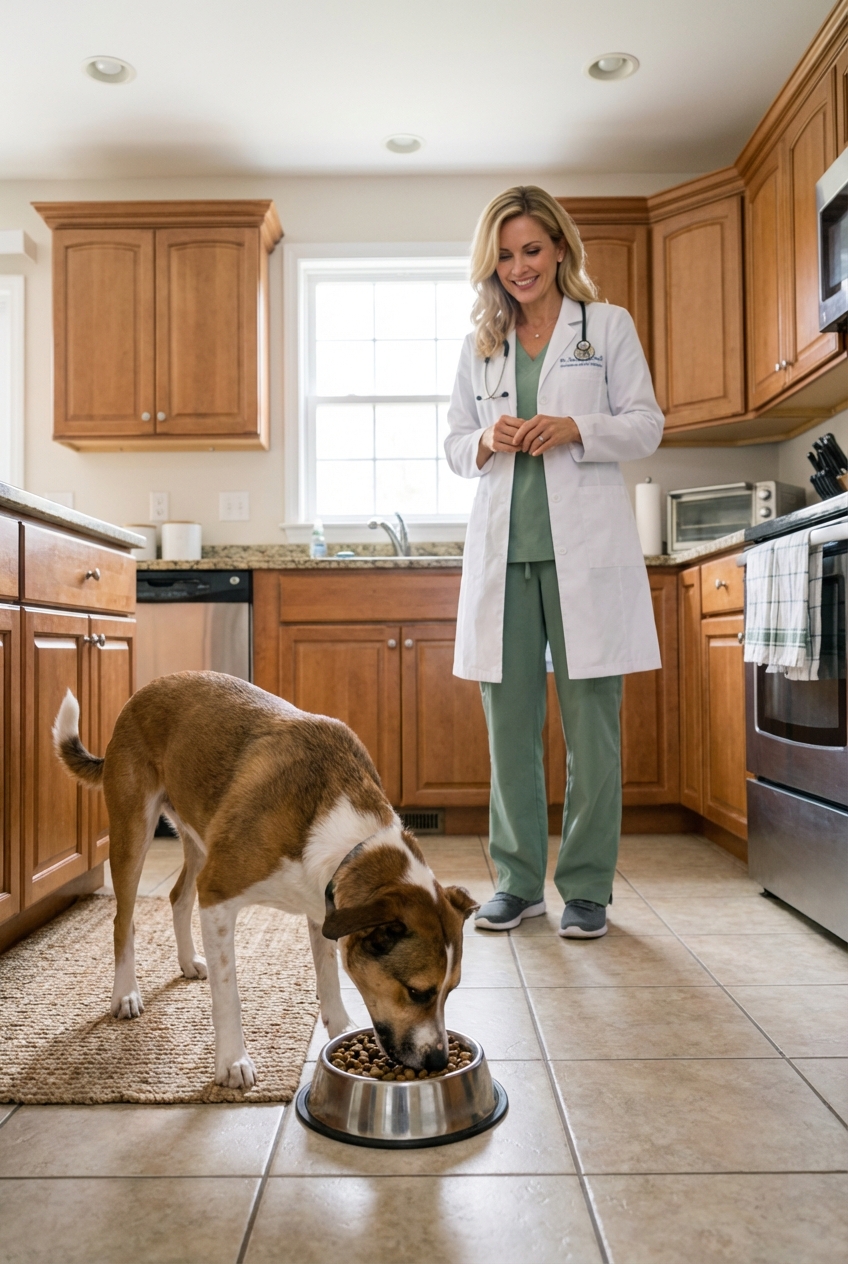
If your dog has grabbed something unsafe (medication, sharp object, choking hazard), do your best to stay calm. Toss high-value treats to create distance, use a trade if your dog knows it, and avoid reaching into their mouth if there is any risk of a bite. If you cannot safely resolve it, call your veterinarian for guidance or seek in-person help.
Step 6: Food bowl practice
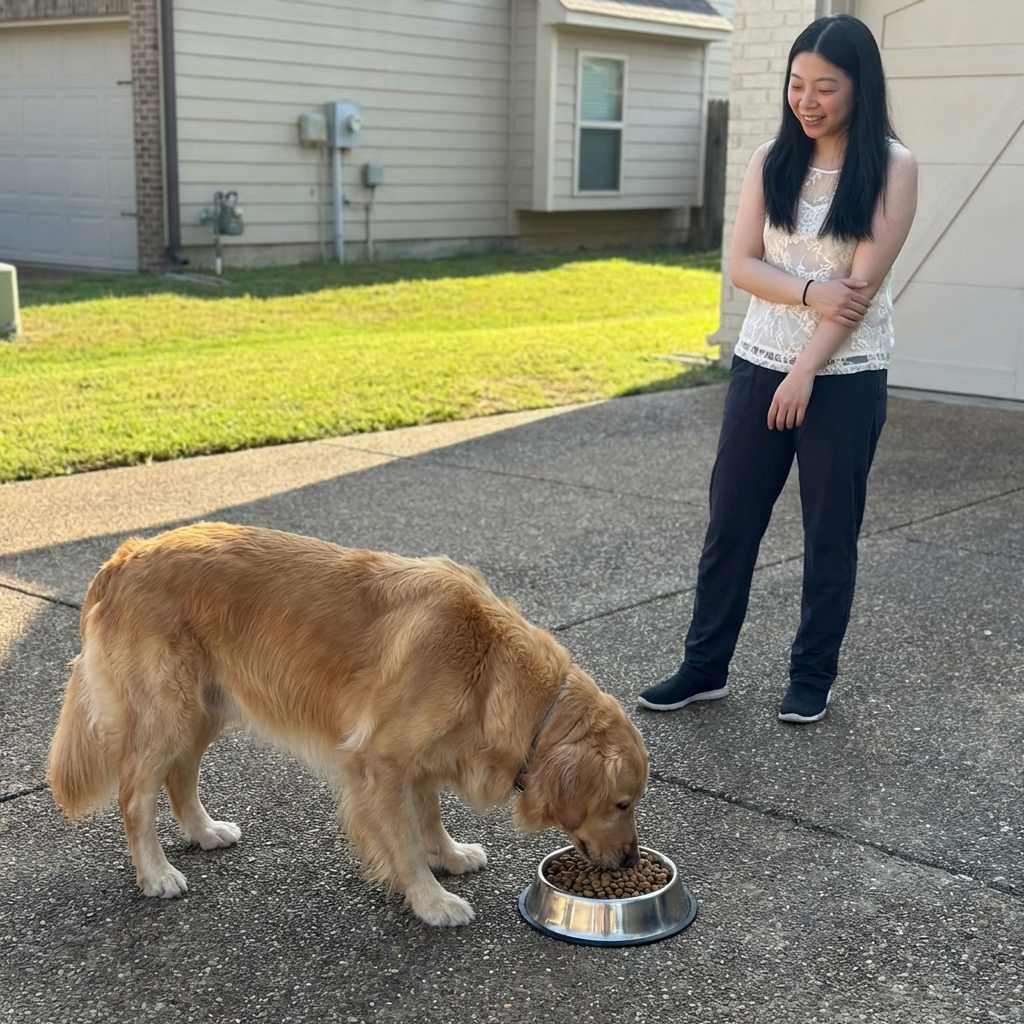
For bowl guarding, you are building a “bowl equals bonuses” association. Start with an empty bowl.
- Put the empty bowl down.
- Drop a treat in it.
- Walk away.
Repeat. Then progress to small amounts of kibble, adding treats as you pass. Many dogs learn to wag when they see you approaching.
Important: Do not remove the bowl mid-meal “to show who is boss.” That can worsen guarding by confirming your dog’s fear.
Step 7: Add new people and places
Dogs do not automatically transfer learning to new contexts. Once your dog is relaxed with you, repeat the process with other adults, then new locations. Kids should only be involved under professional guidance, and often the safest plan is keeping kids completely out of training sessions.
What not to do
- No alpha rolls, scruff shakes, or intimidation. These methods can increase fear and bite risk.
- No punishing growls. You want warnings, because warnings prevent bites.
- No sudden bowl touching. Skipping steps can backfire.
- No leaving high-value chews out in multi-dog homes without separation.
When to get help
Resource guarding is very trainable, but some situations need extra support.
- Call your veterinarian if guarding appeared suddenly, worsened quickly, or your dog may be in pain (limping, sensitivity to touch, dental issues, arthritis). Pain can make dogs far more defensive.
- Get a credentialed behavior professional if there has been a bite, if the dog guards people, or if you have children at home. Look for certifications like IAABC, CCPDT, or a board-certified veterinary behaviorist (DACVB).
In some cases, medication for anxiety can be part of a humane, effective plan alongside behavior work. Medication decisions should be made with your veterinarian, and they work best when paired with a behavior modification plan.
Multi-dog homes
Multi-dog households add an extra layer of management. The easiest win is structure.
- Feed dogs separately behind gates or closed doors.
- Pick up bowls immediately after meals.
- Give chews only when dogs are separated.
- Do not encourage “sharing” of toys if it causes tension.
- Watch for subtle bullying: blocking access, hovering, stealing, staring.
A simple daily plan
If you want a gentle routine that builds trust quickly, try this for 7 to 10 days:
- Morning: practice 5 “trade” reps with a low-value toy
- Mealtime: from a distance, walk by and toss 3 to 5 tiny high-value treats (behind or to the side), then keep moving
- Evening: short “approach, toss, retreat” session near a chew (with the chew being low value at first)
Keep sessions short and upbeat. You want your dog thinking, “This is easy. I feel safe.”
Bottom line
Resource guarding is not your dog being “bad.” It is your dog protecting what matters to them. With smart management, calm training, and a commitment to safety, most dogs learn that humans near their resources is a good thing. Go slow, celebrate tiny wins, and do not hesitate to bring in your vet and a qualified behavior professional when you need a hand.