Bone broth can support hydration, appetite, and comfort for picky, senior, or recovering dogs. Get a plain, dog-safe recipe, serving amounts, storage tips, a...
Article
•
Designer Mixes
Dog Recovery After Spay: Step-by-Step

Shari Shidate
Designer Mixes contributor
Spaying is one of the most common surgeries in veterinary medicine, and most dogs recover beautifully with a little planning, good pain control, and a calm home setup. As a veterinary assistant, I like to remind families that the goal is not just “getting through” the next 10 to 14 days. The goal is protecting the incision, preventing complications, and helping your dog feel safe and comfortable while her body heals.
This step-by-step overview walks you through what’s normal, what’s not, and exactly what to do each day. Always follow your veterinarian’s discharge instructions first, especially if your dog had a heat cycle recently, was pregnant, has other health conditions, or had a more complicated procedure.
What spay surgery is and why recovery matters
A spay (ovariohysterectomy or ovariectomy, depending on the technique) is abdominal surgery. That means there is an external skin incision you can see, plus internal healing you cannot see. Even if your dog seems “back to normal” in a couple of days, her tissues are still repairing underneath.
Many post-spay issues are linked to two very preventable problems:
- Too much activity too soon (running, jumping, stairs, rough play)
- Licking or chewing the incision (which introduces bacteria and breaks down healing tissue)
That said, some complications can happen even when you do everything right, like a seroma (fluid pocket), a suture reaction, infection, or, more rarely, internal bleeding. The good news is that daily checks and quick communication with your clinic help catch problems early.
Before you leave the clinic
Your best recovery starts with a few clear answers before you head home. If anything is unclear, ask. Your vet team expects questions.
Questions to ask
- How long should activity restriction last for my dog specifically?
- What medications am I giving, at what times, and with or without food?
- Is my dog allowed to eat tonight and how much?
- What does the incision look like today so I can compare at home?
- Do you recommend an e-collar, inflatable collar, recovery suit, or all of the above?
- What signs mean I should call you urgently or go to an emergency hospital?
Pro tip: take a quick photo of the incision in the clinic parking lot (in good light) so you have a baseline reference.
Set up a calm recovery space at home
Choose a quiet area away from household traffic, kids running through, and other pets who want to play. Your dog should be able to rest, stand up, turn around, and stretch out comfortably.
Helpful supplies
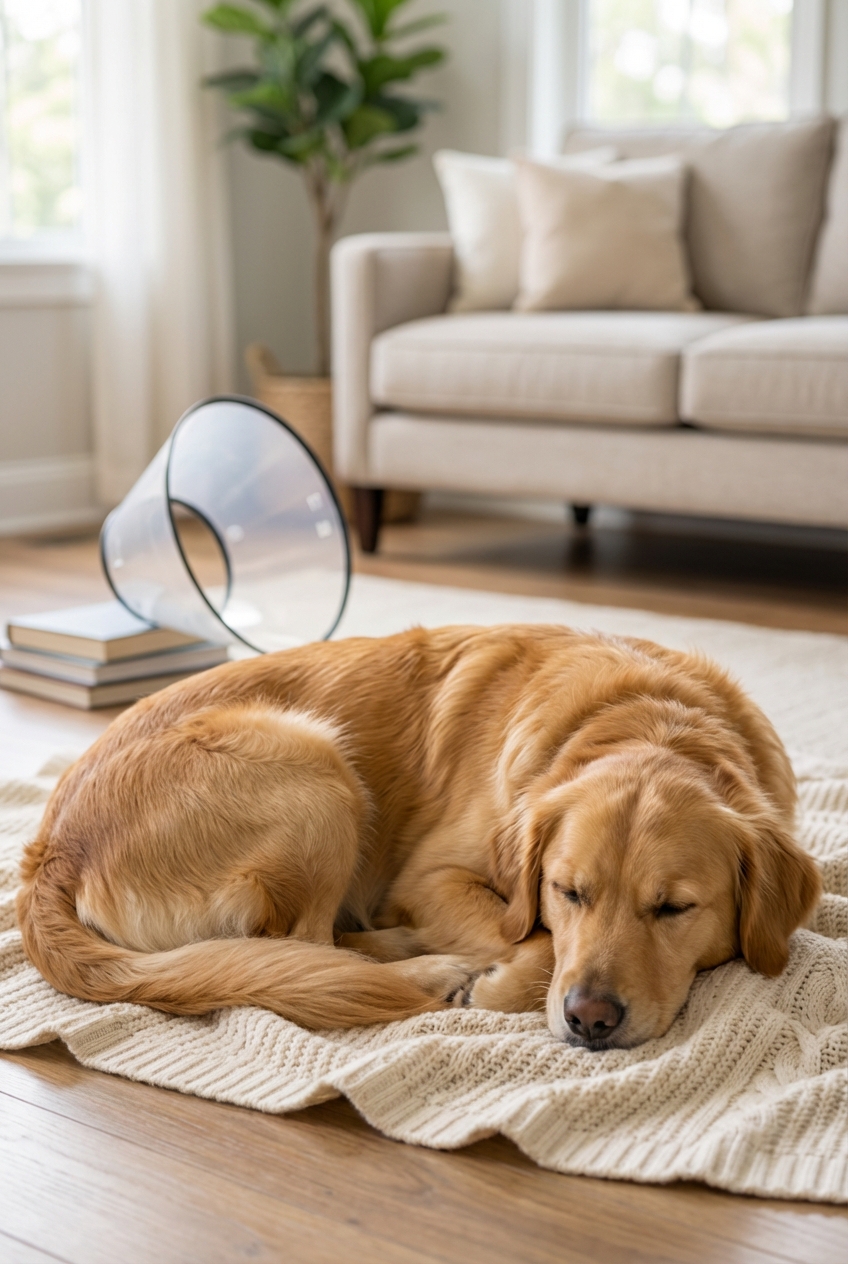
- E-collar (cone) or vet-approved alternative that truly prevents licking
- Leash and harness for short potty breaks (avoid neck pulling if your dog strains)
- Non-slip rugs to prevent sliding on tile or wood
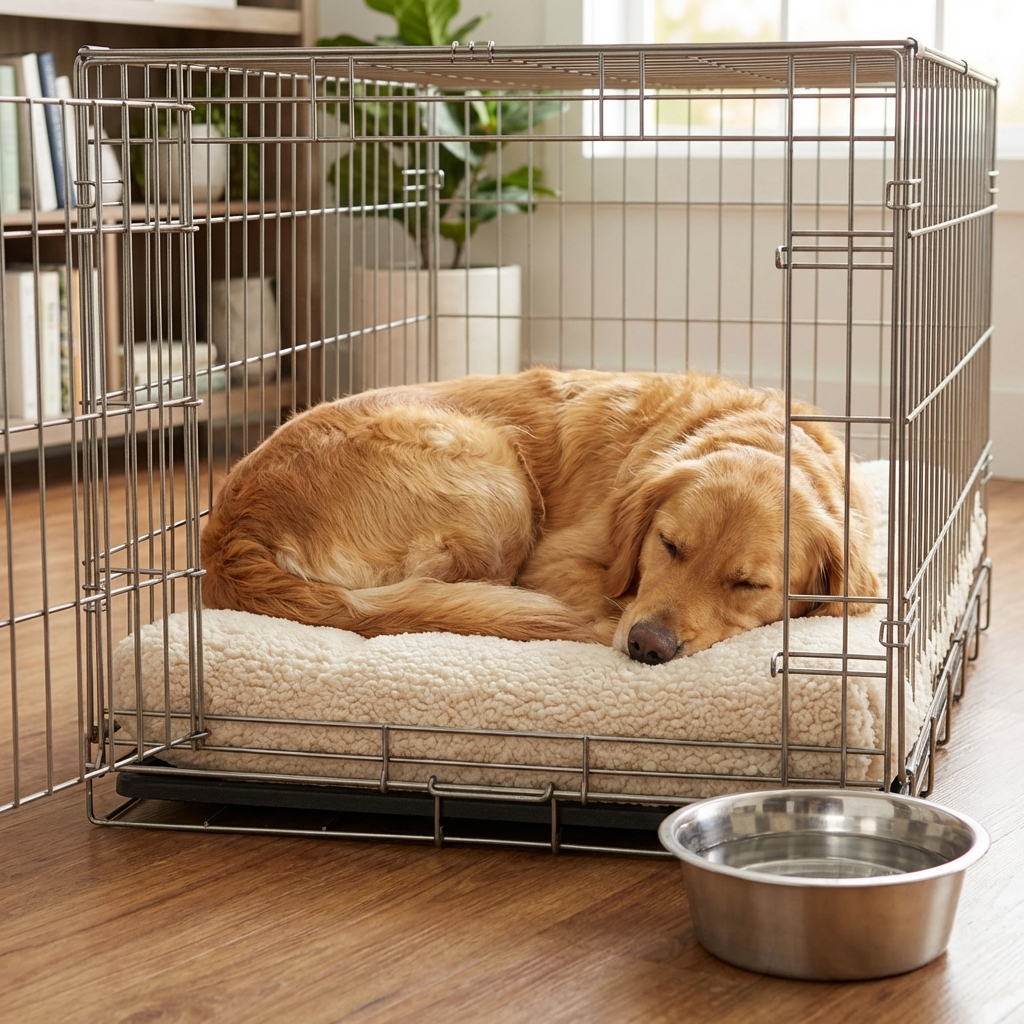
- Crate or exercise pen if your dog struggles to settle
- Clean bedding you can wash easily
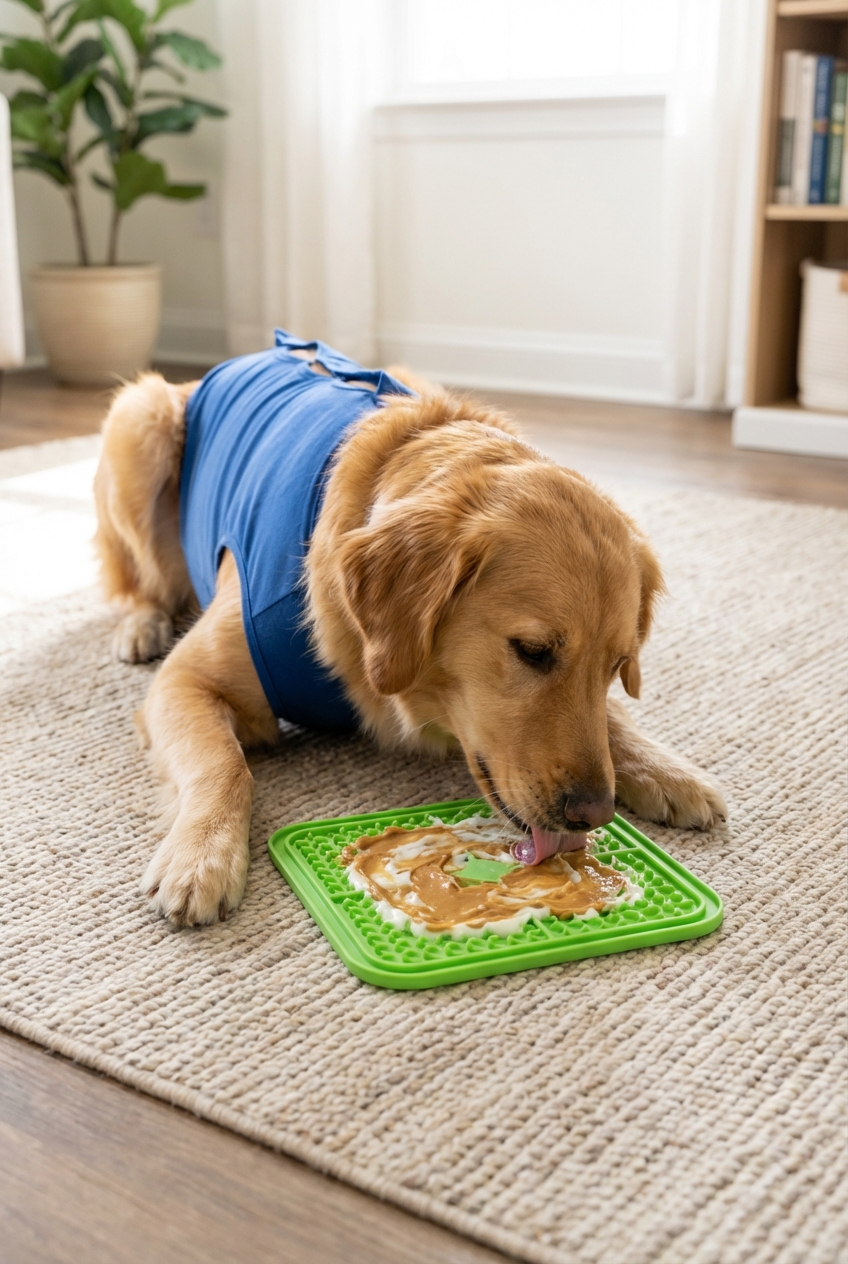
- High-value, low-activity enrichment (stuffed Kongs, lick mats, snuffle mats)
Step-by-step recovery timeline
Every dog heals at her own pace, but this timeline fits many routine spays. If your veterinarian gave different guidance, follow that.
First night (0 to 12 hours)
- Expect sleepiness from anesthesia. Mild wobbliness is common.
- Offer small amounts of water. If she gulps and vomits, remove the water for 30 to 60 minutes, then re-offer a few small sips.
- Feed a small meal only if your vet says it is okay. Some dogs have nausea.
- Keep the E-collar on, even if she seems too groggy to lick. Many dogs “wake up” suddenly at 1 a.m.
- Potty breaks on leash only. No backyard zoomies.
Days 1 to 3
This is often when you notice the most soreness and the most temptation to lick.
- Activity: leash walks only for potty. No running, jumping, stairs if possible.
- Incision: a small amount of redness, mild swelling, and even mild bruising can be normal. A tiny amount of clear or pink-tinged seepage right after surgery can also be normal. The incision should look closed and should not be actively bleeding, gaping, or oozing thick discharge.
- Medication: give exactly as prescribed. Do not add human pain relievers. Many are toxic to dogs.
- Appetite: may be slightly reduced, but should improve. Call your vet if she refuses food for more than 24 hours, and call sooner for repeated vomiting, worsening lethargy, or if you have a very small dog, puppy, or a dog with other medical issues.
Days 4 to 7
Many dogs start acting like themselves. This is the tricky stage because they feel better before they are fully healed.
- Keep restrictions in place. The inside is still healing.
- Check the incision daily. It should be less red and less puffy over time.
- Continue preventing licking. Even one focused licking session can open the skin.
- Enrichment: add gentle mental work (food puzzles) to reduce restlessness.
Days 8 to 14
For many dogs, this is the “finish line” for skin healing, but some need longer restrictions.
- Recheck or suture removal is often scheduled around this window, if your dog has non-dissolving skin sutures or staples.
- Gradual return to activity only after your veterinarian confirms it is safe.
- Watch for late issues like swelling, discharge, or a new lump at the incision.
After day 14
If your vet clears your dog to resume activity, increase exercise gradually. Many dogs do best returning to normal over 1 to 2 weeks, starting with longer leash walks and adding play and running later. If you see new swelling, soreness, or your dog suddenly becomes protective of her belly, pause and call your vet.
Incision care: do and avoid
Do
- Look at the incision at least once daily in good lighting.
- Keep it clean and dry.
- Use the E-collar or recovery suit consistently if your dog shows any interest in the area.
Avoid
- No bathing or swimming until your vet clears it.
- Avoid getting the incision wet or dirty, including rolling in wet grass, mud, sand, or anything that can cling to the incision area. The goal is keeping the site clean and dry.
- No ointments, sprays, peroxide, or alcohol unless your veterinarian specifically prescribed it.
- No bandages unless directed. They can trap moisture and bacteria.
If you see a small firm bump under a healed incision weeks later, it can sometimes be a suture reaction. Still, it is always worth a quick call and photo to your clinic so they can guide you.
Potty trips and bathroom habits
Short, calm potty breaks help prevent accidents and protect the incision.
- Leash every time, even in a fenced yard.
- Keep it brief and avoid excited play.
- Choose clean ground when you can, and avoid dirt, sand, or muddy areas that can cling to the belly.
- Wipe paws and belly if needed with a clean, damp cloth, and gently pat dry. Do not scrub the incision.
It is also common for some dogs to be a little constipated after anesthesia or certain pain medications. Call your vet if your dog is straining, seems painful, has not urinated, cannot pass stool, or goes more than 48 hours without a bowel movement (or sooner if she seems uncomfortable).
Pain control: what “normal” looks like
Good pain control helps healing because your dog rests more, eats better, and is less likely to fuss with the incision.
Common signs your dog may be painful
- Shaking, panting when the room is not warm
- Restlessness, difficulty getting comfortable
- Hunched posture or guarding the belly
- Not wanting to lie down or not wanting to get up
- Reduced appetite
- Whining, lip licking, or unusual irritability
If you suspect pain is not controlled, call your vet. Do not “wait it out.” There are safe options your clinic can tailor to your dog.
Feeding and digestion after spay
Some mild nausea or softer stool can happen after anesthesia and stress. Most dogs normalize quickly.
Tips that help
- Offer small, frequent meals for the first day if your dog seems queasy.
- Keep treats minimal, especially if your dog is less active during recovery.
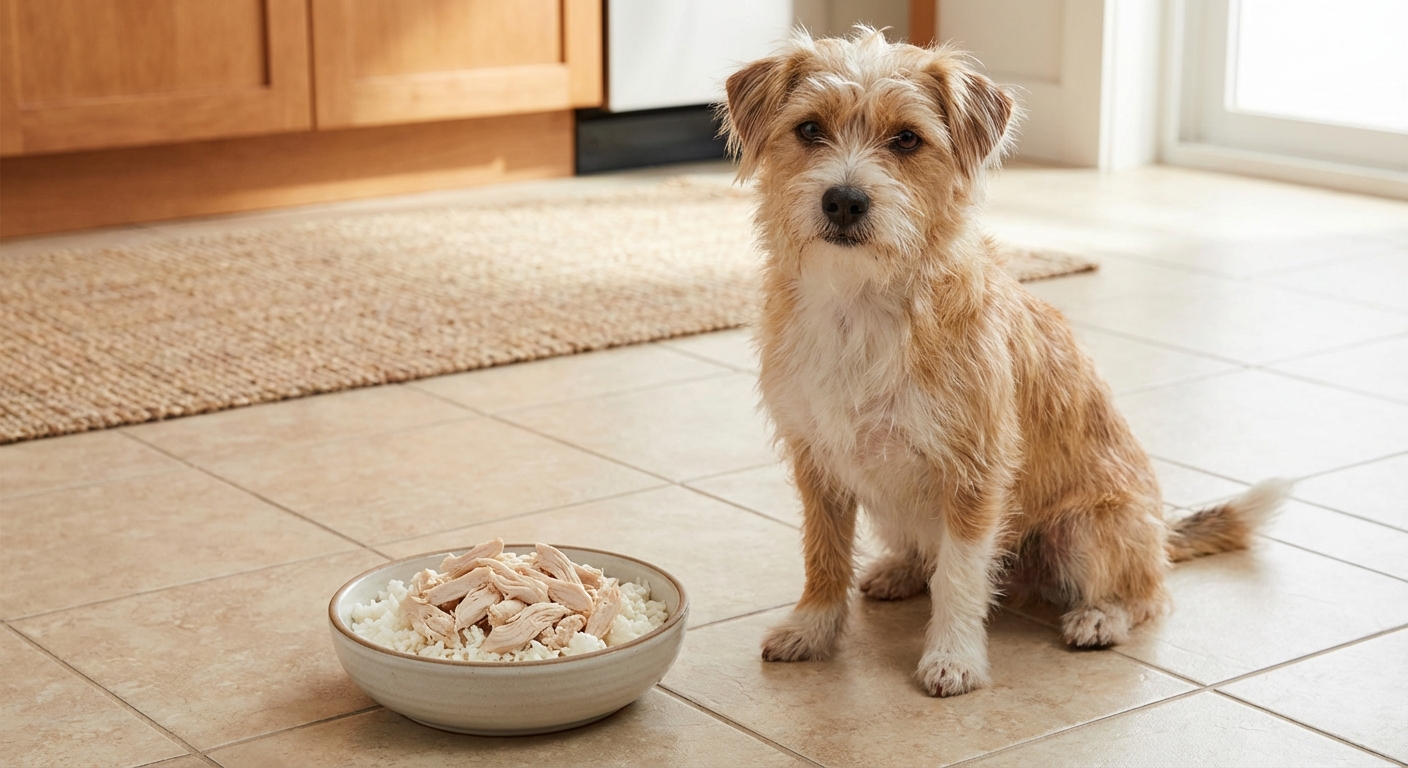
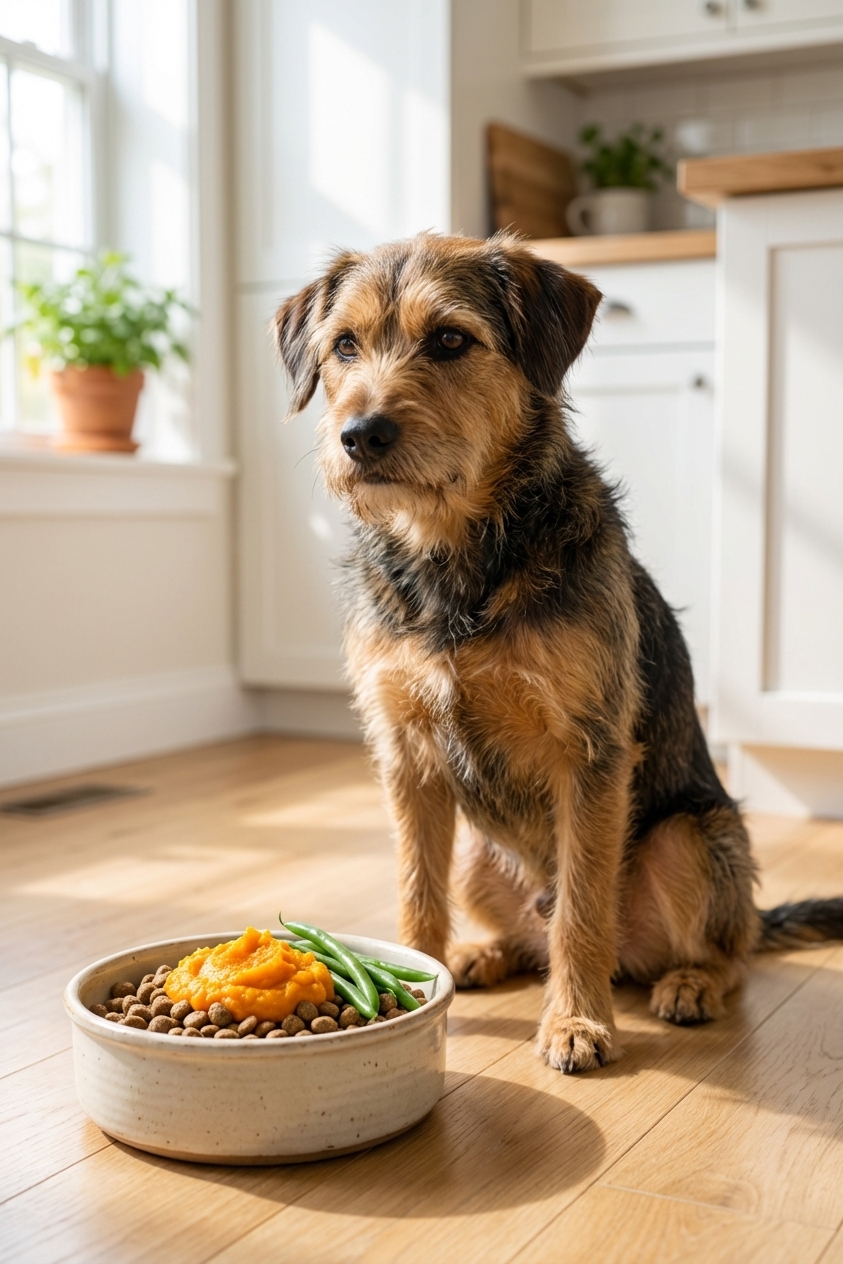
- If your vet approves, consider a bland diet short term for stomach upset (for example, cooked lean chicken and rice), then transition back slowly.
Call your vet if you see repeated vomiting, diarrhea that lasts more than a day, black or tarry stool, or a swollen painful abdomen.
How to keep an active dog calm
For many families, the hardest part is not medical. It is managing an energetic pup who feels better by day three. The trick is pairing safe confinement with boredom-busting enrichment.
Low-movement enrichment ideas
- Frozen stuffed Kong with part of your dog’s meal
- Lick mat with a thin layer of wet food (ask your vet if diet restrictions apply)
- Snuffle mat for kibble hunting
- Short training sessions that do not involve jumping (chin rest, paw, touch, settle)
If your dog is frantic despite your best efforts, talk to your veterinarian. Temporary calming medications can be a kind, safety-focused option for some dogs.
Red flags: when to call the vet right away
Trust your instincts. If something feels off, call. These signs deserve prompt veterinary guidance:
- Bleeding or discharge from the incision (especially thick, cloudy, yellow, green, or foul-smelling discharge)
- Incision opening, missing sutures, or skin edges separating
- Marked swelling, heat, or worsening redness
- Foul odor from the incision
- Repeated vomiting, refusal to drink, or severe lethargy
- Pale gums, collapse, or difficulty breathing
- Bloated or painful abdomen
- Continuous whining that does not improve with prescribed medication
- Inability to urinate, painful urination, or significant straining to poop
When in doubt, take a clear photo of the incision in natural light and call your clinic. It is one of the fastest ways for your veterinary team to triage what you are seeing.
Frequently asked questions
How long does a dog need to wear the cone after spay?
Typically until your veterinarian confirms the incision is healed, often 10 to 14 days. Some dogs need longer. If your dog can reach the incision, the E-collar stays on.
Can my dog go up and down stairs?
Ideally limit stairs for the first several days. If you must use stairs, use a leash and move slowly. For small dogs, carrying them is often safer if they tolerate it.
Is swelling normal?
Mild swelling can be normal early on. Swelling that rapidly increases, feels hot, oozes, or looks angry needs a call to your veterinarian.
My dog seems totally fine. Can we resume normal activity?
Not yet. Feeling better is not the same as being healed. Early overactivity is a top reason incisions break down.
Final thoughts
Spay recovery is usually smooth, but it is not passive. Your job is to be your dog’s calm coach: keep the E-collar on, keep activity low, give medications as directed, and check the incision daily. If you do those four things, you will greatly reduce the risk of the most common complications.
If you would like, save this page and use it as a daily checklist. And if you ever feel unsure, your veterinary team would much rather answer a “quick question” today than treat a bigger issue tomorrow.