A practical 0–2 scoring checklist to track your dog’s comfort, appetite, mobility, breathing, joy, and good vs bad days—plus red flags and when to call...
Article
•
Designer Mixes
Dog Quality of Life Checklist Printable Guide

Shari Shidate
Designer Mixes contributor
When a dog is aging, living with a chronic condition, or recovering from a serious illness, one of the hardest parts for families is the uncertainty. You might find yourself thinking: Is my dog comfortable today? Are they still enjoying life? Am I missing something important?
A quality of life checklist helps you step out of the swirl of emotions and look at your dog’s day-to-day experience in a consistent, structured way. Many veterinarians use established quality of life frameworks (such as the HHHHHMM scale in pet hospice and palliative care), and a home checklist is a practical way to track the same key areas between visits. As a veterinary assistant, I’ve seen how empowering it can be to track small changes over time. It gives you clearer conversations with your veterinarian and, most importantly, helps your dog get the support they need sooner.

What quality of life means
Quality of life is not about perfection. It is about whether your dog can comfortably do the things that matter to them: resting without distress, eating and drinking adequately, moving around with manageable pain, interacting with the family, and having more good days than hard days.
Veterinary teams often evaluate quality of life using consistent categories like appetite, hydration, mobility, hygiene, comfort, and behavior. A checklist simply brings those categories into your home so you can track them at home in real time.
How to use the checklist
Pick a schedule you can stick to
Daily tracking is helpful during rapid changes, medication adjustments, or hospice care. Weekly tracking can work well for stable seniors or long-term conditions like arthritis.
Score honestly, not hopefully
It is completely normal to want to give a higher score because you love your dog. Try to score what you observe, not what you wish were true. If you live with other family members, consider each person scoring independently once a week, then compare notes.
Look for trends, not one-off days
Everyone has an off day. A checklist becomes powerful when you notice patterns like: “Mobility is steadily declining,” or “Appetite improves for two days after fluids, then drops again.” Trends help your veterinarian fine-tune pain control, anti-nausea support, or nutrition plans.
Add context in your notes
A score is useful, but your notes often explain why it changed. Include things like new medications or dose changes, stressful events (company, fireworks), weather and temperature shifts, changes in activity, and any diet changes.
Bring it to your vet visits
A simple log of scores and notes can save time and lead to better care decisions. If you have a telehealth appointment, you can read the scores out loud.
Checklist categories
You can copy these categories into a document and print it, or keep them in your phone notes. Many families like a 0 to 10 score for each item, where 0 is poor and 10 is excellent. Add short notes when something changes.
- Pain and comfort: Is your dog relaxed at rest? Any panting, shaking, hiding, tense belly, or reluctance to be touched?
- Breathing: Normal breathing at rest? Any coughing, wheezing, open-mouth breathing, or increased effort? (If your dog is brachycephalic or has heart or lung disease, ask your veterinarian what “normal” should look like for your dog.)
- Appetite: Eating a reasonable amount for them? Interested in food? Any possible nausea signs like lip-licking, drooling, swallowing, or turning away?
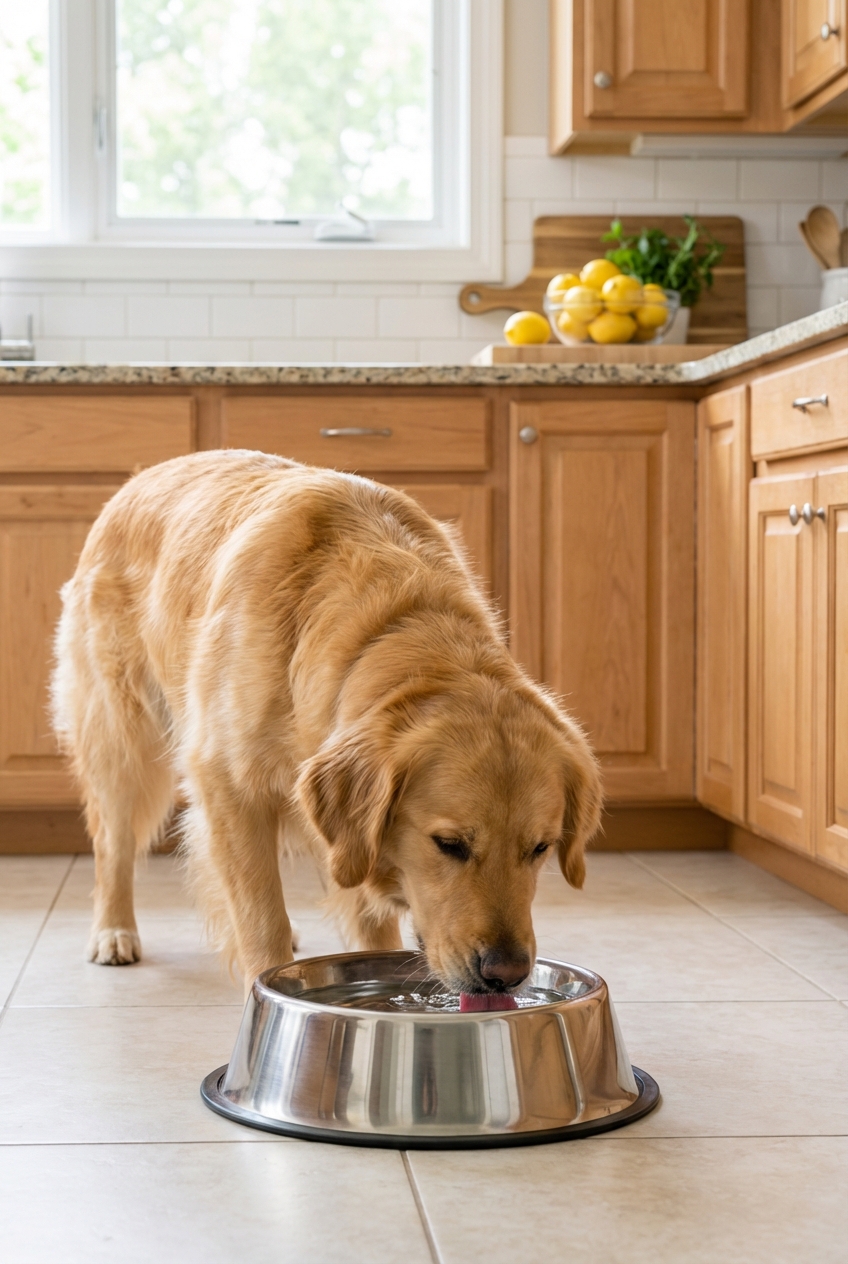
- Hydration: Drinking enough? Any possible dehydration concerns like dry or tacky gums, or sunken-looking eyes? Dehydration can be hard to assess at home, so treat this as a “check in” category and ask your veterinarian if you are unsure.
- Mobility: Can they get up, walk, and change positions without significant struggle? Any slipping, falling, or hesitating at stairs?
- Bathroom habits: Can they urinate and defecate without pain or accidents? Any diarrhea, constipation, blood, straining, or loss of dignity (such as repeated accidents they cannot control)?
- Hygiene and skin: Can they stay clean and dry? Any urine scald, pressure sores, odor, or matted fur from being unable to groom?
- Sleep and rest: Are they sleeping comfortably? Restless pacing at night can be a sign of pain, nausea, anxiety, or cognitive changes.
- Enjoyment and engagement: Do they still seek attention, enjoy gentle activities, or show interest in favorite things?
- Mental state: Any confusion, “staring off,” getting stuck in corners, new vocalizing, or changes that suggest canine cognitive dysfunction?
- Good days vs hard days: At the end of the day, would you call today mostly good, mixed, or mostly hard?

Simple scoring
If you want an easy framework, try this:
- 0 to 3: Severe concern in that category, or a fast decline. Call your veterinarian the same day if possible.
- 4 to 6: Needs improvement. Contact your veterinarian within 24 to 48 hours if it is new, worsening, or affecting multiple categories. Otherwise, discuss adjustments at your next visit.
- 7 to 10: Generally comfortable and stable in that category.
Tip: Circle your dog’s lowest two categories each week. Those are often the areas where supportive care makes the biggest difference.
If scores drop
A checklist is not meant to make you feel helpless. It is meant to help you act earlier.
Talk to your veterinarian about comfort first
Pain, nausea, and anxiety can quietly steal quality of life. Many dogs benefit from a layered plan that may include anti-inflammatory medication, nerve pain support, joint supplements, anti-nausea medications, appetite support, or mobility aids. Never start or stop medications without guidance from your veterinarian.
Make home easier
- Use non-slip rugs or runners for slippery floors
- Add a supportive orthopedic bed
- Try a harness or sling for stairs
- Raise food and water bowls if bending is painful
- Keep favorite spots accessible, warm, and quiet
- If you try traction socks, choose a proper fit and supervise. Poorly fitted socks can make slipping worse for some dogs.
Support hydration and nutrition
If your dog’s appetite is inconsistent, ask your veterinarian about safe options for increasing palatability, adding calorie-dense foods, or using prescription diets. For some dogs, small frequent meals may reduce nausea. Hydration support might include adding water to meals, offering broth approved by your vet, or in some cases, subcutaneous fluids.
End-of-life talks
This is the part no one wants to face, but having a plan is a gift to your dog and to yourself. If your checklist shows:
- Persistent pain or distress that is not responding to treatment
- Inability to rest comfortably
- Repeated emergency episodes
- Loss of interest in food, water, family, and favorite activities for many days in a row
- More hard days than good days
Then it is reasonable and compassionate to ask your veterinarian about hospice support and, when appropriate, humane euthanasia. Choosing comfort is not giving up. It is protecting your dog from suffering.
Keep the checklist focused on your dog’s experience, not your fear. The goal is comfort, dignity, and love.
Printable checklist text
If you want a quick printable version, copy and paste this into a document and print it:
Date:

Pain/Comfort (0-10): ____ Notes:
Breathing (0-10): ____ Notes:
Appetite (0-10): ____ Notes:
Hydration (0-10): ____ Notes:
Mobility (0-10): ____ Notes:
Bathroom (0-10): ____ Notes:
Hygiene/Skin (0-10): ____ Notes:
Sleep/Rest (0-10): ____ Notes:
Enjoyment/Engagement (0-10): ____ Notes:
Mental State (0-10): ____ Notes:

Today was:  Good / Mixed / Hard
One thing that helped today:
One concern to address:
Recent changes (meds, routine, diet, stress, weather):
If you would like, you can also add a line for medications and appetite changes, because those two often explain score shifts.
Quick safety note
A checklist is a supportive tool, not a diagnosis. If your dog has trouble breathing (such as open-mouth breathing at rest, very pale or blue-tinged gums, or extreme effort), collapses, cannot urinate, has uncontrolled vomiting, shows severe pain, or seems suddenly disoriented, treat that as urgent and contact a veterinarian or emergency clinic right away.