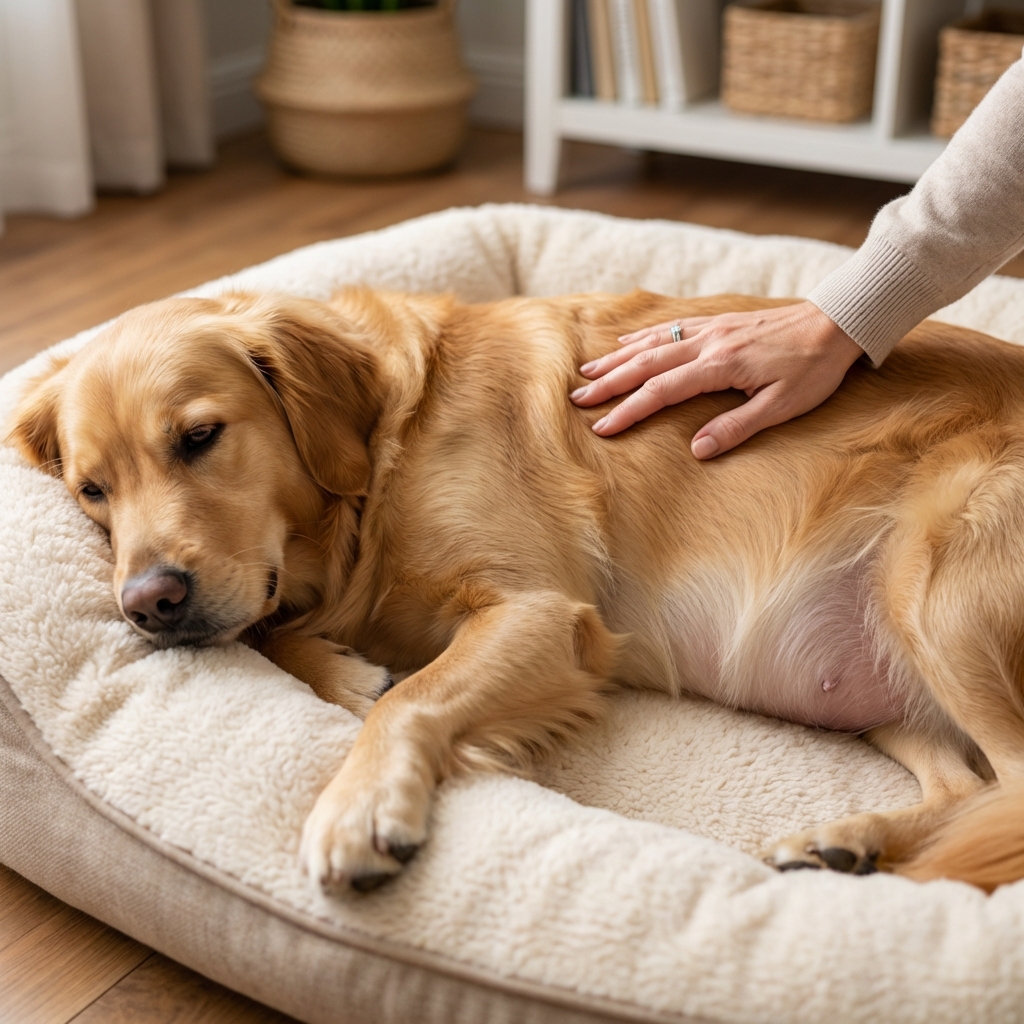
Most dogs are pregnant about 63 days from ovulation (58–68 days total). Get a clear week-by-week pregnancy timeline, labor stages, vet test timing, and red...
Article
•
Designer Mixes
Dog Pregnancy Week by Week

Shari Shidate
Designer Mixes contributor
If you think your dog might be pregnant, you are probably watching her every move and wondering what is normal and what is not. Canine pregnancy is short and busy, typically about 62 to 64 days from ovulation (often quoted as 63 days on average), and a lot changes from week to week.
Below is a vet-informed, week-by-week timeline so you can follow along, know when to call your vet, and feel prepared for whelping day.
Quick note: Belly size and “showing” vary a lot by breed, body shape, litter size, and even coat. A small belly does not rule out pregnancy, and a big belly is not proof.

Quick facts: dog gestation basics
- Typical length: about 62 to 64 days from ovulation. From the breeding date, the range can look wider (often about 58 to 72 days) because dogs can be bred before ovulation and sperm can survive for several days.
- Litter size: varies widely by breed and individual.
- Most reliable due date: your vet estimating based on ovulation timing and early pregnancy findings, not just the first breeding date.
Veterinary tip: Many owners count from the mating date, but vets prefer counting from ovulation because it is much more predictive.
How to confirm pregnancy
Home clues are not enough to confirm pregnancy. If timing matters (health, planning, or possible complications), talk to your veterinarian about the best option for your dog:
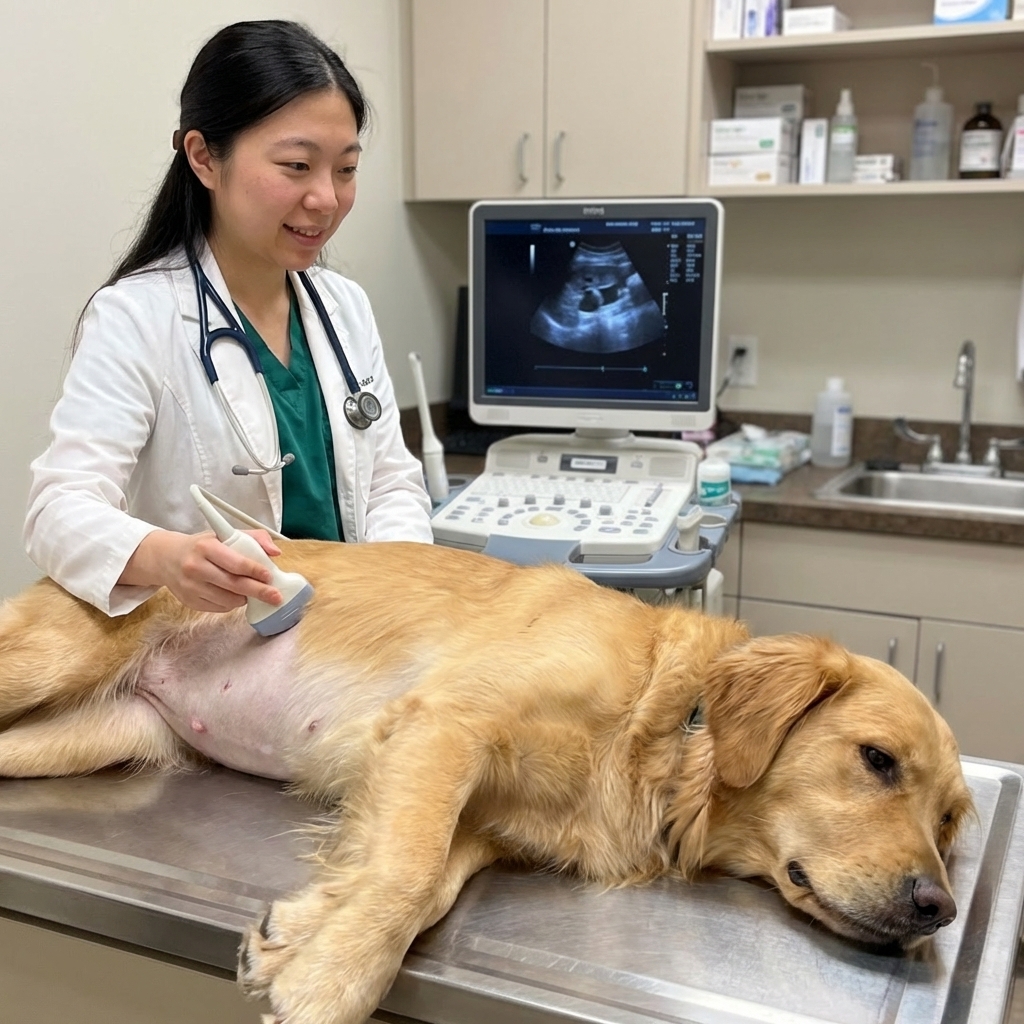
- Ultrasound: often useful around days 25+ to confirm pregnancy and assess fetal viability. It is great for confirmation, but it is not always perfect for exact puppy count.
- Relaxin blood test: often becomes reliable around days 25 to 30 after breeding (timing varies). Your vet can tell you when it makes sense.
- Abdominal palpation: sometimes possible with an experienced vet around days 28 to 35, but it is technique-dependent and not always definitive.
- X-ray (radiographs): best for puppy count close to delivery, when fetal skeletons are mineralized enough to see clearly, often around day 55+ from ovulation (or as your vet advises).
Medication note: Do not start or stop flea, tick, heartworm prevention, vaccines, or supplements without veterinary guidance. Safety depends on the product, timing, and your region’s disease risks.
Week 1 (Days 1 to 7): Fertilization begins
What is happening: After breeding, fertilization occurs and early cell divisions begin as the embryos travel toward the uterus.
What you may notice
- Often no visible signs.
- Some dogs are a little more tired or cuddly, but it is not a reliable indicator.
Care and feeding
- Keep routines stable. Normal exercise is fine unless your vet says otherwise.
- Do not change food yet. Stay on a high-quality adult diet.
- Avoid medications and supplements unless approved by your veterinarian, including herbal products.
Vet check
- If your dog has any chronic condition or is on medications, call your vet now to discuss safety during pregnancy.
Week 2 (Days 8 to 14): Early embryo development
What is happening: The embryos continue developing and move toward the uterus.
What you may notice
- Still usually no obvious changes.
- Mild appetite shifts can happen.
Care and feeding
- Keep activity normal and stress low.
- Continue a balanced adult diet and fresh water.
- Avoid rough play with unfamiliar dogs to reduce injury risk.
Week 3 (Days 15 to 21): Implantation
What is happening: Embryos implant into the uterine lining. Hormones are shifting, and this is when some owners start to notice subtle signs. Timing can vary a bit between dogs.
Possible symptoms
- Decreased appetite or picky eating for a few days.
- Mild nausea or occasional vomiting in some dogs.
- Slightly enlarged or pinker nipples.
- More sleep or calmer behavior.
Care and feeding
- If appetite dips, offer smaller, more frequent meals.
- Keep the diet consistent. Avoid sudden switches that can upset the stomach.
- Skip high-impact activity, but gentle walks are great.
Vet check
- If vomiting is persistent, she seems painful, or there is foul-smelling discharge, call your vet promptly.
Week 4 (Days 22 to 28): Easier to detect
What is happening: Fetuses are forming major organs. This is also a common time for veterinary confirmation. Exact timing varies, so think in ranges rather than exact days.
What you may notice
- Nipples may be more prominent.
- Appetite often returns and may increase.
- Some dogs gain a little weight.
Vet visit: confirmation
- Ultrasound is often performed around this time (commonly day 25 and beyond) to confirm pregnancy and assess fetal viability.
- Your vet may also discuss parasite control, vaccination timing, and nutrition.
Feeding guidance
- Many vets recommend staying on an adult diet until later in pregnancy, then transitioning to a higher-calorie growth or reproduction diet in the final third.
- Do not add calcium supplements unless your veterinarian instructs you. Unnecessary calcium during pregnancy may reduce the body’s normal parathyroid response and increase the risk of low calcium (eclampsia) during lactation.
Week 5 (Days 29 to 35): Belly changes may start
What is happening: Fetuses grow quickly, and the uterus is expanding.
Signs you might see
- Slight abdominal rounding, especially in smaller dogs or larger litters.
- Increased appetite in many dogs.
- More affectionate or more protective behavior.
Care and feeding
- Start planning your whelping space and supplies now so you are not scrambling later.
- If your vet recommends it, begin a gradual transition to a puppy or reproduction diet (higher energy and nutrient density). Do this over 7 to 10 days.
- Keep exercise moderate. Avoid jumping from high furniture if possible.
Week 6 (Days 36 to 42): Visible growth
What is happening: Fetuses develop features like skin pigment and claws. Your dog is carrying more weight and may tire more easily.
Common symptoms
- Noticeable belly enlargement in many dogs.
- Some dogs want smaller meals more often because the uterus crowds the stomach.
- Occasional constipation can occur.
Care and feeding
- Feed 3 to 4 smaller meals per day if she seems uncomfortable with larger portions.
- Keep water available at all times.
- Ask your vet about safe stool support if constipation becomes an issue. Do not give laxatives without veterinary guidance.
Vet note
- If you have not confirmed pregnancy yet, talk to your vet now. You will also want a plan for emergency care, especially if your breed is higher risk for dystocia (difficult labor).
Week 7 (Days 43 to 49): Nesting may begin
What is happening: Fetuses are maturing quickly. Your dog may start seeking quiet spots and showing nesting behaviors.
What you may notice
- Nesting, such as pawing at bedding or choosing a secluded corner.
- More rest and less interest in long activity.
- Hair thinning around mammary glands in some dogs.
Care and feeding
- Continue nutrient-dense meals in smaller portions.
- Keep her environment calm, especially if you have other pets or small children.
- Begin getting her comfortable with the whelping area.
Set up the whelping area
- Quiet, warm, low-traffic room.
- Whelping box large enough for her to stretch out, with pig rails if appropriate.
- Washable bedding and extra sets ready.
- A safe heat source for puppies (your vet can advise temperature targets based on litter age).

Week 8 (Days 50 to 56): Milk glands develop
What is happening: Puppies continue to mature and begin to move into birthing position. Your dog may look very pregnant now.
Signs you might see
- Enlarged mammary glands; some dogs may express a small amount of fluid.
- More obvious fetal movement in some cases.
- Reduced appetite as the stomach has less room.
Vet visit: puppy count and delivery planning
- Many vets recommend an x-ray close to delivery to estimate puppy count and assess size relative to the pelvis. For counting, x-rays are usually most reliable once fetal skeletons are well mineralized, often around day 55+ from ovulation (your vet will time it based on your dog).
- Discuss when to head to an emergency clinic and whether a planned C-section is recommended for your dog’s breed or history.
Feeding
- Stay on a growth or reproduction diet if that is your vet’s plan.
- Prioritize consistent calories and hydration over forcing large meals.
Week 9 (Days 57 to 63): Labor prep
What is happening: Puppies are fully developed and the body is preparing for labor.
Signs labor is approaching (Stage 1)
Stage 1 is the “getting ready” stage. The cervix is relaxing and contractions may start, but you usually will not see strong pushing yet.
- Nesting intensifies.
- Restlessness, panting, pacing, shivering, or wanting to be very close to you.
- Drop in rectal temperature in many dogs about 8 to 24 hours before Stage 2 (active pushing). For context, many dogs run around 101 to 102.5°F (38.3 to 39.2°C), and the pre-labor drop is often below about 99°F (37.2°C). Not all dogs show a clear drop, and your dog’s normal baseline matters, so ask your vet what threshold and pattern they want you to watch for.
- Decreased appetite right before labor is common.
What active labor looks like (Stage 2)
Stage 2 is when your dog is actively pushing or straining and delivering puppies. You will typically see stronger abdominal effort and more focus. This is the stage most “when to call the vet” rules are referring to.
What to have ready
- Your vet’s number and the nearest 24-hour emergency clinic saved in your phone.
- Clean towels and washcloths.
- Disposable gloves and water-based lubricant (if your vet recommends).
- Kitchen scale for weighing puppies.
- Thermometer.
- Heating pad or heat source designed for pets, used safely to avoid burns.
When to call the vet urgently
- Strong, active pushing (Stage 2) for 30 minutes with no puppy produced.
- More than 2 hours between puppies when you know more are coming, or she is straining and exhausted.
- Green or black discharge (uteroverdin) before the first puppy, especially if a puppy is not delivered very soon after. Green discharge after the first puppy can be normal.
- Extreme lethargy, collapse, uncontrolled bleeding, or obvious pain.
- A puppy visible but stuck.

Discharge: what is normal
- Often normal: small amounts of clear or slightly cloudy mucus, especially as labor approaches.
- Call your vet: foul-smelling discharge, thick pus-like discharge, heavy bleeding, or green or black discharge before the first puppy (unless a puppy is clearly imminent).
What to feed a pregnant dog
Nutrition is one of the kindest ways you can support a healthy pregnancy and strong milk production later. The goal is steady body condition, not rapid weight gain early on.
General feeding guidelines
- Weeks 1 to 4: Usually stay on a complete and balanced adult diet unless your vet advises otherwise.
- Weeks 5 to 9: Many dogs do best transitioning to a high-quality puppy or reproduction diet (higher calorie and nutrient density) and eating smaller meals more often.
- Avoid unneeded supplements, especially calcium, unless prescribed.
- Keep treats under control. Choose nutrient-dense options and avoid high-fat table scraps that can trigger digestive upset.
If you love the idea of adding fresh foods, keep it simple and conservative. Think small amounts of cooked lean protein or dog-safe veggies on top of a balanced diet. If you want to go fully homemade during pregnancy or lactation, please work with a veterinary nutritionist to ensure the diet is complete and balanced.
Looking ahead: Most dogs need an even bigger calorie increase during lactation than they did during pregnancy, so plan for appetite and food intake to rise after the puppies arrive.
After birth: what to watch
The hours and days after whelping matter just as much as delivery day.
- Normal: mom resting, puppies nursing often, and a vaginal discharge called lochia that is typically dark green to reddish-brown and gradually decreases over days to weeks.
- Call your vet urgently: fever, foul-smelling discharge, heavy bleeding, refusal to eat with weakness, swollen painful mammary glands, hot painful abdomen, or tremors, stiffness, or seizures (possible eclampsia).
- If puppies are not nursing well: poor latch, constant crying, or weight loss are reasons to call your vet promptly.
Week-by-week checklist (save this)
- Week 3 to 4: Watch for nipple changes and appetite shifts. Ask your vet about confirmation options (ultrasound, relaxin test, palpation).
- Week 5: Start prepping supplies and a whelping area. Consider food transition if your vet recommends it.
- Week 6: Smaller meals, moderate exercise. Confirm your emergency plan.
- Week 7: Introduce the whelping box and keep the home calm.
- Week 8: Ask about x-ray timing for puppy count and delivery planning.
- Week 9: Review Stage 1 vs Stage 2 labor signs, monitor for pre-labor changes (including temperature if your vet recommends it), and keep your dog close.
Frequently asked questions
When can I feel puppies moving?
Some owners notice movement in the later weeks, often around weeks 7 to 9, but it depends on litter size, your dog’s body condition, and whether she will tolerate gentle observation. Your vet is the best person to confirm fetal wellbeing.
Can my dog still go on walks?
In most normal pregnancies, yes. Gentle, regular walks are helpful. Skip intense running, rough play, and risky activities late in pregnancy.
Should I take her temperature near the due date?
Only if your vet recommends it and shows you how to do it safely. Temperature patterns can be useful, but they are not perfect and should never replace watching your dog’s behavior and knowing when to seek help.
Final thoughts
Dog pregnancy moves fast. If you follow the week-by-week changes, keep nutrition steady, and build a relationship with your vet early, you will be in a strong position to support both mom and puppies. And if anything feels off, trust your instincts and call your veterinary team. It is always better to ask one “unnecessary” question than to wait too long.