Noticing blood in your dog’s poop? Learn the difference between bright red blood and black tarry stool, likely causes, safe home steps, and urgent signs to...
Article
•
Designer Mixes
Dog Pooping Red Blood: Tips and Advice

Shari Shidate
Designer Mixes contributor
Seeing red blood in your dog’s poop can feel scary, and I get it. As a veterinary assistant here in Frisco, Texas, I have talked with many worried pet parents about this exact issue. The good news is that not every case is an emergency, but every case deserves attention so you can protect your dog’s comfort and health.
Below I’ll walk you through what red blood can look like, what it often means, what you can do at home right away, and when you should call a veterinarian today.
What it can look like
Not all blood looks the same, and the shade and location can give helpful clues.
- Bright red streaks or drops on the outside of stool: Often points to bleeding closer to the exit, like the colon, rectum, or anus.
- Bright red blood mixed in with soft stool or diarrhea: Often suggests inflammation of the large intestine (colitis).
- Dark, tarry, black stool (melena): This can indicate digested blood from higher up in the GI tract (stomach or small intestine). This is usually urgent and should be evaluated the same day, especially if your dog seems tired, is vomiting, has pale gums, or the stool is very dark and sticky.
Also keep in mind that some foods can mimic blood. Beets, red food dyes, and some treats can tint stool. If you are unsure, it is still worth checking in with your clinic.
One more quick tip: occasionally, what looks like blood in stool is actually coming from the urinary or reproductive tract. If you are seeing blood in the yard or on bedding but not clearly mixed with poop, tell your vet so they can help you sort out the source.
Common causes of bright red blood
Bright red blood (also called hematochezia) is often linked to the lower GI tract. Here are common possibilities your veterinarian may consider.
Dietary indiscretion
Trash snacks, greasy table food, sudden diet changes, and new treats can inflame the colon. This is one of the most frequent reasons I see dogs develop red blood with diarrhea.
Colitis
Colitis can happen after stress (boarding, fireworks, new baby), sudden food changes, or infections. Stool is often frequent, small in volume, and may include mucus and bright red blood.
Parasites
Whipworms, hookworms, and giardia can cause diarrhea and blood. Puppies and newly adopted dogs are especially at risk, but adults can get parasites too. A fecal test helps confirm this.
Parvovirus (puppies and unvaccinated dogs)
This is an important one not to miss. Parvo can cause severe, bloody diarrhea and can become dangerous quickly, especially in puppies or unvaccinated dogs. If your puppy has bloody diarrhea, vomiting, weakness, or is not eating, treat it as urgent and call an emergency clinic right away.
AHDS (sudden, severe bloody diarrhea)
Some dogs develop sudden watery diarrhea with a lot of blood and mucus and may seem okay at first, then worsen fast. Clinics may call this acute hemorrhagic diarrhea syndrome (AHDS). If you see a large volume of blood or rapid changes over hours, get seen the same day.
Anal gland issues or rectal irritation
If you notice scooting, licking the rear, straining, or small drops of blood after a bowel movement, the anus or anal glands may be irritated or infected.
Constipation and straining
Hard stool can cause small tears and leave bright red streaks on poop. This can happen after dehydration, too many bones, or low fiber.
Foreign material
Chewed toys, sticks, fabric, and bones can irritate the GI lining. If your dog is vomiting, has belly pain, or cannot keep food down, consider this more urgent.
Food intolerance or allergy
If blood and mucus keep coming back, or your dog has chronic soft stools, a food sensitivity or allergy could be part of the story. Your vet may talk with you about diet trials or long-term GI support.
More serious causes to rule out
Bleeding disorders, certain toxins, severe infections, inflammatory bowel disease, and masses in the GI tract can also lead to blood in the stool. These are less common, but they matter, especially if symptoms persist or worsen.
When it is an emergency
Use this as a practical checklist. If any of these are happening, call your veterinarian or an emergency clinic now.
- Black, tarry stool (melena)
- Large amounts of blood (more than a streak, like puddles, repeated bloody diarrhea, or the toilet-paper test keeps coming up very red)
- Blood that is rapidly increasing or worsening over hours
- Vomiting repeatedly, especially with blood
- Weakness, collapse, pale gums, or trouble breathing
- Bloated abdomen or obvious belly pain
- Cannot keep water down, or refusing water along with ongoing diarrhea, vomiting, lethargy, or risk factors (puppy, senior, chronic illness)
- Puppies, seniors, or dogs with chronic illness (they can decompensate faster)
- Known toxin exposure (rat poison, human medications, xylitol products)
- Possible foreign body (ate a toy, sock, bone fragments)
- Possible parvo risk (unvaccinated puppy with bloody diarrhea and vomiting)
If you are on the fence, it is okay to treat it as urgent and call. I would always rather a pet parent call “too early” than wait too long.
What you can do at home
If your dog is bright, alert, drinking, and you are seeing a small amount of bright red blood with mild diarrhea, these steps can help while you arrange veterinary guidance.
1) Take photos and note details
This helps your vet a lot. Write down:
- When it started
- How many stools in 24 hours
- Stool consistency (formed, soft, watery)
- Blood amount (a streak versus pooling)
- Any vomiting, appetite change, lethargy, or straining
- Any new foods, treats, chews, boarding, stress, or trash access
- Any medications your dog is taking, including prescription NSAIDs (carprofen, meloxicam, deracoxib) or steroids (prednisone), since these can sometimes contribute to GI irritation or bleeding

2) Stop rich foods and new treats
Keep things simple and consistent. Do not add new chews, bones, or table food. For diet changes, follow your veterinarian’s guidance since the best option can vary by age, size, and medical history. Some clinics recommend a short bland diet (like a prescription GI diet) while others will tailor a plan based on your dog’s needs.
3) Focus on hydration
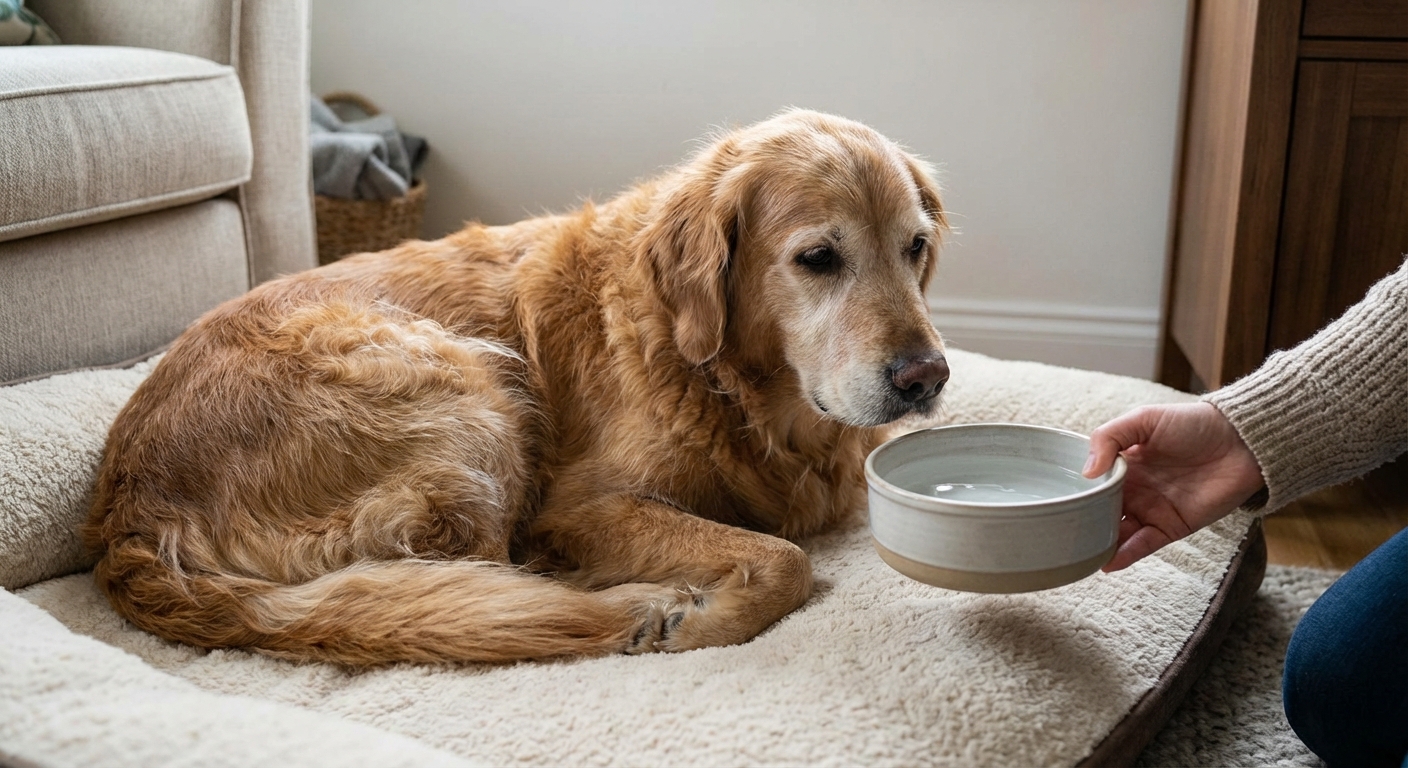
Diarrhea can dehydrate dogs quickly. Encourage drinking with fresh water and frequent potty breaks. If your dog is vomiting, seems weak, will not drink, or you are seeing dehydration signs (sticky gums, sunken eyes), call your vet the same day.
4) Ask before giving meds
Please do not give human anti-diarrheals, aspirin, ibuprofen, or other over-the-counter meds unless your vet specifically tells you to. Some are dangerous for dogs and can worsen bleeding.
5) Consider a vet-approved probiotic
Many veterinarians recommend probiotics for acute diarrhea and stress colitis. The key is using a product made for pets and following your clinic’s dosing instructions.
6) Bring a stool sample if you can
If your vet asks for a fecal test, a fresh sample helps. In general:
- Pick up a small amount (about 1 to 2 teaspoons) in a clean bag or container
- Keep it cool and bring it in as soon as you can (often within 12 to 24 hours)
- Do not freeze it unless your clinic tells you to
If your clinic has different instructions, follow theirs.
What your vet may do
Blood in stool is a symptom, not a diagnosis. Your veterinarian’s job is to find the cause and treat it safely.
- Fecal testing to check for parasites and giardia
- Parvo testing when risk is present (especially puppies and unvaccinated dogs)
- Physical exam including hydration status and abdominal palpation
- Anal gland evaluation if there is straining, scooting, or rear-end discomfort
- Bloodwork if your dog seems unwell, has persistent symptoms, or there is concern for systemic illness
- X-rays or ultrasound if a foreign body, obstruction, or mass is suspected
- Treatment may include diet therapy, deworming, probiotics, fluids, or medications for inflammation or infection when indicated
If your dog has red blood in stool for more than 24 to 48 hours, or it keeps coming back, that is your cue to schedule an exam. Persistent bleeding is your dog asking for help.
How to help prevent it
Some cases are unavoidable, but many are preventable with a few habits that really do add up.
Go slow with diet changes
If you are switching foods, do it gradually over 7 to 10 days. Sensitive dogs may need even longer.
Stay consistent with parasite prevention
Use vet-recommended preventives and bring in fecal samples at regular wellness visits, especially if your dog visits dog parks or daycare.
Reduce trash access
Secure trash cans, watch backyard hazards, and avoid giving cooked bones. Many GI upsets start with something sneaky your dog found before you did.
Support gut health
High-quality, balanced nutrition, adequate hydration, and routine exercise can help keep stools consistent. If your dog is prone to stress diarrhea, talk with your vet about proactive strategies before travel or boarding.
Quick triage
Monitor and contact your vet
- Small streak of bright red blood once
- Dog is acting normal, eating, drinking
- No vomiting, no weakness
Call your vet today
- Blood continues into the next day
- Diarrhea is frequent or contains mucus
- Straining, obvious discomfort, or repeated episodes
- You suspect a medication side effect (NSAID or steroid) or recent diet change triggered it
Emergency clinic now
- Black, tarry stool
- Large amount of blood or rapidly worsening bloody diarrhea
- Vomiting, collapse, pale gums, severe lethargy
- Puppy or unvaccinated dog with bloody diarrhea, especially with vomiting
- Possible toxin exposure or foreign body
Final note
Red blood in poop is never something to ignore, but it is often treatable once the cause is identified. Trust your instincts. You know your dog best. If something feels off, call your veterinarian and bring the details you collected. That information can speed up answers and relief for your pup.