
Dog Paw Pad Peeling: Causes and Treatment

If your dog’s paw pads are peeling, cracking, or feeling rough, it can look alarming. The good news is that many cases are caused by everyday things like weather and walking surfaces, and they often respond well to simple home care. But sometimes peeling paw pads are a sign of an allergy, a nutritional issue, an infection, or a skin condition that truly needs veterinary treatment.
Below are the most common causes, what you can safely do at home, and the red flags that mean it is time to call your vet.
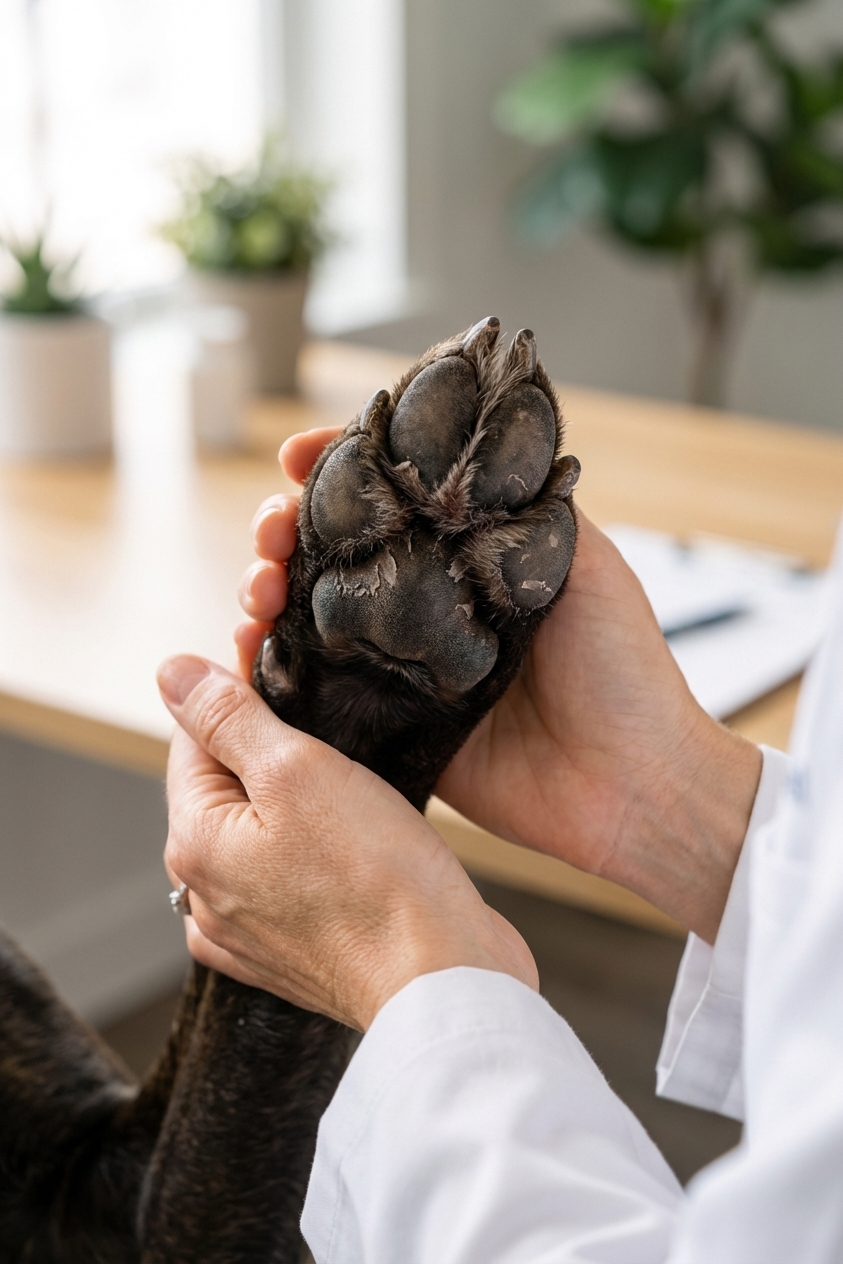
What normal paw pads look like
Healthy paw pads are a little tough and slightly textured, like a well-cared-for callus. They should not be bleeding, deeply cracked, swollen, or painful to touch.
A little seasonal dryness can happen, especially in winter. What we worry about is persistent peeling, deep fissures, limping, licking that doesn’t stop, or any discharge or odor.
Common causes
Hot pavement and surface burns
In hot climates, heat injury is one of the most common reasons paw pads peel. Pavement, asphalt, and dark concrete can get hot enough to burn pads quickly. Burns can cause peeling days later as damaged layers slough off.
- Clues: sudden limping on walks, reluctance to walk, pads look red or shiny, blistering, peeling that appears after a hot outing
- Higher risk: midday walks, long distances on pavement, dogs that pull and cannot avoid hot patches
Rule of thumb: If the ground feels uncomfortably hot to you, it is likely too hot for paws. When in doubt, choose grass or shade, walk early or late, use booties, or check the surface temperature with an infrared thermometer.
Quick first aid for burns
If you think your dog burned their pads on hot pavement:
- Move to a cool surface immediately.
- Rinse paws with cool (not ice-cold) running water for several minutes.
- Do not pop blisters.
- Keep the paw clean and prevent licking. A clean, loose covering can help during transport, but avoid tight or sticky bandages and call your vet for guidance.
- Do not apply human burn creams or numbing products unless your vet specifically approves. Many contain ingredients dogs should not lick.
- Call your vet the same day, especially if there are blisters, raw areas, or limping.
Cold weather, ice, and de-icers
Cold, dry air can dehydrate paw pad skin. Ice can abrade pads, and salt and chemical de-icers can cause irritation that leads to cracking and peeling. Some dogs also get redness between toes.
- Clues: rough pads in winter, paw lifting, licking after walks, red skin between toes, worse after sidewalks treated with salt
Allergies and contact irritation
Environmental allergies can affect feet more than many people realize. Dogs often show allergy discomfort through paw licking and chewing. Over time, constant licking plus inflammation can damage the pad surface and lead to peeling. Irritants like lawn chemicals, cleaners, or rough surfaces can do something similar.
- Clues: itchy paws, frequent licking, seasonal flare-ups, ear infections, red or brown saliva staining between toes, symptoms in more than one paw
Yeast or bacterial infection
When paws stay inflamed or damp, yeast and bacteria can overgrow. Infection can make pads scaly, thick, or peeled, and it can be quite painful.
- Clues: odor, greasy or moist skin between toes, redness, discharge, increased licking, sore spots or pustules
Foreign body or injury
A small cut, thorn, foxtail, splinter, or piece of grit can trigger licking and limping, and that self-trauma can lead to cracking and peeling. Sometimes you never see the original culprit, you just see the fallout.
- Clues: sudden one-paw limping, focused licking of one spot, swelling between toes, a small puncture, bleeding, pain when you spread the toes
Zinc-related skin disease
Zinc plays a role in skin health and repair. True dietary zinc deficiency is uncommon in dogs eating a complete and balanced commercial diet, but zinc-responsive dermatosis can occur. It is more likely in certain breeds or when diets are unbalanced, or when absorption is affected.
- Clues: crusting around the mouth or eyes, hair loss, recurrent scaling, poor coat quality, slow healing, paw pad cracking
- Higher risk: Nordic breeds such as Siberian Huskies and Alaskan Malamutes, dogs eating unbalanced homemade diets, and sometimes diets that interfere with mineral absorption
Diagnosis requires a veterinary exam and testing. Do not add zinc supplements on your own without guidance. Too much zinc can be harmful.
Autoimmune skin disease (pemphigus foliaceus)
Pemphigus foliaceus is an autoimmune condition where the immune system attacks the skin, leading to crusting and lesions. It can affect the face and ears and may involve the feet, paw pads, and nail area.
- Clues: widespread crusting, pustules, painful feet, lesions on nose or ears or around eyes, worsening despite basic moisturizers, multiple areas affected
Hyperkeratosis
Hyperkeratosis means an overgrowth of keratin that makes pads thick, dry, and sometimes “hairy” or very rough. Over time, thickened pads can crack and peel. It may be inherited in some breeds or occur with other medical problems.
- Clues: very thick pads that keep returning to the same rough state, cracks at the edges, discomfort on hard floors, gradual onset
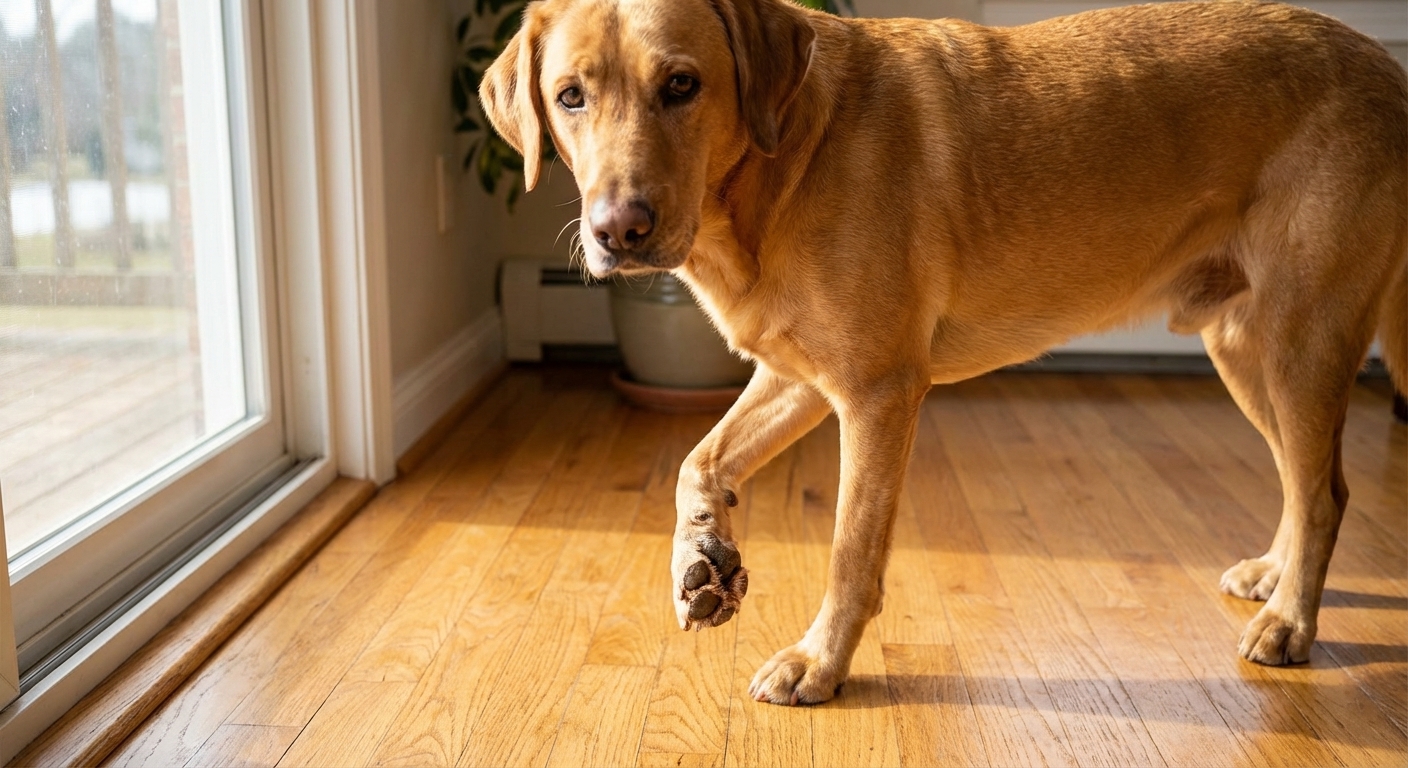
Rare but serious systemic disease
In rare cases, severe cracking and crusting of paw pads can be linked to systemic illness. One example is hepatocutaneous syndrome, which is associated with liver disease and can cause painful crusting on the feet along with other skin changes. This is not common, but it is a reason persistent, painful pad disease should be evaluated promptly.
Home care for mild cases
If your dog is acting normal, walking comfortably, and you see mild dryness or superficial peeling with no bleeding, you can usually start with gentle home care for a few days.
1) Clean and dry
- After walks, rinse paws with lukewarm water to remove salt, pollen, and irritants.
- Pat dry, especially between toes. Moisture trapped between toes can fuel yeast.
2) Protect on rough days
Booties are wonderful for hot pavement, icy sidewalks, or salty trails. If your dog hates booties, a paw wax can add a thin protective layer, but it is not as protective as a well-fitting boot.
3) Use a dog-safe balm
Look for pet-safe balms made for paw pads. Apply a thin layer and let it absorb. For dogs that lick, do it right before a meal or use an e-collar briefly so it can soak in.
- Avoid: products with strong essential oils, heavy fragrances, or anything that stings on cracked skin.
- Also avoid: human pain creams, numbing agents (like lidocaine or benzocaine), diaper rash creams (often zinc oxide), or human medications unless your vet tells you to.
- Tip: For rough, thick pads, consistent daily use matters more than a thick one-time coating.
4) Reduce licking
Licking is a major reason mild irritation turns into a bigger problem. If your dog cannot stop, use a cone or inflatable collar and call your vet, especially if you suspect allergy or infection.
5) Adjust walks
- Heat: walk early morning or after sunset, choose grass or shaded trails.
- Cold: shorten walks on icy days and rinse off de-icers right away.
- Indoors: consider runners or rugs if hard floors seem to bother sensitive paws.
6) Nutrition check for homemade diets
I love whole-food diets, but they need to be balanced. If your dog is on homemade food and you are seeing repeated skin issues, it is worth reviewing the recipe with a veterinarian or board-certified veterinary nutritionist. Nutrient gaps can show up in the skin.
When to call your vet
Please contact your veterinarian promptly if you notice any of the following:
- Limping or your dog is reluctant to walk or put weight on a paw
- Bleeding, open cracks, blisters, or raw tissue
- Swelling, warmth, or significant redness
- Discharge, a bad odor, or moist weeping skin between toes
- Severe licking that you cannot interrupt
- Multiple paws affected at once, or recurring flare-ups
- Other symptoms like fever, lethargy, loss of appetite, vomiting, or skin lesions on the face or ears
- Thick “hairy” pads that keep cracking and do not improve with balm (possible hyperkeratosis)
These cases may need prescription therapy such as medicated wipes or shampoos, antibiotics or antifungals, allergy medications, pain control, bandaging, or diagnostics like skin cytology, skin scraping, and sometimes biopsy if autoimmune disease is suspected. Recurring paw issues can also be tied to problems like parasites, endocrine disease, or deeper inflammation between the toes, so do not feel like you are overreacting by getting it checked.
Prevention
- Choose safer walking times: avoid the hottest part of the day in summer.
- Use protection: booties for extreme heat, ice, or salt.
- Rinse after walks: especially during allergy season or when sidewalks are treated.
- Keep nails and fur trimmed: long nails and hair between pads can change footing and increase friction.
- Use balm proactively: a few times a week for dogs prone to dryness or hyperkeratosis.
- Address allergies early: controlling itch helps prevent self-trauma to pads.
FAQ
Is paw pad peeling normal during shedding season?
Paw pads do not “shed” the way fur does, but they can slowly slough dead skin. Small flakes can be normal. Large sheets peeling off, cracking, bleeding, or pain is not normal and deserves attention.
Can I use Vaseline or coconut oil on dog paws?
Some owners use them, but licking is the big issue. A dog-specific paw balm is usually a better option because it is designed for paws and tends to be safer if a small amount is ingested. If your dog is licking constantly, any product becomes less helpful because it cannot stay on long enough to work.
How long should it take to improve with home care?
For mild dryness, you often see improvement within 3 to 7 days with protection and balm. If things are worsening, your dog is limping, or you see odor, redness, discharge, or swelling, do not wait. Those signs point toward infection, burns, allergy inflammation, a foreign body, or another medical issue.
Your dog’s paws do a lot of work every day. If you treat peeling early with protection and moisture, you can often prevent the painful cracks and infections that come later.