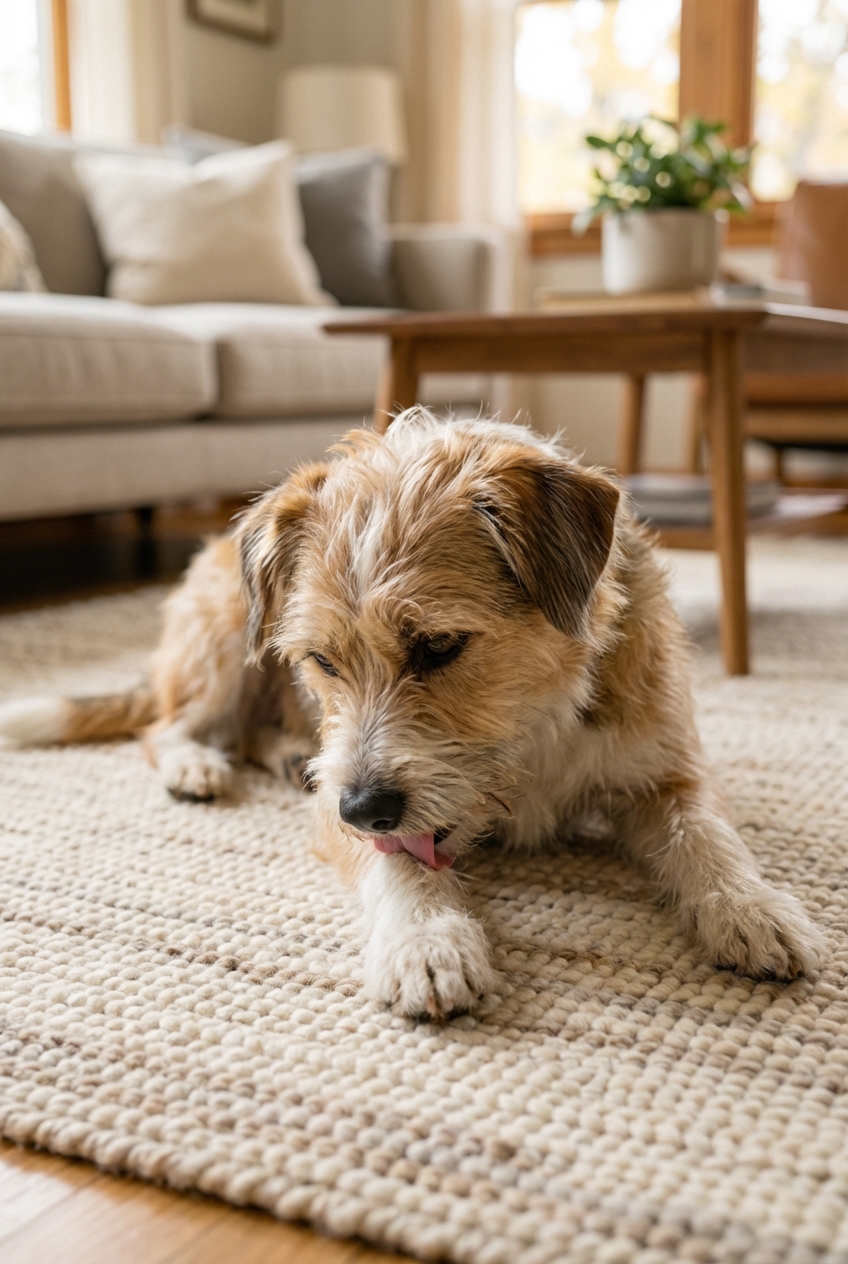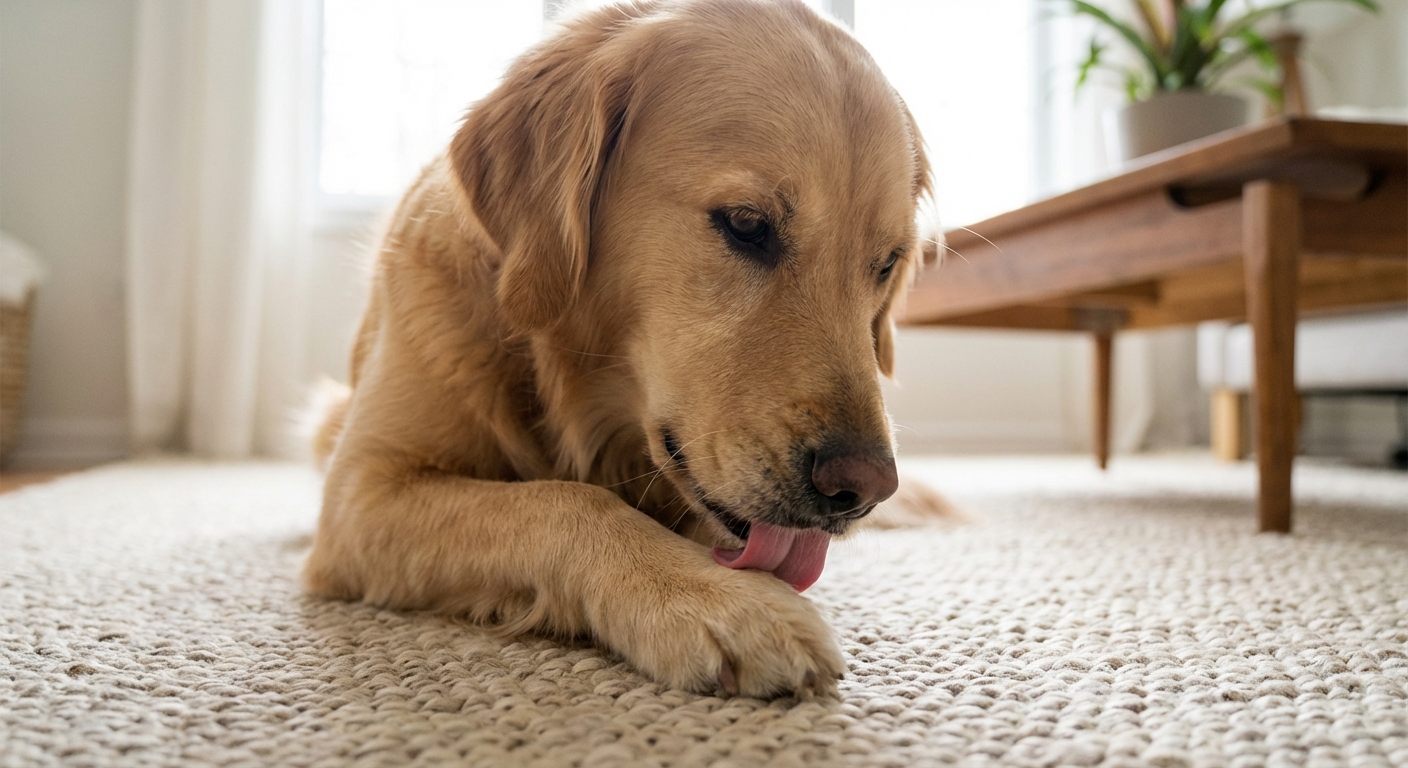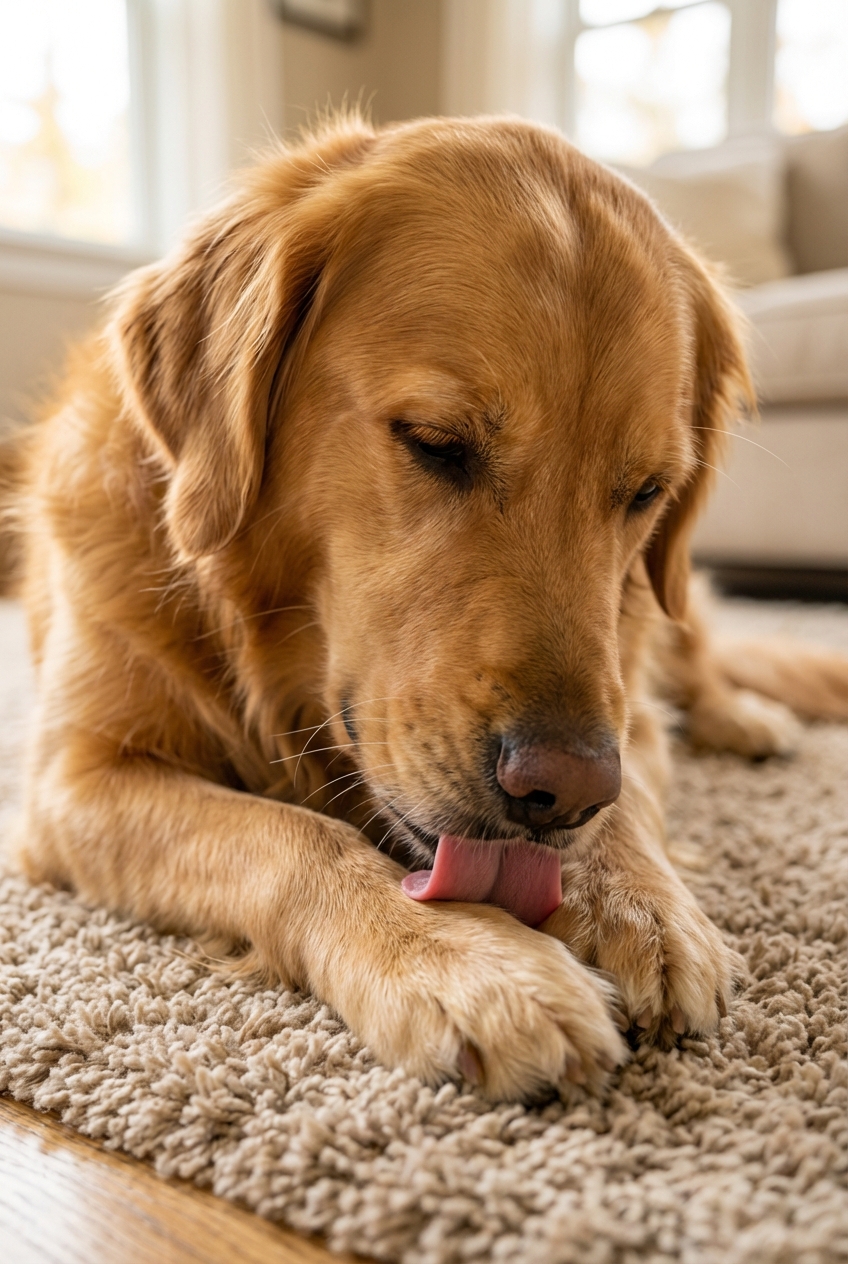
Frequent paw licking can signal allergies, infection, irritants, pain, parasites, or a foreign body. Learn red flags, simple at-home paw checks, and when to ...
Article
•
Designer Mixes
Dog Paw Licking: Causes, Care, and When to Worry

Shari Shidate
Designer Mixes contributor
If you live with a dog, you have probably seen it: a little paw licking after a walk, or a full-on licking session that seems to come out of nowhere. Some paw licking is totally normal. But when it becomes frequent, intense, or your dog cannot “settle” without licking, it is usually your dog’s way of saying: something itches, hurts, or feels off.
As a veterinary assistant here in Frisco, Texas, I like to approach paw licking with two goals: (1) help you narrow down the most likely cause, and (2) give you safe, practical steps you can take at home while you decide if it is time to call your vet.
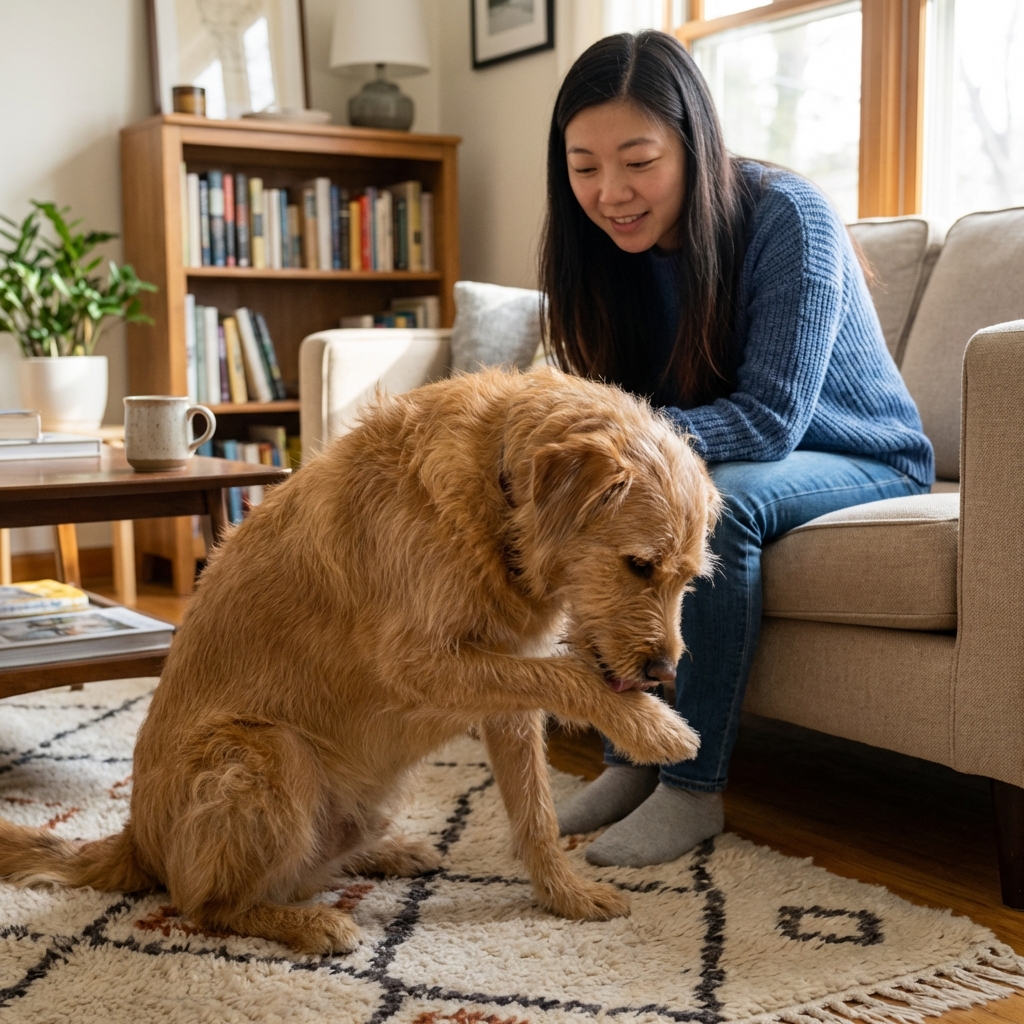
Normal vs. excessive paw licking
What can be normal
- Brief licking after coming inside from grass, sand, or rain
- Occasional grooming that stops easily when redirected
- Light cleaning of a paw after stepping in something sticky
Signs it is becoming a problem
- Licking that happens daily or for long stretches
- Waking up at night to lick or chew paws
- Red, rusty-brown stained fur between toes
- Swelling, limping, or sensitivity when you touch the paw
- Hair loss, thickened skin, odor, or discharge
- Cracked pads or bleeding
If you see skin breakdown, strong odor, pus, or a sudden limp, move “vet visit” up the list. Paw issues can go from mild irritation to infection quickly.
The most common reasons dogs lick their paws
1) Allergies (environmental or food)
Allergies are one of the top causes of chronic paw licking. Dogs do not always show allergies as sneezing like humans do. They often show it through itchy skin, especially paws, belly, ears, and face.
- Environmental allergies (pollens, grasses, molds, dust mites) often flare seasonally, but in Texas they can be year-round.
- Food allergies are less common than environmental allergies, but they do happen and can present with paw licking, ear infections, and itchy skin.
Clue: If paw licking comes with recurrent ear infections or itchy belly, allergies jump higher on the list.
2) Yeast or bacterial infection
Moist, warm areas between toes are a perfect place for yeast and bacteria to overgrow, especially in allergy-prone dogs. Infected paws often smell “corn chip-like” or musty, look red, and may have discharge or soggy skin between toes.
Important: Licking can be the cause and the consequence. A little itch leads to licking, licking damages the skin, and then infection sets in, which itches even more.
3) Irritants and contact reactions
Think about what your dog’s paws touch: lawn chemicals, de-icers, hot pavement, mulch, cleaning products, and even certain grasses. Contact irritation can trigger sudden licking after walks.
- Hot sidewalks can cause burns and peeling pads
- Foxtails and splinters can hide between toes
- Cleaning solutions on floors can be irritating if not rinsed well
4) Pain: injury, arthritis, or nail problems
Dogs lick where it hurts. A torn nail, foreign body, small cut, or interdigital cyst can cause persistent licking of one paw. Older dogs may lick due to joint pain or arthritis, sometimes focusing on a specific foot or leg.
Clue: If only one paw is targeted, think injury, foreign body, nail issue, or localized infection first.
5) Parasites
Fleas, mites, and other parasites can cause intense itching. Even indoor dogs can be exposed. If your dog is not on consistent vet-recommended parasite prevention, put this on your checklist.
6) Anxiety, boredom, or compulsive behavior
Some dogs lick as a self-soothing habit, especially during stress, changes in routine, or when they do not get enough mental and physical enrichment. This can become a repetitive behavior that is hard to break without addressing the underlying need.
Clue: Paw licking that increases during loud events, when left alone, or at night can have a behavioral component, even if there is also mild skin irritation.
At-home paw check: a simple 2-minute routine
You do not need fancy tools. Just good light and gentle handling.
- Look: Check pads, nail beds, and between toes for redness, swelling, foreign objects, or dark discharge.
- Smell: A strong musty or “corn chip” odor can suggest yeast overgrowth.
- Feel: Compare paws. Is one warmer, thicker, or more tender?
- Watch your dog walk: Any limping, toe-touching, or shifting weight?
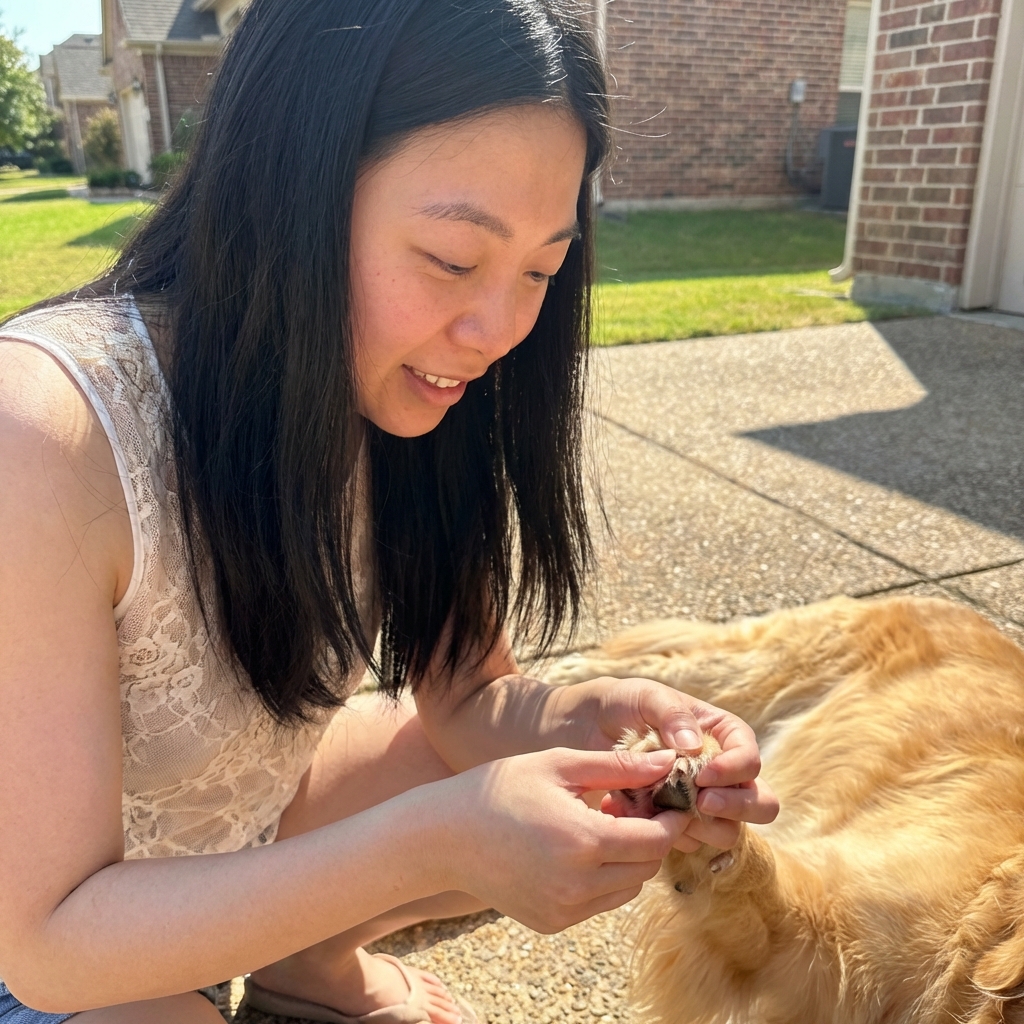
If your dog yanks away, cries, or you see a puncture wound, do not dig deeply with tweezers. That is a good time for a vet exam.
Safe, evidence-based steps you can try at home
Step 1: Rinse and dry after outdoor time
This is one of the simplest, most effective habits for allergy and irritant-prone dogs.
- Rinse paws with cool water after walks or yard time
- Pat dry thoroughly, especially between toes
- During heavy pollen seasons, consider a quick wipe-down of legs and belly too
Step 2: Prevent the lick cycle
If the skin is raw, licking is not “helping,” it is delaying healing. Use a cone (E-collar) or soft recovery collar if needed for a few days while you address the cause.
Step 3: Consider short-term paw protection
- Booties can reduce exposure to grass and chemicals and protect against hot pavement.
- Paw wax can help some dogs with mild pad irritation.
Tip: If your dog hates booties, start slow with a few minutes indoors and reward heavily.
Step 4: Basic enrichment for stress-related licking
If licking seems linked to boredom or anxiety, build in healthy “replacement behaviors.”
- Daily sniff walks (even 10 to 15 minutes of sniffing is powerful)
- Food puzzles, lick mats, or frozen stuffed toys (supervised)
- Short training sessions for mental work
- A predictable routine, especially for sensitive dogs
What to avoid
- Do not use human creams, essential oils, or alcohol on paws unless your veterinarian approves. Many products are irritating or unsafe if licked.
- Do not wrap a paw tightly at home. Bandages that slip or trap moisture can worsen infection.
- Do not ignore a strong odor, discharge, or worsening redness. These usually need medical treatment.
When to call the vet right away
Paw licking becomes urgent when there are signs of pain, infection, or a foreign body that needs removal.
- Sudden limping or refusing to bear weight
- Bleeding, a torn nail, or a puncture wound
- Swelling between toes, a lump, or a draining tract
- Pus, significant redness, heat, or foul odor
- Skin is open, ulcerated, or your dog cannot stop licking
- Your dog seems lethargic, feverish, or not eating
Your vet may recommend cytology (checking for yeast and bacteria), allergy management, parasite prevention updates, medicated wipes or shampoos, prescription anti-itch medications, antibiotics or antifungals, and sometimes an elimination diet trial if food allergy is suspected.
How diet and skin health fit in
Nutrition does not “cure” all paw licking, but it can absolutely support the skin barrier and immune health. If your dog has recurring skin trouble, talk with your veterinarian about:
- Consistent omega-3 fatty acids (EPA and DHA) for skin inflammation support
- High-quality, balanced diet that meets AAFCO standards, or a properly formulated homemade plan
- Weight management, since extra weight can worsen inflammation and mobility pain
If you are interested in homemade food, please do it in a balanced way. Dogs need the right calcium-to-phosphorus ratio and appropriate vitamins and minerals. A veterinary nutritionist or a vetted recipe source can help you do it safely.
Quick troubleshooting guide
If it is mostly one paw
- Think: thorn, foxtail, splinter, cut, nail injury, cyst
- Do a careful paw check, limit licking, and call the vet if tenderness or swelling is present
If it is all paws and comes and goes
- Think: seasonal allergies, contact irritation
- Rinse and dry after walks, consider booties, and talk to your vet about allergy control
If there is odor and redness between toes
- Think: yeast or bacterial overgrowth, often linked to allergies
- Plan for a vet visit, since treatment is usually needed
If licking is worst during stress or downtime
- Think: anxiety or compulsive habit
- Increase enrichment, add structure, and involve your vet if it persists
Bottom line
Paw licking is a clue, not just a quirky habit. The earlier you catch irritation and break the lick cycle, the easier it is to prevent infections and chronic skin flare-ups. Start with a quick paw check, rinse and dry after outdoor time, and do not hesitate to loop in your veterinarian when you see pain, odor, swelling, or worsening redness.
Your dog is not trying to drive you crazy. They are communicating the only way they can. And with the right steps, most paw licking can be improved significantly.