Understand why dog-on-dog aggression happens, how to read early stress signals, and how to improve behavior with safety-first management and evidence-based t...
Article
•
Designer Mixes
Dog Park Etiquette

Shari Shidate
Designer Mixes contributor
Dog parks can be such a gift when they are used thoughtfully. They give dogs a safe(ish) place to run, sniff, and socialize, and they give us humans a chance to breathe and connect too. But as a veterinary assistant here in Frisco, Texas, I can tell you that many preventable injuries and scuffles start with simple etiquette missteps.
The goal is not “perfect” behavior. The goal is a calmer park where dogs feel safe, owners feel confident, and everyone goes home with the same number of ears and tails they arrived with.
Before you go: set your dog up for success
Skip the park if your dog is sick, injured, or not fully vaccinated
Dog parks are high-contact environments. Coughing, diarrhea, vomiting, limping, or an open wound are solid reasons to choose a quiet walk instead. If your dog is a puppy, talk with your veterinarian about when public dog spaces are appropriate based on vaccine status and local disease risk.
Take the edge off first
A quick sniffy walk or a few minutes of training at home can help your dog arrive with a calmer brain. It often prevents that rude, high-speed greeting that starts trouble at the gate.
Choose the right time and the right area
If your dog is new to dog parks, go at off-peak hours. Fewer dogs usually means less pressure and fewer pile-ups. If your park has separate areas for small dogs, use them as intended. Size differences can turn play into an injury in seconds, even when everyone “means well.”
Know your dog’s play style
Some dogs love body-slamming wrestling. Others prefer chase games or parallel sniffing. A mismatch is not bad manners, it is just information. If your dog is consistently overwhelmed or overbearing, the dog park may not be the best social outlet right now.
At the gate: a common flashpoint
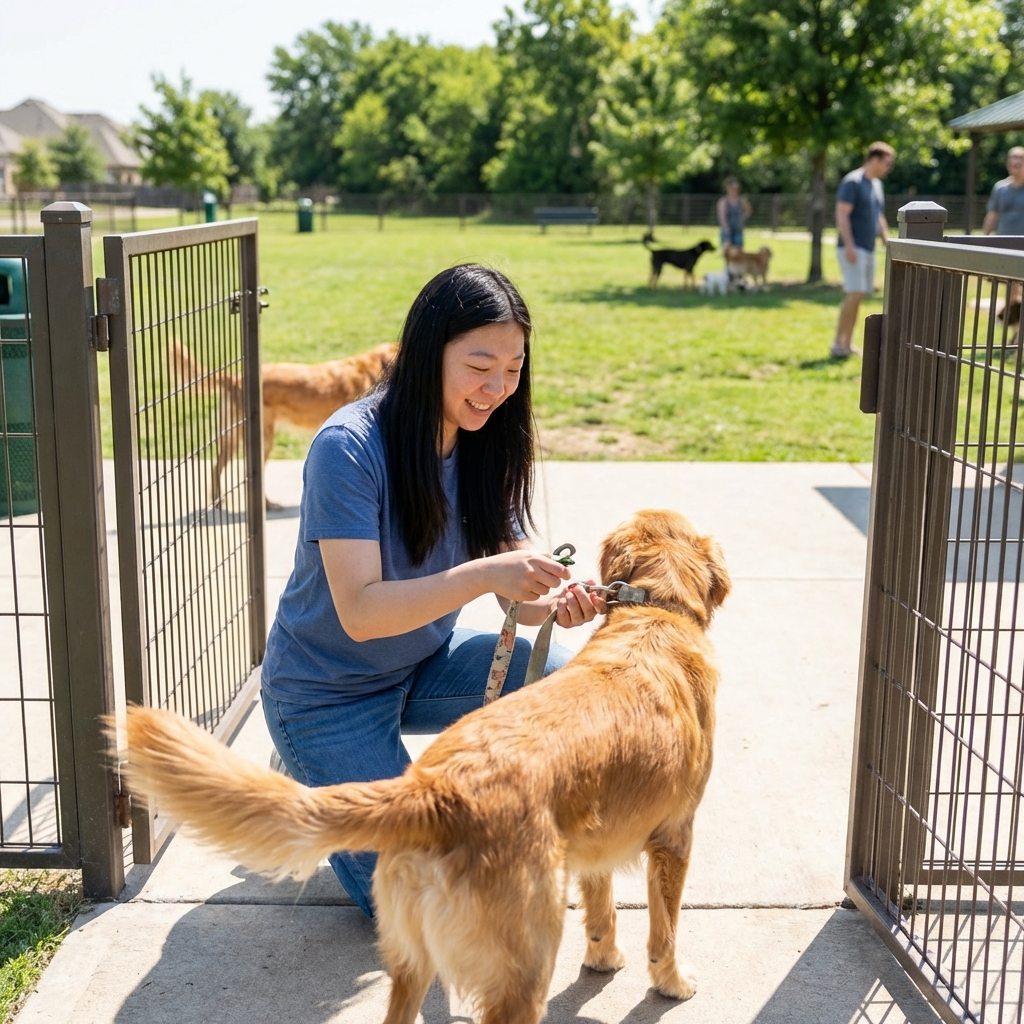
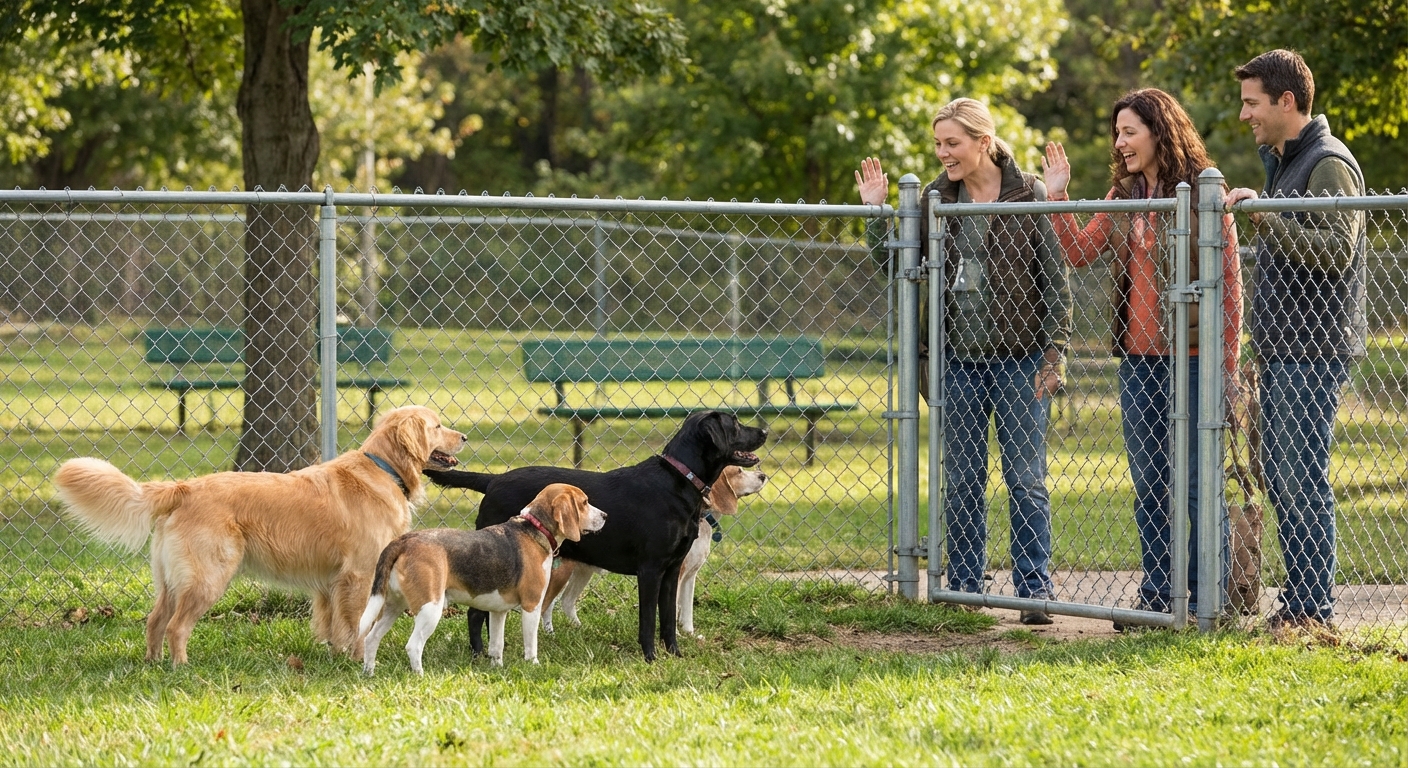
Use the double gate
Most parks have a holding pen or “airlock” entry. This is there for a reason. Step inside, close the outer gate, then clip or unclip your leash calmly before opening the inner gate. One open gate at a time helps prevent escapes.
Avoid entering while leashed
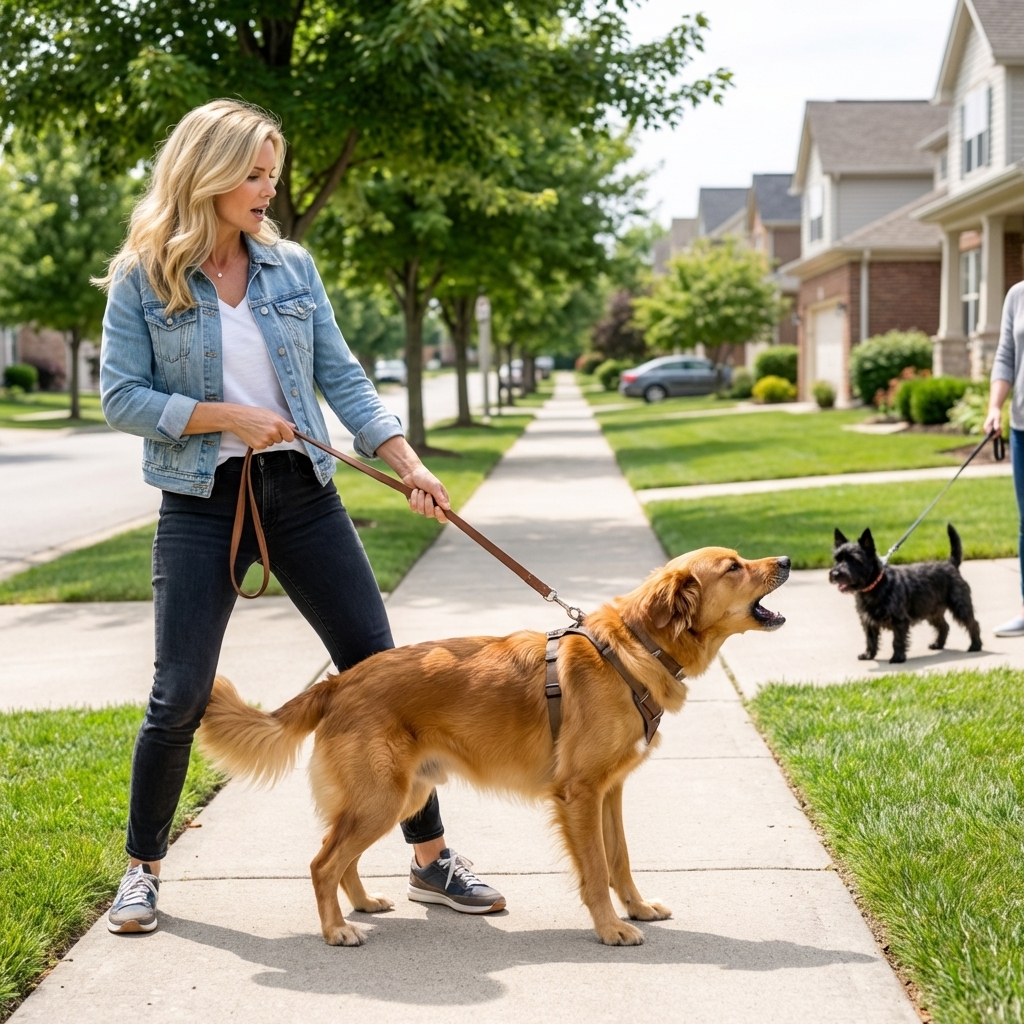
Walking into the main off-leash area with your dog still on leash can create tension fast. Leashes limit natural movement and can make a dog feel trapped, which increases the chance of reactive behavior. Whenever possible, remove the leash inside the secure holding pen, then enter the park.
If you cannot safely unclip in the holding pen because it is crowded or chaotic, do not push through. Step out, wait for space, or come back later. Your dog does not need to “tough it out” at the gate.
Pause if there is a mob
If several dogs are swarming the entrance, wait. Ask owners to call their dogs away, or enter when the crowd disperses. Tight spaces plus high excitement are a recipe for scuffles.
Watching play: good manners
Stay engaged
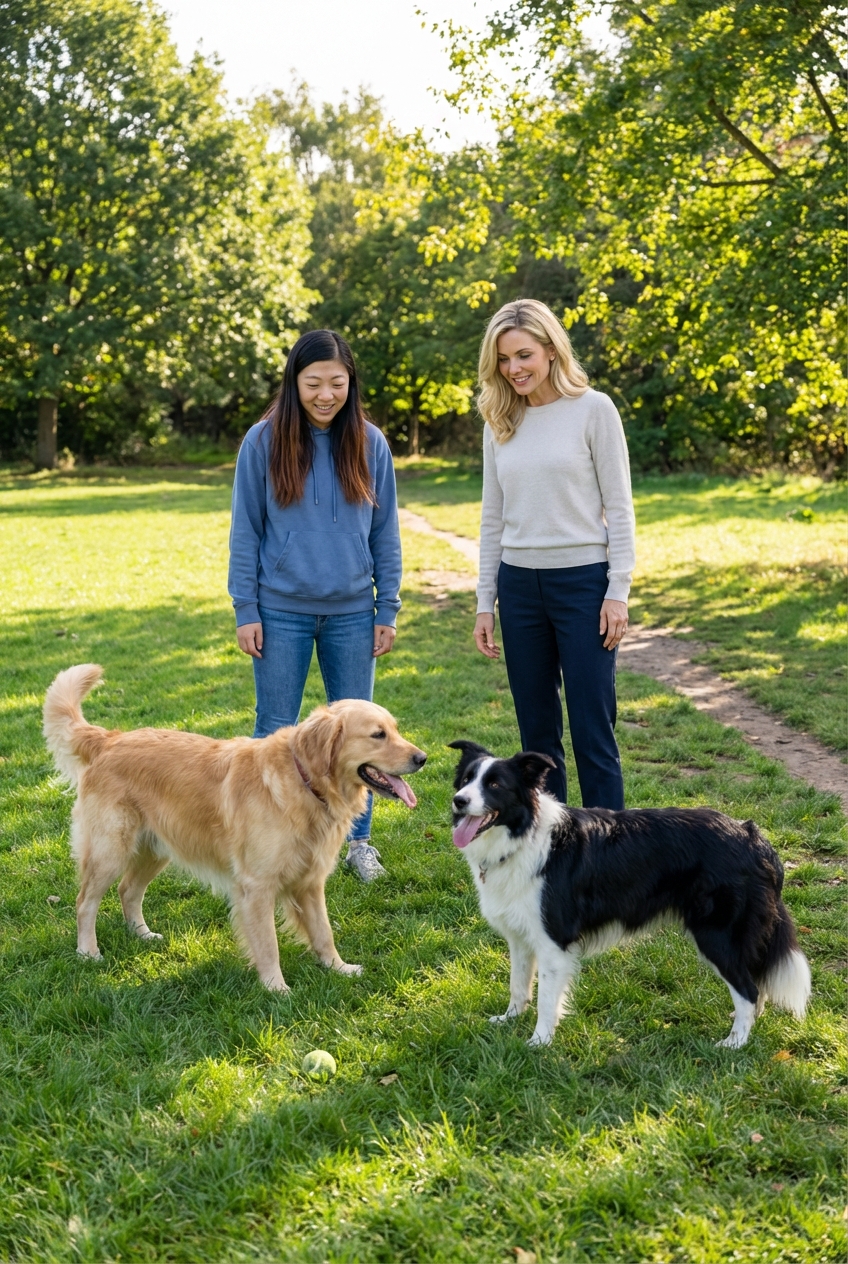
The dog park is not the best place for long phone calls. Most problems are small at first: a hard stare, one dog repeatedly pinning another, a dog who will not take “no” for an answer. If you catch it early, you can redirect and prevent escalation.
Healthy play signs
- Loose bodies with wiggly movement, not stiff posture.
- Play bows, bouncy movements, and self-handicapping (bigger dog softens their play).
- Role reversals where chasing and being chased switches back and forth.
- Short breaks where dogs pause, shake off, sniff, then re-engage.
Red flags
- One dog is trying to leave and keeps getting followed or body-blocked.
- Play is turning into repeated pinning, cornering, or relentless mounting.
- Hackles up plus stiff legs and hard staring.
- Growling that escalates with snapping, snarling, or yelping.
- A group “packs up” and chases one dog intensely.
When in doubt, call your dog to you, leash up, and take a short break outside the main play area. A two-minute reset can prevent a ten-minute disaster.
Rules that keep it safe
Pick up waste
This is basic courtesy, but it is also health protection. Parasites and bacteria spread easily in shared spaces. Bring your own bags even if the park provides them, because dispensers run out at the worst times.
Leave food at home
Food can trigger guarding behavior, even in dogs who are normally easygoing. If you need rewards for training, use very low-value treats and keep them discreet, or practice training outside the fence line instead.
Be careful with toys
Some parks allow toys, some do not. Even when toys are allowed, they can cause conflict if multiple dogs want the same ball. If you bring a toy, be ready to put it away the moment excitement shifts into guarding, crowding, or snapping.
Skip busy areas with little kids
Dogs in full-speed zoom mode can knock down an adult, and kids can be unpredictable to dogs. If your park has a separate walkway or viewing area, that is often the safer choice.
Follow posted rules
Limits on dog age, vaccination status, hours, toy policies, and number of dogs per person exist because someone learned a lesson the hard way.
Breaking up trouble safely
Call your dog away early
The best time to stop a fight is before it starts. Practice a strong recall at home so you can use it when the park gets intense.
Avoid grabbing collars
Hands near mouths is how owners get bitten, even by their own dog. If a scuffle happens:
- Stay as calm as you can and use a firm voice.
- Create space by calling dogs away and having owners leash up.
- If you must physically separate and there are two adults, consider the wheelbarrow method (each person lifts their dog’s back legs and moves backward). Lift at the same time. If only one dog gets lifted while the other is still anchored, the lifted dog can take serious underbelly bites.
- Once separated, leash and leave to decompress.
If any dog is injured, seek veterinary care promptly. Punctures can look small and still be serious under the skin.
Etiquette for humans
Ask before leashed greetings
The area right outside the dog park is often crowded. Some dogs are fine off-leash but reactive while leashed. A quick “Is it okay if they say hi?” prevents misunderstandings.
Do not shame early exits
A good dog park visit can be five minutes. If someone notices their dog is overwhelmed and chooses to go, that is responsible. Normalize that.
Be honest about your dog
If your dog is in a phase where they guard balls, mount other dogs, or get overwhelmed in crowds, it is not a character flaw. It is a training opportunity. Management is part of good manners.
Simple checklist: calmer trips
- Arrive with your dog already exercised a little if possible.
- Enter the double gate one gate at a time.
- Unclip inside the holding pen, then enter the main area.
- Keep leashes and collars safe and secure (quick-release is helpful).
- Stay present and watch body language.
- Call breaks often, especially if play gets intense.
- Pick up waste immediately.
- Leave food at home, and use toys thoughtfully.
- End on a good note and exit before your dog is overstimulated.
Dog parks work best when we think of them as a shared community space. Your choices help set the tone. And when you build good habits, you will be amazed how much more fun a dog park can be for everyone, especially your dog.