Dog Nose Dry and Cracked: Causes and Home Care

If you have ever looked down at your dog and thought, “Why is my dog’s nose so dry and crusty today?”, you are not alone. A dog’s nose can go from smooth and moist to dry, rough, or cracked for simple reasons like weather changes, sleep, or rubbing on surfaces. But sometimes, a dry and cracked nose can be your dog’s way of waving a small red flag that something else is going on.
As a veterinary assistant, I like to start with this reassurance: a dry nose by itself is not automatically an emergency. What matters is the whole picture, including your dog’s energy, appetite, hydration, skin, and whether the nose looks painful, bleeds, or develops sores.
Quick note: This article is for general education and is not a substitute for veterinary care. If you are worried, trust your instincts and call your vet.
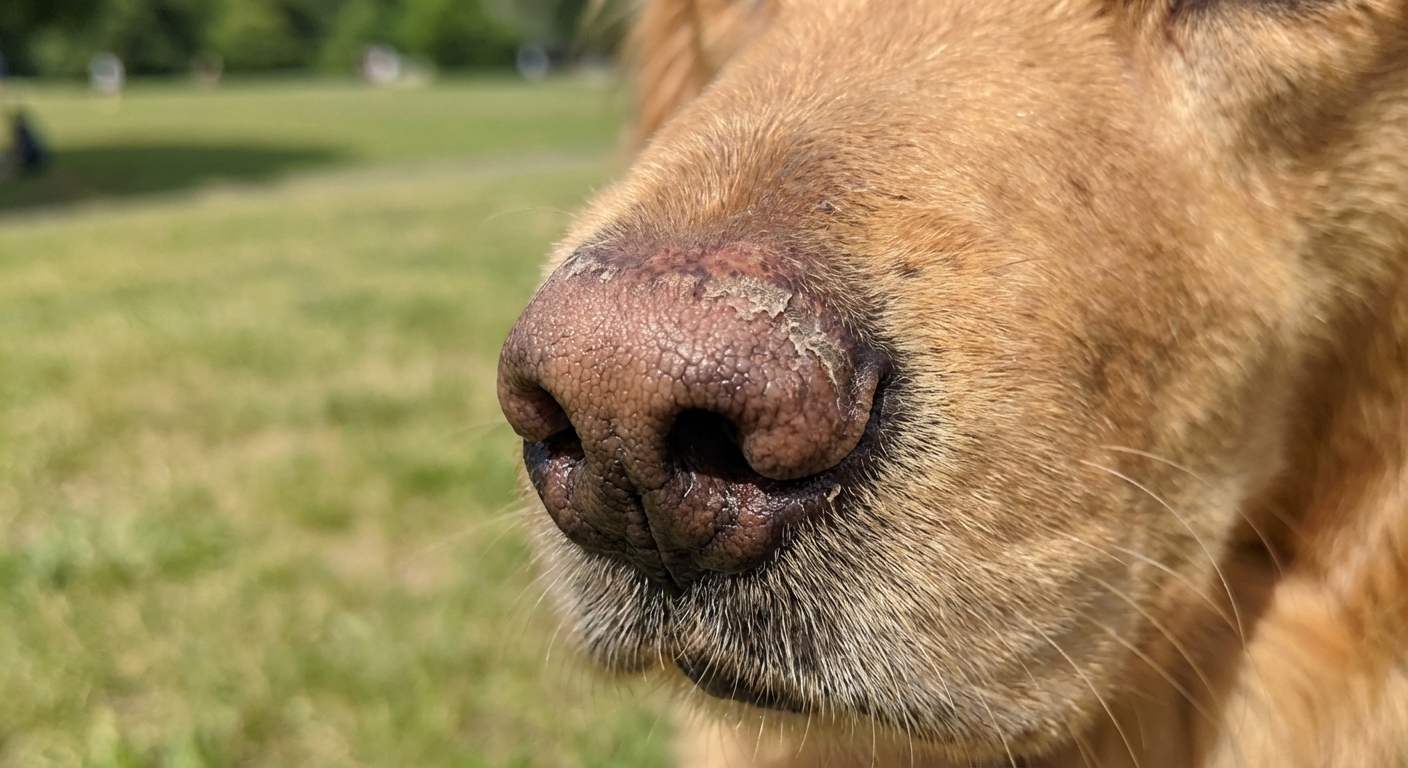
What a healthy dog nose looks like
Many healthy dogs have noses that vary throughout the day. A “normal” nose can be:
- Cool or warm, depending on sleep, exercise, or environment
- Moist or slightly dry at different times
- Smooth without thick crusts, deep cracks, or bleeding
A nose that is consistently thickened, crusty, cracked, bleeding, or changing color is when it is worth digging deeper.
Common causes of a dry or cracked dog nose
1) Dry air and weather
Cold air, wind, indoor heating, and low humidity can dry out the sensitive skin on the nose, especially in winter. Some dogs also press their nose against crates, bedding, carpet, or doors, which can make dryness worse.
Tip: When rubbing is the main trigger, people often call it “kennel nose.” It is usually more of an abrasion than a medical disease, but it can crack and get infected if it keeps happening.
2) Mild dehydration or illness
Dehydration and illness can contribute to dryness, but a dry nose is not a reliable test for dehydration on its own. Dogs can have a dry nose and be perfectly hydrated, and dogs can be dehydrated with a nose that still feels moist.
Clues it might be dehydration or an underlying illness:
- Sticky or tacky gums
- Reduced energy
- Sunken-looking eyes
- Less frequent urination or dark yellow urine
- Vomiting or diarrhea
- Heavy panting, fever, or not eating normally
If your dog seems sick along with the dry nose, focus less on the nose and more on the underlying issue. That is a “call your vet” situation.
3) Sunburn and sun damage
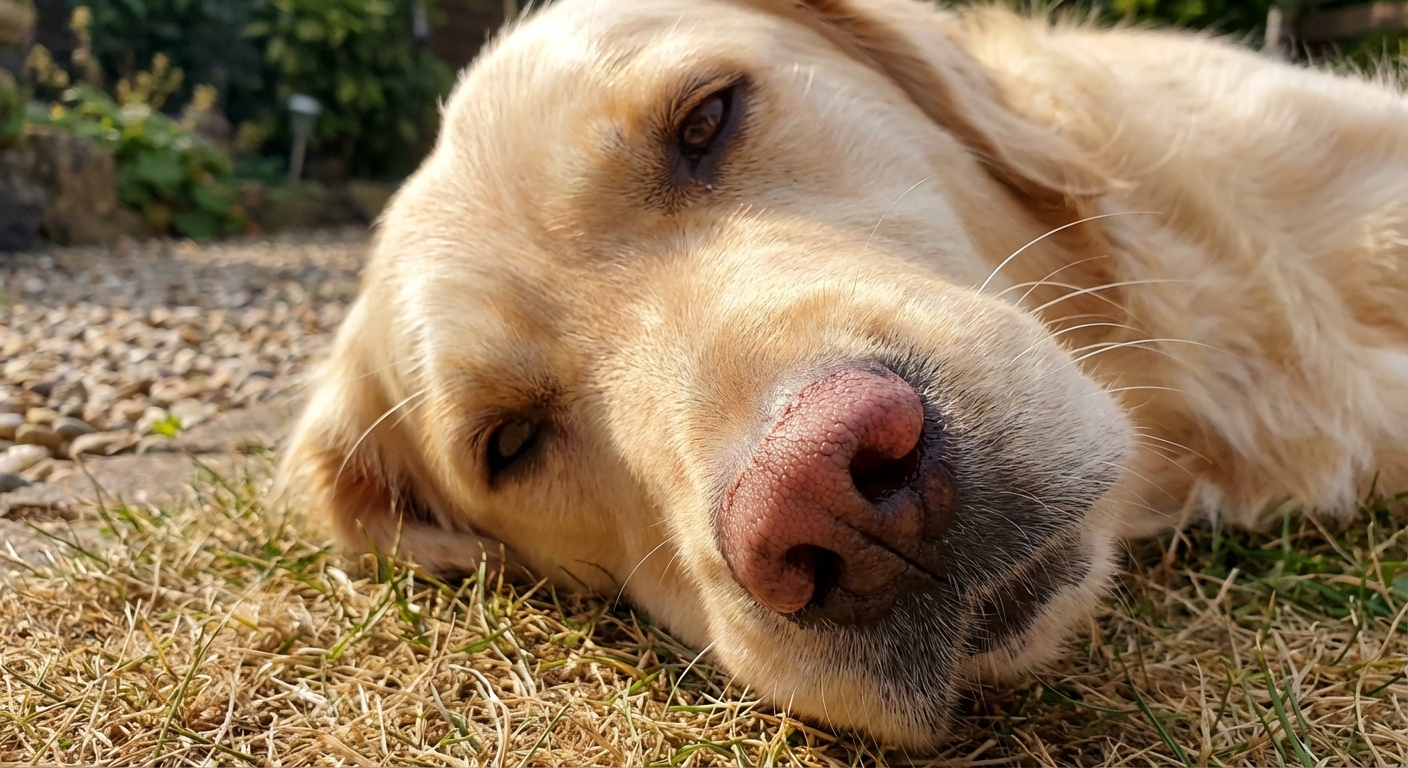
Yes, dogs can get sunburned noses. This is more common in dogs with light-colored noses or thin facial hair. Repeated sun exposure can cause dryness, peeling, cracking, and tenderness.
Important note: Chronic sun damage can increase the risk of skin cancer, especially on lightly pigmented skin. Risk varies by dog, but any non-healing scab, sore, or growing lesion on the nose should be checked by a veterinarian. Squamous cell carcinoma is one example vets watch for on sun-damaged skin.
Medical causes to take seriously
When a dog’s nose is persistently crusty, develops deep cracks, or has sores, bleeding, pigment changes, or discharge, we start thinking beyond simple dryness.
4) Hyperkeratosis
Hyperkeratosis means the body produces extra keratin, creating a thick, rough, crusty surface on the nose (and sometimes the paw pads). It can be age-related, breed-associated, or linked to other conditions.
What it often looks like:
- Dry, thickened, crusty build-up on the nose
- Ridges or a rough, horn-like texture
- Cracking that may bleed if severe
This is one of the most common reasons people describe the nose as “crusty” rather than just dry.
How it is often managed: Many dogs do well with regular softening care using vet-recommended moisturizers, sometimes with gentle keratolytic ingredients, plus treating any underlying condition if one is identified.
5) Allergies and irritation
Environmental allergies (pollen, dust mites, grasses), contact irritation (cleaning products, rough surfaces), or food sensitivities can affect skin health, including the nose. Allergies often come with itchy skin, paw licking, ear infections, or watery eyes.
Low-risk trial: If you use plastic food or water bowls, consider switching to stainless steel or ceramic and washing daily with unscented soap. Plastic is not always the culprit, but this is a simple change that can help some dogs with contact irritation.
6) Autoimmune skin conditions (DLE, pemphigus)
Some autoimmune conditions can target the skin of the nose and face. Two well-known examples are:
- Discoid lupus erythematosus (DLE), which commonly affects the nose leather (the hairless, textured part of the nose). It can cause crusting, sores, loss of pigment, and sensitivity to sun.
- Pemphigus (such as pemphigus foliaceus), which can cause crusts and lesions on the nose, face, and other areas.
Why this matters: These conditions usually do not improve with simple balms alone. They require diagnosis and veterinary treatment, and early care helps prevent progression and pain.
Other possible causes
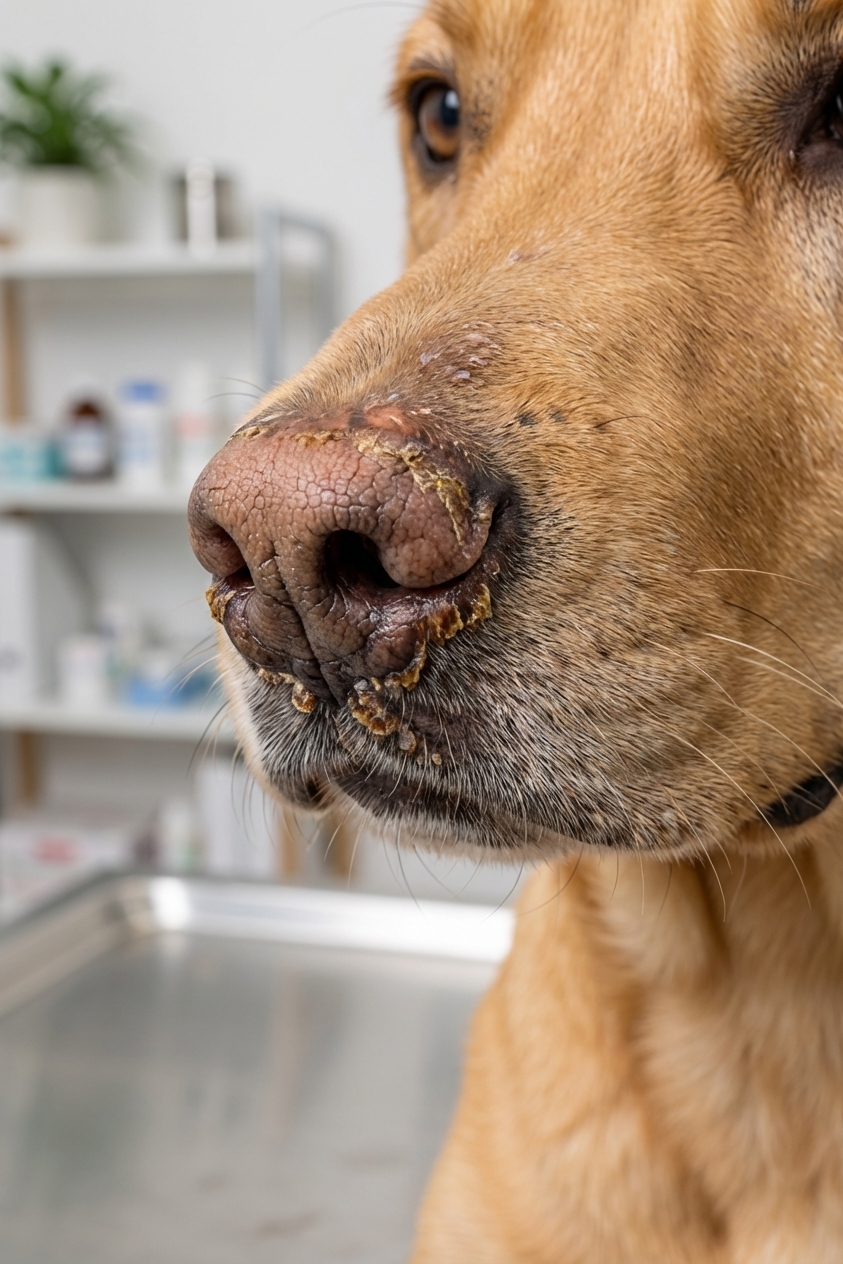
If the nose is crusting, oozing, or not improving, a few other possibilities your vet may consider include:
- Infection (bacterial or yeast) that can cause crusts, odor, redness, and soreness
- Mites (such as demodex), especially if there is hair loss or crusting around the face
- Fungal disease in certain regions, which may cause persistent lesions
- Endocrine or systemic disease (like hypothyroidism) when paired with broader skin changes, weight gain, or low energy
- Neoplasia (tumors), especially when there is a non-healing sore, lump, or progressive change in shape or pigment
Safe home care for mild dryness
If your dog is acting normal, eating well, and the nose is only mildly dry or slightly rough, these gentle at-home steps are typically safe. The goal is to protect the skin barrier and prevent the cracks from getting deeper.
Important safety note: If your dog has open ulcers, oozing, obvious infection, or actively bleeding cracks, skip home treatments and call your veterinarian. Those cases can worsen if you seal bacteria in with oily products.
Step 1: Support hydration and humidity
- Fresh water available at all times (multiple bowls if needed)
- Add water to meals or offer warm, low-sodium broth (no onion or garlic powder)
- Use a humidifier during dry months
Step 2: Use a dog-safe nose balm
A quality pet-specific nose balm can soften mild surface crust, reduce cracking, and protect from wind and dry air. Look for simple, dog-safe ingredients like beeswax and plant oils.
How to apply:
- Start with clean hands
- Apply a thin layer 1 to 2 times daily
- Try to distract your dog for a minute so it can absorb rather than immediately being licked off
Step 3: Coconut oil (for some dogs)
Coconut oil can be a simple option for mild dryness because it moisturizes and helps protect the surface. Use a tiny amount.
When to avoid it: Skip coconut oil if the nose is raw or ulcerated, and stop if you notice loose stool, increased redness, or itchiness. For some dogs, oils can aggravate yeast-prone skin.
Step 4: Avoid these common mistakes
- Do not use human medicated ointments unless your vet tells you to. Some ingredients can be unsafe if licked.
- Do not pick crusts off. That can cause bleeding and open the door to infection.
- Avoid fragranced products and essential oils on the nose. Many are irritating and some can be toxic to pets.
When to call the vet
Please schedule a veterinary visit if you notice any of the following:
- Deep cracks, bleeding, or obvious pain
- Crusts that keep returning or keep thickening
- Sores, ulcers, or raw areas
- Loss of nose pigment, especially with redness or scabbing
- Nasal discharge, sneezing fits, or noisy breathing
- Other symptoms like vomiting, diarrhea, fever, lethargy, reduced appetite, or increased drinking and urination
- Crusting on the nose plus crusting on ears, face, or paws
- A non-healing scab or a new lump on the nose
Your vet may recommend an exam plus tests such as skin cytology (checking for infection), a fungal or bacterial culture, parasite testing, a diet trial for food sensitivities, or allergy testing (serum or intradermal). In some cases, a biopsy is needed to rule out autoimmune disease or cancer.
Preventing future dryness
- Protect from sun: Ask your vet about a dog-safe sunscreen for the nose if your dog spends a lot of time outside.
- Reduce friction: If your dog rubs their nose on crates or doors, add padding, adjust crate fit, and work on boredom and anxiety triggers.
- Consider bowl changes: If irritation is suspected, switch from plastic to stainless steel or ceramic and wash daily.
- Support skin health: Nutrition matters. Balanced diets with appropriate fatty acids can support the skin barrier.
- Use balms proactively: Apply a thin layer during harsh weather if your dog is prone to cracking.
One of the best rules of thumb: treat the nose like skin. If it is mildly dry, moisturize and protect. If it is crusting, cracking, bleeding, not healing, or changing color, it is time to get your veterinarian involved.
Quick checklist
- Is your dog acting normal (energy, appetite, bathroom habits)?
- Any vomiting, diarrhea, coughing, or fever?
- Is the nose mildly dry, or thick and crusty with deeper cracks?
- Any bleeding, sores, discharge, pigment changes, or a non-healing scab?
- Try a thin layer of dog-safe balm for 3 to 5 days if mild.
- If it is not improving or looks worse, schedule a vet visit.