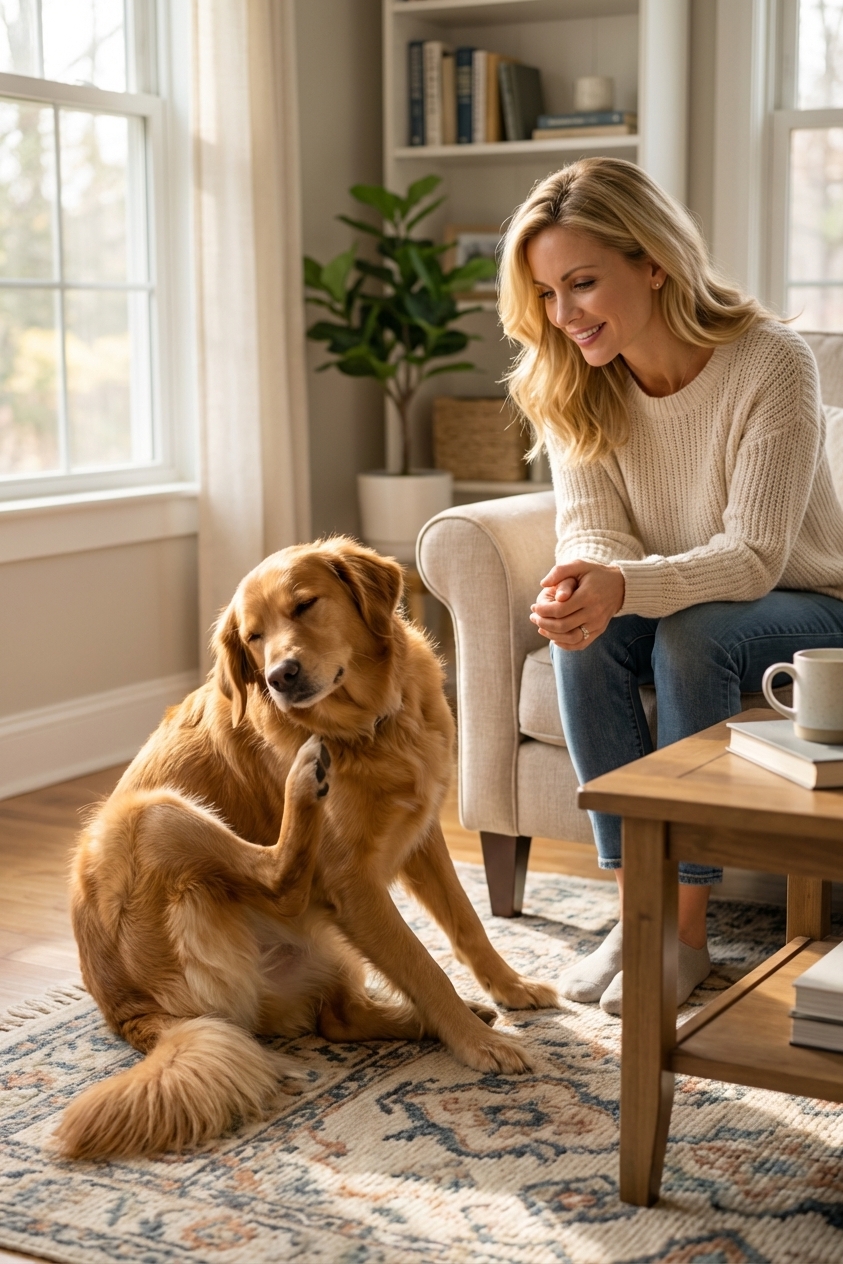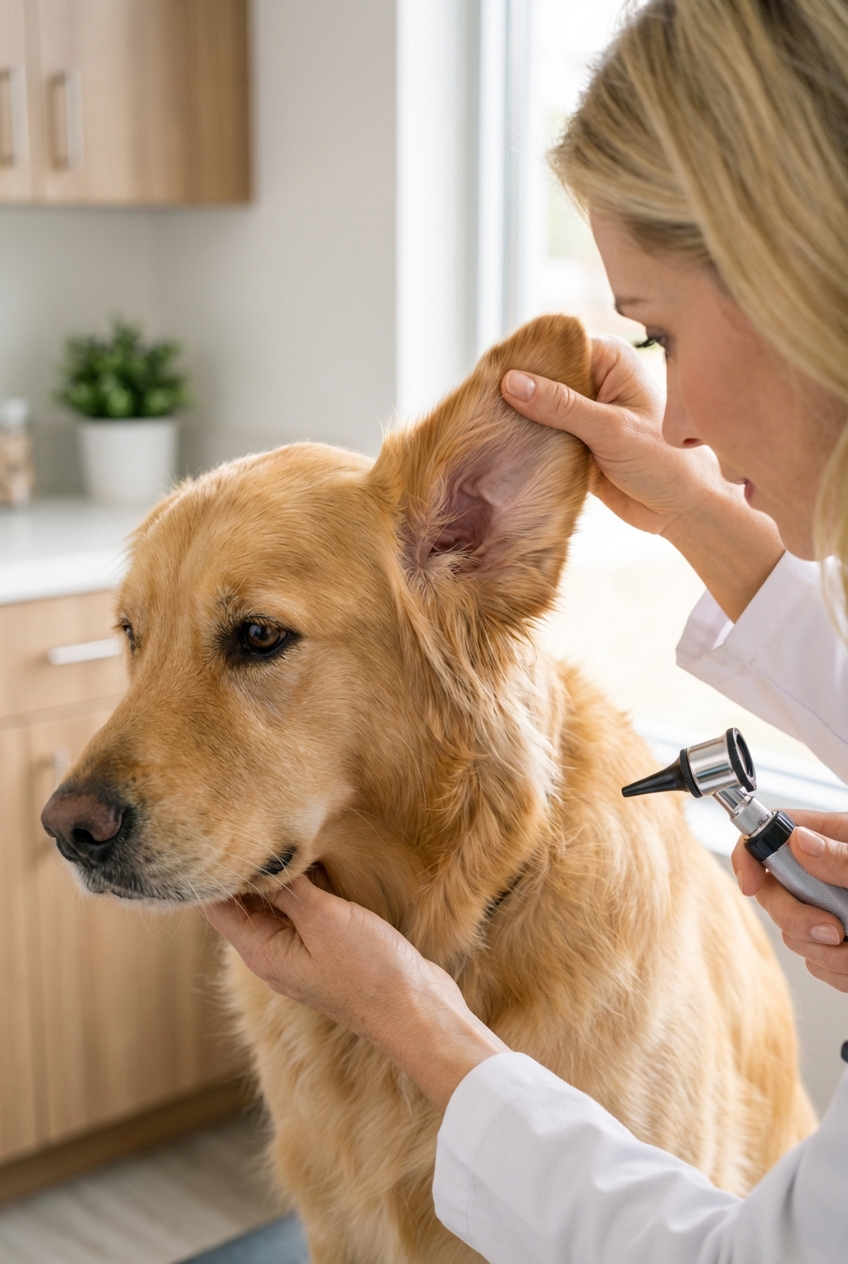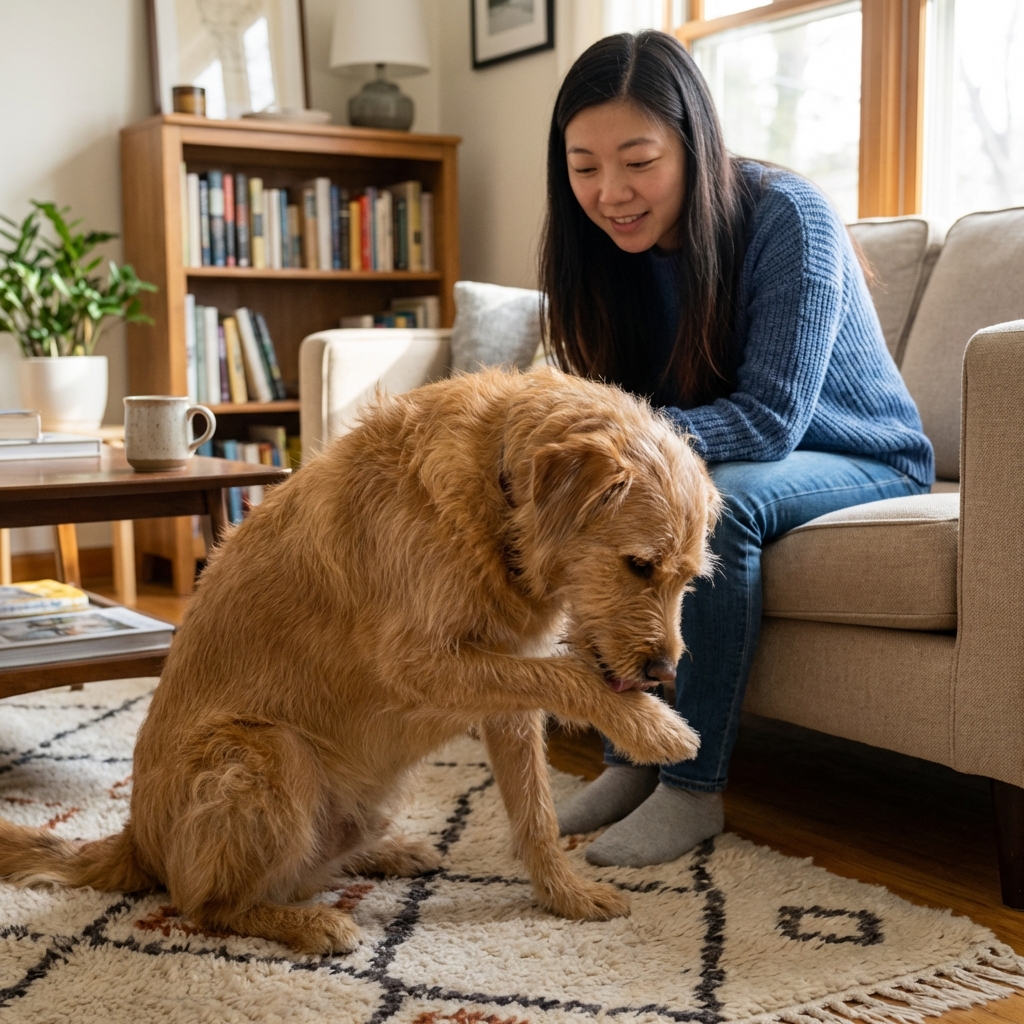
From allergies and yeast to injuries and anxiety, discover the most common reasons dogs lick their paws. Follow a quick paw-check routine, safe home tips, an...
Article
•
Designer Mixes
Dog Licking Paws: Causes, Clues, and Help

Shari Shidate
Designer Mixes contributor
If your dog is licking their paws a lot, it is often not just a habit. In my experience as a veterinary assistant, paw licking is usually your dog’s way of saying: something itches, something hurts, or something feels off. The tricky part is that several causes can look the same on the surface.
I cannot diagnose your dog over an article, but I can help you narrow down what is most likely going on, what you can safely do at home, and when it is time to see your veterinarian.
What’s normal vs. not normal?
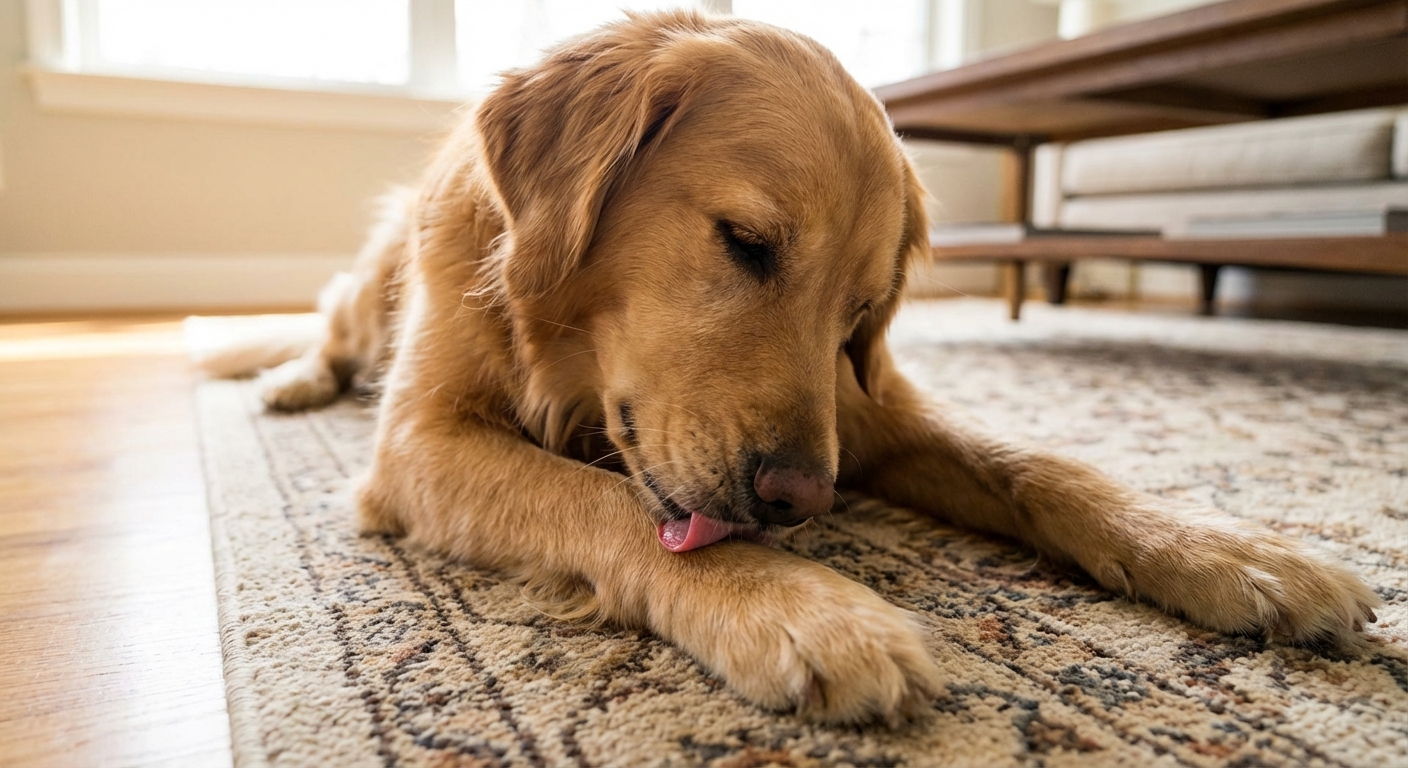
Occasional paw licking after a walk, after eating, or during grooming can be normal. It becomes a concern when it is:
- Causing damage (redness, swelling, hair loss, sores, bleeding, odor)
- Focused on one paw (often pain or something stuck)
- Intense (your dog seems unable to stop)
- Frequent (multiple times a day for days)
- Paired with other symptoms (ear infections, itching elsewhere, scooting, vomiting, soft stool)
Paw licking can snowball fast. Saliva and moisture soften the skin. That makes it easier for yeast and bacteria to overgrow, which creates more itching and more licking. Breaking that cycle is key.
Top reasons dogs lick their paws
1) Allergies (very common)
Allergies are one of the biggest drivers of chronic paw licking. There are three common buckets:
- Environmental allergies (atopy): pollens, grasses, molds, dust mites. Often seasonal at first, then can become year-round.
- Food-related skin reactions: less common than environmental allergies, and often linked to a specific ingredient (frequently proteins like chicken, beef, dairy, or egg).
- Contact irritation: lawn chemicals, winter salt and de-icers, new cleaning products, certain fabrics, rough surfaces.
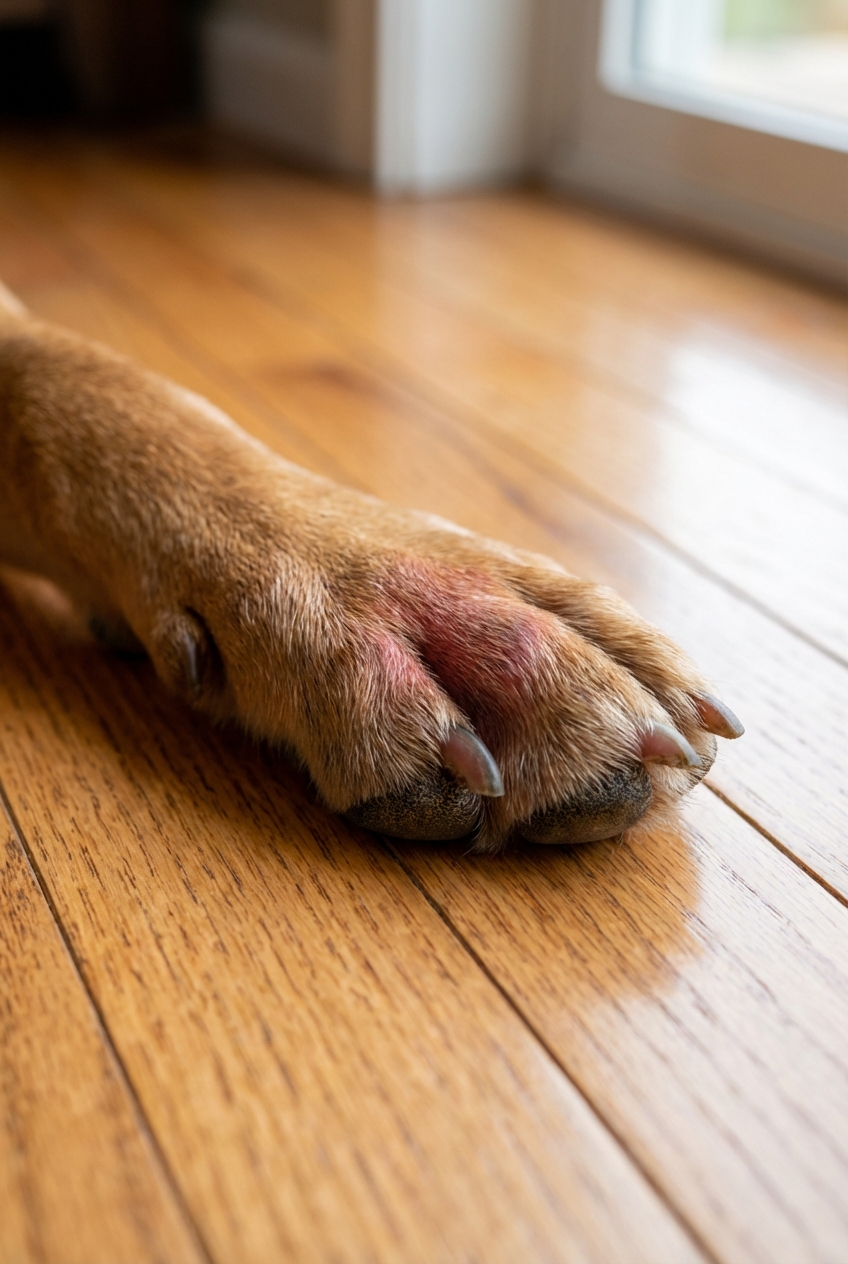
Clues it might be allergies: licking multiple paws, face rubbing, recurrent ear infections, itchy belly or groin, red staining between toes, symptoms that flare after being outside.
2) Yeast or bacterial infection (often secondary)
Once paws stay damp and inflamed, yeast and bacteria can thrive, especially between the toes and around nail beds.
Clues: a musty smell (some people describe a “corn chip” odor), greasy feel, redness between toes, brown saliva staining, thickened skin, tenderness when you spread the toes. Odor alone is not diagnostic, so if you suspect infection, a vet check and cytology (a quick microscope test) is the best way to confirm what is going on.
3) Something stuck in the paw
Foxtails, tiny burrs, thorns, glass, or a sharp seed can trigger sudden licking, usually of one paw.
Clues: sudden onset, limping, licking one paw obsessively, swelling between toes, a small puncture, or your dog pulling away when you touch a specific spot.
Important: Foxtails can migrate under the skin and become serious. If you suspect one and cannot see and safely remove it, get veterinary help promptly.
4) Pain from nails, joints, pads, or injury
Overgrown nails, a cracked pad, arthritis, a sprain, or a broken nail can all cause licking. Some dogs lick as a self-soothing behavior when something aches.
Clues: licking after exercise, stiffness, reluctance to jump, licking one paw repeatedly, nails clicking loudly on hard floors, a broken nail, or a pad crack.
5) Parasites
Fleas can cause intense itch, and mites can contribute to skin issues. Even indoor dogs can be exposed.
Clues: itch around the rump and tail base, visible flea dirt, other pets itching, patchy hair loss, crusting.
6) Interdigital cysts or furunculosis
These are painful, inflamed bumps (often between the toes) that can look like swelling or a “pimple” and may drain. They can be related to allergies, infection, friction, or hair and debris trapped in the skin, and they often need veterinary treatment.
Clues: a recurring swollen nodule between toes, pain, limping, licking one spot, draining fluid, or a sore that keeps reopening.
7) Anxiety, boredom, or compulsive licking
Some dogs lick as a coping mechanism, especially when left alone or under-stimulated. This can be a factor, but I encourage you not to assume it is “just anxiety” until you rule out medical causes.
Clues: licking mostly at night or when you leave, normal-looking skin at first, other stress behaviors (pacing, panting, vocalizing).
Quick at-home paw check (2 minutes)
Here is a simple, safe inspection routine you can do daily for a few days:
- Look: Compare all four paws. Any redness, swelling, or discharge? Hair loss? A sore spot?
- Spread the toes: Check the webbing for debris, tiny seeds, or irritation.
- Check nails: Look for cracks, bleeding, or a broken nail. Note if nails are long.
- Smell: A strong, new odor can point toward infection, but it is not specific.
- Press gently: If your dog flinches at one area, stop and plan a vet visit.
If you see a deeply embedded object, significant swelling, active bleeding, a puncture wound, or a rapidly worsening paw, skip home care and call your veterinarian.
What you can do at home today
1) Rinse after walks
If allergies or contact irritation are suspected, rinsing helps remove pollen and irritants.
- Use lukewarm water to rinse paws and between toes.
- Dry well, especially between toes. Moisture feeds yeast.
If your dog walked on winter salt or de-icer, rinse promptly. These products can irritate skin and cause chemical-type burns in some dogs.
2) Try a short “lick break”
If your dog is creating a hot spot by licking, you may need a temporary barrier:
- E-collar or soft cone for a few days
- Breathable booties for supervised time
- Socks with a secure (not tight) wrap for short periods indoors
Safety note: Avoid anything that restricts circulation. Remove coverings if they get wet. If there is oozing, active infection, or a very damp paw, booties and socks can trap moisture and make things worse, so use them cautiously and keep the area dry.
3) Keep nails and paw hair maintained
Long nails change how the foot lands and can cause discomfort. Excess hair between pads can trap moisture and allergens. Regular grooming helps, especially for curly-coated mixes.
4) Support skin health with nutrition
Skin and paws reflect what is happening inside the body. A balanced, high-quality diet, adequate omega-3 fatty acids, and a healthy gut can support the skin barrier and reduce itchiness over time.
If you are considering a diet change, go slowly and talk with your veterinarian, especially if your dog has chronic ear or skin issues. For dogs with suspected food-related skin issues, your vet may recommend a structured elimination diet trial, which is the most reliable way to identify triggers.
5) Consider environmental tweaks
- Wipe paws after yard time, especially if lawns are treated.
- Wash bedding weekly with a gentle, fragrance-free detergent.
- Vacuum frequently if dust mites are a suspected trigger.
When to see the vet
Call your veterinarian if you notice any of the following:
- Limping or refusal to put weight on the paw
- Swelling between toes, a puncture, a painful lump, or suspected foxtail
- Open sores, bleeding, or pus
- Strong odor plus redness, greasy discharge, or worsening inflammation
- Pain when you touch the paw
- Paw licking that persists beyond a few days despite rinsing and keeping paws dry
- Frequent ear infections or full-body itching along with paw licking
In clinic, your veterinarian may recommend a skin cytology (quick microscope check), ear evaluation, parasite testing, or an allergy and diet plan. Targeted treatment matters because yeast, bacteria, allergies, foreign bodies, cysts, and pain all need different solutions.
Common mistakes to avoid
- Assuming it is behavioral first: Many “anxiety lickers” are actually itchy or painful.
- Letting paws stay wet: Moisture is a yeast invitation.
- Using human creams without guidance: Some ingredients are unsafe if licked and may trap moisture and worsen infection.
- Giving human pain meds: Ibuprofen, naproxen, and acetaminophen can be dangerous for dogs. Call your vet for safe pain control options.
- Stopping treatment too early: Infections often need a full course of therapy to prevent quick relapse.
If you remember one thing, let it be this: paw licking is information. When you treat the cause, the habit usually fades on its own.
FAQ
Why does my dog lick paws at night?
Nighttime licking can happen because your dog is finally still enough to notice itch or discomfort. It can also be related to anxiety or boredom. If there is redness, odor, soreness, or recurring episodes, think allergies, infection, or pain first.
Is paw licking a sign of food allergy?
It can be, but environmental allergies are more common. Food-related skin issues often show up as itch (paws, ears, face) and sometimes gastrointestinal upset. The most reliable way to figure it out is a veterinarian-guided elimination diet trial.
What does yeast on dog paws look like?
Common signs include redness between toes, brownish saliva staining, thickened skin, greasy feel, and a noticeable musty smell. A vet can confirm yeast (and whether bacteria are involved) with a quick cytology test.