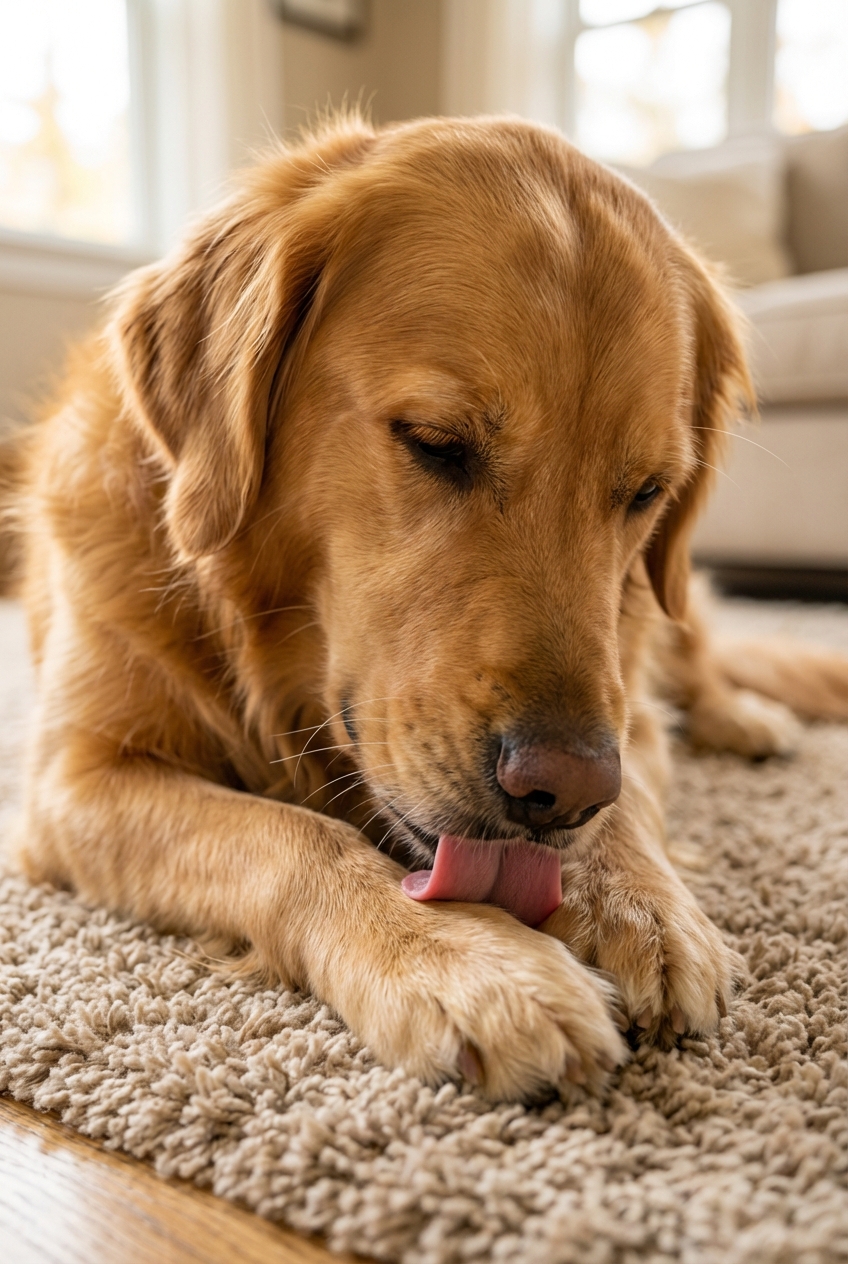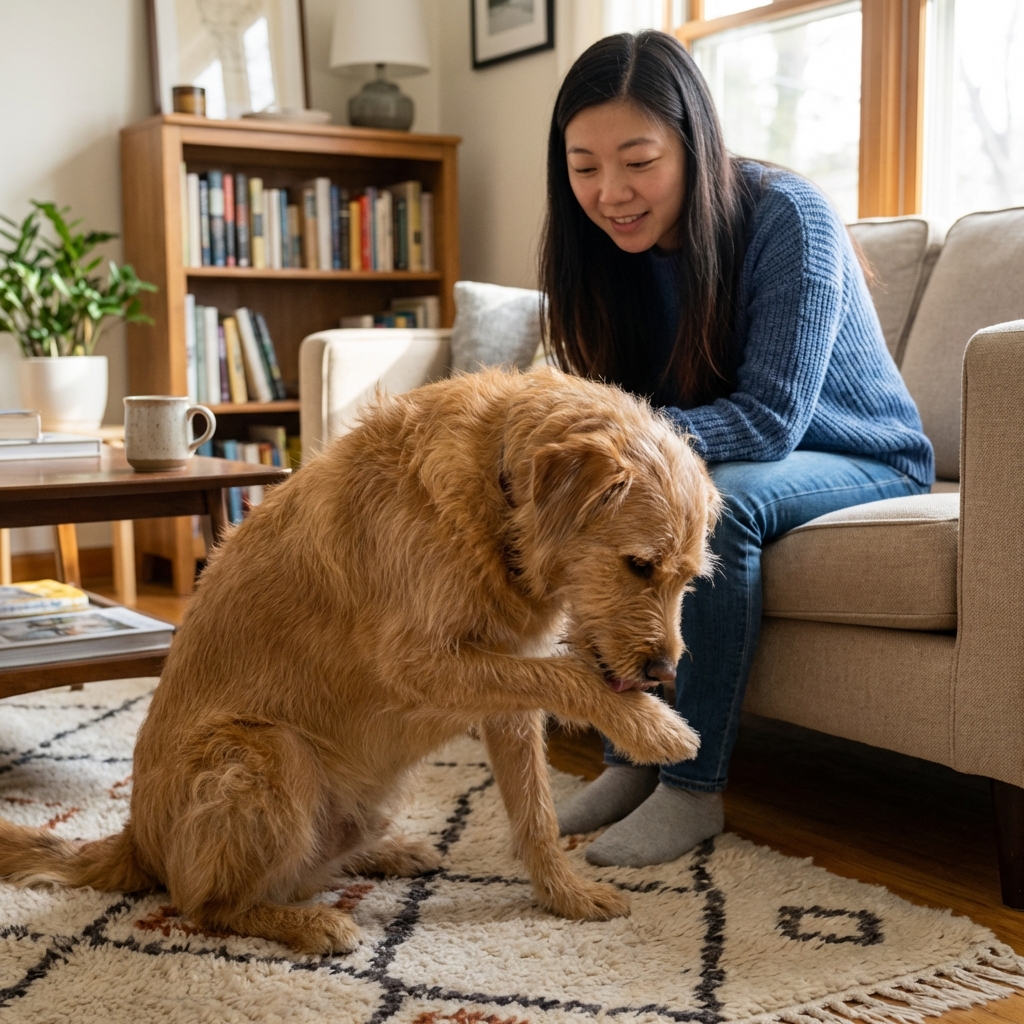
From allergies and yeast to injuries and anxiety, discover the most common reasons dogs lick their paws. Follow a quick paw-check routine, safe home tips, an...
Article
•
Designer Mixes
Dog Licking Paws: Allergies, Yeast, or Pain?

Shari Shidate
Designer Mixes contributor
When a dog suddenly starts licking or chewing their paws, it is often a sign of discomfort, not always “just a habit.” In the veterinary world, paw licking is one of those symptoms that can point to a few common root causes: allergies, yeast or bacterial overgrowth, parasites (especially fleas and mites), pain (including injuries and arthritis), and sometimes stress or compulsive licking. The good news is that with a little detective work, you can usually narrow it down and get your pup comfortable again.
Below, I will walk you through what to look for at home, what it often means, and when it is time to call your veterinarian.
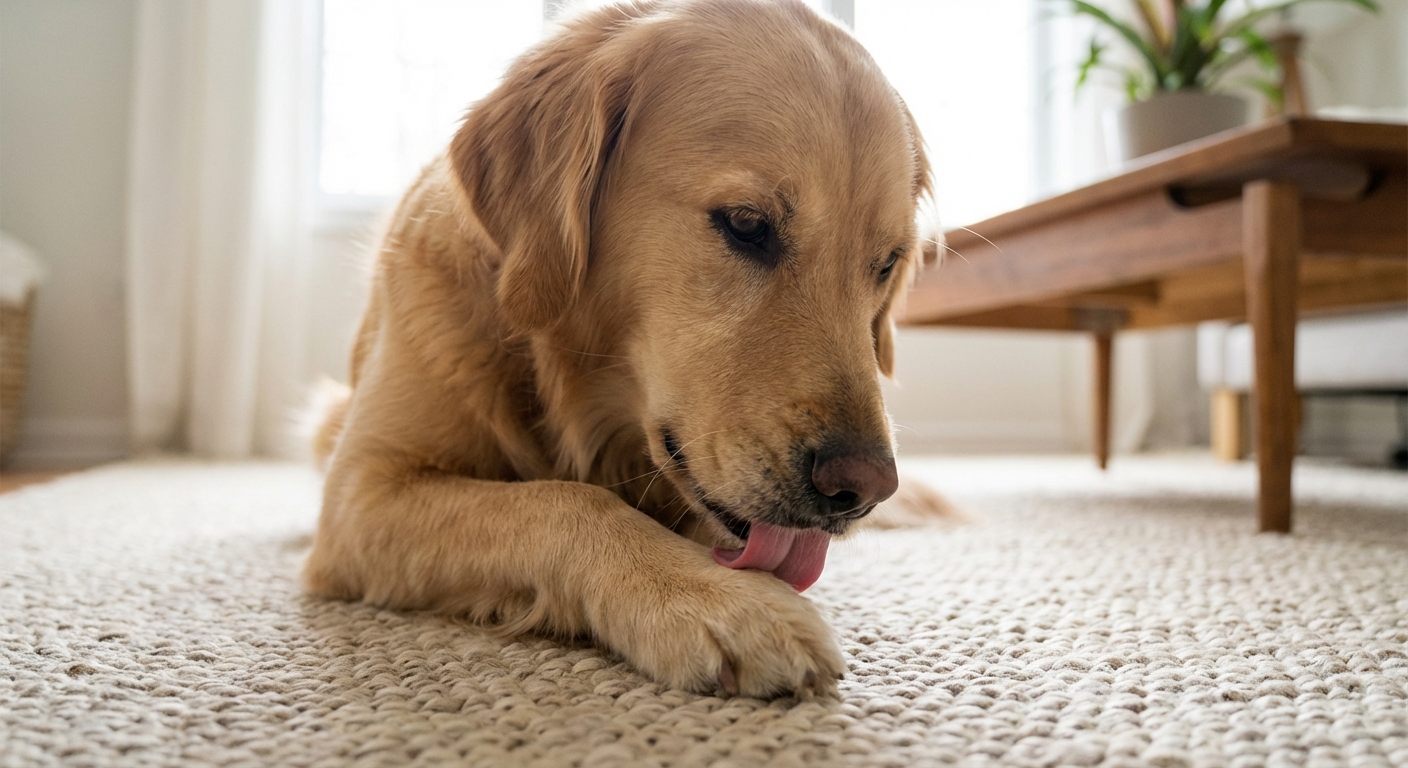
Why dogs lick their paws
Paw licking is a normal grooming behavior in small doses. It becomes a concern when it is frequent, intense, or leaves behind redness, odor, stains, or sores.
Most cases fall into a few overlapping buckets:
- Itchy paws (allergies, yeast or bacteria, fleas and mites, environmental irritation)
- Painful paws (injury, foreign object, nail problems, joint pain)
- Behavioral licking (stress, boredom, separation anxiety, canine compulsive disorder)
Itch and pain can also coexist. For example, allergies can cause inflammation that makes the paws both itchy and tender.
Because licking can quickly damage the skin barrier, a mild issue can snowball into inflammation and infection. That is why early action matters.
Clues it is allergies
Allergies are one of the most common reasons dogs lick paws. Dogs can have sneezing or watery eyes, but they less commonly show classic “hay fever” signs than humans do. More often, allergies show up in the skin, especially the feet, ears, belly, and armpits.
Common allergy triggers
- Environmental allergies (atopy): pollen, grasses, molds, dust mites
- Food allergies: usually a reaction to a protein source, less commonly a grain
- Contact irritation: lawn chemicals, de-icing salts, rough surfaces
- Flea allergy dermatitis: even one or two bites can trigger major itching in sensitive dogs
Signs that point to allergies
- Licking or chewing multiple paws, often all four
- Seasonal flares (worse in spring or fall)
- Ear infections or frequent ear scratching
- Itchy face, rubbing on carpet
- Redness between toes, inflamed skin on belly or groin
Helpful note: Many dogs have both food and environmental allergies. If symptoms are year-round, food allergy becomes more likely, but it is not the only possibility.
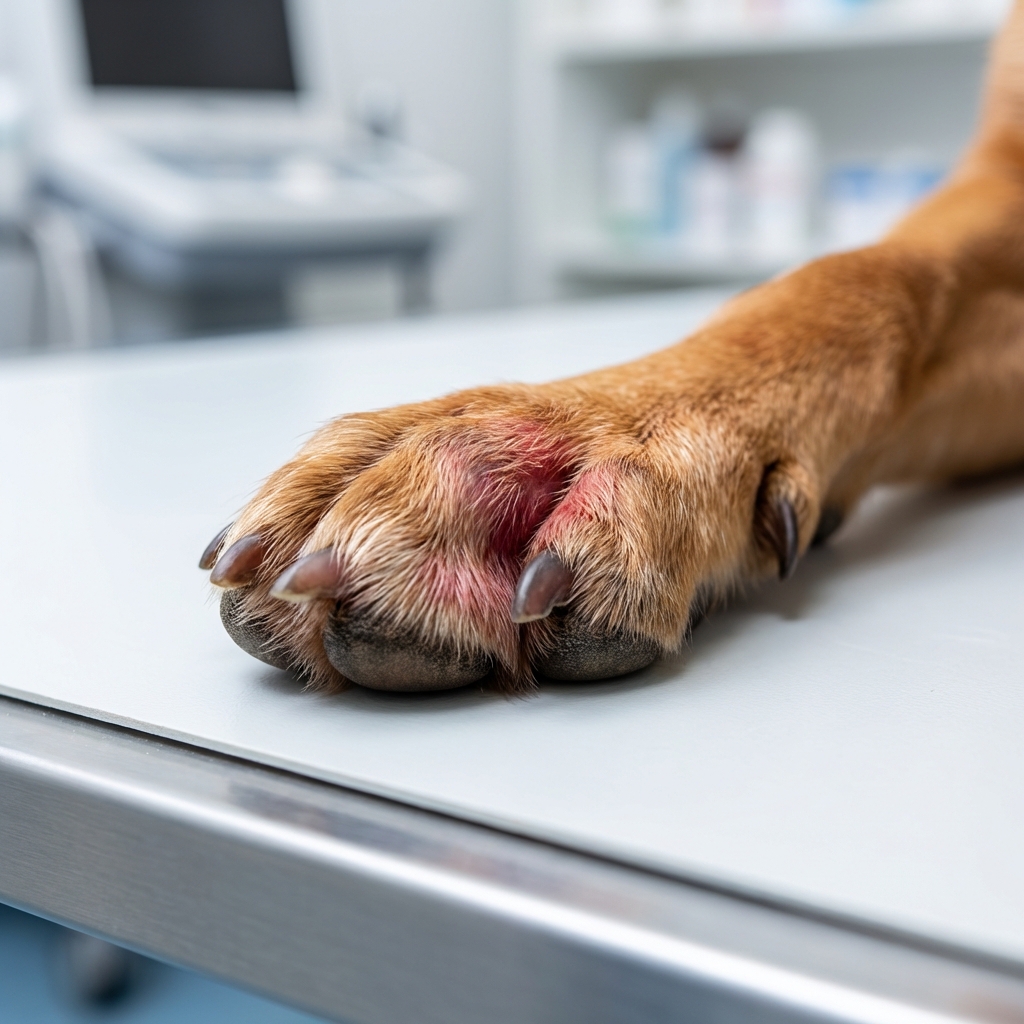
Clues it is yeast (or bacteria)
Yeast is a normal organism on the skin, but it can overgrow when the skin barrier is inflamed or moist. Allergies are a major driver of yeast issues, so the two often travel together.
What it can look and smell like
- Strong odor that is musty, “bread-like,” or corn chip-like
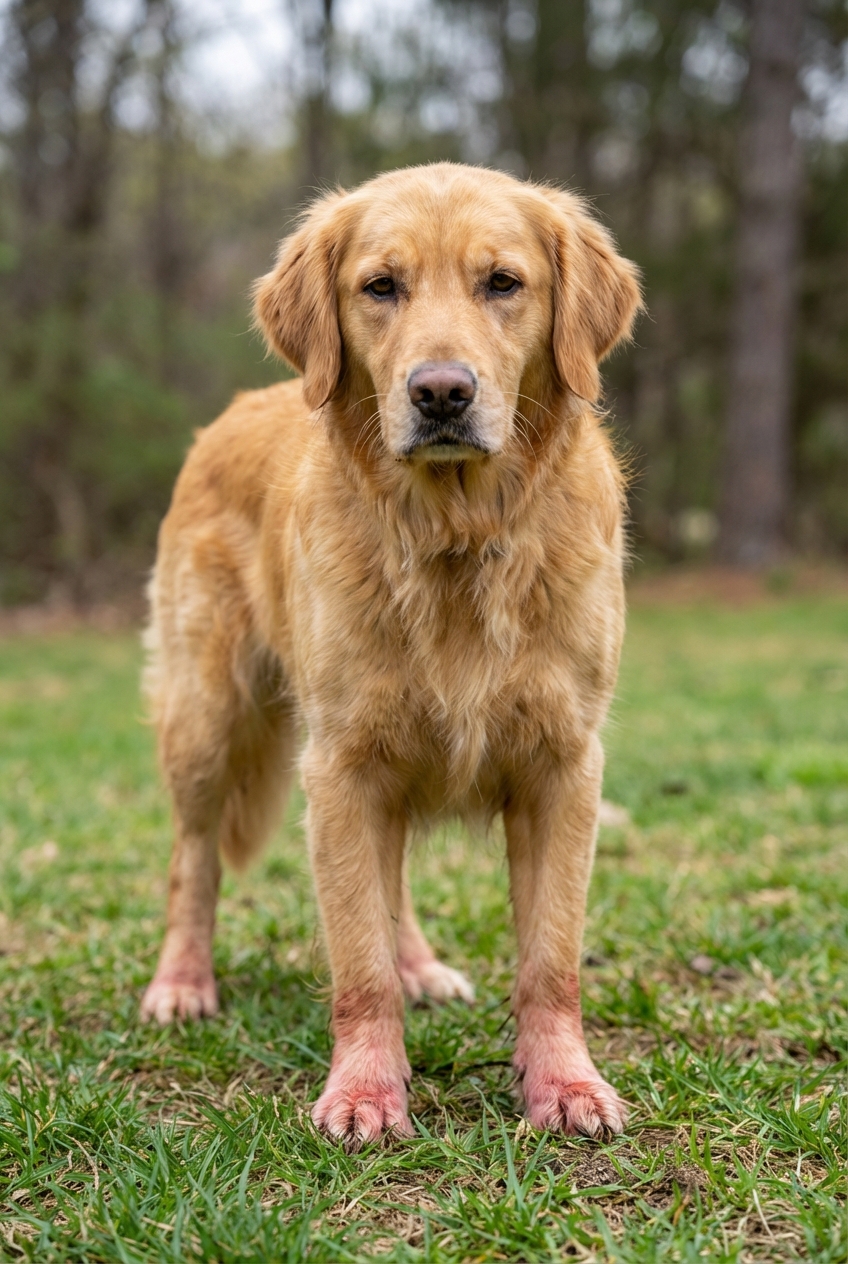
- Rusty staining on fur from saliva (especially on light coats)
- Greasy feel between the toes
- Red, thickened skin, sometimes with dark discoloration
- Dog seems unable to stop licking, especially after walks or at night
Important: Odor and staining are clues, but they do not diagnose yeast on their own. Bacterial infection can look similar, but may include pustules, oozing, or more obvious sores. Many dogs have mixed yeast and bacterial infections, which is why testing matters.
Evidence-based tip: Your veterinarian can do a quick skin cytology (tape prep or swab) to see if yeast or bacteria are present and choose the right treatment. This is much more reliable than guessing and helps avoid unnecessary antibiotics or antifungals.
Clues it is parasites
Parasites are easy to miss, and they can cause intense itch that leads to nonstop paw licking.
Common culprits
- Fleas: some dogs react strongly to small exposure, even if you do not see fleas
- Sarcoptes (scabies): often very itchy, can spread to other dogs, and can affect people
- Demodex: can involve the feet and cause inflammation or infection, itch varies
If your dog is licking paws and also scratching a lot elsewhere, has scabs, hair loss, or other pets in the home are itchy, parasites should be on the list early.
Clues it is pain or injury
Not all paw licking is itch. If your dog is focusing on one paw or one specific toe, think pain first.
Common pain-related causes
- Foreign body: foxtail, thorn, small splinter, glass
- Cut, abrasion, or burn: hot pavement, rough terrain
- Broken or infected nail
- Cyst or interdigital furuncle (painful bump between toes)
- Arthritis: some dogs lick feet near painful joints, especially older dogs
Signs it may be pain
- Limping, favoring one leg, or “toe touching”
- Sudden onset after a walk, hike, grooming, or nail trim
- Yelping when the paw is touched
- Swelling in one toe or between toes
- Visible crack, bleeding, or missing nail piece
Red flags: rapidly increasing swelling, drainage, a puncture wound, significant bleeding, or a suspected foxtail call for same-day veterinary care. Foxtails and punctures can worsen fast.
Behavioral clues
Sometimes paws look fairly normal, but licking continues. In those cases, behavior can be a primary driver or a contributor.
Signs licking may be stress-related
- Licking mainly when resting, bored, or left alone
- No strong odor, redness, swelling, or discharge
- Other anxiety signs (pacing, whining, clinginess, destructive behavior)
- Licking becomes a repetitive “loop” that is hard to interrupt
Even then, it is worth ruling out medical causes first. Pain and allergies can look subtle early on. If your vet rules out infection, parasites, and injury, ask about enrichment, training support, and whether anxiety treatment is appropriate.
At-home check
If your dog is stable and comfortable enough to let you look, you can do a quick paw check in good light.
Step-by-step paw check
- Inspect between toes for redness, swelling, debris, burrs, or a lodged seed.
- Look at nails for cracks, bleeding, or an abnormal angle.
- Check paw pads for cuts or raw spots.
- Smell the paws. A strong musty odor can suggest yeast, but it is not proof.
- Compare paws. One paw affected is more consistent with injury or a foreign body.
Simple comfort measures
- Rinse after walks with lukewarm water and gently dry between toes.
- Use a cone or inflatable collar if licking is nonstop, to prevent self-trauma.
- Try booties outdoors if grass, pollen, or de-icers worsen symptoms.
Please avoid: hydrogen peroxide on skin, essential oils, or human antifungal creams without veterinary guidance. These can irritate skin or be unsafe if licked.
When to call the vet
Call your veterinarian promptly if you notice any of the following:
- Limping or refusal to bear weight
- Swelling, heat, pus, bleeding, or an open sore
- Any rapidly worsening swelling, severe pain, suspected foxtail, or puncture wound (same-day visit)
- Strong odor that returns quickly after cleaning
- Symptoms lasting more than 48 to 72 hours, even if mild
- Frequent ear infections along with paw licking
- Your dog seems uncomfortable, restless, or cannot sleep
If your dog is licking enough to create wounds, it is time. Skin infections can deepen and become harder to treat when they are ignored.
How vets find the cause
In clinic, your veterinarian will usually combine history, exam findings, and a few quick tests. These are common and very helpful:
- Skin cytology to identify yeast and bacteria
- Skin scraping when mites are a concern (such as Sarcoptes or Demodex)
- Flea assessment and prevention review (flea allergy is common and often overlooked)
- Fungal culture in select cases
- Allergy plan: seasonal management, flea control, and sometimes allergy testing
- Food trial if food allergy is suspected (this is different from simply switching foods)
- Paw and nail exam for foreign bodies, interdigital cysts, or nail bed infection
Depending on the findings, treatment may include medicated wipes or shampoos, prescription antifungals or antibiotics, itch control medications, parasite treatment, or pain relief for injuries. Many dogs also need a longer-term plan that targets the underlying allergy or trigger, not only the secondary infection.
Less common causes exist, too. Autoimmune pododermatitis, hormonal disease that predisposes to infection, and even tumors can occasionally show up as persistent paw inflammation. If the problem keeps returning or does not respond as expected, your vet may recommend additional testing or referral.
Prevention that helps
Once paws calm down, prevention keeps many dogs from cycling back into licking and infection.
- Year-round flea prevention: flea allergy can look like many other skin issues, and it only takes a little exposure to trigger symptoms.
- Keep paws clean and dry: especially after wet grass, swimming, or rainy walks.
- Trim hair between paw pads to reduce moisture buildup.
- Address allergies early: controlling itch lowers the chance of yeast and bacterial overgrowth.
- Nutrition matters: for some dogs, a veterinarian-guided diet plan and appropriate omega-3s can support skin barrier health.
If I could share one simple rule from my veterinary assistant experience, it is this: if you only treat the infection but not the underlying itch, the licking usually comes right back.
Quick cheat sheet
- All paws, seasonal itch, ear issues: allergies are likely.
- Odor, greasy redness, staining: yeast or mixed infection is likely (confirm with testing).
- One paw, sudden onset, limping: pain, injury, or foreign body is likely.
- Very itchy, multiple pets affected, scabs or hair loss: fleas or mites should be considered.
- Paws look normal, licking when alone or bored: behavioral licking may be involved (after medical causes are ruled out).
You know your dog best. If something feels off, trust that instinct and get help sooner rather than later. The earlier we calm the inflammation, the easier it is to protect the skin and stop the cycle of licking.