
From lip licking and grass eating to vomiting, diarrhea, and belly pain—learn what an upset stomach looks like in dogs, what you can do at home, and when i...
Article
•
Designer Mixes
Dog Licking Lips: Nausea, Stress, or Mouth Pain?

Shari Shidate
Designer Mixes contributor
As a veterinary assistant, I hear this question a lot: “My dog keeps licking their lips. Is that normal?” Occasional lip-licking after a tasty treat, after a drink, or when anticipating food is totally expected. But repeated, frequent lip-licking, especially when it shows up out of nowhere, is often your dog’s way of saying “something feels off.” The tricky part is that the same behavior can point to nausea, stress, or mouth pain.
This article is general guidance and does not replace an exam. If you are worried or your dog seems unwell, call your veterinarian.
Let’s walk through what this behavior can mean, what else to look for, and when it is time to call your veterinarian.
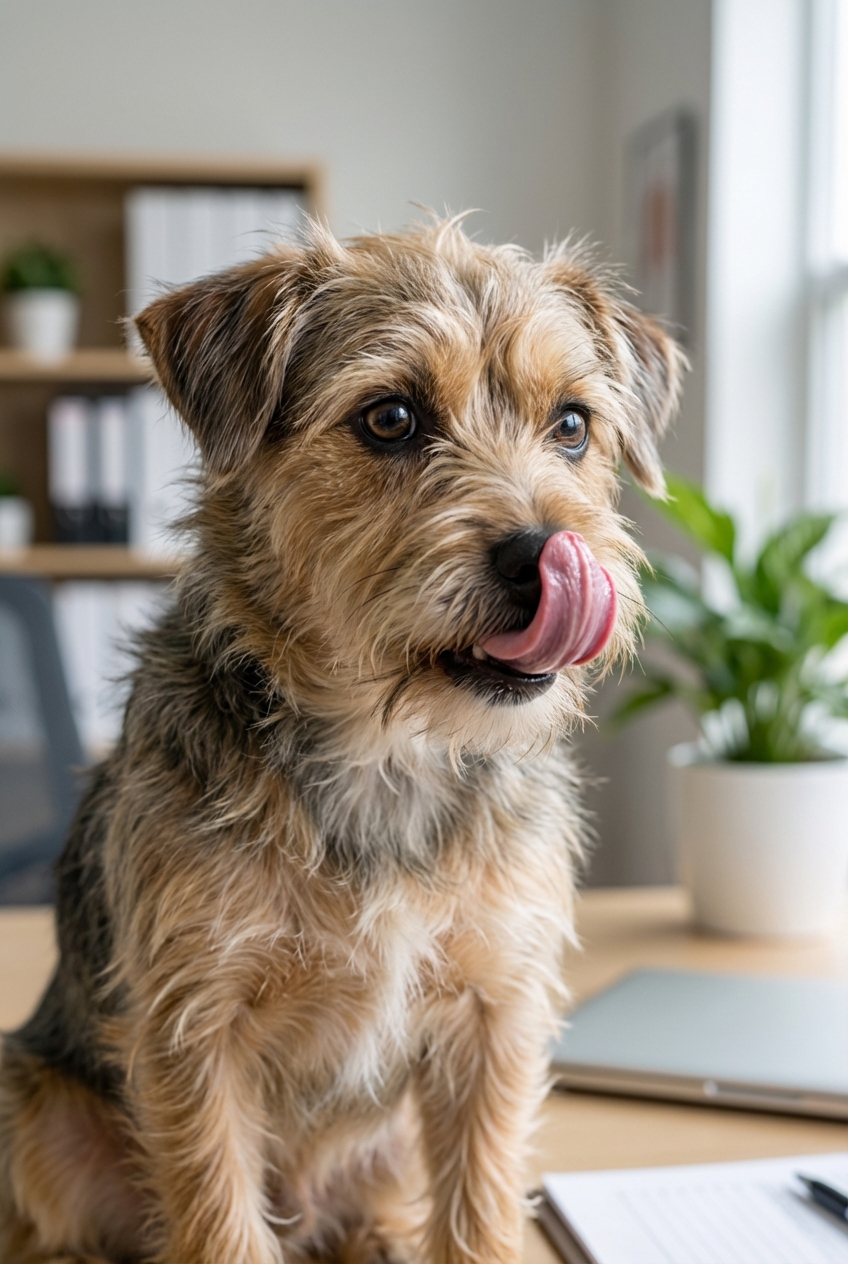
Why dogs lick their lips
Lip-licking can be behavioral (communication or a calming signal), or it can be medical (a physical symptom). Context is everything. Many dogs lick their lips when:
- Behavioral: they feel stressed, overwhelmed, uncertain, or are trying to diffuse tension.
- Stomach and throat: they feel nauseated, have reflux, or have GI upset.
- Mouth: they have dental disease, a mouth injury, an oral infection, or something stuck.
- Discomfort: they have general discomfort or pain, including abdominal pain.
- Skin: they have allergies or irritation around the lips and muzzle (including lip fold dermatitis).
The key is patterns. What happens right before the licking starts, how long it lasts, and what other signs show up with it?
When it points to nausea
If the licking comes with drooling or “gulping,” nausea is high on the list. Dogs do not always vomit when they feel nauseated. Some show subtle signs first, especially with reflux or mild GI upset.
Common nausea clues
- Drooling or wet spots on bedding
- Swallowing or gulping, sometimes with neck stretching
- Loss of appetite or eating grass
- Restlessness, pacing, whining
- Vomiting or retching (may occur later)
- Soft stool or diarrhea
Nausea can be caused by dietary indiscretion, sudden food changes, motion sickness, pancreatitis, parasites, medication side effects, reflux, and other medical issues.
What you can do now
- Check for triggers: new treats, chews, people food, trash access, new meds, car rides.
- Offer water and monitor hydration. Dry or tacky gums, sunken eyes, or lethargy are red flags.
- Do not give human medications like Pepto-Bismol, antacids, or pain relievers unless your veterinarian specifically directs you. Some can be unsafe or interact with other meds.
Call your vet urgently if you see repeated vomiting, a bloated belly, unproductive retching, weakness, blood in vomit or stool, or if your dog may have eaten a toxin or foreign object.
When it points to stress
If the environment is tense, busy, or unfamiliar, lip-licking may be a calming signal. This can look like nausea at first, so use the surrounding situation and body language to guide you.
If the licking happens mainly during certain events (guests, grooming, kids hugging, training pressure), stress moves higher on the list.
Common stress clues
- Yawning when not tired
- Turning head away or avoiding eye contact
- Panting when it is not hot
- Pinned back ears, tucked tail, “whale eye” (showing white of eyes)
- Shaking off as if wet, when dry
- Pacing or inability to settle
Common triggers include new visitors, loud noises, unfamiliar dogs, vet visits, grooming, or changes at home.
Gentle ways to help
- Create space: give your dog a quiet room, crate, or bed where nobody follows them.
- Lower intensity: softer voices, slower movements, less eye contact, no hovering.
- Reward calm: reinforce relaxed behaviors with small treats or a favorite toy.
- Offer decompression: lick mats, stuffed Kongs, and sniff walks help many dogs settle.

When it points to mouth pain
Mouth pain is one of the most commonly missed reasons for persistent lip-licking. Dogs are very good at hiding discomfort. If the licking ramps up around meals, chewing, or when you touch their face, take a closer look.
Common mouth clues
- Bad breath that is new or worsening
- Pawing at the mouth or rubbing the face on furniture or carpet
- Drooling or thicker saliva
- Chewing on one side or dropping food
- Reluctance to eat hard kibble, treats, or chews
- Bleeding gums, red gumline, or visible tartar
- Swelling under the eye or along the jaw (can signal a tooth root abscess)
Possible causes include periodontal disease, fractured teeth, oral ulcers, foxtails or splinters stuck in the gums, oral tumors, and infections.
A safe at-home check
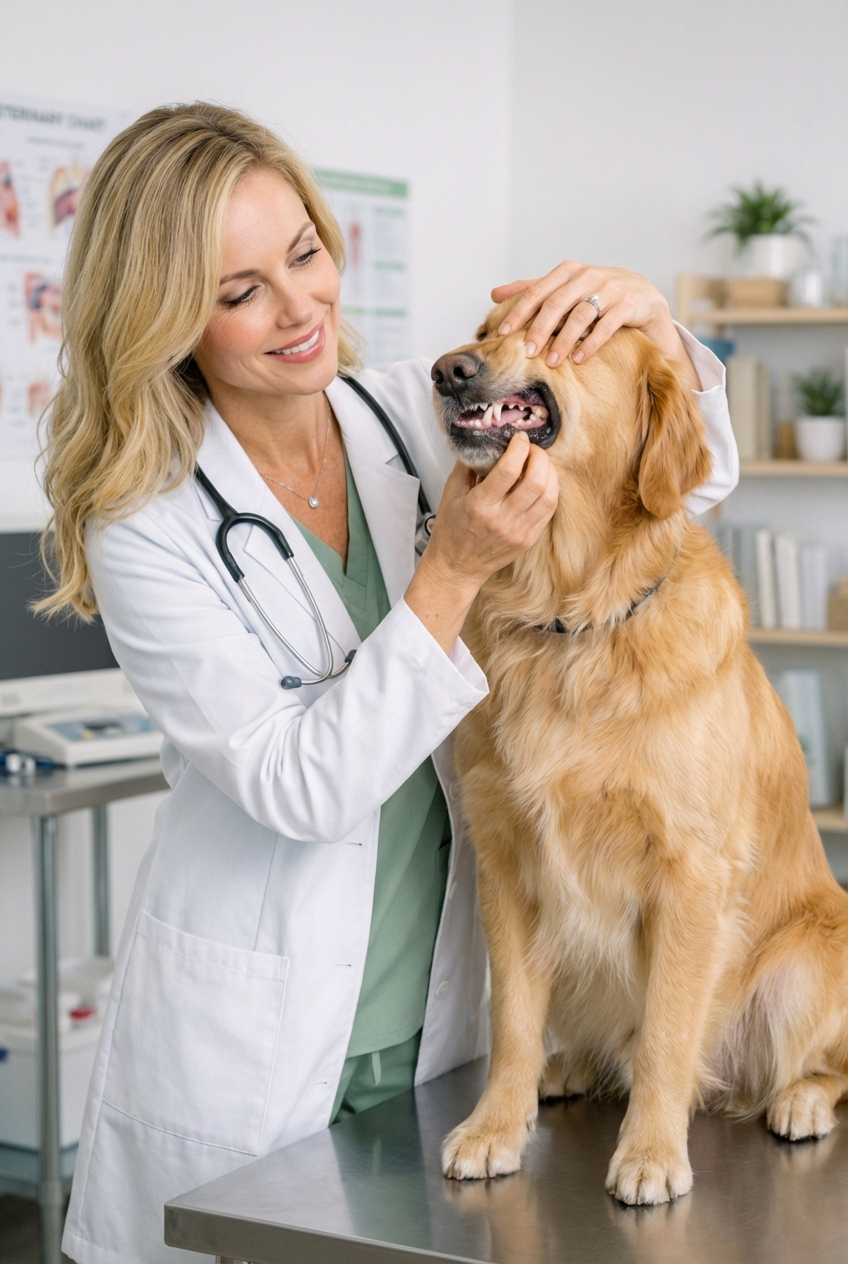
If your dog allows it, gently lift the lip and look at the gumline and teeth. You are looking for redness, swelling, heavy tartar, or anything stuck. Do not force your dog’s mouth open if they are painful or scared, and never poke at a suspicious growth.
Dental pain is not something to “wait out.” If you suspect oral pain, schedule a veterinary exam. Many dental problems require an exam under sedation to assess below the gumline.
Other causes to consider
Not every lip-licker is nauseated, anxious, or dealing with dental disease. A few other possibilities include:
- Allergies or irritation: itchy skin around the muzzle, lip folds, or chin acne can lead to licking.
- Dry or irritated mouth: dehydration, dry indoor air, or certain medications can make the mouth feel uncomfortable, and some dogs respond by licking more.
- Foreign material: hair, string, plant material, or a small bone fragment stuck between teeth or on the roof of the mouth.
- Breathing discomfort: some brachycephalic dogs (like pugs and bulldogs) may lick and drool more when they are overheated, overexcited, or struggling to breathe comfortably.
- Compulsive behavior: repetitive licking can be part of a compulsive pattern, sometimes triggered by stress and sometimes tied to underlying discomfort.
- Neurologic issues: rare, but repetitive licking can occur with focal seizures or other neurologic conditions. This needs veterinary evaluation.
When to call the vet now
If your dog is licking their lips nonstop and “just not acting right,” trust your gut and use the red flags below. A quick call to your veterinary clinic can help you decide the next step.
Same-day or emergency signs
- Repeated vomiting, vomiting with lethargy, or vomiting blood
- Unproductive retching, bloated abdomen, or sudden collapse
- Heavy drooling with trouble swallowing or difficulty breathing
- Suspected toxin ingestion (xylitol, grapes or raisins, medications, chemicals)
- Facial swelling, hives, or sudden severe itchiness
- Swelling under the eye or jaw, or obvious mouth bleeding
A quick tracker for your vet
If your dog is stable and you are monitoring at home, collect a little information. It makes your veterinary visit more efficient and more accurate.
- When does it happen? After meals, at night, in the car, when guests arrive?
- How often? Occasional, daily, or constant?
- What else is happening? Drooling, gulping, yawning, panting, head turning, pawing at mouth?
- Diet details: new food, new treats, new chews, table scraps, bones.
- Video: a 10 to 20 second clip is incredibly helpful for your veterinarian.
Most importantly, do not blame yourself. This behavior is your dog communicating. Noticing it and following up is exactly what a caring pet parent does.