Yellow foam vomit is often bile from an empty or irritated stomach. Learn common causes, safe step-by-step home care, red-flag emergencies, and prevention tips.
Article
•
Designer Mixes
Dog Keeps Vomiting Yellow Bile: Step-by-Step Help

Shari Shidate
Designer Mixes contributor
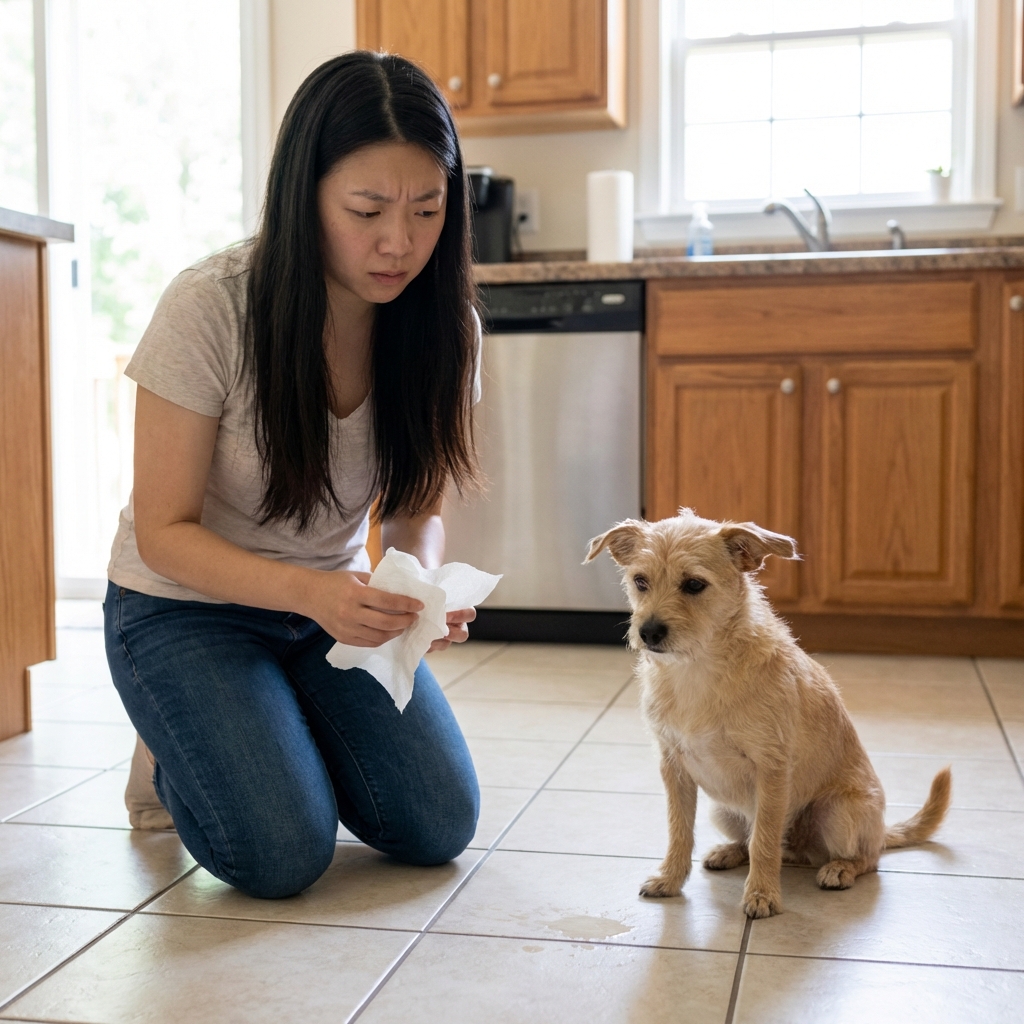
If your dog keeps vomiting yellow bile, you are not alone. As a veterinary assistant, I see this complaint all the time, and the good news is that many cases are manageable once you understand why it is happening and what to do next. Yellow vomit is often bile mixed with stomach fluid, but color alone cannot tell you the exact cause. Sometimes yellow can also come from foam, partially digested food, or refluxed intestinal contents.
That said, repeated vomiting can also be a sign of something more serious. This guide walks you through a practical, step-by-step plan, including when to treat it like an emergency and when to call your vet even if your dog seems mostly okay.
What yellow bile vomit can mean
Yellow vomit is often bile mixed with stomach fluid. Bile is made in the liver, stored in the gallbladder, and released into the small intestine to help digest fats. If the stomach is empty or irritated, bile-containing fluid can reflux and come up as a yellow, foamy liquid.
Common, non-emergency causes
- Empty stomach pattern (often early morning). Many people call this bilious vomiting syndrome. It is usually a pattern diagnosis after other issues are ruled out.
- Eating too fast or drinking a lot of water quickly.
- Dietary indiscretion (trash, rich food, too many treats).
- Sudden diet change or sensitivity to a new food.
- Mild gastritis from stress, travel, boarding, or a new routine.
Causes that need veterinary attention
- Intestinal blockage (toy, sock, corn cob, bones).
- Pancreatitis (often after fatty foods).
- Parvovirus or other infectious disease (especially in puppies or unvaccinated dogs).
- Parasites (giardia, worms) causing ongoing GI upset.
- Inflammatory bowel disease or chronic food intolerance.
- Liver or gallbladder disease.
- Kidney disease or toxin exposure.
- Reflux, ulcers, or endocrine disease (including Addison’s disease in some dogs).
Vomiting or regurgitation?
Owners often use “vomiting” for both vomiting and regurgitation, but they are not the same.
- Vomiting is active. You may see nausea signs first (lip licking, drooling, pacing), then abdominal heaving. The material may be partially digested and can be yellow or foamy.
- Regurgitation is more passive. Food or liquid comes up without much warning, often soon after eating, and it may look undigested and tube-shaped. This can point to esophagus issues and should be discussed with your vet.
Red flags: go to an emergency vet now
Yellow bile can be benign, but these signs are not. If you notice any of the following, skip home care and seek urgent veterinary help.
- Repeated vomiting (for example, more than 2 to 3 times in a day), especially if episodes are close together, ongoing, or your dog cannot keep water down
- Very large-volume vomiting even once, especially if your dog seems weak, painful, or unusually quiet afterward
- Blood in vomit (red streaks or coffee-ground material)
- Bloated or painful abdomen, hunched posture, whining, guarding the belly
- Unproductive retching (trying to vomit but nothing comes up), especially with restlessness or a swollen belly. This can be a sign of bloat (GDV) and is time-critical.
- Extreme low energy, weakness, collapse, pale gums
- Diarrhea with vomiting, especially watery or bloody
- Suspected foreign body (chewed toys, missing socks, trash raid)
- Possible toxin exposure (xylitol, grapes or raisins, chocolate, medications, rodent bait)
- Puppy, senior, or medically fragile dog (diabetes, kidney disease, Addison’s disease history)
- Signs of dehydration (dry or sticky gums, reduced urination, marked weakness). Skin tenting and sunken eyes can be helpful clues, but they are not perfect in every dog.
- Lethargy with ongoing retching or vomiting, which can increase aspiration risk and should be treated as urgent
If you are unsure, it is always okay to call an emergency clinic for guidance. I would rather you call and be told it can wait than miss a critical window.
Step-by-step plan
Step 1: Note the pattern and take a photo
Before you change anything, gather clues. This helps your vet and helps you spot patterns.
- When did it happen? Early morning, middle of the night, after meals?
- How often? One episode or repeated?
- What does it look like? Yellow foam, yellow liquid, food mixed in, grass?
- Any other signs? Diarrhea, pacing, lip licking, drooling, eating grass, belly pain.
- Any access to toys, bones, trash, compost, human meds, or new treats?
If you can, take a clear photo of the vomit for your vet. It is surprisingly useful.
Step 2: Check energy and comfort
A dog who vomits once but is bright, wants to eat, and is drinking normally is different from a dog who looks “off.”
- Gums should be moist, not tacky.
- Your dog should be able to settle and rest, not repeatedly retch or pace.
- They should not be acting painful when picked up or when the belly is touched.
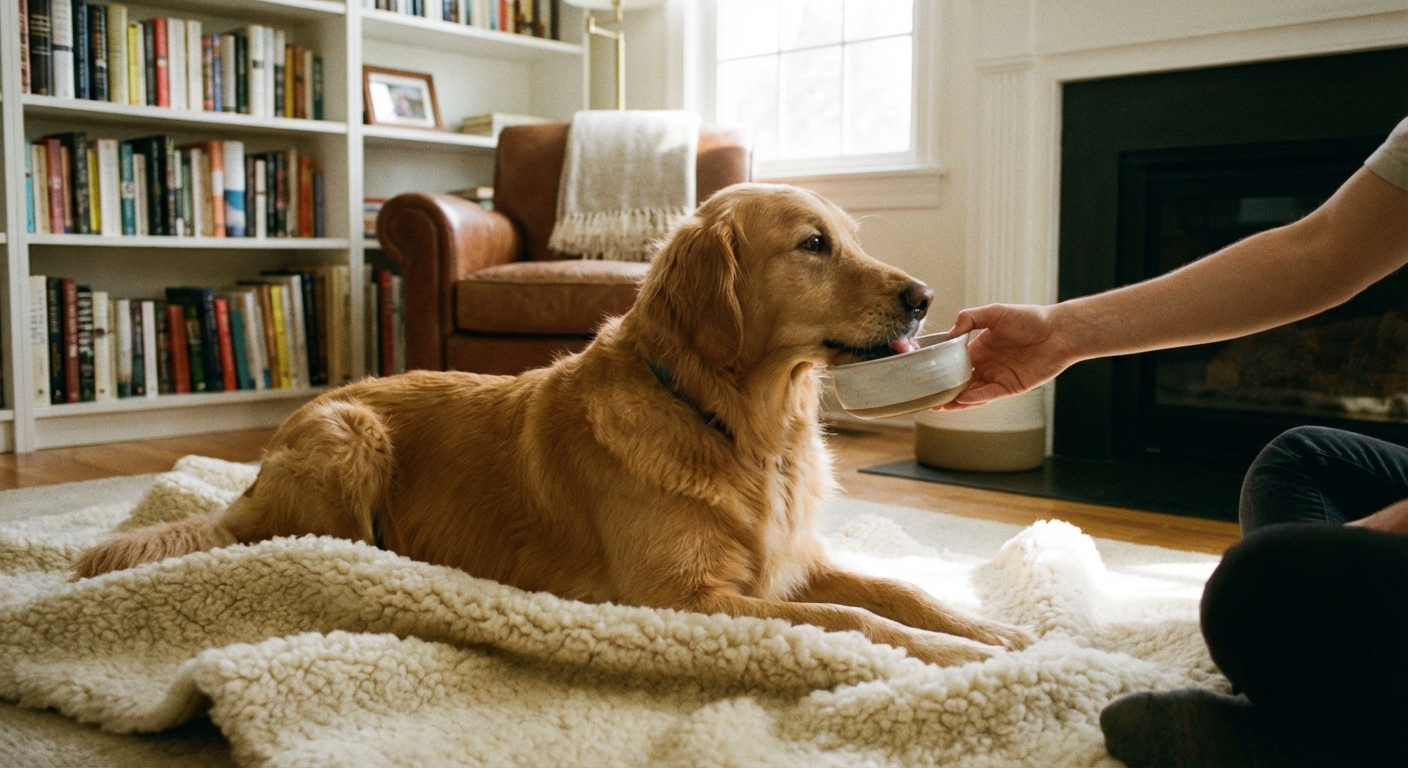
Step 3: Rest the stomach briefly
For a healthy adult dog with a single episode of bile vomiting and no red flags, a short break can help. If vomiting is continuing or worsening, do not keep fasting at home. Call your veterinarian.
- Food: If vomiting has stopped, pause food for 4 to 6 hours (not all day) to avoid making the empty-stomach cycle worse. If vomiting restarts at any point, stop the home plan and call your vet.
- Water: Offer small sips frequently. If your dog gulps water and vomits again, offer ice chips or small measured amounts for a short period. As a rough guide: 1 to 2 tablespoons at a time for small dogs, and a few tablespoons at a time for medium to large dogs, every 15 minutes.
Do not fast puppies without veterinary direction. Puppies can become hypoglycemic quickly.
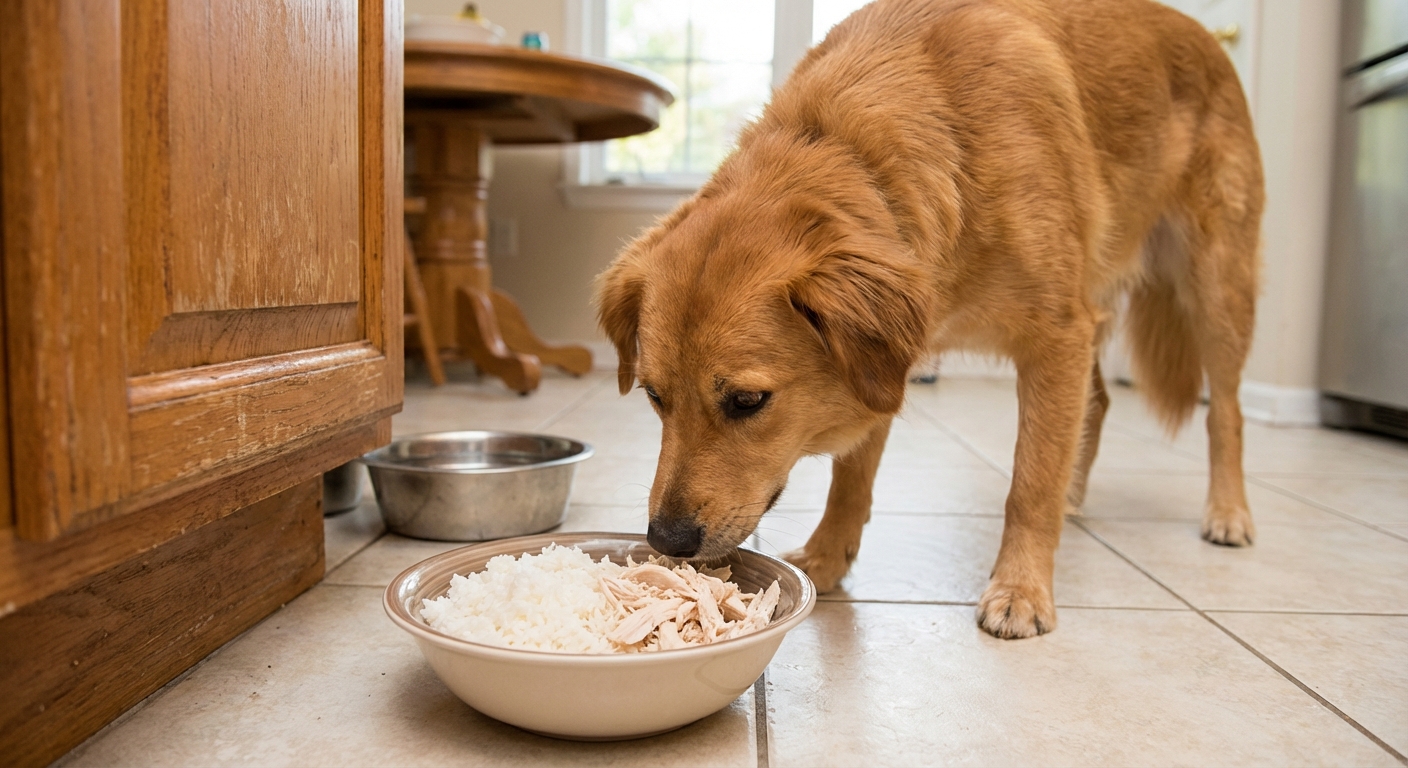
Step 4: Restart with small, low-fat bland meals
Once vomiting has stopped for several hours and your dog seems comfortable, feed a small meal. Think gentle and low-fat. If your dog has a history of pancreatitis, a sensitive stomach, or chronic disease, ask your vet what to feed and for how long. In many cases, a veterinary gastrointestinal diet is a great first-line option.
- Option A: Boiled skinless chicken breast + plain white rice
- Option B: Boiled lean ground turkey (drained well) + white rice
- Option C: A veterinary GI diet, or a novel protein your vet recommends if chicken is a known trigger
Feed small portions every 4 to 6 hours for the first day. If your dog keeps it down, gradually increase the amount and transition back to their normal food over 3 to 5 days.
Step 5: Stop the empty-stomach cycle
If the vomiting happens mostly in the early morning, an empty stomach pattern is a top suspect. Many dogs do better with smaller, more frequent meals and a predictable schedule.
- Feed 3 to 4 smaller meals per day instead of 1 to 2 large meals.
- Add a bedtime snack that is easy to digest.
- Avoid long overnight gaps. For some dogs, an automatic feeder set for early morning helps.
Step 6: Review treats, chews, and table food
When we are focused on kibble, we sometimes forget the extras. Many vomiting cases have a treat connection.
- Pause new treats, bully sticks, rawhides, and rich chews for 1 to 2 weeks.
- Avoid high-fat people foods (bacon, sausage, greasy leftovers).
- Keep the trash secured and counters cleared. It only takes one “score” to inflame the stomach.
Step 7: Consider parasites and testing if it keeps happening
If vomiting is recurring, especially with soft stool, mucus, or intermittent diarrhea, ask your vet about a fecal test. Giardia and other parasites can cause chronic stomach upset and can be missed without the right testing.
Step 8: Ask your vet about safe meds
It is tempting to reach for human medications, but some are risky for dogs. If vomiting is persistent or your dog seems nauseated (lip licking, drooling, refusing food), your vet may recommend anti-nausea medication or stomach protectants based on your dog’s history.
Important: Avoid giving human medications without veterinary approval, especially NSAIDs like ibuprofen or naproxen, which can cause severe stomach ulcers and toxicity in dogs. Also avoid giving bismuth products (like Pepto-Bismol) unless your vet directs you. They can be unsafe in some situations and can turn stool black, which can make GI bleeding harder to recognize. Some human antacids (such as famotidine) may be used in certain dogs, but dosing and safety depend on weight, age, and medical conditions, so this is a vet call, not a guess.
When to call your vet
Even without emergency signs, recurrent bile vomiting deserves a check-in. Call your vet if:
- Vomiting continues beyond 24 hours
- It happens on two or more mornings in a row, or more than twice in a week
- Episodes are becoming more frequent
- Your dog seems “not quite right” even if they are still eating
Frequent bile vomiting can be linked to reflux, ulcers, food intolerance, pancreatitis, parasites, or systemic illness. Sometimes dogs look mostly okay between episodes, so do not feel silly calling.
Special situations
Puppies
Puppies dehydrate faster and are more vulnerable to low blood sugar. Yellow bile vomiting in a puppy warrants a faster call to your veterinarian, especially if vaccines are incomplete or there is diarrhea.
Small dogs
Tiny stomachs and fast metabolisms can make long fasting periods a problem. Many small dogs do better with 3 to 4 meals per day and a bedtime snack.
Seniors
In older dogs, repeated vomiting can signal pancreatitis, kidney disease, or other systemic illness. If your senior dog is vomiting bile more than once, schedule an exam and discuss bloodwork and imaging with your vet.
What to bring to the vet
- A timeline of vomiting episodes (dates, times, frequency)
- Photos of vomit and stool if possible
- Diet details: brand, flavor, treats, chews, recent changes
- List of medications and supplements
- Any known access to foreign objects or toxins
Your vet may recommend a fecal test, bloodwork, X-rays, or ultrasound depending on the exam and symptoms.
Bottom line
Yellow bile vomit is often your dog’s way of saying, “My stomach is irritated or too empty,” and simple changes like smaller meals and a bedtime snack can make a real difference. But if vomiting is frequent, your dog seems unwell, or you see any red flags, trust your instincts and get veterinary help promptly.
If your dog’s energy is down, water will not stay down, or vomiting keeps repeating, it is time to stop troubleshooting at home and loop in your veterinarian.