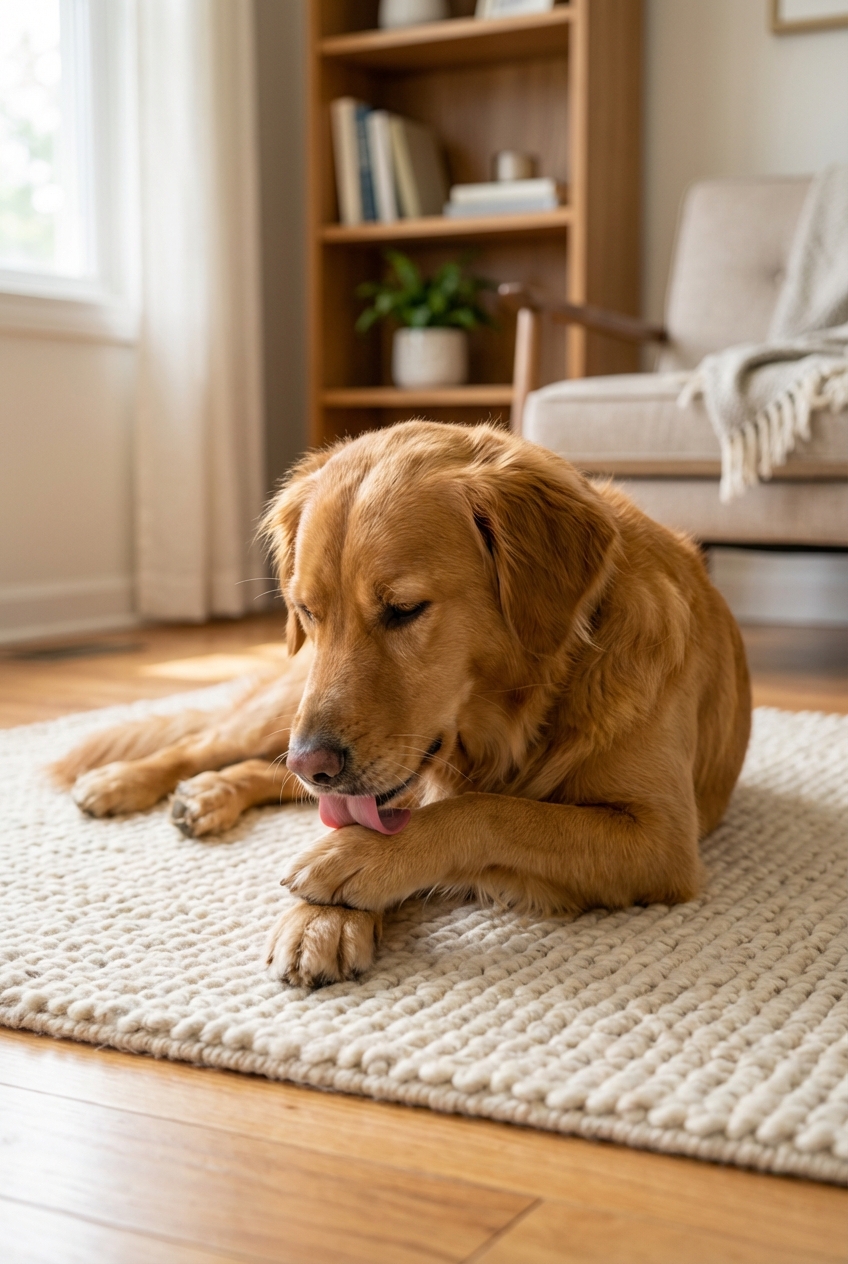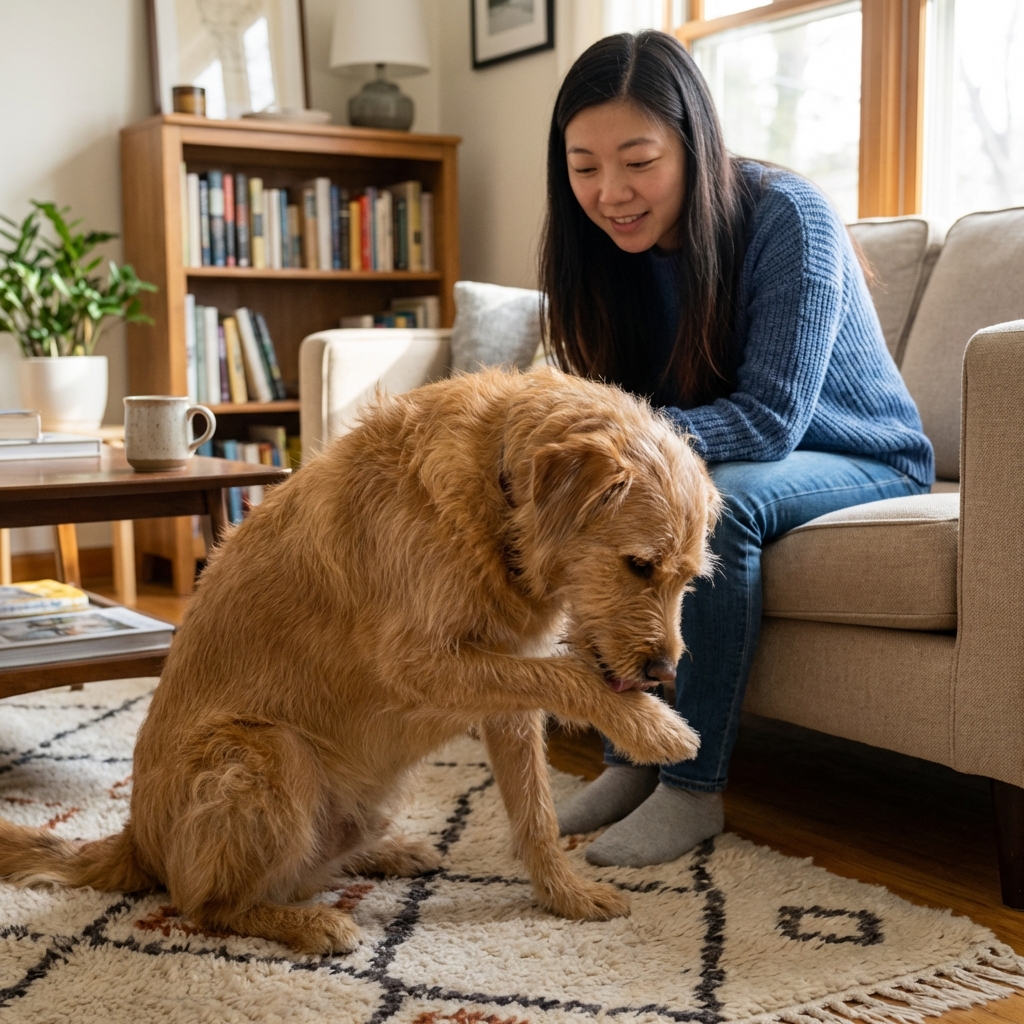
From allergies and yeast to injuries and anxiety, discover the most common reasons dogs lick their paws. Follow a quick paw-check routine, safe home tips, an...
Article
•
Designer Mixes
Dog Keeps Licking His Paw

Shari Shidate
Designer Mixes contributor
If your dog keeps licking his paw, you are not overreacting. Paw licking can be a simple habit, but it is also a common sign of discomfort seen in veterinary settings. The good news is that most causes are treatable once you narrow down why it is happening and stop the lick cycle before skin gets inflamed or infected.
This guide will help you figure out what is normal, what is not, what you can do at home today, and when it is time to call your veterinarian.
Is paw licking normal?
A little licking is normal grooming. What is not normal is licking that is frequent, intense, or focused on one paw or one specific spot.
Signs it is a problem
- Licking that interrupts sleep or play
- One paw is targeted more than the others
- Redness, swelling, hair loss, odor, or dark saliva staining
- Limping, nail sensitivity, or flinching when you touch the paw
- Wet fur between toes, raw skin, scabs, or bleeding
When licking becomes repetitive, the skin barrier breaks down and bacteria or yeast can overgrow. That is why early action matters.
Top reasons dogs lick their paws
Paw licking is a symptom, not a diagnosis. These are the most common underlying causes.
1) Allergies (environmental or food-related)
Allergies are a leading cause. Dogs often show allergy itch on paws, face, ears, and belly. Seasonal flares can point toward pollen or grass. Year-round symptoms can suggest dust mites, mold, or food allergy.
- Clues: licking multiple paws, recurrent ear infections, itchy face, rubbing on carpet
- What helps: veterinary guidance on itch control, consistent skin care, and an allergy plan. Environmental allergy testing is most useful to guide immunotherapy. For food allergy, an elimination diet trial is the standard approach rather than blood testing.
2) Irritation from grass, chemicals, or rough surfaces
Fertilizers, lawn treatments, ice melt, hot pavement, and even some household cleaners can irritate paw pads.
- Clues: licking right after walks, red pads, sensitivity on hard floors
- What helps: rinse paws after walks and avoid treated areas when possible
3) Foreign objects or minor injuries
Foxtails, burrs, tiny splinters, gravel, and broken nails can cause sudden, intense licking.
- Clues: sudden onset, one paw affected, limping, intense, focused licking
- What helps: a careful paw check and prompt veterinary removal if anything is embedded
Foxtail note: if you suspect a foxtail (especially a small draining hole, swelling between toes, or sudden pain after walking in dry grass), do not dig deep. Foxtails can migrate and often need urgent veterinary care.
4) Yeast or bacterial infection
Moist areas between toes are a perfect environment for microbial overgrowth. Moisture plus inflammation, especially from allergies, makes it easier for yeast and bacteria to take hold.
- Clues: strong odor, greasy feel, redness between toes, brown staining, recurrent episodes
- What helps: veterinarian prescribed topical or oral medications and addressing the underlying trigger (often allergy)
5) Parasites
Fleas can cause whole-body itch, but some dogs focus on feet. Mites are less common, but still possible.
- Clues: generalized itch, tiny scabs, other pets itching
- What helps: reliable parasite prevention and a veterinary exam if symptoms persist
6) Pain in the paw or leg
Arthritis, soft tissue strain, a thorn, or an injured nail bed can cause licking because the paw hurts.
- Clues: limping, licking after exercise, reluctance to jump
- What helps: a veterinary evaluation to rule out orthopedic or nail bed problems
7) Anxiety, boredom, or compulsive behavior
Some dogs lick as a self-soothing behavior, especially when left alone or under stress. Over time, it can become compulsive.
- Clues: licking mostly at rest, during alone time, or in predictable stressful situations
- What helps: enrichment, routine, training support, and veterinary behavior guidance if needed
8) Less common but important causes
Some paw problems are not obvious at first glance, especially when they keep recurring in the same spot.
- Interdigital cysts and furunculosis: firm or painful swelling between toes, recurring lumps, or draining tracts
- Pododermatitis: chronic inflammation of the feet that can involve infection, allergy, or immune factors
- Autoimmune or immune-mediated skin disease (rare): unusual ulceration, crusting, or multiple areas affected
- Nail disorders (uncommon): repeated nail pain, brittle or splitting nails, or multiple nails affected over time
At-home paw check in 3 minutes
You do not need fancy tools to learn a lot. Do this in good light when your dog is calm.
Step-by-step
- Look: check pads, between toes, around nails, and the top of the foot for redness, swelling, hair loss, or discharge.
- Spread toes: gently separate toes to look for burrs, foxtails, or trapped debris.
- Smell: a musty, yeasty, or corn-chip-like odor can be associated with yeast or bacterial overgrowth (and sometimes just normal skin). If it is strong or new, it is worth a veterinary check.
- Press lightly: check for painful spots or a cracked nail.
- Compare paws: differences often highlight the problem area.
If you see an embedded object, bleeding that will not stop, a puncture wound, or marked swelling, that is a veterinary visit today.
What you can do right now
These steps are gentle and low-risk for most dogs. They do not replace a veterinary exam when symptoms are significant, but they can reduce irritation and help you gather useful clues.
Rinse and dry after walks
Use lukewarm water to rinse paws, then dry thoroughly, especially between toes. Less moisture and less residue on the skin can make it harder for yeast and bacteria to flare.
Stop the lick cycle
If your dog cannot stop licking, skin will not heal.
- Use an e-collar or soft cone if needed.
- Try a breathable bootie indoors for short periods if your dog tolerates it.
- Keep nails trimmed to reduce accidental skin trauma.
Try a short break from triggers
If licking is worse after grass exposure, walk on sidewalks for a few days and rinse paws after every outing. If it improves quickly, that is helpful information for your veterinarian.
Support skin health with nutrition
Healthy skin starts with a balanced diet. If your dog eats a commercial food, choose a reputable brand with clear proteins and fats. If you feed homemade, make sure it is properly balanced for calcium, essential fatty acids, and micronutrients. Talk with your veterinarian before making major changes, especially if your dog has chronic itching.
Tip from the clinic: take a quick photo of the paw each day. Redness and swelling are easier to track in pictures than in memory.
How long to wait
If your dog seems comfortable and you do not see swelling, open skin, or discharge, try rinsing, drying, and lick prevention. If there is no clear improvement within 24 to 48 hours, or if it worsens at any point, call your veterinarian.
What not to do
- Do not use human pain meds. Many are toxic to dogs.
- Do not apply essential oils to broken skin. They can irritate skin and can be toxic if licked.
- Do not ignore odor or discharge. That often means infection is already present.
- Do not keep switching foods weekly. For food allergy evaluation, diet trials need time and consistency.
- Do not use hydrogen peroxide or rubbing alcohol on paws. These can damage tissue and delay healing.
- Do not apply over-the-counter antibiotic ointments or hydrocortisone unless your veterinarian directs you. Some products are not appropriate if infection is present, and many dogs lick them off.
- Do not tightly bandage the foot at home. Tight wraps can cause swelling and pressure injuries if applied incorrectly.
When to call the veterinarian
Call your veterinarian promptly if any of the following are true:
- Limping, yelping, or sudden severe licking
- Swelling, heat, open sores, bleeding, or a puncture wound
- Bad odor, pus, or a sticky discharge
- Repeated paw infections or chronic licking that keeps returning
- Your dog is also vomiting, has diarrhea, or seems lethargic
These cases often require prescription treatment, and the faster you intervene, the easier it is to resolve.
What your vet may recommend
Veterinarians typically focus on two goals: treat any infection or inflammation, and identify the trigger so it does not keep coming back.
Common diagnostics
- Skin cytology (a quick microscope check for yeast or bacteria)
- Skin scraping if mites are suspected
- Checking nails and nail beds for trauma
- Allergy workup or elimination diet trial if history fits
Common treatments
- Medicated wipes, sprays, or shampoos for feet
- Prescription anti-itch medication when appropriate
- Antibiotics or antifungals if infection is confirmed
- Parasite prevention updates
- Behavior and enrichment plan if compulsive licking is suspected
Preventing paw licking long-term
Once the immediate flare calms down, prevention keeps you from repeating the same cycle.
- Clean paws routinely: rinse after walks and dry between toes.
- Protect in harsh conditions: booties for ice melt, hot pavement, or rough terrain.
- Manage allergies early: seasonal plans work best when started before peak itch.
- Keep fur trimmed: long hair between toes traps moisture and debris.
- Build calm routines: exercise, enrichment, and predictable schedules reduce stress licking.
Quick FAQ
Why does my dog lick one paw only?
One paw licking often points to a localized issue such as a foreign object, nail injury, localized infection, an interdigital cyst, or contact irritation.
Why does it get worse at night?
Many dogs lick more when the house is quiet because there are fewer distractions. Night licking can also happen when itch or pain feels more noticeable at rest.
Does paw licking always mean allergies?
No. Allergies are common, but infections, injuries, pain, and anxiety are also frequent causes. The pattern, smell, and whether one paw or multiple paws are involved help narrow it down.