A dog bowel blockage can turn serious fast. Learn early symptoms, red flags, home do’s and don’ts, how vets diagnose obstructions, treatment options, rec...
Article
•
Designer Mixes
Dog Intestinal Blockage Advice

Shari Shidate
Designer Mixes contributor
As a veterinary assistant here in Frisco, Texas, I have seen how quickly a simple chew toy, sock, corn cob, or chunk of bone can turn into a true emergency. Intestinal blockages (also called GI obstructions) are scary, but there is a lot you can do as a loving pet parent: recognize the warning signs early, know what to do next, and prevent it from happening again.
If you are reading this because you are worried right now, please trust your gut. When it comes to a possible blockage, waiting it out is one of the riskiest choices.
What an intestinal blockage is (and why it is urgent)
A blockage happens when something prevents food and fluid from moving normally through your dog’s stomach or intestines. The item might be a swallowed object (like a toy), or it could be something inside the body (like a tumor or severe inflammation). Either way, the gut can become damaged, dehydrated, and painful fast.
In a complete obstruction, nothing can pass. Pressure builds, vomiting starts, and the intestinal wall can lose blood supply. In the worst cases, the tissue can die and perforate, which can cause a life-threatening infection in the abdomen.
Common things dogs swallow
- Socks, underwear, dish towels, baby items
- Rope toys and string, including carpet fibers
- Corn cobs, fruit pits, peach or plum stones
- Cooked bones (especially splinter-prone)
- Rawhide chunks, pig ears, large chews
- Stuffing from plush toys, squeakers
- Rocks, mulch, sticks, hair ties
- Cat toys and cat string toys (a big one)
Extra note on string or ribbon: Linear foreign bodies (string, yarn, tinsel, ribbon) can saw through the intestines as the gut tries to move them along. This is an emergency.
Signs you should not ignore
Some blockages look obvious. Others start quietly and then escalate. Call your veterinarian or an emergency clinic if you notice any of the following, especially if more than one is happening at the same time:
- Repeated vomiting or retching (even if nothing comes up)
- Loss of appetite or refusing treats
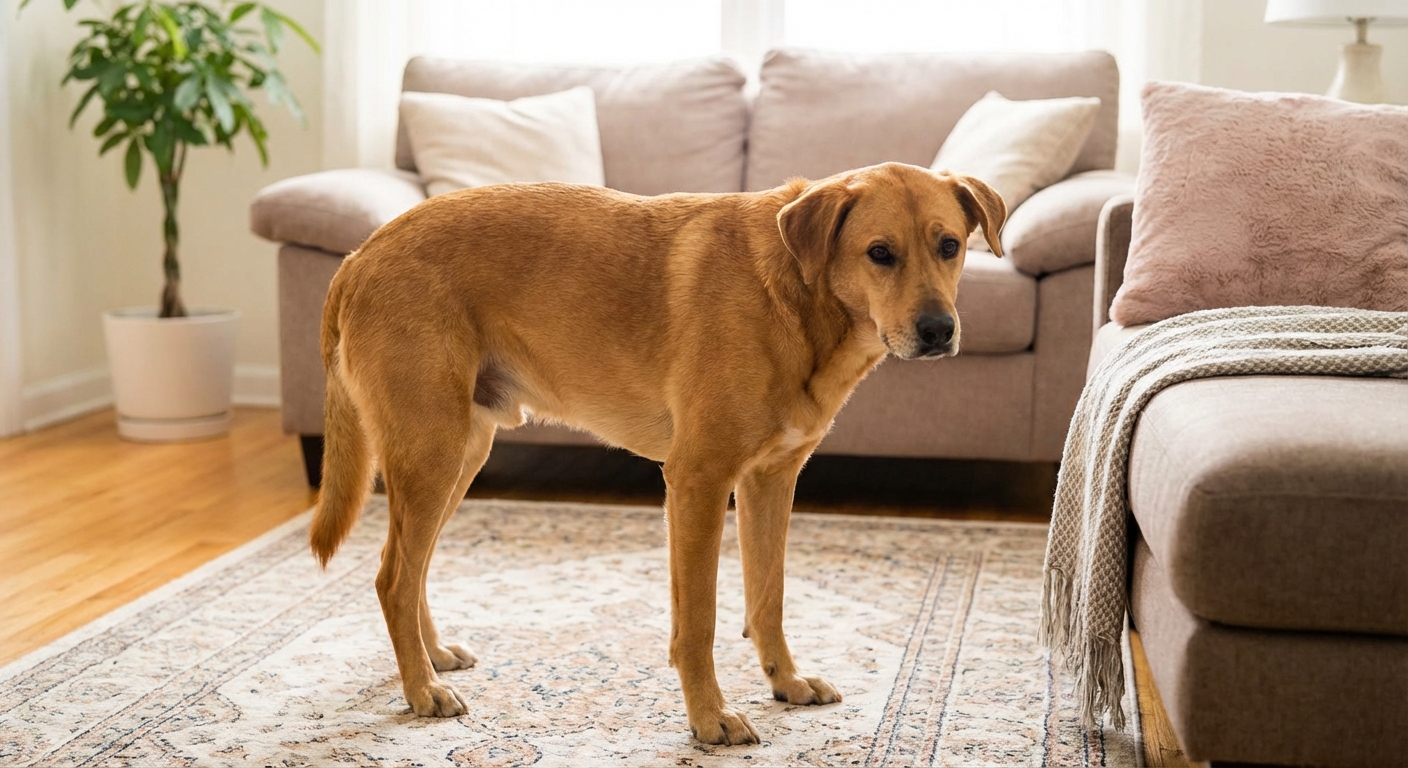
- Abdominal pain, tense belly, or “praying position” (front end down, rear up)
- Lethargy, hiding, shaking, or restlessness
- Diarrhea or straining to poop
- Little to no stool, or very small amounts
- Blood in stool or vomit
- Excessive drooling, lip licking, gulping
- Swollen abdomen
If your dog is vomiting more than once, cannot keep water down, or seems painful, treat it like an urgent situation.
What to do if you suspect a blockage
1) Call a veterinary clinic right away
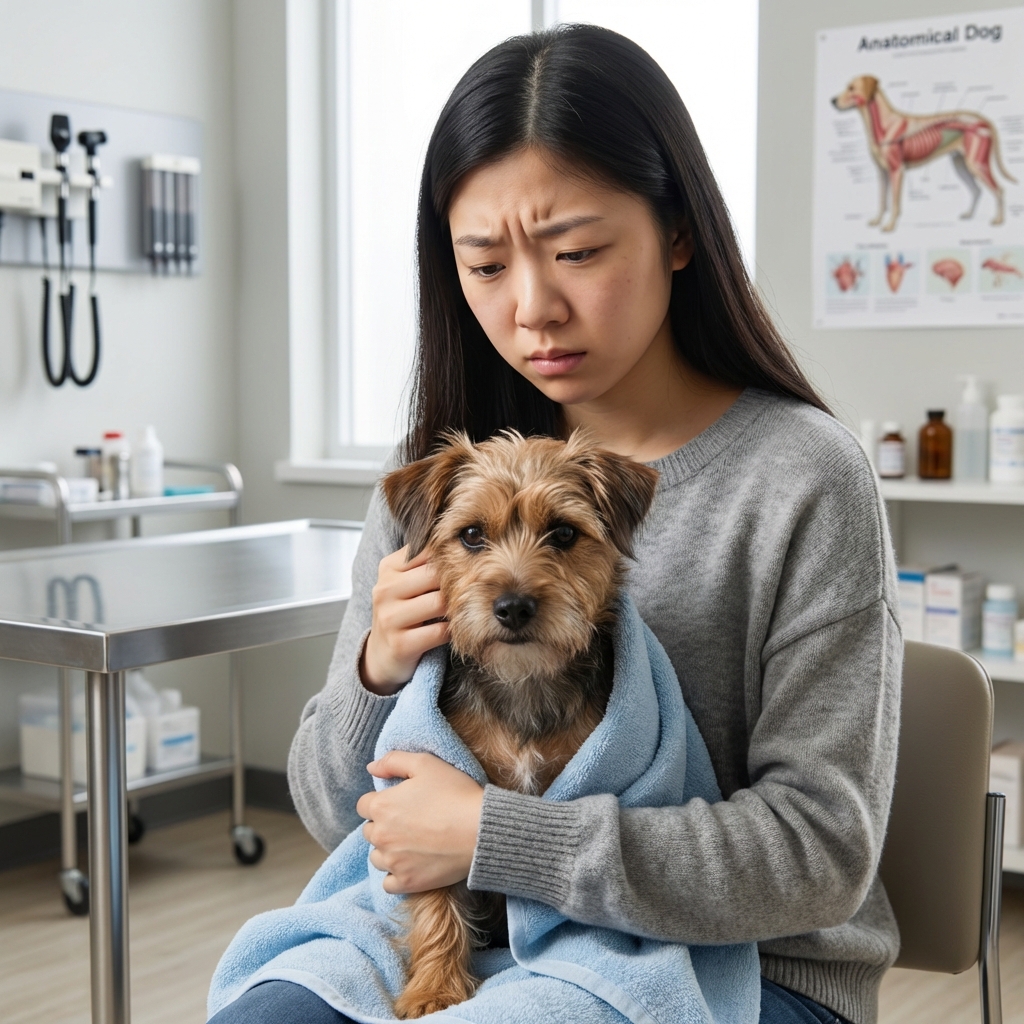
Describe symptoms, when they started, and what you think was eaten. If you have a missing toy piece, bring an identical one with you so the team can judge size and material.
2) Do not give home remedies unless your veterinarian tells you to
Please avoid these common well-meant but risky steps:
- Do not induce vomiting at home unless your veterinarian instructs you. Some objects can injure the throat on the way back up, and timing matters.
- Do not give laxatives, mineral oil, or bulky foods (bread, pumpkin “to push it through”) without guidance. If the gut is blocked, adding more material can worsen pain, dehydration, and pressure.
- Do not give human pain medications (ibuprofen, naproxen, acetaminophen). These can be toxic to dogs.
3) If there is string hanging from the mouth or rectum, do not pull it
This is so important. Secure your dog so they cannot chew it more, and go to the vet immediately. Pulling can cause serious internal damage.
4) Bring helpful details
- When the vomiting started and how often
- Last normal meal and last normal poop
- What may be missing at home (toy, clothing, trash)
- Your dog’s current meds, health conditions, and diet
How veterinarians diagnose a blockage
Your veterinary team will typically combine history, exam findings, and imaging.
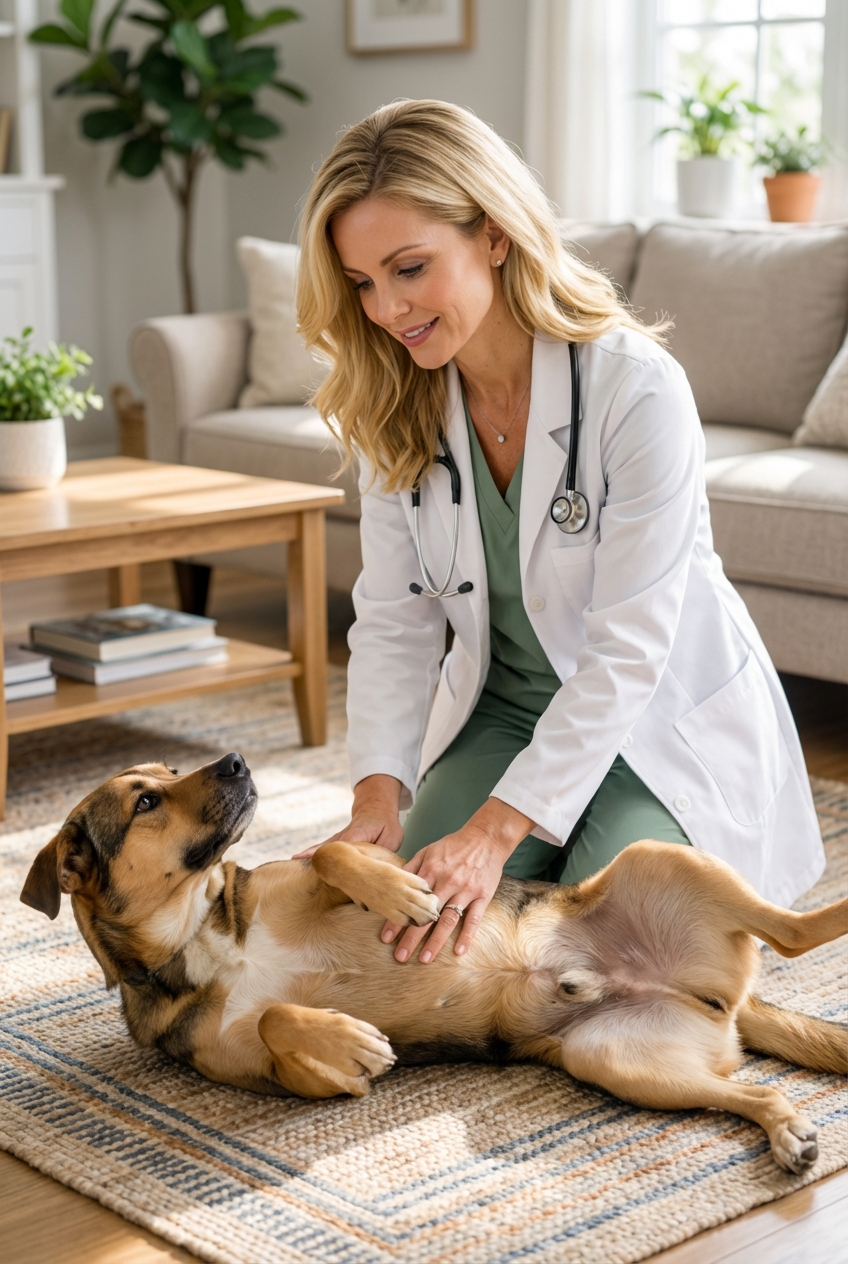
- Physical exam: checking hydration, abdominal pain, fever, gum color, heart rate.
- X-rays: helpful for many objects, gas patterns, and intestinal dilation.
- Ultrasound: very useful for soft objects that do not show up clearly on X-ray and for checking gut movement.
- Bloodwork: looks for dehydration, electrolyte imbalances, inflammation, and organ stress.
Sometimes a contrast study is used. In certain cases, endoscopy can both diagnose and remove an object in the stomach or upper intestine.

Treatment options (and what influences the plan)
Treatment depends on what was swallowed, where it is, how long it has been there, and how stable your dog is.
Monitoring and supportive care (selected cases)
If the object is small, smooth, and already moving through, your veterinarian may recommend careful monitoring with rechecks. This is not a DIY plan. It is a medical decision based on imaging, risk, and your dog’s symptoms.
Endoscopic removal
If an object is still in the stomach and accessible, endoscopy may remove it without abdominal surgery. Not every case qualifies, and timing matters.
Surgery
If the object is stuck, causing complete obstruction, or the intestine is compromised, surgery is often the safest option. The surgeon may remove the object through an incision into the stomach or intestine. If tissue is damaged, a section of intestine may need to be removed and reconnected.
What loving owners should know: early treatment often means an easier recovery. Waiting can turn a straightforward removal into a more complex, higher-risk surgery.
Aftercare: helping your dog heal
Your veterinarian will tailor instructions, but these are common recovery basics after obstruction treatment:
- Food: a bland, easy-to-digest diet for a period of time, then a gradual transition back to their normal diet.
- Hydration: encourage water intake as directed. Some dogs need anti-nausea meds to keep fluids down.
- Medications: pain relief, anti-nausea medications, antibiotics (if indicated), and sometimes GI protectants.
- Activity restriction: especially after surgery, leash walks only and no jumping while the incision heals.
- Incision monitoring: watch for swelling, redness, discharge, or missing sutures.
- Recheck visits: do not skip them. They help catch complications early.
Call your clinic promptly if vomiting returns, your dog seems painful, the belly looks swollen, or your dog will not eat for more than a day post-treatment (unless your veterinarian advised otherwise).
Prevention: simple habits that truly work
Prevention is not about being perfect. It is about setting your dog up for success, especially if you have a curious puppy, a “garbage-loving” adult, or a power chewer.
Safer home setup
- Use a covered trash can or keep trash behind a closed door.
- Keep laundry in a hamper with a lid. Socks are a top offender.
- Pick up small items daily: hair ties, kids’ toys, pacifiers, nerf darts.
- Supervise yard time if your dog eats sticks, rocks, or mulch.
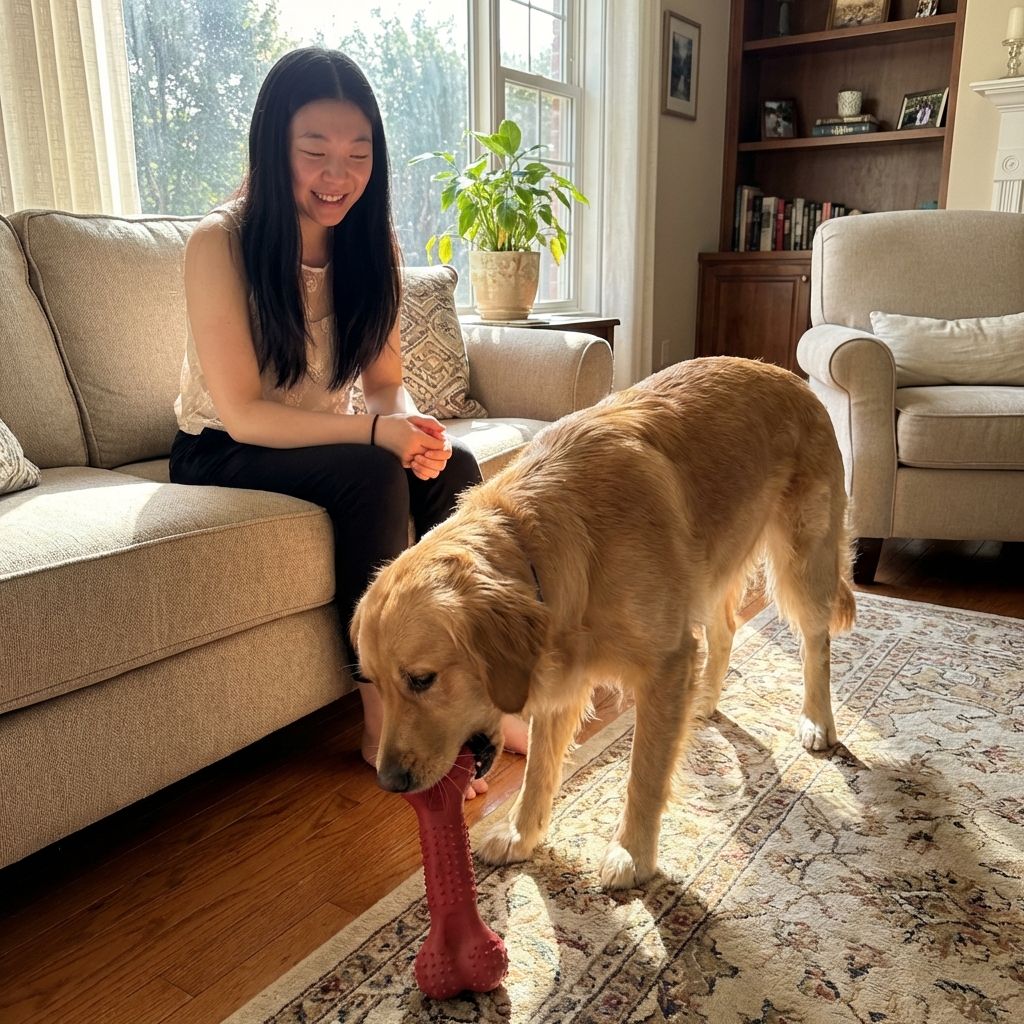
Choose chews wisely
- Avoid chews that break into large chunks or sharp pieces.
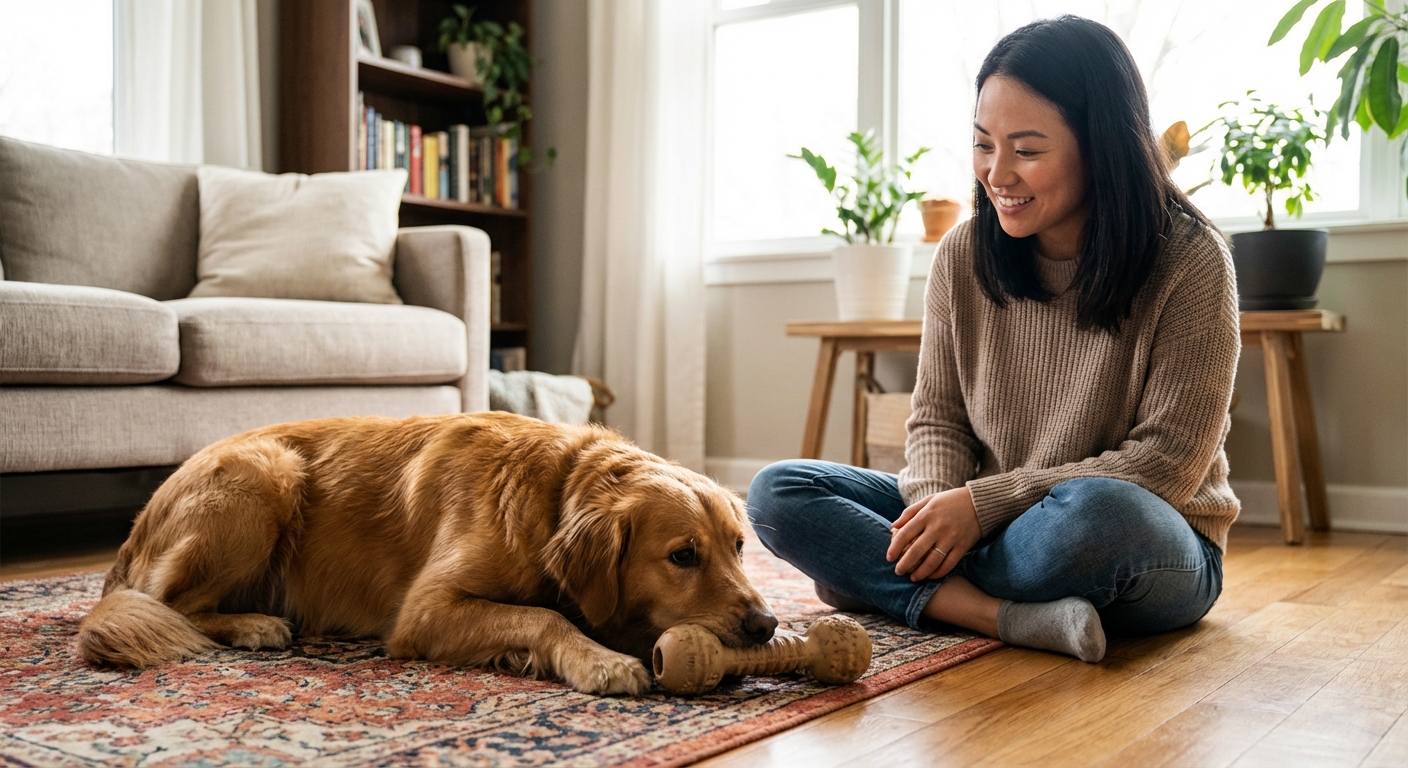
- Size matters. Many dogs swallow items that are simply too small for them.
- Retire damaged toys early. If it is missing pieces, it is no longer safe.
Support healthy chewing and enrichment
Dogs often swallow dangerous things when they are bored, anxious, or under-stimulated. Daily walks, training games, scent work, and feeding puzzles can lower those “grab and gulp” moments.
When it is an emergency
Go to an emergency veterinarian now if your dog has any of the following:
- Repeated vomiting or inability to keep water down
- Bloated abdomen, severe pain, collapse, or weakness
- Known ingestion of string, sharp objects, batteries, or multiple items
- Pale gums, trouble breathing, or extreme lethargy
- Straining without producing stool plus vomiting
One last loving reminder: you are not overreacting by getting help. In obstruction cases, quick action is one of the kindest things you can do.
Quick FAQ
Can a dog still poop with a blockage?
Yes. Especially early on, stool already in the colon may still pass. A dog can also have diarrhea with a partial obstruction. That is why symptoms as a group matter.
How fast do symptoms show up?
It varies. Some dogs start vomiting within hours. Others develop signs over a day or two, especially with partial blockages or soft items.
Will pumpkin help “move it along”?
Pumpkin can be helpful for mild constipation, but it is not a safe home fix for suspected obstruction. If something is stuck, adding fiber can increase pressure behind the blockage.
Are certain breeds at higher risk?
Any dog can obstruct, but dogs who love to chew and swallow, puppies, and anxious or high-energy dogs tend to be overrepresented. Some “designer mixes” and retriever types are famously enthusiastic gulpers.