Confused by your dog’s heat cycle? Learn the key signs, how long bleeding and discharge last, when fertility is highest, and simple steps to prevent pregna...
Article
•
Designer Mixes
Dog in Heat Symptoms

Shari Shidate
Designer Mixes contributor
If you have a female dog who is not spayed, at some point you will likely see behaviors that make you pause and think, “Is she in heat?” As a veterinary assistant here in Frisco, Texas, I hear this question all the time, especially from first-time pet parents. The good news is that most heat cycles are normal and manageable once you know what to look for and how to keep your pup safe and comfortable.
This guide walks you through the most common dog in heat symptoms, what is normal versus what is not, and the practical steps you can take at home.

What “in heat” means
When people say a dog is “in heat,” they usually mean the heat cycle (the period of visible signs), which includes proestrus and estrus. Estrus is the fertile stage within that cycle, when a female is most likely to accept a male.
Most dogs experience their first heat between 6 and 18 months, depending on breed and size. Smaller dogs often cycle earlier; larger breeds may start later.
The stages of a heat cycle
A typical heat cycle is often around 18 to 21 days, but it can be shorter or longer. These stages help explain why symptoms change from week to week.
Proestrus (often 7 to 10 days)
What most owners notice: swelling and the start of bleeding.
- Vulva swelling is usually the first sign.
- Bloody discharge often starts light and may become heavier.
- More attention from male dogs, but your female typically will not “stand” to be bred yet.
- Behavior changes like clinginess, mild irritability, or restlessness.
Estrus (often 5 to 10 days)
What most owners notice: discharge lightens, and she may be more flirtatious or determined to roam.
- Discharge may turn watery or pinkish and can decrease.
- She is fertile now and will usually accept a male.
- Flagging behavior (tail held to the side) may appear.
- Increased roaming or escape attempts are common.
Diestrus (about 2 months)
What most owners notice: heat signs fade, but hormones can still affect behavior.
- Heat signs fade and fertility ends.
- Hormones remain elevated even if she was not bred.
- False pregnancy symptoms can happen in some dogs.
Anestrus (resting period)
What most owners notice: everything looks back to normal.
- No heat signs. The body is in a recovery phase.
- Time between cycles varies. Many dogs average around 6 months, but it can range from about 3 to 12 months.
Quick note: Some dogs have very subtle or “silent” heats with minimal bleeding, so do not rely on discharge alone. Behavior changes and male dog interest can be clues too.
Most common dog in heat symptoms
Here are the symptoms pet owners report most often, with a quick explanation of what is happening and what you can do.
1) Swollen vulva
This is one of the most reliable early signs. Mild to moderate swelling is typical. If you see severe swelling, obvious pain, or wounds, call your veterinarian.
2) Vaginal discharge (blood to lighter fluid)
Spotting to moderate bleeding is common in proestrus. As she moves into estrus, the discharge often becomes thinner and lighter in color. Some dogs are very tidy and you may barely notice any discharge.
3) Increased urination and marking
Many females urinate more frequently during heat. It is partly hormonal and partly communication, since urine contains pheromones that attract males.
4) Attention from male dogs
Neighborhood male dogs may suddenly become very interested, even from a distance. This is normal and is exactly why close supervision and good barriers matter so much during heat.
5) Flirtatious behavior and “flagging”
During estrus, a female may hold her tail to the side when approached, or posture in a way that signals she is ready to mate.
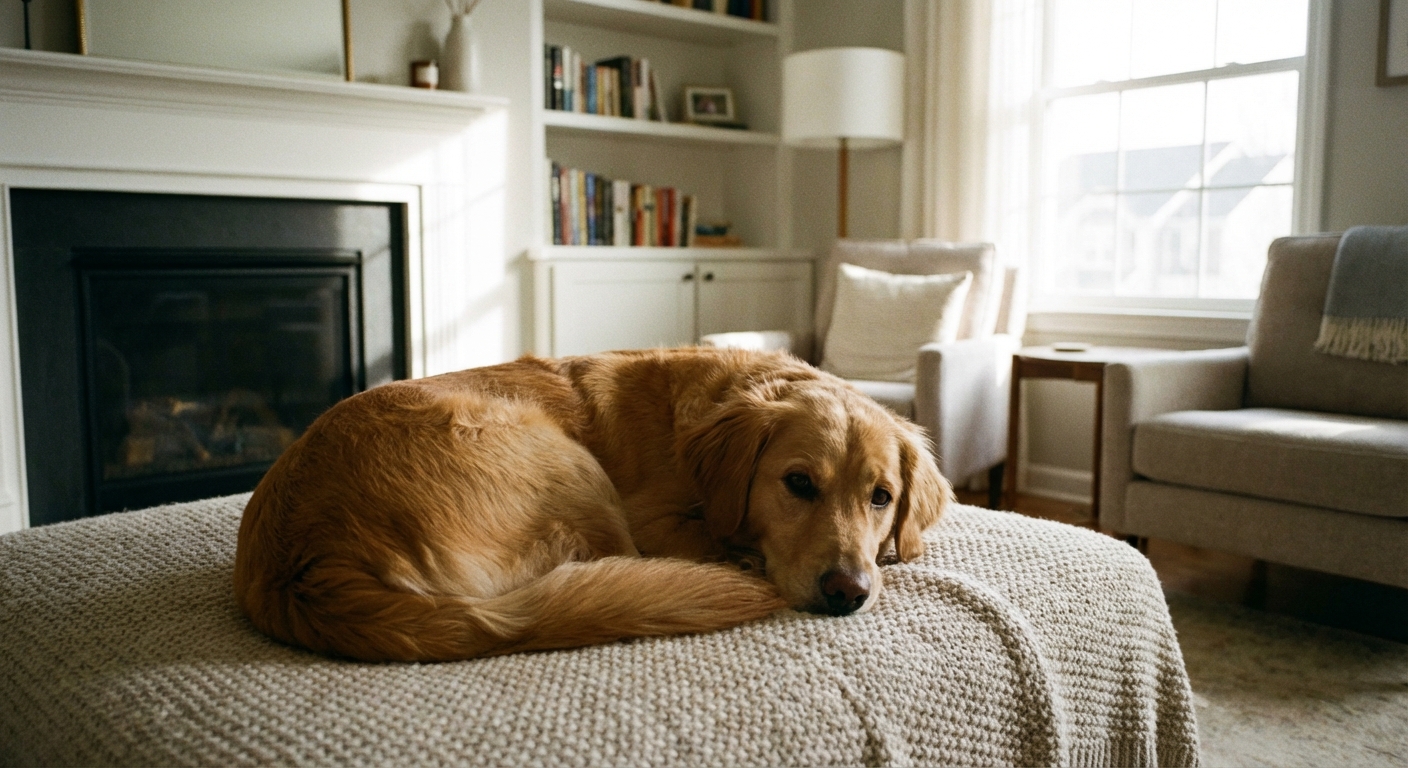
6) Restlessness, pacing, whining, clinginess, or moodiness
Some dogs act more affectionate; others want space. Mild behavior changes are typical. If you see extreme anxiety, nonstop vocalizing, or sudden aggression, check in with your veterinarian to rule out pain or another health issue.
7) Licking the rear end more than usual
This is often a grooming response to discharge and swelling. Excessive licking can sometimes irritate the skin, so keep an eye out for redness.
8) Decreased appetite (sometimes)
Hormonal shifts can change appetite. A mild dip is usually fine if she is otherwise bright and normal. If she refuses food for more than 24 hours or you notice vomiting, lethargy, signs of dehydration, or anything else that feels off, call your veterinarian.
Normal vs. urgent signs
Most heat cycles are not dangerous by themselves. The biggest risks are an unplanned pregnancy and certain hormone-related conditions that can occur in intact females.
Normal, common signs
- Swollen vulva
- Spotting or bleeding that slowly changes over the cycle
- Male dogs showing strong interest
- Behavior changes like restlessness or clinginess
- More frequent urination
Call your veterinarian promptly if you notice
- Bad-smelling discharge, yellow or green discharge, or pus-like fluid
- Heavy bleeding that soaks bedding or seems excessive
- Lethargy, fever, vomiting, diarrhea, or your dog seems unwell
- Increased thirst and urination paired with low energy
- A swollen belly or signs of abdominal pain
- Heat cycles that seem unusually frequent or absent once your dog is fully mature
Why these symptoms matter: pyometra risk
One of the most serious conditions in intact females is pyometra, a uterine infection that often occurs weeks after a heat cycle. It can be life-threatening and requires urgent veterinary care. If your dog seems sick after a heat, do not wait it out.
How long does a dog stay in heat?
For many dogs, visible heat signs last around 2 to 3 weeks, but timing varies widely by individual. Fertility is most likely during estrus, which often falls around the middle of the cycle. Because the exact fertile window can be hard to predict at home, it is safest to assume your dog can become pregnant for the entire time you see heat signs, plus a buffer of several days.
At-home care
You do not need fancy equipment. You need consistency, supervision, and a plan.
Prevent pregnancy first
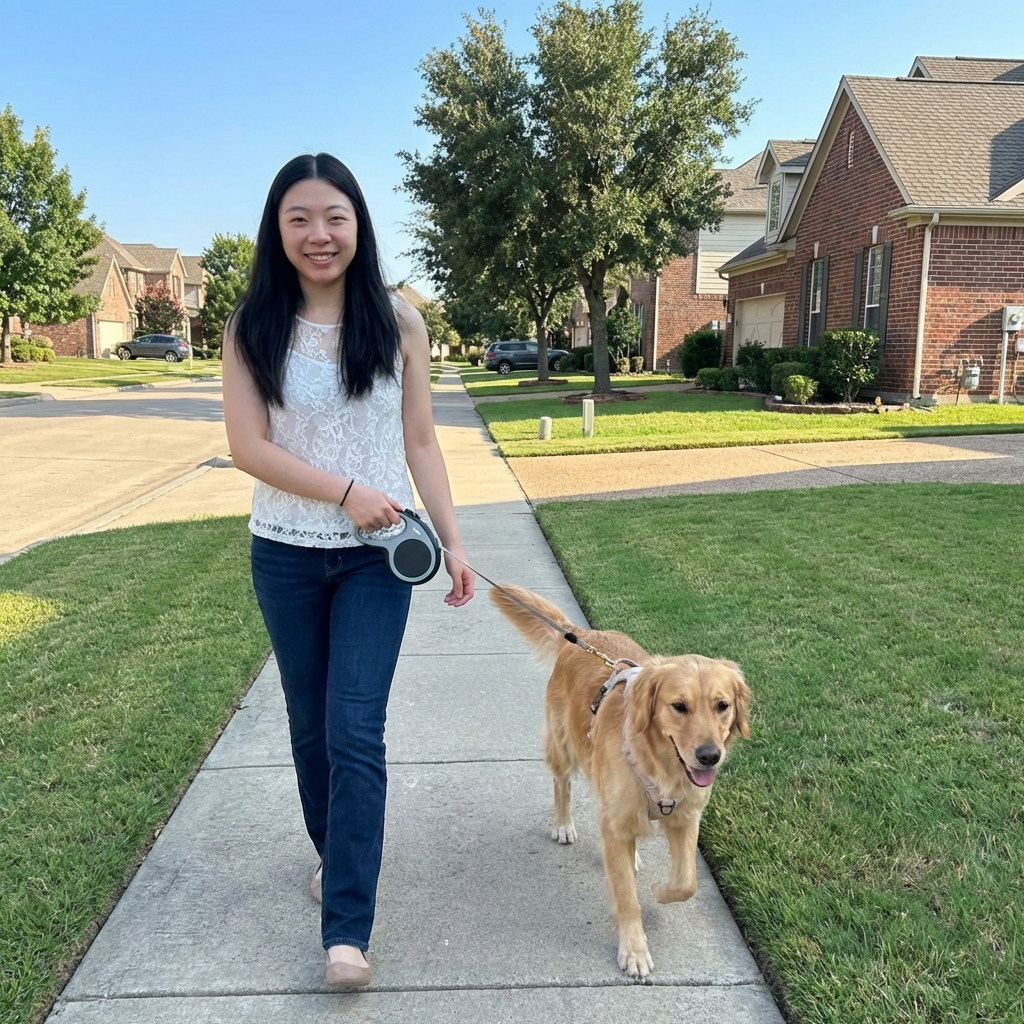
- No off-leash time outdoors. Even well-trained dogs may bolt during heat.
- Supervise every potty break. Use a leash, even in a fenced yard.
- Secure your home and yard. Male dogs can be surprisingly determined.
- Avoid dog parks and daycare. This is not the time for social outings.
Manage discharge and mess
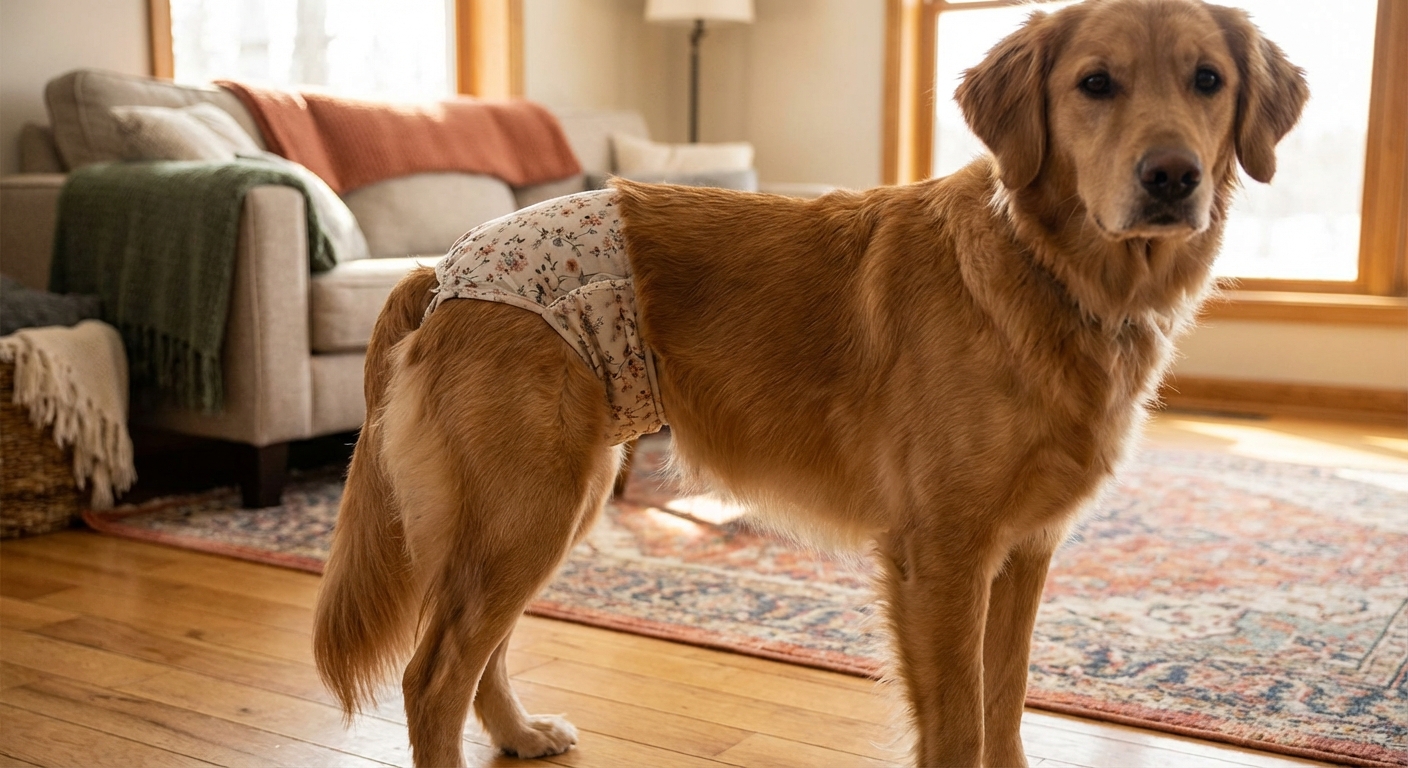
- Use dog heat diapers indoors if your dog tolerates them. Change frequently to prevent skin irritation.
- Important: Diapers help with mess, not pregnancy prevention.
- Washable blankets on favorite sleeping spots help protect furniture.
- Gentle cleaning with a damp cloth can keep the area comfortable. Avoid scented wipes that may irritate.
Support stress and energy changes
- Keep routines steady. Predictability reduces anxiety.
- Offer enrichment indoors like food puzzles, sniff games, or short training sessions.
- Provide a quiet space if she seems extra sensitive.
If an accidental mating happens
This is more common than people think, especially during a first heat.
- If two dogs get stuck together in a “tie,” do not try to pull them apart. This can seriously injure both dogs.
- Keep people and other pets away, keep the area as calm as possible, and call your veterinarian right away for guidance.
- If you suspect mating occurred (even without a tie), contact your veterinarian promptly. There may be time-sensitive options depending on the situation.
Can my dog be spayed while in heat?
Many clinics prefer to spay when a dog is not actively in heat, because tissues can be more vascular during this time, which may increase surgical complexity. That said, spaying in heat is sometimes still possible. The right answer depends on your dog’s health, age, and your veterinarian’s recommendation.
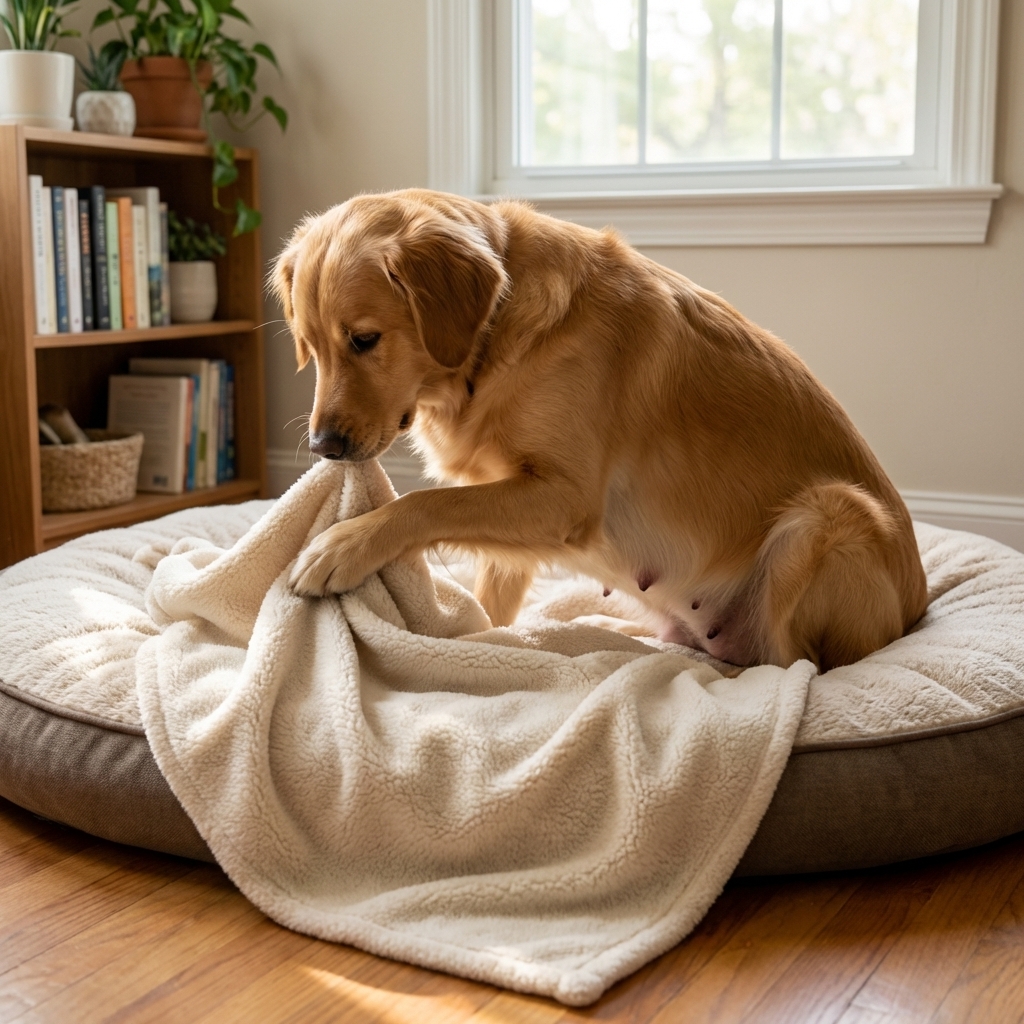
False pregnancy symptoms
In the weeks after heat, some dogs develop signs that look like pregnancy even when they were not bred. You may see:
- Nesting behavior
- Mothering toys
- Mammary enlargement
- Milk production
- Mood changes
Most cases are mild, but you should check in with your veterinarian, especially if your dog seems uncomfortable or has significant mammary swelling.
Frequently asked questions
Do dogs have periods like humans?
Not exactly. Dogs do have bleeding during part of their heat cycle, but the purpose and hormone patterns are different from a human menstrual cycle.
Will my dog be in pain?
Most dogs are not in “pain” from heat alone, but they can feel uncomfortable, restless, or more sensitive. If your dog seems painful, especially in the abdomen, call your veterinarian.
Can I bathe my dog during heat?
Yes, as long as she is comfortable and you use gentle products. Keep her warm and dry afterward, and avoid busy grooming salons where intact males may be present.
Can a male dog smell a female in heat from far away?
Yes. Scent can travel, and male dogs can show up from surprisingly far away. This is why leash walks and secure containment are so important.
A simple checklist
If you want something easy to follow, here is the routine I recommend to many pet parents:
- Track the first day you see discharge or clear heat signs.
- Plan for 3 weeks of strict supervision.
- Leash for all potty breaks, even in the yard.
- Skip dog parks, daycare, and group play.
- Use diapers indoors if needed, and change often.
- Call your veterinarian if discharge smells bad, becomes pus-like, or your dog acts sick.
Final thoughts
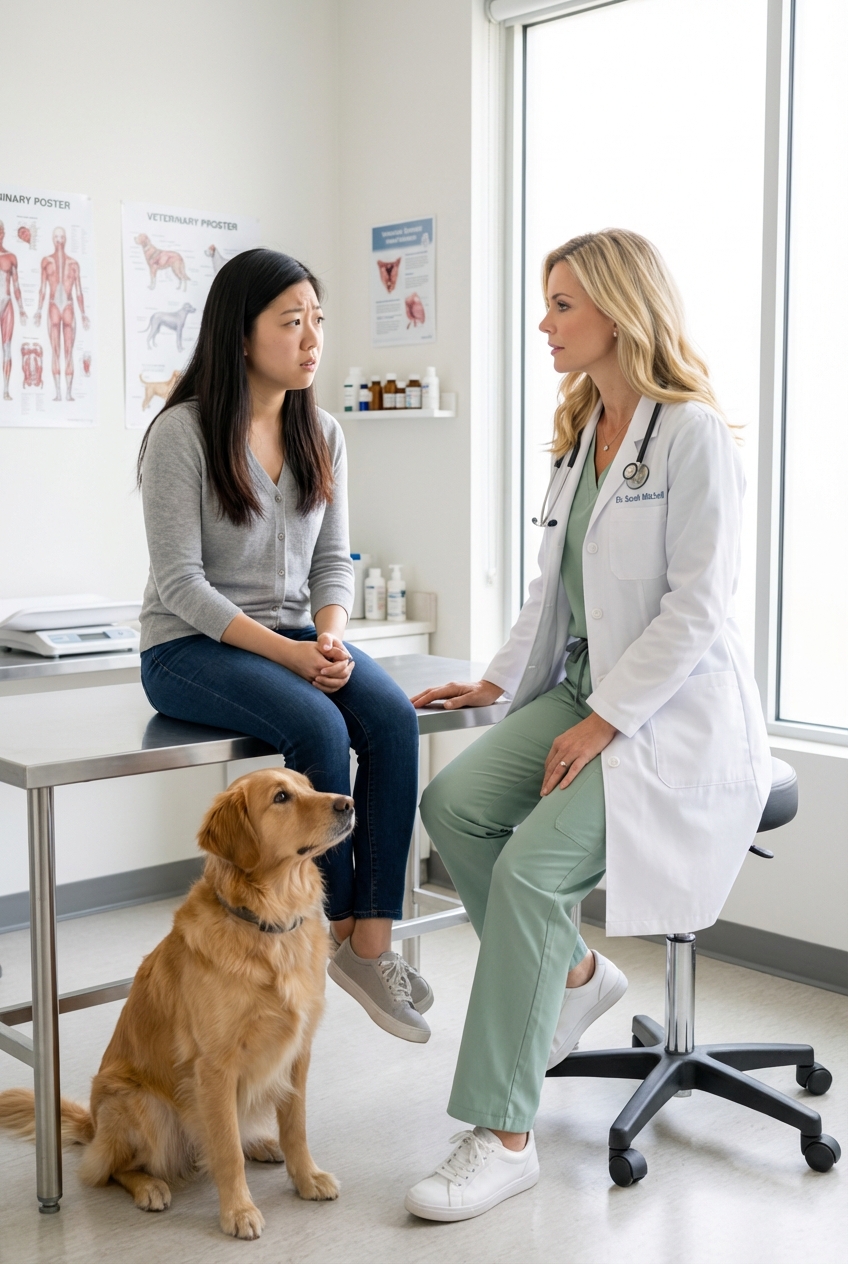
Seeing your dog in heat for the first time can feel like a lot, but you are not doing anything wrong. Heat cycles are a normal part of an intact female dog’s biology. Your job is to recognize the symptoms, prevent accidental breeding, and watch carefully for any signs your dog is not feeling well.
If you are unsure whether what you are seeing is normal, take a quick photo note of the discharge color and amount, track the days, and call your veterinarian. A short conversation can save a lot of stress and help keep your pup safe.