Vet-assistant guide to caring for a female dog in heat: choosing and changing diapers, preventing accidental breeding, smart separation, behavior support, an...
Article
•
Designer Mixes
Dog in Heat Behavior Changes

Shari Shidate
Designer Mixes contributor
If your sweet, predictable girl suddenly seems clingy, restless, or a little extra, you are not imagining it. When a female dog goes into heat, her hormones shift quickly, and behavior changes are common. The good news is that most of these changes are normal, temporary, and very manageable with a little planning and a lot of calm consistency.
As a veterinary assistant, I always tell families to focus on two priorities: preventing an accidental pregnancy and keeping your dog comfortable and safe while her body does what it is designed to do.
Quick heat cycle basics
Most dogs have their first heat between about 6 and 18 months, depending on breed and size. After that, many dogs cycle about every 6 to 7 months, but there is plenty of normal variation between individuals and breeds.
How long does heat last? Many dogs show obvious heat signs for about 2 to 4 weeks total, though the exact timeline varies.
- Proestrus (average about 7 to 10 days): vulvar swelling and often bloody discharge. Males are very interested, but many females are not ready to mate yet. You may see more moodiness and restlessness here. (Normal range can be wider, roughly 3 to 17 days.)
- Estrus (average about 5 to 10 days): discharge often becomes lighter or more watery. This is typically the fertile window. Many females become more receptive to males and may try to roam. (Normal range can be wider, roughly 3 to 21 days.)
- Diestrus: hormones shift again whether she is pregnant or not. Some dogs act totally normal, while others show PMS-like changes or signs of a false pregnancy.
Important: bleeding does not tell you exactly when she is fertile. Many accidental breedings happen because families assume “she is done” when she is still within the fertile window.
Common behavior changes
1) Clinginess and seeking comfort
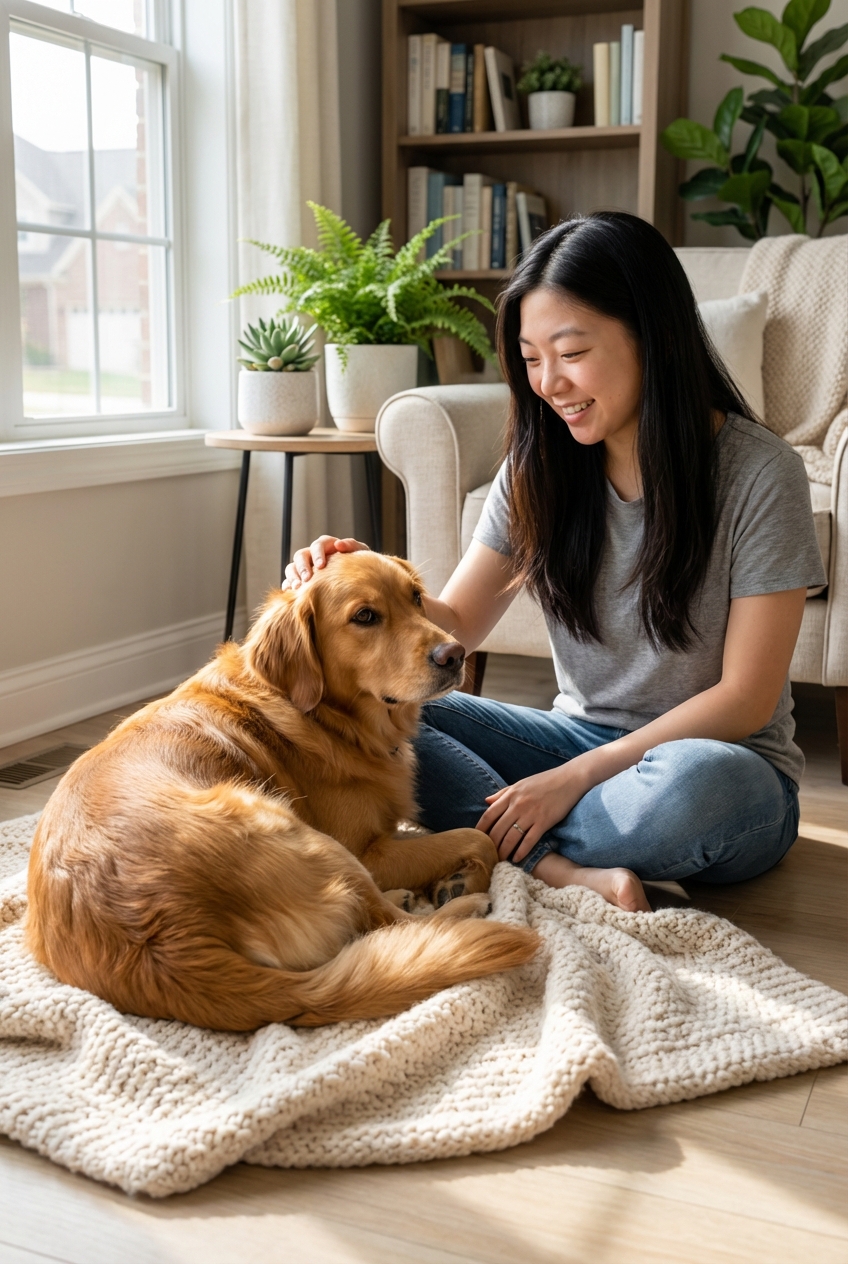
Many dogs want to be near their people more than usual. You may notice shadowing behavior, whining when you leave, or wanting extra petting.
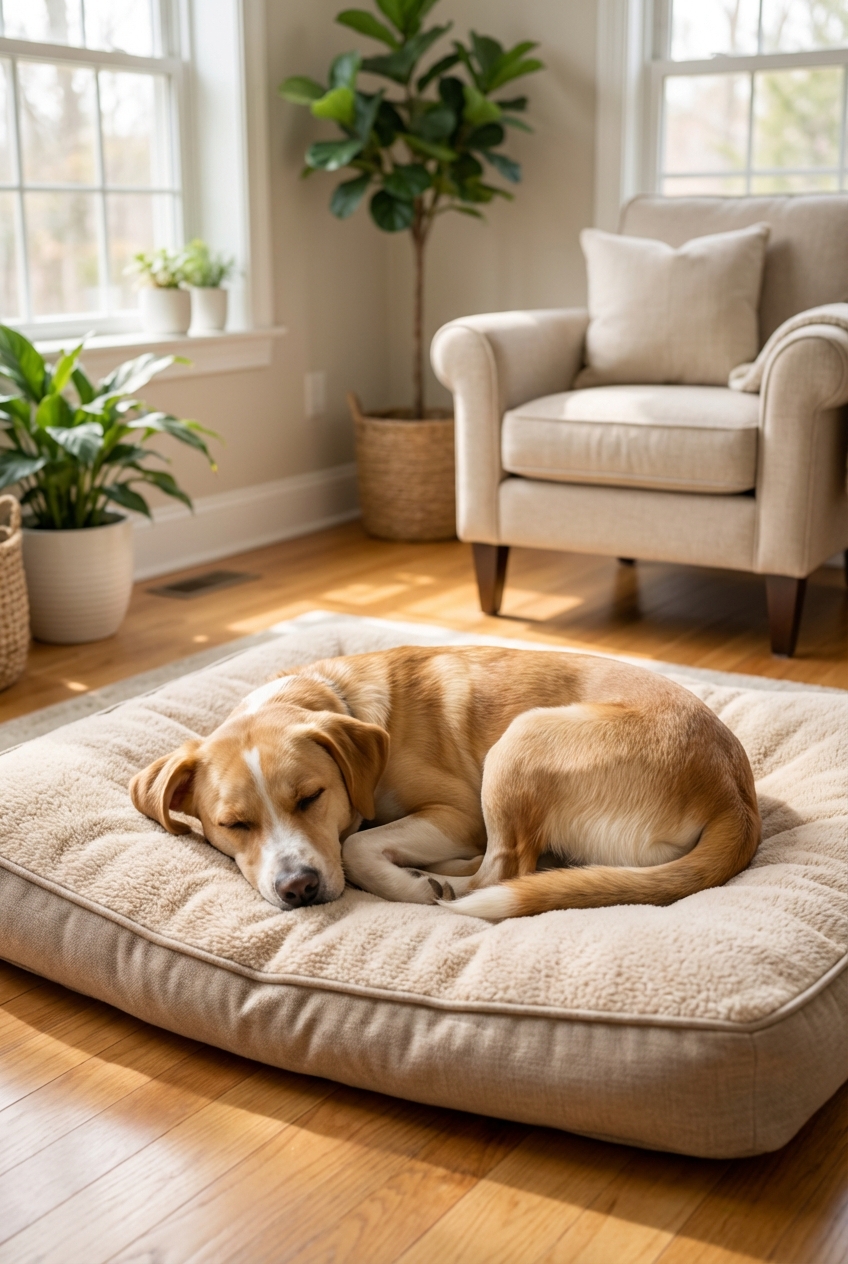
How to help: give calm attention, keep a predictable routine, and offer a comfy “nest” area with a washable blanket.
2) Restlessness and trouble settling
Hormonal changes can make it hard for her to relax. Some dogs sleep less or seem “on edge.”
How to help: add gentle enrichment like food puzzles, scatter feeding, sniffy walks, and short training sessions that build confidence.
3) Increased urination and scent marking
Frequent urination is very common. It can be partly physical and partly behavioral, since urine carries pheromones that signal her cycle stage.
How to help: increase potty breaks and supervise indoor time. If she has accidents, clean with an enzymatic cleaner so the scent does not invite repeat marking.
4) Flirting behaviors and tail flagging
During estrus, some females “flag” their tail to the side, stand still, or seem extra interested in male dogs. This is normal reproductive behavior, but it is also when risk is highest.
How to help: keep her separated from intact males at all times. Leash walks only. No dog parks. No off-leash yard time unless your fencing is secure and you are actively watching.
5) Roaming and escape attempts
Even dogs with great manners can get surprisingly determined when hormones are driving them. I have seen dogs chew through screens or squeeze through small gaps.
How to help: use two barriers whenever possible (for example, a closed door plus a baby gate). Check fence lines daily. If you have workers coming in and out, confine her in a separate room.
6) Irritability with other dogs
Some females become less tolerant, especially if other dogs sniff them repeatedly. Occasional growling can be a normal “please back off” signal.
How to help: reduce dog-to-dog pressure. Give her space, separate feeding areas, and quiet downtime away from other pets. Avoid introducing new dogs during this time.
7) Changes in appetite
Some dogs eat less; others seem hungrier. Both can happen.
How to help: keep meals consistent. If appetite drops, try warming food slightly or adding a small topper like plain cooked chicken. If appetite spikes, use low-calorie bulk like green beans (plain, cooked) and monitor portions to prevent weight gain.

How to manage heat at home
Heat safety essentials
- Leash-only outside: even in your own yard unless it is fully secure and supervised.
- No daycare, dog park, or group play: it is stressful for many dogs and risky for pregnancy.
- Supervise doors and gates: use baby gates, crates, or a closed room during high-traffic times.
- Avoid high-traffic dog areas: choose quieter routes and off-hours for walks because intact males may show up out of nowhere and fixate.
If you have an intact male at home
This is where families get overwhelmed, so here is a realistic approach.
- Strict separation: rotate who gets free time and who is crated or in a separate room. Build in calm breaks for both dogs.
- Separate outdoor time completely: one dog goes out, comes back in, then the other goes out. No shared yard time.
- Use two barriers: for example, a closed door plus a baby gate. Avoid relying on a single latch.
- Do not trust “through the fence” safety: dogs can breed through some barriers (like chain-link) or during brief access mistakes. Plan like it could happen fast, because it can.
- Consider backup options: if either dog is frantic, talk to your vet about short-term calming support, or consider boarding one dog with a trusted facility that can safely handle intact dogs.
Hygiene tools that make life easier
Light bleeding is typical, especially early on. The amount varies by dog. Some dogs barely spot; others drip enough to stain bedding.
- Washable blankets on favorite resting spots.
- Dog heat diapers for short periods when you need them. Change frequently and keep the area clean and dry.
- Recovery suits can help reduce mess for some dogs, but they do not prevent breeding and should not replace supervision.
Note: do not leave diapers on all day without breaks. Moisture can irritate skin and increase infection risk.
Lower stress with targeted enrichment
- Sniff walks: slow, quiet walks where she can sniff safely (on leash) can help settle the nervous system.
- Licking and chewing: frozen Kongs, lick mats (supervised), or long-lasting chews can help many dogs relax.
- Short training sessions: 3 to 5 minutes of easy cues and rewards can build confidence without overstimulation.
Support comfort
Some dogs seem a bit crampy or sensitive. Keep her warm, avoid intense exercise, and let her rest. If she seems painful, do not give human pain relievers. Many are dangerous for dogs. Call your veterinarian for safe options.
What not to do
- Do not assume a male is “safe” because he was neutered. A fully neutered male cannot impregnate her, but a recently neutered male may still have residual sperm for a short period. If you do not know the timing, treat it as a risk and ask your vet what window applies.
- Do not use essential oils or harsh cleaners on her vulva. Use gentle pet-safe wipes or warm water if needed.
- Do not punish heat-related behaviors like restlessness or mild irritability. Redirect and manage the environment instead.
- Do not assume bleeding equals fertility timing. Treat the entire heat period as a pregnancy risk window.
When is she safe again?
Because timing varies, I recommend treating your dog as potentially breedable from the first signs of heat until you are clearly past it.
- Practical rule of thumb: plan for 3 to 4 weeks of strict pregnancy prevention from the start of swelling or discharge.
- Extra caution: keep restrictions in place for at least several days after discharge seems fully stopped and her interest in other dogs has dropped.
If you need precision (for example, for responsible breeding plans), your veterinarian can discuss progesterone testing. For most families, conservative management is the safest path.
When to call the vet
Please contact your veterinarian promptly if you notice any of the following:
- Foul-smelling discharge, pus-like discharge, or discharge that becomes thick yellow or green.
- Sudden heavy bleeding (more than light spotting) or bleeding that seems excessive for your dog.
- Excessive lethargy, fever, vomiting, or refusing food for more than a day.
- Increased thirst and urination paired with illness signs.
- Swollen belly or obvious pain.
- Heat signs that seem to last unusually long (for example, more than 3 to 4 weeks of strong symptoms).
One condition we are especially cautious about in unspayed females is pyometra, a potentially life-threatening uterine infection that can occur after a heat cycle. Early care truly matters.
Spaying
Spaying prevents pregnancy and eliminates heat cycles. It also greatly reduces the risk of pyometra.
Spaying can also reduce the risk of mammary tumors, and the protective effect is strongest when a dog is spayed earlier in life (timing matters, and recommendations can vary based on breed and health).
Timing can be individual based on your dog’s breed, size, and health. If you are unsure what is best, ask your veterinarian to walk you through the pros and cons for your specific dog.
Bottom line
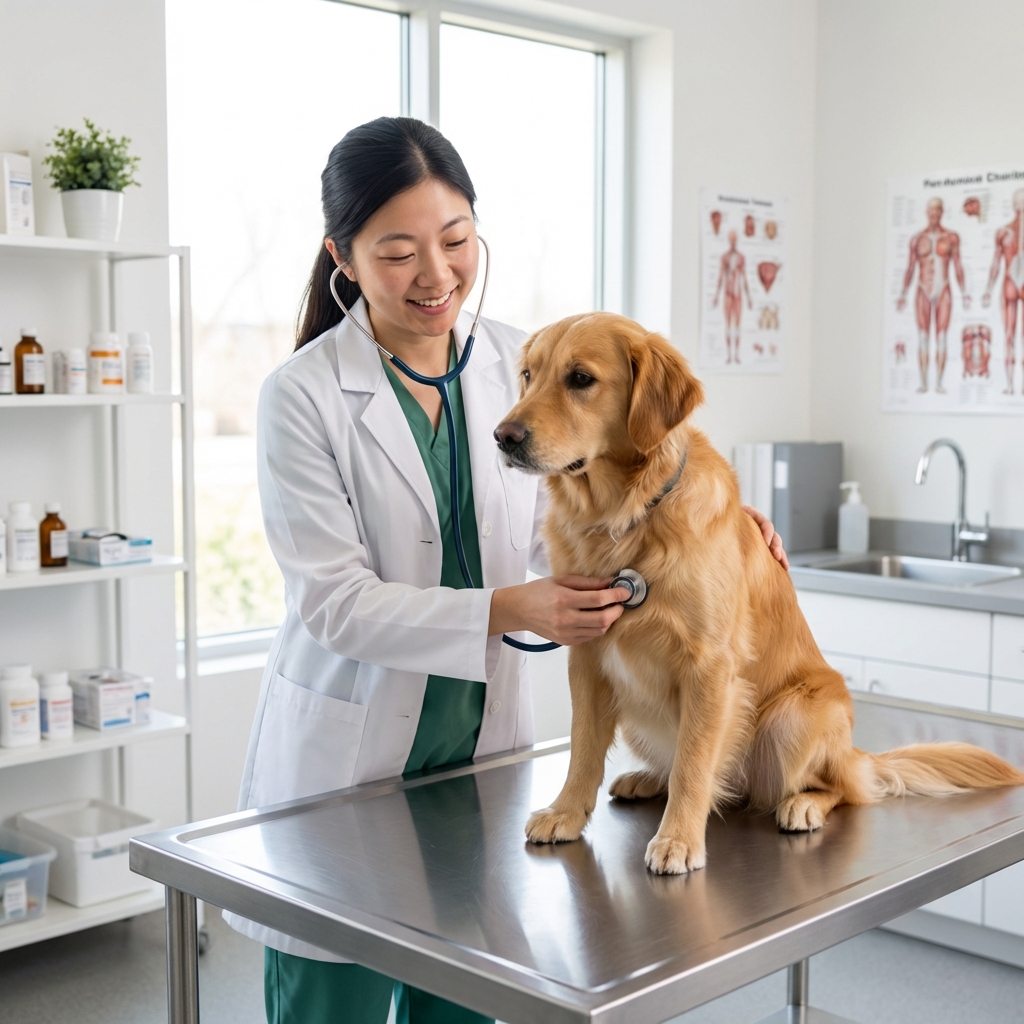
Behavior changes during heat are normal, but they can feel intense. If you focus on prevention, routine, and comfort, most dogs move through this stage just fine. Be patient with her and with yourself. A little planning now can prevent the biggest problems later.
If you ever feel unsure about what you are seeing, call your veterinary clinic. You are not overreacting, and it is always better to ask early.