Help your itchy dog by identifying food triggers with a strict homemade elimination diet. Learn common allergens, hidden exposures, trial length, transition ...
Article
•
Designer Mixes
Dog Hot Spots: How to Treat and Prevent Them

Shari Shidate
Designer Mixes contributor
Hot spots can show up fast and feel dramatic. One day your dog is fine, and the next you notice a wet, angry-looking patch of skin that seems to spread by the hour. As a veterinary assistant (and lifelong pet lover), I can tell you this is one of the most common skin issues we see, especially in warm, humid weather or during allergy season.
This guide will help you spot hot spots early, calm them safely at home, and know when it is time to see your veterinarian.
What is a hot spot?
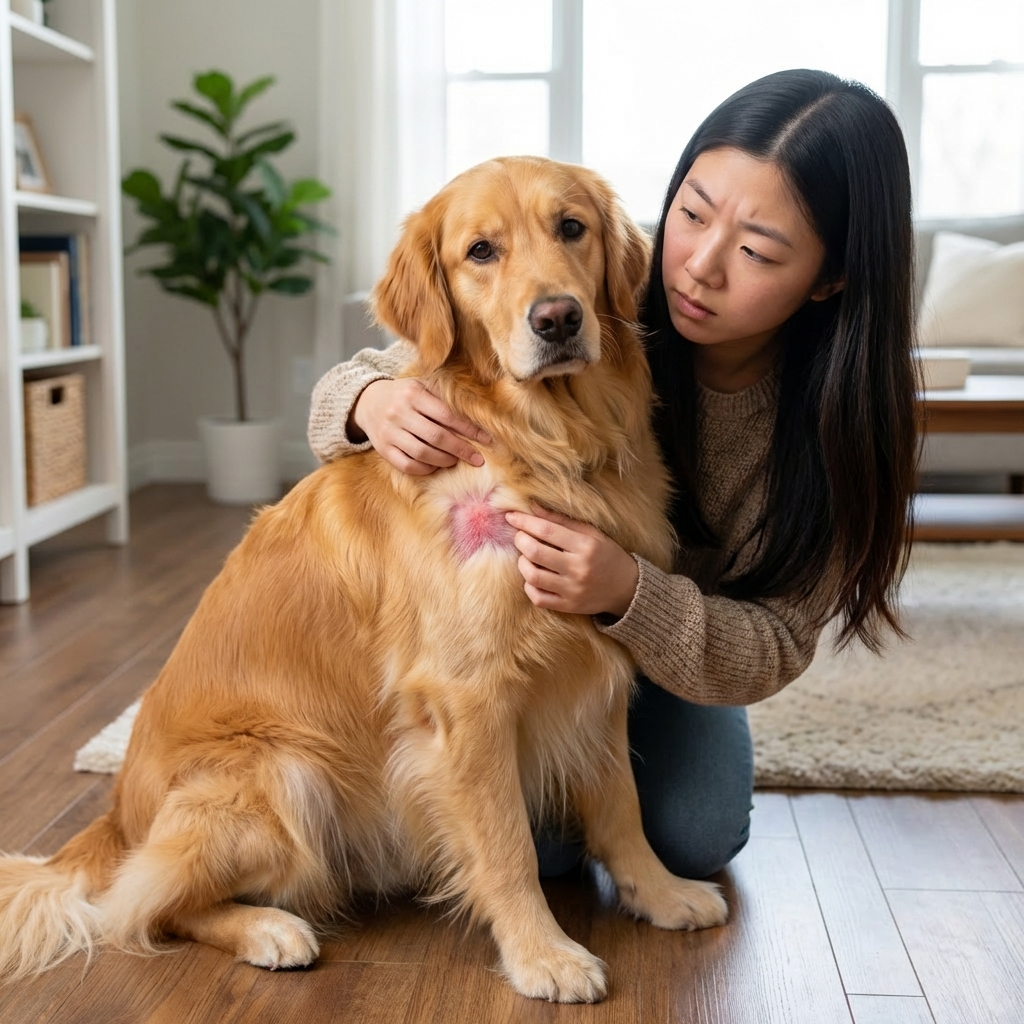
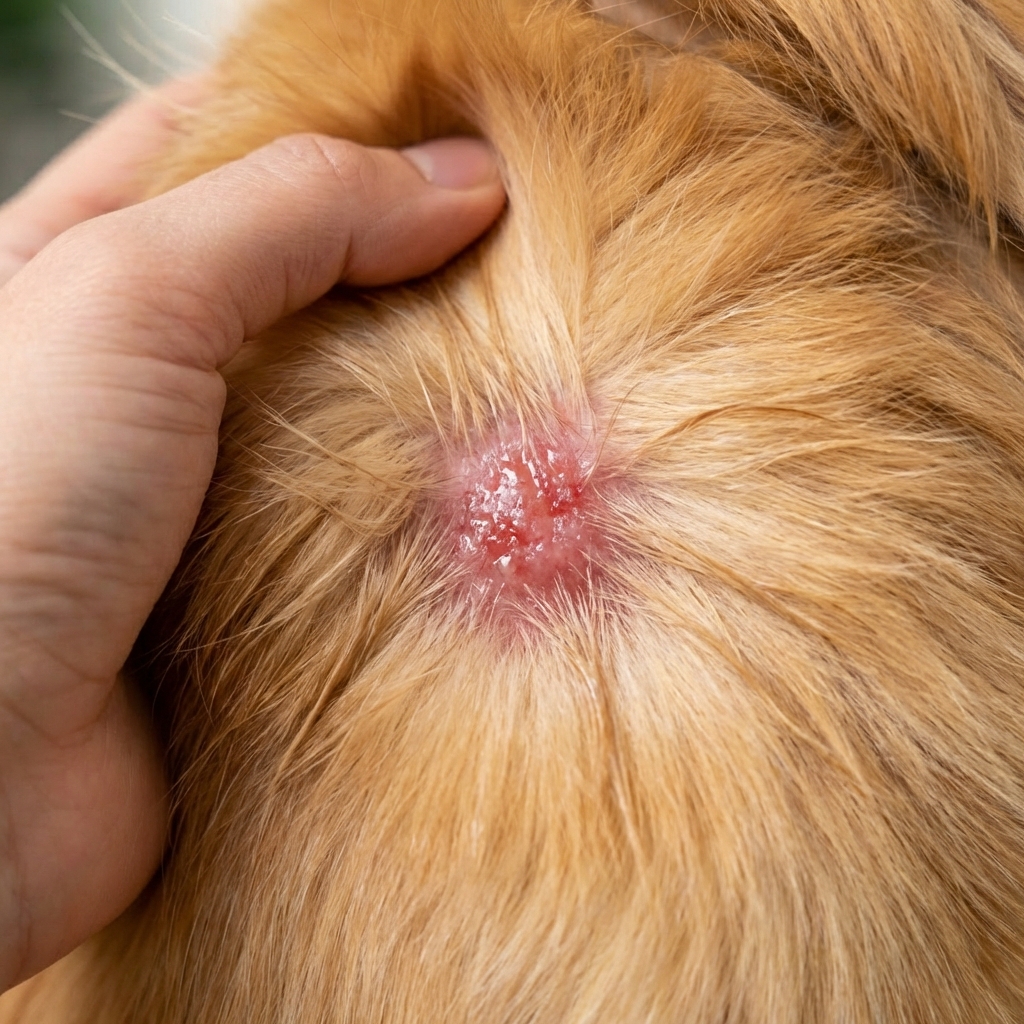
A hot spot is the everyday term for acute moist dermatitis. It is a painful, inflamed skin lesion that often involves a superficial bacterial infection (sometimes called superficial pyoderma). It starts when something triggers itching, licking, chewing, or scratching. That self-trauma breaks the skin barrier, bacteria multiply, moisture gets trapped in the coat, and suddenly you have a wet, tender lesion.
Hot spots are usually a reaction pattern, not the root cause. In other words, the spot is real and needs treatment, but there is often an underlying trigger like allergies, fleas, ear infections, or skin irritation that also needs a plan.
Important: Other skin problems can look similar at first, including ringworm, mange, bite wounds or abscesses, and deeper skin infections. If you are not sure what you are looking at, it is safest to call your vet.
How to spot a hot spot
Hot spots can appear anywhere, but common areas include the cheeks, behind the ears, neck, hips, thighs, and near the base of the tail.
Common signs
- A wet or oozing patch of skin
- Redness that looks raw or “angry”
- Hair loss over the spot, sometimes from matting and saliva
- Strong odor (often from bacterial overgrowth)
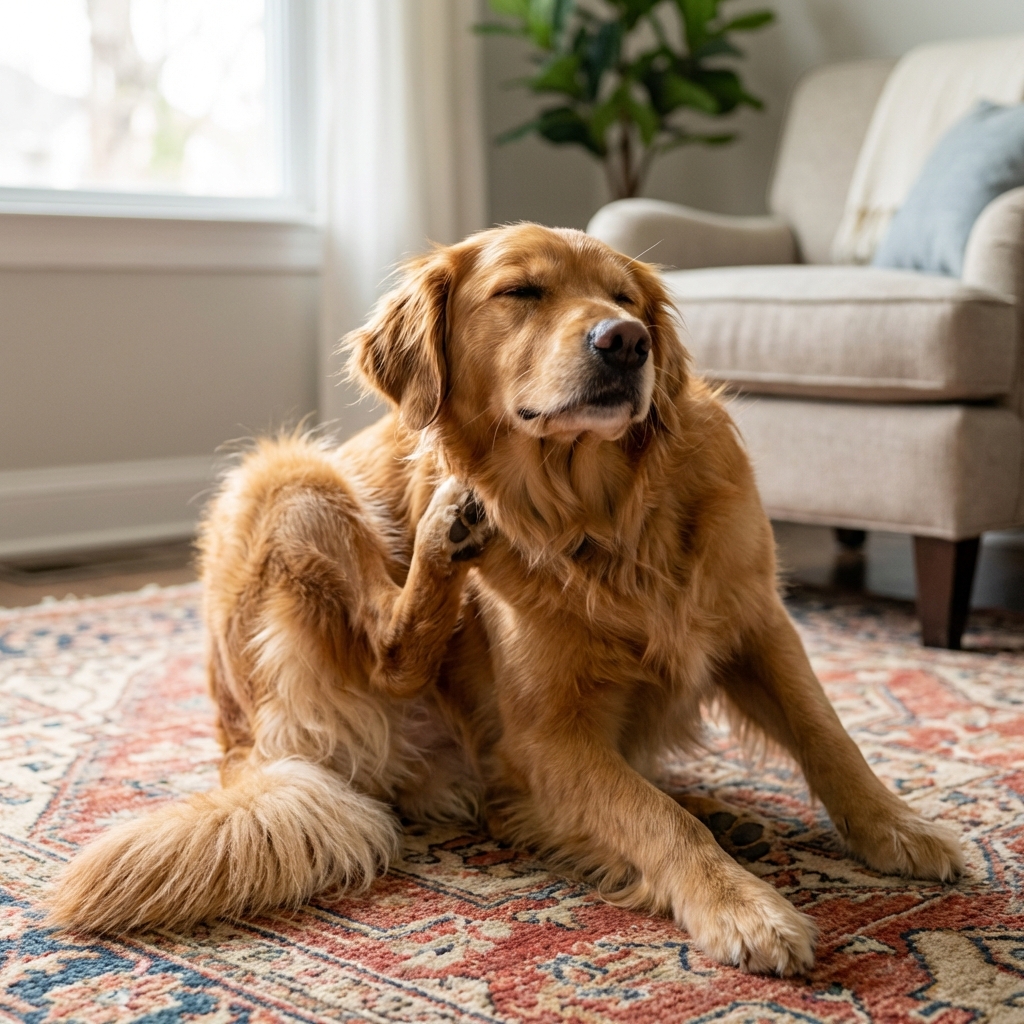
- Your dog cannot stop licking, chewing, or scratching the area
- Pain when touched
If you see rapid expansion over hours, that is very typical. It is one reason we encourage early treatment.
Why hot spots happen
Most hot spots start with itch or trapped moisture. Here are the most common root causes we see in clinics.
1) Allergies
Environmental allergies (pollen, grasses, dust mites) and food sensitivities can make skin itchy and inflamed, setting the stage for a hot spot.
2) Fleas and parasites
Some dogs are extremely reactive to flea saliva. Even one bite can start intense itching. Tick irritation and mites can also contribute.
3) Ear infections
Dogs with ear infections often scratch and rub their head and neck. That repeated trauma can create hot spots behind the ears or on the cheeks.
4) Moisture in the coat
Swimming, bathing, rain, and high humidity can keep the undercoat damp. Dense-coated breeds are especially prone if they do not dry thoroughly.
5) Mats and friction
Mats pull on the skin and trap moisture. Harness rub, collars, and constant scratching can make it worse.
First aid at home
If your dog is bright, eating normally, and the hot spot is small and newly discovered, you can often do careful first aid at home while you monitor closely. The goal is to stop the cycle: itch and moisture lead to infection, which leads to more itch.
Step 1: Stop licking
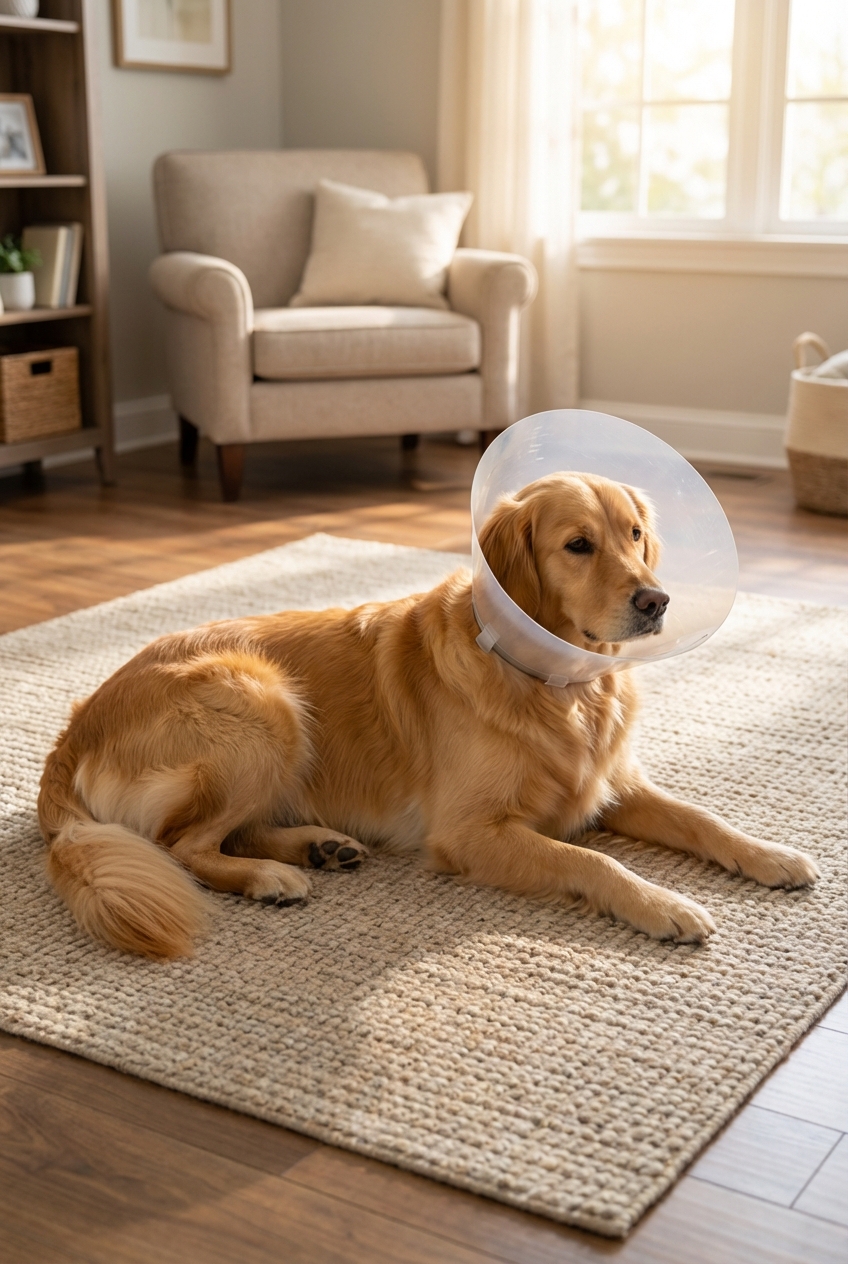
This is not optional. Licking pours fuel on a hot spot. Use an e-collar (cone), inflatable collar, or a well-fitted recovery suit. If your dog can still reach the area, adjust your plan.
Step 2: Clip the hair
Hot spots hide under fur. Carefully clip the hair around the area to expose the full lesion and allow airflow. If your dog is wiggly or the area is painful, it is safer to let your vet or groomer handle this.
Safety note: Painful skin can make even sweet dogs snap. If you are unsure you can do this safely, stop and call your vet. If possible, have a second person calmly help hold your dog.
Tip: Use clippers if possible. Scissors can accidentally cut inflamed skin.
Heads up: Once the hair is clipped, the hot spot often looks bigger and worse than you expected. That is normal and one reason early clipping and cleaning helps.
Step 3: Clean gently
Clean 1 to 2 times daily with a pet-safe antiseptic:
- Chlorhexidine (many pet products are 2 to 4%). If you are using a concentrated chlorhexidine scrub or surgical prep, do not use it full strength unless your veterinarian tells you exactly how to dilute it.
- Dilute povidone-iodine (it should look like weak tea, not dark brown).
Pat dry. Do not rub.
Step 4: Keep it dry
Avoid heavy ointments that trap moisture unless your veterinarian specifically recommends them. Many hot spots do best when they are clean, dry, and open to air, as long as your dog cannot lick.
Step 5: Address the trigger
Start flea control if you are not already using a veterinarian-recommended product. If allergies are suspected, talk to your vet about itch control. Without addressing the cause, hot spots often return.
Hot spots rarely heal well if your dog keeps licking. The cone feels inconvenient, but it is often the fastest route to comfort and healing.
What not to do
- Do not use hydrogen peroxide on hot spots. It can damage healing tissue.
- Do not use rubbing alcohol. It stings and can worsen irritation.
- Do not use human pain meds like ibuprofen, naproxen, or acetaminophen. These can be dangerous for dogs. If your dog seems painful, call your vet.
- Do not give OTC antihistamines unless your veterinarian has provided dosing guidance for your dog. Some dogs can take them, but the dose and safety depend on the individual.
- Do not use human steroid creams unless your veterinarian instructs you. Dogs can lick them, and some products are not safe.
- Avoid numbing sprays or creams that contain lidocaine or benzocaine unless your vet directs you. These can be risky if licked, and they can mask worsening pain.
- Do not bandage most hot spots. Bandages trap moisture and bacteria. In select cases, your veterinarian may use a non-occlusive dressing or specific wrap technique.
- Do not wait it out if it is spreading, very painful, or your dog seems unwell. These can worsen quickly.
When to call the vet
Home care is for mild, early cases only. Contact your veterinarian promptly if you notice any of the following:
- The hot spot is large, rapidly expanding, or very painful
- It is on the face, near the eyes, genitals, or between toes
- There is thick discharge, a foul smell, or bleeding
- Your dog has a fever, seems lethargic, or stops eating
- You cannot safely clip and clean the area
- It is worsening at any time, or not clearly improving within 24 to 48 hours of appropriate first aid
- Your dog gets repeat hot spots (you need a plan for the underlying cause)
Veterinary treatment may include prescription antibiotics, anti-itch medication, pain relief, ear treatment, flea treatment, and medicated shampoos. For some dogs, that itch control is what finally stops the cycle.
Healing timeline
With the cone on and the right treatment, many mild hot spots start to look less wet and less angry within a few days. Larger or deeper lesions may take 1 to 2 weeks to fully heal. If it is not trending better, your vet should take a look.
Prevention that works
The best hot spot is the one that never happens. If your dog is prone to them, small routine changes can make a big difference.
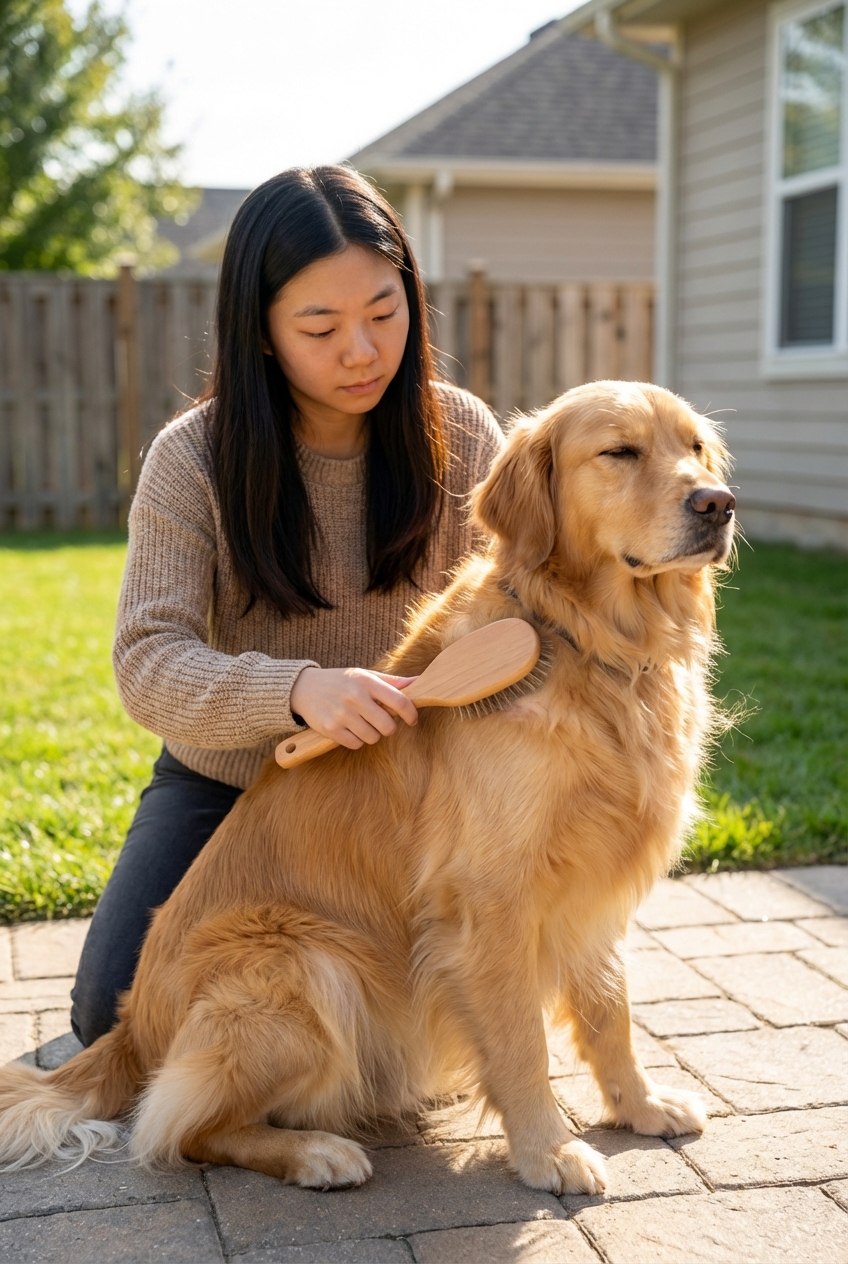
Brush and de-mat
- Brush regularly, especially dense or double coats
- Remove mats promptly
- Ask your groomer about a practical trim during humid months
Dry after water play
- Towel dry, then use a cool or low-warm blow dryer if tolerated
- Pay attention to armpits, behind ears, and thighs
Use parasite prevention
Year-round flea prevention is one of the simplest ways to reduce skin flare-ups, even in indoor pets.
Manage allergies early
If seasonal itch is a pattern, work with your veterinarian on a prevention plan before symptoms peak. Options may include medicated baths, omega-3 fatty acids, prescription allergy medications, or immunotherapy.
Check ears weekly
Especially for floppy-eared breeds and swimmers. If you notice odor, redness, discharge, or head shaking, treat it early with your veterinarian.
Clean the environment
If the hot spot is oozing, wash bedding and blankets, and clean grooming tools after use. This helps reduce reinfection and keeps the area more hygienic while it heals.
Food and skin basics
Nutrition will not “cure” a hot spot overnight, but healthy skin starts from the inside. Evidence-based steps that often help overall skin resilience include:
- Omega-3 fatty acids (EPA and DHA) to support skin barrier function and inflammation control
- Consistent, high-quality protein to support skin repair
- Veterinary guidance on elimination diets if food allergy is suspected
If you are exploring homemade or fresh foods, go slow and keep meals balanced. A shiny coat is wonderful, but the real goal is a strong skin barrier that can better resist irritation and infection.
Quick checklist
- Use a cone or other method to prevent licking right away
- Clip fur to expose the full lesion if you can do so safely
- Clean with a pet-safe antiseptic 1 to 2 times daily, then pat dry
- Keep the area dry and open to air
- Start addressing likely triggers (fleas, allergies, ear issues)
- See your vet if it is large, painful, spreading, or not clearly improving in 24 to 48 hours
If you take one thing from this guide, let it be this: hot spots are treatable, but they move quickly. Early, calm action can save your dog a lot of discomfort.