Hot spots can appear overnight. Learn the causes, signs, safe at-home cleaning and drying steps, common mistakes to avoid, and when your dog needs urgent vet...
Article
•
Designer Mixes
Dog Hot Spots: Home Treatment for Moist Dermatitis

Shari Shidate
Designer Mixes contributor
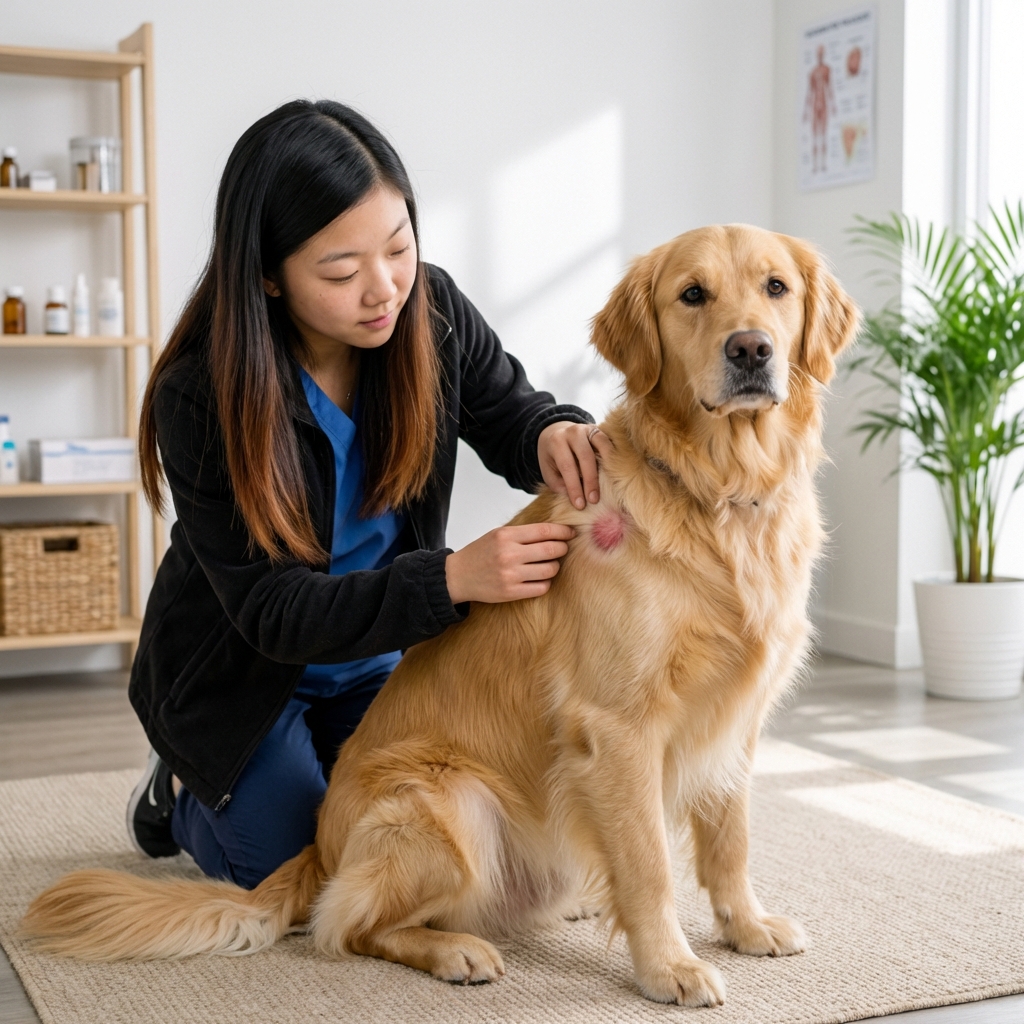
Hot spots can show up fast, look alarming, and make your dog absolutely miserable. As a veterinary assistant here in Frisco, Texas, I see these all the time, especially during warm, humid months when allergies and bugs are active. The good news is that many mild hot spots can be managed at home if you act quickly, keep the area clean and dry, and know when it is time to call your vet.
What is a hot spot?
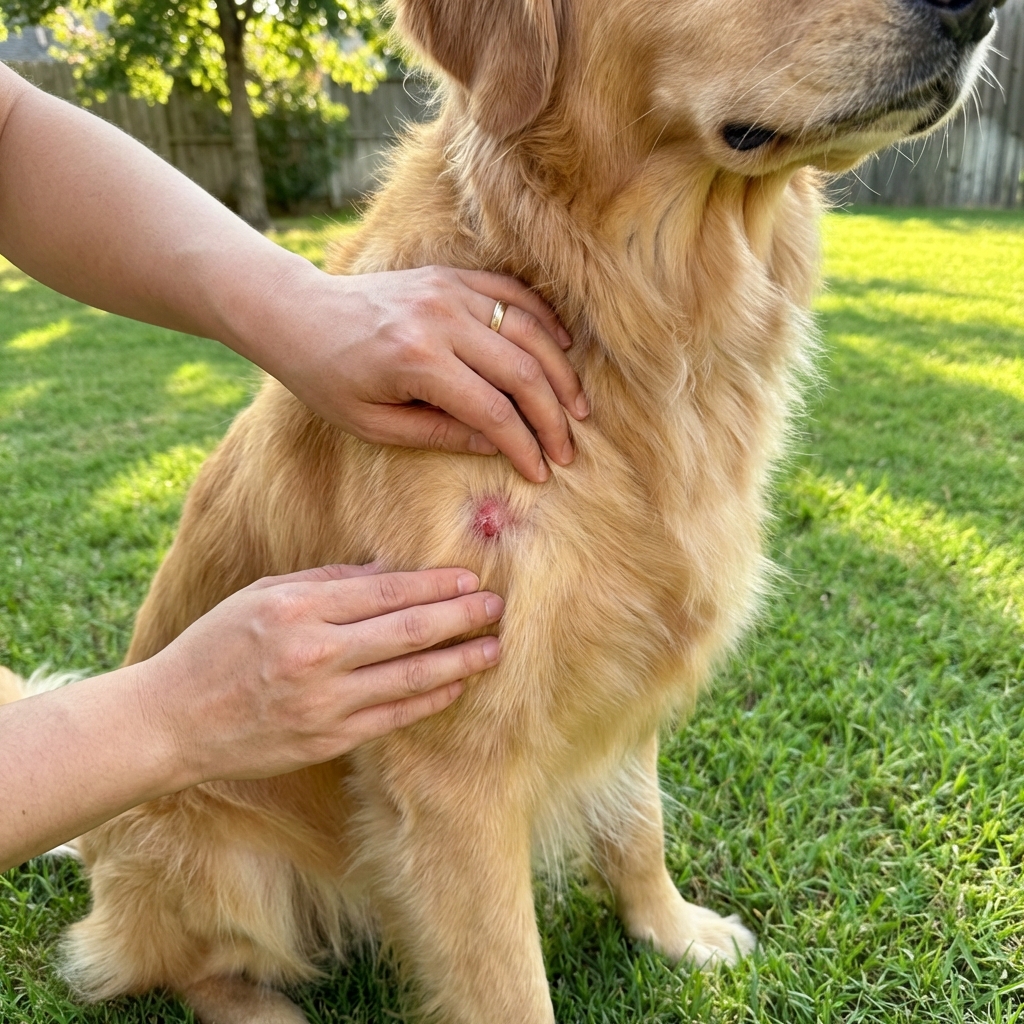
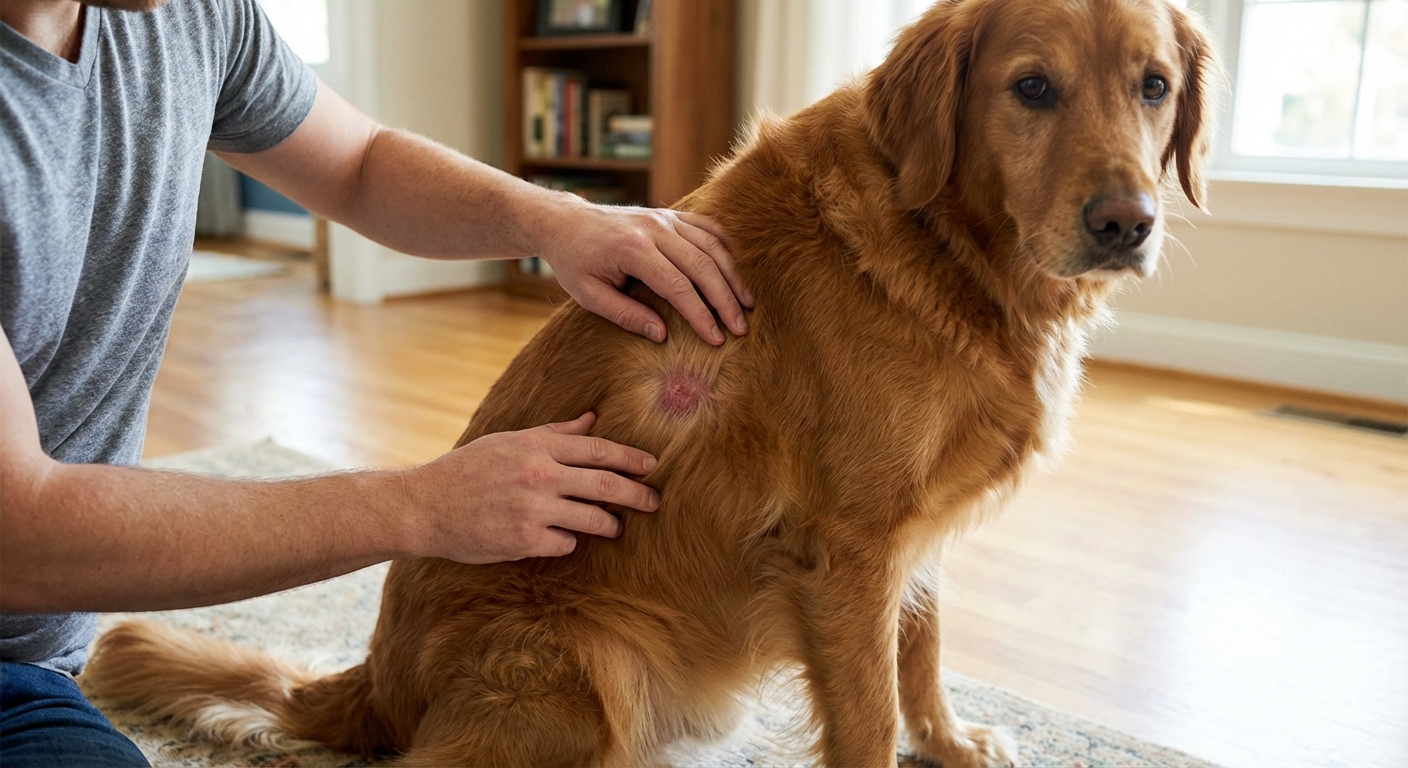
A “hot spot” is the common name for acute moist dermatitis. It is an area of skin that becomes inflamed, itchy, and infected, then quickly turns into a wet, oozing, painful patch. Dogs often make it worse by licking, chewing, or scratching, which damages the skin barrier and allows bacteria to overgrow.
Hot spots are not a specific disease on their own. They are usually a sign that something else is irritating your dog’s skin.
What hot spots look like
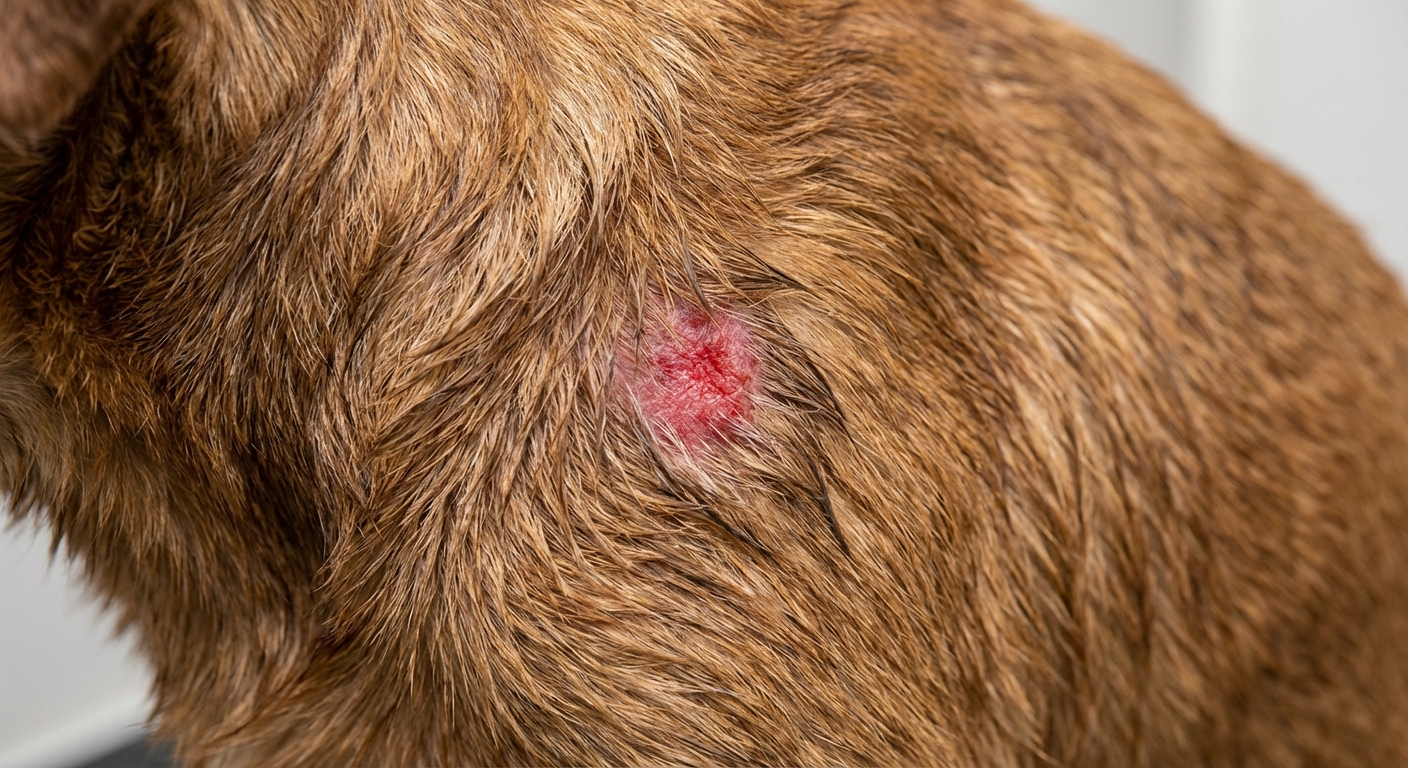
Hot spots can vary in size from a dime to a hand-sized patch, and they can spread within hours. Common signs include:
- A moist or sticky patch of fur, sometimes with a bad odor
- Red, raw skin that may ooze or crust over
- Hair loss around the area
- Intense itching or pain when touched
- Restlessness, increased licking, chewing, or rubbing
Why hot spots happen
In most cases, a hot spot starts with an itch. The itch can come from many sources, including:
- Allergies (environmental or food)
- Fleas or flea allergy dermatitis, even from a single bite
- Moisture trapped in the coat after swimming or baths, especially in thick-coated dogs
- Ear infections that lead to scratching near the head and neck
- Anal gland issues that lead to licking near the back end
- Skin parasites (mites)
- Secondary skin infection (bacterial infection and or yeast overgrowth), often tied to allergies and moisture
- Matting that pulls on the skin and traps moisture
If your dog keeps getting hot spots, the most helpful long-term strategy is identifying the underlying trigger rather than only treating the sore itself.
When not to treat at home
Home care is best for small, mild hot spots when your dog is otherwise acting normal. Contact your veterinarian promptly if you notice any of the following:
- The hot spot is roughly larger than a couple inches (about the size of a credit card), spreading quickly, or bleeding
- It is on the face, near the eyes, genitals, or anus
- Your dog seems very painful, lethargic, or has a fever
- There is heavy discharge, thick crusting, or a strong foul odor
- You suspect maggots (this is an emergency)
- Your dog has multiple spots, or the hot spot keeps returning
- No improvement within 24 to 48 hours of careful home care
Veterinary treatment can include prescription topical antibiotics, oral antibiotics, anti-itch medication, pain control, and addressing underlying allergies or infection.
Home treatment steps
Before you start, a quick gut check: home care is for small, mild spots only. If you feel unsure, if your dog is very painful, or if the spot is in a sensitive area, it is safer to call your vet first.
The goal is simple: stop the self-trauma, clean the skin, dry the area, and prevent infection from worsening.
Step 1: Stop licking fast
If your dog can reach the area, it is very hard to heal a hot spot without a physical barrier. Use:
- An E-collar (cone)
- An inflatable collar
- A recovery suit or t-shirt (only if it keeps the area dry and clean)
Even brief chewing can significantly set healing back.
Step 2: Clip the fur
This is one of the most important steps because fur holds moisture and bacteria against the skin.
- If you can do it safely, clip fur back at least 1 inch around the lesion.
- Use electric clippers if possible; avoid scissors. Scissors can easily cut fragile, inflamed skin.
If your dog is wiggly, painful, or snappy, skip this step and contact your veterinarian or a groomer for help.
Step 3: Clean gently
Clean 1 to 2 times daily. Choose a pet-safe antiseptic such as:
- Chlorhexidine solution or wipes (commonly used in veterinary dermatology)
- Diluted povidone-iodine until it looks like weak tea
Apply with gauze or a soft cloth, then gently blot. Avoid harsh scrubbing.
Avoid hydrogen peroxide and rubbing alcohol. They can damage healing tissue and increase irritation.
Step 4: Dry it completely
Hot spots love moisture. After cleaning:
- Blot dry with clean gauze or a soft towel
- If your dog tolerates it, use a hair dryer on a cool setting held at a distance
Step 5: Use a dog-safe topical
For mild hot spots, an over-the-counter veterinary hot spot spray or chlorhexidine-based topical can help. Use products labeled for dogs, and follow directions closely.
Important: If your dog can lick the area, do not apply creams, ointments, or sprays unless you can reliably prevent licking with an E-collar.
Extra safety note: Avoid human creams and avoid products with numbing agents (like lidocaine or benzocaine) or essential oils unless your veterinarian specifically recommends them.
Step 6: Skip tight bandages
Bandages often trap moisture and make hot spots worse. In most cases, it is better to keep the area clipped, clean, dry, and protected from licking.
Step 7: Recheck for 48 hours
You should see less redness, less moisture, and less discomfort within 24 to 48 hours. If it is not improving, or if it looks worse, it is time for a veterinary exam.
Comfort care that helps
Cool compresses
A brief cool compress for up to 5 minutes can soothe itch and inflammation. Only do this if you can dry the area completely afterward and prevent licking.
Flea control matters
In Texas, fleas can be a year-round issue. If fleas are involved, the hot spot will keep coming back unless your dog is on a reliable vet-recommended flea prevention.
Check ears, paws, allergies
Recurring hot spots often track back to allergies. Many allergic dogs also have chronic ear irritation and paw licking. Treating the skin without addressing the allergy trigger is like mopping up water without fixing the leak.
Common mistakes
- Letting your dog lick “just a little”: self-trauma is the biggest reason hot spots spread
- Not clipping fur: moisture stays trapped and healing stalls
- Using human creams: some contain ingredients that are unsafe if licked
- Covering it tightly: lack of airflow can worsen moist dermatitis
- Skipping flea prevention: even one bite can restart the cycle
Preventing hot spots
Prevention is a mix of skin care, coat management, and addressing the root cause.
- Dry your dog thoroughly after swimming or baths, especially under the collar, behind ears, and around hips
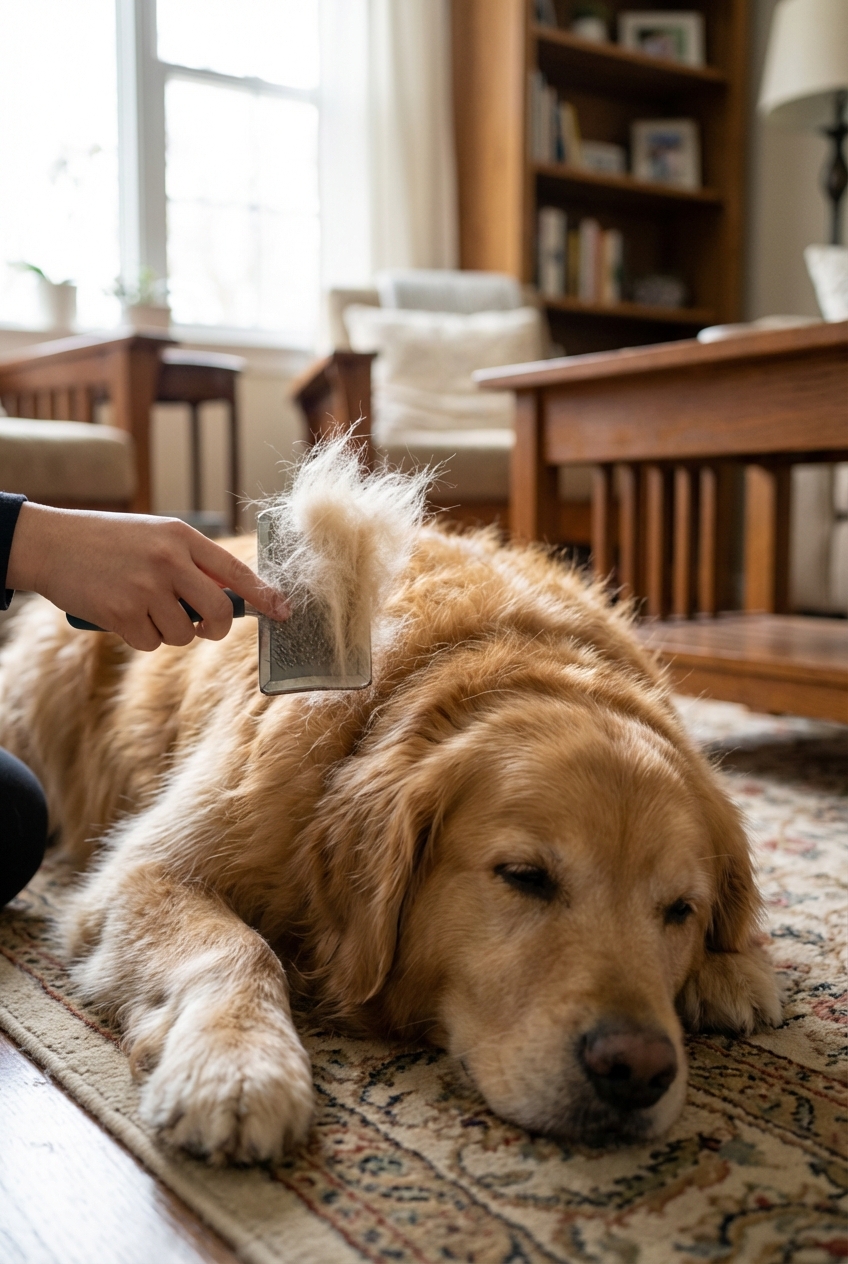
- Brush regularly to prevent mats that trap moisture
- Use consistent flea and tick prevention recommended by your veterinarian
- Manage allergies with a vet plan that may include omega-3s, medicated shampoos, or prescription anti-itch therapies
- Address ear infections early since head scratching often triggers neck and cheek hot spots
What the vet may do
If you end up coming in, you are not alone. Many hot spots need prescription help, especially if they are painful or fast-spreading. A typical visit may include:
- Clipping and deep cleaning the area (sometimes with mild sedation for comfort and safety)
- Pain relief and anti-itch medication to stop the lick and scratch cycle
- Topical medication and, if needed, oral antibiotics
- Skin testing (like cytology) to check for bacterial infection and or yeast overgrowth
- Looking for root causes such as fleas, ear infection, allergies, or moisture and matting
Nutrition and skin
Healthy skin starts on the inside. If your dog struggles with itchy skin, recurring ear issues, or repeated hot spots, talk with your veterinarian about diet quality and targeted supplements.
- Omega-3 fatty acids (EPA and DHA) can support the skin barrier and help some dogs with inflammation
- Consistent, high-quality protein and a balanced diet matter for coat and skin repair
- Allergy-aware feeding may be helpful if food sensitivity is suspected
Results vary, and dosing and product quality matter, so I recommend choosing omega-3s with your vet’s guidance. If you are interested in adding fresh, whole foods, start slowly and keep things simple. Any positive change you can maintain consistently is a win.
At-home checklist
- Stop licking with an E-collar or recovery suit
- Clip fur around the area if safe to do so
- Clean gently with chlorhexidine or diluted iodine
- Dry completely after every cleaning
- Use a dog-safe topical product only if you can prevent licking
- Recheck at 24 to 48 hours, and call your vet if not clearly improving
If you feel unsure, trust that instinct. Hot spots can go from mild to severe quickly, and your vet team would always rather see a spot early than treat a big infection later.
Sources
- Merck Veterinary Manual: Dermatologic Diseases and Acute Moist Dermatitis (Hot Spots)
- American College of Veterinary Dermatology (ACVD): Client education resources on skin infections and pruritus
- VCA Animal Hospitals: Hot Spots (Acute Moist Dermatitis) overview and treatment considerations