
A practical guide to at-home dog hospice care: pain and nausea control, easier breathing, mobility and hygiene help, comfort-station setup, and when to call ...
Article
•
Designer Mixes
Dog Hospice Care Checklist for the Final Week

Shari Shidate
Designer Mixes contributor
The final week with a beloved dog can feel like time speeds up and slows down all at once. Hospice care is about comfort, dignity, and love, while also giving you a clear plan so you are not making every decision in the middle of the night while you are exhausted and worried.
Below is a practical checklist you can use day by day. If you are working with your primary veterinarian or an in-home hospice service, print this and keep it on the counter. The goal is simple: reduce suffering, support easier breathing and better rest, keep your dog clean and comfortable, and know when it is time to call for help.
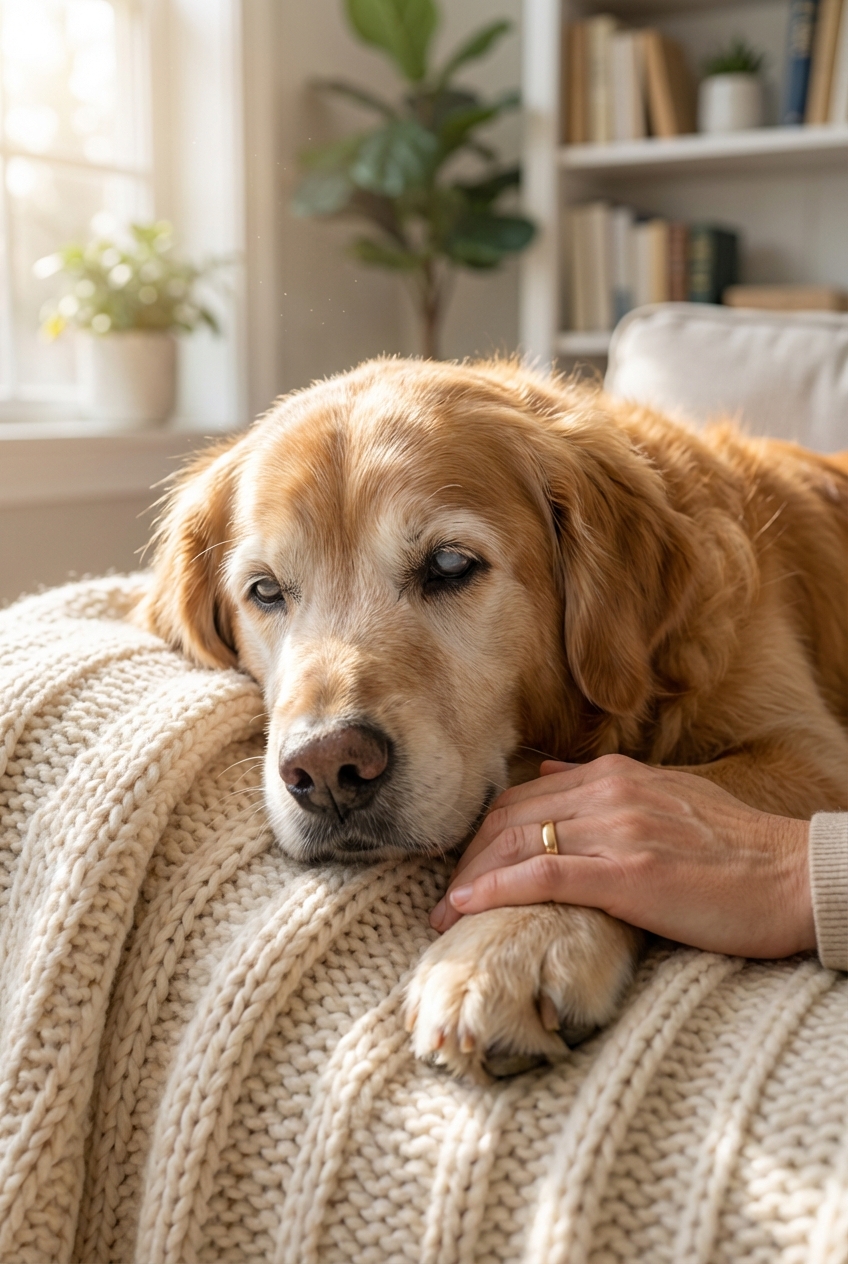
This article is educational and not a substitute for veterinary care. If your dog is struggling to breathe, collapses, has uncontrolled bleeding or seizures, or you cannot keep them comfortable, contact a veterinarian or emergency clinic right away.
The goals of hospice in the last week
- Comfort first: pain control, nausea control, anxiety relief, and gentle support for breathing.
- Basic needs met: hydration, easy calories, warmth, soft bedding, help getting up, and clean skin.
- Predictability: a schedule for meds, potty breaks, and repositioning.
- Guidance: clear “call the vet now” signs and an end-of-life plan you can follow.
Set up a comfort station (do this today)
When a dog is fragile, small inconveniences become big stressors. A simple home setup can reduce pain and prevent emergencies like falls.
Pick the right spot
- Quiet, familiar, away from slippery floors and stairs.
- Close to a door for potty trips.
- Comfortable temperature and good airflow.
What to gather
- Bedding: washable blankets, a supportive orthopedic bed, and a waterproof pad underneath.
- Traction: yoga mats or non-slip runners for the path to the yard.
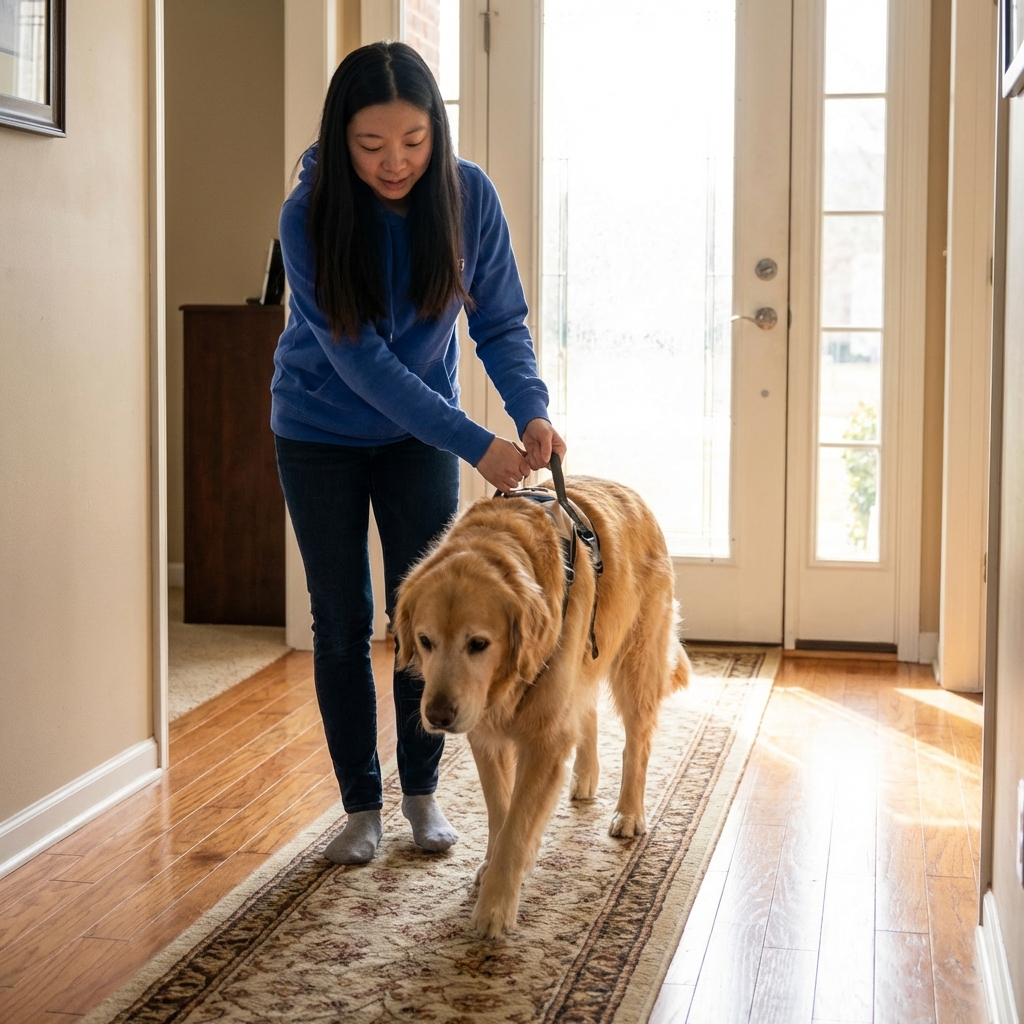
- Mobility help: a well-fitted harness, sling, or towel for rear-end support.
- Hygiene: fragrance-free baby wipes, chlorhexidine wipes (if vet-approved), disposable gloves, paper towels. Avoid using chlorhexidine on open or deep wounds unless your vet directs you.
- Potty tools: pee pads, diapers or belly bands if appropriate, and a small trash bin with liners.
- Medication bin: labeled containers, syringes for liquids, pill pockets if allowed, and a written schedule.
- Emergency info: your vet’s number, after-hours clinic number, and your dog’s diagnosis and medication list in one visible place.
- Lighting: a small lamp or nightlight so you can check breathing and gum color at night.
Safe lifting and handling
- Protect your back and your dog’s joints. Move slowly and keep the spine supported.
- For large dogs, a two-person lift is often safest.
- If your dog seems painful when lifted, ask your vet about adjustments to the plan.

Your final-week daily checklist
Think in “comfort blocks” rather than perfect routines. Many families do a simple morning, midday, evening, and bedtime check.
Morning check (5 minutes)
- Breathing: is it easy and quiet, or labored with effort?
- Pain: trembling, panting when resting, tense belly, hunched posture, reluctance to move.
- Nausea: lip licking, drooling, gulping, turning away from food, vomiting.
- Hydration: offer water. If your dog will not drink, is vomiting, seems dehydrated, or seems suddenly “off,” notify your vet for guidance.
- Mobility: can they stand with help? Are the legs knuckling or slipping?
- Bathroom: assist outside or offer a pee pad option.
- Meds: give morning medications exactly as directed.
Midday check
- Reposition: help your dog change sides to prevent soreness, especially if they are not moving much.
- Food: offer a small, highly palatable meal or snack if your vet approves.
- Clean and dry: wipe urine or saliva, keep skin folds dry, check for redness.
- Temperature: feel ears and paws, and adjust the room. Thin or weak dogs often get chilled. Overheating can show up as heavy panting, bright red gums, drooling, or agitation.
Evening check
- Comfort score: overall, did your dog have more peaceful moments than distressed moments today?
- Potty support: one more supported trip or pad change before bedtime.
- Meds: give evening pain, nausea, or anxiety medications on schedule.
- Sleep setup: fresh blankets, nightlight on, water nearby if your dog can swallow without coughing. If there is any concern for aspiration, ask your vet what is safest.
Night check (if you wake up)
- Breathing: count resting breaths while your dog is asleep or truly resting. A simple method is to count for 15 seconds and multiply by 4. Ask your vet what resting rate or change is concerning for your dog.
- Restlessness: look for pacing, repeated repositioning, whining, or inability to settle.
- If distress is building, use your vet-approved comfort medication plan and call for guidance.
Comfort symptoms: what to watch and what helps
In hospice, we focus on a few major comfort categories. These are the issues that most often disrupt rest and quality of life in the final week.
Pain
Dogs are experts at hiding pain, but end-of-life pain often shows up as panting at rest, a glazed look, irritability, not wanting to be touched, or “stuck” posture.
- Do: follow the pain plan your veterinarian provided and keep doses consistent.
- Do: use thick bedding, gentle massage if your dog enjoys it, and help with standing to prevent slips.
- Avoid: giving human pain medications unless your veterinarian specifically prescribed them. Many are toxic to dogs.
Breathing changes
Some illnesses can cause fluid buildup, airway irritation, or weakness that makes breathing harder. Any sudden or severe respiratory distress is an emergency.
- Do: keep your dog cool, calm, and in a position they choose, often chest down with head elevated.
- Do: reduce stress and limit visitors if excitement worsens breathing.
- Call the vet promptly if: open-mouth breathing at rest, blue or gray gums, repeated collapse, or you cannot get your dog settled.
Nausea and appetite loss
In the final week, appetite may drop significantly. The priority is comfort, not perfect nutrition.
- Do: ask your veterinarian about anti-nausea medications and appetite support.
- Try: warmed food, small frequent bites, hand-feeding, or vet-approved bland options.
- Do not force-feed: it can increase stress and aspiration risk.
Anxiety, confusion, or restlessness
Some dogs become unsettled at night or seem “not themselves.” This can be pain, nausea, trouble breathing, or cognitive changes.
- Do: keep lighting soft, use a predictable routine, and speak calmly.
- Do: use vet-prescribed anti-anxiety or sedating medications if needed for comfort.
- Check basics: do they need to potty, are they too hot or cold, are they lying on a wrinkle in the bedding?
Constipation or diarrhea
GI changes are common with opioids, dehydration, cancer, stress, or new medications. These issues can add a lot of discomfort quickly.
- Call your vet if: no stool for 48 hours, repeated straining, yelping, swollen belly, black or tarry stool, blood in stool, or profuse watery diarrhea.
- Do: ask before giving any over-the-counter stool softeners or anti-diarrhea products. Some are unsafe for dogs or unsafe with certain conditions.
Food, water, and medications: a simple plan
Keep it easy
- Offer water often. Reduced drinking can be part of the body slowing down, but it can also signal nausea, pain, or other issues. If your dog will not drink for a full day, is vomiting, seems dehydrated, or seems uncomfortable, contact your vet.
- Offer small portions of favorite, vet-approved foods. Warm them slightly to increase aroma.
- Use lickable foods for meds if swallowing is still safe (ask your vet if aspiration is a concern).
Make a medication schedule you can follow
- Create a written grid with medication name, dose, time, and purpose.
- Set phone alarms for critical doses, especially pain control.
- Ask your veterinarian for a “breakthrough” plan: what to do if comfort suddenly worsens.
Build a comfort med kit
- Keep comfort meds together with clear labels, dosing instructions, and a measuring syringe for liquids.
- Only pre-draw syringes if your veterinarian instructs you to, and follow storage and expiration guidance.
- Post your after-hours plan next to the kit so you are not searching at 2 a.m.
Tip from the clinic: If your dog starts spitting out pills, ask about liquids, compounded flavors, or alternate routes. Many families struggle here, and there are often solutions.
Hygiene and skin care
As mobility declines, dogs may soil themselves or drool more. Keeping skin clean and dry prevents painful rashes and infections, and it also helps your dog feel more like themselves.
- Wipe promptly after accidents, then dry thoroughly, especially in skin folds.
- Clip long hair around the rear end if your dog tolerates it, or ask your vet team for help.
- Prevent pressure sores: soft bedding, frequent repositioning, and padding under bony hips and elbows.
- Nail and paw checks: slipping and splayed toes are common, and nails can snag when gait is weak.
Quality of life: a gentle scoring tool
When you are tired and emotional, it is hard to remember what “a good day” looked like. A simple daily score can help you see trends, not just moments.
Rate each 0 to 2
- Hurt (pain controlled): 0 = uncontrolled, 1 = sometimes, 2 = well controlled
- Breathing comfortable: 0 = distress, 1 = mild struggle, 2 = comfortable
- Hydration: 0 = cannot keep fluids down or refuses, 1 = minimal, 2 = adequate
- Hygiene: 0 = frequent soiling and skin irritation, 1 = manageable, 2 = clean and comfortable
- Happiness/connection: 0 = withdrawn, 1 = occasional engagement, 2 = enjoys affection
- Mobility: 0 = cannot rise, 1 = rises with help, 2 = moves comfortably
If scores are mostly 0s for more than a day, or if distress is rising despite medications, it is time to call your veterinarian and talk about next steps.
When to call the vet now
In my experience as a veterinary assistant, families often wait because they do not want to “overreact.” You are not overreacting. Comfort changes quickly in the final week.
- Labored breathing, open-mouth breathing at rest, or gums that look blue, gray, or very pale
- Uncontrolled pain: crying, constant panting at rest, cannot settle, or guarding the body
- Repeated vomiting, vomiting with blood, or inability to keep water down
- Collapse, new severe weakness, or repeated falls
- Seizures or multiple episodes of severe disorientation
- Uncontrolled bleeding
- Urination concerns: straining, crying, repeated attempts with little to no urine, or a firm, distended belly are emergencies. If your dog has not urinated for 12 to 24 hours without obvious straining, call your vet for guidance, especially if drinking is reduced or medications have changed.
- Stool concerns: black or tarry stool, significant blood, severe diarrhea, or repeated straining
Planning a peaceful goodbye
If euthanasia is being considered, planning ahead can reduce suffering and reduce panic for you. Many veterinarians offer in-home services, and some areas have dedicated hospice vets. If you prefer a clinic visit, ask for a quiet room and a low-traffic appointment time.
Questions to ask ahead of time
- What signs tell us it is time, based on my dog’s diagnosis?
- Can you provide a comfort medication plan for the final 24 to 72 hours?
- Do you offer in-home euthanasia, or can you refer us?
- What are the aftercare options (private cremation, communal cremation, home burial where legal)?
- How do we keep my dog calm for transport if needed?

Most importantly, remember this: choosing comfort is a loving decision. Hospice is not about giving up. It is about showing up, moment by moment, and letting your dog’s needs lead the way.