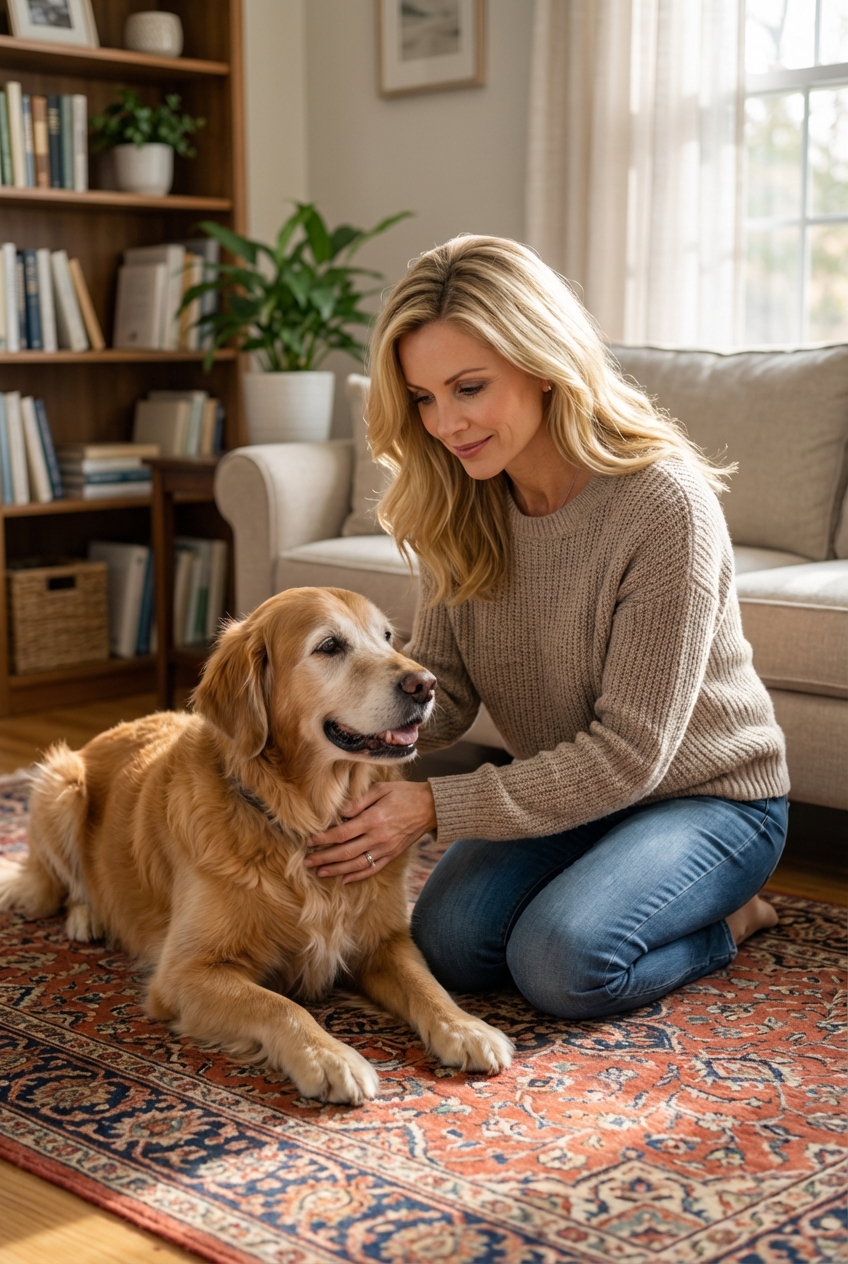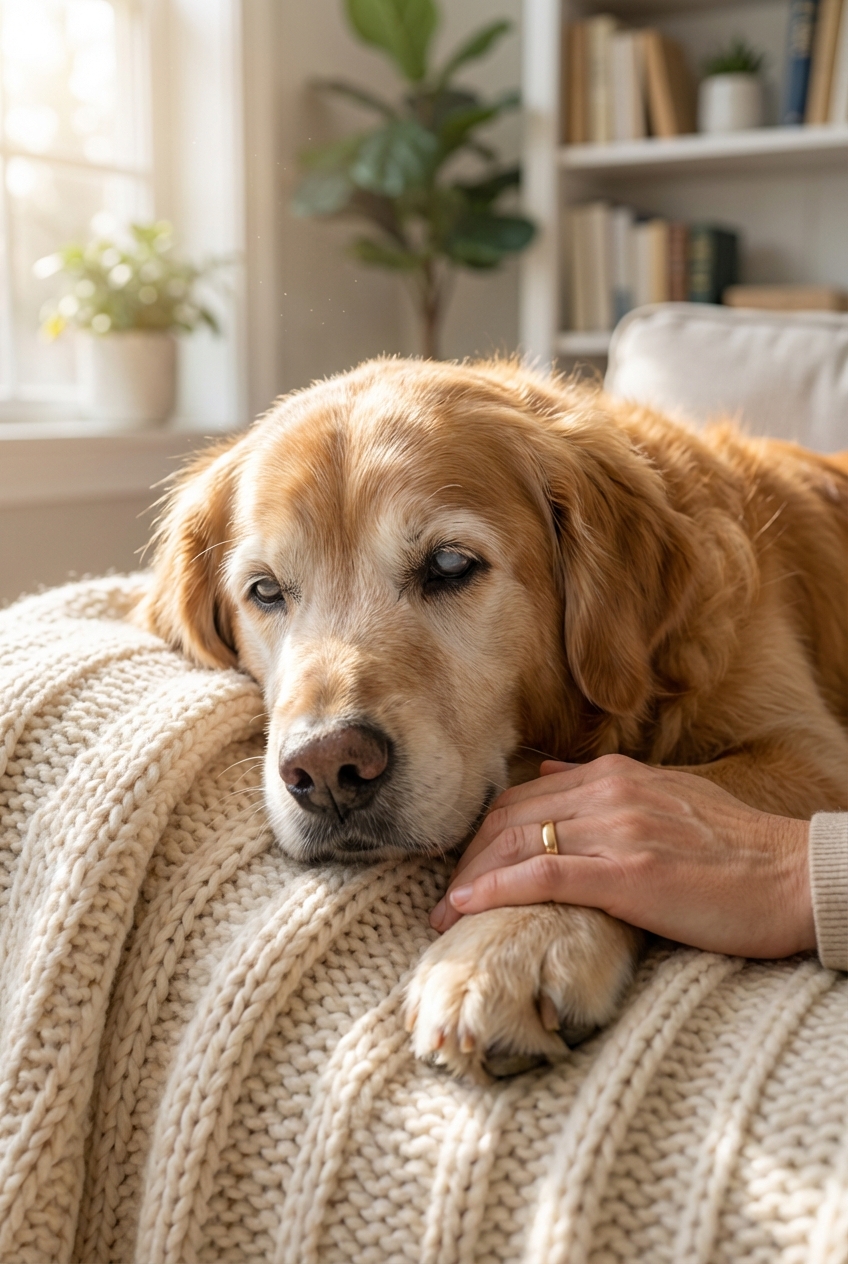
Use this day-by-day dog hospice checklist for the final week: set up a comfort station, track breathing, pain, nausea and anxiety, manage meds and hygiene, a...
Article
•
Designer Mixes
Dog Hospice Care at Home: What Helps Most

Shari Shidate
Designer Mixes contributor
When a dog is nearing the end of life, “doing everything” often looks different than it used to. Hospice care at home is about comfort, dignity, and making sure your dog feels safe and loved while you manage pain, nausea, breathing changes, anxiety, and mobility issues as gently as possible.
As a veterinary assistant, I have seen how much relief families feel once they have a simple plan. You do not have to guess your way through this. With your veterinarian’s guidance, you can create a calm, supportive home setup that helps your dog and helps you.
Note: This is general information and not a substitute for veterinary advice. Your veterinarian should guide medication choices, dosing, and what to do if symptoms change.

What at-home hospice means
Dog hospice care focuses on comfort rather than cure. The goal is to reduce suffering, support basic needs, and protect your dog’s quality of life day by day.
Home hospice typically includes:
- Pain control and symptom management
- Help with mobility, toileting, and hygiene
- Nutrition and hydration support that matches your dog’s ability and appetite
- Emotional comfort, calm routine, and reduced stress
- Planning for emergencies and end-of-life decisions
If possible, ask your veterinarian for a hospice plan in writing, including medication schedules and what to do if symptoms change at night or on weekends.
What helps most
1) Strong pain control
Pain is one of the biggest drivers of poor quality of life. Many dogs hide pain until it becomes severe, so the goal is often to stay ahead of it with consistent dosing.
Depending on your dog’s condition, your veterinarian may use a combination of medications, such as:
- NSAIDs (anti-inflammatory pain medications) when appropriate
- Opioids or opioid-adjacent pain medications prescribed by your veterinarian (for moderate to severe pain, and depending on your dog’s diagnosis and local regulations)
- Gabapentin for nerve pain and overall comfort
- Amantadine as an add-on for chronic pain in some cases
Important: Never use human pain medications unless your veterinarian specifically prescribes them. Some common human drugs can be dangerous or fatal to dogs.
Watch for side effects: Many hospice medications can cause sleepiness or wobbly walking, especially in seniors. If your dog seems overly sedated, disoriented, or suddenly unsteady, contact your veterinarian so they can adjust the plan.
2) Nausea, appetite, and digestion
Many hospice dogs struggle with nausea, reflux, constipation, diarrhea, or reduced appetite. This can happen with cancer, kidney disease, liver disease, heart failure, and even pain itself.
What often helps:
- Anti-nausea medication (like maropitant or ondansetron, as prescribed)
- Appetite support if appropriate for your dog’s diagnosis
- Small, frequent meals with gentle foods your dog will accept
- Stool support (a veterinarian-directed stool softener plan or diarrhea plan)
If your dog has diarrhea, do not give over-the-counter anti-diarrheals unless your veterinarian tells you to. Some cases need very different care, especially if infection, toxins, or bleeding are involved.
If your dog is not eating, it is not always “stubbornness.” It is often nausea, pain, or fatigue. Tell your veterinarian quickly if your dog skips meals for a full day, or sooner for small dogs, diabetic dogs, or dogs with chronic disease.
3) Easier breathing and low-stress handling
Breathing changes can be scary for families. If your dog has heart disease, lung disease, cancer, or fluid buildup, your veterinarian may prescribe medications to reduce fluid or ease respiratory effort.
At home, helpful steps include:
- Keeping the room cool and well ventilated
- Using a harness instead of a collar to reduce pressure on the neck
- Reducing excitement and limiting stairs or chasing behaviors
- Tracking resting respiratory rate while your dog sleeps
Ask your veterinarian what resting rate is normal for your dog and what number should prompt an urgent call. Many clinicians get concerned when a resting rate consistently rises (often above about 30 to 40 breaths per minute in some heart and lung cases), but your dog’s threshold should come from your veterinary team.
If your dog is open-mouth breathing at rest, gums look pale or blue, or breathing becomes suddenly labored, treat it as urgent and contact an emergency clinic.
4) Mobility support and skin protection
For many dogs, mobility is the biggest day-to-day challenge. Slipping, falling, or struggling to stand can increase fear and pain. The right setup can help immediately.
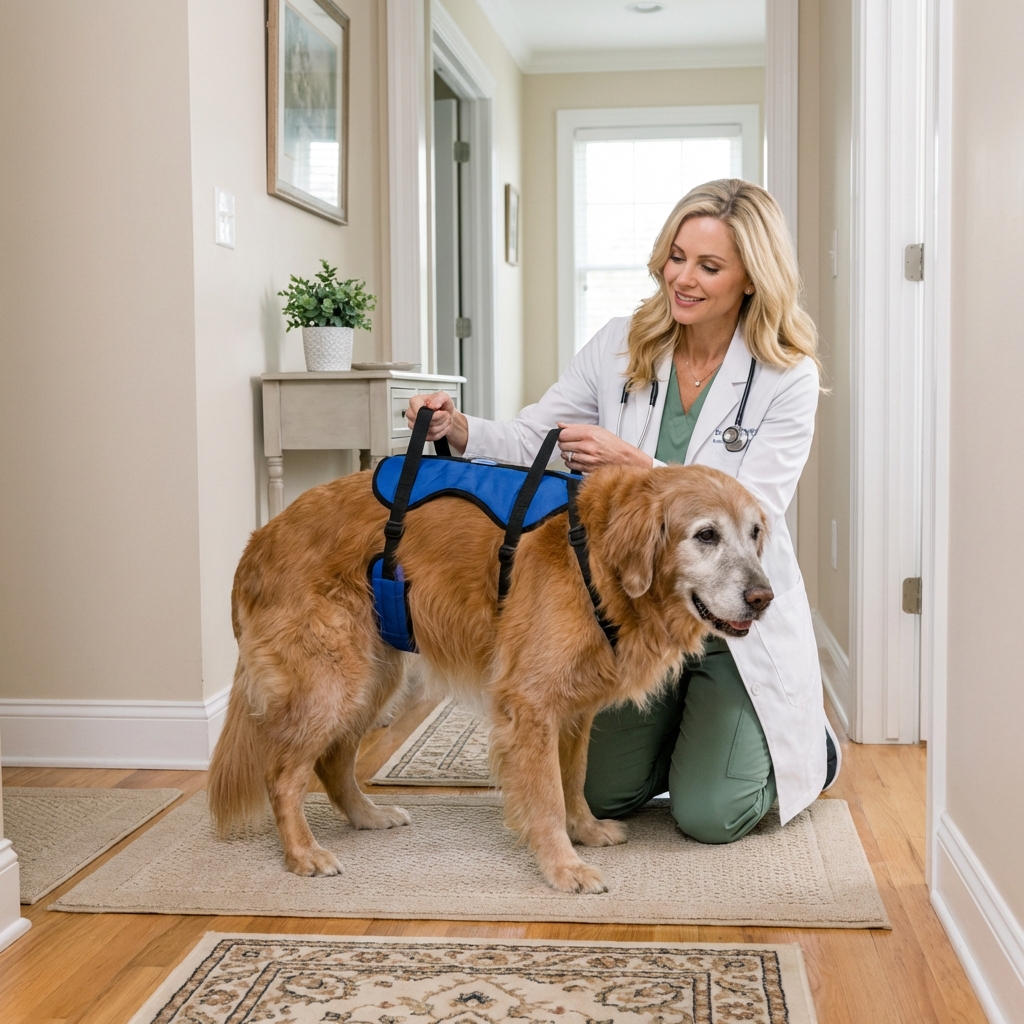
What tends to help most:
- Non-slip flooring (yoga mats, runners)
- Support harnesses for back legs or full-body lifting
- Orthopedic bedding with washable covers
- Frequent repositioning for dogs who lie down most of the day
- Keeping nails and paw fur trimmed to prevent sliding
- Traction aids like dog grip socks or booties may help some dogs if they fit well and your dog tolerates them
If your dog is staying in one position for long periods, ask your veterinarian about preventing pressure sores and keeping the skin clean and dry.
5) Toileting and hygiene
When dogs cannot get outside easily, toileting becomes stressful for everyone. A calm, practical plan reduces accidents and protects your dog’s dignity.
Home options include:
- Potty pads or a washable “pee pad” station
- Diapers or belly bands for some dogs, with frequent changes
- Warm water wipe-downs and gentle, fragrance-free wipes
- Clipping hair around the rear for easier cleaning, if your dog tolerates it
If you notice straining, crying during urination, sudden accidents, or no urine output, contact your veterinarian. Urinary issues can become emergencies.
6) Hydration support
Dehydration can make nausea, weakness, and constipation worse. Some dogs also tire out before they can drink enough.
Vet-friendly ways to help include:
- Offer water in multiple spots and use a wide, easy-to-reach bowl
- Add water or low-sodium broth to meals if your veterinarian approves
- Ice chips or small sips offered frequently if your dog does better with tiny amounts
- Ask about subcutaneous fluids if appropriate for your dog’s diagnosis (these are not right for every condition)
7) A simple routine that lowers anxiety
Dogs feel safest when life is predictable. In hospice, routine becomes part of medicine.
Consider:
- Same wake, meals, meds, and bedtime each day
- Quiet rest area away from heavy foot traffic
- Gentle enrichment like sniff walks in the yard, soft brushing, or favorite music at low volume
- Limiting visitors if your dog gets overstimulated
If your dog seems restless at night, pants, paces, or cannot settle, tell your veterinarian. Anxiety and pain can look very similar, and both can often be treated.
Medication tips
When you are juggling several meds, small systems make a big difference.
- Ask about easier forms like flavored liquids, smaller tablets, or compounded options when available.
- Use a written schedule and set phone alarms so doses do not drift.
- Do not crush or split pills unless your veterinarian or pharmacist confirms it is safe. Some medications are extended-release or taste very bitter.
- Tell your veterinarian what is not working (spitting pills, vomiting after dosing). There is usually another option.
Set up a comfort station
A comfort station is one dedicated area with everything you need so you are not scrambling when your dog needs help.
- Orthopedic bed with a waterproof liner
- Clean blankets and a lightweight throw
- Water bowl that is easy to reach, or a no-spill bowl
- Medications with a written schedule
- Wipes, towels, potty pads, and gloves
- Harness and leash
- Night light to reduce confusion and prevent falls

Quality of life
One of the hardest parts of hospice is knowing when comfort is slipping. A quality-of-life scale can help you see patterns more clearly. Many veterinarians recommend tracking:
- Hurt (pain, breathing effort)
- Hunger (willingness and ability to eat)
- Hydration (drinking, dehydration signs)
- Hygiene (clean and dry, pressure sores)
- Happiness (interest in family, favorite things)
- Mobility (can your dog get up, walk, toilet with help)
- More good days than bad
A simple tip: write down one sentence each day about what was hardest and what went well. When you reread a week at a time, you often get clarity.
When to call the vet
Please contact your veterinarian promptly if you notice:
- Uncontrolled pain, trembling, yelping, or hiding
- Repeated vomiting, severe diarrhea, or black tarry stools
- Labored breathing, open-mouth breathing at rest, or fainting
- Not eating for 24 hours or not drinking, especially with known disease (call sooner for small dogs, diabetic dogs, or medically fragile dogs)
- Collapse, seizures, or sudden severe weakness
- Inability to urinate, or straining without producing urine
Hospice is not about enduring suffering. It is about preventing it and responding quickly when symptoms change.
Support for the family
Hospice can be emotionally and physically exhausting. It is okay to need help.
- Share tasks (med times, clean-up, short walks) so one person is not carrying everything.
- Plan for kids and other pets with calm routines and gentle boundaries. Some pets want to be close, others need space.
- Ask about extra support like in-home hospice vets, palliative care services, or tele-triage through your clinic when available.
If you feel yourself running on empty, tell your veterinarian. Caregiver strain is real, and support is part of taking care of your dog.
When euthanasia is the kindest option
This is a tender topic, but it matters: euthanasia can be a peaceful, loving gift when a dog’s comfort can no longer be maintained. Many families choose in-home euthanasia so their dog can be in a familiar place, on a favorite bed, with the people they trust most.
If you are considering this, ask your veterinarian:
- What changes would tell us it is time?
- How do we keep our dog comfortable right now?
- Is in-home euthanasia available, and how do we schedule it?
- What aftercare options are available (private cremation, communal cremation, burial rules)?
There is no perfect day. There is only the most merciful choice you can make with the information you have and the love you carry.
Checklist for today
- Call your veterinarian and ask for a hospice medication plan and dosing schedule.
- Create a comfort station with non-slip flooring, supportive bedding, and supplies.
- Track pain, appetite, breathing, and mobility once daily.
- Plan how you will handle nights and emergencies, including who to call.
- Give your dog the things that still feel like joy: your presence, calm touch, and quiet time together.
You do not have to do hospice perfectly. You just have to keep choosing comfort, one small step at a time.