
Know what to expect during your dog’s first heat: typical age and timing, the 4 stages, bleeding and behavior changes, how to prevent pregnancy, and red fl...
Article
•
Designer Mixes
Dog Heat Timeline: Bleeding and Behavior

Shari Shidate
Designer Mixes contributor
If you have an unspayed female dog, her first heat can feel surprising, messy, and a little emotional for everyone involved. As a veterinary assistant, I want you to know this upfront: most heat cycles are normal, and with a little planning you can keep your dog comfortable and safe.
Below is a clear heat cycle timeline, what bleeding usually looks like, the most common behavior changes, and the red flags that deserve a call to your veterinarian.

Quick timeline: the 4 stages
Here is the key distinction that helps everything make sense:
- The active heat phase (when you see most bleeding and behavior changes) is typically 2 to 4 weeks total and includes proestrus + estrus.
- The full estrous cycle includes all four stages below and spans the time from one heat to the next. For many dogs, that is about every 6 months, though small breeds may cycle more often and large breeds may cycle less often.
Stage estimates (individual variation is normal):
- Proestrus: about 7 to 10 days (often when bleeding starts)
- Estrus: about 5 to 10 days (typically fertile window)
- Diestrus: about 2 months (hormones settle; pregnancy or false pregnancy can occur)
- Anestrus: about 3 to 5 months (resting phase)
Important note: Many articles say the “average” heat is 21 days. That is a helpful reference point, but your dog may be shorter or longer and still be normal.
Stage-by-stage: bleeding and behavior
1) Proestrus (start of heat)
What you’ll see: This is usually the stage that makes families notice heat. The vulva becomes visibly swollen, and bloody discharge begins. Some dogs drip, others barely spot. You might also notice your dog licking more often.
Typical bleeding:
- Color often starts bright red and can be fairly noticeable
- Discharge can be heavier for the first few days, then taper
- Some dogs keep themselves so clean you see little blood, but it is still there
Typical behavior:
- More clingy, anxious, or restless
- Increased urination and scent marking (she is advertising to male dogs)
- May flirt with males but typically will not allow mating yet
2) Estrus (fertile window)
What you’ll see: This is when ovulation occurs and pregnancy is possible. Many owners are surprised that bleeding may look lighter during the most fertile phase.
Typical bleeding:
- Discharge often shifts from red to pink, watery, or straw-colored
- Some dogs stop showing obvious blood at all
Typical behavior:
- Flagging: tail held to the side when touched near the rear
- More friendly or eager around male dogs
- May actively seek escape opportunities (doors, fences, yards)
Safety tip: If you want to prevent pregnancy, assume she can become pregnant throughout estrus, and often for a few days around it. Keep her leashed outside and avoid dog parks or off-leash areas.
3) Diestrus (after heat)
What you’ll see: The outward signs of heat fade, swelling reduces, and discharge usually stops. Internally, hormones are shifting back toward baseline. If your dog was bred, pregnancy is possible. If not, she can still experience a false pregnancy because the hormone pattern is similar either way.
Typical bleeding: Usually stops or becomes minimal.
Typical behavior:
- Back to normal, or occasionally a little moody
- False pregnancy signs can include nesting, mothering toys, enlarged mammary glands, or milk production
If false pregnancy signs are intense or persistent, talk with your vet. There are safe ways to manage discomfort and reduce complications.
4) Anestrus (resting phase)
What you’ll see: This is the quiet phase between cycles. No bleeding, no fertility, and fewer hormone-driven behaviors.
What to do: This is a great time to:
- Log cycle dates so you can anticipate the next heat
- Discuss spaying timing with your veterinarian if that is your plan
- Work on calm leash skills and focus cues before the next cycle
What normal bleeding looks like
Normal can vary a lot, but these patterns tend to be reassuring:
- Bleeding starts and gradually becomes lighter or changes to pink over 1 to 2 weeks
- No strong foul odor (a mild musky smell can be normal)
- Your dog is otherwise bright, eating, drinking, and acting fairly normal
If your dog’s discharge is thick, pus-like, gray/green, or very foul-smelling, or if she seems sick, that is not typical heat bleeding and needs veterinary attention.
Common behavior changes
Restlessness and attention-seeking
Some dogs become extra cuddly, others want space. Offer calm enrichment like food puzzles, sniff walks, and short training sessions indoors.
Marking and frequent urination
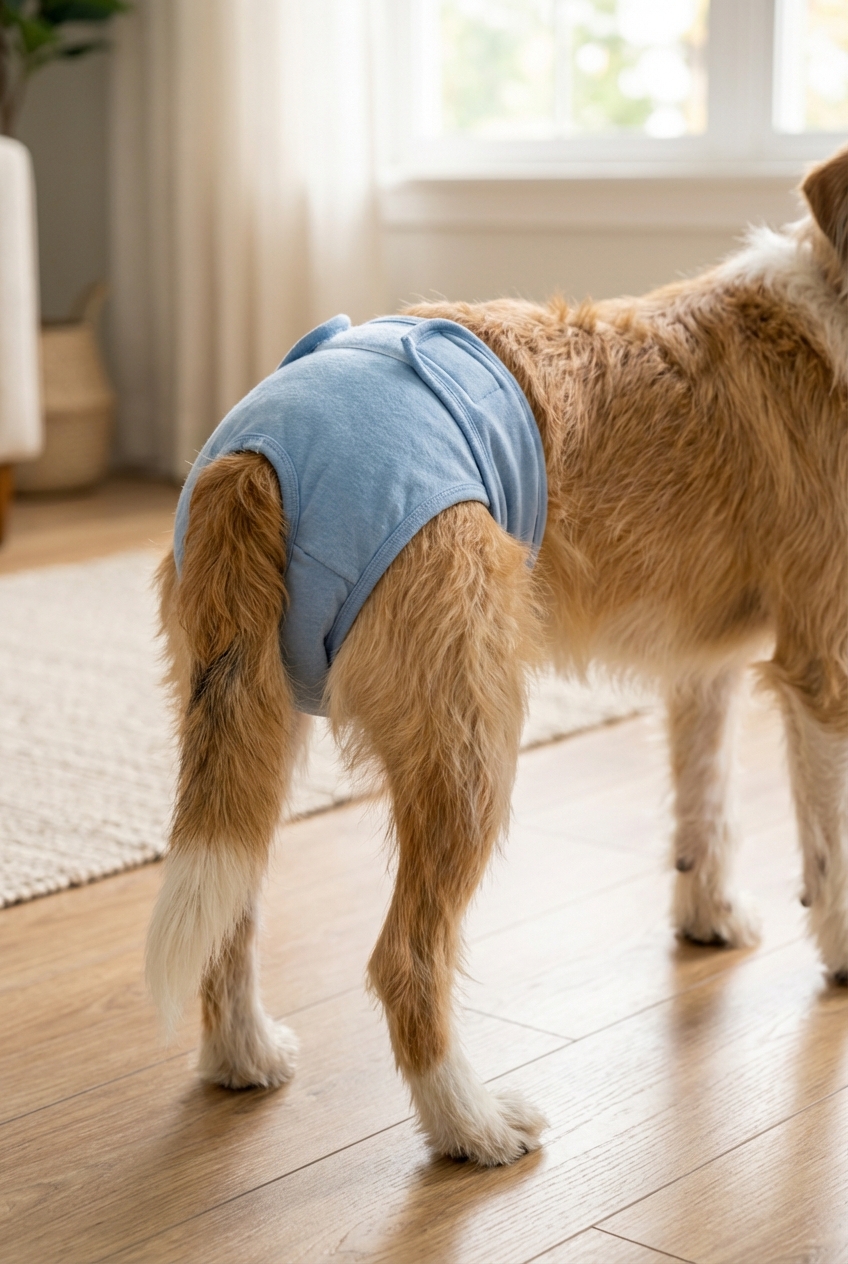
This is very common. Increase potty breaks and consider washable dog diapers (also sold as sanitary panties or heat britches) for indoor management.
Vocalizing and roaming
Hormones can make even well-behaved dogs try to bolt. Use two barriers when possible (for example, leash plus fenced yard, or closed door plus baby gate) and keep ID tags updated.
Changes in appetite
Mild appetite changes can be normal. If she stops eating for more than a day, is vomiting, or seems painful, call your vet.

At-home care checklist
- Use a dog diaper (change often to prevent skin irritation)
- Keep bedding clean and wash with unscented detergent
- Limit contact with intact males, even through fences
- Leash walks only, no dog parks during estrus
- Supervise outdoor time, even in your own yard
- Track dates: day bleeding started, day it lightened, day it ended
Pro tip: Male dogs can be incredibly determined. It is not rare for them to climb, dig, or break through weak barriers to reach a female in heat.
When to call the vet
Please call your veterinarian promptly if you notice any of the following:
- Heavy bleeding soaking through pads/diapers quickly or large clots
- Heat signs lasting longer than 3 to 4 weeks
- Discharge that is pus-like, very foul-smelling, or unusual in color
- Lethargy, vomiting, diarrhea, fever, or your dog seems painful
- Increased thirst and urination along with not feeling well
- A swollen belly, weakness, or collapse
One condition we take very seriously is pyometra, a uterine infection that can occur in unspayed dogs, often within weeks after heat. It can be life-threatening. If your dog seems “off” after a heat, do not wait it out.
Spaying and timing
Spaying prevents heat cycles and greatly reduces the risk of pyometra. Timing is individual and should be discussed with your veterinarian, especially for large-breed dogs where growth and orthopedic considerations matter.
If you plan to spay, many vets prefer scheduling when your dog is not actively in heat because blood flow to reproductive tissues can be higher during heat, which can increase surgical complexity. Your veterinarian can advise the safest timing for your dog.
FAQ
How long does a dog bleed in heat?
Many dogs bleed for 7 to 14 days, but some are shorter or longer. Bleeding often starts heavier and then becomes lighter or pink.
Can a dog get pregnant if she is still bleeding?
Yes. Bleeding does not reliably indicate fertility. Many dogs become fertile as discharge lightens, but pregnancy can occur around this period. If avoiding pregnancy, treat the entire heat as high-risk and use strict management.
Do dogs have cramps or pain during heat?
Some dogs seem mildly uncomfortable, but significant pain is not typical. If your dog is crying, hunched, refusing to move, or seems unwell, call your vet.