
Understand proestrus, estrus, diestrus, and anestrus—plus signs of heat, bleeding cleanup, behavior changes, and the best ways to prevent accidental pregna...
Article
•
Designer Mixes
Dog Heat Cycle Stages

Shari Shidate
Designer Mixes contributor
If you have a female dog who is not spayed, her heat cycle can feel confusing at first. One day she seems a little clingy, and the next you notice spotting, swelling, or sudden interest from male dogs on your walks. As a veterinary assistant, I want you to know this is normal physiology, and once you understand the stages, you can keep her comfortable and prevent an accidental pregnancy.
Below is an owner-friendly, evidence-based breakdown of the dog heat cycle stages, what you may see at home, and when to call your veterinarian.

Quick overview: what “heat” means
Most owners use the word heat to describe the whole time their dog has vulvar swelling, discharge, and attracts male dogs. Medically, the heat period you notice at home usually includes proestrus and estrus. Estrus is the stage when she is typically receptive to mating and can be fertile.
Dogs typically have their first heat between about 6 and 18 months, depending on breed and size. Smaller dogs often cycle earlier, and larger and giant breeds may cycle later (sometimes 18 to 24 months).
Many dogs cycle roughly every 6 to 7 months, but a normal range can be wider (about 4 to 12 months) depending on the individual and breed. Irregular cycles are more common in young dogs (first 1 to 2 heats) and can also occur with certain health conditions.
- Not the same as a period: Dogs can have vaginal bleeding, but it is hormonal and tissue-related, not the same uterine lining shedding seen in humans.
- Ovulation timing varies: Fertility does not line up perfectly with the first day of bleeding. This is why prevention needs to start early and last longer than many owners expect.
The 4 stages of a dog heat cycle
Veterinarians typically describe four stages: proestrus, estrus, diestrus (also called metestrus), and anestrus. The “heat” you notice at home usually includes proestrus and estrus.
One important note: stage boundaries can be hard to identify at home based on discharge color or behavior alone. If you need precise timing (for breeding or for a mismating concern), your veterinarian can confirm stage and fertility using vaginal cytology and progesterone testing.

Stage 1: Proestrus (start of heat)
Typical length: about 7 to 10 days (can range from 3 to 17 days).
What’s happening hormonally: Estrogen rises and prepares the reproductive tract for breeding.
What you may notice at home:
- Swollen vulva
- Bloody discharge or spotting (often bright red at first)
- Male dogs show interest, but your female usually will not allow mating
- Behavior changes like clinginess, restlessness, or increased urination (urine marking can increase)
Owner tip: This is when pregnancy prevention should start. Even if she is not yet receptive, mating attempts can happen quickly, and sperm can survive for several days. Start strict supervision as soon as you see swelling, discharge, or increased male attention.
Stage 2: Estrus (fertile window)
Typical length: about 5 to 10 days (sometimes longer).
What’s happening hormonally: Estrogen falls, progesterone rises, and ovulation occurs during this stage (timing can vary between dogs).
What you may notice at home:
- Discharge often changes from red to pink, watery, or straw-colored (sometimes very light)
- Vulva may remain swollen but can look slightly softer
- Your dog may flag her tail to the side when touched near the rear
- She may actively seek male dogs and may allow mating
Important: Even if bleeding looks lighter or stops, she may be very fertile around this time. Continue strict separation from intact males. Also, male dogs may stay intensely interested even after the visible discharge decreases.
Stage 3: Diestrus (after heat)
Typical length: about 60 days.
What’s happening hormonally: Progesterone remains elevated for weeks whether or not she is pregnant. This is why dogs can experience false pregnancy signs.
What you may notice at home:
- Discharge stops
- Swelling decreases
- Interest in males fades and she will no longer stand to be bred
- Possible false pregnancy signs: nesting, mothering toys, enlarged mammary glands, or mild milk production
Owner tip: If false pregnancy symptoms are intense, talk with your veterinarian. In many dogs it is mild and resolves, but it can sometimes contribute to mammary irritation or behavioral stress.
Stage 4: Anestrus (resting phase)
Typical length: about 3 to 5 months (varies widely).
What’s happening hormonally: The reproductive tract is quiet and resetting for the next cycle.
What you may notice at home: No discharge, no swelling, and normal behavior and appetite in most dogs.
How long does heat last?
From the first signs of proestrus to the end of estrus, many owners see heat lasting around 2 to 3 weeks. Some dogs are longer.
Practically speaking, plan on strict pregnancy prevention for 3 to 4 weeks after the first sign of heat, or longer if your dog’s cycle tends to run long. When in doubt, ask your veterinarian for guidance, especially if you have intact males nearby.
Heat signs and what is normal
- Vulvar swelling and discharge
- Increased urination and marking behavior
- Behavior changes such as clinginess, irritability, restlessness, or reduced focus
- Appetite changes (either direction)
- Male attention even before you see discharge
Extra note on peeing: Increased urination and marking can be normal in heat. But straining, crying out, accidents with frequent tiny amounts, blood in the urine (not just vaginal spotting), or licking that seems painful can point to a urinary tract infection or another issue, so call your veterinarian.
What is not normal: heavy bleeding that soaks through multiple pads quickly, discharge that is thick yellow or green, strong foul odor, lethargy, vomiting, fever, or significant pain. Those signs deserve a same-day call to your veterinarian.
Preventing pregnancy
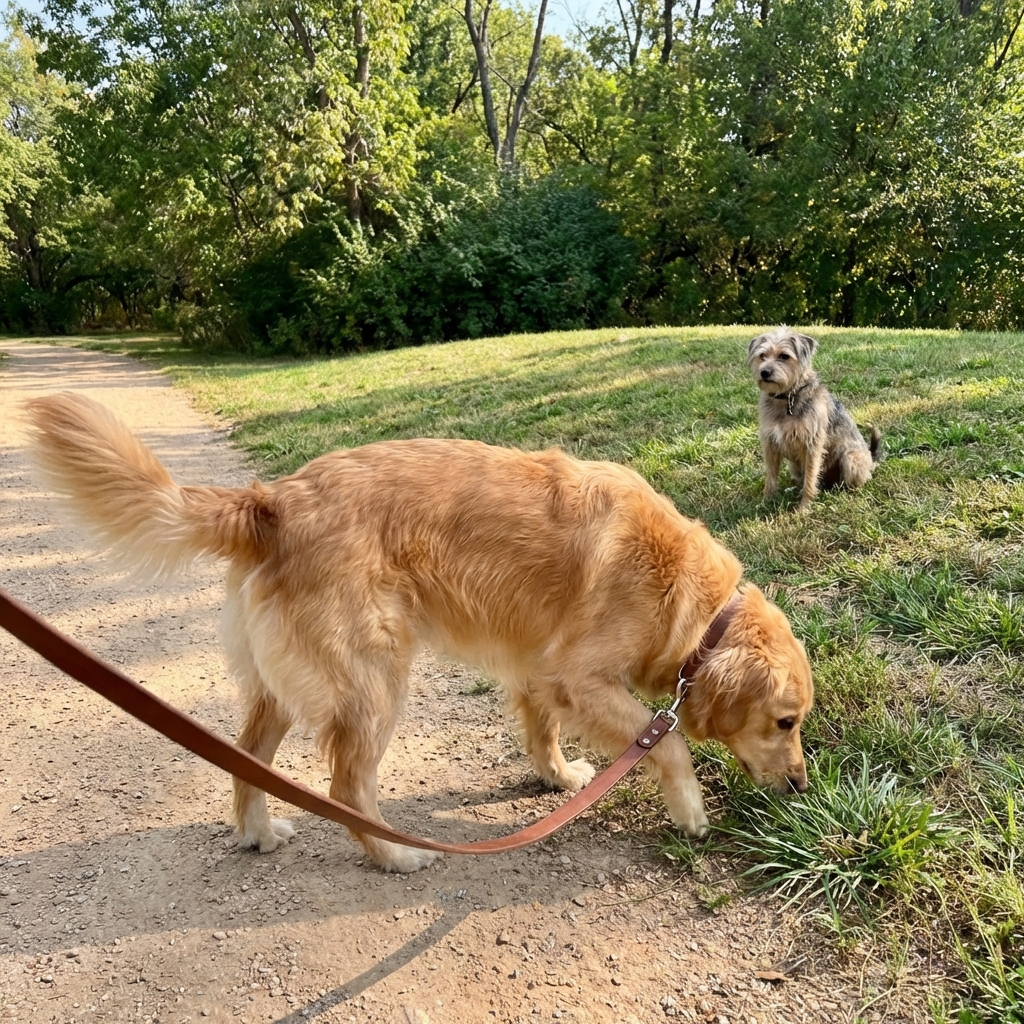
If you do not intend to breed your dog, prevention needs to be taken very seriously. Dogs can mate quickly, and determined males can jump fences, slip collars, or push through doors.
Best practices during heat
- No off-leash time, even in your own yard unless it is fully secured and you are supervising closely.
- Separate from intact males at all times. “They are best friends” is not a safety plan.
- Skip dog parks and avoid daycare or boarding unless the facility explicitly accepts dogs in heat (many do not).
- Walk at low-traffic times and keep the leash short.
- Use physical barriers at home: closed doors, baby gates, and crate rotation when needed.
Common myths
- Myth: Dog diapers prevent pregnancy. Truth: They help contain discharge but do not reliably stop mating.
- Myth: She is safe once the bleeding stops. Truth: Fertility often peaks when the discharge lightens, and males may stay interested beyond the obvious signs.
- Myth: One tie cannot cause pregnancy. Truth: Pregnancy can occur from a single mating.
Quick definition: A “tie” is when the male and female become temporarily locked together during mating. It can last several minutes.
Comfort and cleanup
Most dogs do just fine during heat with a little extra management.
- Use washable bedding and rotate blankets.
- Consider dog heat panties for spotting, and change them often to keep the skin dry.
- Wipe the vulva gently with a soft, damp cloth if discharge collects on the fur.
- Provide enrichment like food puzzles or short training sessions to reduce restlessness.
- Keep routines steady. Many dogs feel more secure with predictable walks, meals, and quiet time.
When to call the vet
Please call your veterinarian promptly if you notice any of the following, especially if your dog is intact and older than 6 months:
- Heavy bleeding or bleeding that lasts longer than about 3 weeks
- Foul-smelling discharge
- Thick yellow, green, or pus-like discharge
- Lethargy, fever, vomiting, diarrhea, loss of appetite
- Increased thirst and urination plus not acting like herself
- Swollen belly, pain, or signs of distress
These symptoms can be associated with infections like pyometra, a serious uterine infection that can become life-threatening without treatment.
Spaying timing
Spaying prevents heat cycles and, with a standard spay (ovariohysterectomy), essentially eliminates the risk of pyometra. It also reduces the risk of mammary tumors, especially when done earlier in life. The best timing is individual and depends on your dog’s breed, size, lifestyle, and orthopedic risk factors.
Talk with your veterinarian about what is best for your dog. If she is currently in heat, many clinics prefer to wait until the cycle has ended, because blood flow to the reproductive tract is higher during heat, which can increase surgical bleeding risk.
If you feel unsure about what stage your dog is in, you are not failing. Heat cycles vary from dog to dog. A quick call to your veterinary team can save you a lot of stress and guesswork.
Heat stage cheat sheet
- Proestrus: swelling and bloody discharge, males interested, she says “no.”
- Estrus: discharge often lightens, she may flag and accept mating, often most fertile.
- Diestrus: heat behaviors stop, possible false pregnancy signs.
- Anestrus: quiet resting period between cycles.
If you want, you can track your dog’s cycle dates on a calendar. After two or three cycles, many owners start to see a pattern, which helps with planning walks, travel, boarding, or a spay appointment.