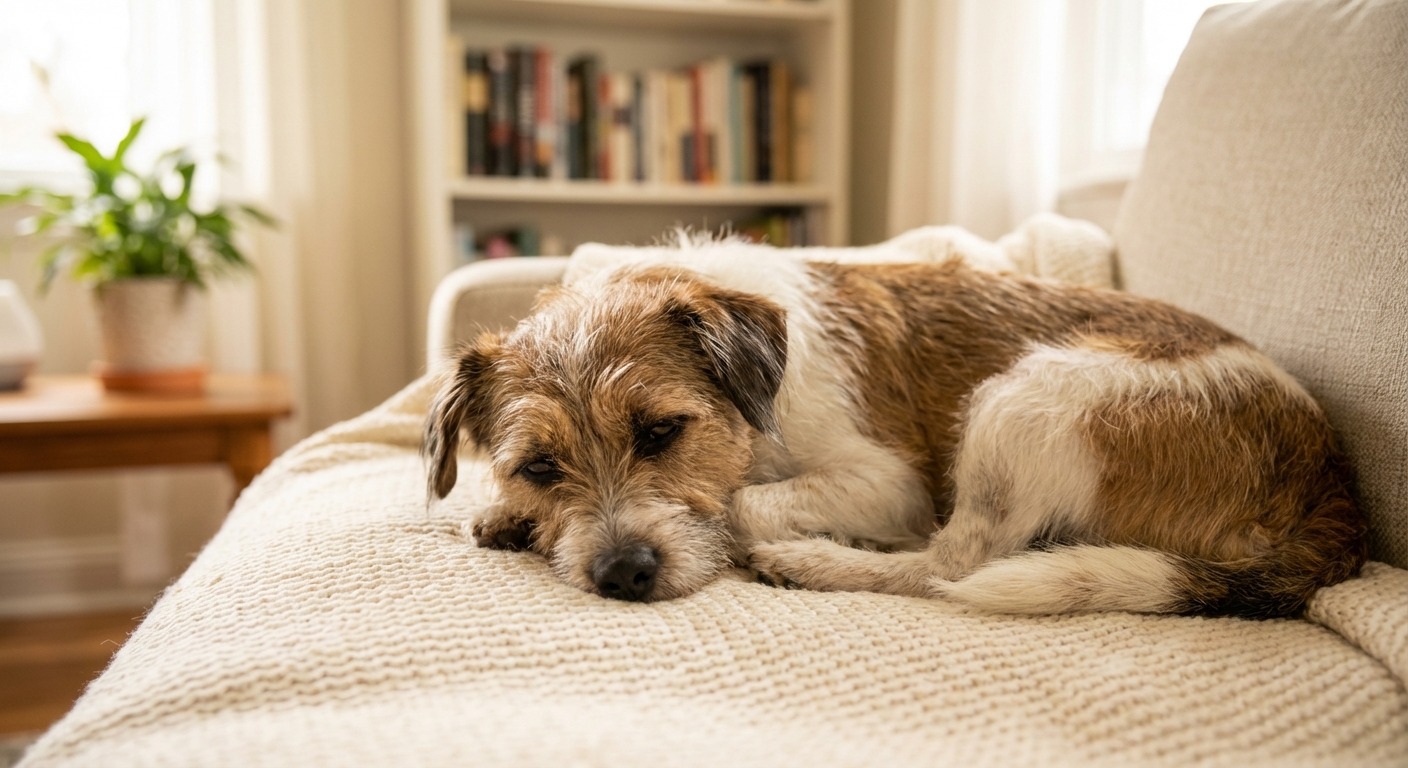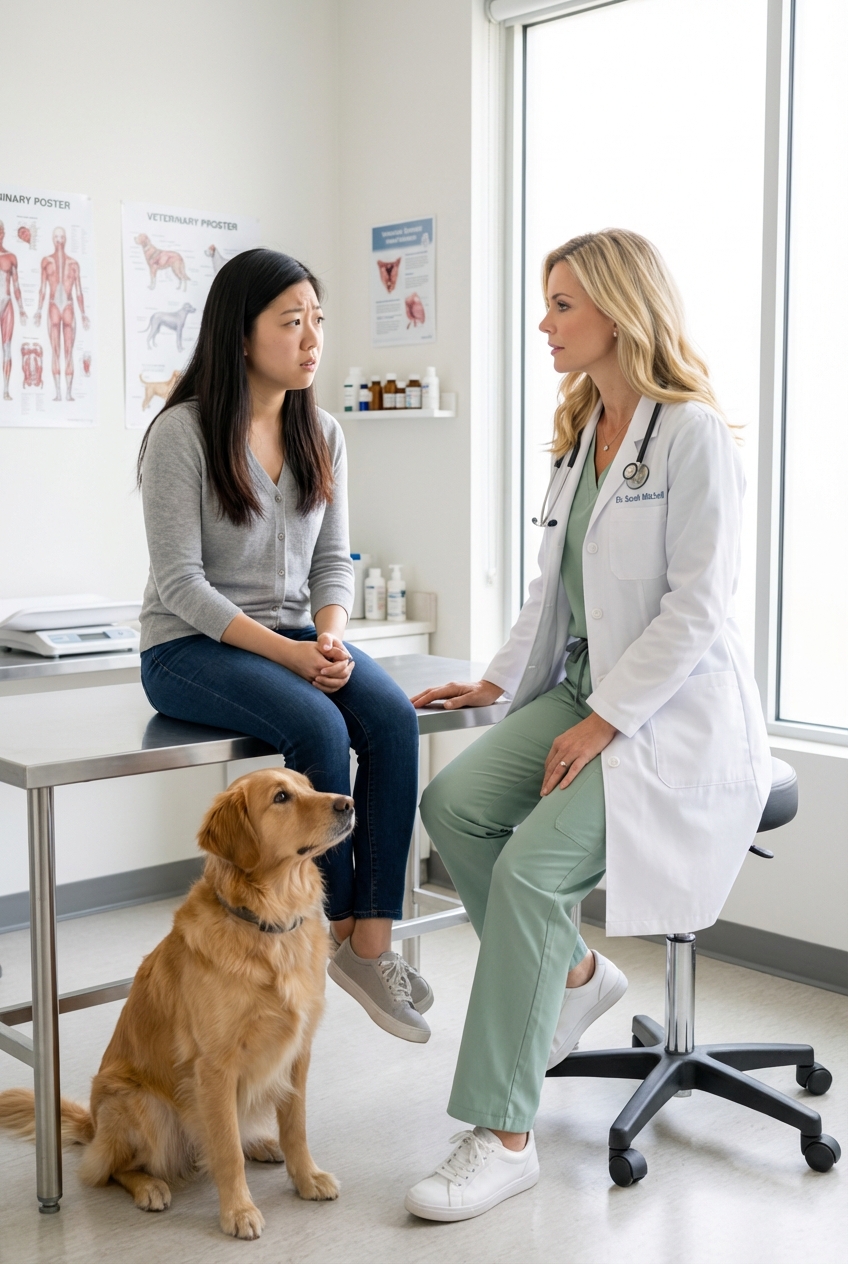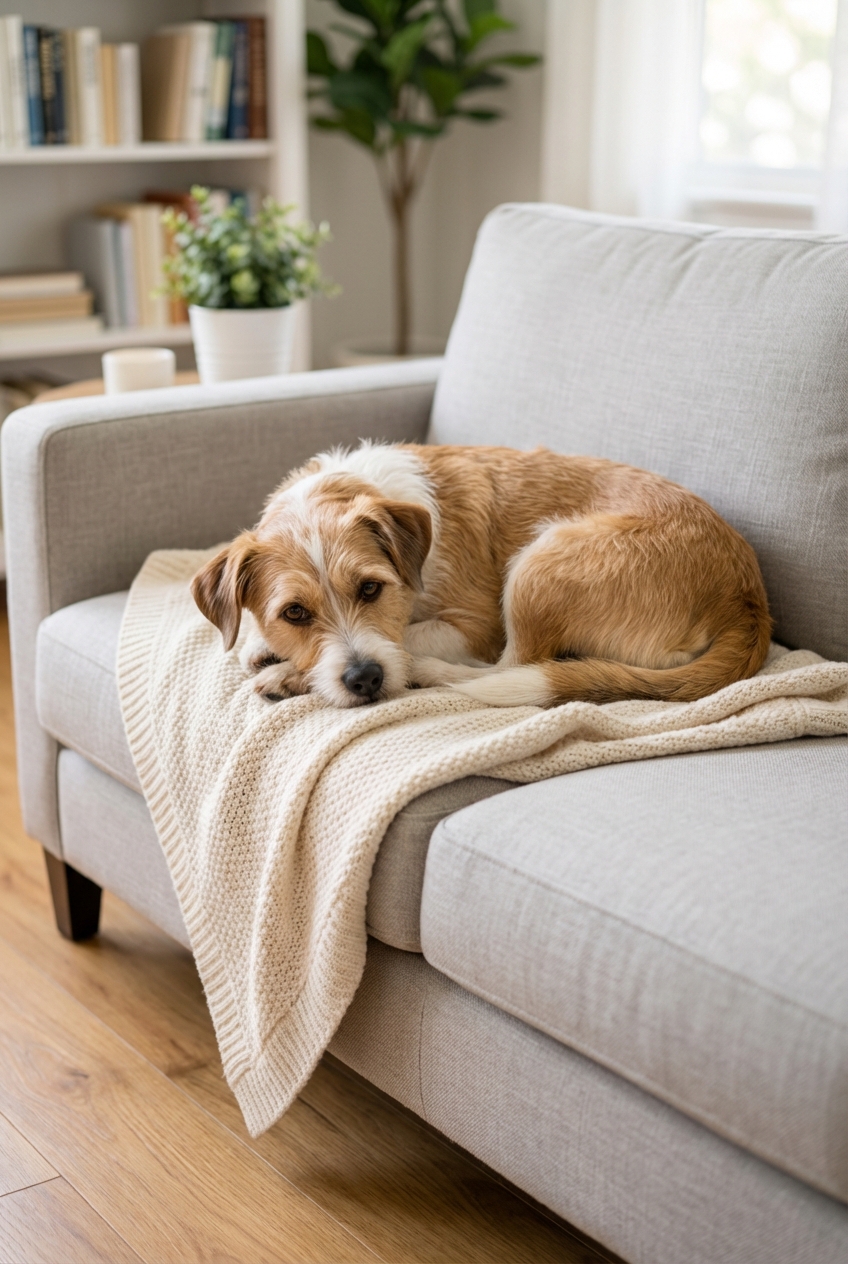
A practical, vet-informed FAQ for your dog’s first heat: stages and timing, fertility myths, normal vs concerning bleeding, cleaning/diaper tips, walk safe...
Article
•
Designer Mixes
Dog Heat Cycle: Pain Signs and Comfort Tips

Shari Shidate
Designer Mixes contributor
If your sweet girl is in heat and acting a little “off,” you are not imagining it. A dog’s heat cycle (also called estrus) can come with mild physical discomfort, plus hormonal shifts that affect mood, appetite, sleep, and energy. As a veterinary assistant in Frisco, Texas, I see how much better dogs do when their families know what is normal, what is not, and how to keep them comfortable and safe.
Important note: Dogs can show discomfort during heat, but severe pain is not considered normal. This article is general education, not a diagnosis. If you suspect true pain or your dog seems ill, it is always safest to call your veterinarian.
Quick heat cycle refresher
Most unspayed female dogs start their first heat between about 6 and 18 months, though smaller dogs often cycle earlier and larger dogs later. After that, many dogs come into heat around every 6 months, but a normal range can be roughly every 4 to 12 months depending on the individual and breed.
Stages in plain language
- Proestrus (often 3 to 17 days): Vulva swelling, bloody discharge, males are interested, your dog usually is not ready to mate yet.
- Estrus (often 3 to 21 days): Discharge often lightens, your dog is fertile and may “flag” her tail to the side. This is the highest escape risk period.
- Diestrus (about 60 days): Hormones shift back. This phase lasts about the same length whether she is pregnant or not. Some dogs show signs that look like pregnancy even if they are not pregnant.
- Anestrus (months): A rest period before the next cycle.
Mild discomfort is most common when swelling is significant, when the vulva is irritated from licking, or when hormonal shifts cause stomach upset or restlessness.
Signs of discomfort (and what they can mean)
Dogs do not always “cry” when they hurt. Many show subtle changes first. Here are common signs of mild discomfort during heat, plus what may be behind them.
Common, usually mild signs
- Restlessness, pacing, clinginess, or wanting to hide: Hormonal changes can affect behavior and sleep.
- Increased licking of the vulva: Swelling and discharge can feel irritating. Too much licking can also inflame the skin.
- Decreased appetite or picky eating: Some dogs eat less.
- Mild lethargy: Many dogs seem “tired” or less playful.
- Frequent urination: Normal marking behavior can increase. Some dogs also feel pressure from swelling.
- Abdominal sensitivity or general discomfort: You might see a tucked abdomen, occasional stretching, or a tense posture. Pronounced abdominal pain is not typical of a normal heat cycle.
Red flags: call the vet today
These signs are not something to “wait out,” because they can point to infection, significant inflammation, or other urgent issues.
- Severe pain: crying, yelping when sitting, shaking, refusing to move, or a hunched posture that will not relax
- Bleeding that is much heavier than normal for your dog: a sudden increase, soaking through bedding, or passing clots
- Foul-smelling discharge or pus-like discharge
- Suspected fever: a measured rectal temperature over 103°F (39.4°C), or your dog is hot, weak, and unwell (warm ears alone are not a reliable sign)
- Vomiting, diarrhea, or not eating for more than 24 hours
- Excessive drinking and urinating, especially with weakness
- Swollen belly, sudden depression, or weakness
After heat: pyometra warning
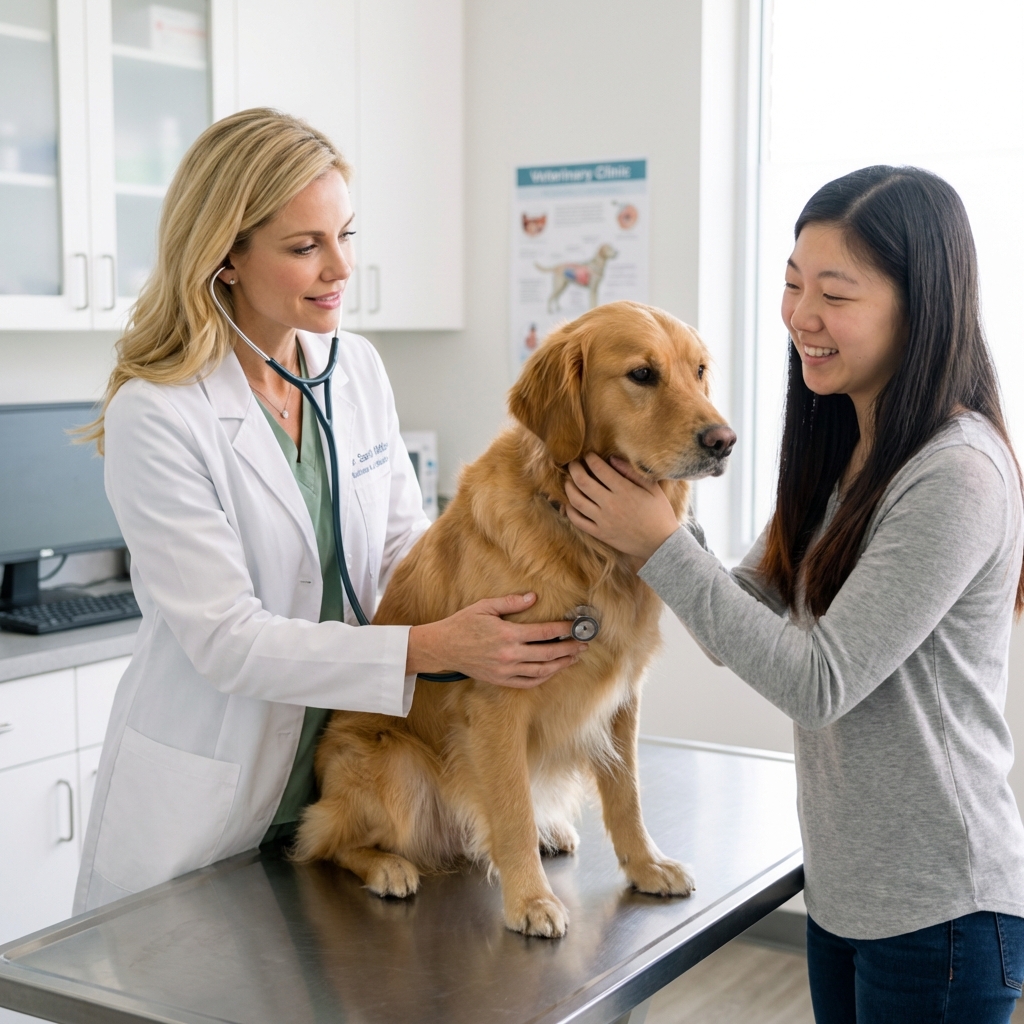
Pyometra is a serious uterine infection in unspayed dogs. It commonly shows up 2 to 8 weeks after a heat cycle, and it is an emergency. Call a vet urgently if you notice lethargy, decreased appetite, vomiting, increased thirst and urination, and vaginal discharge (or no discharge at all with a rapidly worsening sick dog).
Comfort tips that help
You do not need fancy products to help your dog feel better. The goal is simple: reduce irritation, keep her clean, lower stress, and prevent accidental breeding.
1) Keep the area clean and dry
- Use gentle wipes: Unscented pet wipes or a soft cloth with warm water can help remove discharge.
- Prevent skin irritation: If the skin looks red from licking, ask your veterinarian about a safe barrier product. Avoid human creams unless your vet approves them.
- Trim fur if needed: For fluffy mixes, carefully trimming hair around the vulva (or having a groomer do it) helps keep things cleaner.
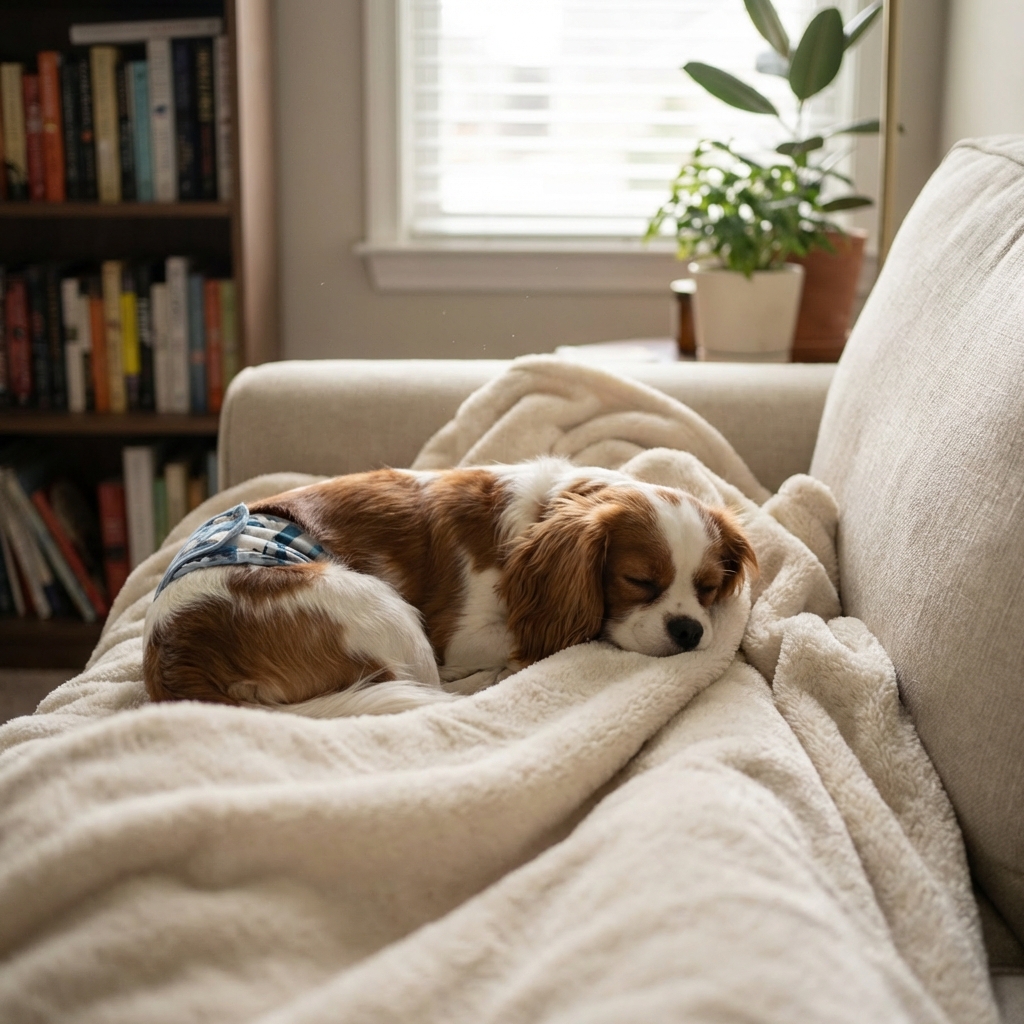
2) Use dog diapers safely
Diapers can protect your floors and reduce mess, but they must be used safely.
- Change frequently: Moisture sitting against the skin can cause irritation or infection.
- Let the area air out: Give diaper-free breaks in an easy-to-clean space.
- Watch for chafing: Adjust fit and use a soft liner if needed.
3) Create a calm routine
- Extra potty breaks: Many dogs feel the urge to urinate more often.
- Gentle exercise: Short leash walks and sniff time can reduce stress without overdoing it.
- Quiet rest area: A cozy bed in a low-traffic spot helps dogs who feel sensitive or restless.
4) Simple soothing strategies
- Warm compress: A warm (not hot) compress on the lower belly for a few minutes can be soothing for mild discomfort. Always supervise and stop if your dog seems bothered.
- Soft bedding: Extra padding can help if she is tender when sitting.
- Hydration: Keep fresh water available.
5) Nutrition: keep it steady
Some dogs eat less. If your dog is healthy and your veterinarian has not restricted her diet, you can gently boost palatability:
- Add a small amount of warm, plain broth (no onion or garlic powder) to meals.
- Offer a bit of bland protein like boiled chicken as a topper.
- Keep treats modest. Stomach upset can happen during hormonal changes.
6) Avoid unsafe pain meds
Please do not give human pain relievers like ibuprofen, naproxen, aspirin, or acetaminophen unless a veterinarian specifically instructs you. These medications can be dangerous for dogs. If your dog truly seems painful, the best comfort tip is a vet visit so your dog can get appropriate, dog-safe relief and an exam to rule out infection.
Behavior changes
Heat often changes behavior. Some dogs get extra cuddly. Others want space. Some become vocal, anxious, or more protective of their home.
Common behaviors
- Tail held to the side (“flagging”) when touched near the back end
- Increased interest in going outside
- Attention-seeking or mild irritability
- Trying to escape, especially during estrus
When behavior is a safety issue
- Escape attempts: This is extremely common. Double-check fences, keep doors secured, and leash-walk only.
- Aggression or extreme anxiety: Call your veterinarian for guidance. There may be a medical issue, or your dog may benefit from short-term behavior support.
Prevent pregnancy
Even the gentlest dog can become highly motivated to seek a mate during estrus. Accidental breeding can happen fast, and it can be dangerous if the dogs are mismatched in size. Also, mating involves a “tie” that can last several minutes, so preventing contact in the first place matters.
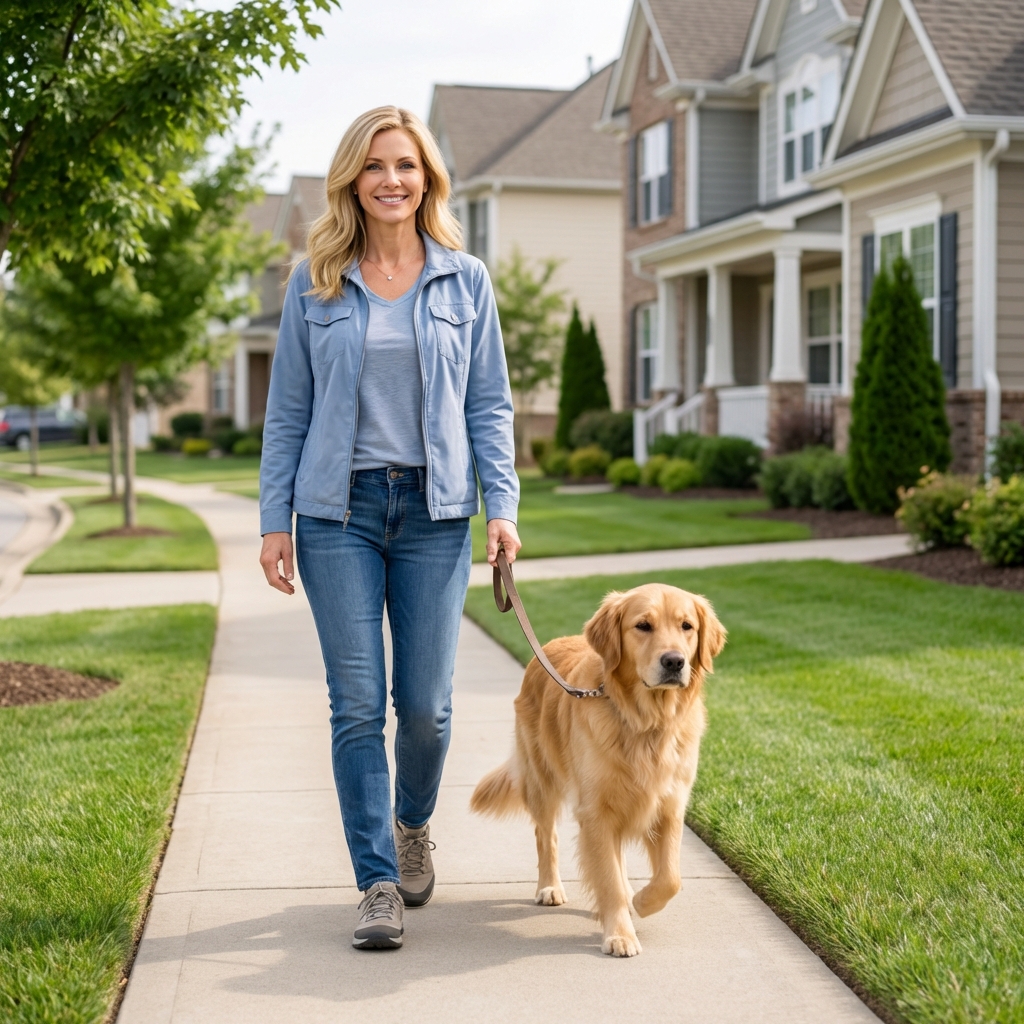
- Leash walks only: No off-leash time, even in familiar areas.
- No dog parks: Avoid crowded dog spaces.
- Supervise backyard time: Do not leave her outside alone.
- Separate from intact males: A determined male can get through surprising barriers, including doors and fences.
Important: Do not guess “safe days.” Dogs can attract males even as bleeding changes or seems to stop. Assume she can be bred for the entire 2 to 3 week window. When in doubt, keep her separated.
Optional but helpful: skip daycare, boarding, grooming salons, and public swimming areas while she is in season. It lowers stress, reduces unwanted contact, and helps protect irritated skin from moisture and germs.
How long does it last?
The messy part often lasts about 2 to 3 weeks total, with the highest fertility risk commonly in the second half of that window. Some dogs are tidier, others have longer cycles.
Track your dog’s cycle on a calendar. Over time, you will learn what is normal for her, which makes it much easier to spot changes that need a vet’s attention.
Spaying and heat
Spaying prevents heat cycles and prevents pregnancy. It also greatly reduces the risk of pyometra. Spaying can lower the risk of mammary tumors as well, with the strongest protective benefit when done before the first heat and decreasing benefit after additional heats. The best timing for spay can depend on your dog’s breed, size, and health. Your veterinarian is the right partner to help you choose the safest plan for your individual dog.
When to call the vet
- Any sign of severe pain or sudden worsening
- Foul-smelling discharge, pus-like discharge, or discharge that looks very abnormal
- Bleeding much heavier than usual, a sudden increase, passing clots, or weakness
- Vomiting, diarrhea, or refusing food more than 24 hours
- Suspected fever (rectal temp over 103°F/39.4°C) or a dog who seems hot and ill
- Signs of pyometra in the weeks after heat: lethargy, increased thirst and urination, vomiting, poor appetite, discharge or no discharge with illness
Your dog’s heat cycle should be manageable with comfort care and vigilance. If it feels like more than that, trust your gut and call your vet. You are your dog’s best advocate.