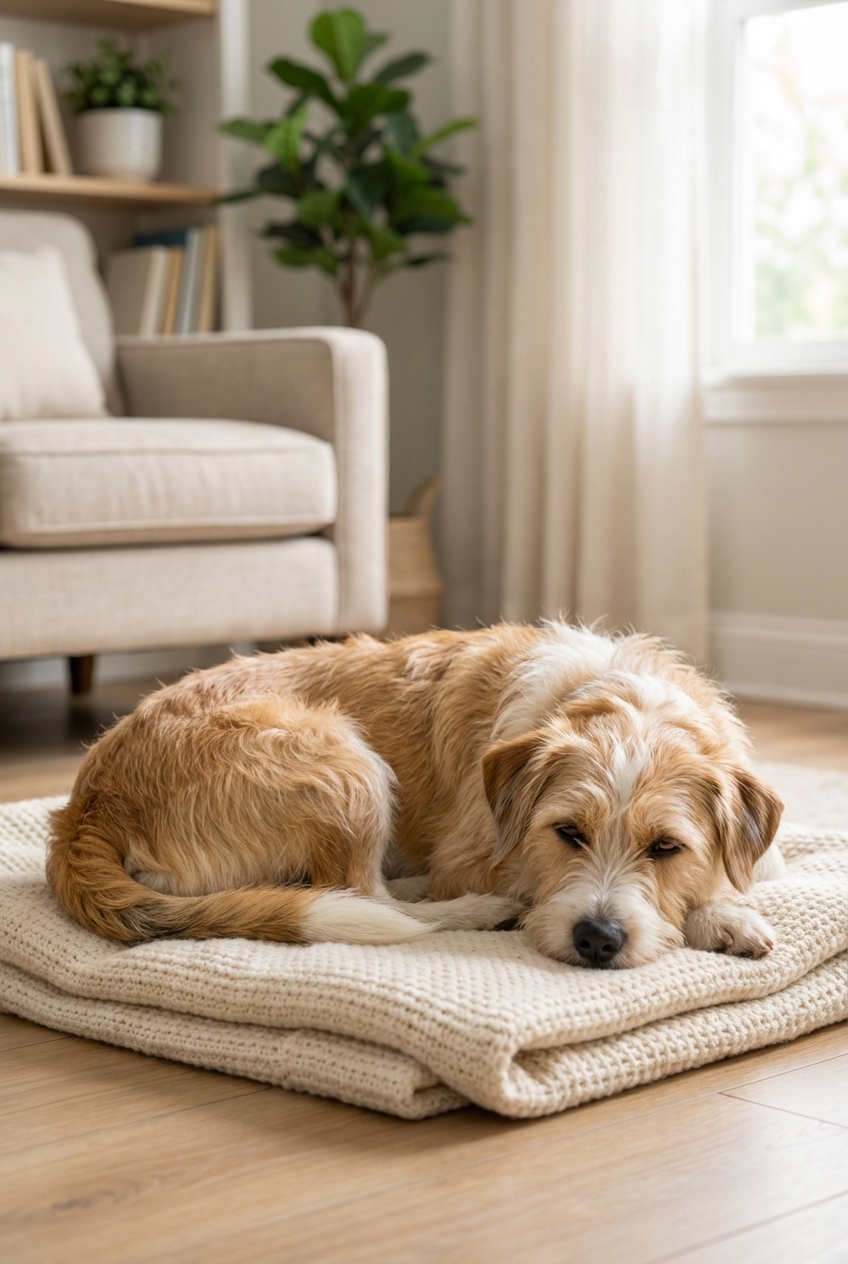
Understand proestrus, estrus, diestrus, and anestrus—plus signs of heat, bleeding cleanup, behavior changes, and the best ways to prevent accidental pregna...
Article
•
Designer Mixes
Dog Heat Cycle FAQ

Shari Shidate
Designer Mixes contributor
If you are a first-time dog parent, your girl going into heat can feel confusing fast. You might notice a little blood on the floor, a sudden change in behavior, or male dogs showing up like they have a calendar reminder. The good news is this is normal biology, and with a few practical steps you can keep her comfortable, clean, and safe.
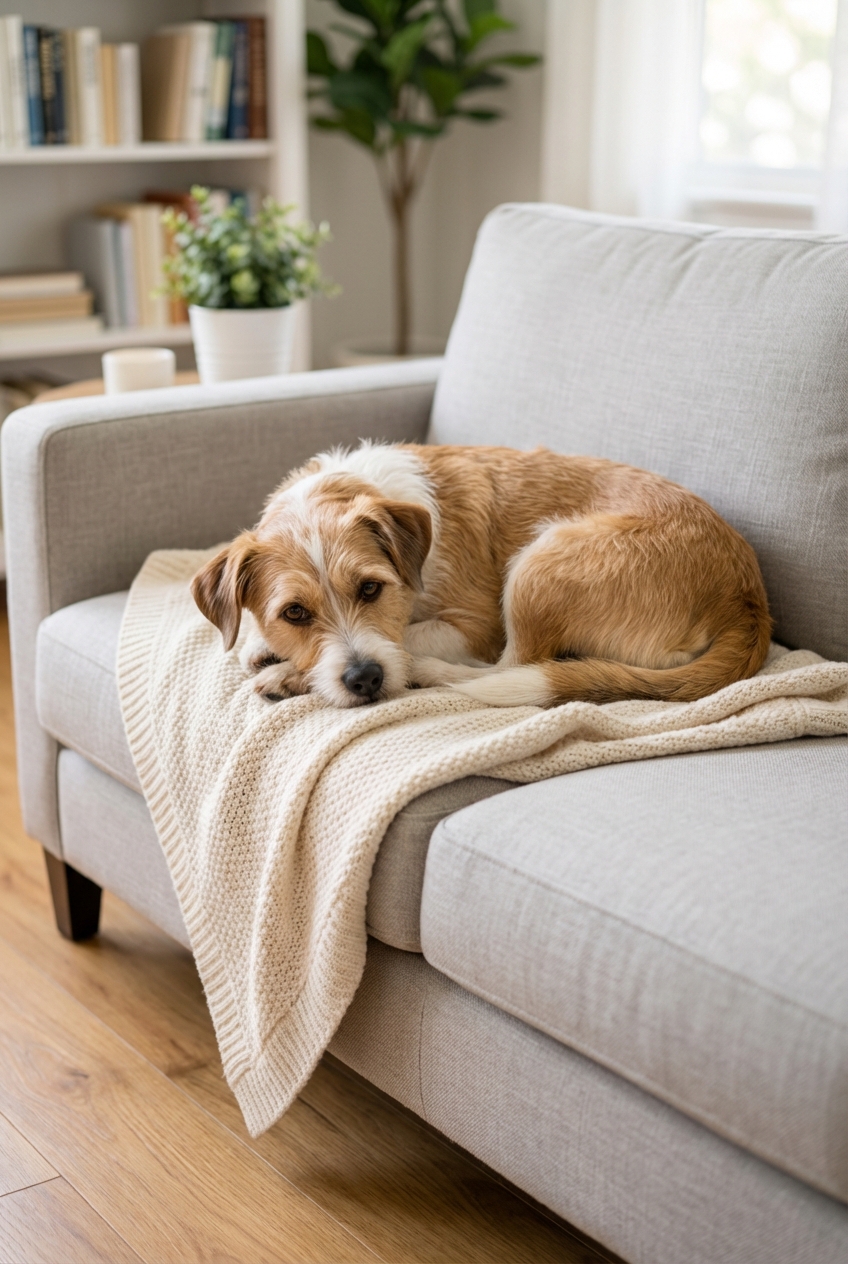
As a veterinary assistant, I always encourage owners to track dates, keep routines steady, and call your veterinarian if anything seems off. Below is a simple, clinic-tested FAQ to help you feel prepared.
What is a heat cycle?
A heat cycle, also called estrus, is the time when an intact (not spayed) female dog is hormonally able to become pregnant. Dogs do not have monthly cycles like humans. Many dogs cycle about every 6 months, but timing varies a lot by individual and breed.
During heat, you will typically see a combination of:
- Vulvar swelling
- Bloody or straw-colored discharge
- More frequent urination
- Behavior changes (clingy, restless, or occasionally moody)
- Increased attention from male dogs
When is she fertile?
Most females are most fertile during estrus, which often (not always) lines up with discharge becoming lighter (pink, tan, or straw-colored) and a willingness to stand for a male.
Important reality check: you cannot time fertility safely just by color alone. Ovulation timing can vary, especially in young dogs. If you want to prevent pregnancy, assume she can get pregnant from early in the cycle until several days after signs seem to be winding down, and keep her fully separated from intact males the entire time.
When do dogs go into heat first?
Most dogs have their first heat between 6 and 18 months, but there is a wide range.
- Smaller breeds often cycle earlier.
- Larger and giant breeds can be later, sometimes up to about 24 months.
If your dog is approaching 2 years old and has never gone into heat, ask your veterinarian. It may still be normal, but it is worth documenting and discussing.
How long does heat last?
Most heat cycles last about 2 to 4 weeks. The average is often around 3 weeks, but some dogs run shorter or longer, especially their first cycle.
A simplified timeline looks like this:
- Proestrus (about 7 to 10 days): swelling and bloody discharge are common. Many females are not receptive to mating yet, but males are very interested.
- Estrus (about 5 to 10 days): discharge often becomes lighter. This is typically the most fertile window, and many females will accept a male.
- Diestrus (about 50 to 60+ days hormonally): the body shifts out of fertility whether she became pregnant or not.
- Anestrus (resting phase): time between cycles.
One more nuance: bleeding or discharge is not the same thing as fertility. Some females bleed longer than they are fertile, and some show very little discharge even when fertile.
How often will she go into heat?
Many dogs cycle about every 6 months. Some cycle every 4 months, others every 8 to 12 months. Breed, size, age, and individual hormones all play a role. A few breeds can be more seasonal and may cycle closer to once yearly.
Helpful tip: keep a note in your phone with:
- First day you noticed bleeding
- When discharge changed color
- When symptoms stopped
- Any unusual signs (strong odor, heavy bleeding, lethargy)
Signs and stages
Physical signs
- Swollen vulva
- Discharge that may start bright red and become lighter
- Increased licking of the area
- Urine marking more often on walks
Behavior signs
- More affectionate or “velcro” behavior
- Restlessness or pacing
- Tail positioning changes (some females “flag” the tail to the side during estrus)
- Sudden interest from neighborhood male dogs
If you notice pain, crying when urinating, or a sudden sick look, do not assume it is just heat. Call your veterinarian to rule out issues like a urinary tract infection.
Bleeding: what is normal?
Light to moderate bleeding is common, especially early on. Many dogs keep themselves clean, so you may see less than you expect. Others leave noticeable drops on floors or bedding.
Call your veterinarian promptly if you notice:
- Very heavy bleeding (soaking through diapers quickly or steady dripping)
- Bleeding longer than about 4 weeks
- Foul odor, pus-like discharge, or discharge that becomes thick and yellow-green
- Lethargy, vomiting, fever, decreased appetite
Those can be warning signs that something more serious is going on.
Keeping your house clean
Practical cleanup is half the battle, especially for first-time owners.
- Use washable covers on favorite sleeping spots.
- Limit access to carpeted areas if possible.
- Try dog heat diapers if your dog tolerates them. Change frequently and keep the area dry to prevent skin irritation.
- Wipe gently with an unscented pet wipe or a warm damp cloth if she is messy. No harsh soaps.
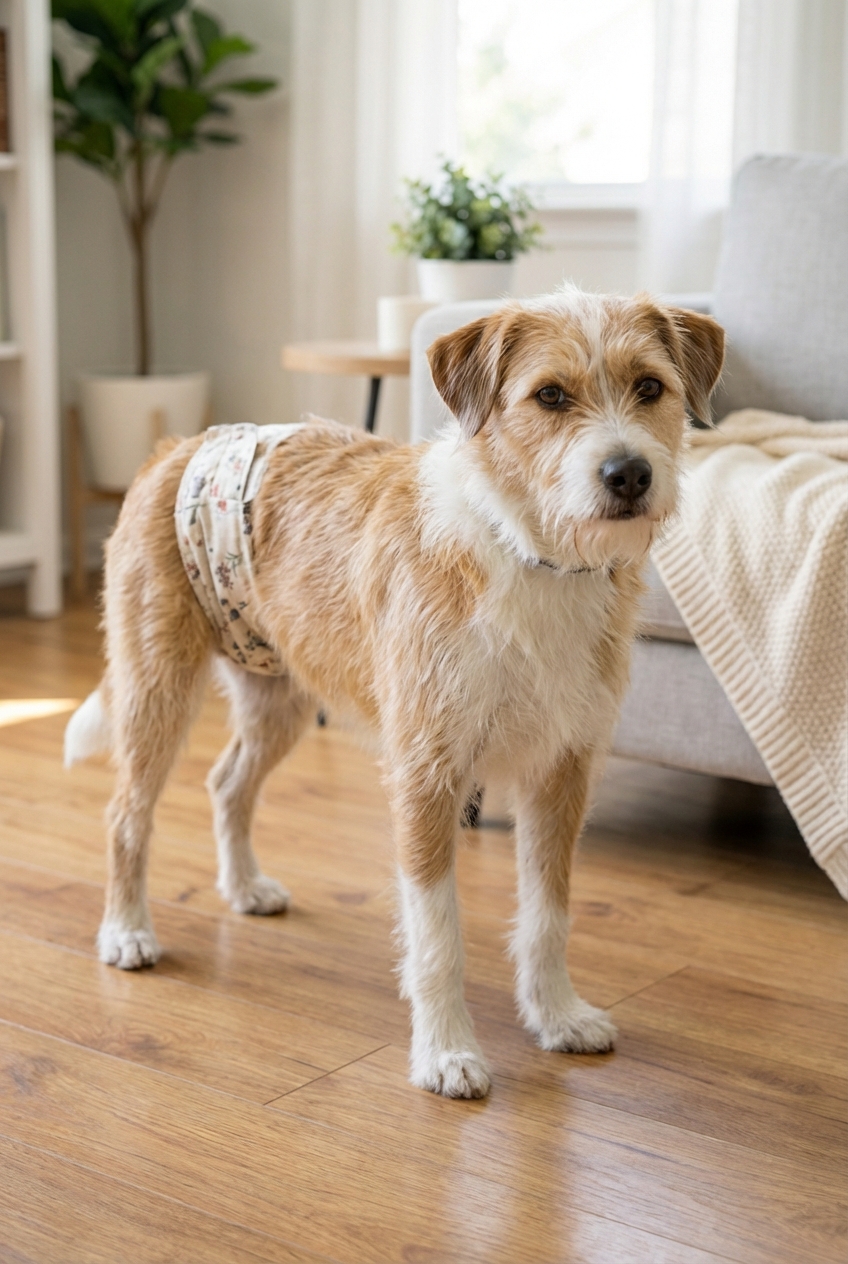
Tip from the clinic: if you use diapers, make sure she still gets supervised diaper-free time so the skin can breathe.
Important: heat diapers are for cleanliness only. They do not prevent mating or pregnancy.
Walking during heat
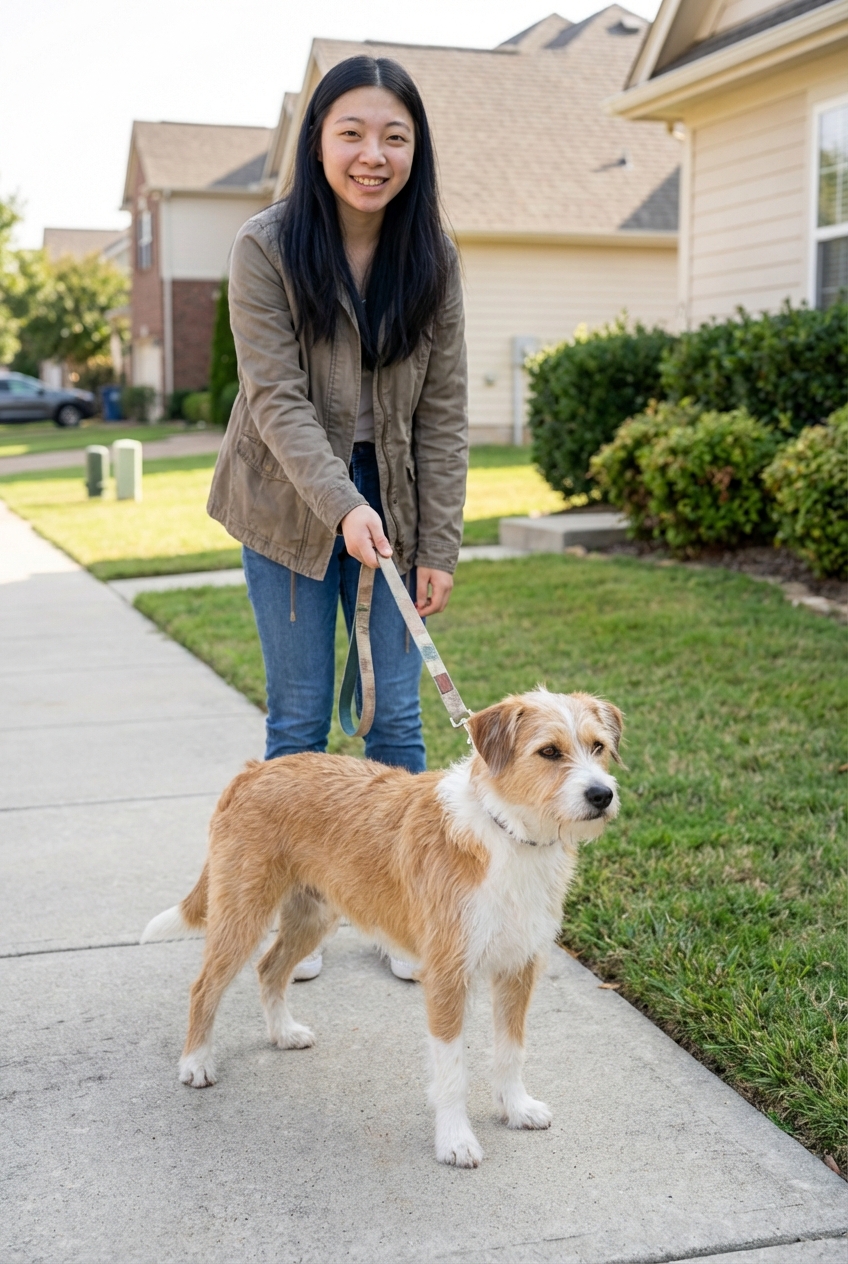
Yes, but you need a safety mindset. During heat, intact male dogs can become persistent and surprisingly creative.
- Leash only, no dog parks.
- Avoid high-traffic times and tight spaces.
- Do not leave her unattended in a yard, even a fenced yard. Dogs can climb, dig, and squeeze through gaps.
- Consider double security like a well-fitted harness plus a leash.
If a male dog approaches, stay calm, create distance, and leave the area. Prevention is much easier than breaking up a situation.
Boarding, daycare, grooming
Many facilities will not accept dogs in heat, and even when they do, it can create safety and stress issues for everyone involved.
- Avoid daycare and dog parks during the cycle.
- Tell your groomer before you show up, and consider rescheduling if possible.
- If boarding is unavoidable, discuss the plan with the facility ahead of time so they can prevent contact with intact males.
Preventing pregnancy
The only foolproof prevention is keeping your female dog physically separated from intact males for the full heat cycle.
- Supervise outside time.
- Keep doors and gates secured.
- Let family members, pet sitters, and kids know: no “quick backyard break” unsupervised.
Reminder: fertility is usually highest during estrus, often when discharge becomes lighter, but timing varies. When in doubt, assume she can get pregnant and keep separation strict.
If she ties with a male
First, breathe. Then:
- Do not try to pull them apart. Dogs can “tie” during mating, and separating them can cause serious injury.
- Keep them calm and contained until they naturally separate.
- Call your veterinarian as soon as possible after separation to discuss options and timing.
There are time-sensitive medical options your veterinarian may discuss depending on circumstances, but you need professional guidance quickly.
Spaying: timing basics
Spaying prevents pregnancy and eliminates future heat cycles. It also greatly reduces the risk of a life-threatening uterine infection called pyometra.
Timing is individualized. Many veterinarians recommend spaying either before the first heat or after a heat cycle ends, but recommendations can vary, especially for large breeds where growth and orthopedic considerations matter. Your veterinarian can help you weigh the latest guidance against your dog’s real-world risks.
Your best next step is a quick consultation with your veterinarian to discuss:
- Breed and adult size expectations
- Medical history
- Local risks (roaming dogs, accidental breeding)
- Ideal timing and surgical plan
Pyometra: why it matters
Pyometra is a uterine infection that can develop in intact females, often 1 to 8 weeks after a heat cycle. It is an emergency and can become life-threatening quickly.
Seek veterinary care immediately if you notice:
- Drinking more than usual
- Vomiting
- Lethargy
- Loss of appetite
- Swollen abdomen
- Vaginal discharge that is pus-like (sometimes there is no discharge)
This is one of the most important reasons we encourage owners to plan ahead for spaying if they do not intend to breed responsibly.
False pregnancy
Yes, some intact females show mothering behaviors or physical changes after heat even when they are not pregnant. This can include nesting, carrying toys, enlarged mammary glands, and even milk production.
Let your veterinarian know if you suspect a false pregnancy, especially if your dog seems distressed or if her mammary glands are painful or swollen.
Quick checklist
- Track the first day of bleeding and note changes
- Keep her separated from intact males for the full cycle
- Leash walks only, skip dog parks and daycare
- Use washable bedding and consider heat diapers (for cleanliness only)
- Call your veterinarian for heavy bleeding, foul discharge, or signs of illness
- Schedule a spay consult if you are not planning an ethical breeding program
Trust your gut. If your dog seems “not herself” in a way that feels sick, not just hormonal, it is always okay to call your veterinarian and ask.
Common questions
Do dogs have cramps?
Some dogs seem mildly uncomfortable or restless, but we cannot confirm cramping the same way we do in humans. If your dog seems painful, is hunched, won’t sit, cries, or is unusually lethargic, contact your veterinarian.
Safety note: do not give human pain medications (like ibuprofen, naproxen, or acetaminophen) unless your veterinarian specifically tells you to. Many common human meds are dangerous for dogs.
Why is she peeing more?
Frequent urination and marking can happen because hormones influence behavior and scent signaling. If you see straining, accidents in a housetrained dog, or blood in urine (not just vaginal discharge), ask your veterinarian to rule out a urinary issue.
Bathing or swimming?
A gentle bath is usually fine if your dog tolerates it. Swimming is not medically forbidden, but it is often not practical during heat because of mess and because you want to avoid contact with other dogs. If you do bathe her or let her swim, supervise closely and dry the area afterward to help prevent skin irritation.
Why are male dogs so intense?
Yes, it is normal. Even calm males can become fixated. This is exactly why physical separation and supervision matter so much.