
Find out how long dogs typically bleed in heat, what discharge changes are normal, how to prevent pregnancy and protect your home, and red flags like heavy b...
Article
•
Designer Mixes
Dog Heat Cycle Discharge Colors: What’s Normal?

Shari Shidate
Designer Mixes contributor
If you have a female dog who is not spayed, you may notice vulvar swelling and some type of discharge during her heat cycle. For many families, the first heat cycle is a little alarming, especially when the color changes from bright red to pink or even straw-colored. The good news is that a range of discharge colors can be completely normal during a heat cycle.
As a veterinary assistant, I like to remind people of two things: (1) your dog’s heat has predictable stages, and (2) “normal” is more about timing, odor, and how your dog feels than one perfect color.
Safety note: Assume your dog can get pregnant any time she is in heat, even if discharge looks light, pink, or clear. Keep her securely separated from intact males.

Quick overview: the 4 stages of a dog heat cycle
Many dogs cycle roughly every 6 to 8 months, but there is wide variability. Some cycle closer to every 4 months, while others are closer to 12 months. Age, size, breed tendencies, and individual hormones all play a role (small breeds often cycle more frequently, giant breeds less).
The cycle is usually described in four stages.
- Proestrus: swelling begins, bleeding or red discharge is common
- Estrus: fertility window, discharge often becomes lighter in color and more watery
- Diestrus: fertility ends, discharge tapers off
- Anestrus: resting phase between cycles
Total time “in heat” is often about 2 to 3 weeks. Some dogs are shorter, and some can run longer (sometimes up to around 4 weeks).
Discharge colors in heat: what they usually mean
Bright red or bloody
Most common in: early proestrus
This is the classic “she is in heat” discharge. It can range from a few drops to a heavier flow. Some dogs keep themselves very clean, so you might see the color more on bedding than on your dog.
Often normal if: your dog is acting like herself, there is no foul smell, and the bleeding gradually lessens over several days.
Dark red or rust-colored
Most common in: mid to late proestrus
As blood oxidizes, it can look darker or brownish. This can still be within normal, especially if it transitions toward lighter colors as estrus approaches.
Pink
Most common in: transition from proestrus to estrus
Pink discharge often means the bleeding is lightening. Many dogs are becoming more receptive to males around this time, even if they are not fully in estrus yet.
Clear or watery
Most common in: estrus
Clear discharge can be a sign your dog is in her most fertile window. Some dogs have very little visible discharge at this point, but the vulva may still be swollen.
Straw-colored, pale yellow, or creamy (small amount)
Most common in: late estrus as heat is resolving
A light yellow tint can happen as discharge tapers off. A small amount without odor can be normal. The key is that it should not look thick like pus and should not smell bad.

Brown spotting near the end
Most common: as heat is resolving
Some dogs have a little brown spotting as things wrap up. If it is minimal and ends, that can be normal. Many owners do not see much discharge once heat is over, so do not be surprised if it stops abruptly.
What’s not normal: colors and signs that need a vet
Heat discharge should not make your dog sick. If your dog seems “off,” trust your instincts and call your veterinarian.
Green discharge
Green discharge is not a normal heat color and should be evaluated promptly. It can point to infection or uterine problems.
Important exception: green to black discharge can be normal around whelping and postpartum (lochia) and can also be seen with placental separation during labor. If your dog is pregnant, recently had puppies, or might be pregnant, call your vet right away for guidance.
Thick yellow discharge or pus-like discharge
Yellow can be normal when it is faint and watery. But thick, opaque yellow or creamy discharge, especially with odor, can suggest infection.
Gray discharge
Gray, cloudy discharge is a red flag for infection and warrants a vet call.
Foul or rotten odor
Normal heat discharge may have a mild metallic or “blood” smell, but it should not be foul. A strong, unpleasant odor plus lethargy or fever can indicate a serious problem.
Bleeding that is very heavy or lasts too long
If your dog is soaking through bedding, seems weak, or you are seeing active, bright bleeding that does not start tapering as the days pass, schedule a veterinary exam. Light spotting that lingers can happen in some dogs, but heavy bleeding at any point is not expected.
As a general guide, if bleeding or heat signs are still going strong beyond about 3 weeks, it is worth checking in with your vet. Some dogs do have longer cycles, but prolonged or heavy bleeding should be evaluated.
Very sick dog after heat
Pyometra (a uterine infection) most often occurs weeks after heat and can be life-threatening. Watch for:
- lethargy, weakness
- loss of appetite
- vomiting or diarrhea
- increased thirst and urination
- fever
- swollen belly
- discharge that is foul-smelling, yellow/green, or pus-like (may be absent in “closed” pyometra)
If your dog seems ill and you suspect pyometra, do not wait for it to “pass.” Call your vet or an emergency clinic the same day.
Why discharge color changes during heat
The color changes are mostly driven by:
- Hormones: shifting estrogen and progesterone levels change the uterine lining and vaginal secretions
- Red blood cell breakdown: fresh blood looks bright red, older blood can look brown or rust-colored
- Amount of fluid: as discharge becomes more watery, it can look lighter or clear
In other words, a change from red to pink to clear is often a normal progression.
How to monitor at home
Track timing
Write down the first day you notice bleeding or swelling. This helps you know whether your dog is progressing normally or lingering too long in one stage.
Check odor and thickness
If you remember one thing, make it this: odor and consistency matter more than shade. Normal discharge tends to be watery to lightly mucousy. Thick, pus-like discharge or strong odor is a reason to call your vet.
Watch behavior and energy
Most dogs in heat are a little clingy, restless, or moody. They should still be eating and acting mostly normal. Lethargy, vomiting, or fever is not expected.
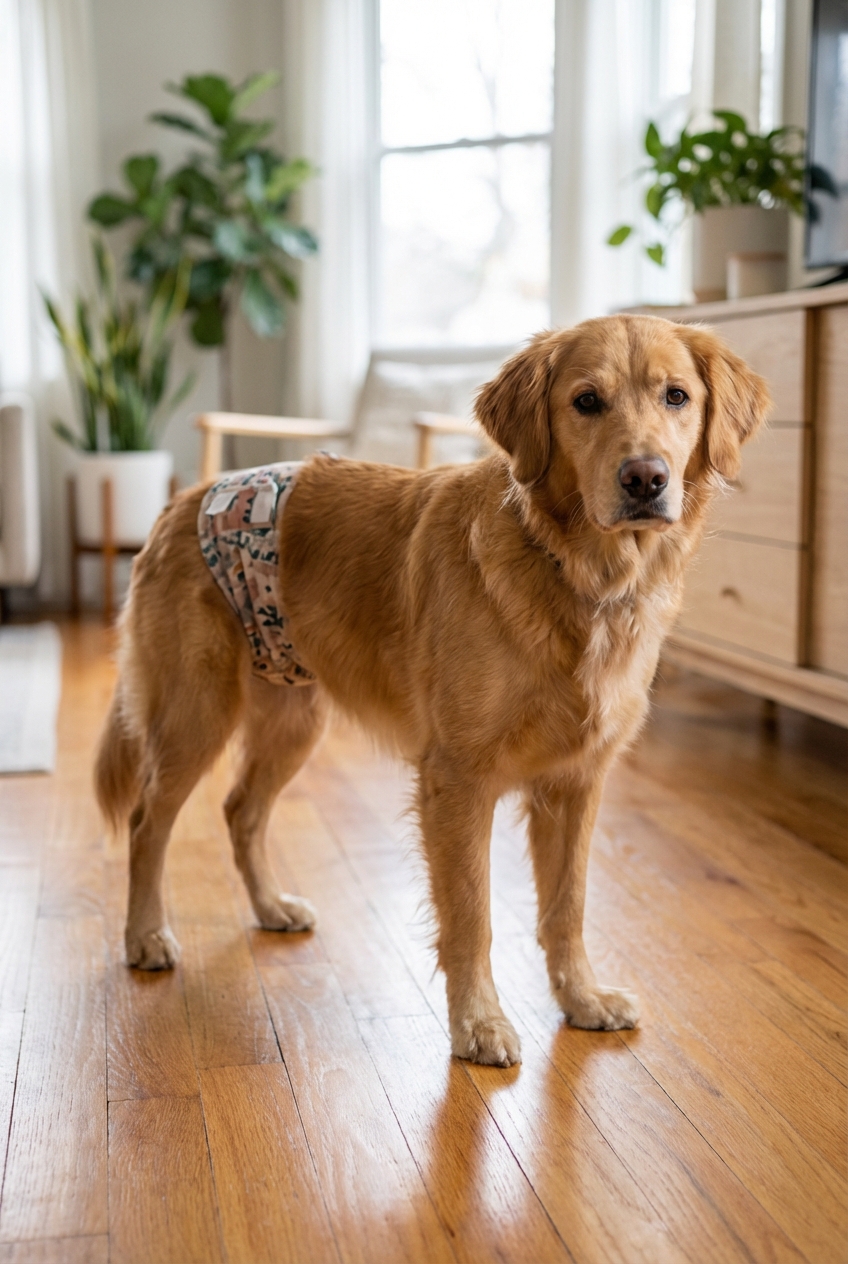
Use heat diapers thoughtfully
Diapers can keep your home clean, but they also trap moisture. Change them often, keep the area clean and dry, and watch for skin irritation.
Common questions in the clinic
Is clear discharge normal in heat?
Yes. Clear or watery discharge is often seen during estrus, when your dog is most fertile.
My dog’s discharge is light yellow. Is that an infection?
Not always. A faint yellow tint at the end of heat can be normal. If it is thick, smelly, greenish, or your dog seems unwell, that is when we worry about infection.
Can my dog bleed without being in heat?
Yes. Urinary tract infections, vaginal inflammation, trauma, tumors, clotting disorders, and other conditions can cause blood.
If you are not sure it is heat, schedule an exam. In clinic, we often sort this out with a physical exam, a urinalysis, and sometimes vaginal cytology or imaging, depending on what we find.
What about “silent heat” or a split heat?
Young dogs sometimes have a silent heat (minimal visible bleeding) or a split heat where signs start, stop, then restart weeks later. It is still a good idea to involve your vet if the pattern is confusing, especially if discharge returns or your dog seems unwell.
When is my dog most likely to get pregnant?
Many dogs are most fertile roughly between days 9 and 14 from the start of bleeding, but this varies widely. If breeding is intended, the reliable way to time ovulation is with your veterinarian using progesterone testing and, in some cases, vaginal cytology.
If avoiding pregnancy matters, assume she can become pregnant any time during heat and keep her securely separated from intact males.
When to call the vet
- Discharge is green, gray, pus-like, or foul-smelling
- Your dog has fever, vomiting, diarrhea, loss of appetite, or lethargy
- Bleeding is very heavy at any point, or heat signs are still going strong beyond about 3 weeks
- Heat signs stop and then discharge returns with your dog acting unwell
- You suspect pregnancy complications, miscarriage, or postpartum problems
If you are unsure, it is absolutely okay to call your veterinarian and describe what you are seeing. A quick conversation can save you a lot of stress, and in some cases, it can save your dog’s life.