A calm, pet-friendly guide to cleaning your dog’s ears at home: safety checks, supplies to use (and avoid), step-by-step technique, frequency tips, and vet...
Article
•
Designer Mixes
Dog Head Shaking After a Bath

Shari Shidate
Designer Mixes contributor
That vigorous post-bath head shake can be totally normal, but it can also be your dog’s way of saying something feels off in their ears. As a veterinary assistant in Frisco, Texas, I’ve seen both: happy, harmless water-flinging and the start of a painful ear problem. The key is knowing what’s common, what’s not, and what you can safely do at home.
Quick takeaway: A few shakes right after a bath is usually normal. Shaking that keeps going, comes back repeatedly, or shows up with odor, discharge, redness, pain, head tilt, or wobbliness is a reason to call your vet.
This article is general education and not a substitute for a veterinary exam and diagnosis.
Is head shaking after a bath normal?
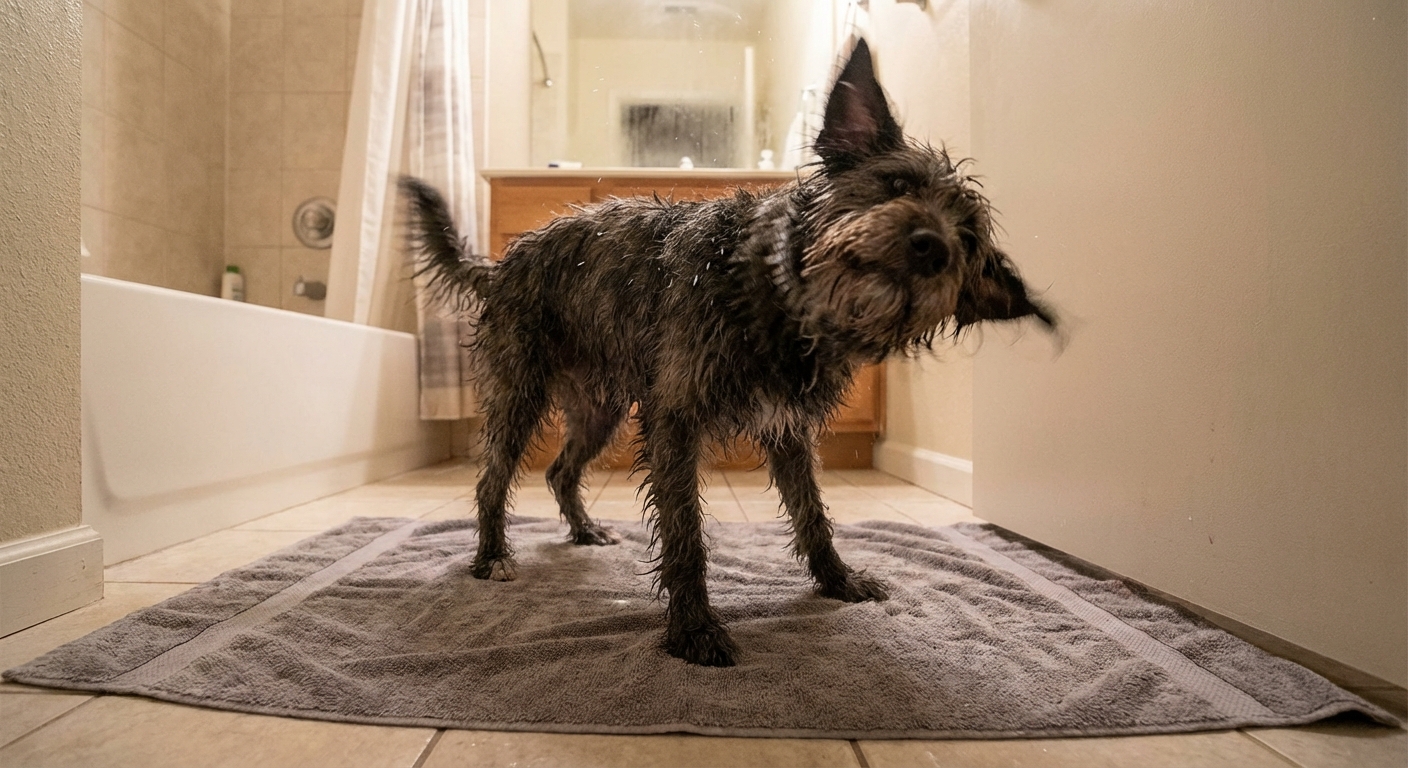
Often, yes. Dogs shake to clear water from their coat, ears, and face. A few strong shakes shortly after the bath is usually just drying behavior.
It becomes more concerning when shaking is frequent, persists into the next day, or comes with ear scratching, redness, unusual odor, discharge, or a head tilt. Bath time can also worsen an underlying ear issue and make symptoms suddenly obvious.
Common causes after a bath
1) Water trapped in the ear canal
Dogs have a vertical and horizontal ear canal (often described as “L-shaped”), so water can sit deeper inside and feel irritating. This is especially common in floppy-eared breeds and dogs with lots of ear hair.
- What you’ll notice: shaking soon after the bath, maybe mild ear flicking, but no strong odor or thick discharge.
- Why it matters: trapped moisture can create a friendly environment for yeast and bacteria.
2) Mild irritation from shampoo or rinse water
Even gentle shampoos can irritate if they get into the ear canal or if your dog has sensitive skin.
- What you’ll notice: shaking and pawing at the ears, sometimes redness around the ear opening.
- Common trigger: rinse water flows toward the ear openings when you wash the head and neck.
3) Ear infection (yeast or bacteria)
A bath does not cause most ear infections by itself, but moisture can aggravate a low-grade or underlying problem and make symptoms flare.
- What you’ll notice: persistent shaking, scratching, redness, swelling, discharge (often brown, yellow, or cloudy), and a strong or unusual smell.
- Risk factors: allergies, frequent swimming or baths, floppy ears, narrow ear canals, and lots of ear hair.
4) Ear mites (more common in puppies and multi-pet homes)
Ear mites cause intense itchiness. Bathing does not create mites, but you may notice the shaking more after handling the ears.
- What you’ll notice: strong itch, frequent scratching, and dark, crumbly debris that can look like coffee grounds.
5) Foreign material or trapped hair
Loose hair after bathing or grooming can tickle the ear canal. Less commonly, a foxtail or plant awn can lodge in the ear and cause sudden, intense symptoms.
- What you’ll notice: sudden, dramatic head shaking, pawing, crying out, or only one ear affected.
6) Allergy-related inflammation
If your dog has seasonal or food allergies, their ears may already be inflamed and sensitive. A bath can be the final straw that turns mild irritation into nonstop shaking.
- What you’ll notice: recurrent ear problems, licking paws, rubbing face, and itchy skin along with the ear shaking.
7) Less common but urgent: hematoma or inner ear disease
Repeated, forceful shaking or scratching can rupture tiny blood vessels in the ear flap, causing a balloon-like swelling called an aural hematoma. Inner ear disease (including vestibular disease) can also affect balance.
- What you’ll notice: a swollen ear flap, head tilt, stumbling, rapid eye movement, or nausea.
What you can do at home
Step 1: Quick ear check
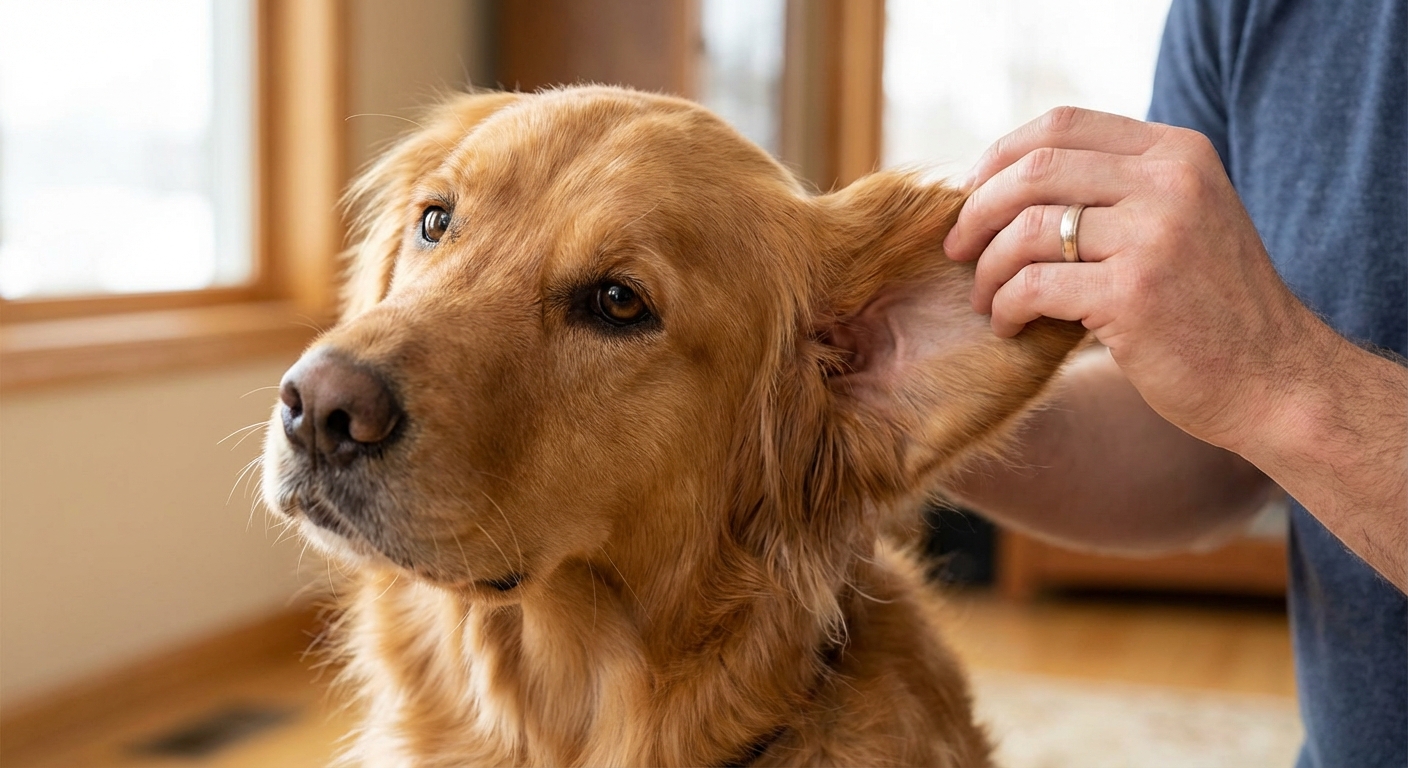
- Look at the ear opening: is it pink and calm, or red and inflamed?
- Smell the ear: a strong or unusual odor is a major clue for infection.
- Check for discharge: small amounts of wax can be normal, but thick yellow, green, bloody, or chunky brown debris is not.
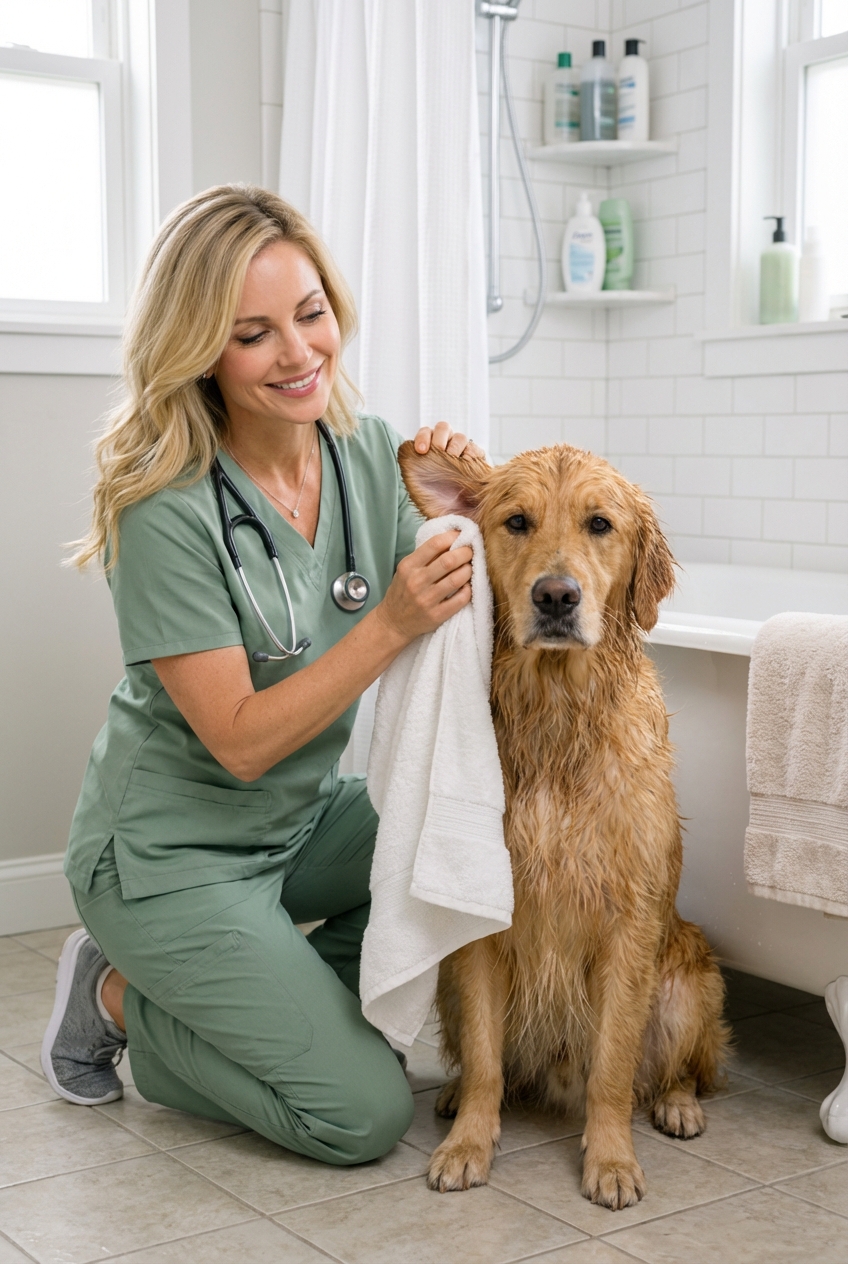
Step 2: Dry the outer ear
Use a soft towel or cotton ball to dry only what you can see and reach easily.
- Do: gently wipe the ear flap and the entrance to the ear canal.
- Do not: use cotton swabs inside the canal. They can push debris deeper and risk injury.
Step 3: Ask about a vet-approved drying rinse
If your dog is prone to ear issues or swims often, ask your veterinarian about an ear drying solution used after bathing and swimming. These are designed to help evaporate moisture and keep the ear environment less friendly to yeast and bacteria.
- Important: Do not use DIY remedies like vinegar, peroxide, or alcohol unless your veterinarian specifically instructs you. They can sting badly if the ear is inflamed.
- Also important: Avoid drying agents or cleaners if there is a chance the eardrum is ruptured or your dog is painful. Your vet may need to check the eardrum first, especially in dogs with chronic ear disease.
Step 4: Stop if it seems painful
If your dog yelps, pulls away, or will not let you touch the ear, stop and call your veterinarian. Pain can mean infection, a foreign body, or a risk to the eardrum. In those cases, the wrong product can be harmful.
What not to do during baths
- Do not aim a spray nozzle or running water directly into the ear openings.
- Do not over-clean the ears “just in case.” Too much cleaning can irritate the canal.
- Do not use heavily fragranced products on sensitive dogs if you suspect skin or ear allergies.
- Do not plug ears with anything that could slide down into the canal. If you use cotton balls as a temporary barrier, keep them at the entrance only and remove them immediately after the bath.
When to call the vet
Please reach out to your vet promptly if you notice any of the following:
- Head shaking that continues or keeps returning into the next day after a bath
- One ear seems much worse than the other
- Strong odor, redness, swelling, or discharge
- Frequent scratching or rubbing the ear on the floor
- A puffy, swollen ear flap (possible hematoma)
- Your dog cries out when chewing, yawning, or when you touch the ear
Seek same-day care if you suspect a foxtail or other foreign body (sudden intense one-sided shaking, crying, pawing), or if your dog has a head tilt, balance problems, rapid eye movement, or seems “drunk.” Those signs can indicate inner ear involvement and should not wait.
Ear infections are uncomfortable and can worsen quickly. Early treatment usually means faster relief and a lower chance of recurrence.
How vets check the ears
If you come in for post-bath head shaking, your vet team will usually:
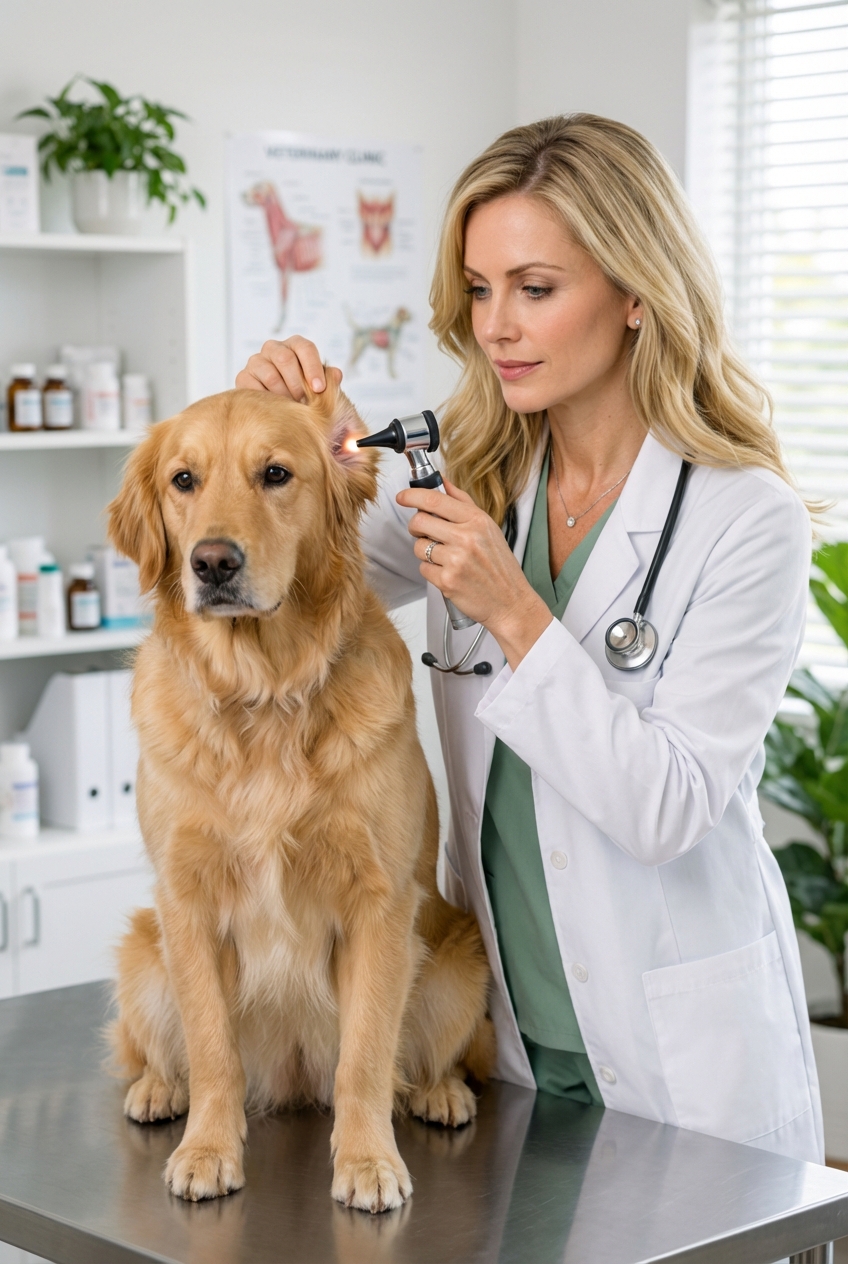
- Look in the ear with an otoscope to check for swelling, debris, foreign material, and eardrum health
- Do an ear cytology (a quick microscope check) to look for yeast, bacteria, and inflammatory cells
- Recommend the right treatment: ear cleanser, medicated drops, oral meds if needed, and a plan to prevent recurrence
This matters because treating yeast like bacteria, or vice versa, can delay healing.
Prevention tips
- Keep water out of the ears: when rinsing the head, aim the water flow away from the ear openings.
- Wipe the face instead: use a damp cloth around the cheeks and ears instead of pouring water over the head.
- Dry ears after baths: towel dry the outer ear and ask your vet about a drying rinse if your dog is prone to infections.
- Skip plucking unless your vet recommends it: for some dogs, plucking can irritate the ear canal and increase inflammation.
- Address allergies: recurrent ear issues often trace back to allergies. Managing them can be a game-changer.
Reality check
Most post-bath head shaking is just your dog trying to get comfortable. But if it turns into a pattern, trust what you’re seeing. Ears heal best when we catch problems early, keep them dry, and use the right products for the right diagnosis.
If your dog’s head shaking comes with odor, discharge, redness, or pain, it’s time for a vet visit. Comfort and hearing are worth protecting.