Get skunk smell off your dog safely with the peroxide, baking soda, and dish soap method. Includes step-by-step washing tips, face/eye care, vet red flags, a...
Article
•
Designer Mixes
Dog Got Skunked? Wellness Tips

Shari Shidate
Designer Mixes contributor
Few things are more unforgettable than the moment your dog comes flying back into the house smelling like skunk. I know it can feel like a full-blown household emergency, but you can handle this calmly and safely with a little know-how.
This guide focuses on wellness first: protecting your dog’s eyes, skin, and stress levels while you tackle the odor. I’ll also share when it’s time to call your veterinarian.
First steps: keep everyone safe
Skunk spray is an oil-based secretion containing sulfur compounds (thiols). It is potent, it clings to fur, and it can irritate eyes, skin, and airways.
- Keep your dog outside if possible until you have a plan and supplies. This prevents the oil from spreading through your home.
- Protect yourself with gloves and old clothes. Skunk odor transfers easily. Work in a ventilated area if you can.
- Stop the rubbing. Dogs often roll or paw at their face, which can push oils deeper and irritate the eyes. If needed, gently towel-wrap them or use an e-collar temporarily to prevent face-pawing.
- Check for wounds and rabies risk. Skunk encounters often happen at close range. Carefully look for bites, scratches, or punctures (especially on the face, legs, and chest). If you find any wound, if you suspect a bite, or if your dog’s rabies vaccine is overdue, call your vet immediately for next steps. Skunks are a rabies vector in many regions.
- Check for eye exposure. If your dog’s eyes are squinting, red, watery, or they seem painful, flush gently with sterile saline eyewash (not homemade) if you have it and call your vet for guidance. Persistent squinting should be checked promptly since corneal injury is possible.
- Watch breathing. Coughing, gagging, wheezing, or distress warrants a veterinary call right away, especially in brachycephalic breeds (like French Bulldogs and Pugs) or dogs with existing airway disease.
Skip the tomato juice
Tomato juice might slightly mask smell, but it does not chemically neutralize skunk oils. The goal is to break down and oxidize the odor compounds, not cover them up.
The most widely recommended home approach is a fresh, simple mixture using hydrogen peroxide, baking soda, and dish soap. It works because it oxidizes odor-causing thiols into less odorous compounds.
The skunk bath (safe and effective)
What you need
- 3% hydrogen peroxide (the standard brown bottle from the store, not higher concentrations)
- Baking soda
- Grease-cutting dish soap (helps lift oily residue)
- Gloves, towels, and a comb
- Optional: cotton balls to gently place at the ear openings (do not push into the ear canal)
- Optional alternative: a commercial pet skunk remover (helpful for sensitive skin, dark coats, or repeat treatments)
Important: This guide is for dogs. Do not use this mixture on cats. Cats are more likely to lick the product while grooming and are often more sensitive. Call your vet for cat-safe options.
Mixing ratio
A common mixture is:
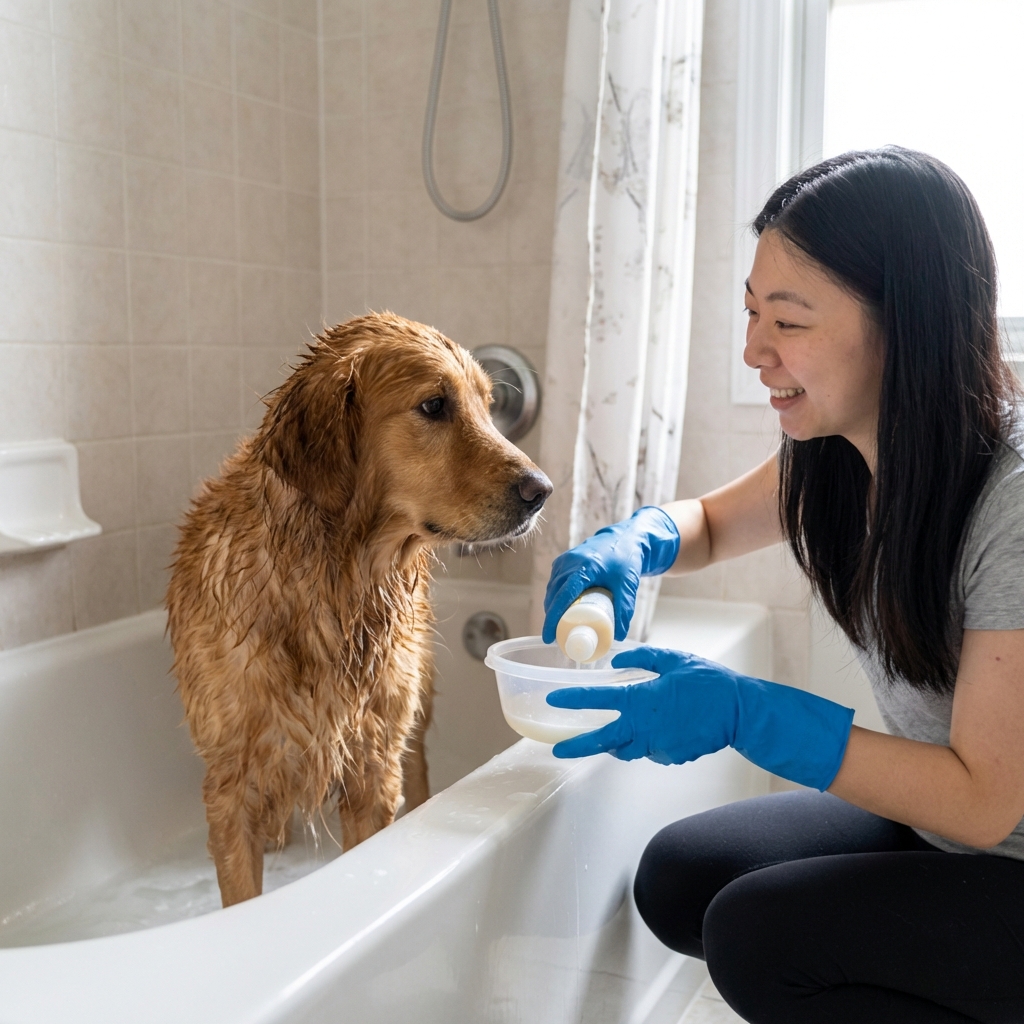
- 1 quart (4 cups) of 3% hydrogen peroxide
- 1/4 cup baking soda
- 1 to 2 teaspoons dish soap
Important: Mix fresh and use immediately. Do not store it in a closed container. This mixture can release gas and build pressure.
How to do it
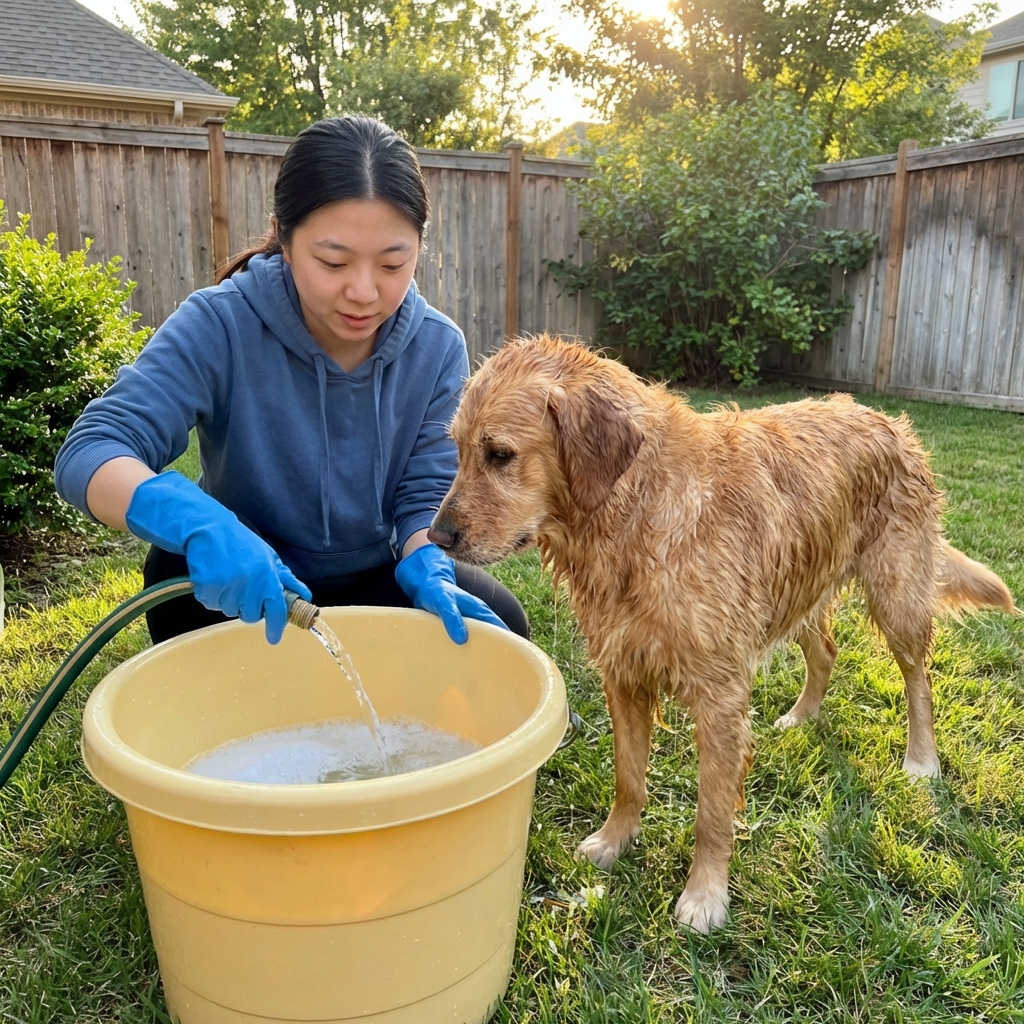
- Keep your dog dry at first. Water can spread the oils before you break them down.
- Patch test if your dog is tiny, very young, or has skin issues. Dab a small area first. If you notice intense redness or discomfort, stop and switch to a pet-formulated skunk product or call your vet or groomer.
- Apply the mixture and work it into the coat, especially where the spray hit most (often face, chest, and shoulders).
- Avoid eyes, inside ears, and mouth. This mixture can sting and irritate delicate tissue. Use a damp cloth around the face if needed.
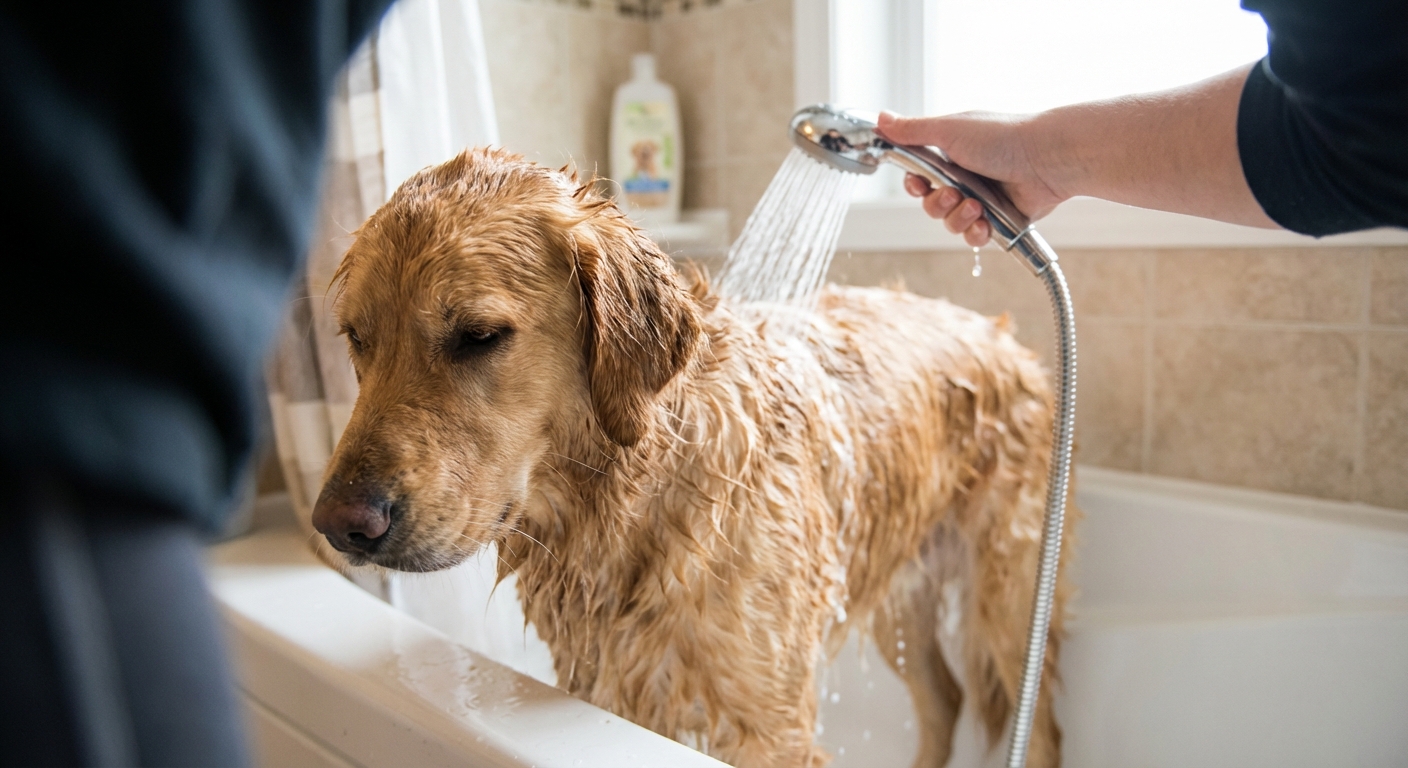
- Let it sit for about 3 to 5 minutes, then rinse thoroughly. Do not leave it on longer, and do not use it like a soak.
- Shampoo normally and rinse again. You may need a second round if the odor is intense, but try not to overdo it in one day.
- Towel dry, then let your dog air dry in a warm, draft-free space.
Coat and fabric note: Peroxide can lighten fur, especially on black or richly colored coats, and repeated use increases the risk. It can also bleach towels and clothing. If you are concerned, a commercial pet skunk shampoo can be a good alternative.
Face spray: what to do
Face hits are common because dogs investigate skunks up close.
- Eyes: If there is redness, squinting, thick discharge, or your dog seems painful, call your veterinarian. Eye irritation can be significant, and some dogs develop corneal ulcers.
- Mouth: If your dog licked skunk spray, you may see drooling, lip smacking, nausea, or vomiting. Small exposures are usually more irritating than toxic, but GI upset can be intense. Offer fresh water and call your vet (or pet poison control) if vomiting is persistent, there was a large exposure, or your dog seems lethargic.
- Nose and lungs: Sneezing is common, but repeated coughing, wheezing, or labored breathing is not. Get veterinary help promptly.
Next 48 hours: wellness care
Even after a great bath, your dog may still have a lingering odor, especially when damp. That does not mean you failed. It is simply how tenacious skunk oils are.
Skin and coat
- Do not over-bathe. Too many harsh washes can dry out skin and trigger itching.
- Use a gentle follow-up wash once the worst odor is controlled. An oatmeal-based pet shampoo or a gentle conditioner can help restore the skin barrier.
- Brush once dry to remove residual oils and improve airflow to the skin.
- Call your vet if skin looks angry (hives, swelling, severe redness, or intense itching). Your vet may recommend a medicated shampoo or other support.
Comfort and stress
- Offer a calm reset after the bath. Quiet time, a favorite blanket, and a low-stimulation environment help lower stress.
- Keep them hydrated. Strong smells and stress can reduce drinking in some dogs.
- Watch appetite and stool. A temporary decrease in appetite can happen after a stressful event, but it should rebound quickly.
Call the vet right away
Please call your veterinarian or an emergency clinic if you notice:
- Any bite, scratch, puncture, or suspected physical contact with the skunk
- Rabies vaccination is overdue or you are unsure of status
- Eye pain, squinting, intense redness, discharge, or your dog cannot open the eye normally
- Difficulty breathing, repeated coughing, wheezing, or collapse
- Repeated vomiting, significant lethargy, or refusal to drink
- Signs of an allergic-type reaction, such as facial swelling or hives
- Any concerning behavior change, especially in seniors or puppies
If your dog was sprayed at close range and seems unwell, trust your instincts. It is always better to check in early.
Clean your home without spreading odor
Skunk odor loves soft surfaces. A few practical steps can protect your space.
- Ventilate: open windows and run fans if weather permits.
- Wash fabrics (blankets, bedding, collars, harnesses) separately in hot water if the material allows. Baking soda can help, and an enzymatic laundry product may be even more effective for stubborn odors.
- Hard surfaces: wipe with a mild detergent solution. Dish soap can help cut oily residue.
- Replace air filters if your HVAC seems to be holding onto odor.
Prevention
Skunk encounters are common in many neighborhoods, especially at dawn and dusk.
- Leash walks at night and keep a flashlight handy.
- Do a quick yard scan before letting your dog out.
- Secure trash and outdoor pet food that might attract skunks.
- Refresh recall training. A reliable “come” can prevent that one curious dash into the bushes.
- Keep rabies vaccines current and ask your vet what is recommended in your area.
If you do just one thing today, make it this: assemble a small “skunk kit” now. Gloves, peroxide, baking soda, dish soap, sterile saline eyewash, and old towels can turn panic into a plan.