Noticed goopy eyes on your dog? Learn what clear, gray, or green discharge can mean, how to clean eyes safely at home, and the urgent signs—pain, squinting...
Article
•
Designer Mixes
Dog Goopy Eye Care & Training Tips

Shari Shidate
Designer Mixes contributor
When your dog has a goopy eye
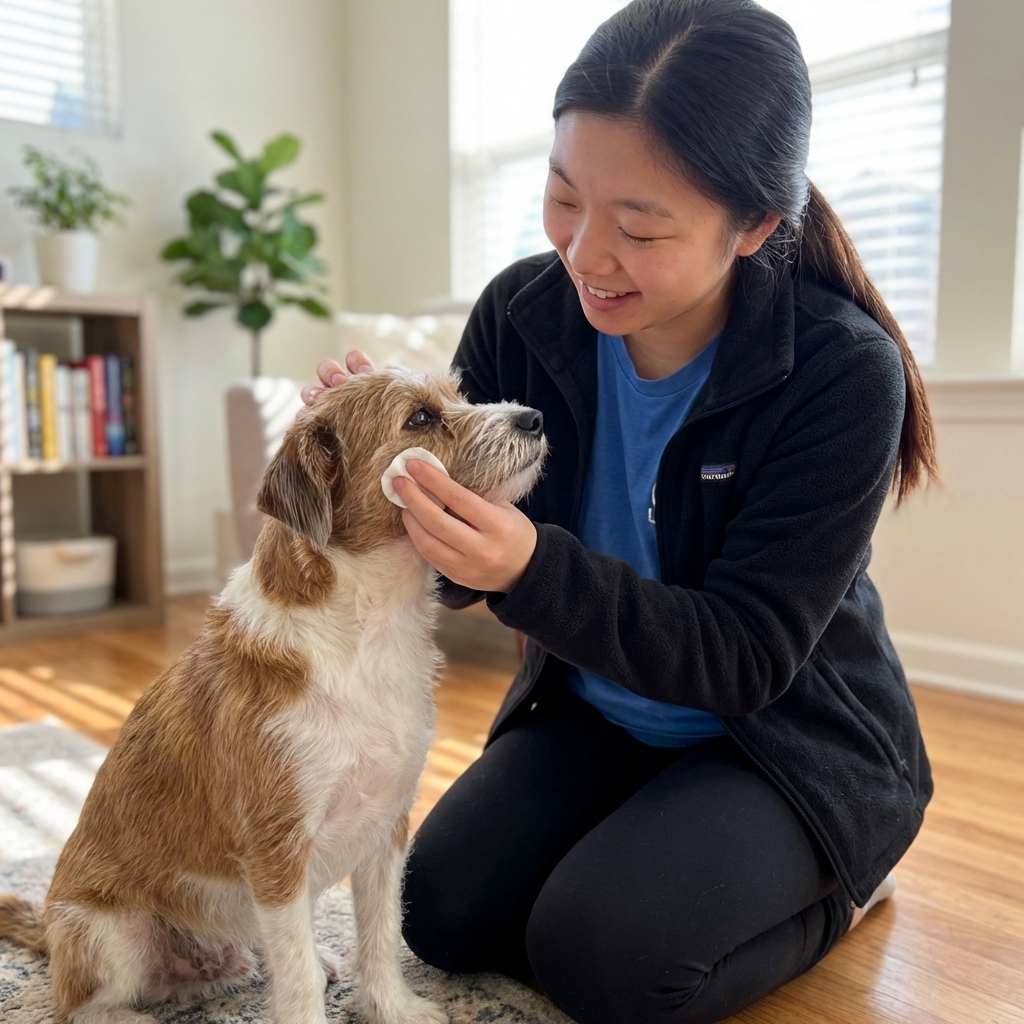
If your dog wakes up with a little crust in the corner of the eye, you are not alone. In clinics, “goopy eyes” are a common concern I hear from pet parents. The good news is that many cases are mild and manageable at home. The important part is knowing what is normal, what is not, and how to care for the eye without turning it into a wrestling match.
A quick note on roles: I am a veterinary assistant, not a veterinarian. I can help you sort out what is often okay to monitor, what is not, and how to make basic care easier, but a veterinary exam is still the gold standard for diagnosing eye problems.
Flat-faced (brachycephalic) breeds and mixes, plus dogs with long facial hair, can be especially prone to watery eyes and tear staining because of facial shape, eyelid anatomy, hair growth around the eyes, and allergies. With a simple routine and a little training, most dogs learn to tolerate eye cleaning quickly.
What “goop” can mean
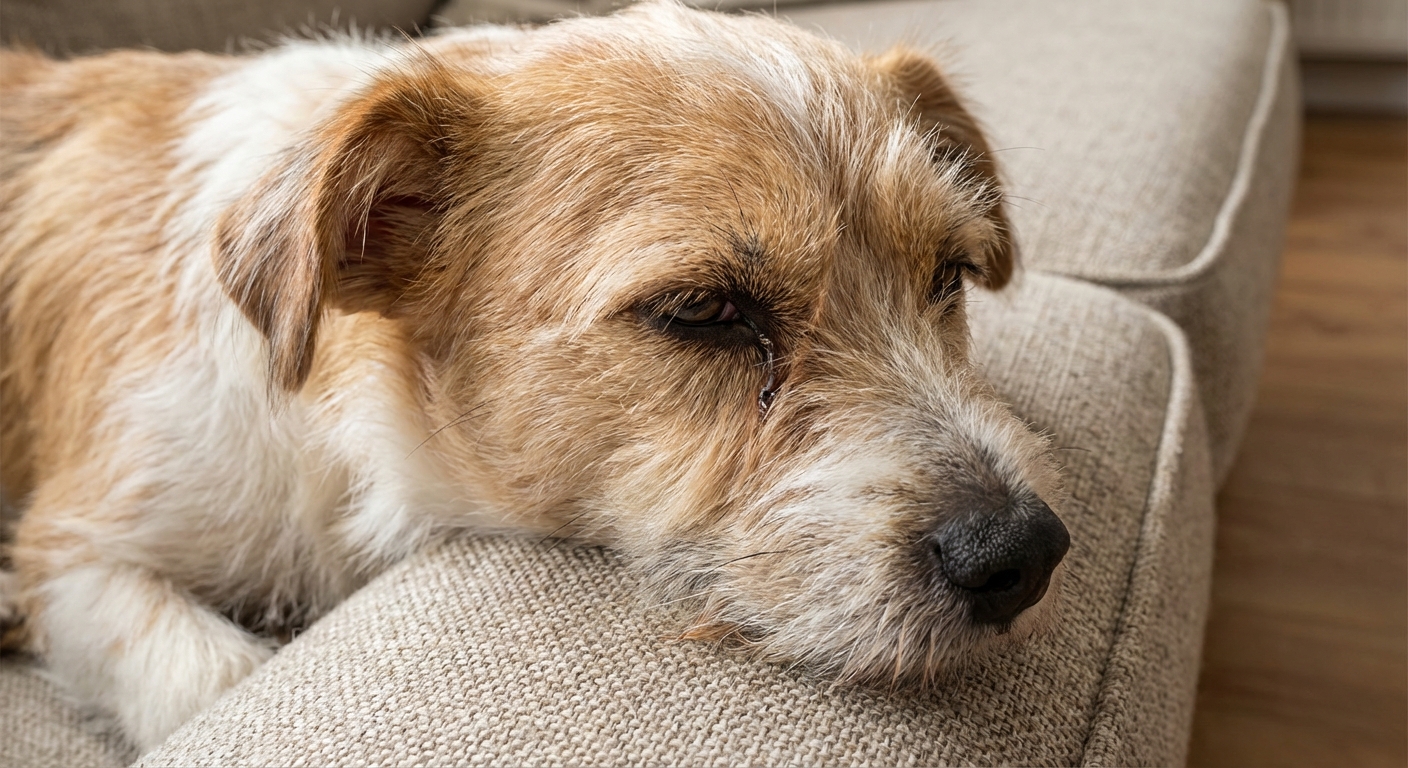
Eye discharge is a symptom, not a diagnosis. Color, thickness, and whether one or both eyes are affected can offer clues, but it is not a substitute for a veterinary exam.
Common, less urgent causes
- Normal sleep crust: small amount of tan or clear crust, especially after naps.
- Tears that overflow: clear watery discharge that leaves a damp track, common in small breeds and flat-faced mixes.
- Irritants: dust, shampoo, smoke, pollen, or rough play in tall grass.
- Allergies: watery eyes, mild redness, plus licking paws or sneezing.
- Hair rubbing the eye: fur poking the eye can cause constant tearing and squinting.
More urgent causes to rule out
- Corneal scratch or ulcer: squinting, holding eye closed, pawing at face, light sensitivity.
- Conjunctivitis (inflammation or infection): redness, swelling, thicker discharge.
- Dry eye (KCS): sticky, ropey mucus, dull-looking eye surface.
- Eyelid or lash problems (entropion, distichia, trichiasis): tearing, squinting, recurrent irritation. Your vet will check for inward-rolling lids or hairs rubbing the cornea.
- Cherry eye: a pink or red bulge at the inner corner of the eye (prolapsed gland) with irritation and discharge.
- Tear drainage issues: constant tearing and staining can come from a narrowed or blocked nasolacrimal duct, or from facial and eyelid conformation that prevents normal drainage.
- Glaucoma or uveitis: sudden pain, cloudiness, enlarged eye, severe redness.
If you are seeing persistent goop, it is worth talking with your veterinarian because the eye is one area where waiting too long can lead to bigger problems.
Red flags: call your vet today
Eye issues can change quickly. Contact your veterinarian promptly if you notice any of the following.
- Squinting, blinking hard, or keeping the eye closed
- Pawing at the eye or face rubbing on carpet
- Eye looks cloudy, bluish, or has a visible spot on the surface
- Marked redness or swelling of the eyelids
- Yellow, green, or thick discharge, especially if it keeps returning after you wipe it
- One eye suddenly worse than the other
- Any eye problem after a known trauma or a cat scratch
- Your dog seems painful, lethargic, or has a fever
Veterinary clinics often do a quick fluorescein stain test to check for corneal ulcers. It is fast, and usually relatively low-cost, and it can prevent a small scratch from turning into a serious emergency.
Home care for mild goopy eyes
If your dog is bright, comfortable, and the discharge is mild, you can usually start with gentle cleaning and monitoring while you schedule a checkup if it does not improve. If symptoms are not clearly improving within 24 to 48 hours, or if they worsen at any time, contact your veterinarian.
What to use
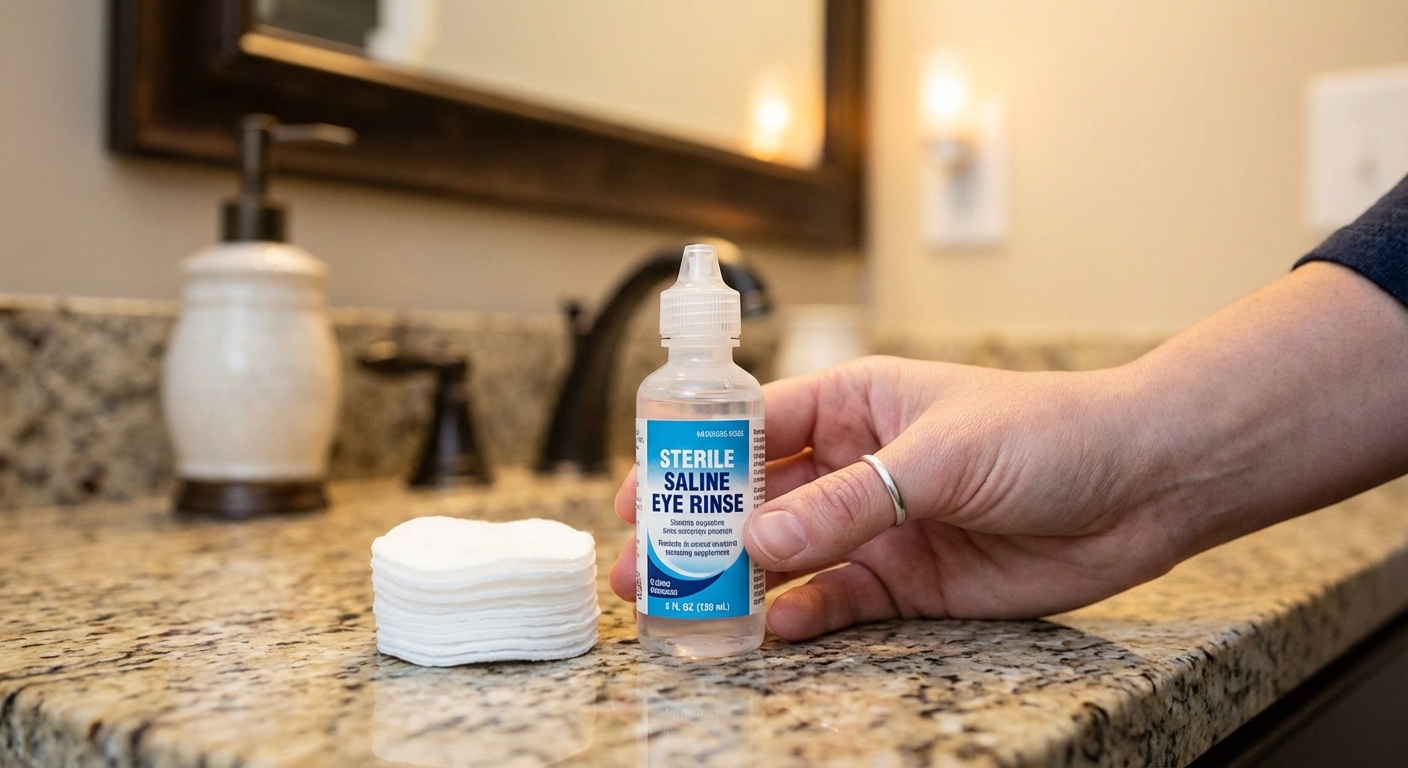
- Warm water on a clean cotton round or soft gauze
- Veterinary ophthalmic saline (sterile eye rinse) if you have it
- Clean towel to keep fur dry afterward
Step-by-step cleaning
- Wash your hands.
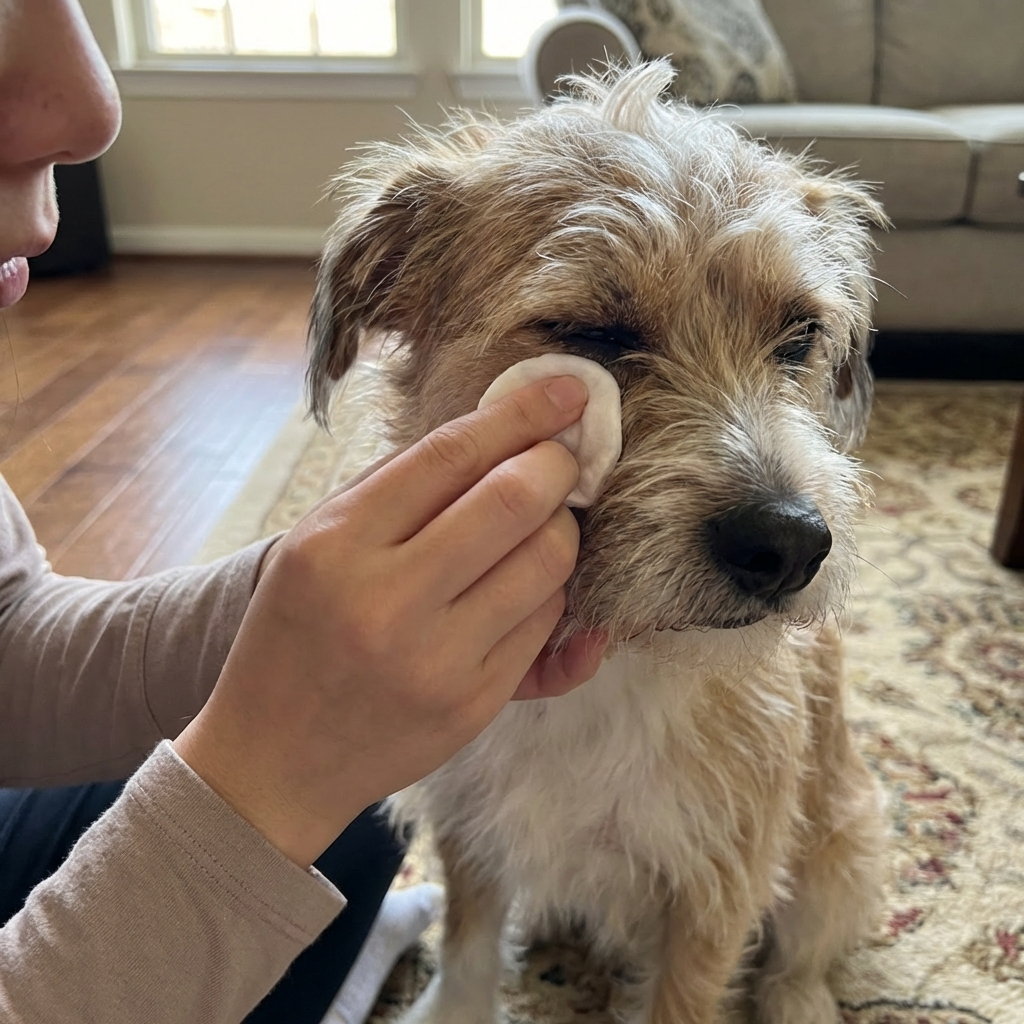
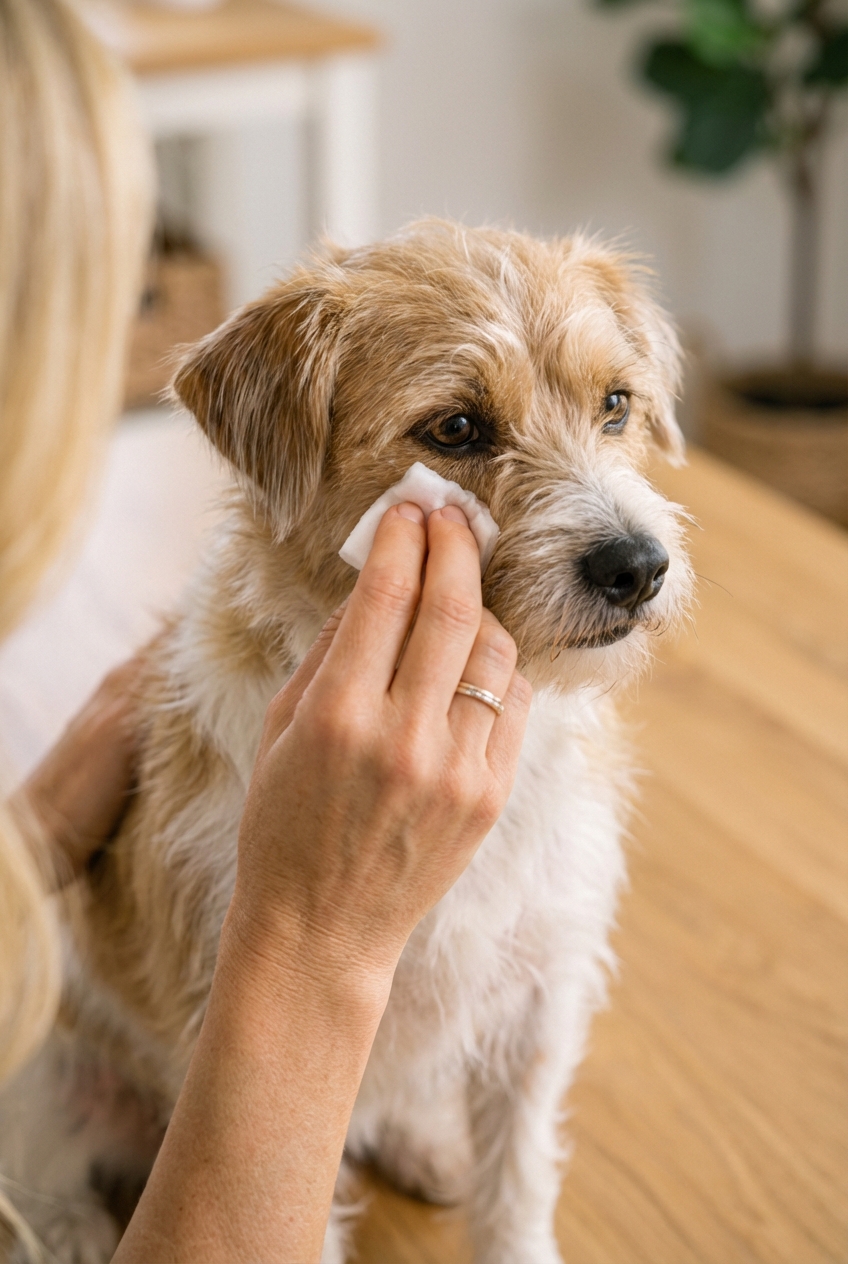
- Soften first: hold a warm, damp pad against the closed eyelids and inner corner for 10 to 20 seconds.
- Wipe gently: wipe from the inner corner outward, one stroke per pad. Avoid rubbing.
- Use a fresh pad for each eye to avoid spreading bacteria.
- Dry the fur under the eye to reduce skin irritation and staining.
Aim for 1 to 2 times daily during flare-ups, then scale back to a maintenance routine if your dog tends to tear.
What not to do
- Do not use human eye drops unless your veterinarian tells you to. This is especially important for any product that may contain steroids, which can make an unrecognized corneal ulcer much worse.
- Do not use leftover prescription eye medications, including antibiotic ointments or combination antibiotic-steroid products. Using the wrong medication can delay proper care, and expired products can be contaminated.
- Do not use hydrogen peroxide, alcohol, or harsh antiseptics near the eye.
- Do not share washcloths between pets.
- Do not try to pluck crusts off dry. Always soften first.
Training: teach “eyes”
As a veterinary assistant, I have learned that most dogs are not “bad” during eye care. They are unsure, sensitive, or they have been accidentally restrained too fast. The secret is to train eye wiping the same way you would train sit or shake, in tiny, happy steps.
Set yourself up for success
- Pick a quiet spot with good lighting.
- Use high-value treats your dog does not get every day.
- Keep sessions short, 30 to 90 seconds at first.
- If your dog gets stressed, stop and try again later.
Step-by-step “Eyes” plan
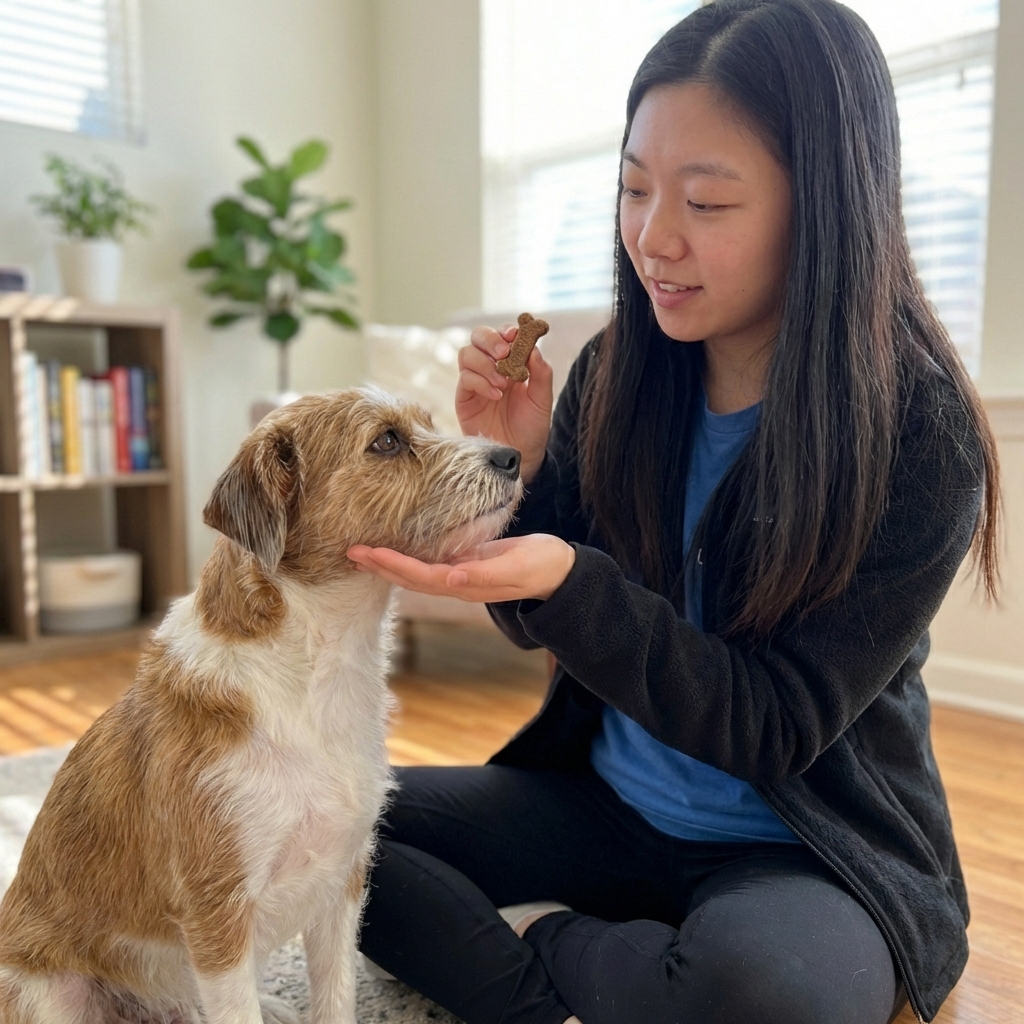
- Touch and treat: touch the cheek near the eye for one second, then treat. Repeat 5 to 10 times.
- Lift and treat: gently lift the brow or hold the chin for one second, then treat.
- Introduce the pad: show the damp pad, treat. Touch the pad to the cheek, treat.
- One wipe: do a single, gentle wipe, treat immediately.
- Build duration: slowly work up to two wipes, then the other eye, then a short “hold still” cue.
Helpful cues
- “Chin”: dog rests chin in your palm for stability.
- “Eyes”: a predictable cue that signals what is coming.
- “All done”: ends the session so your dog does not worry about surprise extra handling.
If your dog is very wiggly, try giving a lickable treat (like a dog-safe squeeze treat) while you do a quick wipe. Licking is soothing and helps many dogs hold still.
Preventing recurring goop
Some dogs will always be a little watery, especially light-colored dogs. Your goal is comfort and healthy skin, not perfection.
Simple prevention checklist
- Trim eye-area hair safely, or ask your groomer to keep the visor short so it does not poke the eye.
- Rinse after baths and keep shampoo away from the face.
- Wipe after outdoor time during high pollen days.
- Keep the face dry after drinking water.
- Check for allergens: seasonal patterns, scented cleaners, or dusty areas.
- Be cautious with stain products: avoid anything that claims to bleach fur or is not specifically made for pets and for use around the eyes. Never put cleaners into the eye.
Nutrition and hydration basics
Eye discharge is usually not fixed by one magic supplement, but overall inflammation and allergy load can be influenced by health basics. Ask your veterinarian if an elimination diet trial or an omega-3 plan makes sense for your dog, especially if goopy eyes come with itchy skin or recurrent ear issues.
Common questions
Is clear, watery discharge okay?
Often yes, especially if both eyes are watery and your dog is comfortable. If it is constant, worsening, or mainly one eye, it is worth a veterinary exam to check eyelids, tear drainage, and the cornea.
What about green or yellow gunk?
That can suggest infection or significant inflammation, but it can also happen when tears are not draining correctly. Either way, it deserves a call to your veterinarian.
Can I use leftover antibiotic eye ointment?
No. Using the wrong medication can delay proper care. Some medications are unsafe if the cornea is ulcerated, especially steroid-containing drops or combination products, and expired products can be contaminated.
My dog fights face handling. Do I need a muzzle?
Sometimes, yes, and that is okay. A properly fitted basket muzzle can be a safety tool, not a punishment. If you think you need one, ask your vet team to help with fitting and conditioning so it stays calm and positive.
Bottom line
Mild, occasional eye crust can be normal. Persistent goop, redness, squinting, or thick discharge is your sign to get veterinary guidance. In the meantime, gentle cleaning plus a simple “eyes” training routine can turn daily care into something your dog accepts, and sometimes even enjoys because it predicts treats and calm attention.