Noticing lip-smacking, gulping, or regurgitation after meals? Learn common GERD symptoms in dogs, likely causes, practical feeding changes, and red flags tha...
Article
•
Designer Mixes
Dog Gagging After Eating: Causes and Solutions

Shari Shidate
Designer Mixes contributor
Hearing your dog gag right after a meal can be scary, especially when it comes out of nowhere. In many cases, it is something simple like eating too fast, but sometimes gagging is your dog’s way of telling you something is stuck, irritated, or not sitting right.
As a veterinary assistant, I always tell pet parents to focus on two things: what the gagging looks like (a quick hacking sound versus repeated retching), and how your dog is acting otherwise (bright and normal versus distressed). That combo usually points you toward the right next step.
Quick note: This article is for general education and triage. It cannot diagnose your dog. If your dog seems distressed or you are unsure, call your veterinarian or an emergency clinic.
What it can look like
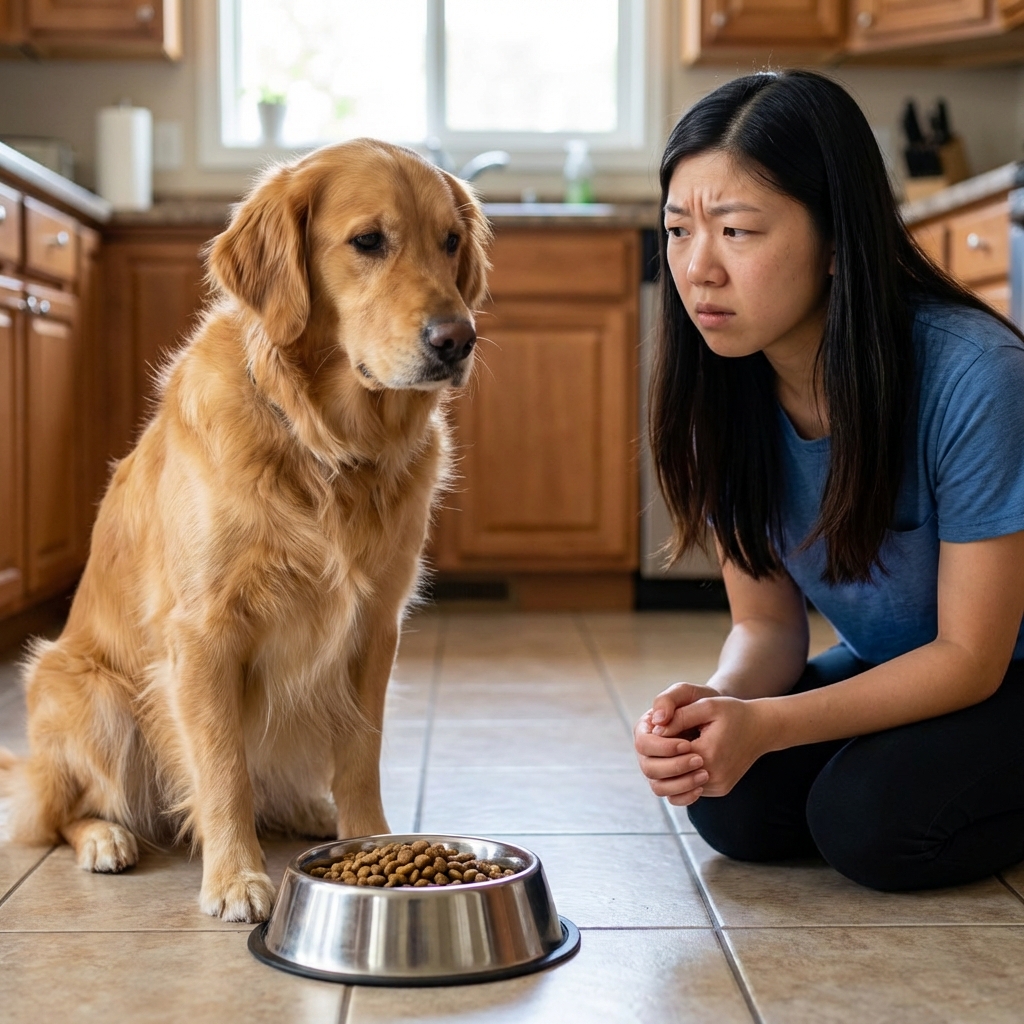
People use the word “gagging” for a few different behaviors. Getting specific helps.
- Gagging or hacking: a dry, sudden hacking sound, sometimes with a swallow afterward.
- Retching: repeated heaving motions that may or may not bring anything up.
- Regurgitation: food comes back up easily and looks undigested. It may look tubular because it often comes from the esophagus. This is different from vomiting.
- Vomiting: abdominal effort and nausea signs, and the material is usually partially digested.
If you can safely take a short video, it can be incredibly helpful for your veterinarian.
Common causes
Eating too fast
This is one of the most common reasons. Fast eaters swallow extra air, take large bites, and can trigger gagging, coughing, burping, or even vomiting right after meals.
Food stuck in the back of the throat
Kibble, treats, rawhide, dental chews, or a large piece of food can briefly lodge in the throat and cause gagging, repeated swallowing, drooling, or pawing at the mouth.
Acid reflux or esophagus irritation
Some dogs gag after eating because stomach acid or food refluxes into the esophagus. You might see lip licking, swallowing, gulping, and discomfort after meals or at night.
Overeating or rich food
A very large meal or a sudden switch to richer food can cause nausea and gagging. Dogs with sensitive stomachs may gag even with small “people food” additions like greasy meats.
Food intolerance or allergies
Some dogs do not tolerate certain ingredients well. Along with post-meal gagging or nausea, you might also see itchy skin, ear issues, gas, loose stools, or intermittent vomiting. If symptoms are recurring, your vet may discuss an elimination diet trial.
Esophageal problems (including megaesophagus)
If your dog frequently regurgitates undigested food shortly after meals, your vet may want to rule out an esophageal motility issue. This becomes more concerning if you also notice weight loss, coughing, fever, or a history of pneumonia (aspiration risk).
Foreign body in the esophagus
Not all “stuck” items are in the back of the throat. A bone fragment, chew, toy piece, or other foreign material can lodge in the esophagus and cause repeated gagging or regurgitation that may continue for hours to days. This is not a wait-and-see situation. Call your veterinarian promptly.
Kennel cough or other airway irritation
Sometimes the timing is a coincidence. A dog with tracheal irritation may cough or gag after swallowing or drinking. Small breeds can be prone to tracheal collapse, which can sound like a honking cough and may be triggered by excitement, pulling on the leash, or eating.
Brachycephalic airway anatomy
Flat-faced breeds (like Pugs, Bulldogs, and Boston Terriers) are more prone to noisy breathing, gagging, and coughing with eating due to their airway structure. If you also notice loud snoring, heat intolerance, or frequent “reverse sneezing,” ask your vet about airway evaluation.
Dental or mouth pain
Broken teeth, gum disease, oral masses, or an injury can make chewing difficult. Dogs may try to swallow larger pieces, then gag. Watch for dropping food, chewing on one side, or bad breath.
GI disease or parasites (more likely if ongoing)
Parasites and other gastrointestinal diseases are less likely to cause immediate post-meal gagging alone, but they can contribute to chronic nausea and vomiting. If gagging is happening along with diarrhea, weight loss, poor appetite, or a dull coat, your vet may recommend stool testing and lab work.
Bloat risk (deep-chested dogs)
In deep-chested breeds, GDV (bloat with twisting) is a true emergency. Rapid eating is commonly discussed as a possible contributor, and many veterinarians recommend calm, slower meals as a precaution. You will find emergency red flags below.
At-home steps
If your dog is otherwise acting normal and the gagging is mild or occasional, these strategies are commonly recommended by veterinarians and often reduce episodes.
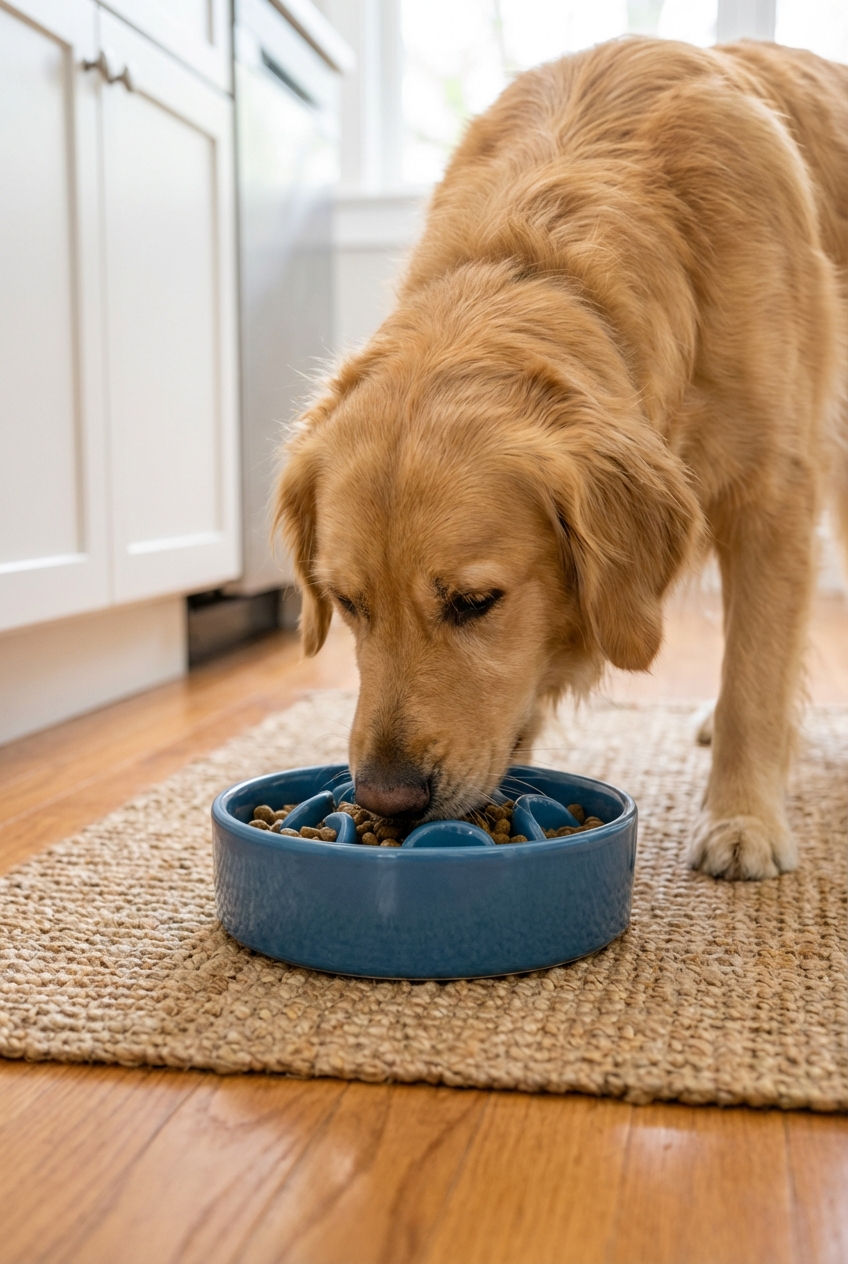
1) Slow down meals
- Use a slow feeder bowl or a puzzle feeder.
- Scatter kibble on a snuffle mat or feed small handfuls at a time.
- Split the daily amount into 2 to 4 smaller meals.
2) Adjust texture and bite size
- If kibble seems to “catch,” ask your vet if you can try adding warm (not hot) water to soften it. Do not leave moistened food sitting out, since it can spoil more quickly.
- For dogs who bolt, some do better with larger kibble pieces, and others do better with smaller or softer textures. Because this varies by dog and can affect choking risk, consider this change with your vet’s guidance.
- Avoid oversized treats and tough chews if your dog tends to gag.
3) Keep meals calm
- Feed in a quiet space away from other pets to reduce competition.
- Give a few minutes of rest after meals. Many vets recommend avoiding vigorous exercise right after eating as a precaution, especially for deep-chested breeds.
4) Transition foods slowly
Sudden changes can trigger nausea, gagging, or vomiting. A typical transition is 25% new food for a few days, then 50%, then 75%, then 100% over 7 to 10 days. Go slower for sensitive pups.
5) Track patterns
Keep a quick note on timing, food type, treat brand, and whether it happens with water too. Patterns are often the clue your vet needs.
When it is an emergency
Get emergency veterinary care now if you notice any of the following:
- Difficulty breathing, open-mouth breathing, or blue or pale gums
- Repeated retching with little or nothing coming up, especially with a swollen or tight belly (possible GDV)
- Excessive drooling, panic, pawing at the mouth, or inability to swallow (possible obstruction)
- Collapse, extreme weakness, or severe lethargy
- Blood in vomit, regurgitation, or saliva
If you suspect your dog is choking and cannot breathe, seek immediate help. If your dog is breathing but gagging, avoid trying to “sweep” the throat with your fingers because you can push an object deeper or get bitten in a panic moment.
When to call your vet
Make an appointment if gagging after eating is:
- Recurrent, getting more frequent, or not improving
- Lasting more than 24 to 48 hours even if your dog seems otherwise okay
- Paired with regurgitation (undigested food coming back up)
- Paired with coughing, wheezing, or frequent throat clearing
- Accompanied by weight loss, decreased appetite, diarrhea, or trouble swallowing
- Starting after a new chew, toy, or diet change
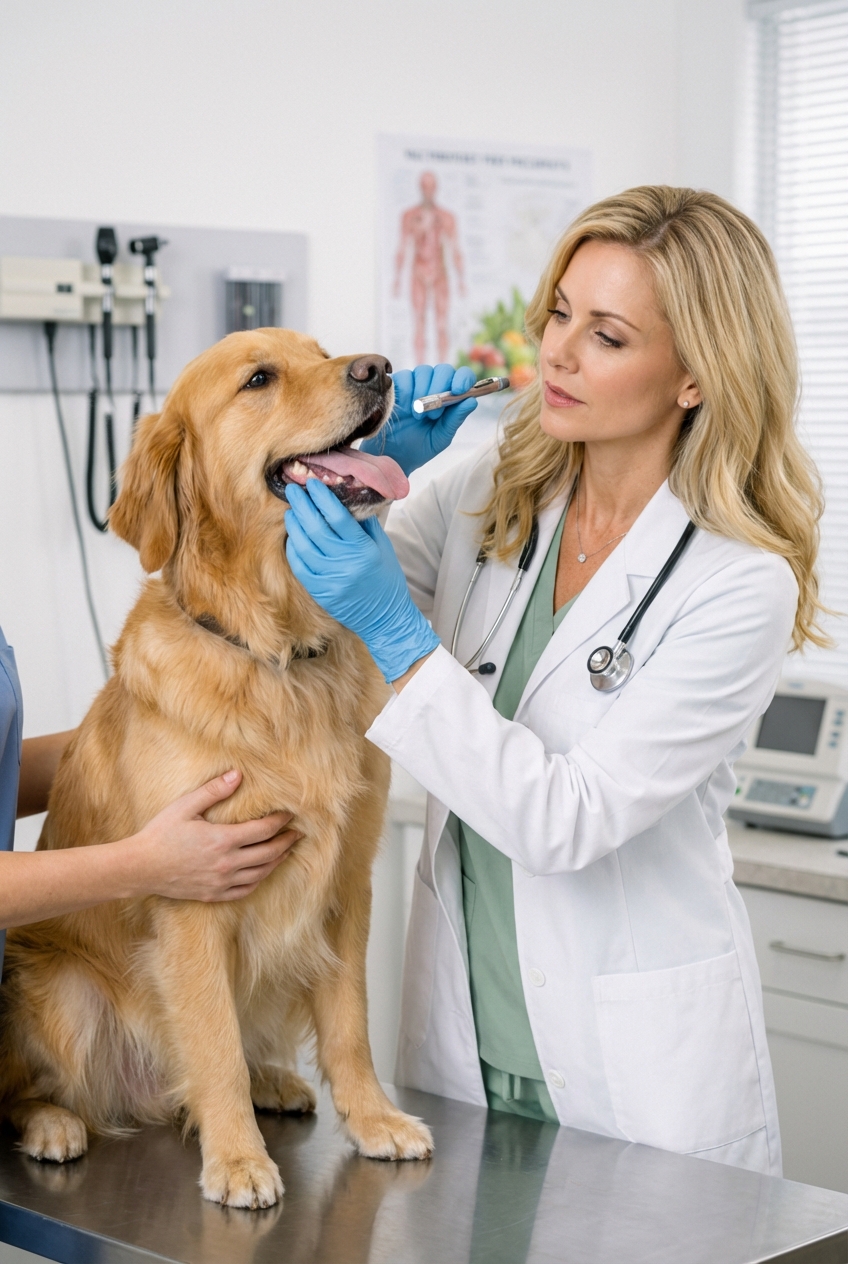
Your vet may recommend an oral exam, chest or neck X-rays, and sometimes bloodwork. If regurgitation is a theme, your vet may consider esophageal disease, aspiration risk, and the safest feeding position and meal type for your dog.
Feeding tips for sensitive dogs
If your dog’s gagging seems tied to stomach sensitivity, the goal is gentle, predictable meals with high-quality ingredients.
- Pick one protein source for a few weeks and avoid constant switching.
- Choose simple ingredient treats and skip rich table scraps.
- Ask your vet whether a probiotic is appropriate for your dog.
- If you are interested in fresh or homemade food, work with your veterinarian or a board-certified veterinary nutritionist so the diet is complete and balanced.
Small changes can make a big difference. For many dogs, slowing down the meal and splitting it into smaller portions stops the gagging within days.
Quick checklist
- Is your dog breathing comfortably?
- Is this gagging, vomiting, or regurgitation?
- Any drooling, pawing at the mouth, or trouble swallowing?
- What did your dog eat, and how fast?
- Can you capture a short video for your vet?
If you are ever unsure, it is absolutely okay to call your veterinarian. Trust your instincts. You know what “normal” looks like for your dog.