Chicken and rice can soothe mild stomach upset and help dogs transition back to normal food. Learn safe recipes, portions, how long to feed it, and when to c...
Article
•
Designer Mixes
Dog Gagging After Drinking Water Causes Explained

Shari Shidate
Designer Mixes contributor
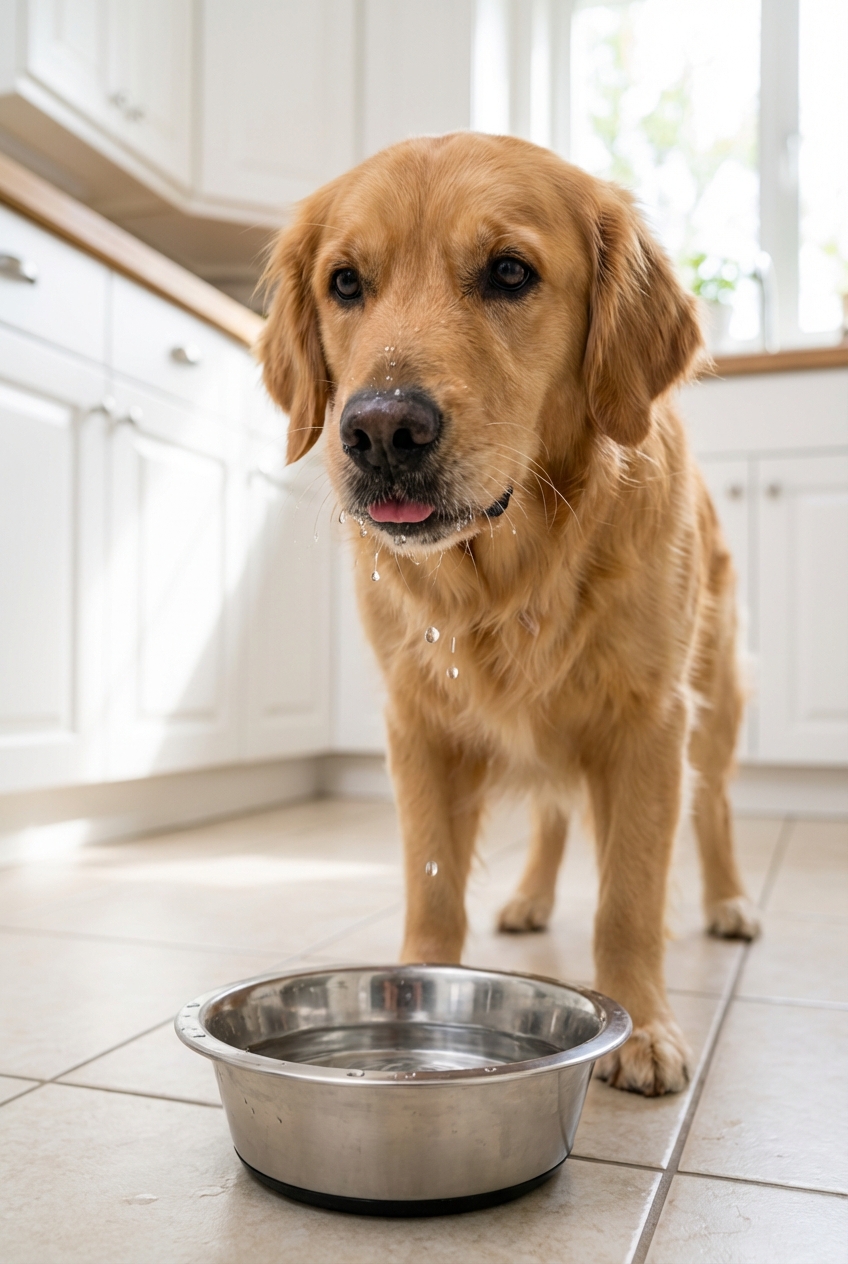
It can be startling when your dog drinks normally, then suddenly starts gagging, retching, or coughing like something went down the “wrong pipe.” In many cases, it is harmless and short-lived. Still, gagging after water can also be your dog’s early way of saying, “Something’s not quite right.”
Quick note: This article is for general education and is not a diagnosis. If you are unsure or your dog seems distressed, contact your veterinarian.
Below, I’ll walk you through the most common causes, what you can do at home, and when it is time to call your veterinarian.
What it can look like
Owners use a lot of different words for this, and they can mean different things medically. Here are the most common patterns:
- Quick cough right after swallowing (often from water briefly going the wrong way).
- Retching or dry heaving (gagging motion, sometimes with saliva or foam).
- Hacking cough (can sound like trying to clear the throat).
- Reverse sneezing (snorting, rapid inhaling, looks scary but is often benign).
- Regurgitation (water comes back up effortlessly shortly after drinking).
If you can, take a short video on your phone. It helps your veterinary team tremendously.
Also, a helpful baseline: an occasional brief cough after a big gulp can be normal. The pattern matters, meaning how often it happens, whether it is worsening, and whether other symptoms show up.
Common causes
1) Drinking too fast
This is the most common explanation I see. Dogs may gulp water after exercise, excitement, or when they have been restricted from the bowl. Fast drinking can trigger coughing, gagging, or even a little spit-up.
Why it happens: Rapid swallowing and big gulps can make it easier for a small amount of water to briefly enter the airway and trigger a cough reflex. Dogs may also swallow extra air.
2) Water briefly entering the airway
Just like people, dogs can accidentally inhale a small amount of water, especially if they drink while panting. A brief cough or gag right after drinking can be the body’s normal reflex to protect the airway.
Important note: Repeated episodes can increase the risk of aspiration pneumonia, so frequency and severity matter.
3) Reverse sneezing
Reverse sneezing often happens with throat or nasal irritation. Some dogs have episodes right after drinking cold water, after excitement, or if they have post-nasal drip.
What you’ll notice: Loud snorting, neck extended, rapid inhalations. Most episodes resolve within seconds to a minute.
Worth a call: If episodes are frequent, prolonged, or new, your vet may want to rule out causes like nasal mites, a foreign body, or other upper airway disease.
4) Throat or upper airway irritation
Inflammation can make swallowing feel “off,” so drinking triggers gagging or throat clearing. Common culprits include:
- Allergies and post-nasal drip
- Smoke, cleaning fumes, dusty environments
- Recent barking fits, leash pulling, or collar pressure
- Infectious tracheobronchitis (kennel cough)
5) Laryngeal paralysis or other laryngeal issues
The larynx (voice box) helps protect the airway during swallowing. If it is not closing and opening properly, your dog may cough or gag with water, sometimes more than with food.
More common in: Older large-breed dogs, though it can occur in others. Some dogs also develop noisy breathing, a voice change, or heat intolerance.
Safety note: Severe cases can become an emergency if breathing becomes difficult.
6) Collapsing trachea (especially small breeds)
In toy and small breeds, the trachea can become more flexible, leading to a classic honking cough. Drinking, excitement, pulling on a leash, or pressure on the neck can set it off.
7) Megaesophagus or regurgitation problems
Sometimes what looks like gagging is actually regurgitation, where water comes back up soon after drinking. Megaesophagus is one condition that can cause this, and it increases the risk of aspiration pneumonia.
Clue: Regurgitation is usually effortless and may happen shortly after drinking or eating. Vomiting typically includes abdominal heaving.
8) Acid reflux or nausea
Reflux can irritate the throat and esophagus. Some dogs will gag after drinking because the motion triggers discomfort or because they are already nauseated.
9) Dental or oral pain
Broken teeth, oral ulcers, or severe dental disease can make your dog drink in an unusual way, which can look like coughing or gagging. You might also notice bad breath, pawing at the mouth, or drooling.
10) Something stuck or a mass (less common, but important)
Sticks, plant material, foxtails, or growths in the back of the throat can cause persistent gagging, especially after drinking.
11) BOAS in flat-faced breeds
If you have a brachycephalic dog (like a French Bulldog, English Bulldog, Pug, or Boston Terrier), airway anatomy can make coughing, gagging, and noisy breathing more likely, especially with excitement, heat, or drinking. These dogs can also be more prone to airway irritation and reflux.
12) Irritants in or around the water
Sometimes the trigger is not the act of drinking, but what they are drinking or what the bowl was exposed to. Examples include chlorinated pool water, water additives, residue from cleaning agents, or even a new bowl material that holds odors.
13) Heart disease (as a broader cough cause)
Heart disease does not typically cause gagging right after a sip of water. Still, chronic cough from heart enlargement or fluid changes can become more noticeable around excitement, activity, or drinking. If coughing is persistent, it is worth discussing with your vet.
When it is an emergency
Please seek urgent veterinary care (ER if needed) if you notice any of the following:
- Labored breathing, open-mouth breathing at rest, or blue or gray gums
- Repeated choking or inability to swallow
- Collapse, extreme weakness, or severe lethargy
- Swollen face or hives (possible allergic reaction)
- Persistent coughing after a drinking episode, especially with fever, fast breathing, or low appetite (concern for aspiration pneumonia)
- Blood in saliva or coughed material
When to book a vet visit
If your dog is stable but this keeps happening, it is reasonable to schedule a non-urgent appointment, especially if:
- It happens more than occasionally, such as several times per week
- It lasts more than 24 to 48 hours, or is getting more frequent
- It happens with water-only consistently (not just after a big gulp)
- You see regurgitation, weight loss, low appetite, or repeated nausea
- There is a new honking cough, noisy breathing, or a voice change
- Your dog is a flat-faced breed and symptoms worsen with heat or excitement
What you can do at home
Slow the drinking
- Offer smaller amounts more often, especially after play or walks.
- Try a wider, shallow bowl to reduce deep gulping.
- For chronic “gulpers,” consider a slow-water bowl insert designed for pets.
Use a harness
If your dog coughs or gags after drinking and also pulls on leash, a well-fitted harness can reduce pressure on the trachea.
Check the basics
- Clean bowls daily to reduce buildup that can irritate sensitive dogs.
- Offer fresh water. Some dogs seem sensitive to very cold water, so you can try cool (not icy) water and see if that helps.
- Think about recent changes: new bowl, new cleaner, water additives, or access to pool water.
- Look briefly in the mouth for obvious stuck debris, but do not reach into the throat if your dog is panicking or might bite.
Track patterns
Write down: when it happens, how long it lasts, whether it is water-only or also with food, and whether there is exercise, heat, excitement, or leash pulling involved. These details help your veterinarian narrow down the cause quickly.
What your vet may check
Depending on your dog’s age, breed, and symptoms, your vet may recommend:
- Physical exam with careful listening to lungs and trachea
- Oral exam (sometimes sedation is needed for a full look)
- Chest X-rays to assess lungs, trachea, and aspiration risk
- Neck imaging if laryngeal or throat problems are suspected
- Infectious disease evaluation if cough suggests kennel cough or pneumonia
- Swallow study or referral if regurgitation or megaesophagus is suspected
- Cardiac evaluation if a persistent cough raises concern for heart disease
FAQs
Is gagging after water always serious?
No. A single brief cough or gag after a big gulp is often just water briefly going the wrong way. The concern rises if it is frequent, worsening, or paired with breathing changes, lethargy, fever, or decreased appetite.
My dog gags only with water, not food. What does that mean?
Water is thinner and easier to misdirect toward the airway than food. If it happens consistently, it can point toward swallowing coordination issues, laryngeal problems (including laryngeal paralysis), regurgitation conditions, or airway irritation. It is worth discussing with your veterinarian.
Could this be kennel cough?
Possibly. Kennel cough often causes a dry hacking cough that can be triggered by excitement, leash pressure, or drinking. Many cases are mild, but puppies, seniors, and dogs with other health conditions may need more support.
Bottom line
Most dogs who gag after drinking water are simply drinking too fast or briefly irritating the throat. But if it is happening repeatedly, worsening over time, or paired with coughing, breathing changes, or regurgitation, it deserves a veterinary check. You know your dog best. If your gut says, “This is not normal,” it is okay to call.