A practical, vet-informed guide to dog wound care: how to stop bleeding, flush and clean safely, bandage paws and scrapes, prevent licking, and recognize eme...
Article
•
Designer Mixes
Dog Front Paw Limping Tips

Shari Shidate
Designer Mixes contributor
Seeing your dog limp on a front paw can feel scary, especially when it seems to come out of nowhere. The good news is that many causes are minor and treatable, but front-limb limping can also signal problems that need prompt veterinary care. In this article, I will walk you through what to check at home, what to avoid, what truly helps, and when to call your vet.
Why front paw limping happens
Dogs often carry a lot of weight on their front end, especially when stopping, jumping down, or turning quickly. A limp can come from the paw itself, the wrist area (carpus), elbow, shoulder, or even the neck. Here are some common possibilities:
- Paw pad irritation or injury (burns from hot pavement, rough surfaces, cuts, torn pads).
- Foreign body such as a thorn, foxtail, tiny shard of glass, or packed debris between toes.
- Broken or torn nail, including quick exposure or nail-bed infection.
- Sprain or strain from zoomies, slipping on tile, jumping off furniture, or rough play.
- Arthritis or chronic joint disease, especially in adult and senior dogs.
- Elbow dysplasia and other developmental conditions, more common in larger breeds but possible in mixes too.
- Biceps or shoulder injuries that may look like a paw issue at first.
- Infection (toe web infection, abscess, interdigital cyst) that can cause swelling and pain.
- Neurologic pain (neck pain can refer lameness to a front leg).
- Inflammatory or tick-borne illness in some regions, which can cause shifting lameness or joint pain. This is a “call your vet” situation, not a DIY one.
If your dog is limping and also seems “off” overall, do not assume it is just a sore paw. Whole-body signs can mean something deeper is going on.
Quick home check
If your dog is stable, breathing normally, and not in extreme distress, you can do a brief, gentle check before deciding next steps. If your dog may bite due to pain, stop and call your vet. Stop immediately if pain escalates at any point.
1) Look first, then touch
- Compare both front paws: swelling, redness, discharge, or one toe held oddly can be a clue.
- Check between toes and around the nails for burrs, foxtails, or sticky debris.
- Look at the paw pads for cracks, burns, bleeding, or a flap of torn pad.
2) Check the nails
- A split nail can be very painful and may bleed off and on.
- Watch for a nail that angles differently, looks shorter than the others, or has dried blood at the base.
3) Gently feel up the leg
- Start at the toes and move upward. Stop if your dog yelps, pulls away sharply, trembles, or tries to mouth your hand.
- Feel for heat, swelling, or a firm lump.
4) Watch them walk
Use a non-slip surface if you can. Video helps a lot. A short clip of your dog walking toward you and away from you can be incredibly useful for your veterinarian.
5) Check the environment
- Recent hike through tall grass? Foxtails and thorns love the toe webbing.
- New running routine? Overuse injuries happen.
- Hard stop while playing fetch? Sprains are common.
When it is an emergency
Call your veterinarian or an emergency clinic right away if you notice any of the following:
- Non-weight-bearing lameness (holding the paw fully up), especially if sudden or lasting more than a few hours.
- Obvious deformity, dangling limb, or suspected fracture.
- Heavy bleeding or a deep cut. If bleeding will not stop with firm pressure, go in immediately. If your dog becomes weak, collapses, or has pale gums, do not wait.
- Severe swelling, rapidly expanding redness, or draining pus.
- Fever, lethargy, refusal to eat, or your dog seems unusually quiet and painful.
- Neck pain (yelping when you touch the neck, reluctance to move the head) or weakness in multiple limbs.
- Possible snake bite or toxin exposure.
Also treat it as urgent if your dog is a puppy, a senior, or has a known condition like arthritis or a clotting disorder. Puppies can injure growth plates, and what looks like a small limp can be more serious than it seems.
Safe first-aid steps
Here are the safest, most practical steps I recommend as a veterinary assistant when you are unsure what is going on. These do not replace an exam, but they can prevent things from getting worse.
Rest is the first medicine
For many mild strains and sore paws, strict rest for 24 to 48 hours makes a big difference. That means:
- Leash walks only for potty breaks.
- No running, jumping, stairs, wrestling, or fetch.
- Use rugs or yoga mats on slick floors to prevent slips.
If your dog is still clearly limping after 48 hours, or if the limp keeps coming back even when it “gets better,” keep activity restricted (leash walks only) and schedule an exam.
Cold compress for new injuries
If the limp started within the last 24 to 48 hours and you suspect a sprain or minor injury, a cold compress can help reduce pain and swelling.
- Use a cold pack wrapped in a thin towel.
- Apply for 10 minutes, up to 2 to 3 times daily.
- Stop if your dog becomes stressed or more painful.
Rinse minor paw wounds
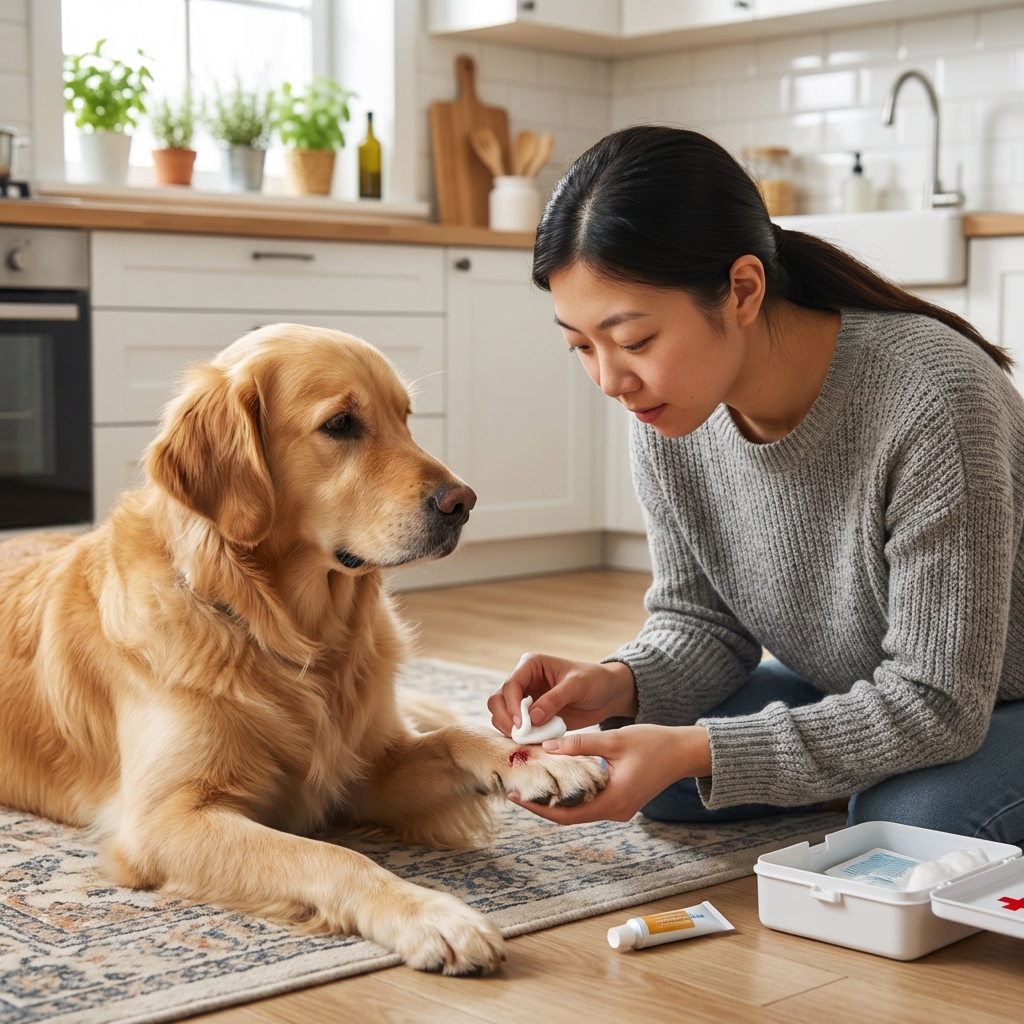
If you see a small cut or abrasion, gently rinse with sterile saline (or clean running water in a pinch). Pat dry.
Avoid: hydrogen peroxide, rubbing alcohol, or harsh antiseptics unless your veterinarian tells you to use them. These can irritate tissue and slow healing.
Bandage with caution
A light bandage can protect the area, but only if you can keep it clean and dry.
Important: Bandages that are too tight can cause swelling, impaired circulation, and pressure sores. If you are not confident, skip the bandage and call your vet. If you do bandage, check toes for swelling, coldness, or discoloration and do not leave the bandage on unchanged for long periods. When in doubt, let your vet place the first one.
Prevent licking
Licking feels soothing to dogs, but it often worsens inflammation and delays healing. Use an e-collar or soft cone if your dog will not leave the paw alone.
Know the quieter pain signs
Not all pain looks dramatic. Call your vet if you notice panting at rest, trembling, hiding, sleep changes, irritability, sudden clinginess, or aggression when touched.
What not to do
- Do not give human pain meds like ibuprofen, naproxen, or acetaminophen unless your veterinarian specifically instructs you. These can be toxic or even fatal to dogs when used incorrectly.
- Do not force stretching or “walk it off.” Pain is information.
- Do not ignore a limp that lasts more than 24 to 48 hours, even if it seems mild. Small problems can become big problems if your dog compensates and overloads other joints.
- Do not ignore repeat limping that keeps returning, even if it resolves with rest. Recurrent limping is a strong reason to book an exam.
- Do not dig aggressively between toes with tweezers if you suspect a foxtail. If it breaks off under the skin, infection can develop quickly.
How vets diagnose limping
If the limp persists or your dog is very painful, your vet will likely recommend a step-by-step approach:
- History and gait evaluation: when it started, activity level, any known injury.
- Pain localization: gentle flexion and extension of toes, wrist, elbow, shoulder, and neck.
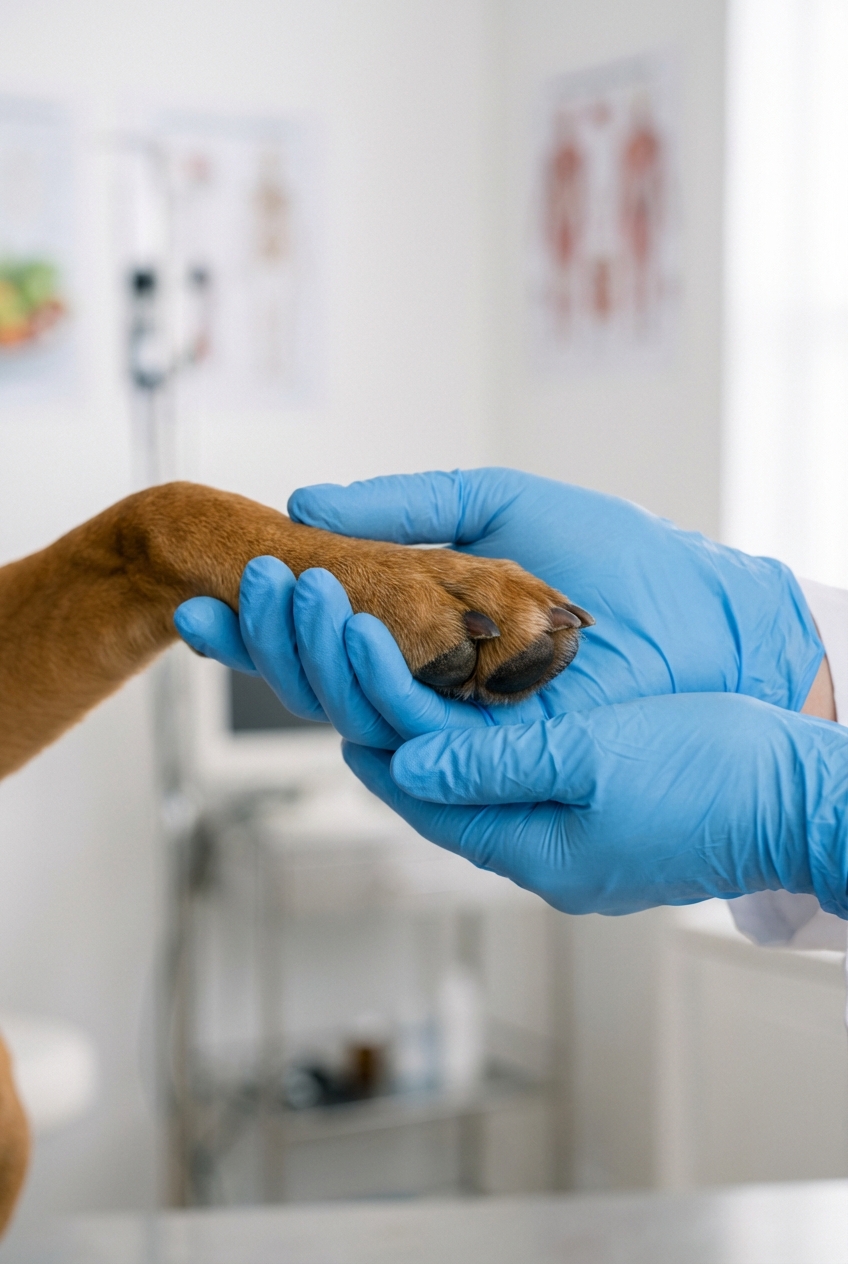
- Paw exam: nails, pads, foreign material, interdigital swelling.
- Imaging: X-rays are common; sometimes ultrasound, CT, or MRI is needed for shoulder, elbow, or soft-tissue injuries.
- Lab work if infection, inflammation, tick-borne illness, or systemic illness is suspected.
Be ready to share videos of the limp and any changes in appetite, energy, or behavior. Those details help more than you might think.
Support while you wait
Set up recovery space
- Keep your dog on one level of the home if possible.
- Use a supportive bed and block access to stairs or couches.
- Short leash potty trips only.
Track symptoms
Write down:
- Which paw is affected and whether it is improving or worsening.
- Whether your dog is toe-touching, limping, or not bearing weight at all.
- Swelling, heat, discharge, odor, or a visible wound.
- Any licking, whining, panting, trembling, or trouble settling down.
Nutrition and weight
When dogs are injured, inflammation and tissue repair increase nutrient needs. Focus on a balanced, high-quality diet and hydration. If your dog is overweight, ask your vet about a safe weight plan since extra weight increases joint stress.
Common scenarios
Limping after long play
This often points to a strain or overuse, especially if your dog improves with rest. If it keeps returning, it is time for an exam to rule out shoulder or elbow issues.
Licking and limping
Think foreign body, allergy irritation, nail injury, or infection. A mild limp plus lots of licking is a classic pattern with something stuck between toes.
Worse after rest, then improves
This pattern can be seen with arthritis. A vet can help with a safe pain-control plan, joint support strategies, and appropriate exercise.
Sudden severe limp
Shoulder, elbow, or neck pain can mimic a paw injury. This is where an orthopedic exam and imaging are often needed.
Prevention tips
- Trim nails regularly: overly long nails can change gait and strain joints.
- Use paw protection on very hot days or rough terrain. Hot pavement can burn pads quickly.
- Warm up before intense play: a few minutes of easy walking before fetch helps.
- Keep your dog lean: excess weight increases joint stress.
- Choose traction: rugs and runners help prevent slips that cause wrist and shoulder injuries.
My rule of thumb
If the limp is mild and clearly improving with rest, you can monitor briefly. If it is severe, persistent, keeps coming back, or paired with swelling or behavior changes, let your veterinarian guide the next step.
You know your dog best. If your gut is telling you something is wrong, trust that instinct and call.