Not sure if your dog’s eye “gunk” is normal? Learn what clear, mucus, or yellow/green discharge can mean, how to clean safely at home, and when to call...
Article
•
Designer Mixes
Dog Eye Discharge: When to See the Vet

Shari Shidate
Designer Mixes contributor
If you have ever wiped “sleep” from your dog’s eye and wondered if it is normal, you are not alone. As a veterinary assistant, I hear this question all the time. Some eye discharge is totally harmless. Other types can be your dog’s early warning sign that something is wrong, and eyes can go from mildly irritated to seriously painful quickly.
This guide will help you recognize what is normal, what is not, and when it is time to call your veterinarian.
What “normal” eye discharge looks like
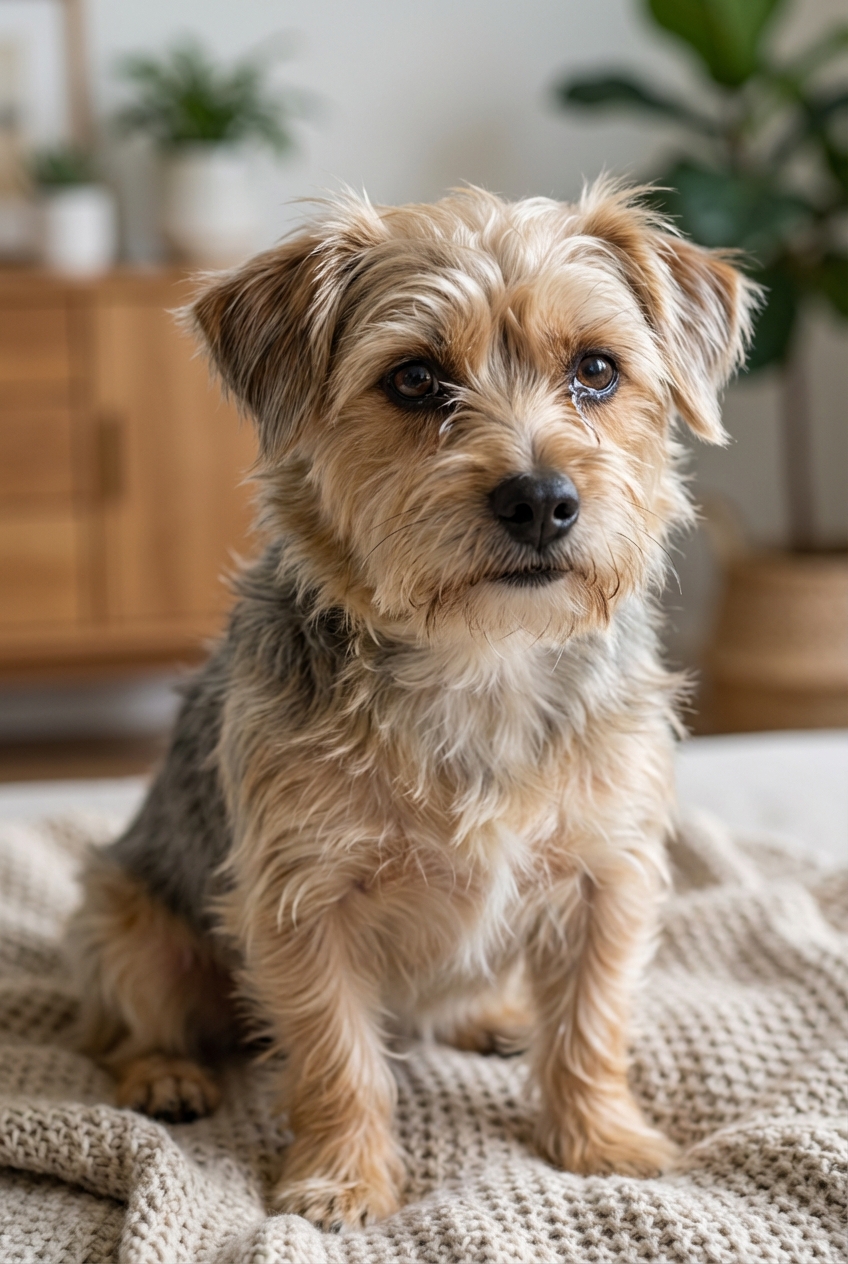
Many healthy dogs have a small amount of discharge, especially after sleeping, a windy walk, or allergy season. Normal discharge is usually:
- Clear and watery, like tears
- Thin, not sticky
- Small in amount, mainly at the inner corner
- Occasional, not getting worse day by day
You may also see small, dry, tan to gray crusts in the morning. That is often just normal tear film debris.
Types of discharge and what they can mean
Discharge color and texture can give clues, but it is not a diagnosis by itself. Here are common patterns vets use when deciding what to check next.
Clear, watery tearing
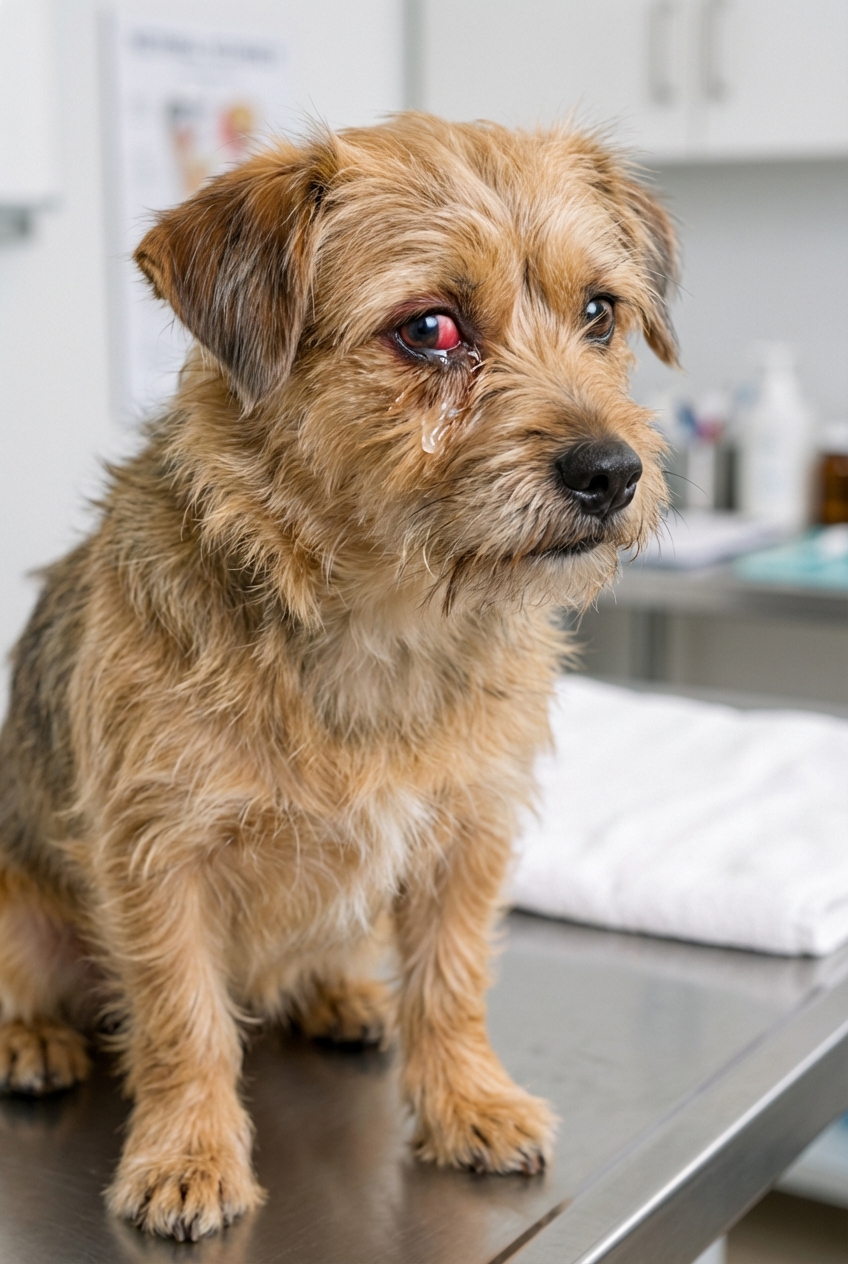
This often points to irritation. Common causes include allergies, wind and dust, mild conjunctivitis, eyelashes rubbing the eye, or a foreign body (like a tiny piece of plant material). If only one eye is tearing, a scratch or foreign body becomes more likely.
White or gray mucus
Thicker, ropey mucus can show up with dry eye (keratoconjunctivitis sicca), chronic irritation, or early infection. Dry eye is important because it can cause corneal damage over time if untreated.
Yellow or green discharge
Yellow-green discharge is more consistent with infection or significant inflammation. It can occur with bacterial conjunctivitis, an infected corneal scratch, or secondary infection after allergies. This is a common “call the vet” sign, especially if your dog is squinting or the eye looks red.
Brown, reddish-brown tear staining
Tear staining is common in lighter-coated dogs and short-nosed breeds. It can be linked to normal tearing, blocked tear drainage, facial shape, chronic low-grade irritation, or yeast and bacteria living in the damp fur. Tear staining itself is often not an emergency, but it is worth discussing if it is new or worsening.
Bloody discharge or obvious blood in the eye area
This can happen after trauma, from a severe corneal ulcer, certain bleeding disorders, or tumors. Any blood from the eye area should be treated as urgent.
When to see the vet (and when it is urgent)
Eye problems can be painful, and some can threaten vision. If you are on the fence, it is usually safer to call.
Seek emergency care today if you notice:
- Squinting, keeping the eye closed, or obvious pain
- Sudden cloudiness, a blue or white haze, or a visible spot on the cornea
- Bulging eye or the eye looks pushed forward
- Marked swelling around the eye, or the eyelids are very puffy
- Trauma (hit by a ball, scratched by a cat, rough play, thorn or stick exposure)
- Blood in discharge or inside the eye
- Unequal pupils or a new, very dilated pupil
- Sudden vision changes (bumping into things, acting disoriented)
- Potential chemical exposure (cleaners, pool chemicals, shampoo in the eye)
Make a veterinary appointment in the next 24 to 48 hours if:
- Discharge is yellow or green
- The eye is red and discharge is increasing
- Discharge lasts more than a day or two or keeps recurring
- Only one eye is affected and it is not improving
- Your dog is rubbing the face or pawing at the eye
- You see a new lump on the eyelid or near the tear duct
Extra caution for high-risk dogs
Some dogs are more prone to serious eye issues, and should be seen sooner rather than later:
- Flat-faced breeds (Pugs, French Bulldogs, Shih Tzus, Pekingese, Boston Terriers): more exposure and corneal injury risk
- Dogs with chronic allergies: more inflammation and secondary infection risk
- Senior dogs: higher risk for dry eye, tumors, and glaucoma
- Dogs with a history of corneal ulcers: recurrence can happen
What your vet will likely do
Many eye conditions look similar from across the room, so vets rely on a few quick tests to protect vision and choose the right medication.
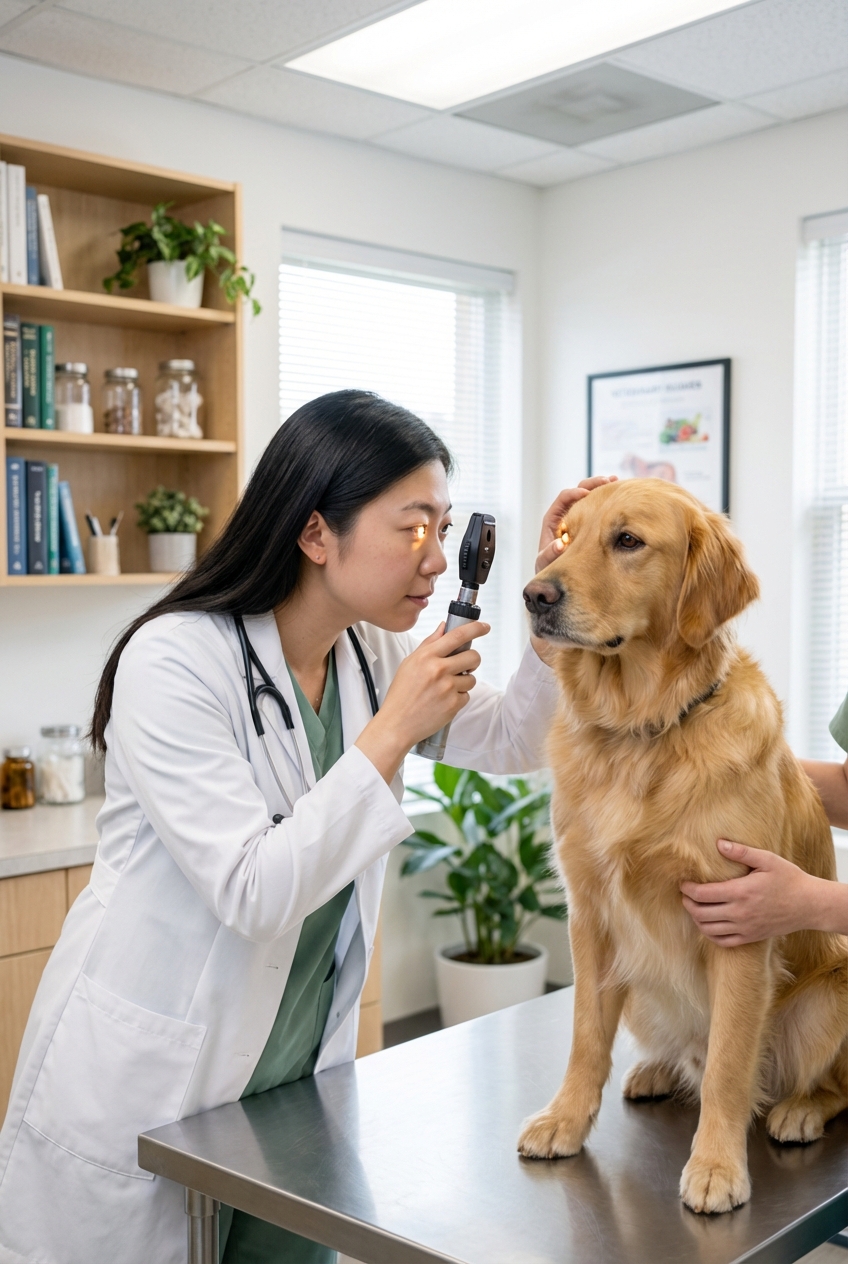
- Eye exam with magnification and light to look for foreign material, eyelash problems, eyelid abnormalities, and inflammation patterns
- Fluorescein stain to check for corneal scratches or ulcers
- Schirmer tear test to measure tear production if dry eye is suspected
- Intraocular pressure measurement if glaucoma or uveitis is a concern
- Sometimes cytology or culture for stubborn or recurrent infections
These tests are one big reason it is risky to use leftover eye meds at home. Certain drops can make an undiagnosed corneal ulcer dramatically worse.
Safe at-home care while you wait
If your dog seems comfortable and you are waiting for an appointment, you can do a few low-risk steps.
Do:
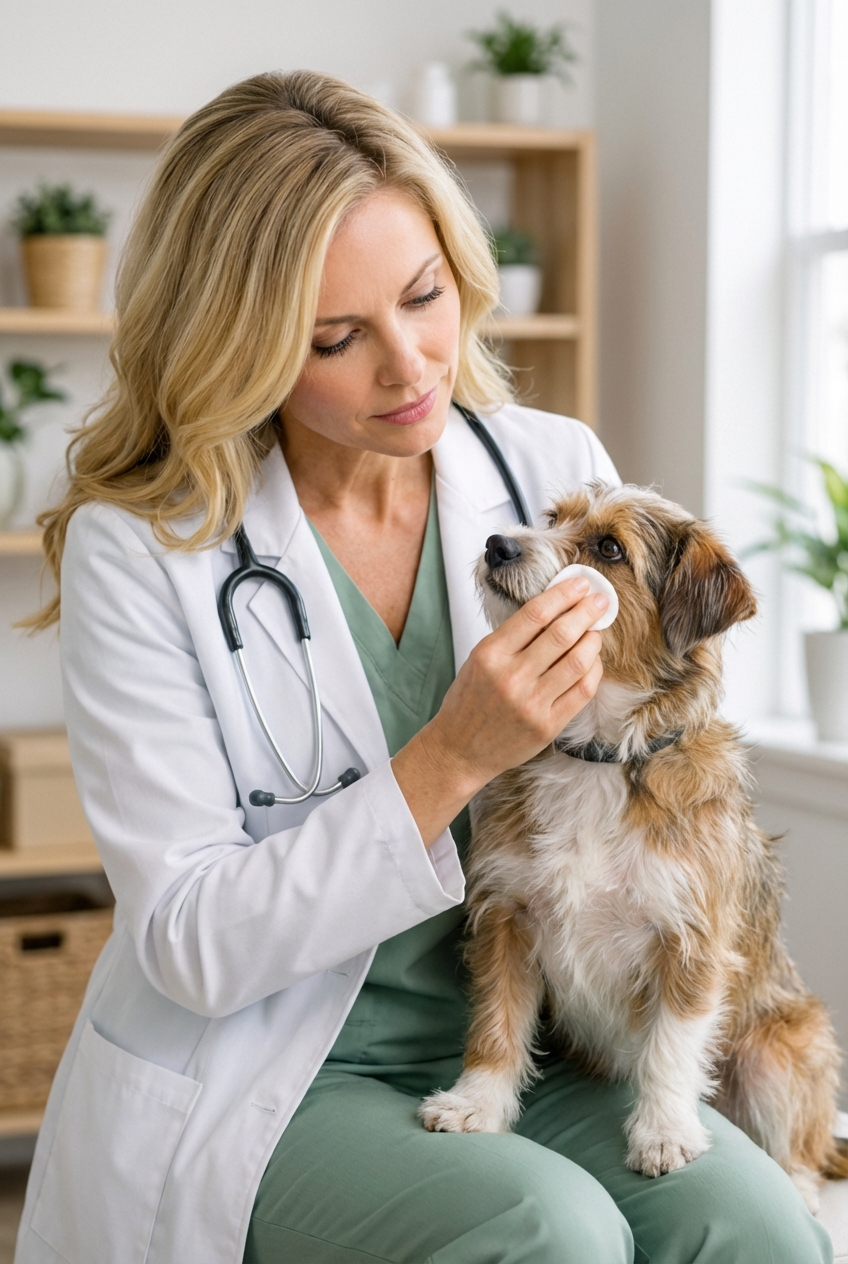
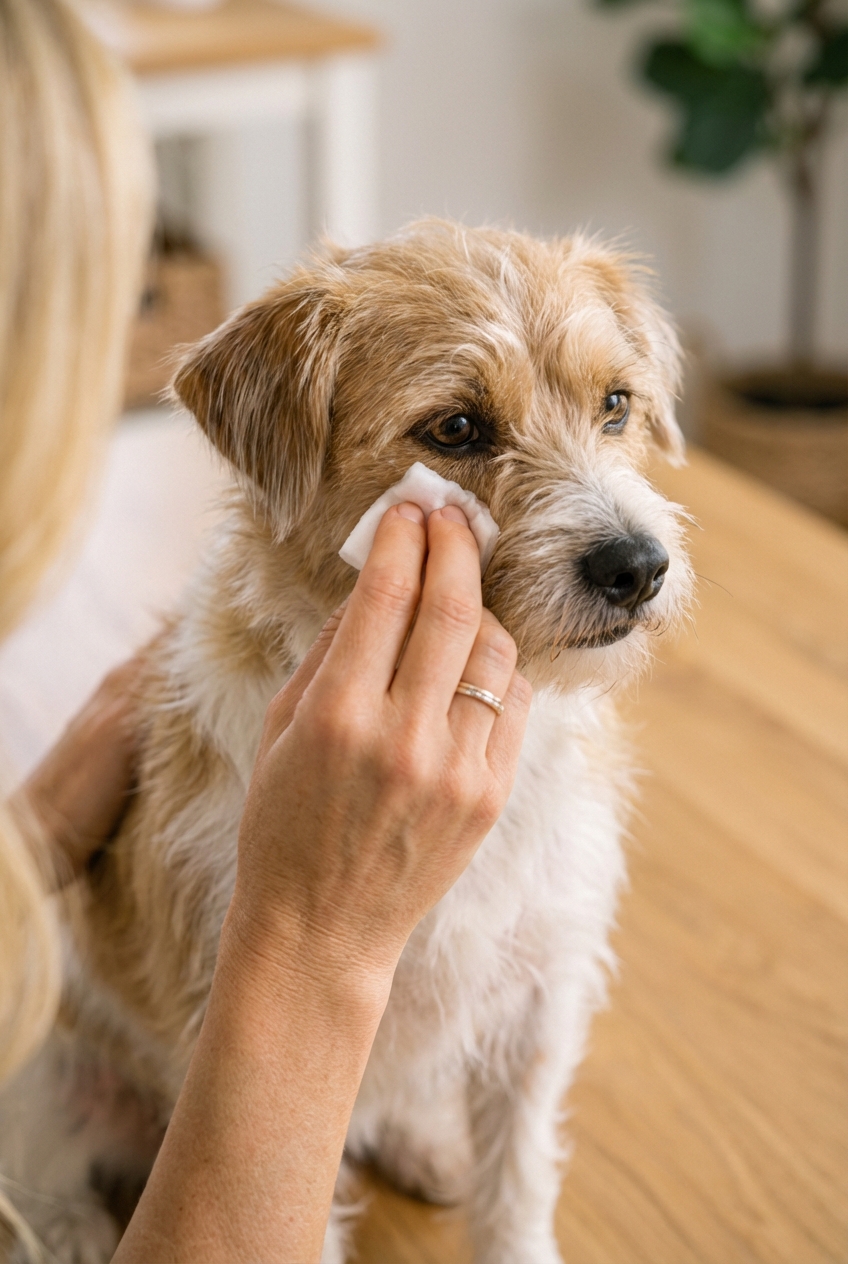
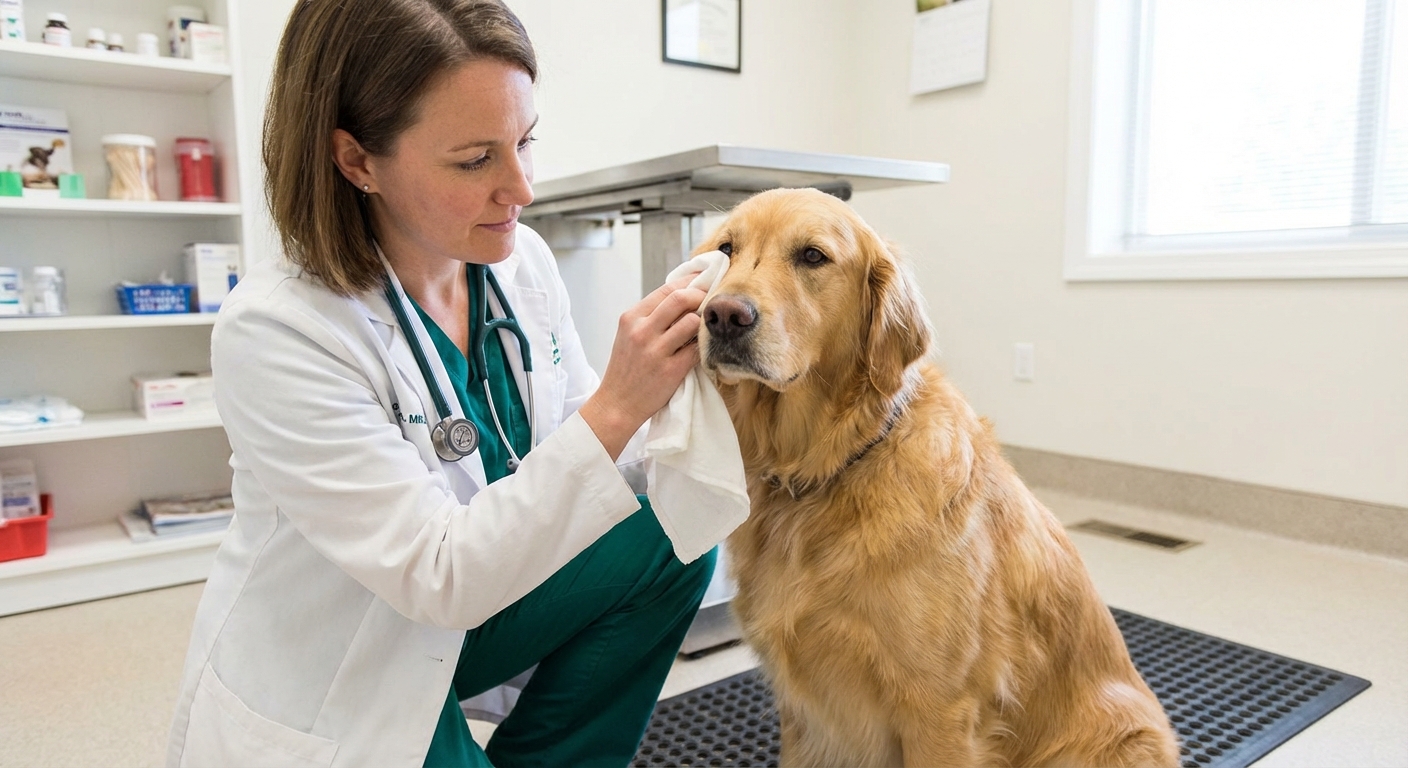
- Gently wipe discharge with a clean, damp cotton round or soft cloth, one per eye
- Use sterile saline eyewash (plain saline only) to rinse away debris if needed
- Prevent rubbing by using an e-collar if your dog is pawing at the eye
- Take a clear photo in good lighting so you can compare changes and show your vet
Do not:
- Do not use human eye drops unless your veterinarian specifically approves them
- Do not use leftover prescription drops, especially steroid-containing medications
- Do not use tea, herbal rinses, peroxide, or essential oils near the eye
- Do not try to remove something stuck on the eye surface with tweezers or cotton swabs
Common causes, in plain language
Here are a few diagnoses your vet might mention and what they mean for your dog.
- Conjunctivitis: inflammation of the tissues around the eye. Can be triggered by allergies, irritation, infection, or eyelid issues.
- Corneal ulcer: a scratch or crater on the clear surface of the eye. Often painful, causes tearing and squinting, and needs prompt treatment.
- Dry eye: not enough tears. Often causes thick mucus, redness, and recurring discharge. Treatable, but usually requires long-term management.
- Blocked tear duct: tears cannot drain normally, leading to chronic watery eyes and staining.
- Entropion or ectropion: eyelids roll in or out, causing irritation and discharge. Some cases require surgery.
- Allergies: seasonal or environmental triggers can cause watery eyes, redness, and face rubbing, often along with itchy skin or ear issues.
Prevention and everyday eye hygiene
You cannot prevent every eye issue, but you can lower the odds of irritation and catch problems early.
- Trim hair around the eyes if it pokes or rubs (ask a groomer or your vet team for help if needed).
- Avoid tall dry grasses and brushy areas during peak foxtail season, especially for face-first sniffers.
- Rinse after dusty adventures with plain sterile saline if your dog is prone to irritation.
- Keep chronic allergies controlled with your veterinarian’s plan so the eyes are less inflamed.
- Schedule rechecks if your dog has a history of ulcers or dry eye.
Trust your instincts. If your dog’s eye looks different from normal, or your dog is acting painful or “off,” it is worth a veterinary call.
Quick checklist: Should I call the vet?
- Yes, call if discharge is yellow/green, your dog is squinting, the eye is red, or only one eye is affected.
- Go in urgently for cloudiness, swelling, bulging, blood, trauma, or possible chemical exposure.
- Monitor mild, occasional clear tearing if your dog is comfortable and it resolves within a day.
If you are ever uncertain, call your veterinary clinic and describe the discharge, how long it has been happening, and whether your dog is squinting or rubbing. Those details help the team triage you appropriately.