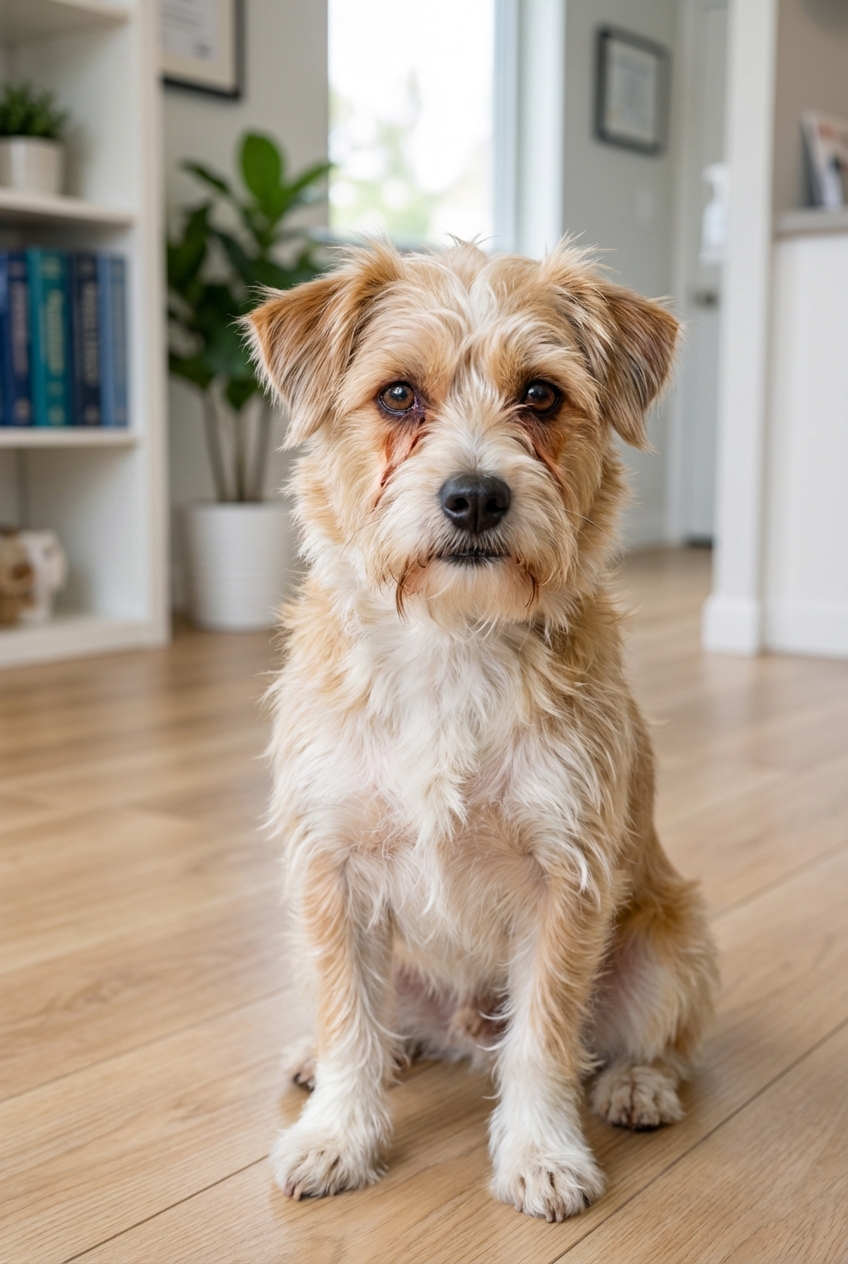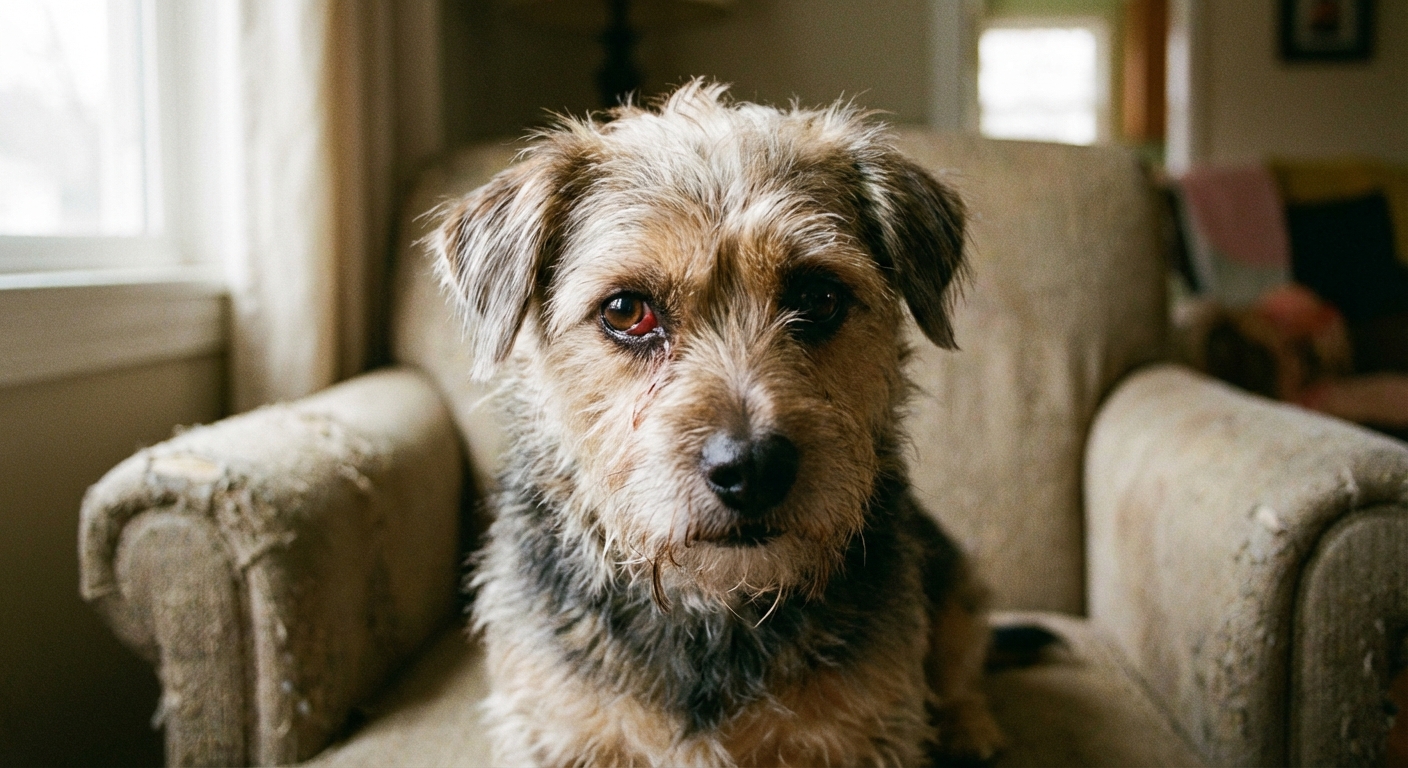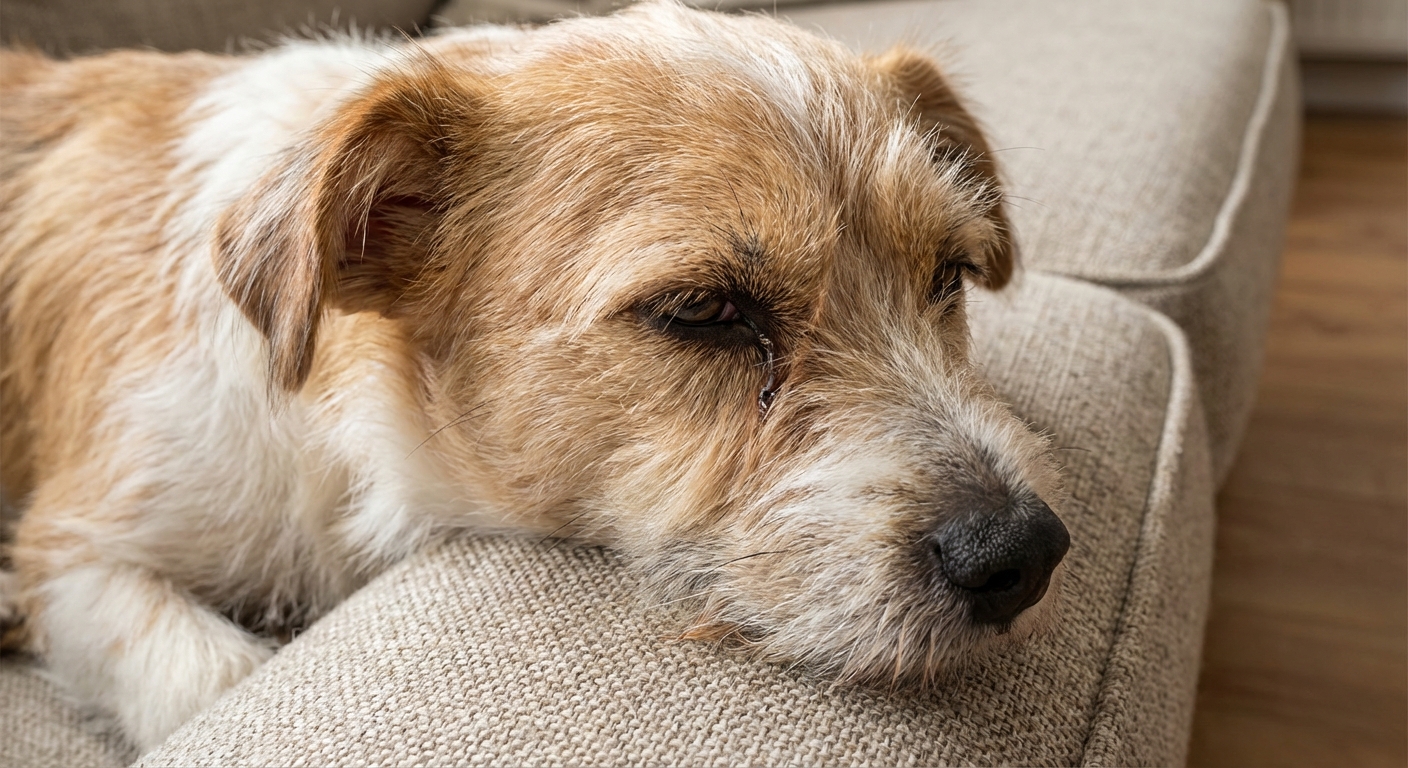
Noticed goopy eyes on your dog? Learn what clear, gray, or green discharge can mean, how to clean eyes safely at home, and the urgent signs—pain, squinting...
Article
•
Designer Mixes
Dog Eye Discharge, Redness, and Swelling

Shari Shidate
Designer Mixes contributor
When your dog’s eyes look red, puffy, or goopy, it’s hard not to worry. In the clinic, I’ve seen everything from simple allergies to painful ulcers that need same-day care. The good news is that many eye issues are very treatable, especially when you catch them early.
This guide will help you recognize what’s normal, what’s not, and when it’s time to call your vet.
What “normal” eye discharge looks like
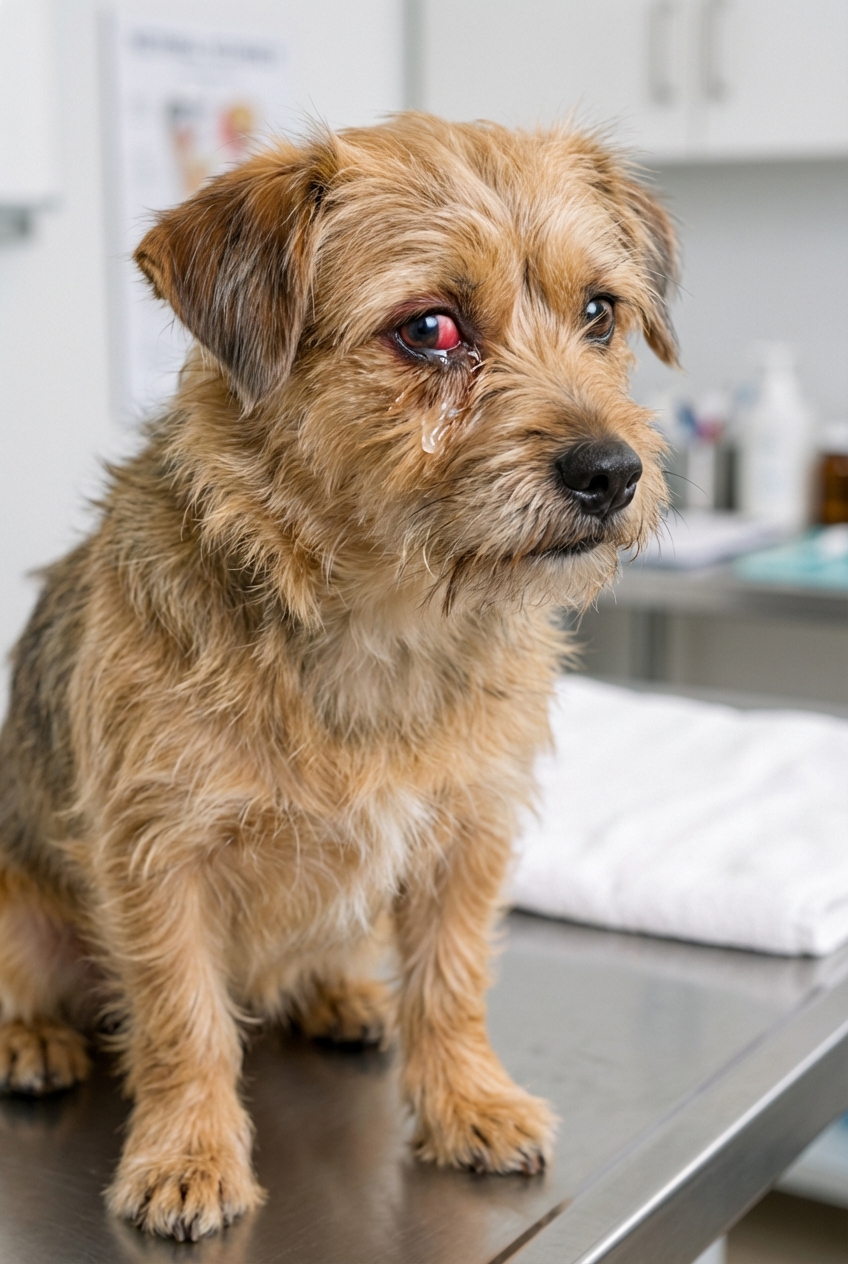
A small amount of clear tearing or a tiny bit of light tan crust in the inner corner can be normal, especially after sleep. Some dogs also tear more because of facial shape (like Pugs and Shih Tzus), prominent eyes, short noses, or heavy facial hair that rubs the eye.
But discharge that is thick, colored, increasing, or paired with redness or swelling is a sign something is irritating or infecting the eye.
One eye vs both eyes
It is not a hard rule, but it is a helpful clue. Problems that affect one eye are often more consistent with a foreign body, a scratch or ulcer, an eyelash issue, or trauma. Symptoms in both eyes are more often tied to allergies or irritants in the environment.
There are plenty of exceptions, so use this as a hint, not a diagnosis.
Discharge color: what it can mean
Eye discharge gives helpful clues, but it does not diagnose the problem by itself. Different conditions can look the same at home. For example, allergies and dry eye can both cause redness and discharge, and irritation can turn into a secondary infection.
- Clear and watery: allergies, mild irritation, wind or dust exposure, blocked tear drainage. Less commonly, it can be seen early on in an infection before discharge thickens.
- White or gray mucus: dry eye (keratoconjunctivitis sicca), irritation, allergy-related inflammation.
- Yellow or green discharge: bacterial infection or secondary infection on top of allergies, dry eye, or an injury.
- Rusty-brown tear staining: chronic tearing and porphyrins in tears are common contributors, especially in light-colored coats. Facial anatomy, blocked tear ducts, or hair rubbing the eye can drive ongoing tearing. Yeast and bacteria can overgrow in constantly damp fur and worsen odor or skin irritation, even if they are not the root cause of the staining.
- Bloody or pink-tinged tears: trauma, ulcer, severe inflammation, foreign body, or a mass. This is a “call your vet” sign.
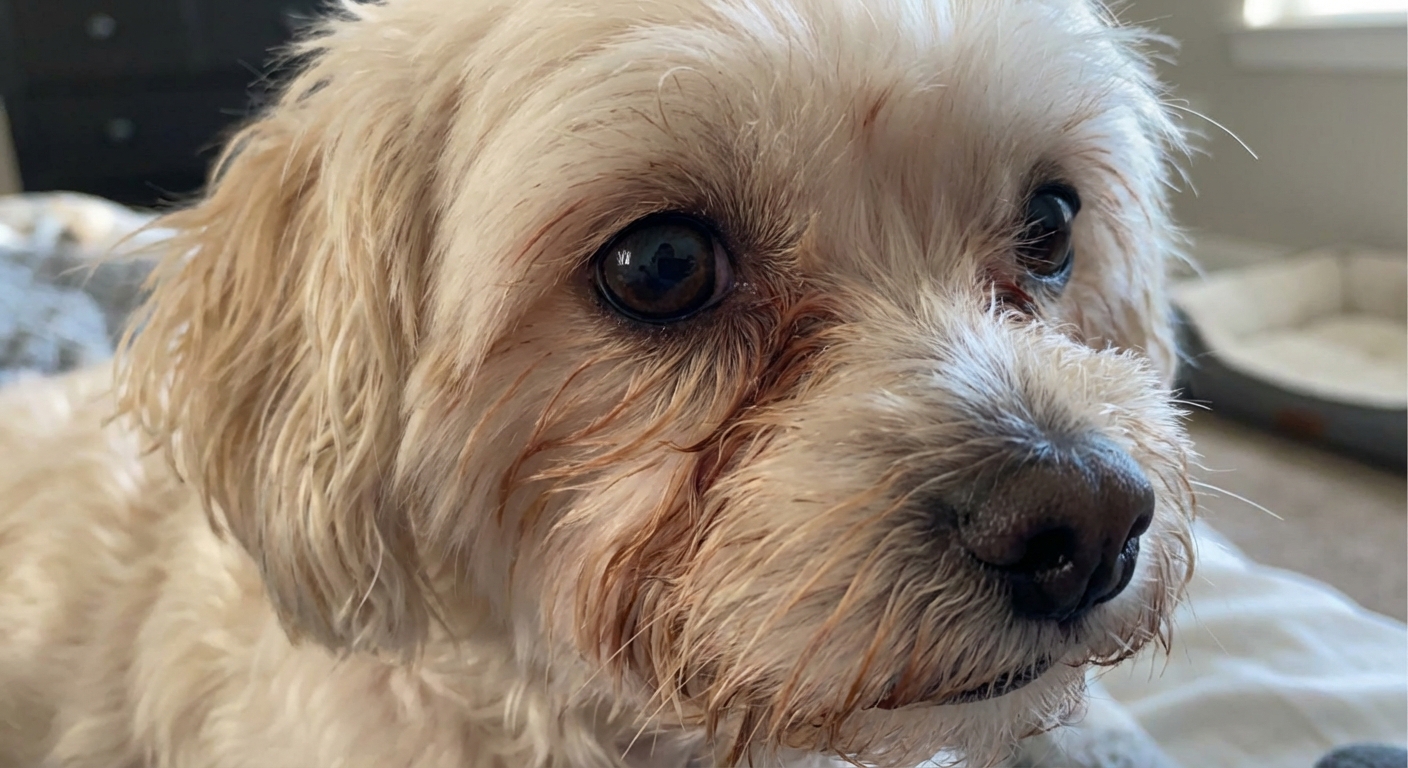
Redness and swelling: common causes
Allergies (environmental or seasonal)
Allergies commonly cause red eyes, watery discharge, and itchy rubbing. Many dogs also have ear infections, paw licking, or facial itching at the same time.
Conjunctivitis
Conjunctivitis can come from allergies, irritants, bacteria, viruses, or an underlying eye condition. You may see red, bloodshot whites of the eyes and increased discharge.
Infectious conjunctivitis is not as common in dogs as it is in people, but daycare, boarding, and kennel cough type respiratory viruses can spread and cause watery eyes and discharge.
Dry eye (KCS)
Dry eye happens when the tear film is inadequate. It often causes thick mucus discharge, redness, squinting, and a dull-looking surface of the eye. Dry eye is common and very manageable, but it needs veterinary testing and long-term treatment.
Corneal ulcer or scratch
A corneal ulcer is painful and can worsen quickly. Watch for squinting, holding the eye closed, pawing at the face, and sensitivity to light. Ulcers are diagnosed with a simple fluorescein stain test at the vet.
Foreign body (grass awn, dirt, hair)
If symptoms start suddenly after a walk, grooming, or playtime, think foreign body. Dogs may blink constantly, squint, and tear a lot.
Eyelid or eyelash problems
In-turned eyelids (entropion), abnormal lashes (distichia), and hair from the face rubbing the cornea can cause chronic irritation, ulcers, and discharge. Many dogs with fluffy facial hair need regular trimming around the eyes.
Cherry eye
This looks like a pink or red bulge in the inner corner of the eye. It is often not an emergency in the moment, but it does need veterinary evaluation soon to protect tear production long term. If your dog is very painful, the eye is not closing normally, or there was trauma, treat it as urgent.
Blepharitis and eyelid skin irritation
Sometimes the eyelids themselves are the problem, not the eyeball. Inflammation or infection of the eyelid margins (blepharitis) can cause redness, swelling, and discharge. Allergies are a common trigger.
Glaucoma or uveitis
These are serious and painful. You might notice a cloudy eye, a larger pupil, a bulging eye, severe redness, or sudden vision changes. Uveitis can also be linked to systemic illness in some cases (including tick-borne disease), which is one more reason not to ignore a painful red eye. These require urgent veterinary care.
When it’s an emergency
Because eyes can deteriorate fast, do not “wait it out” if you see any of these:
- Squinting or keeping the eye closed
- Obvious pain, pawing at the eye, or crying out
- Cloudiness or a blue or white haze on the cornea
- Sudden swelling around the eye or bulging of the eyeball
- Thick yellow or green discharge with worsening redness
- A puncture, scratch, or known trauma
- Different sized pupils or sudden vision changes
- Blood in or from the eye
If you are unsure, it’s safest to call your veterinarian or an emergency clinic. Eye pain is real pain, and early treatment can save vision.
Safe steps at home
If your dog is comfortable and the symptoms are mild, these steps are generally safe while you arrange a vet visit:
- Gently wipe discharge with sterile saline and a clean gauze pad. Wipe from the inner corner outward and use a fresh pad each time.
- Rinse with sterile ophthalmic saline or eye wash if you suspect dust or pollen irritation. Avoid homemade salt water. Avoid contact lens solutions that contain additives or disinfectants.
- Use an e-collar if your dog is rubbing or pawing. Self-trauma can turn mild irritation into an ulcer.
- Trim hair around the eyes if it is poking the eye, but do not use sharp scissors close to the eyelid if your dog won’t hold still. A groomer or your vet team can help safely.
Please avoid: human eye drops (including redness-relief drops like Visine), antibiotic ointments left over from another pet, and steroid eye drops unless your veterinarian specifically prescribed them for this episode. Steroids can make corneal ulcers dramatically worse.
Also skip eye patches. They can trap debris and moisture and make irritation or infection worse.
What your vet may check
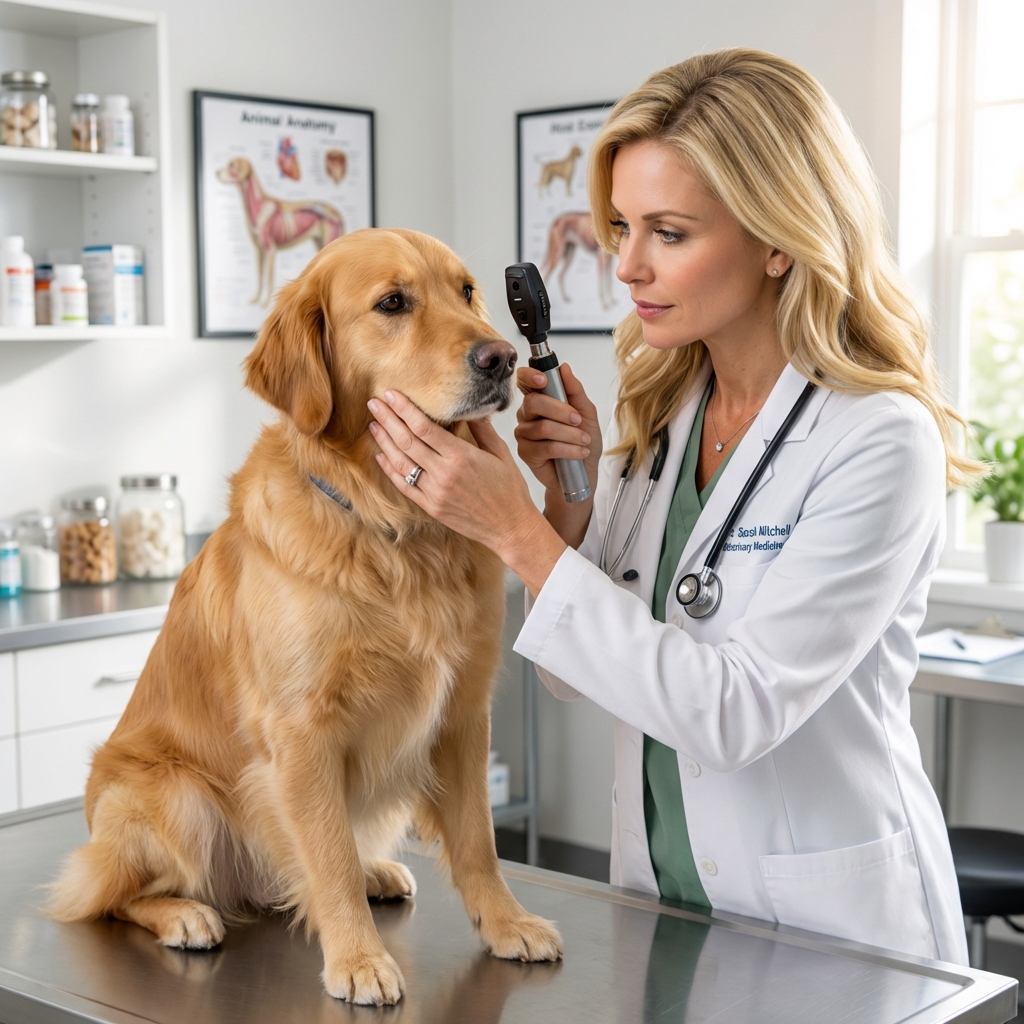
Eye cases often look similar from the outside, so veterinarians use specific tests to protect the eye and choose the right medication:
- Fluorescein stain: checks for corneal ulcers or scratches.
- Schirmer tear test: measures tear production to diagnose dry eye.
- Tonometry: checks eye pressure for glaucoma or other pressure problems.
- Eyelid and lash exam: looks for hair rubbing, abnormal lashes, entropion, or foreign material.
- Oral and nasal exam: dental disease or nasal issues can sometimes affect the tear ducts and cause chronic discharge.
Preventing repeat flare-ups
- Keep face fur tidy: hair rubbing the cornea is a common, fixable trigger in dogs with heavy facial hair.
- Rinse after high-pollen days: a quick sterile saline wipe can reduce irritants.
- Manage allergies proactively: talk with your vet about safe options, especially if your dog also has itchy skin or ears.
- Stay current on checkups: chronic discharge may be dry eye or eyelid anatomy issues that benefit from long-term care.
- Watch grooming products: shampoo or sprays in the eye can cause irritation. Ask your groomer to use eye-safe practices.
Quick checklist
Consider urgent care if your dog is squinting, painful, has a cloudy eye, sudden swelling, or thick colored discharge.
Consider a prompt appointment (within 24 to 48 hours) if symptoms are mild but persistent, recurring, or affecting both eyes.
Eyes are one of those areas where “waiting a few days” can change the outcome. If your gut says something isn’t right, trust it and call your vet.