Green or yellow-green eye discharge in dogs often signals infection or inflammation. Learn likely causes, red-flag symptoms needing same-day care, safe clean...
Article
•
Designer Mixes
Dog Eye Discharge: Green vs. White Goop

Shari Shidate
Designer Mixes contributor
If you live with a dog long enough, you will eventually wipe something out of the corner of an eye. A little “sleep” can be completely normal. But when discharge turns thick, sticky, or changes color, it is your dog’s way of saying, “Something is irritating my eyes.”
As a veterinary assistant in Frisco, Texas, I like to remind families of one simple rule: color and consistency give clues, but your dog’s comfort level is the real headline. Squinting, redness, swelling, or a sudden change deserves attention.
This article is educational and cannot diagnose your dog. If you are worried, call your veterinarian.
What is normal
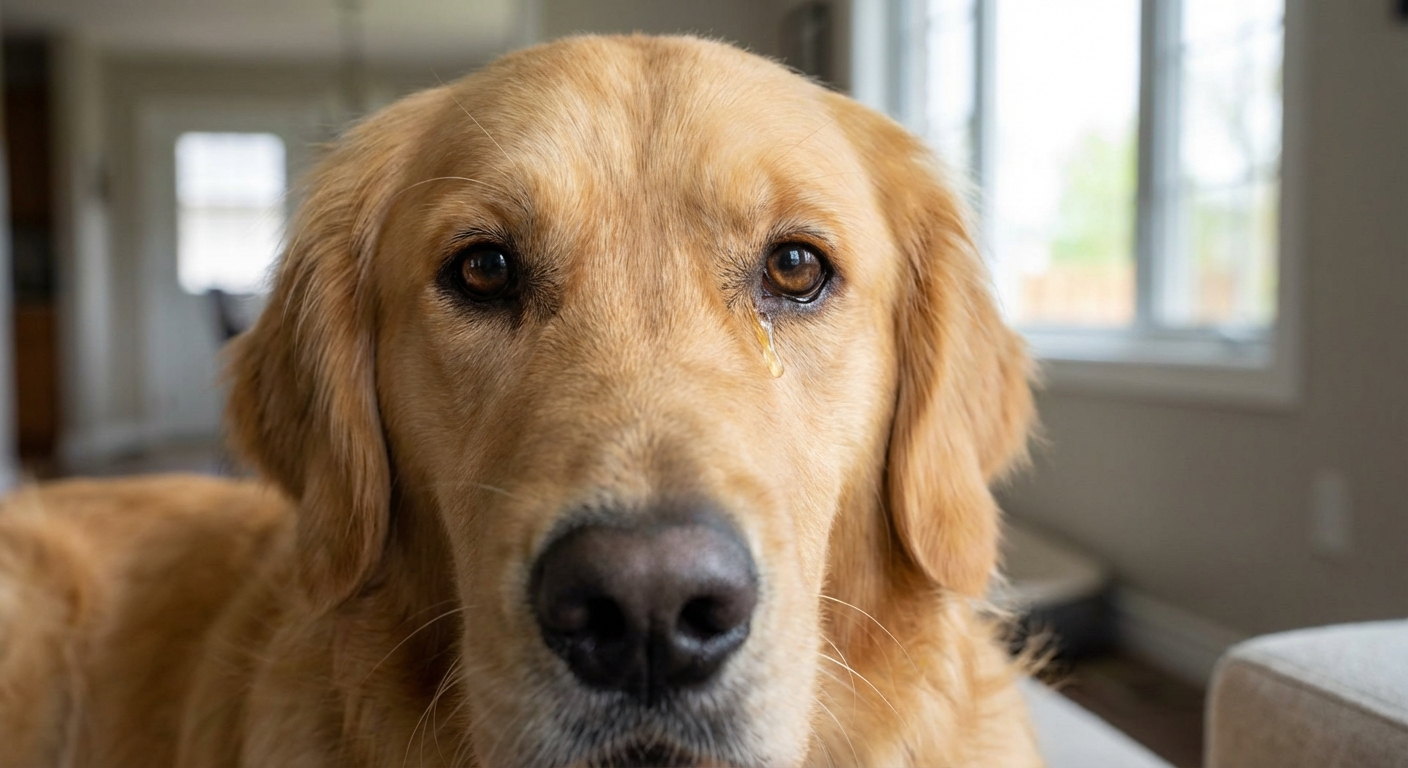
Eye discharge is a mix of tears, oils, mucus, and whatever the eye is trying to flush out (dust, pollen, or germs). Many dogs get a small amount of light tan or clear-to-white crust in the morning, especially brachycephalic breeds like Pugs, Shih Tzus, French Bulldogs, and mixes with flatter faces.
Usually normal
- A small amount of clear tearing after a windy walk
- A tiny amount of white or light tan crust after sleep
- No squinting, no redness, no pawing at the face
Usually not normal
- Thick, sticky, or stringy discharge
- Yellow or green discharge
- One eye is suddenly much worse than the other
- Redness, swelling, squinting, light sensitivity, or your dog seems painful
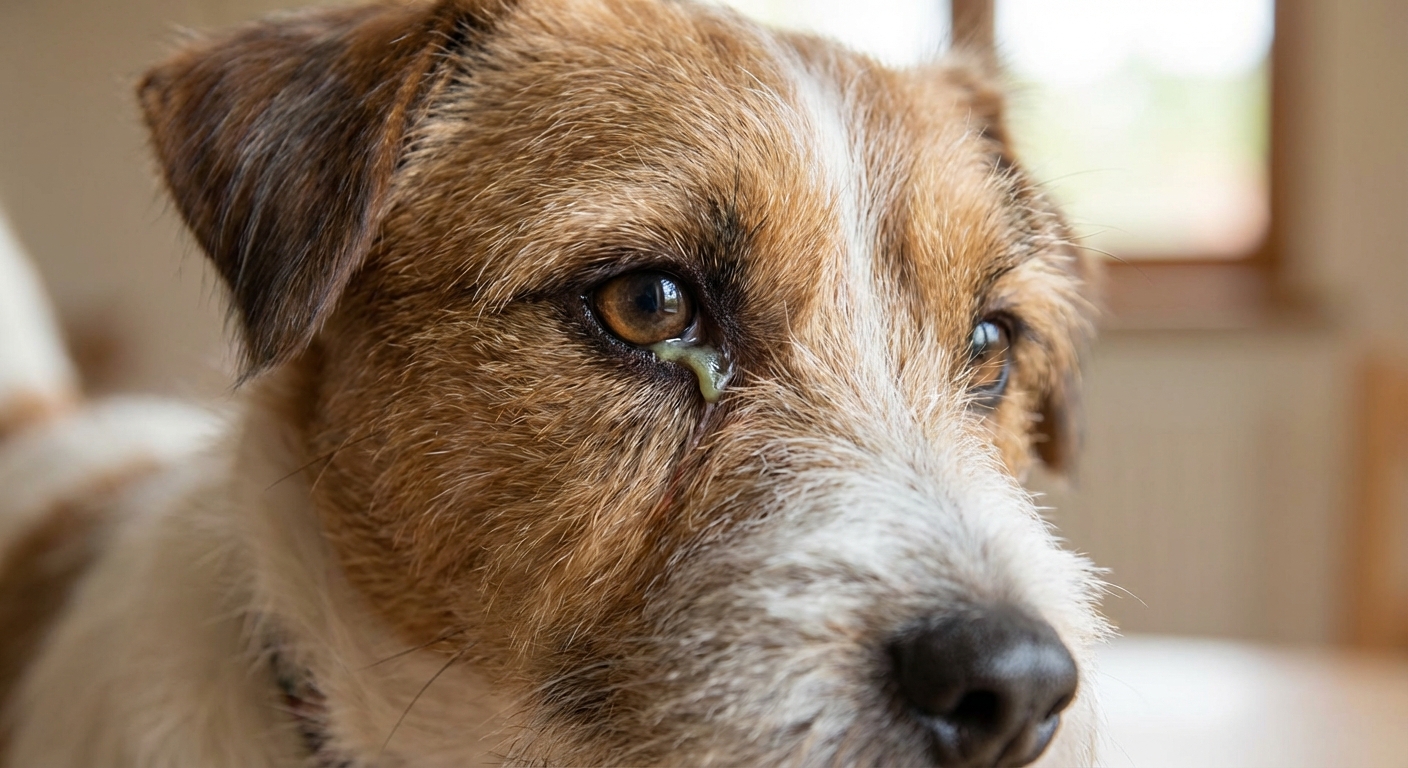
Green discharge
Green (or yellow-green) discharge is often associated with infection or significant inflammation. The color can come from white blood cells and cellular debris, which is a sign the immune system is actively responding.
One important note: color alone cannot tell you what type of germ (or irritant) is involved. Viral, allergic, and irritant conjunctivitis can look similar, and secondary infection can develop on top of the original problem.
Common causes
- Conjunctivitis (inflammation and sometimes infection of the tissues around the eye)
- Corneal ulcer (a scratch on the surface of the eye). This can start with irritation and quickly turn into heavier discharge.
- Foreign body (a grass awn, sand, dust) trapped under the eyelid
- Dry eye (KCS) where the eye cannot make enough tears and becomes prone to irritation and infection
- Contagious respiratory or conjunctival illness in puppies or dogs from group settings (daycare, boarding). These syndromes may include coughing, sneezing, nasal discharge, and “goopy” eyes.
Why this matters: green discharge can be a sign that the eye needs prescription treatment. Some conditions, like ulcers, can worsen quickly without the right medication.
If you suspect something contagious: keep your dog away from other dogs, wash your hands after handling eye discharge, and do not share towels, bedding, or toys until your vet weighs in.
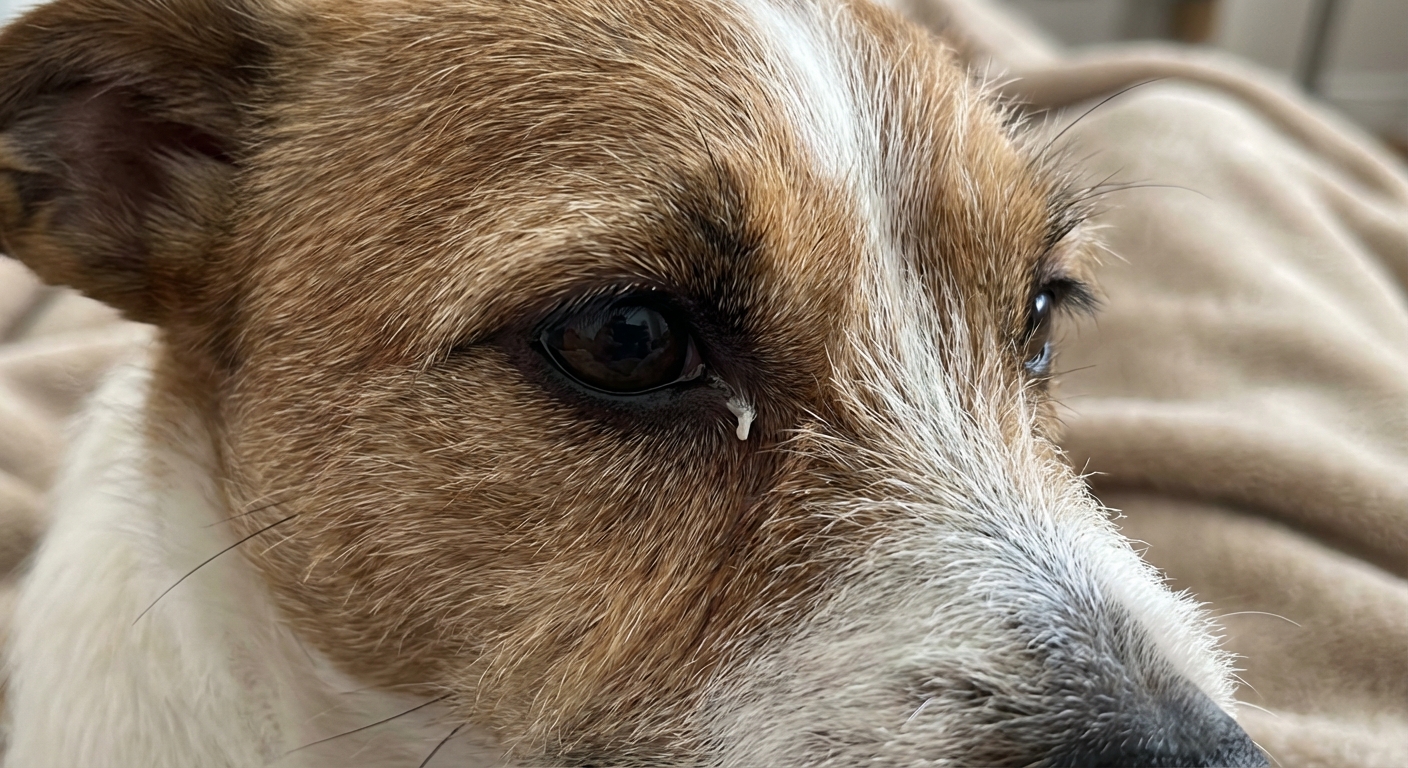
White discharge
White discharge can be tricky because it ranges from totally normal sleep crust to a thicker mucus that signals a problem.
Usually benign
- It is small in amount and wipes away easily
- It happens mainly after naps or overnight
- Your dog’s eye looks comfortable and clear
May be a concern
- It is mucus-like and keeps coming back throughout the day
- There is redness of the whites of the eyes
- Your dog squints, blinks a lot, or rubs their face on the carpet
A common culprit: dry eye can produce stringy white mucus because the eye is not getting enough watery tears. Dogs with dry eye often have dull-looking eyes, redness, and chronic discharge that returns quickly after you wipe it away.
Other colors
- Clear and watery: allergies, wind, mild irritation, early infection, blocked tear drainage
- Yellow: infection or inflammation, often similar concerns as green
- Brown or rust staining: tear staining from chronic tearing, facial conformation, and pigment staining on the hair. Yeast or bacteria on the fur can make staining more noticeable. (You will also hear people mention diet or water; evidence is mixed, so I focus on finding and treating the underlying eye or skin issue.)
- Red-tinged discharge: trauma, severe inflammation, or bleeding from tissues around the eye. This warrants prompt evaluation.
What you can do at home
If your dog seems comfortable and the discharge is mild, gentle cleanup is reasonable while you monitor closely.
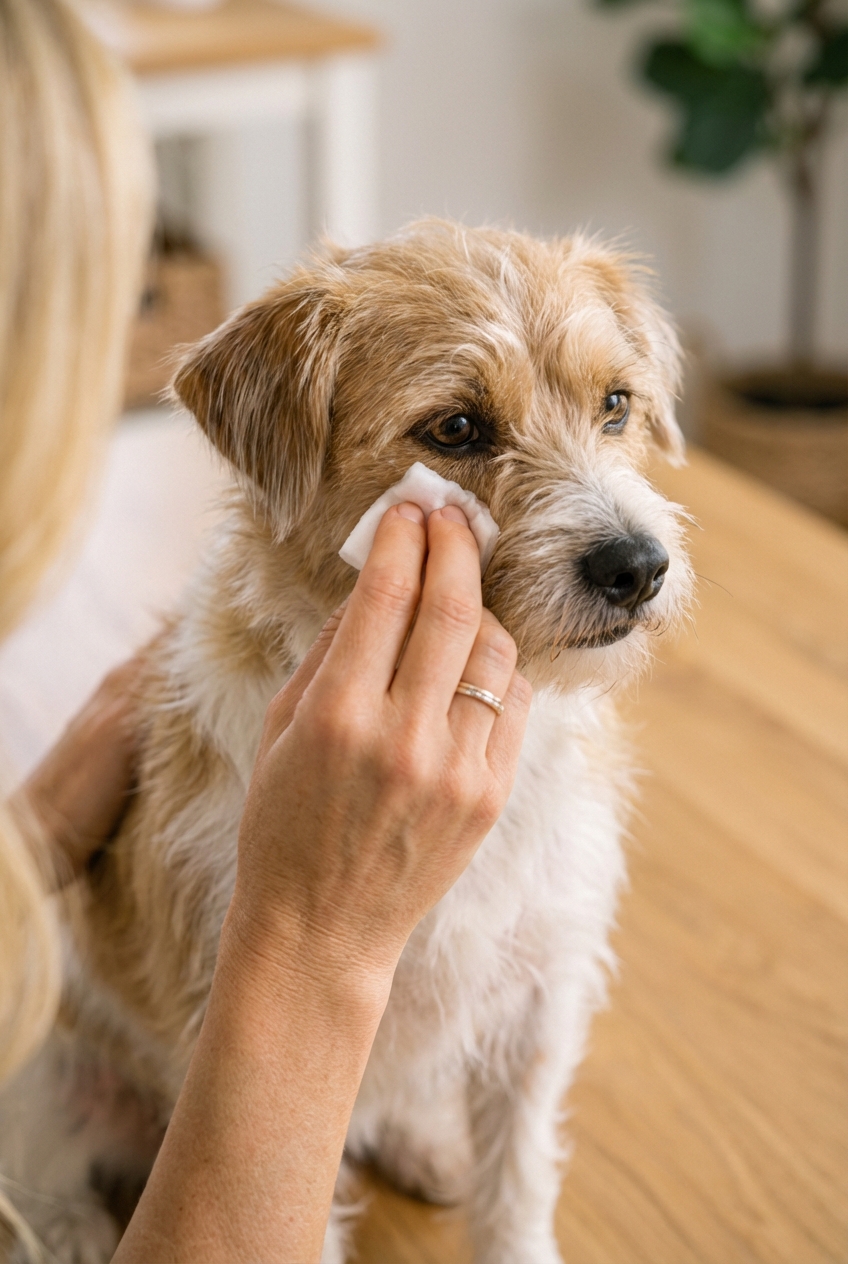
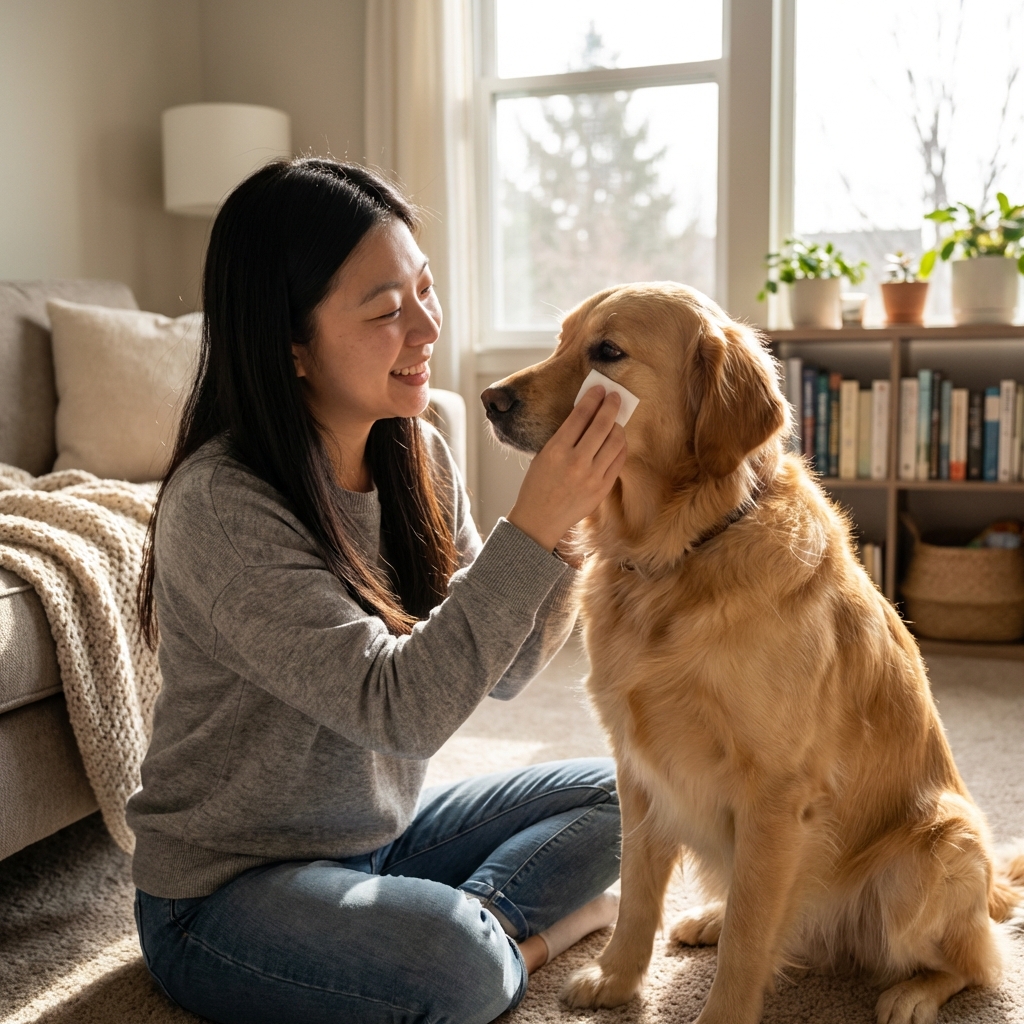
How to clean safely
- Wash your hands first.
- Use a soft cotton pad or clean cloth dampened with sterile saline or warm water.
- Wipe from the inner corner outward, using a fresh pad for each eye.
- Avoid rubbing the eyeball itself. Clean the eyelids and the corner where discharge collects.
- Do not use contact lens solution (it can contain preservatives that sting and irritate).
- Trim long hair around the eyes if it is poking the surface, or have a groomer do it.
Avoid these mistakes
- Do not use hydrogen peroxide, alcohol, essential oils, or human eye drops unless your veterinarian directs you.
- Do not share leftover prescription eye medication from another pet. The wrong drop can make an ulcer much worse, especially steroid-containing medications.
- Do not wait if your dog is squinting or acting painful. Eyes can change fast.
When to call the vet
If you are unsure, I always tell families to call. A quick conversation can help you decide if you can monitor at home or need an exam.
Call in 24 to 48 hours
- Discharge is increasing or changing from clear to white, yellow, or green
- Mild redness that is not resolving
- Both eyes look irritated and allergies are suspected
Same-day visit
- Green or yellow discharge with redness
- Squinting, excessive blinking, or keeping the eye closed
- Swelling around the eye
- Cloudiness, a blue-gray haze, or a visible spot on the cornea
- Recent trauma (rough play, cat scratch, running through brush)
- Brachycephalic breeds (Pugs, Frenchies, Shih Tzus, Boston Terriers) with any new squinting or discharge. They are more ulcer-prone, so I recommend a lower threshold for an exam.
Emergency now
- The eye is bulging or suddenly looks very different in shape
- Suspected chemical exposure (cleaners, pool chemicals). Flush immediately with lots of sterile saline if available, or clean lukewarm water for 10 to 15 minutes, then go in.
- Your dog seems severely painful or cannot see well
What your vet may check
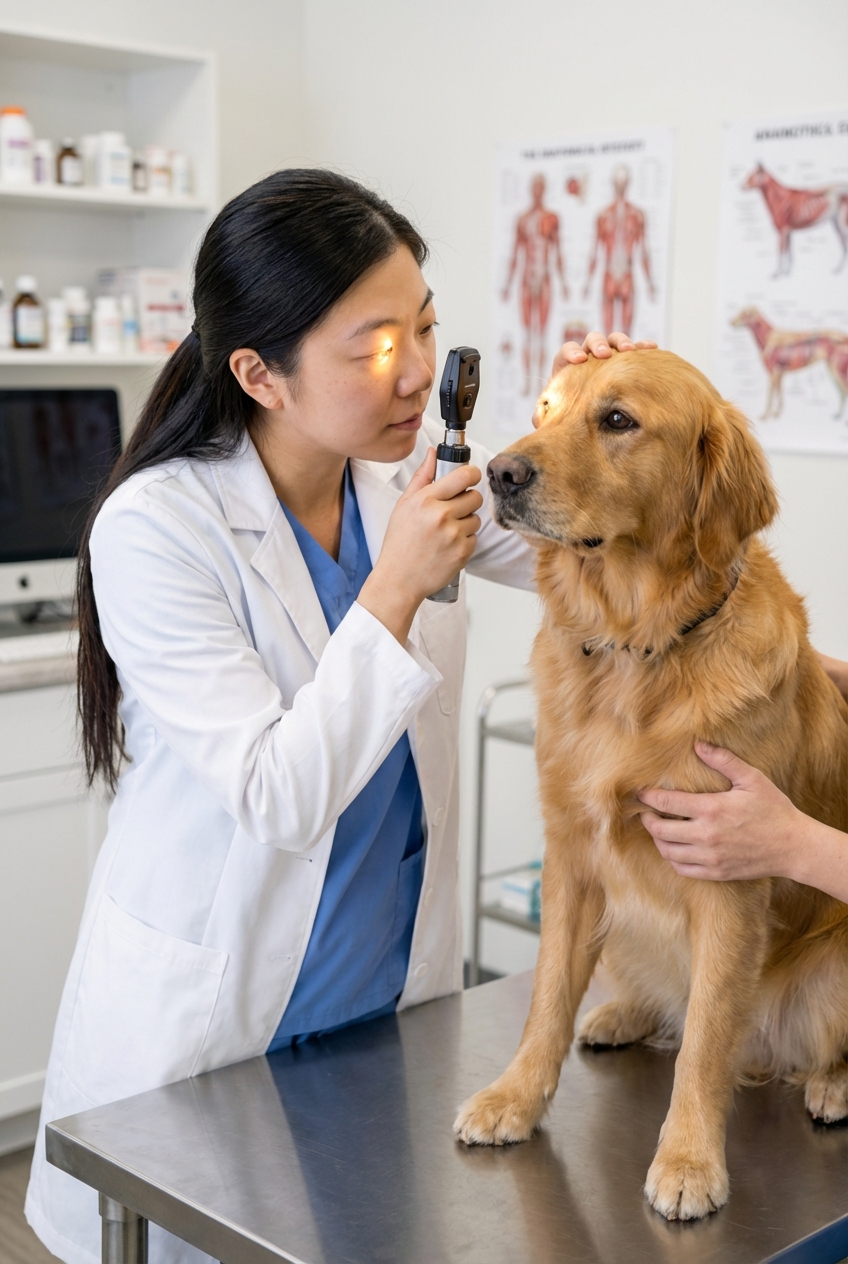
At the clinic, we focus on comfort and protecting vision. Your veterinarian may recommend:
- Fluorescein stain to check for corneal ulcers or scratches
- Schirmer tear test to screen for dry eye
- Eye pressure measurement if glaucoma or uveitis is suspected (these can be very painful and need fast treatment)
- Exam under the eyelids for foreign material
- Evaluation for eyelid or lash issues such as entropion (lid rolling inward) or abnormal lashes that rub the cornea
- Medication such as antibiotic drops, lubricating gels, anti-inflammatory medication (only when safe), and sometimes an E-collar to prevent rubbing
Preventing flare-ups
Some dogs are simply more prone to goopy eyes, especially those with allergies, prominent eyes, or shallow eye sockets. The goal is not perfection. The goal is comfortable, healthy eyes.
- Keep the eye area clean with gentle daily wiping if needed
- Address allergies with your vet’s guidance if you notice seasonal flare-ups
- Groom face hair so it does not poke the eye
- Schedule checks for chronic discharge to rule out dry eye, eyelid issues, or blocked tear ducts
Trust your instincts. If your dog’s eye looks uncomfortable or the discharge turns thick, yellow, or green, it is worth an exam. Protecting the eye early is always easier than fixing a bigger problem later.
Quick takeaway
- Green discharge: often infection or significant inflammation, but color alone cannot identify the cause. Call your vet promptly.
- White discharge: can be normal when mild, but recurring mucus can suggest dry eye or irritation.
- Squinting, redness, cloudiness, swelling: treat as urgent.