Worried about dog eye boogers? Learn what’s normal vs concerning, how discharge color and behavior signal trouble, safe cleaning steps, and when to call yo...
Article
•
Designer Mixes
Dog Eye Boogers: Allergy or Infection?

Shari Shidate
Designer Mixes contributor
Most dogs get a little eye gunk from time to time, especially after sleeping or on a windy day. But when eye discharge becomes frequent, thick, foul-smelling, or your dog seems uncomfortable, it is worth figuring out what is going on. In my work as a veterinary assistant here in Frisco, Texas, I see this question all the time: Are these eye boogers just allergies, or is it an infection?
This guide will help you recognize common patterns, know what you can safely do at home, and understand when it is time to call your veterinarian.
What is “normal” eye discharge?
A small amount of discharge can be completely normal. The eye has its own cleaning system, and a bit of dried tear material can collect at the inner corner.
Often common and mild
- Small crusts after sleeping
- Clear, watery tears when it is windy, dusty, or cold
- Brown tear staining on light-colored fur, especially in short-nosed breeds (this is common, but if it is new, worsening, or paired with irritation, it is worth an exam)
More concerning
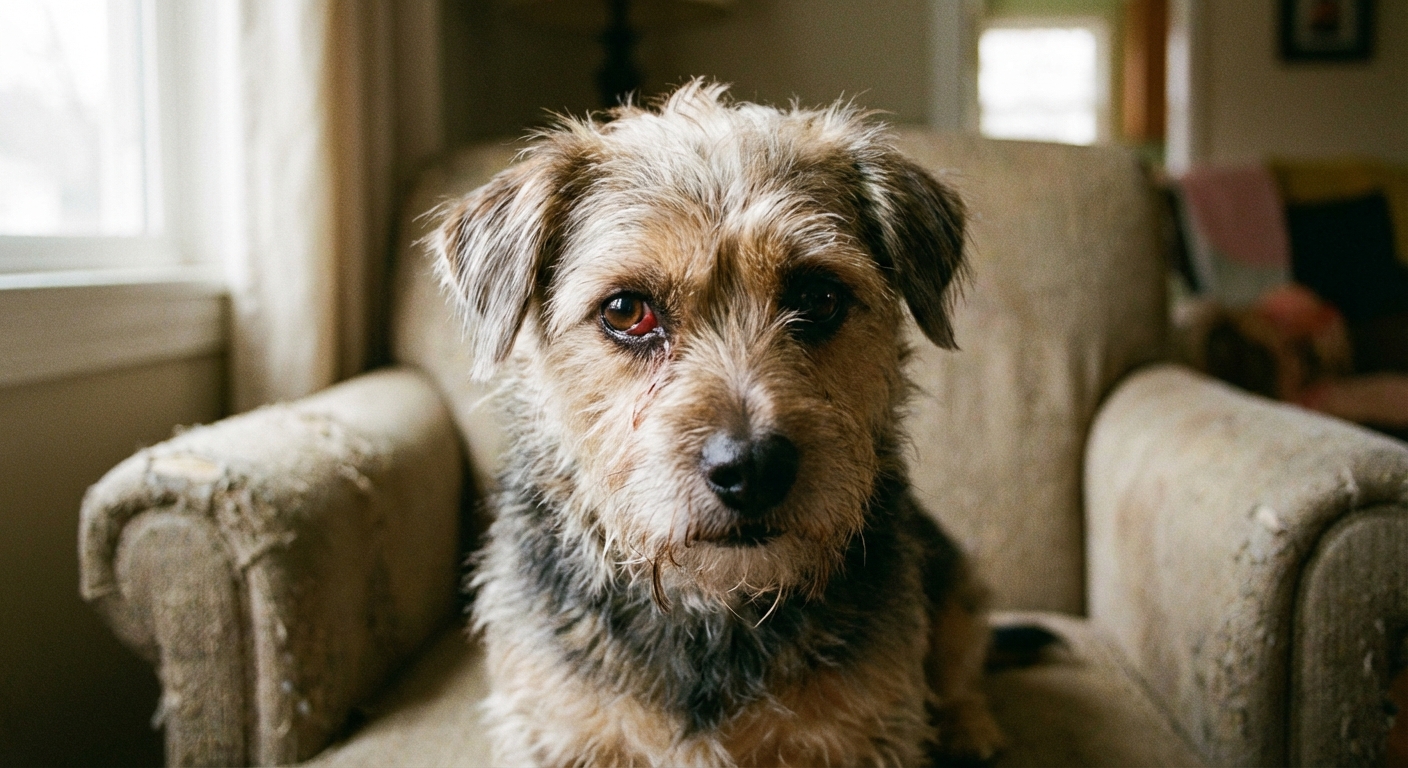
- Yellow, green, or gray discharge
- Thick mucus that returns quickly after wiping
- Squinting, pawing, rubbing, or avoiding light
- Redness of the white of the eye or swollen eyelids
- One eye suddenly worse than the other
Allergy eye boogers
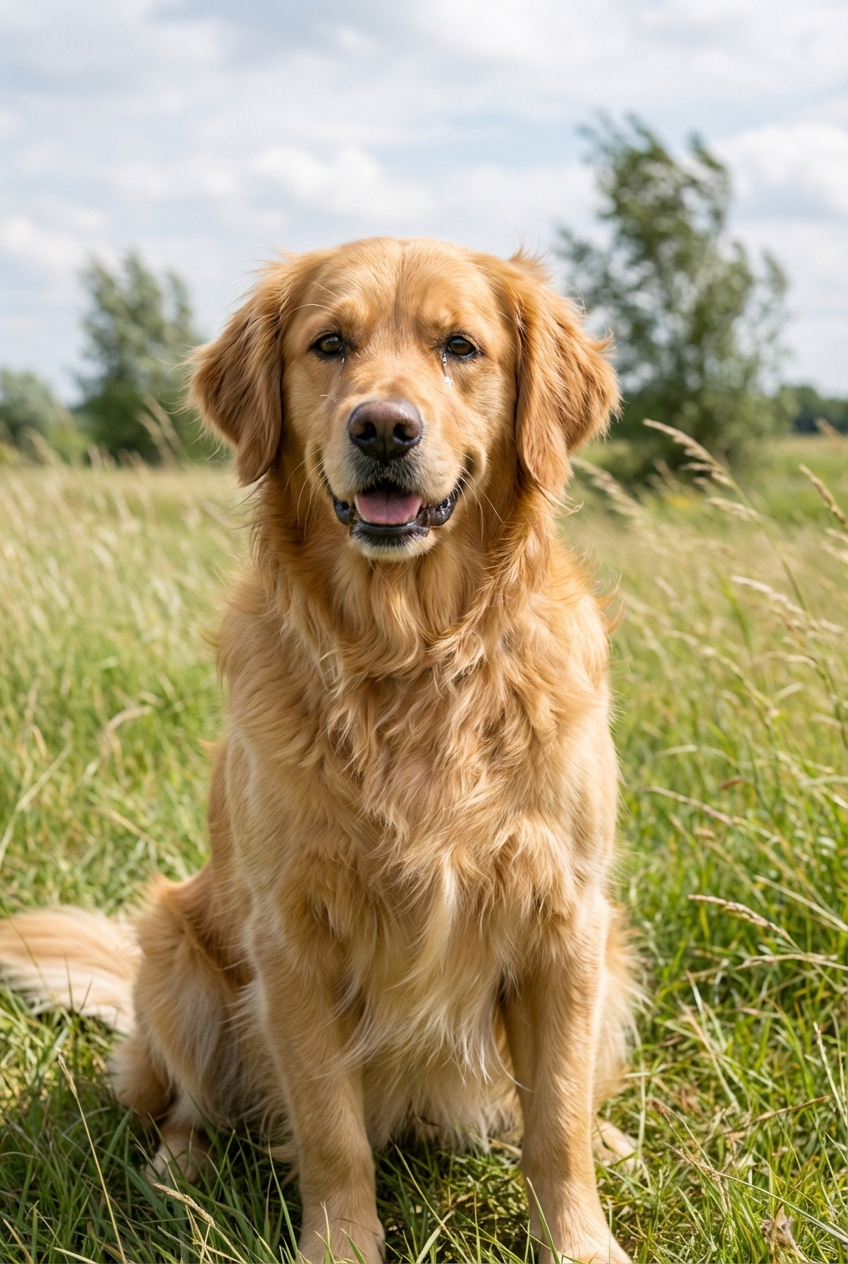
Allergies are a very common cause of watery eyes and mild discharge. In North Texas (and many other regions), seasonal allergens like grass pollens can play a big role. Dogs can also react to dust, smoke, fragrances, and some household cleaners.
Typical clues
- Discharge is usually clear and watery, sometimes with a little stringy mucus
- Both eyes often look affected in a similar way
- Itchiness elsewhere: paw licking, face rubbing, ear scratching
- Sneezing or mild nasal drainage may happen too
- Symptoms fluctuate with seasons, weather, or after being outdoors
Allergies can still cause redness and irritation, but the discharge is more likely to stay watery rather than thick and pus-like.
Infection and conjunctivitis
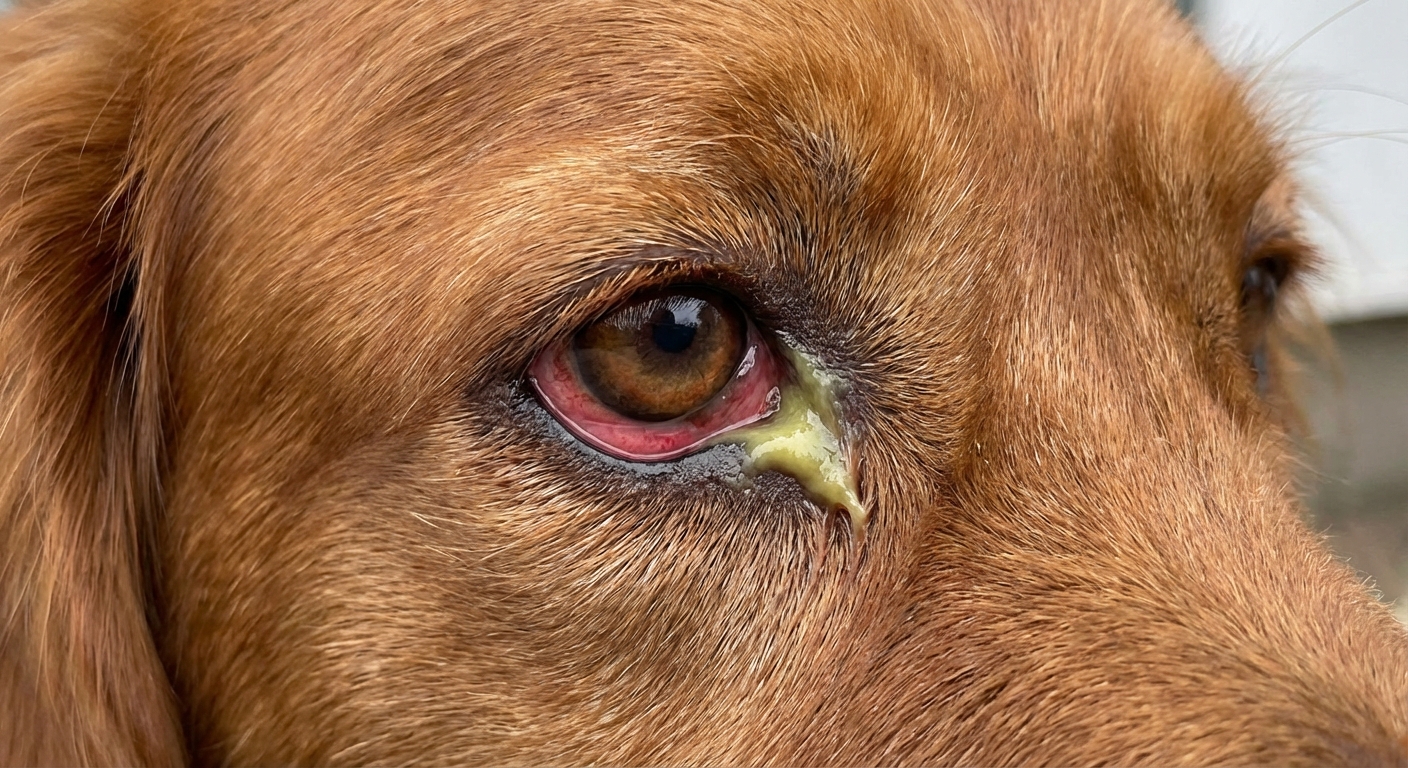
Many dogs with eye discharge have conjunctivitis, which simply means inflammation of the conjunctiva (the pink tissue around the eye). Conjunctivitis can be caused by allergies, irritants, dry eye, eyelid issues, or infection.
Eye infections in dogs are most often bacterial. They are less commonly viral, and many “infections” are secondary to another problem. Something else like allergies, dry eye, or a foreign object can irritate the eye first, and then infection follows.
Typical clues
- Yellow or green discharge that is thicker and sticky
- Crusting that builds up repeatedly through the day
- Red, inflamed conjunctiva (the tissue around the eye)
- Squinting, pain, or sensitivity to light
- One eye is often worse than the other at first
If your dog is squinting or keeping an eye closed, treat that as urgent. Pain can indicate a corneal ulcer, scratch, or something stuck in the eye, and those can worsen quickly without proper treatment.
Other common causes
Eye boogers are not always a simple allergy vs infection situation. Here are other frequent culprits your veterinarian may look for.
Dry eye (KCS)
Dry eye happens when the eye does not produce enough tears. It often causes thick, tacky mucus, redness, and recurring irritation. Many dogs with dry eye need long-term prescription medication and tear testing.
Blocked tear ducts
Blocked drainage can lead to overflow tears and staining. You might see wet fur under the eye and recurrent discharge even though the eye itself looks fairly comfortable.
Foreign material
Seeds, dirt, sand, or plant debris can get trapped under the eyelid. This can cause sudden tearing, squinting, and pawing. It can also lead to infection if not removed.
Eyelid and eyelash problems
Some dogs have eyelids that roll inward (entropion) or eyelashes that rub the eye. Chronic irritation leads to tearing, redness, and mucus. These cases often do best with a veterinary exam and sometimes a surgical fix.
Cherry eye
Cherry eye is a prolapsed gland of the third eyelid that looks like a pink or red bump at the inner corner of the eye. It can cause extra tearing and discharge, and it should be checked by your veterinarian.
Breed-related tearing
Short-nosed breeds and some toy breeds may have more tear overflow due to facial shape. That does not automatically mean infection, but you still want to watch for discomfort, redness, or thick discharge.
Quick home check
You do not need fancy tools to get useful information. A calm 60-second check can help you decide what to do next.
- Color: clear vs yellow/green
- Consistency: watery vs thick and sticky
- Comfort: normal blink vs squinting or holding eye shut
- Redness: mild vs bright red and angry-looking
- One eye or both: one-sided issues are more suspicious for injury or foreign body
If your dog is squinting, pawing hard at the eye, or the eye looks cloudy or bluish, skip home care and call your veterinarian the same day.
Safe home care
What you can do
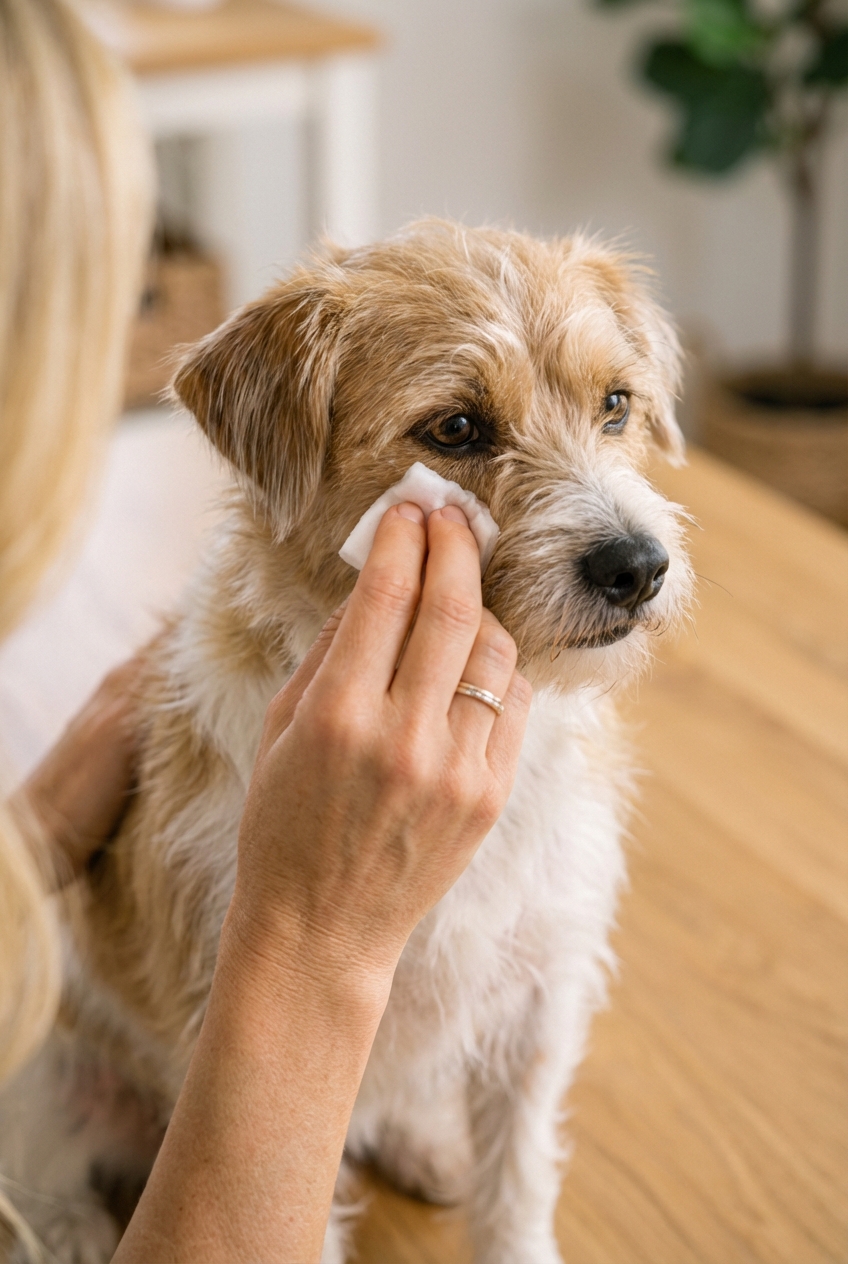
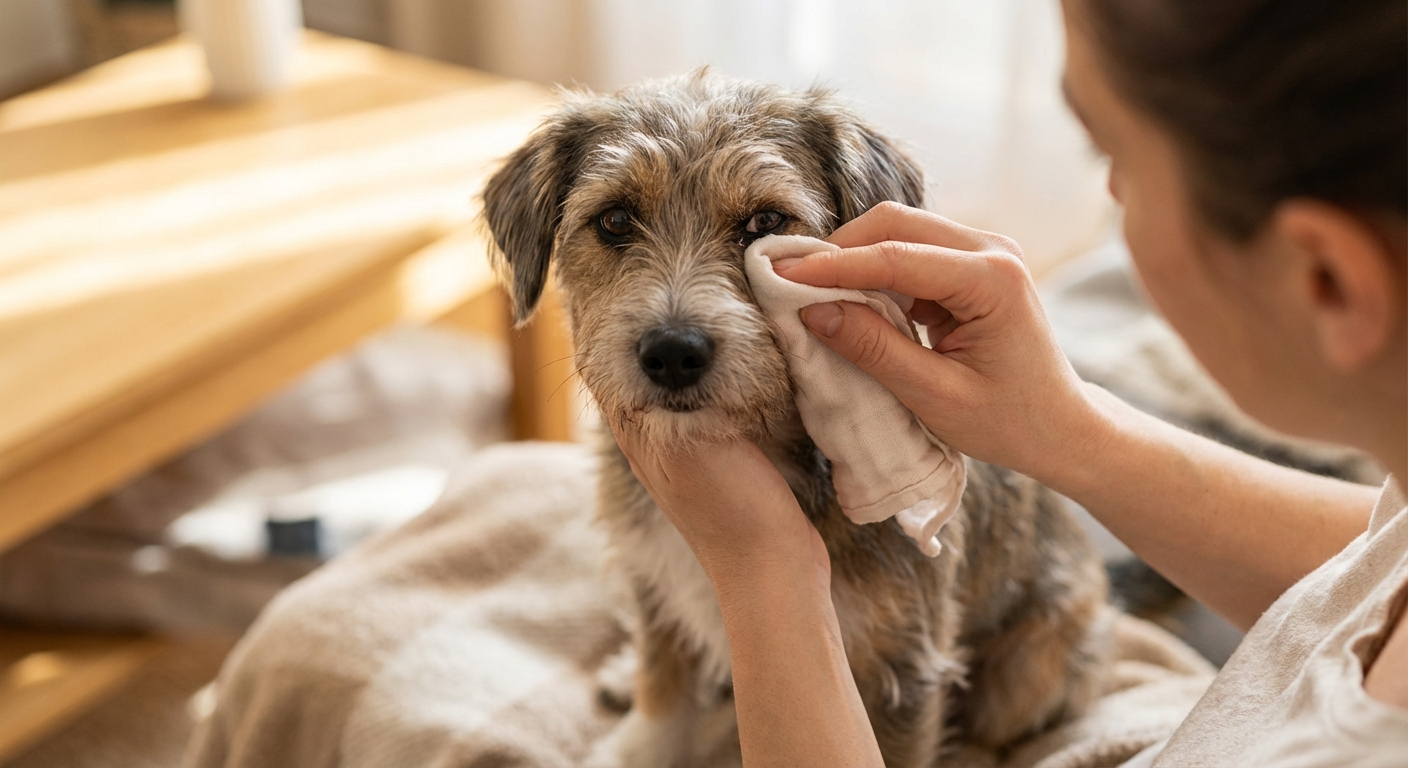
- Gently wipe the eyelids and the inner corner with sterile eyewash saline (store-bought, not homemade) and clean cotton rounds or gauze. Wipe from the inner corner outward, and use a fresh pad each pass.
- Warm compress for 1 to 2 minutes to soften crusts if needed.
- Keep hair trimmed around the eyes if it is poking or trapping discharge (or ask your groomer).
- Reduce irritants like smoke, heavy fragrances, dusty bedding, and harsh cleaning sprays near your dog.
What to avoid
- Do not use human eye drops unless your veterinarian tells you to.
- Do not use leftover prescription drops from a past issue. Eye medications are condition-specific.
- Avoid steroid-containing drops unless they are prescribed for this specific episode. Steroids can be dangerous if an ulcer is present.
- Do not flush under the eyelids at home or try to remove a stuck object yourself.
- Do not use homemade solutions or contact lens products.

When to call the vet
Eyes are delicate, and problems can go from mild to serious faster than many pet parents expect.
Call promptly if you see
- Yellow or green discharge
- Squinting, pain, pawing, or rubbing
- Cloudiness on the surface of the eye
- Swelling around the eye
- Sudden onset in one eye
- No improvement within 24 to 48 hours of gentle wiping and avoiding irritants
- Any eye issue in a puppy or an immunocompromised dog
- Fever, lethargy, or a “not themselves” vibe along with eye symptoms
Go the same day for eye emergencies
- Trauma (scratch, bite, hit by a branch) or chemical exposure (cleaners, pool chemicals)
- Sudden severe pain or the eye held tightly shut
- Cloudy eye, a bluish haze, or a noticeably enlarged pupil (concerns include glaucoma or uveitis)
- Bulging eye or a rapidly growing red swelling around the eye
- Facial asymmetry or a droopy eyelid on one side
What your vet may do
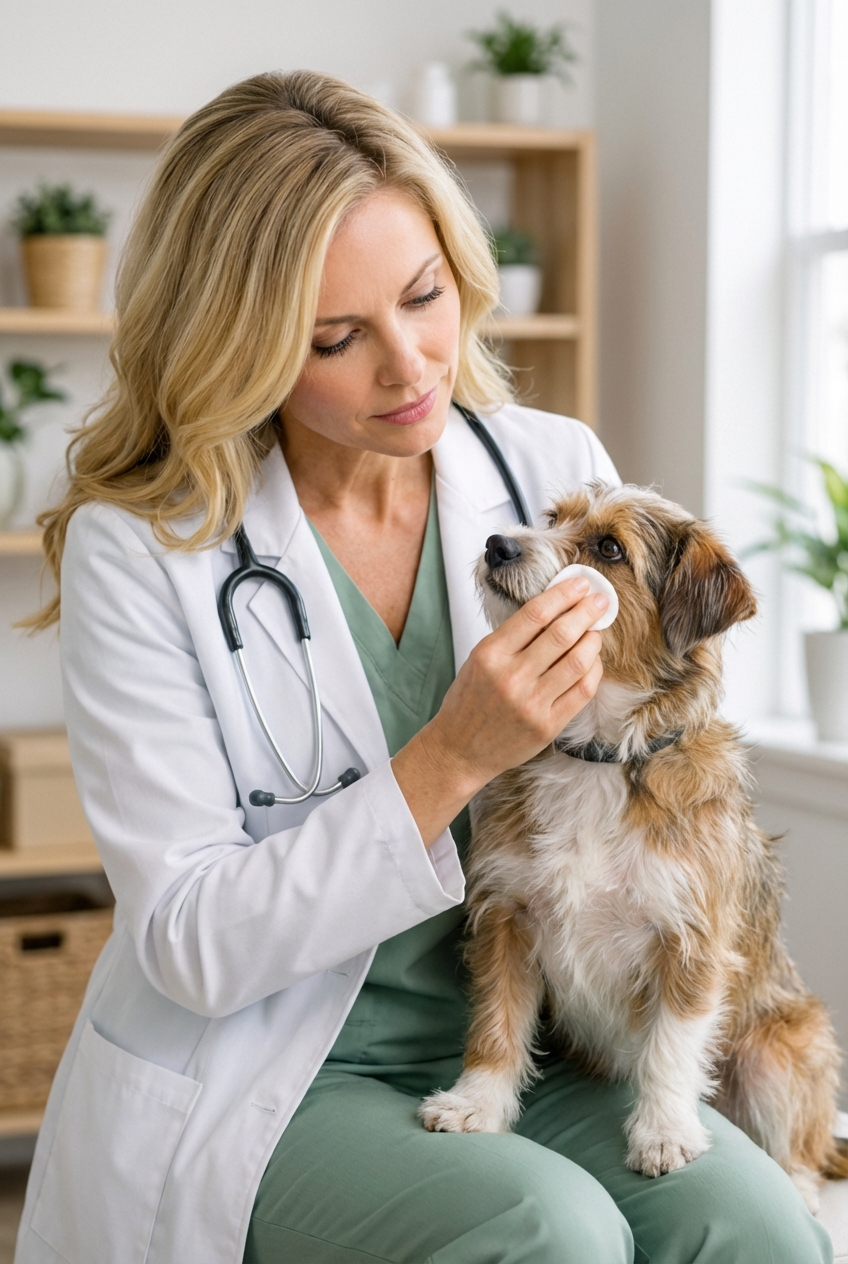
Depending on the exam, your vet may recommend a fluorescein stain test for ulcers, a tear production test for dry eye, pressure measurement if glaucoma is a concern, and an eye-safe culture if infection keeps returning. The goal is to treat the cause, not just the discharge.
Preventing repeat flare-ups
- Wash bedding weekly in fragrance-free detergent if allergies are suspected.
- Wipe paws and face after outdoor time during high pollen days.
- Stay consistent with flea control, since itching and skin inflammation can worsen facial rubbing.
- Schedule regular grooming to keep hair from irritating the eyes.
- Ask about allergy support if your dog has frequent ear infections, paw licking, or seasonal flare-ups.
And remember, you are not overreacting by asking questions. When it comes to eyes, it is always better to be a little cautious. A quick exam can prevent a lot of discomfort and protect your dog’s vision.