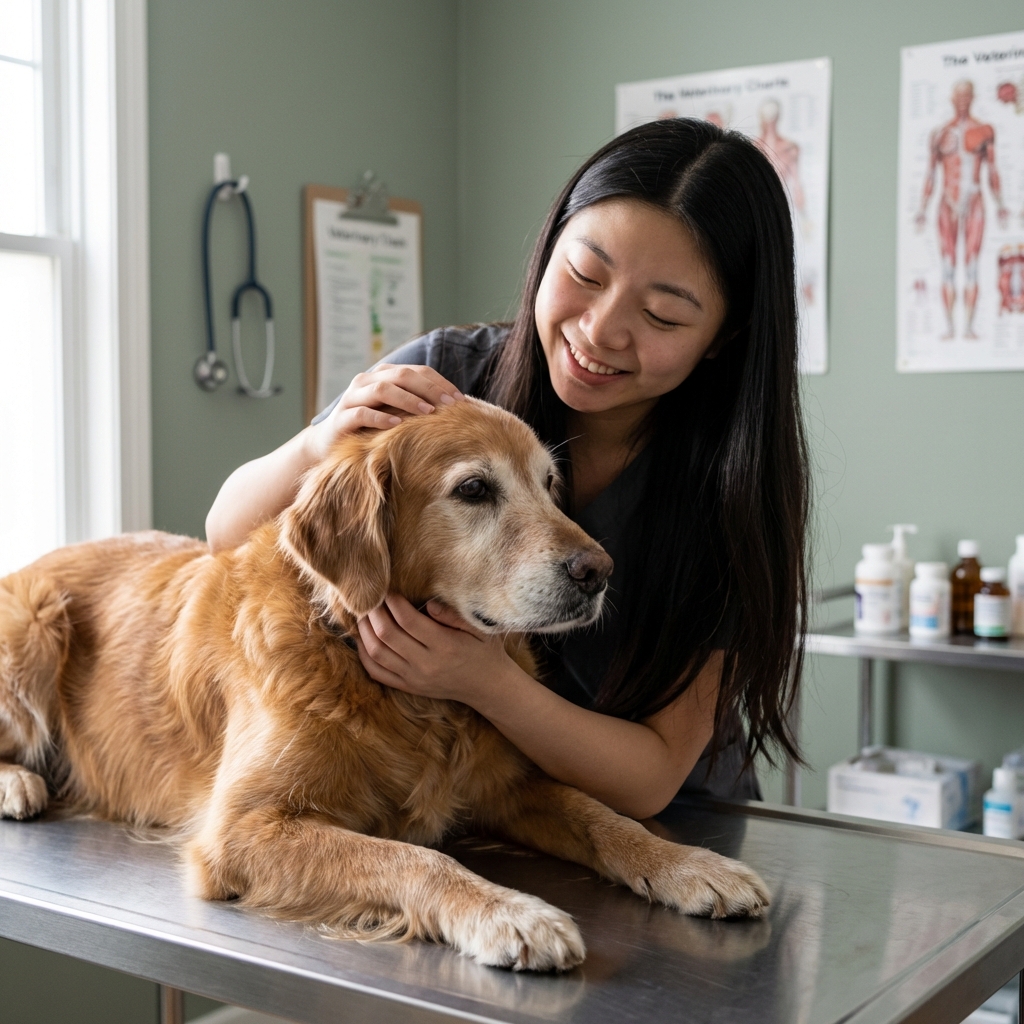
A compassionate guide to end-of-life care for dogs at home—comfort setup, mobility and hygiene tips, medication safety, quality-of-life tracking, emergency...
Article
•
Designer Mixes
Dog End of Life Signs: Facts & Tips

Shari Shidate
Designer Mixes contributor
First, a gentle truth
As a veterinary assistant here in Frisco, Texas, I have seen something over and over. Dogs are incredibly good at loving us, and often very quiet about their discomfort until they cannot be anymore. If you are searching for end of life signs, you are not being dramatic. You are being attentive.
This article will help you recognize common signs that a dog may be nearing the end of life, plus a few comforting facts and practical tips to support your dog and your family. Every dog is unique, and none of these signs alone can predict a timeline. When in doubt, your vet can help you interpret what you are seeing.
If you are seeing sudden collapse, repeated seizures, uncontrolled bleeding, severe breathing distress, or your dog cannot get comfortable at all, seek emergency veterinary care right away.
Common dog end of life signs
Many of these changes can also happen with treatable illness, medication side effects, or pain that can be managed. What matters most is the pattern over time and whether your dog can still enjoy the basics: rest, breathing comfortably, eating and drinking enough, and interacting in a way that feels like them.
1) Appetite and thirst changes
- Eating much less or refusing food, even favorites
- Drinking less, or sometimes drinking more due to kidney or endocrine disease
- Trouble chewing or swallowing, drooling, or coughing with meals
Tip: If your dog still wants to eat but struggles, ask your vet about nausea control, pain relief, appetite stimulants, or easier textures. Small, frequent meals and warming food slightly can boost aroma and interest.
Important: Near the end of life, some dogs naturally eat less as the body slows down. That said, ongoing refusal to eat can also be a sign of nausea, pain, dehydration, or a metabolic crisis. If appetite loss lasts more than 24 hours, or is paired with vomiting, diarrhea, marked lethargy, or weakness, call your vet.
2) Weight loss and muscle wasting
Unintentional weight loss, a bony spine or hips, and thinning muscles along the thighs are common in chronic disease and advanced aging. This can happen even when a dog is still eating.
3) Mobility decline and weakness
- Difficulty standing up, climbing stairs, or getting into a favorite spot
- Slipping on floors, knuckling over, or dragging toes
- Needing help to squat to urinate or defecate
Tip: Non-slip rugs, a supportive harness, and a low-entry bed can make a huge difference. If your dog is falling or panicking during attempts to stand, it is time to discuss quality of life and safety with your vet.
4) Breathing changes
Labored breathing, faster breathing at rest, open-mouth breathing, or a belly that works hard to move air can signal pain, heart disease, lung disease, anemia, or fluid buildup.
- Watch resting breaths: when asleep or truly resting, many dogs are often under about 30 breaths per minute. What matters most is what is normal for your dog, so ask your vet what range to watch for.
- Red flags: blue or gray gums, extended neck posture to breathe, or inability to lie down comfortably.
5) Confusion, anxiety, or behavior shifts
Some dogs show cognitive changes near the end of life, including pacing, staring into space, getting stuck in corners, vocalizing at night, or seeming less responsive.
Tip: Keep pathways clear, add soft night lighting, and maintain a calm routine. Talk to your vet about medications or supplements that can ease anxiety or cognitive changes.
6) Withdrawal and less interest in connection
Many families notice their dog is less excited about greeting, toys, walks, or even gentle petting. Some dogs become clingier, while others seek solitude. Both can be normal, but a big personality change is meaningful.
7) Incontinence and hygiene challenges
Urinary or fecal accidents can occur with weakness, neurologic decline, kidney disease, or medication changes. Repeated soiling can lead to skin irritation and discomfort.
- Use washable bedding or puppy pads under a soft blanket.
- Trim fur if needed and clean gently with warm water or pet-safe wipes.
- Ask your vet about diapering, UTI screening, or pain control.
8) Pain that breaks through
Dogs do not always cry when they hurt. Look for subtle signs:
- Restlessness, panting, trembling
- Hunched posture, tucked abdomen
- Guarding, flinching, or not wanting to be touched
- Changes in sleep, appetite, or willingness to move
Tip: If you suspect pain, do not wait. There are often ways to improve comfort through hospice-level care, even when a cure is not possible.
9) GI upset and bathroom changes
Vomiting, diarrhea, constipation, and straining can show up near the end of life, especially with kidney or liver disease, cancer, pain medications, dehydration, or reduced mobility. Even “mild” GI issues can drain comfort quickly.
- Call your vet promptly if vomiting repeats, your dog cannot keep water down, or diarrhea is frequent.
- Seek urgent care if you see blood in vomit or stool, a swollen belly, repeated unproductive retching, or signs of dehydration (sticky gums, sunken eyes, severe lethargy).
10) Temperature and circulation changes
As the body weakens, you may notice cooler ears or paws, pale gums, or a dog that feels “chilly” even in a warm room. These can also be signs of shock or poor circulation, especially if paired with weakness or collapse.
Tip: If your dog has pale or gray gums, sudden weakness, collapse, or seems “not there,” treat it as an emergency and seek veterinary care right away.
Reassuring facts to keep you steady
When you are anxious, your brain wants certainty. A few grounded reminders can help you feel steadier as you make loving, practical decisions.
- Dogs are masters at reading us. Research suggests dogs track human cues and emotions closely. Calm voices, slow breathing, and gentle touch can genuinely help them settle.
- Eating less is not always suffering. Near the end of life, the body can naturally slow down and appetite may fade. Still, prolonged anorexia can also mean nausea, pain, dehydration, or another problem that may be treatable. Loop your vet in early, especially if there is vomiting, diarrhea, or marked weakness.
- Quality of life can change quickly. A dog can look “okay” one day and significantly worse the next due to fluid shifts, bleeding, infection, or organ changes. Keeping notes can help you see trends sooner.
- Your presence matters more than perfection. Dogs do not need an ideal day. They need a safe, loving one.
Comfort tips you can start today
Think of this as supportive care you can offer at home while you coordinate with your vet.
Create a cozy one-room setup
- Choose a quiet, familiar area close to you.
- Layer a supportive bed with washable blankets.
- Keep water nearby and consider a second bowl on the other side so your dog does not have to reposition as much.
Make walking safer
- Add traction with rugs or yoga mats.
- Use a sling or harness to support hips.
- Short potty trips are enough. Comfort beats distance.
Support appetite without pressure
- Offer small portions of strongly scented foods your vet approves.
- Try softer textures if chewing is tiring.
- If your dog refuses, remove the bowl and try later. Repeated coaxing can increase stress.
Keep a simple symptom journal
Write down a few quick notes once or twice a day:
- Eating and drinking
- Bathroom habits
- Breathing effort and rate at rest
- Pain signs and mobility
- One “bright spot” and one “hard moment”
This becomes incredibly helpful when you talk with your vet and when you are making hard decisions through foggy, emotional days.
Why timelines vary
It is completely normal to want a timeframe. The hard part is that end of life decline is not the same for every dog. Some decline gradually over weeks, while others shift quickly in a matter of days due to fluid changes, bleeding, infection, or organ failure.
If you are facing a serious diagnosis, ask your vet about a hospice plan: what to monitor at home, which changes mean “call today,” which changes mean “go now,” and how to adjust medications to protect comfort.
When to talk about hospice or euthanasia
These conversations are an act of love. Many families wait because they fear doing it “too soon,” but waiting too long can mean your dog experiences unnecessary distress.
A practical quality of life checklist
Consider asking yourself these questions, ideally with your vet:
- Hurt: Is pain controlled most of the day?
- Breathing: Can my dog breathe comfortably at rest?
- Hydration and nutrition: Can they take in enough to feel okay without struggle?
- Hygiene: Can we keep them clean and dry without constant distress?
- Happiness: Do they still enjoy a few things, even small ones?
- Mobility: Can they get up and reposition with help, without frequent falling?
- More good days than bad: Over the last 7 days, which side is winning?
If you like having a scoring tool, ask your vet about the HHHHHMM quality of life scale (Hurt, Hunger, Hydration, Hygiene, Happiness, Mobility, More good days than bad). It can help you put words to what you are already noticing.
Tip: If your dog is having repeated “bad days,” especially with breathing trouble, uncontrolled pain, or panic, it is time to call your vet promptly to discuss next steps.
What to expect with a peaceful goodbye
Many people are afraid of the unknown. Your veterinary team can talk you through the exact process, but in general, euthanasia is designed to be gentle and pain-free. Most pets become relaxed and sleepy first, then pass quietly.
Sometimes, even with a very peaceful passing, the body can do a few things that surprise families. You might see a deep breath, a small twitch, or release of urine or stool. These are reflexes and do not mean your dog is suffering. Your vet can use sedation first and adjust medications as needed, since individual experiences can vary.
If you are considering an in-home service, ask about:
- Scheduling and aftercare options (private cremation, communal cremation, burial where legal)
- How they manage anxiety and pain beforehand
- What you can do to prepare your space
You do not have to carry this alone. Ask your vet to explain choices in plain language and help you plan a goodbye that prioritizes comfort.
Quick FAQ
Do dogs know they are dying?
We cannot know exactly what a dog understands about death, but we do know they feel comfort, stress, pain, and safety. Your calm presence, familiar routine, and pain control matter deeply.
Is hiding a sign of dying?
It can be. Dogs may hide when they feel unwell, nauseated, painful, or anxious. It is also a common instinctive behavior. A sudden change in where they rest is worth a vet check.
What if my dog stops eating for a day?
One skipped meal can happen for many reasons. If appetite loss lasts more than 24 hours, or if your dog is weak, vomiting, has diarrhea, or seems painful, call your vet.