A compassionate guide to end-of-life care for dogs at home—comfort setup, mobility and hygiene tips, medication safety, quality-of-life tracking, emergency...
Article
•
Designer Mixes
Dog End of Life Care: Comfort Tips at Home

Shari Shidate
Designer Mixes contributor
When you love a dog, you want their last days to feel safe, familiar, and full of comfort. As a veterinary assistant, I have seen how small changes at home can ease pain, reduce anxiety, and help a family feel more confident in the care they are giving.
This guide shares gentle, evidence-based comfort tips you can use at home, plus clear signs it is time to call your veterinarian or consider in-home hospice or euthanasia support.
Note: This is general education and not a substitute for veterinary diagnosis or treatment. If you are worried your dog is suffering, contact your veterinarian promptly.
Start with comfort
End of life care is not about doing everything. It is about doing what helps your dog feel better today. Many families find it helpful to think in terms of three daily questions:
- Is my dog comfortable? (pain, nausea, breathing, anxiety)
- Is my dog hydrated and able to eat enough?
- Can my dog rest and eliminate without distress?
If one of these areas is slipping, your veterinarian can often help with medication adjustments, mobility aids (like harnesses, ramps, or supportive slings), appetite support, or a hospice plan.
Create a cozy rest nest
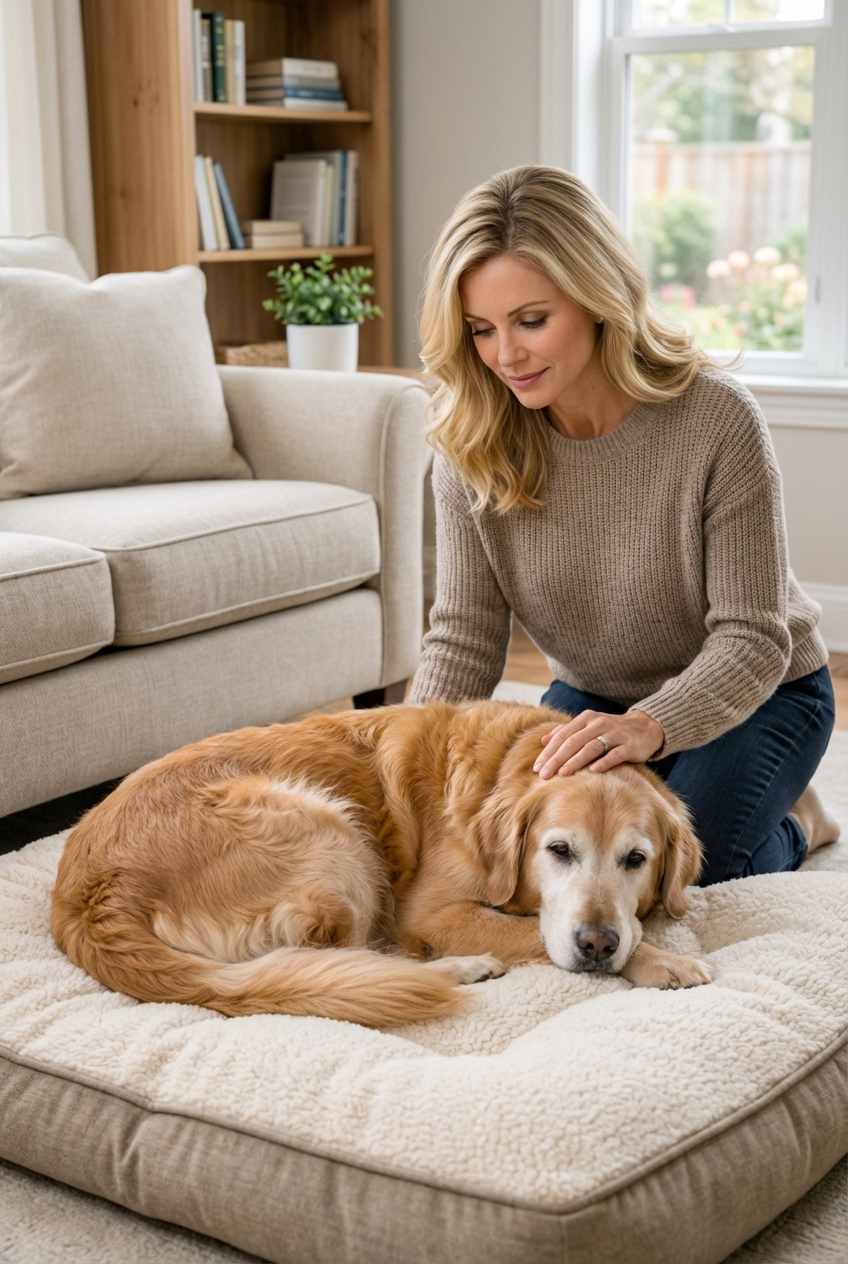
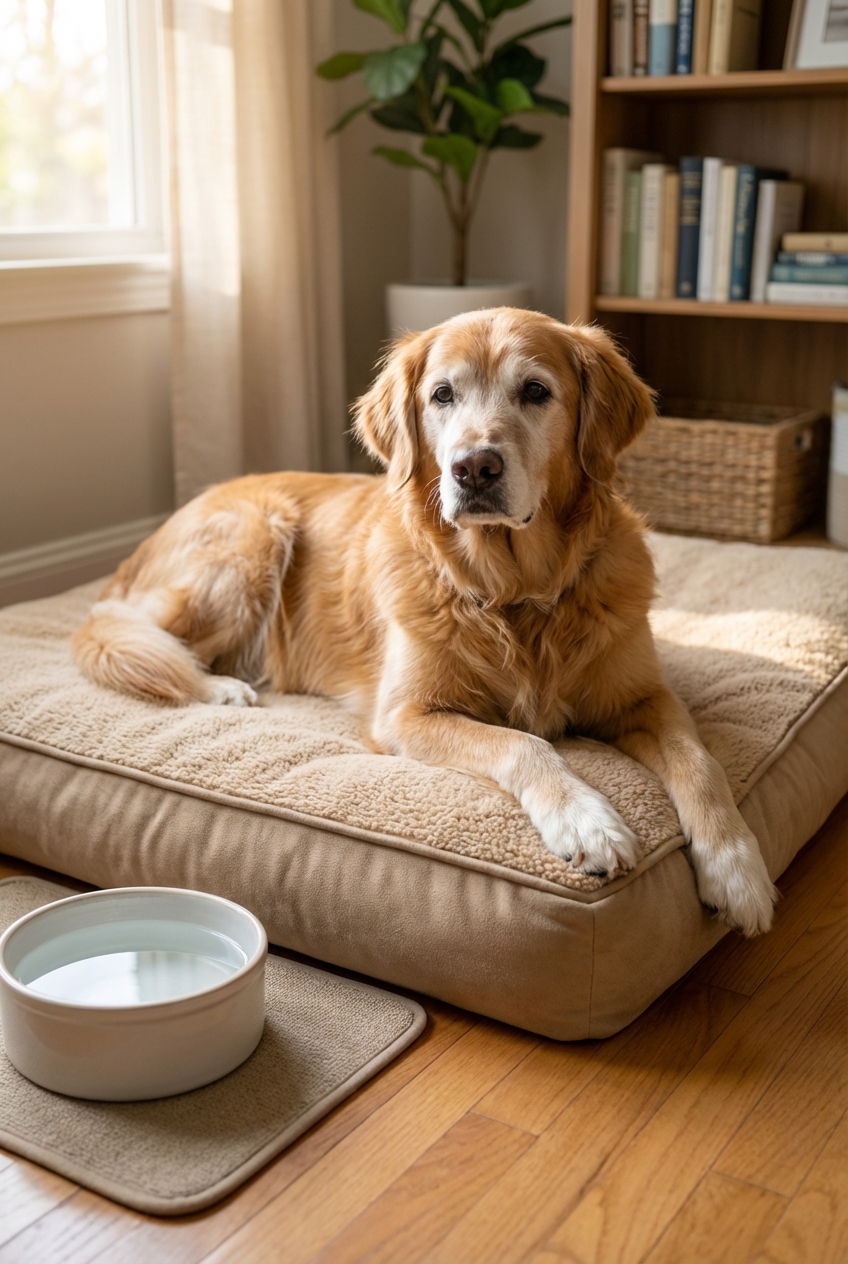
As dogs weaken, pressure on hips, elbows, and shoulders can become painful. A supportive resting area is one of the highest-impact changes you can make.
Set up the space
- Choose one main area near you, but away from noise and heavy foot traffic.
- Use a thick, supportive bed or layered blankets. If your dog has trouble getting up, a lower profile bed can help.
- Add traction with yoga mats or non-slip rugs to help prevent falls when they stand up. Keeping nails trimmed and paw fur tidy can also improve grip.
- Keep essentials nearby (water, pee pads, wipes, medications, a flashlight for nighttime potty trips).
Prevent pressure sores
Dogs who lie down most of the day can develop skin breakdown, especially over bony areas.
- Help your dog shift position regularly, as tolerated. If moving is painful or your dog resists, stop and ask your vet for guidance on safer repositioning and bedding support.
- Keep bedding clean and dry. Moisture can increase skin irritation quickly.
- Ask your vet about barrier creams and skin protection if you notice redness, hair loss, urine scald, odor, or sores.
Pain control signs
Pain is one of the most common reasons dogs become restless, stop eating, or withdraw. The tricky part is that dogs may mask discomfort until it becomes more significant.
Common signs of discomfort
- Panting when the room is not warm
- Restlessness, pacing, or difficulty settling
- Trembling or tense body posture
- Whining, flinching, or guarding an area
- Not wanting to be touched, or the opposite, becoming clingier
- Changes in sleep, appetite, or mobility
Medication safety
Work closely with your veterinarian on pain medication. Never give human pain relievers unless your veterinarian specifically instructs you to. Some human medications can be toxic to dogs, even at small doses.
If your dog seems painful despite medication, call your vet promptly. End of life comfort often improves by adjusting dose timing, adding a second medication, or treating nausea and anxiety, which can look like pain.
Help with eating and drinking
Appetite commonly drops near the end of life. Sometimes it is a natural part of the body slowing down, and sometimes it is treatable nausea, mouth pain, constipation, or medication side effects.
Gentle ways to encourage eating
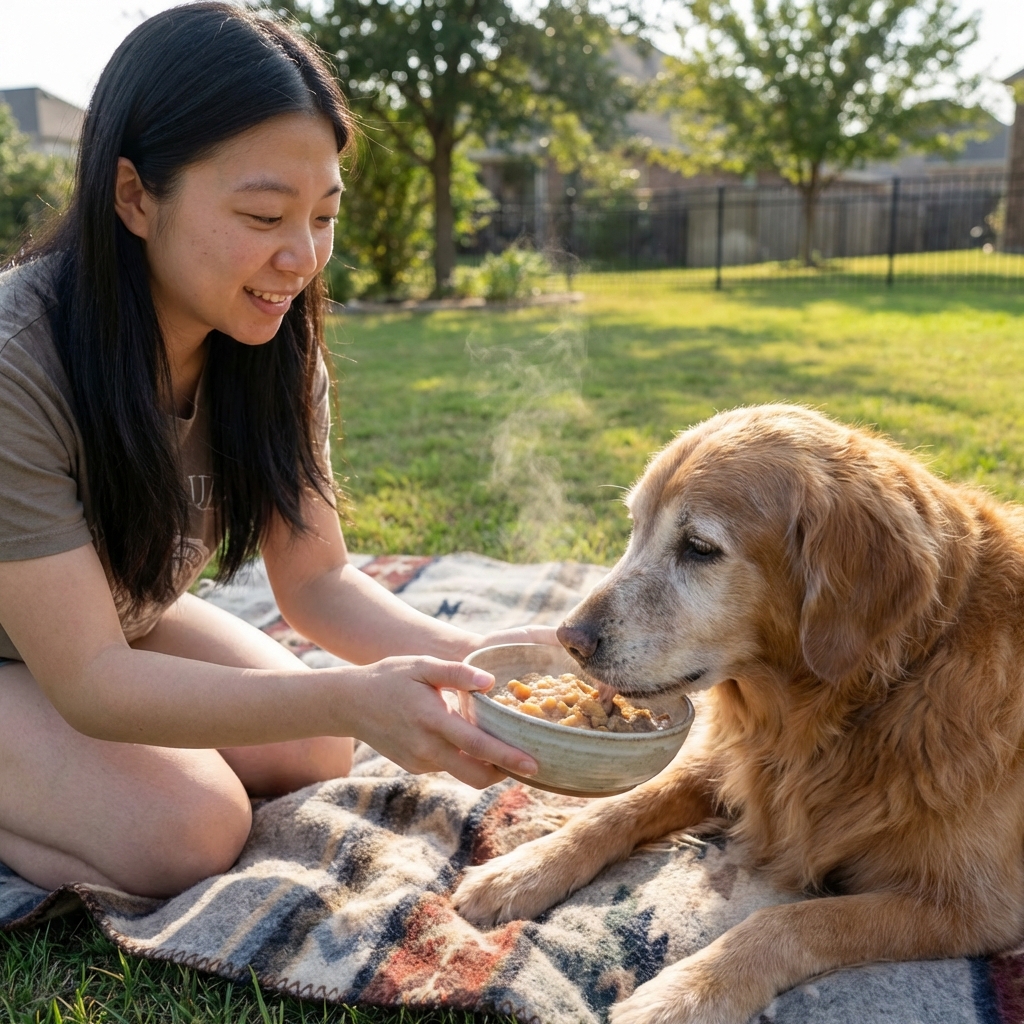
- Warm the food slightly to increase aroma.
- Offer small, frequent meals rather than one large meal.
- Try softer textures if chewing is uncomfortable.
- Ask your vet about anti-nausea medications, stomach protectants, or appetite stimulants when appropriate.
A quick caution: Forced feeding or syringe-feeding can cause stress or aspiration in some dogs. If your dog is very weak, coughing, or refusing to swallow, ask your vet before trying it.
Hydration tips
- Keep water bowls in multiple easy-to-reach spots.
- Offer ice chips if your dog likes them.
- If your vet approves adding fluids to food, use water or a low-sodium broth that is onion-free and garlic-free.
- If your vet recommends an electrolyte option, use only a pet-formulated product. Avoid human sports drinks and any products containing xylitol.
If your dog is not drinking, seems dehydrated, or is vomiting, call your vet. Dehydration can worsen weakness and nausea.
Important note: If your dog is consistently refusing food and water, it does not always mean you are doing something wrong. It can be a sign the body is nearing the end. A veterinarian can help you interpret what is happening and keep your dog comfortable.
Make potty breaks easier
Many dogs at the end of life struggle with weakness, arthritis, neurological changes, or incontinence. Your goal is dignity and comfort, not perfection.
At-home options
- Use short, supported trips with a harness or a towel sling under the belly.
- Set up pee pads in a consistent spot, especially overnight.
- Keep the path clear and well-lit to reduce slips and confusion.
- Use gentle cleanup supplies like unscented wipes, soft towels, and a mild pet shampoo for quick rinses.
Call your vet soon
- Straining to urinate, crying, or producing little urine
- No bowel movement for 24 to 48 hours, especially with straining, pain, vomiting, or loss of appetite
- Repeated accidents paired with distress, confusion, or sudden weakness
Breathing and anxiety
Difficulty breathing is scary for both dogs and the people who love them. It is also one of the most urgent reasons to seek veterinary guidance.
Comfort steps at home
- Keep your dog in a cool, well-ventilated room.
- Limit stressful activity and encourage quiet rest.
- Keep a calm routine with soft lighting and familiar scents.
Go to an ER now
- Labored breathing, open-mouth breathing at rest, or blue or gray gums
- Collapsing or repeated fainting
- Severe agitation that will not settle
If you see these signs, contact an emergency clinic or your veterinarian immediately. Your dog may need oxygen, medication, or a compassionate end of life plan right away.
Stay close on their terms
Many dogs still want closeness even when they are not feeling well. Others need more space. Either is okay.
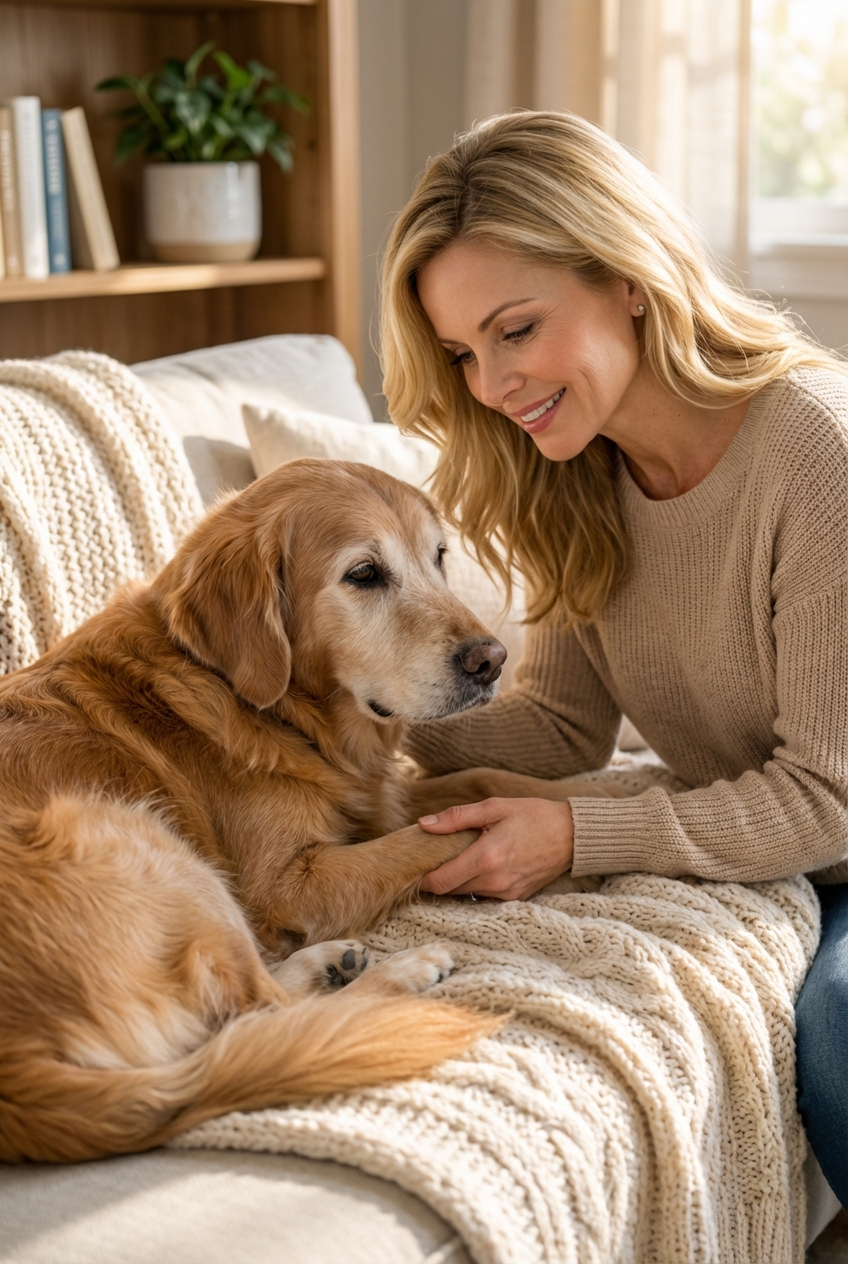
- Offer gentle touch if your dog seeks it, like slow petting on the chest or behind the ears.
- Talk to them in a calm voice. Familiar voices can be grounding.
- Let them rest. Increased sleep can be normal near the end and may be comforting.
Comfort is not only physical. It is also the feeling of being safe with you.
Daily quality of life check
When emotions are heavy, a simple checklist can help you make clearer decisions. Many veterinarians use quality-of-life tools that look at pain, hunger, hydration, hygiene, happiness, mobility, and whether your dog is having more good days than bad.
Ask yourself
- Did my dog have at least one peaceful, comfortable period today?
- Were they able to rest without constant distress?
- Could they enjoy something small, like a favorite spot, a gentle cuddle, or a treat?
- Are the bad moments increasing in frequency or intensity?
If the bad days are outnumbering the good days, or if distress is hard to control even with veterinary help, it is time to talk about next steps.
Plan for a peaceful goodbye
Planning does not make the loss easier, but it can make the experience calmer and more loving.
Ask your vet
- What symptoms should I watch for in the next week?
- What medications may help comfort (pain, nausea, anxiety, breathing), and how do I give them?
- Do you offer in-home hospice or in-home euthanasia referrals?
- What should I expect during the natural dying process, and when is it not comfortable?
Consider in-home euthanasia
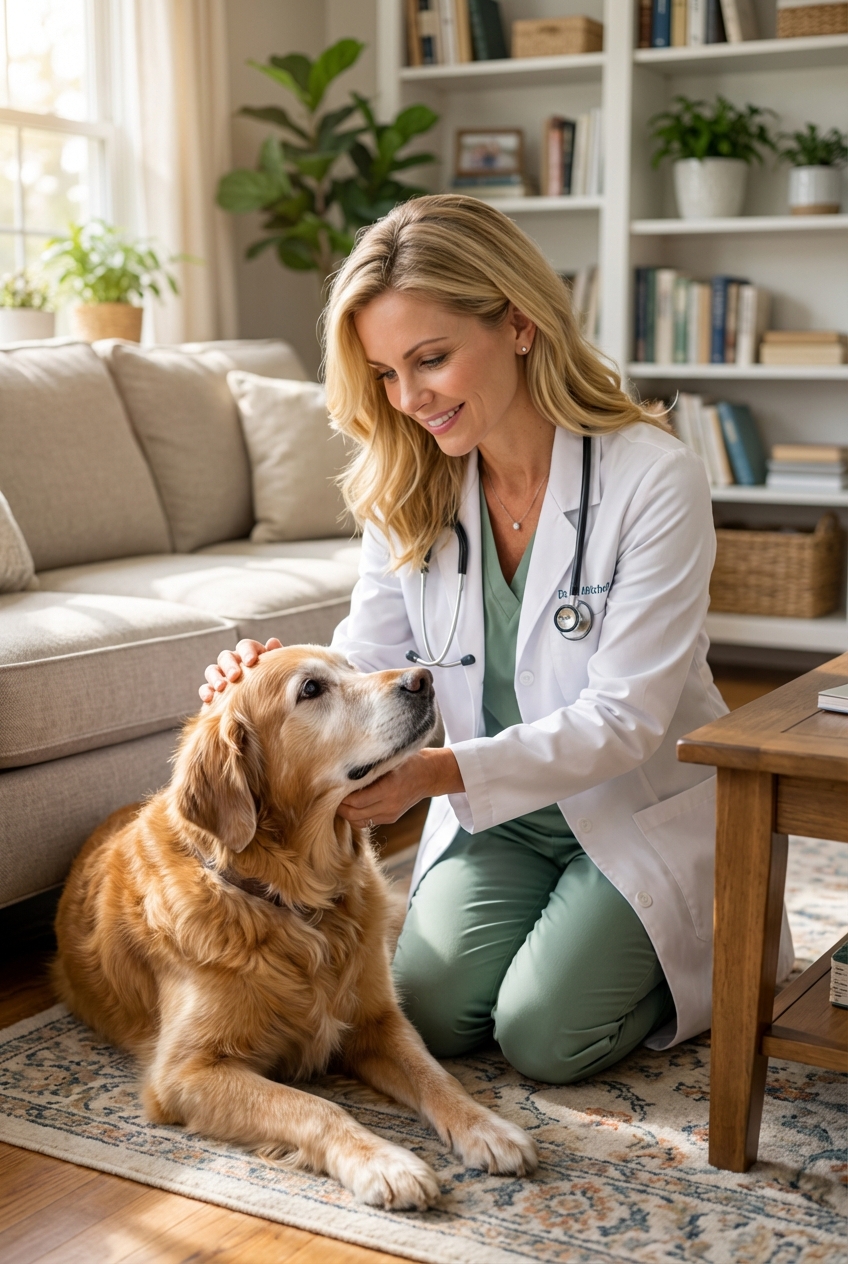
For many families, in-home euthanasia allows a dog to be in a familiar place, surrounded by the people they trust. If this is an option in your area, you can schedule a consult early, even if you do not need it yet. Having a plan can reduce panic decisions.
Quick comfort checklist
- Soft, supportive bedding and clean blankets
- Non-slip rugs or mats for stability
- Easy access to water and potty options
- Vet-guided pain control plan, written down with times
- Small, tempting meals and nausea support if needed
- Calm, quiet environment with familiar routines
- Daily quality-of-life check-in
If you are in the middle of this right now, please hear this: loving your dog through the end is one of the kindest things you will ever do. You do not have to do it perfectly. You just have to keep choosing comfort, one day at a time, with your veterinarian as your partner.
If you need support for yourself too, ask your veterinary clinic about pet loss resources in your area. Many families find it helps to talk with someone who understands.