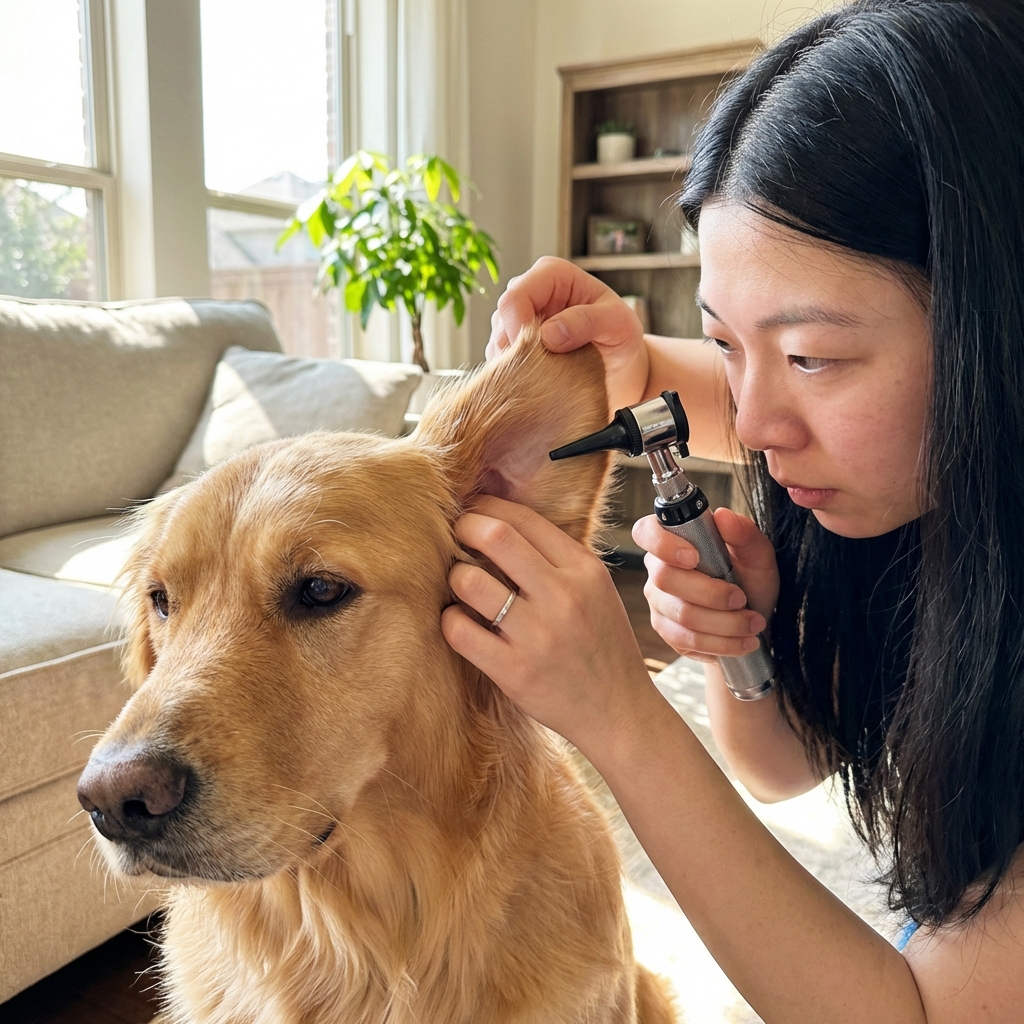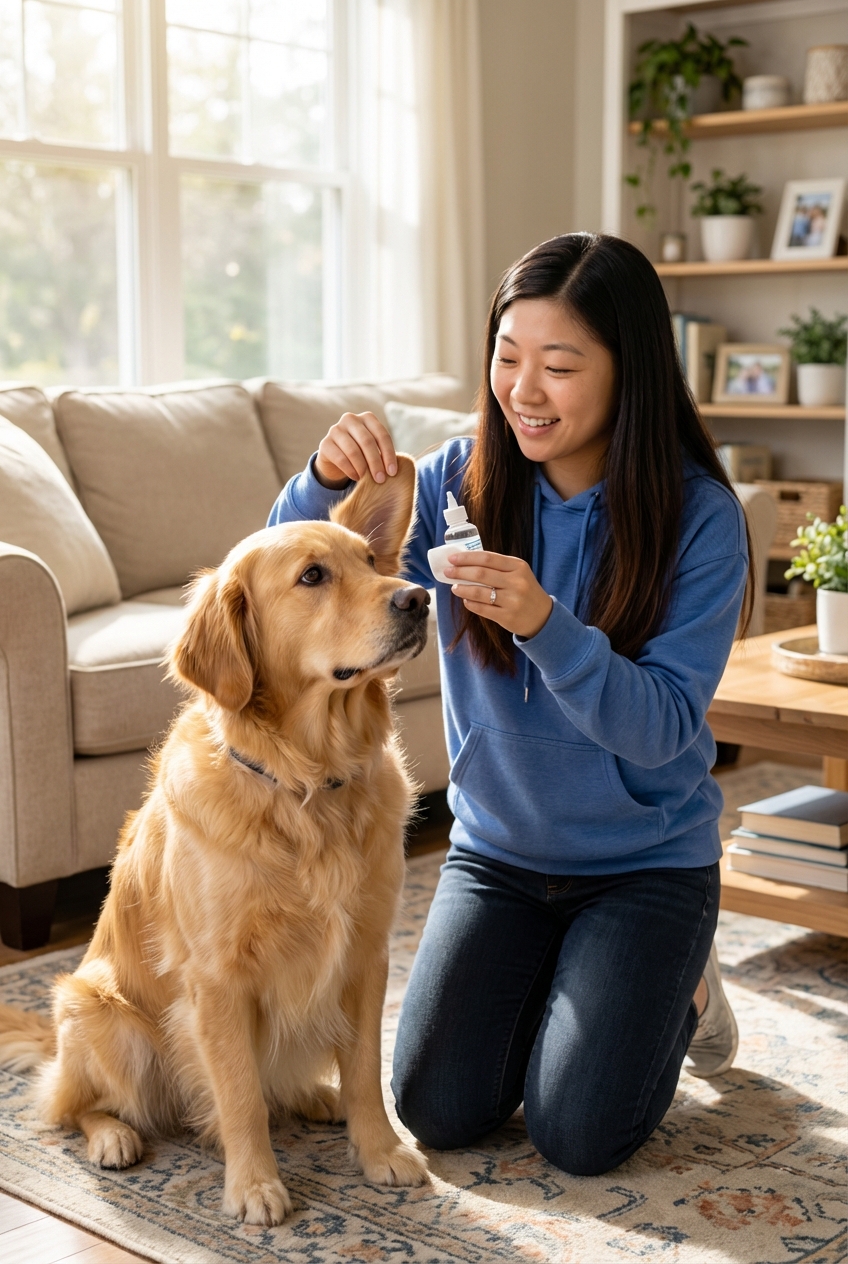
A vet-assistant guide to cleaning your dog’s ears the safe way—what to use, what to avoid, step-by-step technique, how often to clean, and when to call y...
Article
•
Designer Mixes
Dog Ear Infections: Brown Discharge, Smell, and Home Care

Shari Shidate
Designer Mixes contributor
If your dog’s ears smell “yeasty,” look gunky, or you’re seeing brown discharge, you’re not alone. As a veterinary assistant, I can tell you this is one of the most common reasons families come into the clinic. The good news is that many ear issues improve quickly with the right care. The important part is knowing when it’s safe to try gentle home support and when you need a veterinarian, because some ear infections get worse fast if they’re treated the wrong way.
What brown discharge and odor can mean
Brown or dark discharge plus an odor usually points to one of a few common culprits. These problems can look similar at home, but the treatment can be very different, which is why ear infections are not a one-size-fits-all situation.
Common causes
- Yeast overgrowth : Often smells musty or slightly sweet. Some people describe it like bread or corn chips, but smell alone is not diagnostic. Discharge can be brown, sticky, and waxy.
- Bacterial infection: Can smell foul or sour and may produce yellow-brown discharge. Ears can be very painful.
- Ear mites (more common in puppies and cats, and less common in many adult dogs): Classically creates a dark, “coffee grounds” debris. Mites are contagious between pets.
- Allergies (environmental or food): A leading driver of recurring ear infections. The ear becomes inflamed first, then yeast and bacteria move in.
- Wax buildup: Some dogs naturally produce more wax, especially those with floppy or hairy ears.
- Foreign material: Foxtails, grass seeds, or plant bits can trigger sudden head shaking and pain, often in just one ear.
Quick reality check: brown discharge is not “normal wax” if it comes with odor, redness, scratching, head shaking, swelling, or pain when you touch the ear.
Why floppy ears are prone: ears that fold over tend to trap heat and moisture, which reduces airflow and creates a perfect environment for yeast and bacteria.
Signs of an ear infection
Dogs are great at hiding discomfort, so even subtle signs matter.
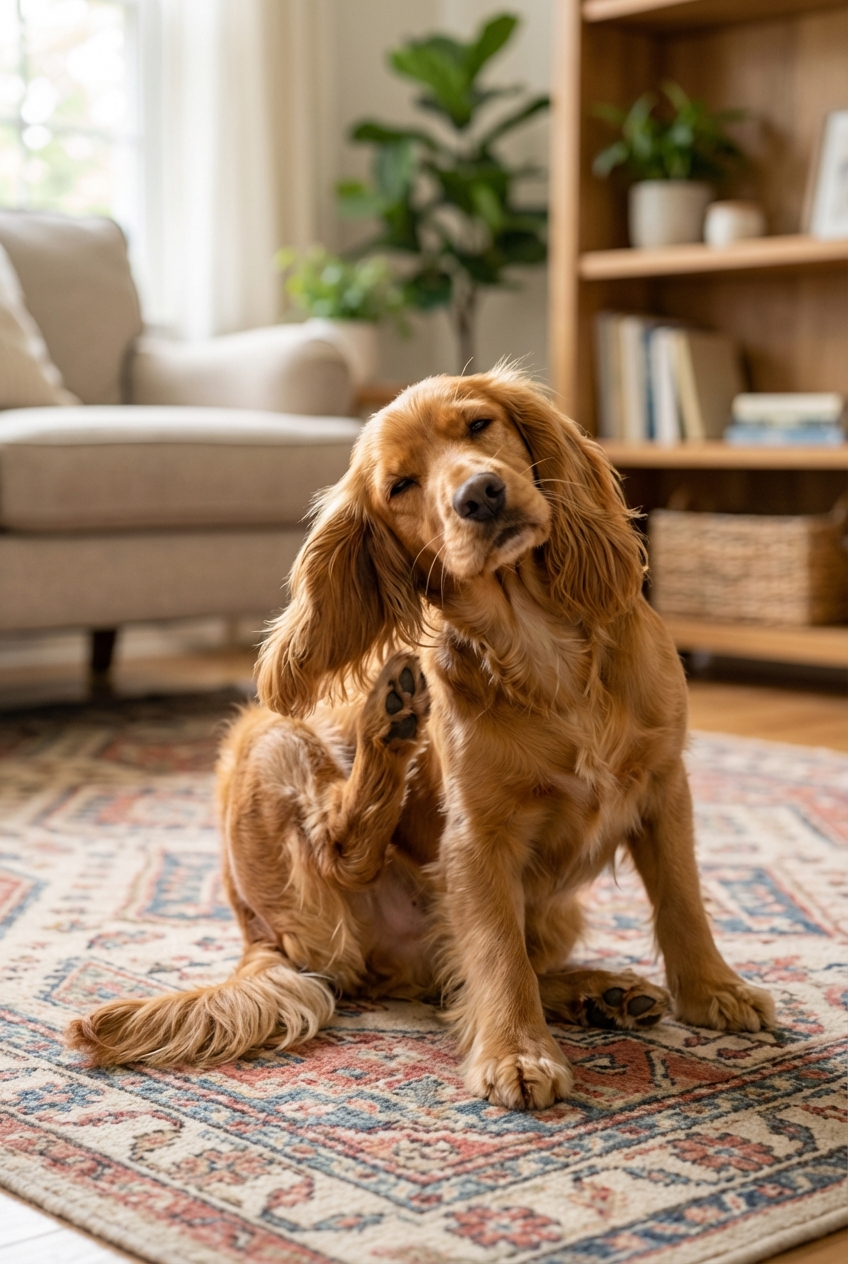
- Head shaking or ear flapping
- Scratching at the ear or rubbing the ear on the floor
- Redness, heat, swelling, or a thickened ear canal
- Brown, yellow, or black discharge
- Strong odor
- Pain when you touch the ear or when they yawn
- Holding the head tilted
- Balance issues, stumbling, or unusual eye movements
If you notice a head tilt or balance problems , treat that as urgent. That can mean the infection is affecting the middle or inner ear.
When to see a vet now
Home care is only appropriate for very mild situations and only when your dog is comfortable. Please skip the guesswork and book a visit if any of the following are true:
- Your dog cries, pulls away, or seems painful when the ear is touched
- The ear is very red, swollen, bleeding, or hot
- There is pus-like discharge, a strong rotten odor, or lots of thick debris
- You see a head tilt, wobbliness, circling, or vomiting
- Your dog has recurrent ear infections (more than 2 to 3 per year)
- The ear looks like a puffy “pillow” on the flap (possible hematoma)
- Your dog is a puppy, senior, or immune-compromised
- Symptoms last longer than 24 to 48 hours or worsen
- You suspect a foreign body (sudden severe head shaking, sudden pain, one ear affected)
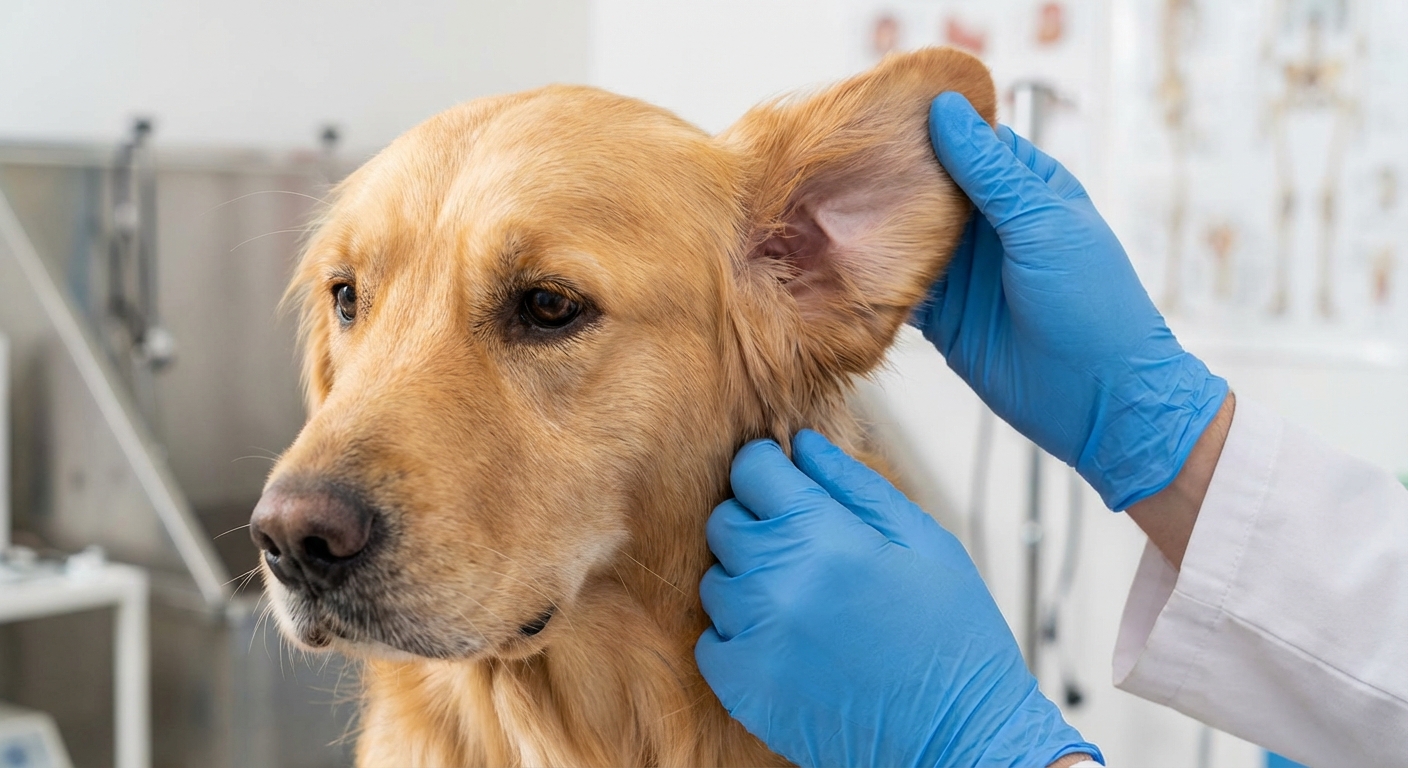
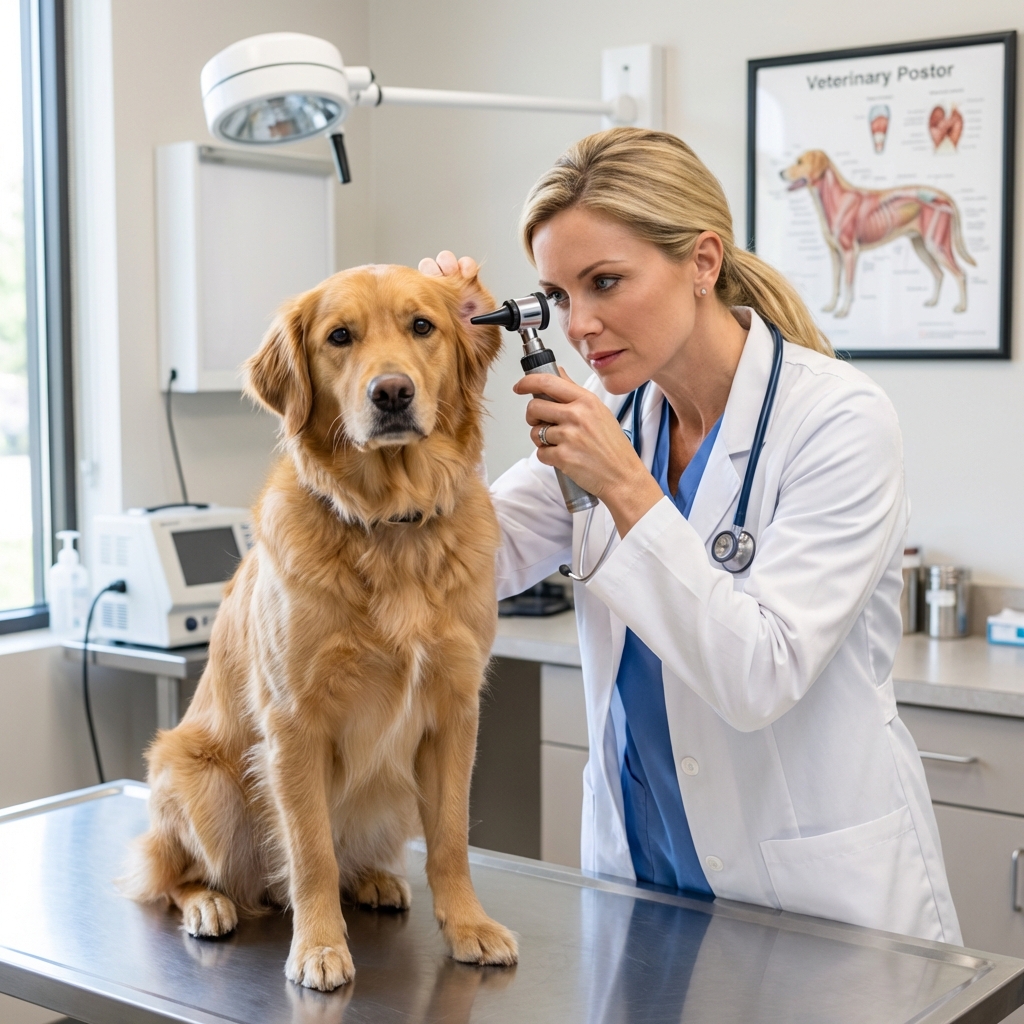
Veterinarians often do an ear cytology (a quick microscope check) to see whether yeast, bacteria, or mites are present. That one test can save your dog a lot of discomfort and save you money by avoiding the wrong product.
Safe home care
Let’s be clear and kind about this: most moderate to severe infections need prescription medication. However, there are a few evidence-based, low-risk steps you can take at home to support comfort and prevent problems, especially if your dog is prone to wax buildup or mild irritation.
1) Gentle ear cleaning
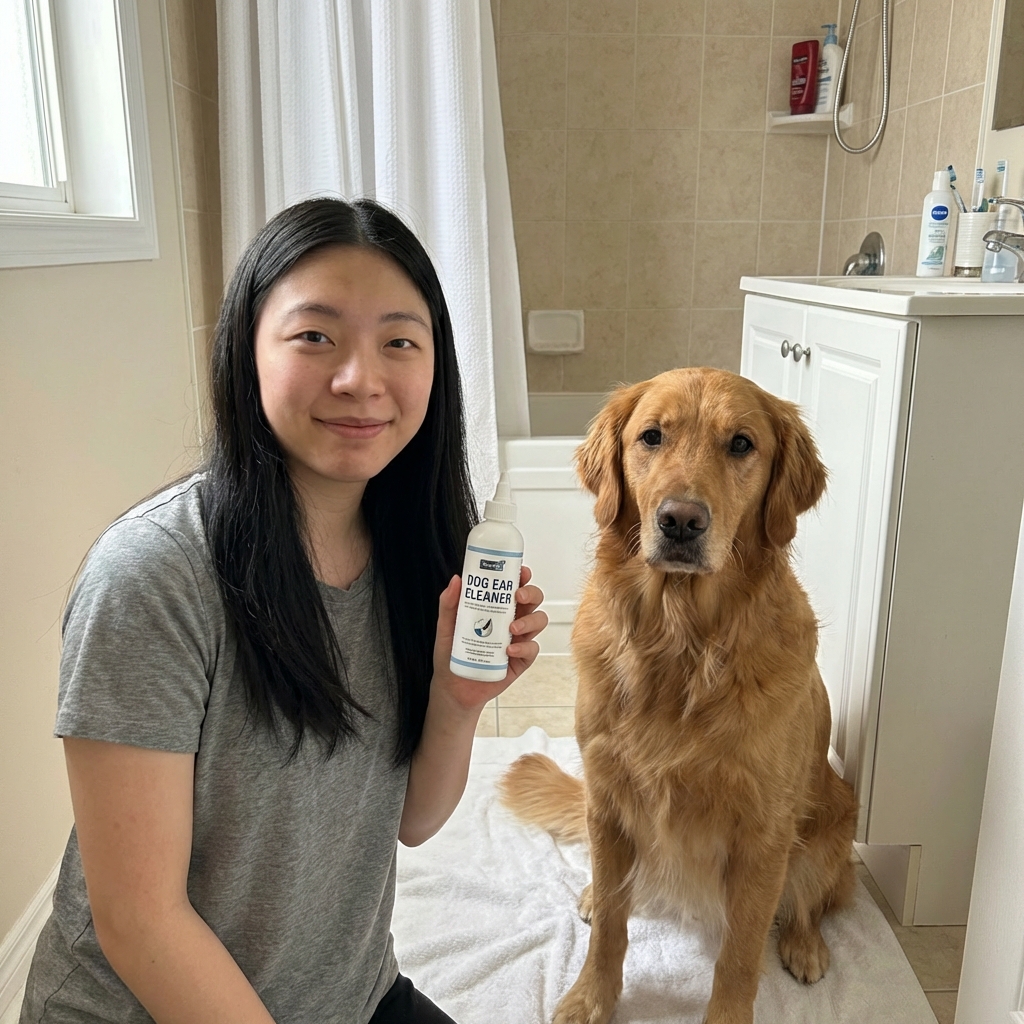
If your dog seems comfortable and the ear is only mildly dirty, cleaning can reduce wax and moisture that yeast and bacteria love.
- Choose a dog-specific ear cleaner with drying properties if your dog swims or has floppy ears. If your dog has sensitive skin, pick a gentle, pH-balanced cleaner.
- How to clean: Use the amount directed on the label (or by your vet). In many cases that means a generous amount so the canal is well-coated, not just a few drops. Massage the base of the ear for 20 to 30 seconds, then let your dog shake. Wipe away what you can see with cotton or gauze.
- Do not use Q-tips. They can pack debris deeper and can injure the canal.
Do not clean and call your vet instead if your dog is painful, the ear is very inflamed, you see blood, your dog has a head tilt or balance changes, you suspect a foreign body, or you are worried the eardrum could be damaged. You cannot safely check an eardrum at home, and flushing the ear in those situations can make things worse.
2) Keep ears dry
Moisture is a huge trigger, especially for swimmers and dogs that get frequent baths.
- After swimming or bathing, dry the ear flap gently with a soft towel.
- Ask your veterinarian about a drying ear rinse if your dog is prone to infections.
- Avoid letting water run directly into the ear canals during baths.
3) Prevent self-trauma
Scratching can make a mild irritation become a full-blown infection, and it can cause painful ear hematomas.
- Trim nails if they are sharp.
- Use an e-collar if your dog cannot stop scratching.
- Consider a soft recovery collar for comfort if your dog tolerates it better.
What to avoid
- Hydrogen peroxide: Irritating to ear tissue and can delay healing.
- DIY vinegar or alcohol mixes: These often sting inflamed ears and can worsen irritation. Some veterinarians do use specific acidifying products in certain cases, but that is best done with vet guidance and the right formulation.
- Oils (including coconut oil) placed into the ear canal: Oils can trap moisture and debris and may worsen infections.
- Human ear drops or leftover prescription meds: Some medications are unsafe if the eardrum is damaged, and you cannot tell at home. Leftover antibiotics also increase the odds of ineffective treatment and contribute to antibiotic resistance.
- “Just keep cleaning” when it’s painful: If it hurts, you need a vet exam and likely medication.
Why infections come back
Recurring ear infections are often a sign of an underlying issue. Treating only the infection without addressing the cause is like mopping up water without fixing the leak.
Common drivers
- Allergies : One of the most common causes of recurrent otitis, and the number one pattern I see in my clinic. Allergy inflammation changes the ear environment and invites yeast and bacteria.
- Anatomy: Floppy ears, narrow canals, and heavy ear hair can reduce airflow and trap moisture.
- Moisture exposure: Frequent swimming or baths.
- Skin disease: Conditions that affect the whole skin barrier often affect ears too.
- Endocrine issues: Hypothyroidism can contribute in some dogs.
If infections are frequent, ask your vet about an allergy plan (diet trial, medications, immunotherapy, or topical management). Long-term control usually means fewer ear flare-ups and a happier dog.
At-home checklist
If you’re trying to decide what to do today, here is a practical path:
- Mild wax, mild smell, dog not in pain: Clean once with a dog ear cleaner (as directed), keep ears dry, and monitor for 24 hours.
- Brown discharge plus red ear or frequent scratching: Schedule a vet visit soon. You can gently clean only if it is not painful.
- Strong odor, thick discharge, swelling, pain, head tilt, balance changes, or sudden severe symptoms in one ear: Go to the vet as soon as possible.
Tip from the clinic: If you can, take a clear photo of the discharge and note when it started, whether your dog swims, and whether it is one ear or both. That history helps your veterinarian narrow the cause faster.
How vets treat it
Veterinary treatment depends on what is actually in the ear. Common options include:
- Prescription ear drops targeted to yeast, bacteria, or both
- Oral medications if the infection is severe or deeper in the canal
- Anti-inflammatory medication to reduce swelling and pain
- Ear flush performed in-clinic for heavy debris, sometimes under sedation for comfort and safety
- Culture and sensitivity for stubborn infections to choose the most effective antibiotic
Many dogs feel noticeably better within a few days once the right medication starts, but it is important to finish the course as directed even if the ear looks improved.
Prevention
Prevention is not about doing more, it’s about doing the right small things consistently.
- Check ears weekly: Look and smell. Healthy ears are light pink and have little to no odor.
- Clean only when needed: Over-cleaning can irritate the ear canal. Some dogs do best with cleaning only after swimming, while others need a weekly routine. Your vet can help you pick a frequency based on your dog’s ear history.
- Dry after water play: Especially for retrievers, doodles, and any dog that loves the pool.
- Manage allergies : This is a game-changer for chronic ear infections.
- Keep hair trimmed around the ear opening if your groomer recommends it for airflow.
If your dog has a history of ear trouble, ask your veterinarian for a maintenance plan based on your dog’s ear cytology history. That is the most evidence-based approach and often prevents repeat infections.
Quick Q and A
Is brown discharge always an infection?
No. Some dogs have darker wax. But brown discharge plus odor, redness, itching, or head shaking should be treated as a likely problem until proven otherwise.
Can I treat a smelly ear with apple cider vinegar?
I do not recommend it for a smelly, irritated ear. Vinegar can sting and inflame already-damaged ear tissue. A dog-specific ear cleaner is safer, and a vet visit is best if odor is strong.
Can ear infections spread to humans?
Most typical dog ear infections (yeast or bacterial otitis externa) are not contagious to people. Ear mites are contagious between pets, and some infections can spread through close contact if someone has broken skin or a weakened immune system. Wash hands after handling infected ears and avoid sharing towels.
Final note: If your dog has brown discharge and a smell, you’re right to pay attention. Start with safe, gentle steps, but do not wait too long if your dog seems uncomfortable. Ear problems are painful, and early treatment usually means a quicker recovery and fewer repeat issues.