
Dog DNA Tests for Mixed Breeds: What Results Can and Can’t Tell You

Dog DNA tests are one of those modern pet tools that feel like magic. You mail in a cheek swab, and a few weeks later you get a report that claims your “mystery mix” is part Poodle, part Aussie, and maybe a dash of something you never expected.
As a veterinary assistant here in Frisco, Texas, I see a lot of families with designer mixes bring those results into the clinic with big questions. Some of those questions are truly helpful, like possible genetic health risks. Others can lead you down the wrong path, like assuming a breed result explains every behavior or guarantees a certain adult size.
Let’s walk through what dog DNA tests can tell you, what they cannot, and how to use the results to make smarter health and training choices for your mixed-breed best friend.

What a dog DNA test is actually measuring
Most consumer dog DNA tests compare your dog’s genetic markers to a reference database. Often that database is built around purebred dogs, but some companies also include regional or landrace populations (sometimes labeled as “village dogs”) or broader breed groups. The company’s algorithm looks for patterns that are statistically similar to what they have in their reference set, then estimates which breeds or groups are the best match and at what percentages.
Why this matters for mixed breeds
Mixed-breed dogs can carry DNA from many ancestors, sometimes going back several generations. The farther back those ancestors are, the more “blended” the DNA becomes, and the harder it is to assign small percentages with confidence.
- Large percentages (for example, 40% to 60%) often feel more reliable than tiny ones.
- Small percentages (like 1% to 5%) can be real, but they are often lower-confidence. Sometimes they reflect shared ancestry between related breeds or limitations in the reference set, especially if a company has fewer samples for certain lineages.
As a general rule, breed identification is usually more precise for recent mixes (think one to two generations back) and less precise for dogs with very mixed ancestry over many generations.

Accuracy limits: why results can differ between companies
It is common for two reputable companies to give slightly different breed breakdowns for the same dog. That does not automatically mean one is “lying.” It usually comes down to differences in:
- Reference databases: One company may have more samples for certain breeds, regional lines, or non-traditional populations.
- Algorithms: Each company weights markers differently.
- Breed definitions: Some “breeds” have closely related genetic histories, and the line between them can be fuzzy.
Practical takeaway
Use breed results as a helpful clue, not as a legal document. If multiple breeds in the same family group show up (for example, several herding breeds), that often tells you more than fixating on a single 5% result.
Why siblings can have different results
This one surprises people: two puppies from the same litter can have different DNA test breed percentages. In rare cases, they can even have different fathers if the mom was bred more than once during her heat cycle.
Even with the same parents, genetics are a lottery
Puppies do not inherit an identical “average” blend of the parents’ DNA. They inherit different combinations of the genes their parents carry. So one sibling may inherit more of the “Lab-looking” genes, while another inherits more of the “Husky-looking” genes.
- Breed percentage differences: Normal within a litter.
- Coat type differences: Very common, especially with Poodle mixes.
- Size differences: Also common, because growth is influenced by many genes and environment.

Health markers: useful, but not the whole story
Many DNA tests include a health screening panel. These can be genuinely valuable, especially when they identify a known disease-causing mutation. But interpretation matters a lot.
Positive does not always mean sick
Some results show your dog is:
- Clear: No mutation detected for that condition.
- Carrier: One copy detected. Many carrier dogs never develop the disease, but it matters for breeding decisions.
- At-risk or affected: Two copies detected for certain recessive conditions, or a higher-risk variant for other conditions.
One important nuance: not every “at-risk” variant guarantees disease. Some mutations are highly predictive, while others only increase risk modestly, and real-world outcomes can depend on other genes, age, and environment.
Even when a dog is listed as “at-risk,” the next step is not panic. The next step is a conversation with your veterinarian about whether confirmatory testing, monitoring, or lifestyle changes are recommended.
False reassurance is also a risk
A “clear” result is not a lifetime guarantee of perfect health. DNA panels only test for the mutations they include. Your dog can still develop conditions that are influenced by other genes, aging, hormones, infections, injuries, diet, and weight.
If you remember one thing, make it this: genetic risk is not destiny, and a normal result is not a force field.
Best way to use a health report
- Bring the report to your vet and ask what is clinically relevant for your dog’s age, breed mix, and symptoms.
- Use results to guide prevention. For example, earlier joint support discussions if a mix has higher orthopedic risk.
- Do not change or stop medications based on a DNA report without veterinary guidance.
And just to keep expectations realistic: I cannot diagnose a dog from a DNA report. What I can do in clinic is help owners turn those results into the right questions for their veterinarian.
Trait predictions: why upbringing still matters
Some tests estimate traits like adult weight range, coat shedding, or even behavioral tendencies. These can be fun, and sometimes useful, but they are not a substitute for real-life observation and training.
Behavior is shaped by both genetics and environment
Genetics can influence tendencies, like herding drive or scenting interest. But your dog’s day-to-day behavior is also shaped by:
- Early socialization and exposure to the world
- Training methods and consistency
- Stress levels in the home
- Exercise and enrichment
- Pain or medical issues that can change behavior quickly
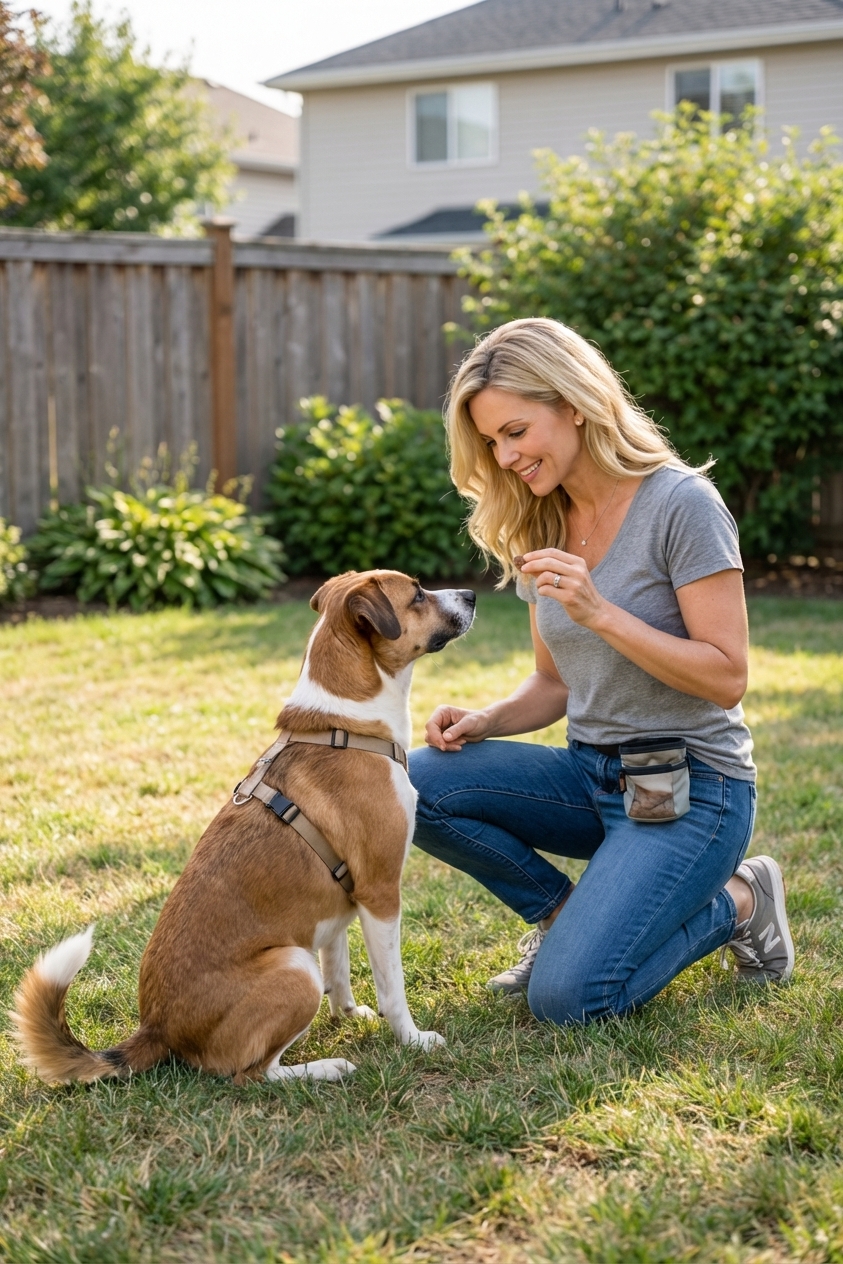
In clinic, we see this all the time: a dog labeled “anxious” may be under-exercised, under-enriched, or quietly painful. DNA cannot diagnose that.
Common misconceptions to avoid
1) “My dog is 25% of X breed, so they will act exactly like X.”
Breed tendencies are broad patterns, not guarantees. Individual dogs vary a lot, especially mixes.
2) “If the DNA test says ‘no’ to a breed, it is impossible.”
Databases are improving, but they are not perfect. Some breeds are underrepresented, and some genetic lineages overlap.
3) “A health result explains my dog’s symptoms.”
Sometimes it helps, but symptoms still need a real medical workup. Many common issues, like allergies, ear infections, pancreatitis, dental disease, and arthritis, involve more than one factor.
4) “Now I know my dog’s adult size for sure.”
Size estimates are just that: estimates. Nutrition, overall health, and sometimes neuter timing can influence growth.
How to use DNA results in real life
If you want to use your results in a way that truly supports your dog’s well-being, here is a simple, practical plan.
Step 1: Focus on the big patterns
- Are the top breeds pointing toward herding, sporting, terrier, toy, or guardian tendencies?
- Is there a common health theme associated with those groups, like joint risk or skin sensitivity?
Step 2: Pair genetics with what you can see
- Body condition score and weight trends
- Coat and skin health
- Stool quality and digestive tolerance
- Energy level and recovery after exercise
Step 3: Ask your vet targeted questions
- Do any genetic findings affect medication choices or anesthesia planning? For example, MDR1 (also called ABCB1) drug sensitivity can change which medications are safe for some dogs.
- Do we need confirmatory testing for any “at-risk” findings?
- Should we start earlier screening, like baseline bloodwork or orthopedic checks?
- Does anything here rarely change preventive care planning, or is it mainly a note for future medications and monitoring?
Step 4: Build the environment your dog needs
Whatever your dog’s mix is, the basics still move the needle the most: balanced nutrition, a healthy weight, dental care, daily enrichment, and kind, consistent training.
Getting a good swab matters
One very real reason tests fail or come back “low confidence” is sample quality. A few simple habits can help:
- Follow the instructions exactly, including how long to wait after eating or chewing.
- Avoid touching the swab tip with your fingers.
- Swab the inside of the cheek as directed, and use the full recommended time.
- Let the swab dry (if the kit instructs you to) before sealing it up.
Choosing a dog DNA test
If you are shopping for a test, here are evidence-based features that tend to matter:
- Transparent methodology: Clear explanation of how breeds or groups are determined.
- Robust reference database: More samples generally helps, especially for mixes and regional lineages.
- Health panel details: Which conditions are included and what “carrier” vs “at-risk” means.
- Customer support: Access to genetic counseling or a vet-reviewed explanation is a plus.
- Privacy and data policy: Make sure you are comfortable with how DNA data may be stored or shared.
When results should prompt a vet visit
A DNA report is a great reason to schedule a calm, non-urgent appointment if it shows a meaningful health risk, especially if your dog has symptoms. Consider booking a visit sooner if you see:
- Frequent fainting, collapse, or exercise intolerance
- Unexplained weight loss, vomiting, or chronic diarrhea
- Seizures or sudden behavior changes
- Persistent itching, ear infections, or skin sores
- Limping, stiffness, or trouble rising
Genetic information can be powerful, but it is most powerful when it is combined with an exam, history, and the right follow-up tests.
The bottom line
Dog DNA tests can be a fun window into your mixed-breed dog’s story. They can also offer genuinely useful clues about health risks. But they do have accuracy limits, siblings can inherit different genetic combinations, and trait predictions cannot account for the biggest influence of all: your dog’s life with you.
If you use DNA results as one tool, alongside veterinary care and thoughtful training, you will get the best of both worlds: curiosity satisfied and a healthier, happier dog.
