A practical 24–72 hour diet and hydration plan for mild dog diarrhea, with bland food options, safe add-ons like probiotics, foods to avoid, and clear red ...
Article
•
Designer Mixes
Dog Diarrhea With Mucus: Care and Training Tips

Shari Shidate
Designer Mixes contributor
Seeing diarrhea with mucus in your dog’s poop can be alarming. I get it. As a veterinary assistant here in Frisco, Texas, I’ve talked with many worried pet parents who wonder if it’s “just a sensitive tummy” or something more serious.
The good news is that many mild cases improve quickly with the right at-home support. The important part is knowing when you can monitor versus when you need a vet, and how to prevent repeat episodes through smart routines and training.
Quick note: This article is general education and not a substitute for a veterinary exam, diagnosis, or treatment plan.
What mucus in poop can mean
Mucus is a slippery, jelly-like substance produced by the intestines. You can occasionally see a small amount, but noticeable mucus with diarrhea, mucus that keeps showing up, or mucus paired with other symptoms usually points to irritation or inflammation in the GI tract.
Often this involves the large intestine. Colitis simply means inflammation of the colon (large intestine).
Common reasons include:
- Dietary indiscretion: getting into trash, new treats, table foods, or sudden diet changes
- Stress or excitement: boarding, travel, guests, schedule shifts
- Parasites: especially Giardia, whipworms, roundworms, hookworms
- Infections: viral or bacterial causes can irritate the gut
- Food sensitivity: certain proteins or rich foods trigger inflammation
- Antibiotic-associated diarrhea: gut flora disruption after medications (avoid using antibiotics unless your veterinarian prescribes them)
- Inflammatory bowel disease or chronic GI issues in recurring cases
Many dogs with large-bowel diarrhea will also have urgency, straining, and small frequent stools that may look coated in mucus.
Large-bowel versus small-bowel, in plain terms: Large-bowel diarrhea tends to be frequent, urgent, and slimy (sometimes with bright red blood). Small-bowel diarrhea is often larger-volume and may come with weight loss or more obvious nutrient issues if it is chronic.
Red flags: call the vet now
Please contact your veterinarian promptly or seek urgent care if you notice any of the following:
- Blood in stool (especially large amounts, or dark, tarry stool)
- Sudden severe bloody diarrhea or your dog seems rapidly worse (this can be an emergency)
- Vomiting that is repeated or prevents keeping water down
- Lethargy, weakness, collapse, or your dog seems “not themselves”
- Abdominal pain, bloating, or a hunched posture
- Dehydration signs: tacky or sticky gums, sunken eyes, poor skin snap-back, reduced urination
- Puppies, seniors, pregnant dogs, or immune-compromised dogs (they can decline fast)
- Diarrhea lasting more than 24 to 48 hours, or recurring episodes
- Possible toxin exposure or foreign body risk (chewed toys, socks, bones)
If you can, bring a fresh stool sample to the appointment. Parasite testing is often step one, even for dogs on monthly preventives.
At-home care (mild cases)
If your dog is otherwise bright, alert, and drinking water, you can often start supportive care at home while monitoring closely.
Step 1: Stop the extras
Pause treats, chews, table scraps, and rich foods. Even a small amount of something fatty can keep diarrhea going.
Step 2: Hydration first
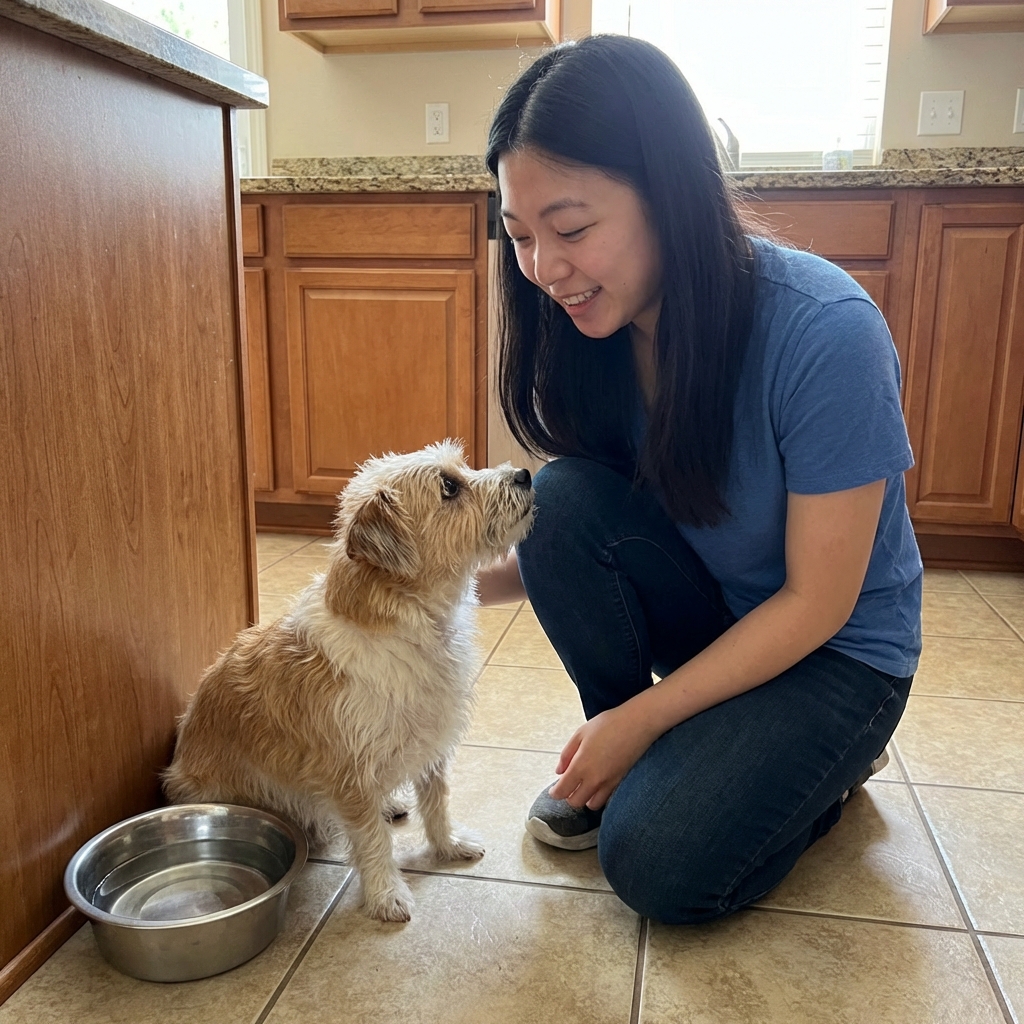
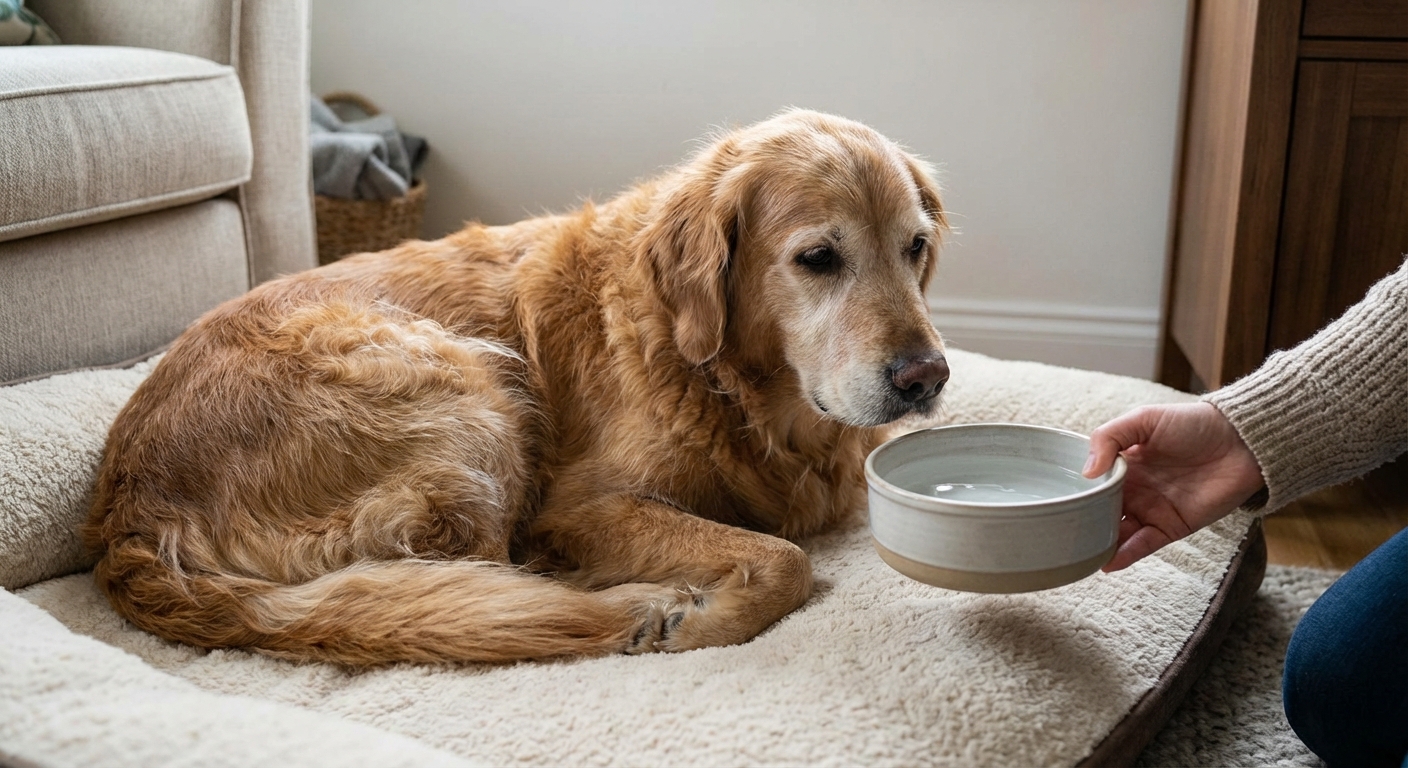
Diarrhea pulls water out of the body. Encourage frequent drinking.
- Offer fresh water in multiple spots.
- If your vet approves, you can offer low-sodium, unseasoned broth that is onion-free and garlic-free to encourage drinking.
- For dogs that gulp and then vomit, offer small amounts more often.
Step 3: Ask before fasting
In some adult dogs, a brief 8 to 12 hour break from food can rest the GI tract. However, it is not right for every dog.
- Do not fast puppies, toy breeds prone to low blood sugar, dogs with diabetes, or dogs with complex medical conditions unless your veterinarian specifically instructs you to.
- When in doubt, feed a small bland meal and call your vet.
Step 4: Bland diet for 1 to 3 days
A simple, low-fat bland diet is often helpful. Two common vet-approved options are:
- Boiled skinless chicken breast plus plain white rice
- Lean ground turkey (well cooked and drained) plus white rice
Feed small meals every 6 to 8 hours rather than one large meal. If stools improve, transition back to regular food slowly over 3 to 5 days by mixing increasing amounts of normal diet into the bland diet.
Step 5: Gut support (ask your vet)
Evidence-based options frequently used in practice include:
- Probiotics formulated for dogs: can help restore healthy gut microbes
- Veterinary GI diets: highly digestible, often very effective for short-term flares
- Fiber in the right amount: can help large-bowel diarrhea by bulking and supporting the colon
For fiber, veterinarians commonly suggest options like plain canned pumpkin or psyllium, but dosing varies widely by dog size and health history. Please confirm what is appropriate with your vet, especially if your dog is on medications.
Step 6: Track stool changes
Write down:
- Frequency of poops
- Any vomiting
- Appetite and energy
- Stool appearance (watery, soft-serve, formed but slimy)
- Visible mucus and any blood
This log helps your vet make faster decisions if the issue continues.
Hygiene and household safety
Some causes of diarrhea, including Giardia, can spread between pets and can be a risk for people in certain situations.
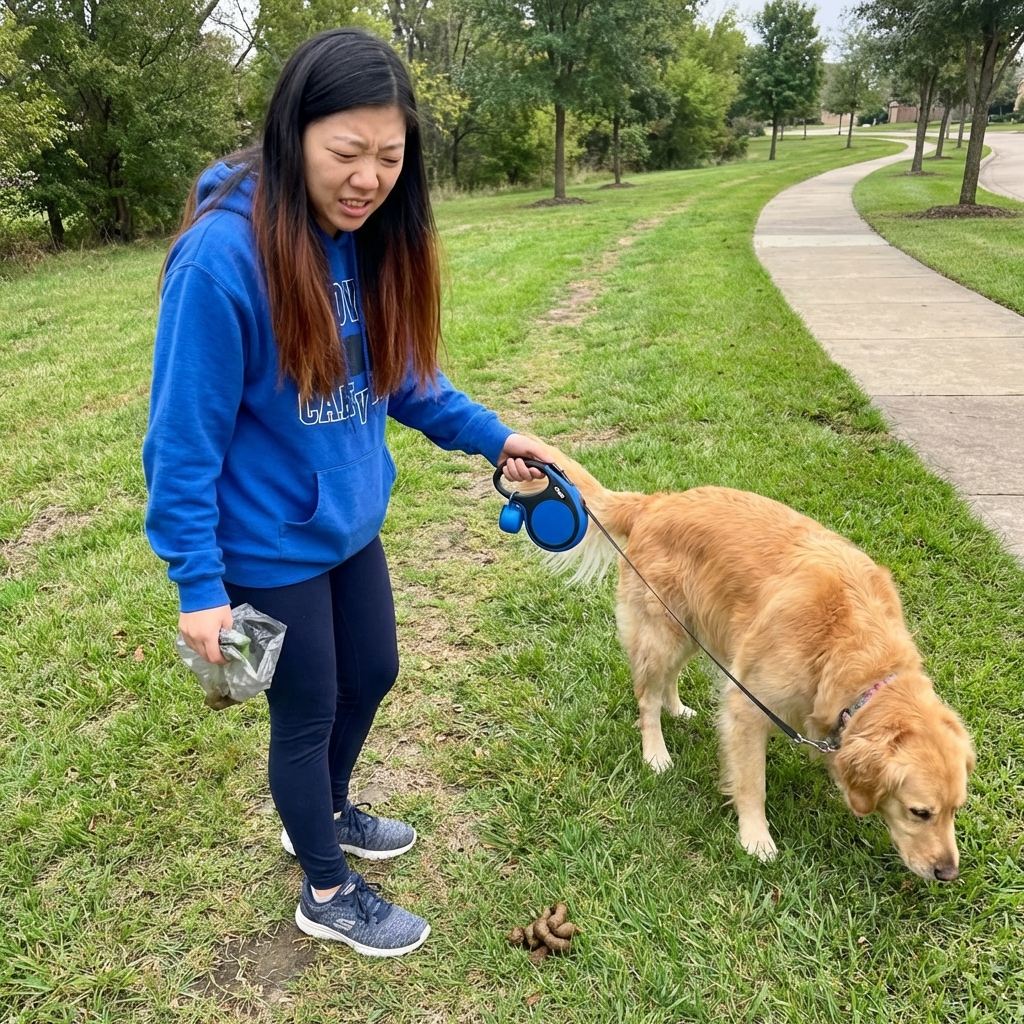
- Pick up stool promptly from your yard and on walks.
- Wash hands after cleanup, especially before handling food.
- Use extra caution around kids, seniors, and anyone who is immune-compromised.
Why training still matters
Diarrhea with mucus often comes with urgency. Your dog may suddenly need to go, and that can look like “forgetting” house training. In reality, it is a temporary medical need.
Your goal is to:
- Prevent accidents without punishing your dog
- Reduce stress (stress can worsen colitis)
- Rebuild routine once stools normalize
Training tips for right now
1) Increase potty breaks
For the next 24 to 72 hours, go out more often than you think you need to.
- First thing in the morning
- After every meal
- After drinking a lot of water
- After play
- Right before bedtime
- One extra late-night trip if urgency is severe
2) Use a quick potty routine
Keep outings calm and boring until your dog goes.
- Leash up
- Go to the same spot
- Stand still and give a simple cue like “Go potty”
- Reward with calm praise and a tiny bland-safe reward if your vet approves
3) Manage the environment, do not punish
If accidents happen:
- Clean with an enzymatic cleaner to remove scent
- Reduce roaming space with baby gates
- Supervise closely or use a crate only if your dog is comfortable and can be taken out frequently
Punishment increases anxiety and can make GI symptoms linger.
4) Teach an “I need to go” signal (after recovery)
Once your dog is feeling better, you can condition a clear signal:
- Hang jingle bells on the door or use a button
- Each time you go out, help your dog touch the bell or button
- Immediately open the door and head to the potty spot
- Reward after they eliminate outside
This is especially helpful for sensitive-stomach dogs who may need an extra urgent trip now and then.
Food during recovery
Helpful choices
- Lean, simply cooked proteins
- Easy-to-digest carbs like white rice
- Vet-approved probiotics
- Plenty of water
Avoid for now
- Fatty meats, bacon, sausage
- Dairy (unless your vet recommends a specific product)
- New treats or chews
- Sudden diet switches
- Seasonings, onions, garlic, spicy foods
If your dog is improving on a bland diet, keep it consistent for the short recovery window, then transition slowly back to normal. Many repeat tummy upsets are triggered by “just one new snack.”
Prevent repeat episodes
- Keep a consistent diet and change foods gradually over 7 to 10 days
- Trash management: use a lid and keep counters clear
- Parasite prevention and routine fecal tests as recommended by your vet
- Stress buffering: predictable routines, decompression walks, and rest after big events
- Food journal if your dog has frequent GI flare-ups
Questions for your vet
If diarrhea with mucus is frequent, severe, or not improving, these are helpful questions:
- Should we run a fecal test that includes Giardia?
- Do you recommend a probiotic and for how long?
- Would a prescription gastrointestinal diet help short-term?
- Could this be a food sensitivity, and what elimination diet plan is safest?
- Are any medications my dog takes likely to cause diarrhea?
Bottom line
Dog diarrhea with mucus is often a sign of intestinal irritation, and it can be triggered by diet changes, stress, parasites, or infection. For mild cases, supportive care, hydration, and a bland diet can be very effective. At the same time, smart training adjustments like extra potty breaks and calm routines can prevent accidents and reduce stress while your dog heals.
If you’re seeing red flags or symptoms are not improving within 24 to 48 hours, please get your veterinarian involved. Trust your gut. You know your dog best.