Vet-informed guide to a short-term bland diet for dogs: chicken and rice 1:2 ratio, daily cup ranges by weight, how many meals to split into, and red flags t...
Article
•
Designer Mixes
Dog Diarrhea With Blood

Shari Shidate
Designer Mixes contributor
Seeing blood in your dog’s diarrhea is scary, and I want you to know you are not overreacting. Bloody diarrhea can be as mild as irritation from a brief stomach bug, or as serious as acute hemorrhagic diarrhea syndrome (AHDS, previously called “hemorrhagic gastroenteritis” or HGE), toxin exposure, intestinal blockage, or parvo in puppies. The safest move is to treat it like an urgent symptom until you know otherwise.
This quick guide will help you decide what to do right now, what to watch for, and how to support your dog safely while you contact your veterinarian.
First: Is this an emergency?
Bloody diarrhea is an emergency today if any of the items below are true. If you are unsure, it is always appropriate to call an emergency veterinarian (ER) and ask for triage advice.
Go to an ER now
- Your dog seems weak, collapses, or is difficult to wake.
- Repeated vomiting, especially if your dog cannot keep water down.
- Large amounts of blood or diarrhea that looks dark red and jelly-like (a severity pattern that can be seen with several serious conditions).
- Bloated belly, intense abdominal pain, or “praying” posture.
- Pale gums (instead of healthy bubblegum pink), fast breathing, or rapid heart rate.
- Black, tarry stool (digested blood) or blood plus coffee-ground vomit.
- Puppy, unvaccinated dog, or immunocompromised dog (parvo risk and faster dehydration).
- Possible toxin exposure (for example, rat poison, human pain relievers, xylitol, grapes, or raisins).
- Known or suspected foreign body (toy pieces, socks, corn cobs, bones).
- Diarrhea for more than 24 hours, or any bloody diarrhea with worsening signs.
Why the urgency? Dogs can dehydrate quickly. Blood loss, electrolyte imbalances, and intestinal inflammation can become serious fast, even if your dog seemed fine this morning.
Red blood vs black stool
Not all blood looks the same, and the color can hint at where it is coming from.
- Bright red streaks or drops often suggest bleeding from the lower intestinal tract (colon, rectum). This can happen with colitis, parasites, stress diarrhea, diet changes, or anal gland irritation.
- Dark red, maroon, or jelly-like diarrhea can indicate more significant intestinal inflammation or bleeding and deserves urgent evaluation.
- Black, tarry stool suggests digested blood from higher up (stomach or small intestine) and should be treated as urgent. Note: some substances can mimic this (for example, iron supplements or bismuth products) and can also make it harder for your vet to interpret stool color.
Common causes of bloody diarrhea
There are many possibilities, and that is why vets focus on your dog’s overall stability first (hydration, pain, vomiting, circulation), then diagnostics.
- Dietary indiscretion: getting into trash, greasy food, table scraps, new treats, bones, or sudden diet changes.
- Stress colitis: travel, boarding, guests, moving, storms, new pets.
- Parasites: whipworms, hookworms, giardia, coccidia.
- Parvovirus: especially in puppies or unvaccinated dogs.
- AHDS: sudden watery bloody diarrhea, often with vomiting. It can look dramatic and can become life-threatening due to dehydration.
- Pancreatitis: often tied to fatty foods; may include pain, vomiting, and lethargy.
- Toxins or medications: rodenticides, NSAIDs, supplements, accidental ingestion of human meds.
- Foreign body: partial obstruction can cause diarrhea, blood, vomiting, and pain.
- Inflammatory bowel disease, ulcers, polyps, or tumors: more common with ongoing or recurrent symptoms.
Is it diarrhea or constipation?
This trips a lot of people up, and it matters. Some dogs with colitis look like they are “constipated,” but they are actually having frequent small stools.
- Colitis pattern: straining, urgency, many small stools, mucus, and bright red blood.
- Large-volume diarrhea: bigger puddles of watery stool, more likely to cause dehydration quickly.
- True constipation: straining with little to no stool produced, sometimes with small hard pieces. If your dog cannot pass stool at all, is vomiting, or seems painful, that is urgent.
What to do in the next 30 minutes
1) Keep your dog calm and prevent more “sampling”
- Leash walk only. No yard roaming if they eat sticks, plants, or poop.
- Remove access to trash, cat litter, compost, and toys that shred.
2) Check gums and hydration
- Gums: should be pink and moist, not pale, gray, or sticky.
- Skin tent: gently lift skin over the shoulders. It should snap back quickly. This is a rough screen and can be less reliable in overweight dogs, older dogs, or very young puppies, so do not use it as your only guide.
3) Save a sample and take photos
- Put a small stool sample in a clean bag or container.
- Take a quick photo of the stool and any vomit. This truly helps your vet.
4) Call your vet or an ER
Tell them: your dog’s age, weight, how long it has been going on, whether there is vomiting, how much blood you are seeing, energy level, and any possible ingestion (trash, toxins, new foods). If you are on the fence, a same-day call is the right move.
Parvo and contagious risk
If your dog is a puppy, unvaccinated, or has been around unknown dogs recently, assume there is some contagious risk until your vet says otherwise.
- Keep your dog away from other dogs (skip dog parks, daycare, grooming, and shared yards).
- Pick up stool promptly and limit access to areas other dogs use.
- Clean indoor accidents thoroughly. Your vet can advise on disinfectants that work against hardy viruses like parvo.
What you can do at home while you wait
Home care is only appropriate if your dog is bright, alert, drinking, not repeatedly vomiting, and the blood is minimal. If symptoms are worsening or you cannot reach a vet, go in.
Offer small amounts of water
- Frequent small sips are better than a full bowl chug.
- If your vet approves, an unflavored electrolyte solution made for pets can help. Avoid anything with xylitol.
Food: do not stack remedies
For many dogs, a short break from food can reduce gut workload, but fasting is not right for every dog (especially small breeds, puppies, diabetics, or dogs with other conditions). Follow your veterinarian’s advice.
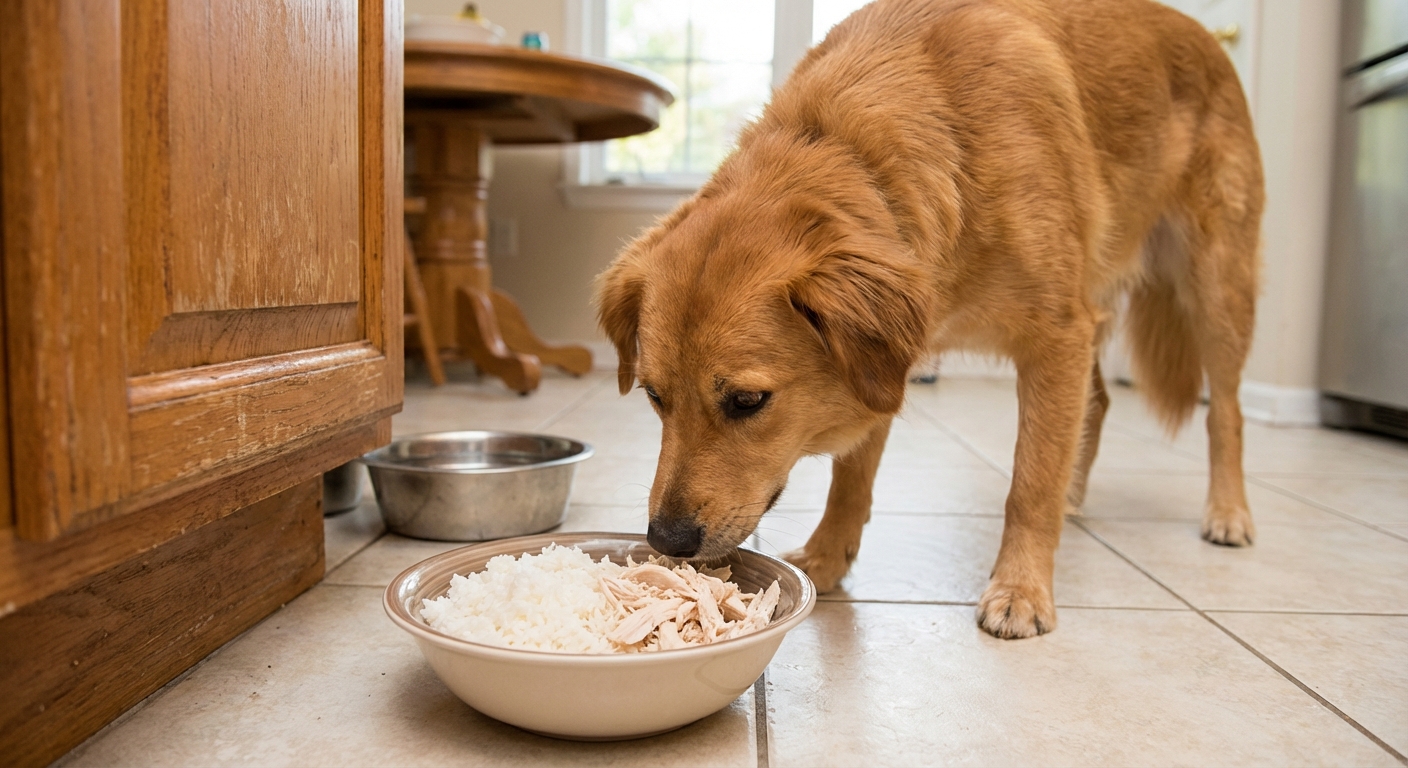
If your vet recommends feeding, a bland diet is commonly used short-term, such as:
- Boiled skinless chicken breast or turkey
- Plain white rice
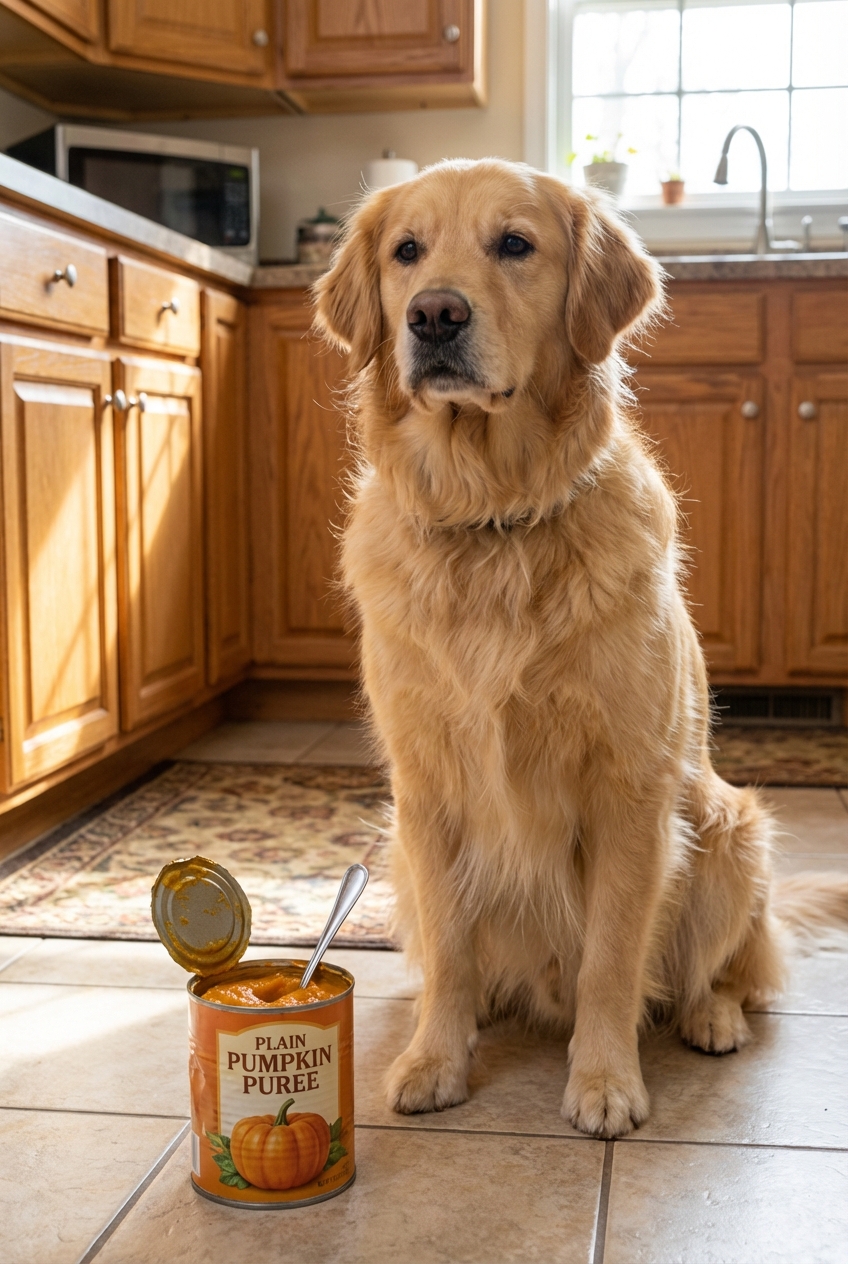
- Plain pumpkin (not pie filling) in small amounts
Feed small meals, and do not add oils, butter, rich broth, or new treats.
Probiotics can be helpful
Some dogs benefit from a veterinarian-recommended probiotic during acute diarrhea. Use a product made for pets and follow label directions. If your dog is severely ill, probiotics are not a substitute for medical care.
What not to do
- Do not give human anti-diarrhea meds (like loperamide) unless your vet specifically instructs it. Some dogs are higher risk for side effects, including herding breeds with the MDR1 gene mutation.
- Do not give ibuprofen, naproxen, or aspirin without veterinary guidance. These can cause serious GI injury and toxicity.
- Do not give Pepto-Bismol (bismuth subsalicylate) without veterinary guidance. It can cause salicylate toxicity and it can turn stool black, which may mask or mimic melena.
- Do not feed bones, rawhide, or fatty foods “to firm things up.” They can worsen irritation or trigger pancreatitis.
- Do not delay care if your dog is lethargic, vomiting, or worsening. Bloody diarrhea is not a wait-and-see symptom for long.
What your vet may do
Veterinary teams usually start by assessing hydration, blood pressure, temperature, and abdominal pain. Depending on findings, they may recommend:
- Fecal testing for parasites and giardia
- Parvo test (especially for puppies)
- Bloodwork to check hydration, electrolytes, infection, and organ function
- Pancreatitis testing (often a canine pancreatic lipase test, sometimes paired with ultrasound)
- Imaging (x-rays and or ultrasound) if a foreign body, obstruction, or another serious cause is suspected
- Fluids (subcutaneous or IV), anti-nausea meds, gut protectants, pain control, and targeted treatments
What to expect at the clinic
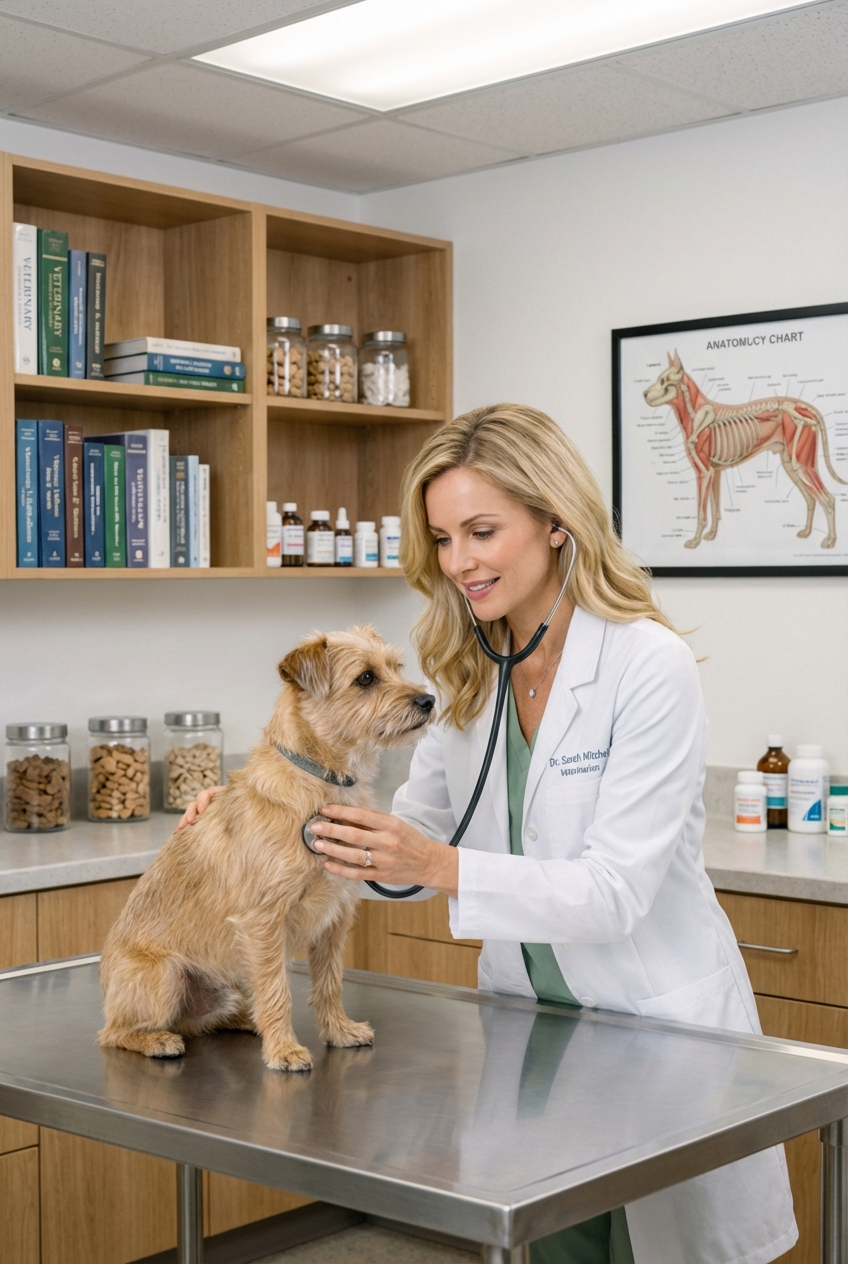
If you go to an ER, expect quick triage first. The team will prioritize pets with shock signs (weakness, pale gums, collapse) and severe dehydration. You may be asked for a stool photo, a brief timeline, and any possible toxin or foreign-body exposure. Diagnostics and treatment can start the same visit, especially if your dog needs fluids or anti-nausea medication.
When it is safe to monitor at home
Some dogs have mild colitis that improves quickly. Monitoring at home is usually only reasonable if:
- Your dog is bright, responsive, and comfortable
- There is no repeated vomiting
- The blood is minimal (small streaks, not large volume)
- Your dog is drinking and can keep fluids down
- You can reach your veterinarian and have a plan if symptoms worsen
If you do monitor, keep a simple log: time of each stool, appearance, vomiting episodes, water intake, and energy level. This makes a vet visit much more efficient if you end up needing one.
Prevention you can start today
- Prevent scavenging: secure trash, use a basket muzzle for chronic “garbage gobblers” on walks (with vet guidance).
- Parasite control: keep your dog on vet-recommended prevention and do fecal testing at least annually, more often for dogs with frequent GI issues.
- Slow diet changes: transition foods over 7 to 10 days.
- Be cautious with rich foods: fatty meats and holiday leftovers are a common trigger for pancreatitis and GI upset.
- Vaccination: keep puppies and adult dogs current, especially for parvovirus protection.
Quick checklist for your vet call
- Age, breed, and weight
- When diarrhea started and how many episodes
- Blood appearance: bright red vs dark vs black
- Vomiting: yes or no, how often
- Energy level: normal, tired, or weak
- Appetite and water intake
- Diet changes, new treats, table scraps, trash exposure
- Any medications or supplements (including iron or bismuth products)
- Vaccination status (especially puppies)
If you take only one thing from this guide: bloody diarrhea is a symptom worth calling your veterinarian about the same day, and going in immediately if your dog looks unwell.