Vet-informed guide to a short-term bland diet for dogs: chicken and rice 1:2 ratio, daily cup ranges by weight, how many meals to split into, and red flags t...
Article
•
Designer Mixes
Dog Diarrhea: What to Do Fast

Shari Shidate
Designer Mixes contributor
Diarrhea is one of the most common reasons pet parents panic, and I get it. When your dog is suddenly having loose stools, you want relief fast and you want to make sure it is not something serious. The good news is that many cases clear up quickly with simple, safe at-home steps. The important part is knowing when home care is appropriate and when to call your veterinarian right away.
First, check for red flags
Before you try any home treatment, do a quick safety check. Diarrhea can be mild, but it can also be a sign of dehydration, parasites, pancreatitis, toxin exposure, medication side effects, or a blockage.
Call your vet urgently or go to an ER if you notice:
- Blood in the stool (red streaks) or black, tarry stool (this can mean digested blood)
- Repeated vomiting, severe lethargy, weakness, or collapse
- Signs of dehydration (sticky gums, sunken eyes, skin that does not spring back)
- Severe abdominal pain or a bloated belly
- Diarrhea in a puppy, senior dog, or any dog with chronic disease (kidney, heart, diabetes, Addison’s)
- Possible toxin exposure (trash, compost, human meds, xylitol, rodent bait, cannabis, grapes)
- Suspected foreign body (toy pieces, bones, corn cobs, socks)
- Large-volume watery diarrhea, very frequent diarrhea, or accidents in the house
- Diarrhea that lasts more than 24 to 48 hours, or sooner if it is worsening
- New diarrhea after starting NSAIDs, antibiotics, or other medications (do not stop meds without vet guidance)
- Weight loss, refusal to eat, or symptoms that keep coming back
If none of those apply and your dog is otherwise bright, drinking, and acting normal, you can often start supportive care at home.
Quick guide: first 12 to 24 hours
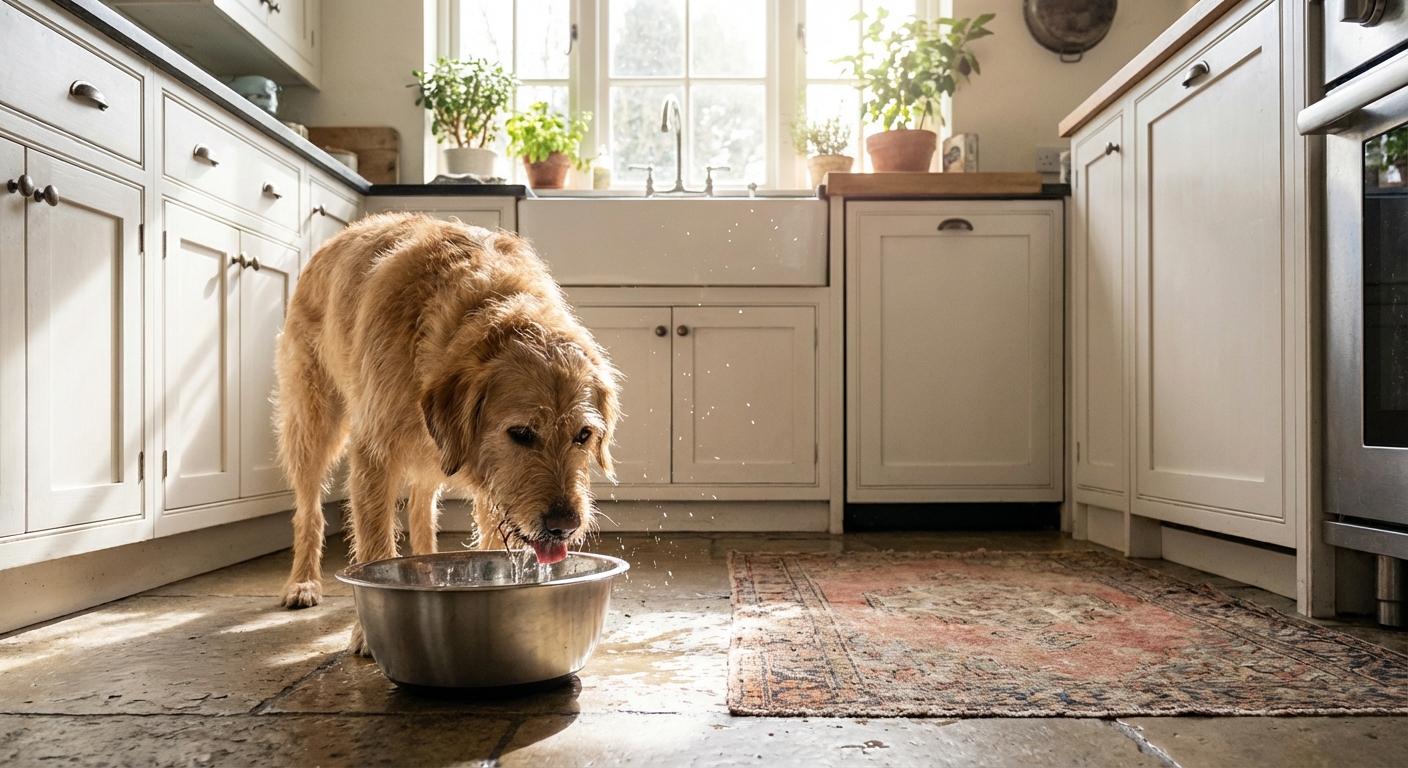
1) Protect hydration first
Loose stools can cause loss of water and electrolytes. Dehydration is one of the biggest risks, especially for small dogs.
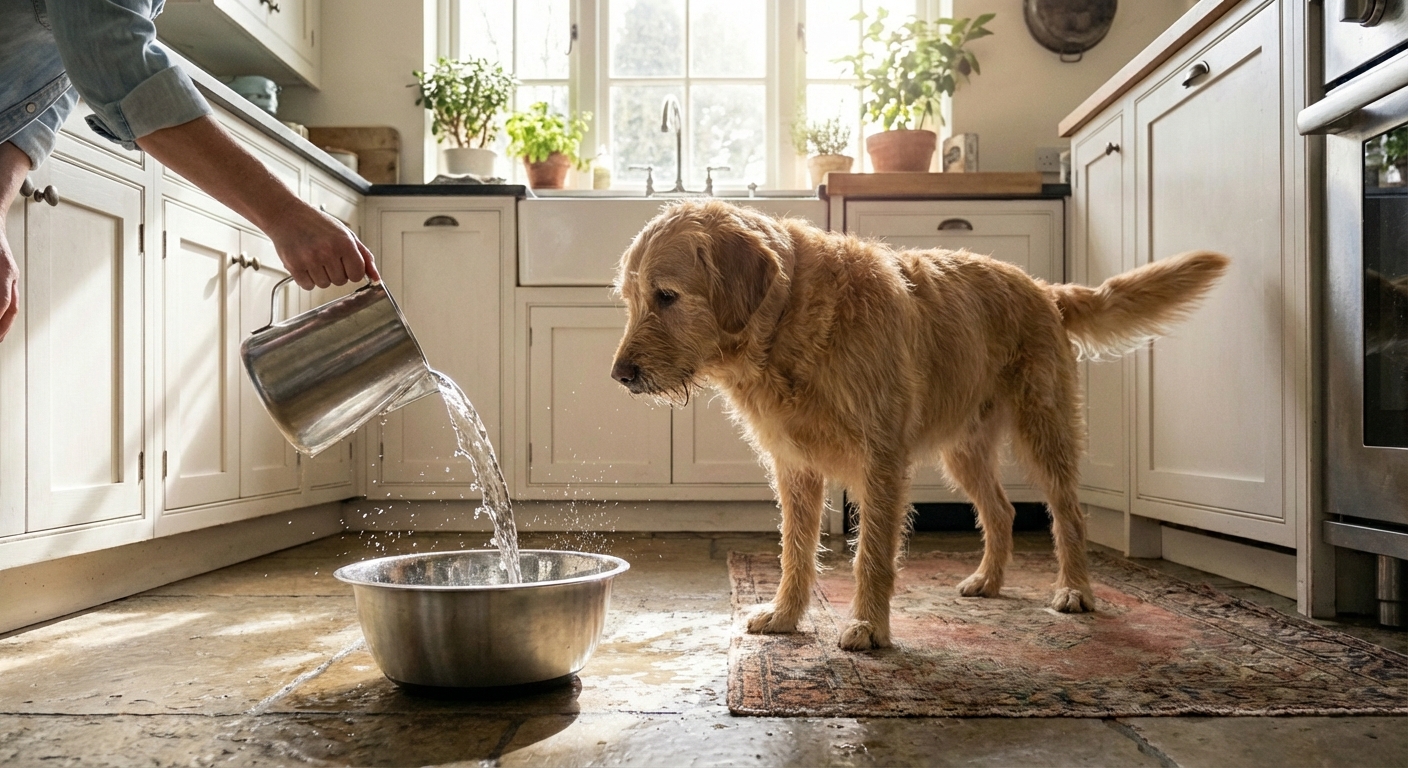
- Offer fresh water at all times.
- If your dog is willing, offer small amounts of unseasoned broth (no onion or garlic powder).
- Give frequent potty breaks so your dog does not feel pressured to “hold it.”
2) Pause rich treats and new foods
For now, stop all table scraps, chews, fatty treats, and anything new. Keep things boring and gentle.
3) Food break: only sometimes
Some veterinarians may recommend a brief food break for otherwise healthy adult dogs, while others prefer starting a highly digestible diet right away. If you are not sure which is best for your dog, call your vet. Do not fast puppies, toy breeds prone to low blood sugar, or dogs with certain medical conditions.
- If your vet recommends it, a typical approach is a 6 to 12 hour break from food while continuing water.
- If your dog is hungry and bright, it is often reasonable to skip fasting and go straight to a bland diet in small meals.
- If your dog is also vomiting, get vet guidance before trying fasting or home care.
The bland diet most dogs do well on
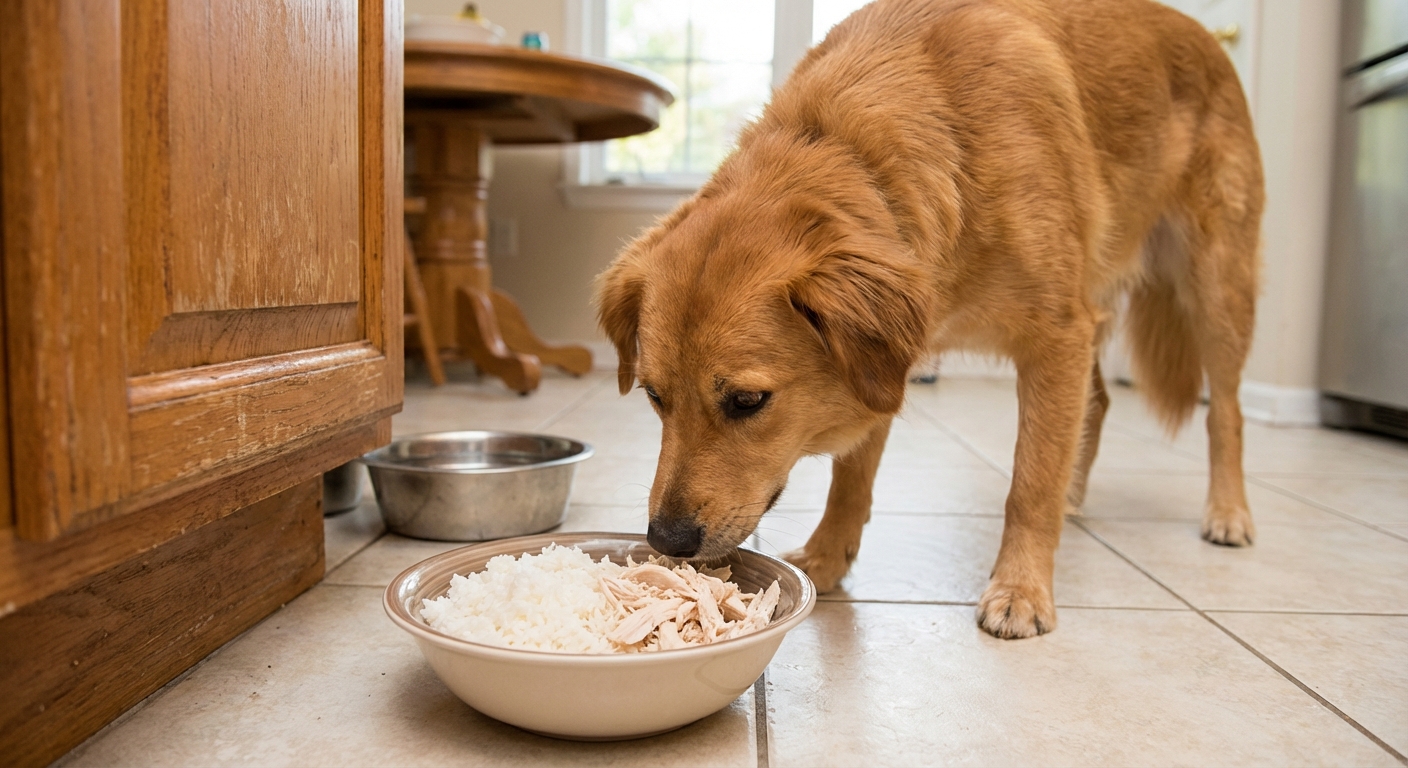
A bland diet is simple, low-fat, and easy to digest. The goal is to calm inflammation and give the intestines a chance to recover.
Good options (pick one protein + one carb)
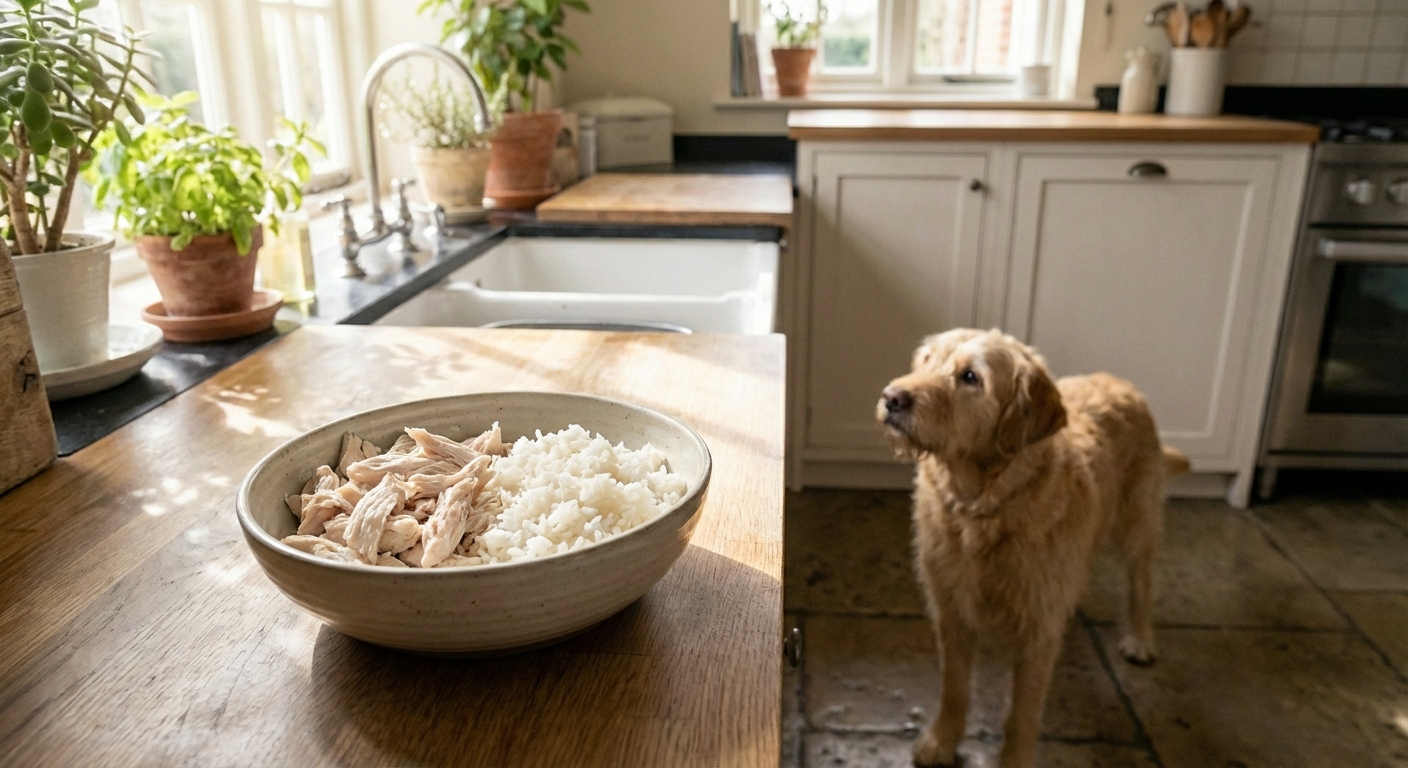
- Boiled skinless chicken breast + white rice
- Lean ground turkey (well-drained) + white rice
- Boiled lean beef (well-drained) + plain pasta
Portion and schedule: Feed small meals every 6 to 8 hours instead of one large meal. A common starting point is about 25% to 50% of their normal total daily amount for the first day, then increase as stools improve. If your dog has special calorie needs, follow your veterinarian’s guidance.
Avoid: butter, oils, cheese, bacon grease, heavy seasonings, and anything spicy. Fat is a frequent trigger for ongoing diarrhea and can contribute to pancreatitis.
Helpful add-ons
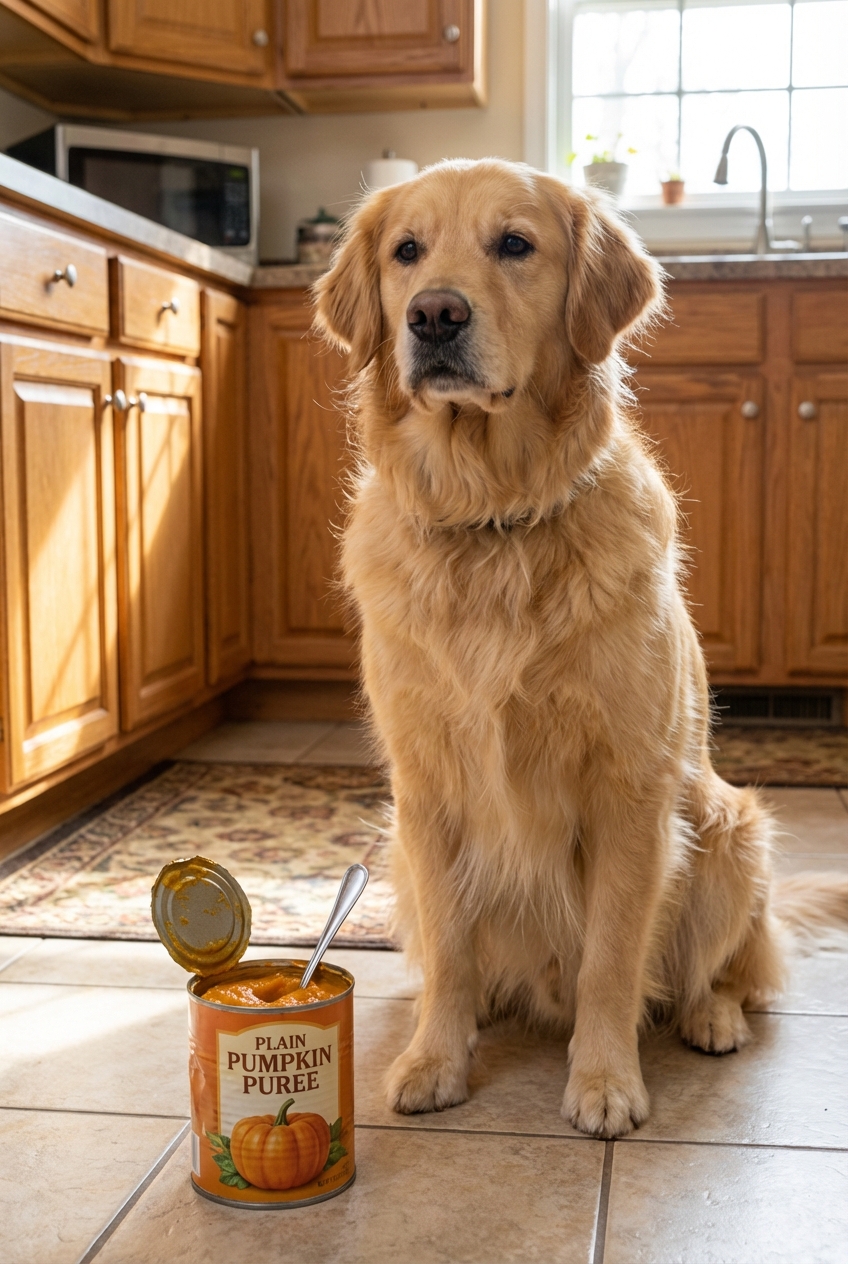
Plain canned pumpkin (not pumpkin pie filling)
Pumpkin adds soluble fiber, which can help firm up stool by absorbing excess water. The “right” amount is not one-size-fits-all, so start low and adjust based on your dog’s response.
- Small dogs: start with 1 teaspoon
- Medium dogs: start with 1 to 2 teaspoons
- Large dogs: start with 1 tablespoon
Mix into the bland food once daily at first. If it helps and your dog tolerates it, you can increase to twice daily. If stools get bulky, gassy, or worse, back down or stop and check in with your vet.
A veterinary probiotic
There is good evidence that some veterinary probiotics and specific strains can shorten the duration of acute diarrhea. Not every probiotic on the shelf is the same, so a dog-specific product recommended by your veterinarian is ideal.
- Use as directed for 5 to 10 days, even if stools improve sooner.
Electrolytes, with caution
Electrolyte support can help, but skip sports drinks and random “rehydration” hacks. Do not give Gatorade, and do not use Pedialyte or other human electrolyte solutions unless your vet specifically advises it (sugar and sodium levels can be a problem, especially for small dogs). If you are worried about dehydration, ask your veterinarian about a vet-approved oral rehydration option and the right amount for your dog.
Describe the diarrhea
If you end up calling your vet, a few details can speed up decisions. Here is a simple way to think about what you are seeing.
Large bowel signs
- Small amounts, more frequent trips
- Urgency and straining
- Mucus is common
- Bright red blood may show up as streaks
Small bowel signs
- Large volume watery stool
- Less straining, but bigger messes
- Weight loss or poor appetite can show up with ongoing issues
- Black, tarry stool can suggest digested blood and is urgent
Hygiene and contagion tips
Some causes of diarrhea (like giardia and certain infections) can spread to other pets and, in some cases, people. While your dog is sick, a little extra cleanup goes a long way.
- Pick up stool promptly and dispose of it securely.
- Wash your hands after cleanup, and supervise kids closely.
- Clean soiled areas with a pet-safe disinfectant.
- Avoid dog parks, daycare, and shared water bowls until stools are normal.
What not to do
- Do not give human anti-diarrhea meds unless your vet tells you to. Some can be dangerous in certain dogs or mask a serious problem.
- Do not feed a high-fat “comfort food” meal. Fat can worsen diarrhea and may trigger pancreatitis.
- Do not switch diets repeatedly trying to fix it. Too many changes can keep the gut irritated.
- Do not ignore parasites. Even indoor dogs can pick them up from soil, parks, or other pets.
- Do not stop prescription medications without checking with your veterinarian first.
When your dog starts improving
Once stools are more formed for 24 hours, you can slowly transition back to your normal diet.
- Days 1 to 2: 75% bland diet, 25% regular food
- Days 3 to 4: 50% bland, 50% regular
- Days 5 to 6: 25% bland, 75% regular
- Day 7: back to 100% regular food
If diarrhea returns during the transition, step back to the previous ratio and contact your veterinarian if it does not stabilize quickly.
Common causes
- Dietary indiscretion (trash, rich foods, sudden treats)
- Sudden diet change
- Stress (boarding, travel, new pet or baby)
- Parasites (giardia, roundworms, hookworms)
- Bacterial imbalance in the gut
- Food intolerance or sensitivity
- Medication effects (antibiotics, NSAIDs, some supplements)
One practical tip from the veterinary assistant side of life: if you can, bring a fresh stool sample to your vet. It can speed up answers dramatically.
Stool sample tips
- Aim for a sample that is fresh within a few hours.
- If you cannot get in right away, seal it in a bag or container and refrigerate it.
- Do not freeze it unless your vet tells you to.
- Bring it in with the date and time collected.
Vet visit checklist
If you do need to go in, you will help your veterinary team a lot by having these details ready:
- How long the diarrhea has been going on
- Frequency and volume
- Any vomiting, appetite changes, or lethargy
- Any blood or mucus
- Recent diet changes, new treats, or trash exposure
- Current medications and supplements (including recent antibiotics or NSAIDs)
- Vaccination status and parasite prevention
Bottom line
If your dog is bright, hydrated, and not showing red flags, many mild cases improve with hydration, a bland diet, and a veterinary probiotic. If you see blood, black tarry stool, vomiting, weakness, dehydration, or the symptoms last more than a day or two, do not wait. Your veterinarian can rule out parasites, infection, pancreatitis, medication reactions, and blockages and get your pup comfortable quickly.