A practical 24–72 hour diet and hydration plan for mild dog diarrhea, with bland food options, safe add-ons like probiotics, foods to avoid, and clear red ...
Article
•
Designer Mixes
Dog Diarrhea Treatment Handbook

Shari Shidate
Designer Mixes contributor
Diarrhea is a very common reason dogs end up at the vet, and as a veterinary assistant here in Frisco, Texas, I can tell you this: most cases are mild and short-lived, but some are true emergencies. The goal of this handbook is to help you figure out what you are seeing, what you can safely do at home, and when it is time to call your veterinarian.
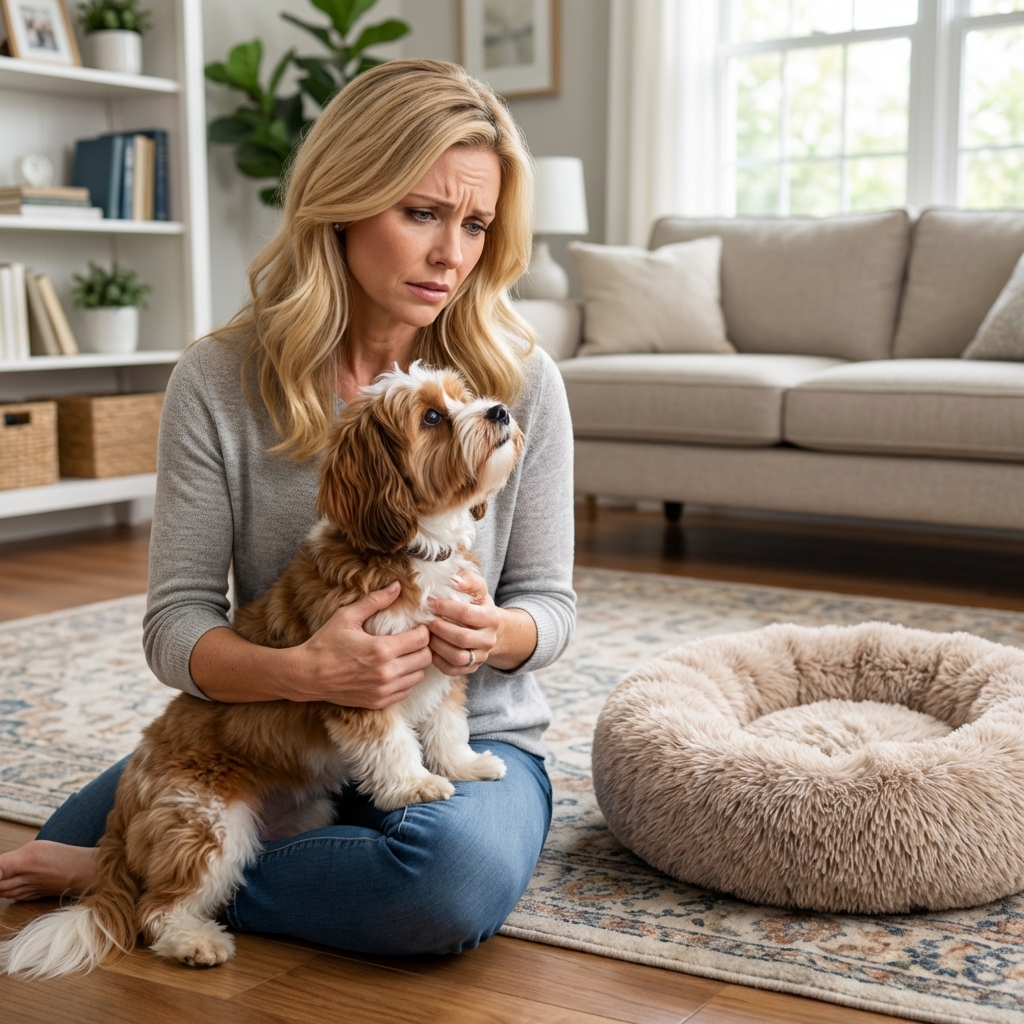
Important note: this article is educational and cannot diagnose your dog. If you are unsure, it is always appropriate to call your vet for advice.
First: decide if this is an emergency
Before you try any home care, do a quick safety check. Diarrhea becomes dangerous when it leads to dehydration, when there is significant bleeding, or when it is a symptom of a bigger problem like pancreatitis, an intestinal blockage, toxin exposure, or a serious infection.
Go to an emergency vet now if you notice any of these
- Repeated vomiting or any vomiting plus diarrhea
- Large amounts of blood in stool, or black, tarry stool (digested blood)
- Your dog is very lethargic, collapses, seems painful, or has a swollen belly
- Suspected toxin exposure (xylitol, rat bait, grapes or raisins, medications, cannabis, etc.)
- Possible foreign body (chewed toy pieces, socks, corn cob, bones, rawhide pieces)
- Signs of dehydration you can spot at home: dry or tacky gums, sunken-looking eyes, marked lethargy, or peeing much less than normal
- Puppies, seniors, pregnant dogs, or dogs with chronic disease (kidney disease, diabetes, Addison’s, heart disease)
- Diarrhea that is severe, very frequent, or worsening quickly (even if it has not been “long” yet)
- Rule of thumb: diarrhea lasting more than about 24 hours in a small dog, or more than about 48 hours in a stable adult dog
If you suspect poisoning, you can also contact ASPCA Animal Poison Control or Pet Poison Helpline for guidance. They may charge a consultation fee, and they will usually want your dog’s weight and what was eaten (plus the package if you have it).
When a same-day vet call is smart
- Diarrhea with mucus and straining that looks like constipation
- Worms visible in stool
- Diarrhea that keeps returning every few weeks
- Recent antibiotics, new medication, or sudden diet change
- New puppy or newly adopted dog with unknown vaccination history
What diarrhea can look like
Your veterinarian will often ask, “Is it small-bowel or large-bowel diarrhea?” You do not need to diagnose it, but noticing a few patterns helps you describe it clearly.
Small-bowel diarrhea
- Larger volume stool
- May be watery
- Less frequent
- Weight loss can happen if it persists
Large-bowel diarrhea
- Frequent small amounts
- Mucus is common
- Straining is common
- Fresh red blood may appear from irritation
If you can, take a clear photo of the stool and write down frequency, color, and any triggers like new treats, table scraps, stress, or boarding.
Common causes
Diarrhea is a symptom, not a diagnosis. Here are the big buckets we see most often in clinic.
- Dietary indiscretion: garbage, rich foods, fatty leftovers, new chews, sudden food change
- Food intolerance or sensitivity: chronic or recurrent loose stool, often improves with a diet trial
- Parasites: giardia, roundworms, hookworms, whipworms, coccidia
- Stress: travel, boarding, storms, changes at home
- Infection: viral or bacterial, sometimes from contaminated water or raw diets
- Medication effects: antibiotics commonly disrupt the gut microbiome
- Pancreatitis: often after a fatty meal, commonly with vomiting and a painful abdomen (fatty treats, greasy table food, and some rich chews can be triggers)
- Inflammatory bowel disease or other chronic GI disease: longer-lasting patterns
- Foreign body or partial obstruction: may start as diarrhea then progress to vomiting and severe illness
At-home care for mild diarrhea
If your dog is bright, alert, drinking, and not vomiting, you can usually start with supportive care. The focus is hydration and gentle nutrition.
Step 1: Hydration first
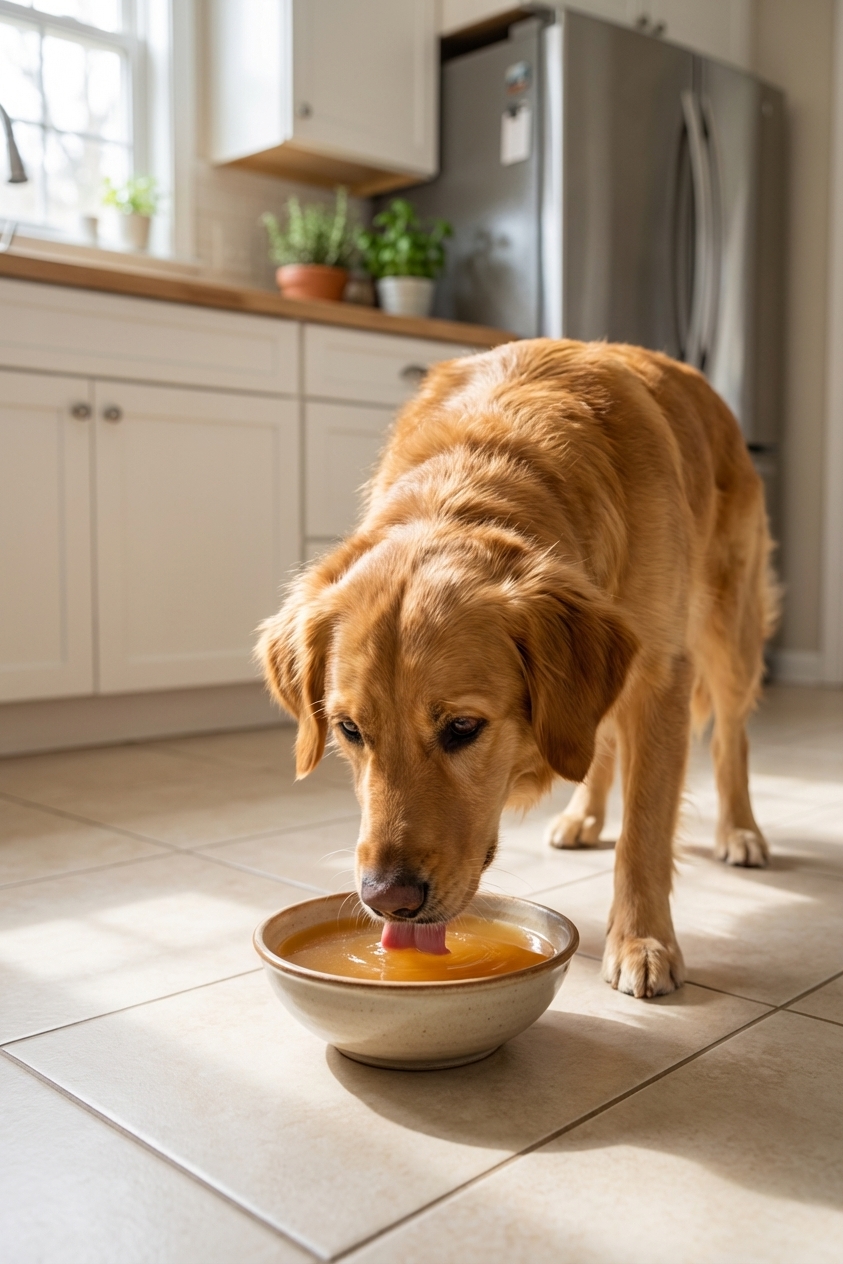
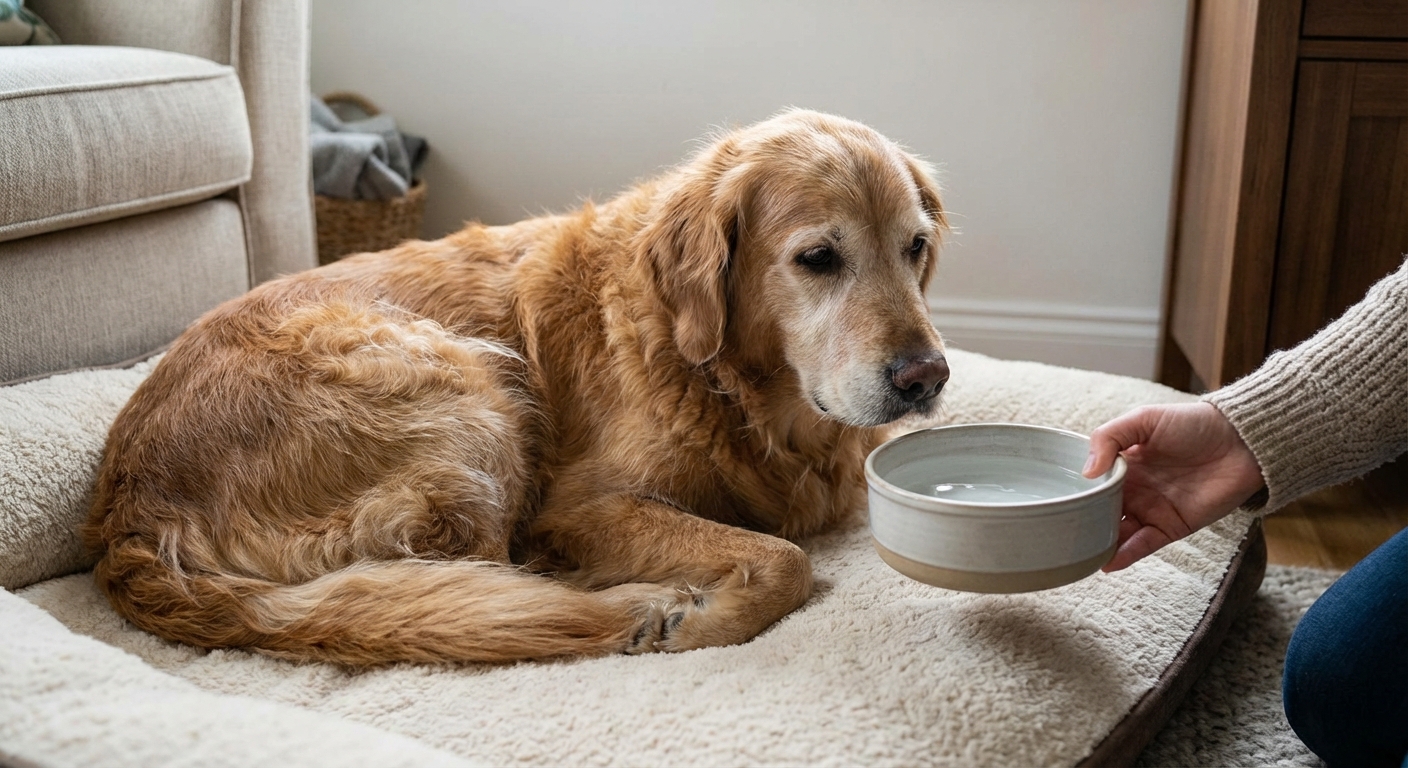
Offer frequent access to fresh water. You can also offer a veterinarian-approved oral electrolyte solution if your vet says it is appropriate. Avoid sugary sports drinks.
- If your dog is drinking normally, that is a good sign.
- If your dog refuses water, call your vet.
Step 2: Food pause or small meals
You may hear this called “gut rest.” Practice varies. Some veterinarians recommend a brief fast for certain adult dogs, while others prefer starting small bland meals right away.
If your vet recommends it and your dog is otherwise stable, a common approach is withholding food for about 8 to 12 hours. Always keep water available.
- Do not fast puppies, toy breeds prone to low blood sugar, seniors, or dogs with medical conditions unless your vet directs it.
- If vomiting starts at any point, stop home care and call your veterinarian.
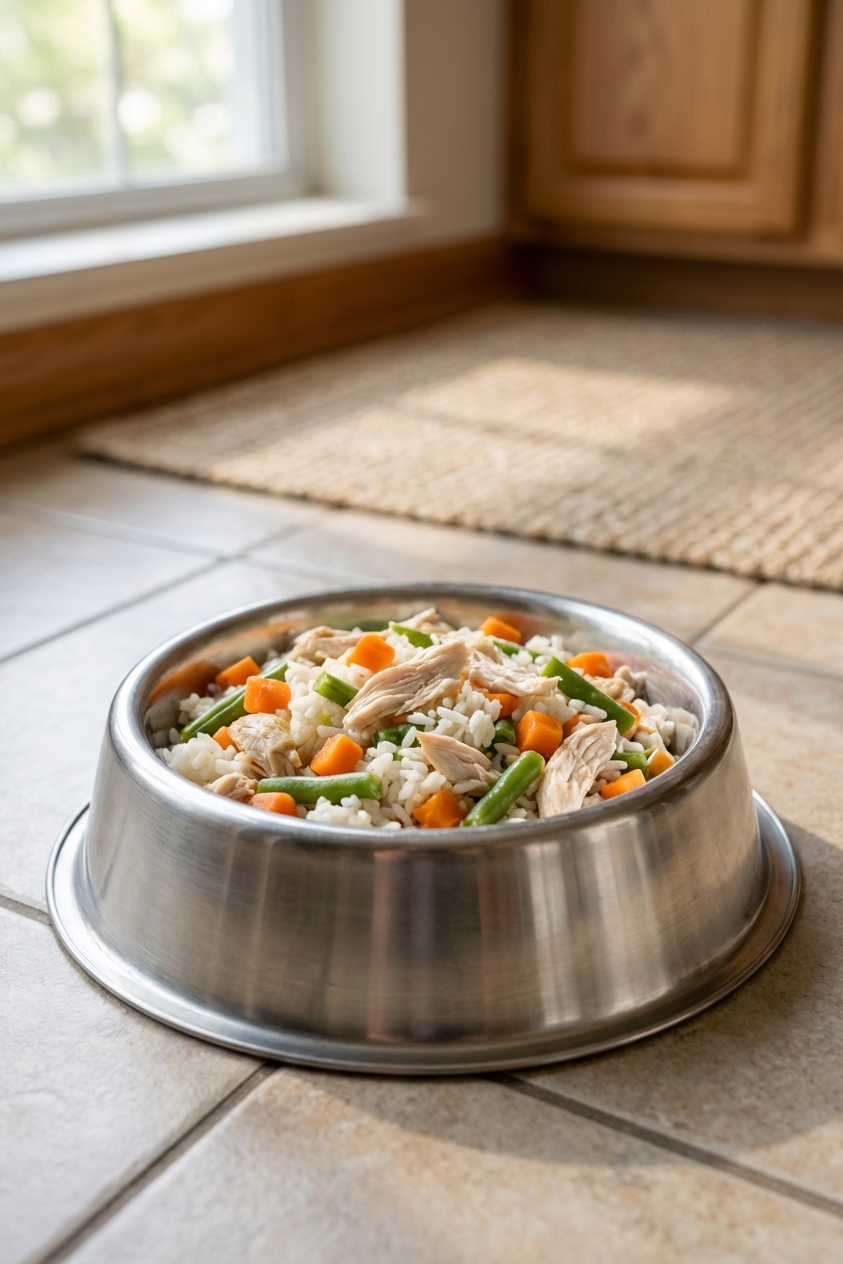
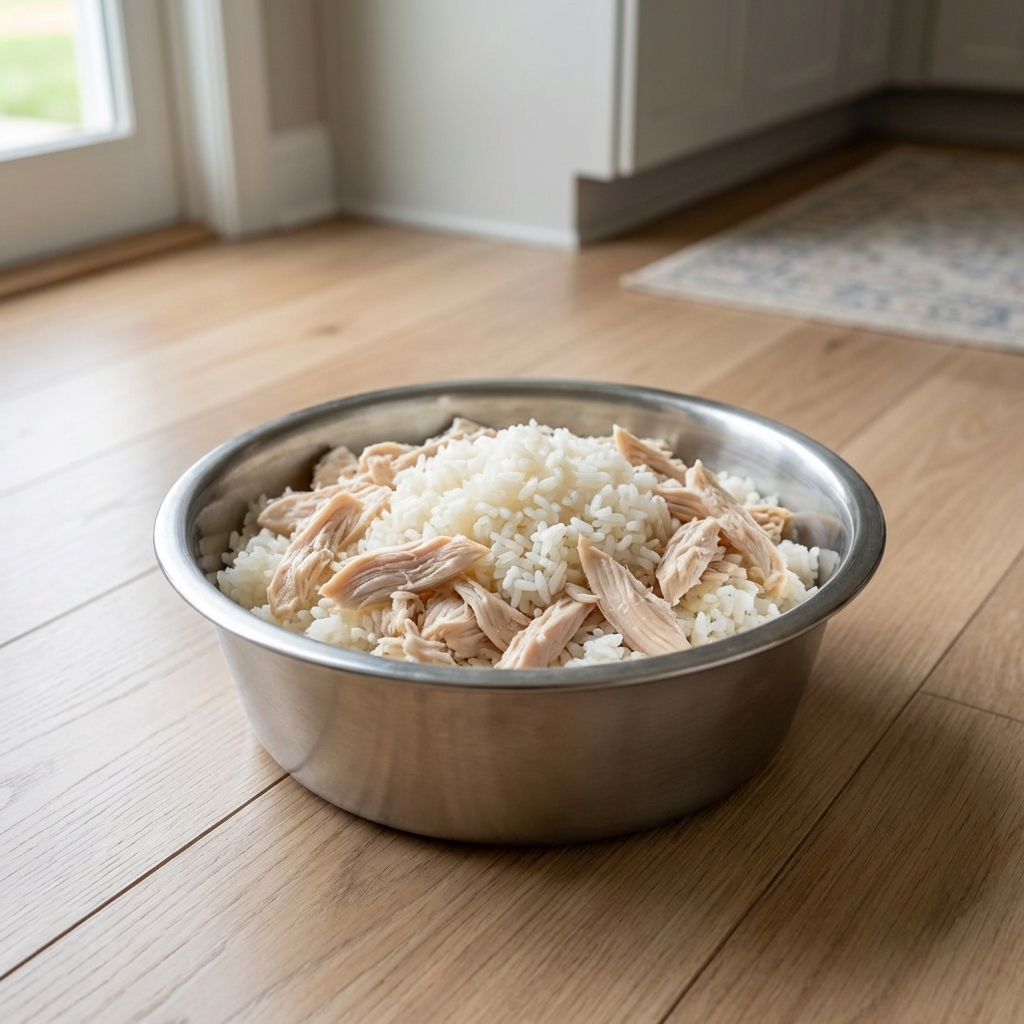
Step 3: Feed a bland diet
Feed small meals. Think simple, low fat, easy to digest.
- Option A: boiled skinless chicken breast + white rice
- Option B: 93 to 96 percent lean ground turkey (cooked and drained) + white rice
- Option C: boiled white fish + white rice
A common starting point is about 1 part protein to 2 parts starch, but there is no single perfect ratio for every dog. Portion sizes depend on your dog’s size and needs, so start small (every 6 to 8 hours) and adjust with your vet’s guidance if you are unsure.
If your dog is sensitive to chicken, turkey or fish are often better options. If you suspect pancreatitis, do not try to manage it at home. Low fat is critical and your dog should be seen.
Step 4: Add gentle fiber if needed
For some dogs, a small amount of soluble fiber helps stools firm up.
- Plain canned pumpkin (not pie filling): small dogs 1 teaspoon, medium dogs 1 tablespoon, large dogs 1 to 2 tablespoons mixed into food
If diarrhea is watery and frequent, call your vet to discuss whether fiber is appropriate. In some cases, especially with certain parasites or infections, fiber alone will not solve the issue.
Step 5: Consider a probiotic
Some veterinary probiotics and synbiotics have evidence for helping with acute diarrhea, but results are product-specific. When in doubt, choose a vet-recommended brand made for dogs with clear labeling and quality control. If your dog is immunocompromised, ask your vet before using probiotics.
How long should home care take to work?
You should see improvement within 24 to 48 hours. If stools are not clearly improving, the diarrhea is very frequent, or new symptoms appear, call your veterinarian.
Medications: use caution
I know it is tempting to reach into the human medicine cabinet. Please be careful. Dogs metabolize medications differently, and some common human products are dangerous.
Generally avoid without vet guidance
- Loperamide (Imodium): may be unsafe for herding breeds with MDR1 mutation and can worsen some infections or obstructions
- Bismuth subsalicylate (Pepto-Bismol): contains salicylate and can cause toxicity in certain situations; can also darken stool and mask bleeding
- Any pain reliever: ibuprofen, naproxen, and many others are toxic to dogs
- Leftover antibiotics: can worsen gut imbalance and delay correct diagnosis
Prescription options your vet may recommend
Depending on the cause, your veterinarian may prescribe anti-nausea medication, a dewormer, a GI diet, a probiotic or synbiotic, or a short course of medications aimed at intestinal inflammation. Antibiotics are not always necessary, and in many uncomplicated cases they are avoided to protect the gut microbiome.
Dehydration: check at home
Dehydration is one of the biggest risks with diarrhea, especially in small dogs and puppies.
- Gum check: gums should be slick and moist, not tacky
- Skin tent test: gently lift skin over the shoulders; it should snap back quickly (this is less reliable in seniors)
- Energy and urination: acting weak, hiding, or peeing less can indicate dehydration
If you suspect dehydration, your dog may need subcutaneous or intravenous fluids, which is a veterinary visit.
When diarrhea is bloody
A small streak of bright red blood can happen with colon irritation, but it still deserves attention.
Call your vet promptly if
- Blood is more than a streak
- Your dog is straining repeatedly
- There is vomiting, lethargy, or poor appetite
- Stool is black or tarry
One condition we take very seriously is acute hemorrhagic diarrhea syndrome (AHDS). Dogs can deteriorate quickly and may need fluids and supportive care.
Puppies: treat as urgent
Puppies get dehydrated fast, and diarrhea can be a sign of intestinal parasites or viral illness like parvovirus. If your puppy has diarrhea, especially with vomiting, low energy, or loss of appetite, call your veterinarian the same day.
What your vet may do
If you come into the clinic, your vet team may recommend tests based on your dog’s age, symptoms, and risk factors.
- Fecal testing: checks for parasites like giardia and worms
- Parvo test: especially in unvaccinated or partially vaccinated puppies
- Bloodwork: looks for dehydration, infection, pancreatitis indicators, organ function
- X-rays or ultrasound: evaluates foreign bodies, obstruction, pancreatitis, masses
- Diet trial: for chronic or recurring diarrhea
Bring a stool sample if you can. A small amount in a clean container is perfect. If you cannot bring it right away, many clinics prefer a sample collected within 12 to 24 hours and kept refrigerated (not frozen) until your appointment.
Back to normal food
Once stools improve, do not jump back to the regular diet overnight. A gentle transition helps prevent a relapse.
- Day 1: 75% bland, 25% regular food
- Day 2: 50% bland, 50% regular food
- Day 3: 25% bland, 75% regular food
- Day 4: 100% regular food if stools remain normal
If diarrhea returns during transition, go back a step and call your veterinarian if it persists.
Prevention
Some diarrhea is just life with dogs, but you can lower the odds significantly.
- Make diet changes slowly: transition foods over 7 to 10 days
- Limit rich treats: especially fatty meats, cheese, and greasy table scraps (and be cautious with rich chews)
- Use parasite prevention: year-round prevention and routine fecal testing
- Keep trash secured: use locking lids if you have a “counter surfer”
- Be cautious with chews: avoid easily swallowed pieces; supervise chewing; remember some chews can be both a blockage risk and a tummy trigger
- Support gut health: ask your vet about probiotics during stressful events like travel or boarding
Quick checklist
If you call your vet, these details help them help you faster.
- How long the diarrhea has been happening
- How many episodes in the last 24 hours
- Any vomiting, appetite changes, or lethargy
- Blood: none, streaks, or large amounts
- Recent diet changes, new treats, chews, people food
- Any exposure to standing water, dog parks, boarding, grooming, or new pets
- Current medications and preventatives
If you remember one thing: diarrhea is often manageable, but dehydration and combined vomiting are the big red flags. When in doubt, call your vet. It is never “overreacting” to protect your dog.
Frequently asked questions
Should I withhold water?
No. Unless your veterinarian specifically instructs you otherwise, water should always be available. Dehydration is a major risk.
Is rice always necessary?
Not always, but it can be a helpful short-term carbohydrate for many dogs. Some dogs do better with a veterinary GI diet or a different bland option. If your dog has grain sensitivities, ask your vet for alternatives.
Can stress cause diarrhea?
Yes. Stress colitis is very real. It often presents as frequent small stools with mucus, sometimes with a little fresh blood. Even then, it is still wise to rule out parasites and infection, especially if it is the first episode.
What if my dog acts normal but the diarrhea will not stop?
If stools stay loose past about 48 hours, or the diarrhea keeps coming back, schedule a vet visit. Persistent diarrhea can point to parasites, food sensitivity, pancreatitis, or chronic intestinal inflammation.